


SYRIA’S TRANSITION:
Transition Meetings:
October 27:
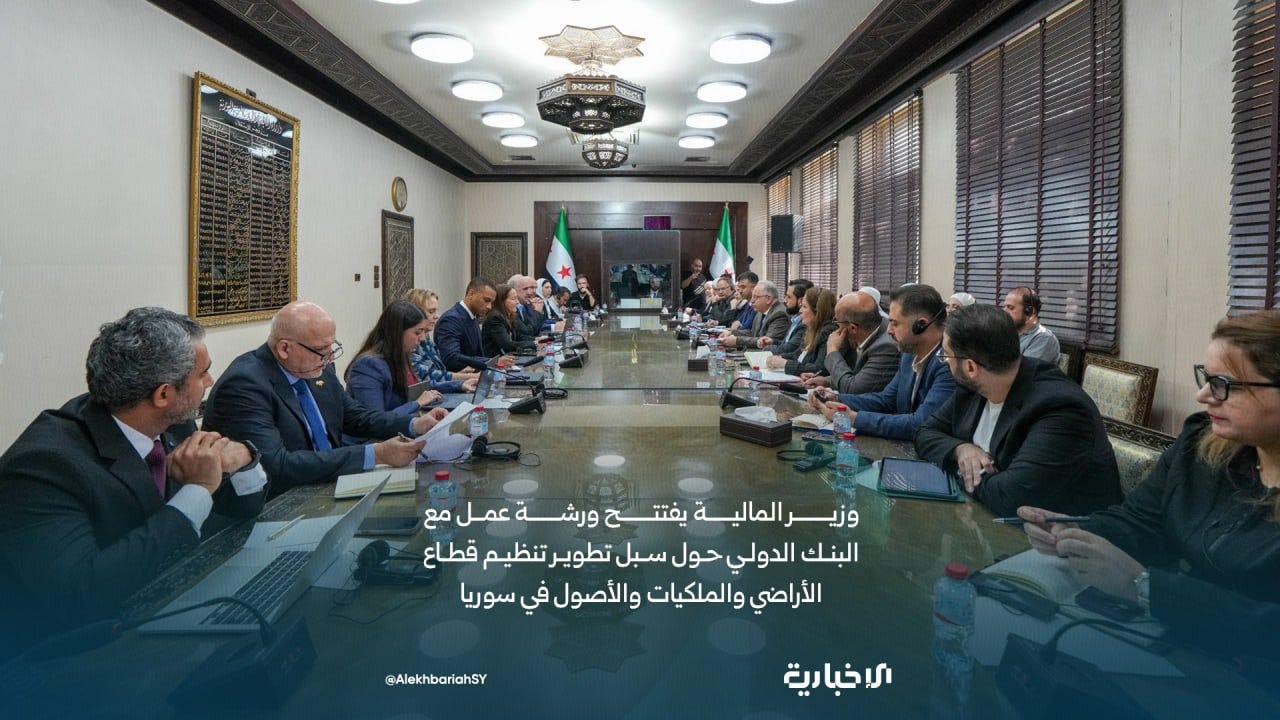
Finance Minister Mohammed Barniyeh convened a workshop alongside a delegation from the World Bank on October 27 to discuss challenges related to real estate property rights and mechanisms for addressing them, as well as enhancing coordination between relevant institutions and supporting recovery and reconstruction efforts. Officials from Syria’s Ministries of Local Administration, Environment, Public Works and Housing, Justice, Emergency and Disaster Response, and Finance, as well as representatives from the Directorate of Real Estate Affairs, the Real Estate Financing Supervision Authority, and the Central Bank were all in attendance.
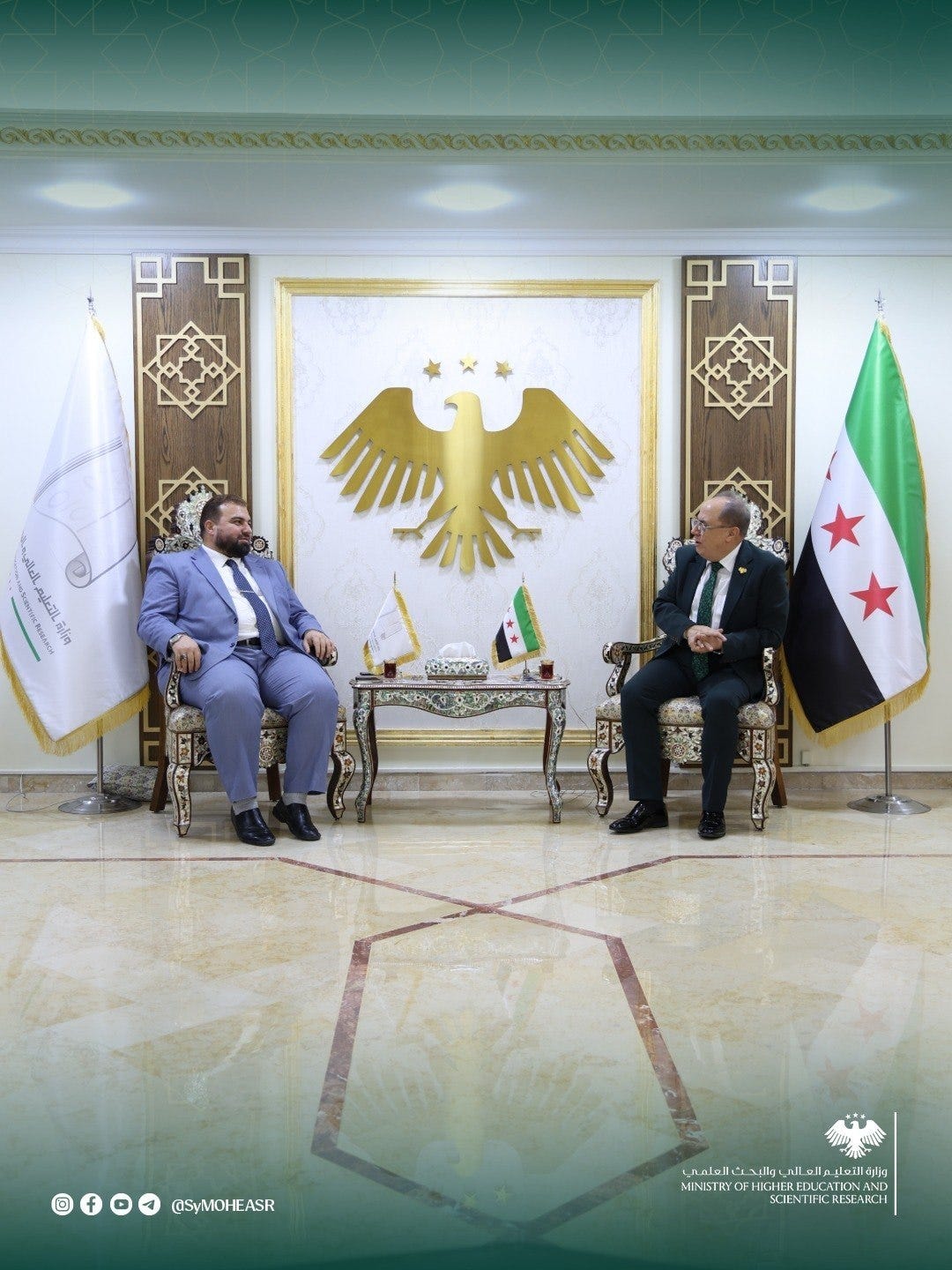
Minister of Higher Education Marwan al-Halabi hosted a meeting with Governor to Suwayda Mustafa Bakkour on October 27 to discuss the state of university and higher education opportunities for those in Suwayda, as well as ongoing efforts to rehabilitate colleges.
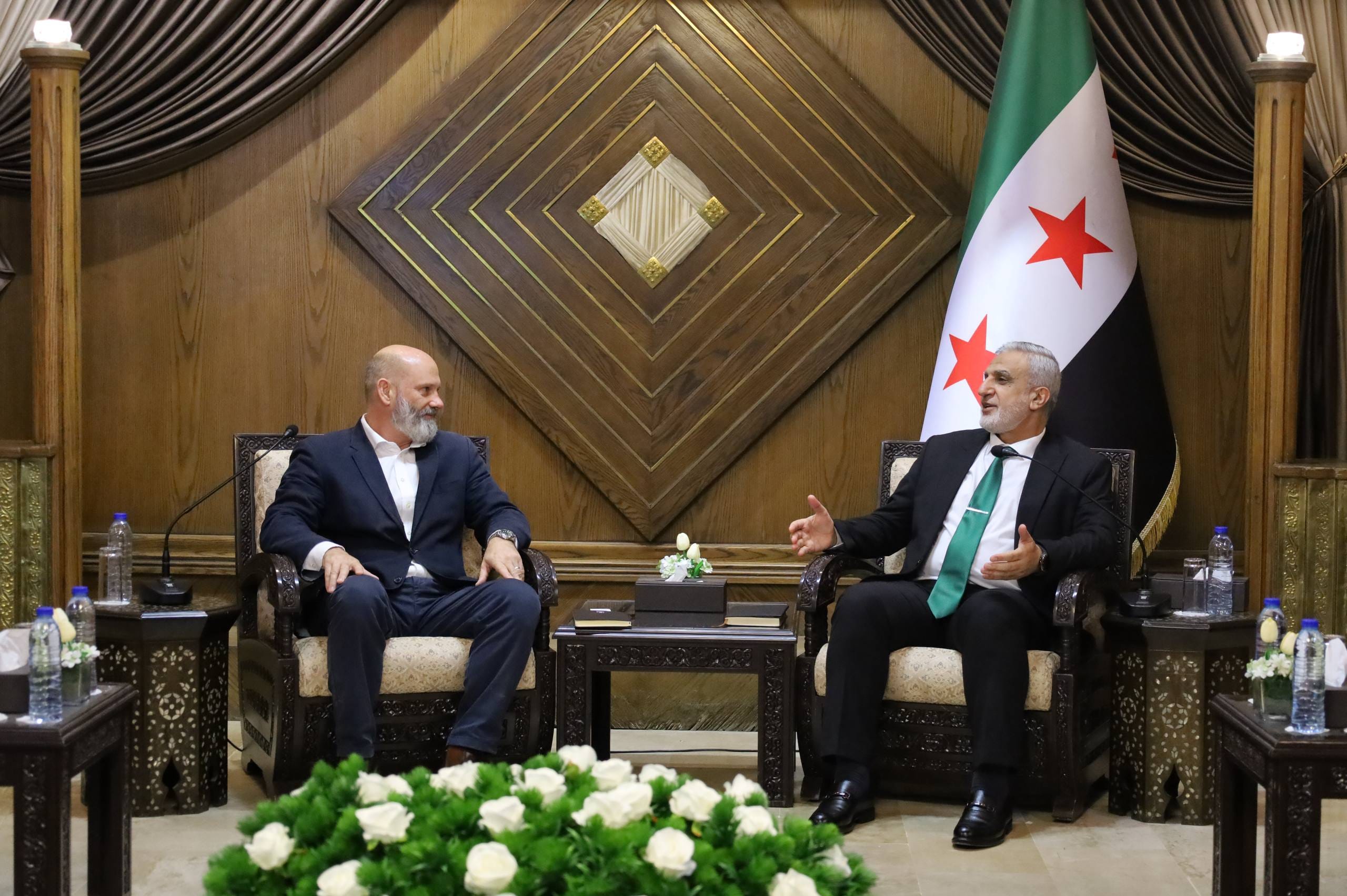
Governor of Aleppo Azzam al-Gharib hosted a meeting with UK Special Envoy Barrie Peach on October 27 during which they discussed Aleppo’s reconstruction, economic recovery, and infrastructure development priorities and the needs of the region’s electricity, transportation, industry, agriculture, and tourism sectors.
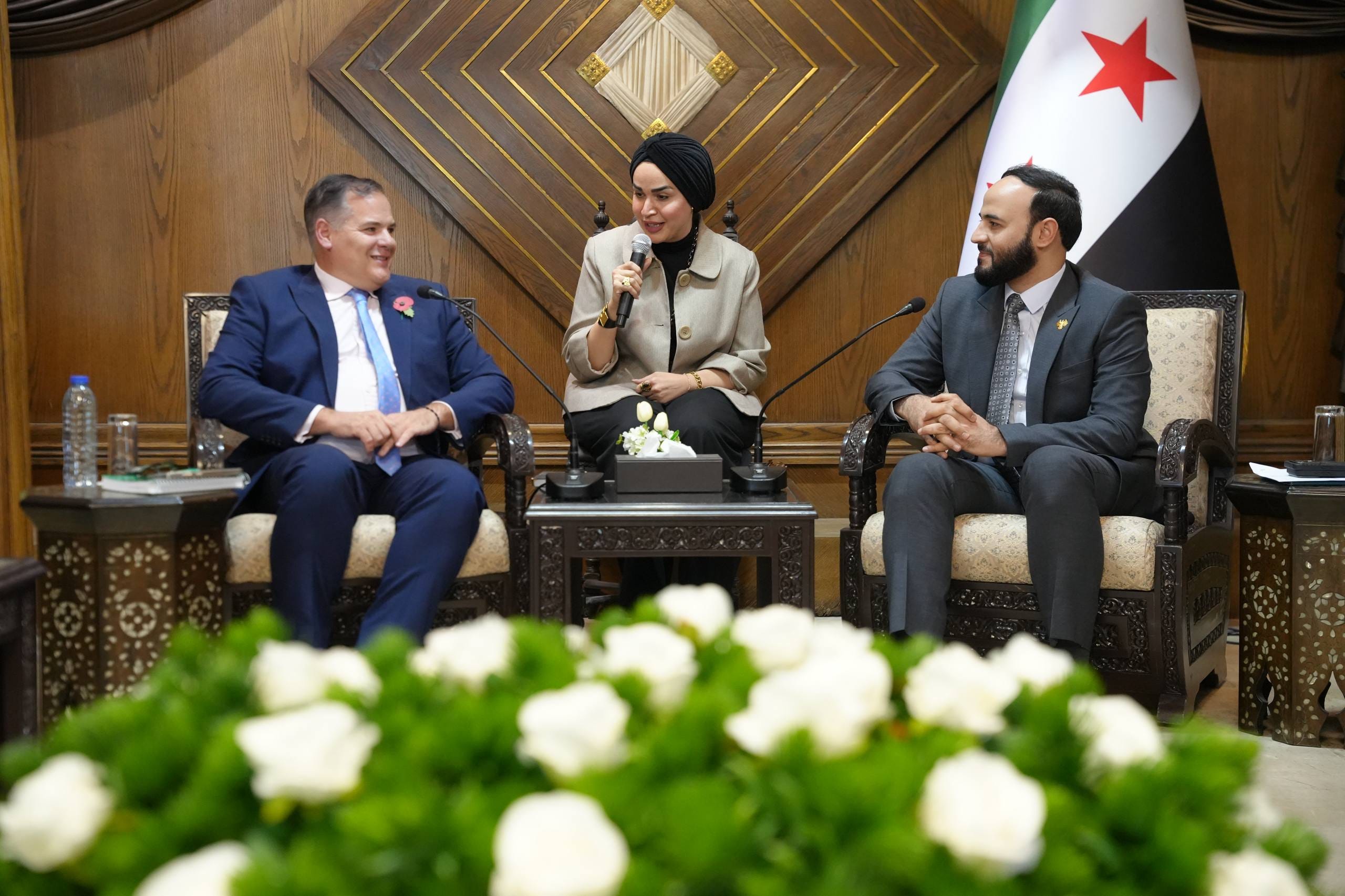
Deputy Governor of Aleppo Fawaz Hilal hosted a meeting with WFP Assistant Executive Director Matthew Hollingworth on October 28 to discuss cooperation in recovery, sustainable development, and food security, as well as supporting agricultural projects in the governorate.
October 28:
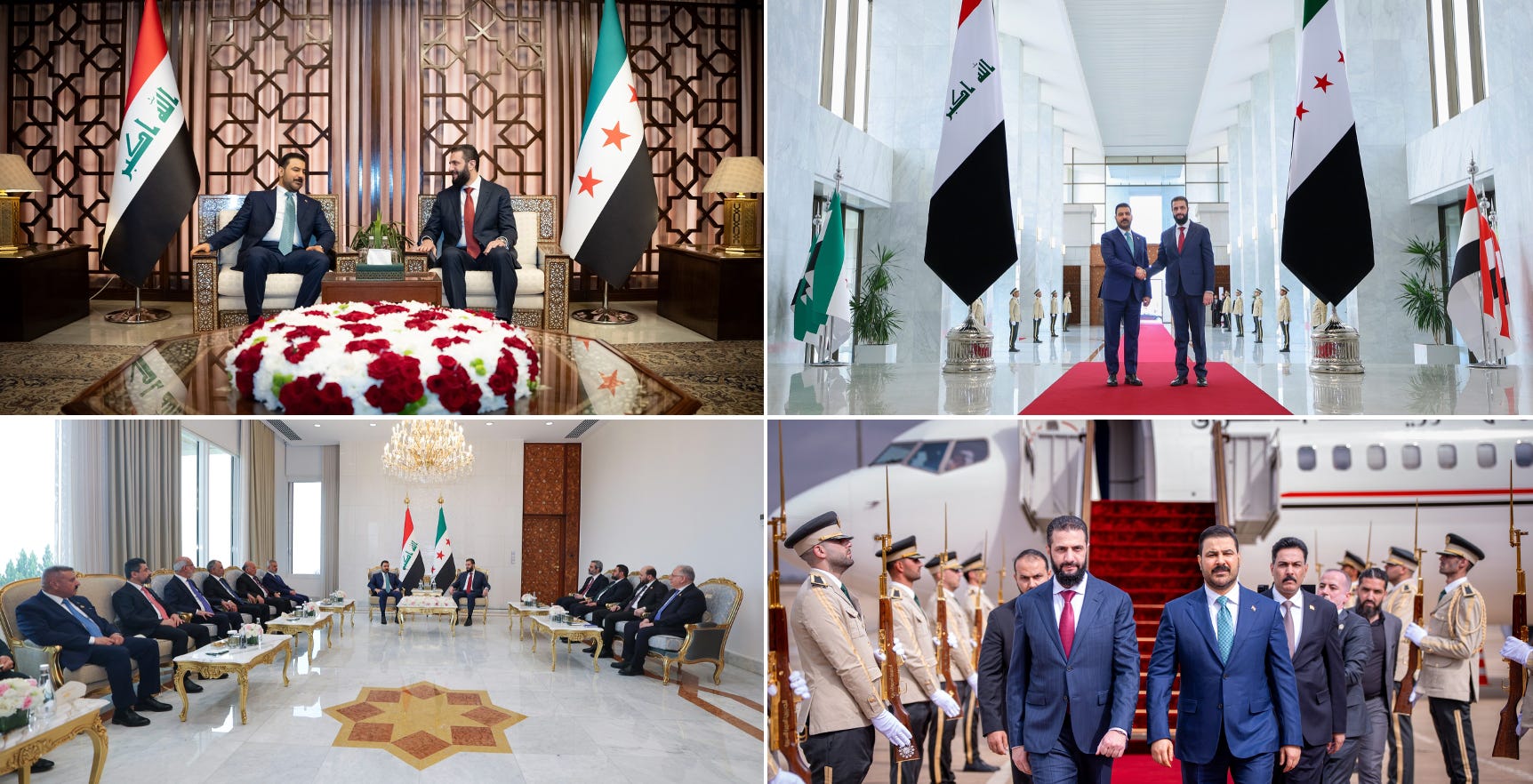
President Ahmed al-Sharaa hosted a visit to Damascus by Iraqi Prime Minister Ali al-Zaidi on October 28 — beginning with a meeting at Damascus International Airport, followed by engagements at the People’s Palace. They reportedly discussed economic cooperation, including a proposal for Syria to begin importing 2 million barrels per day of Iraqi fuel for export via the Baniyas terminal. They discussed broader avenues for economic cooperation, as well as security coordination and border security.
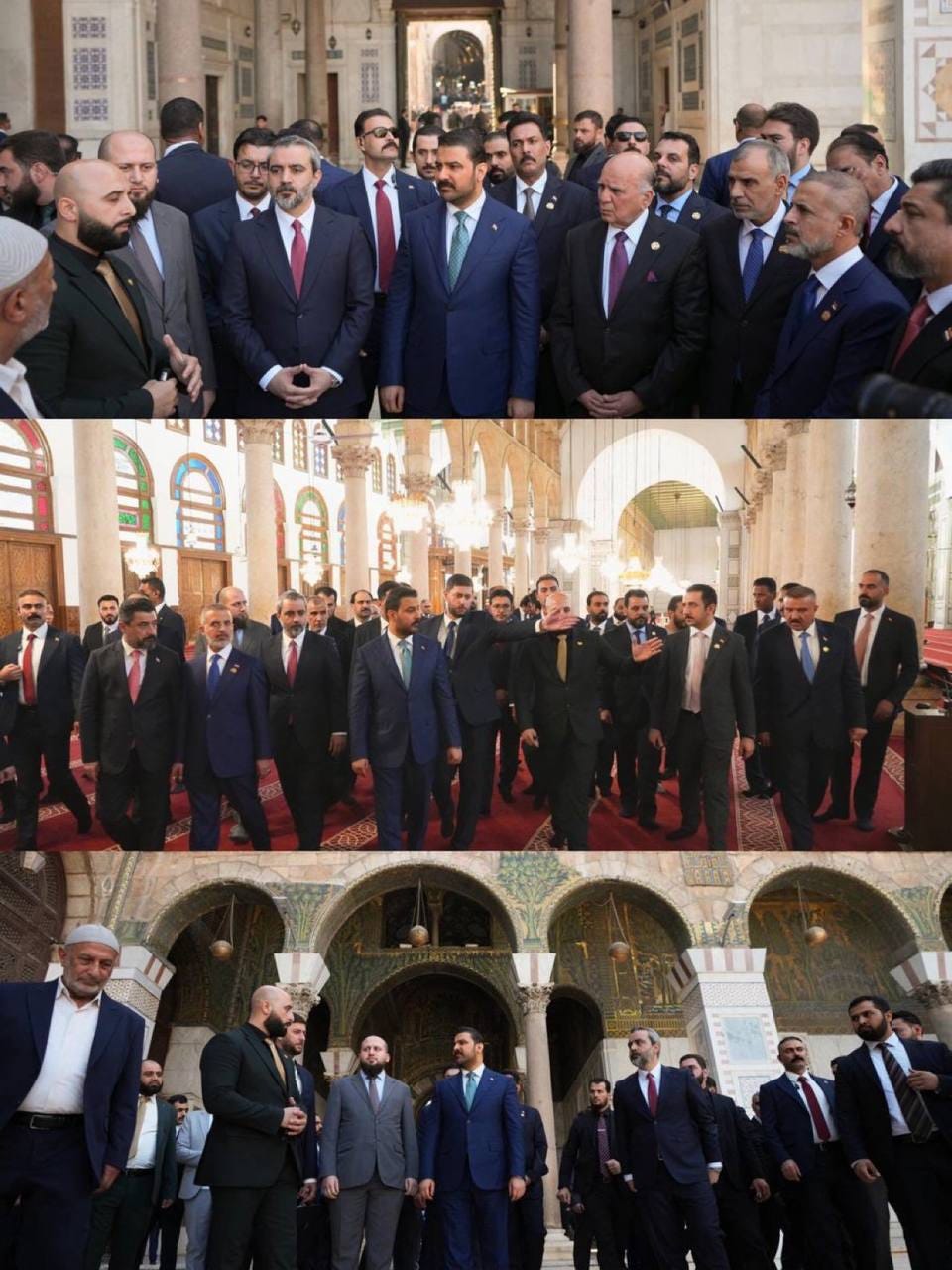
Later that day, Foreign Minister Shaybani accompanied Prime Minister Zaidi on a tour of Damascus’ Old City, during which it was announced that Iraq was donating $5 million each to restore areas of the Ummayyad Mosque and the Sayyida Zeinab shrine.
The Foreign Ministry’s Director of Arab Affairs convened a formal summoning of Jordanian Ambassador Sufyan al-Qudah on October 28, to submit an official note of complaint regarding Jordan’s airstrikes in southern Syria late on October 26 that left 8 civilians dead.
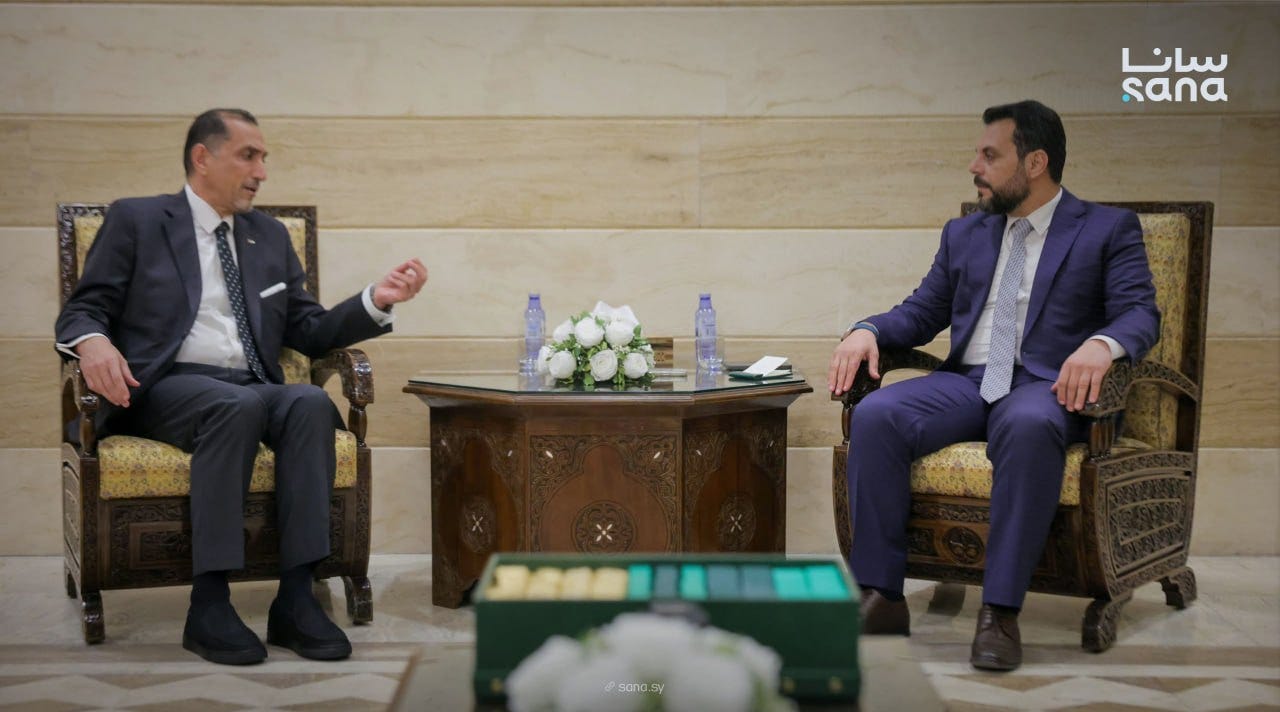
Finance Minister Mohammed Barnieh hosted a meeting with a delegation from the UN Industrial Development Organization (UNIDO) on October 28 to discuss a proposed industrial recovery program in Syria.
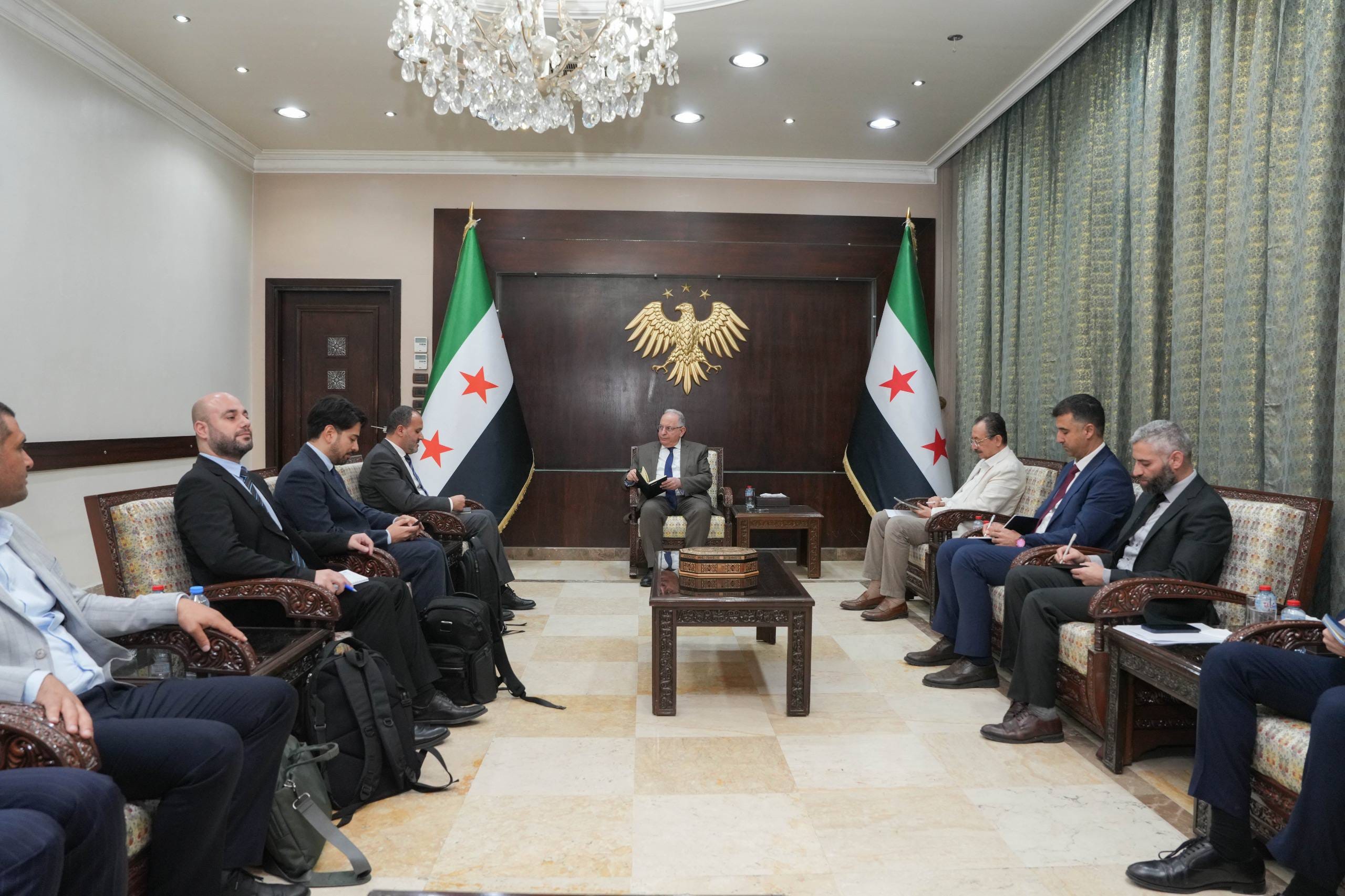
The Foreign Ministry’s Senior Advisor on European Affairs, Hamza al-Mustafa, hosted a meeting with Cypriot Ambassador Sevag Avedissian on October 28.
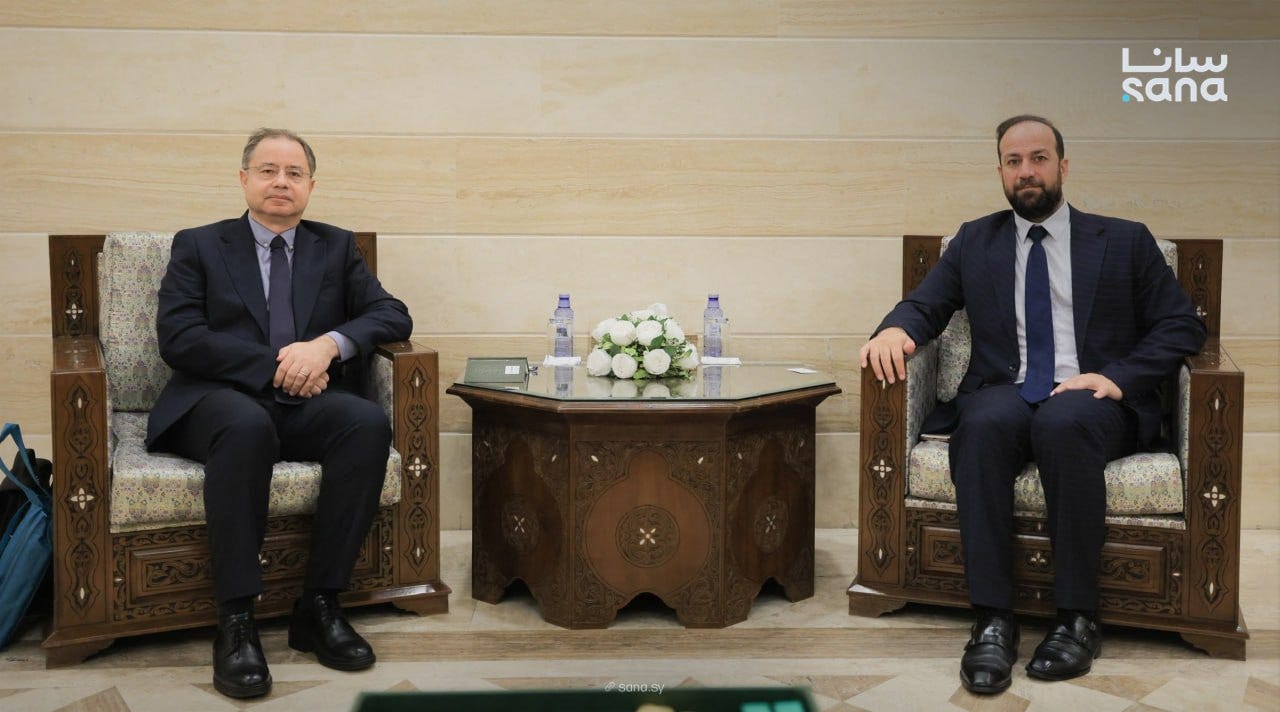
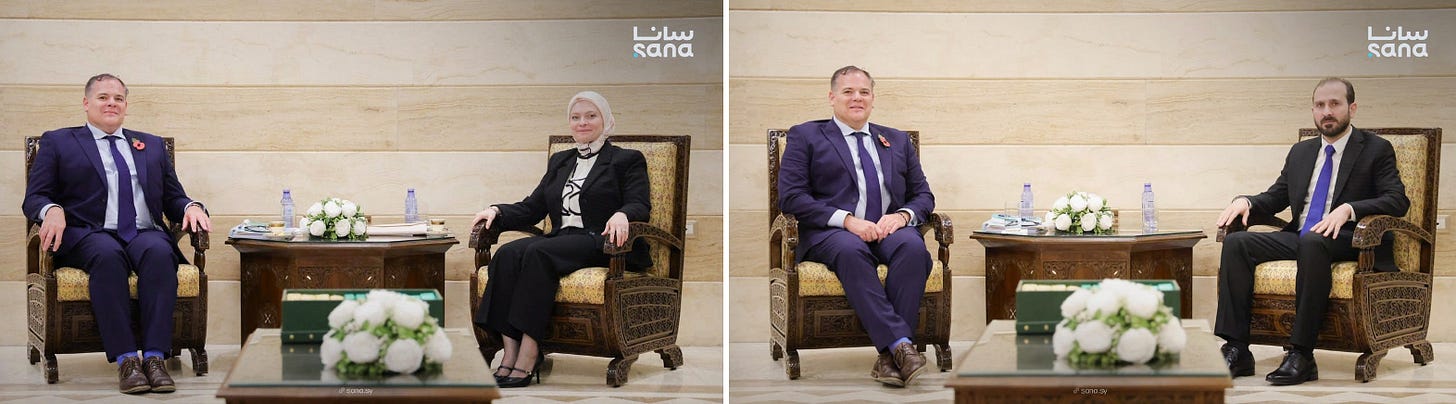
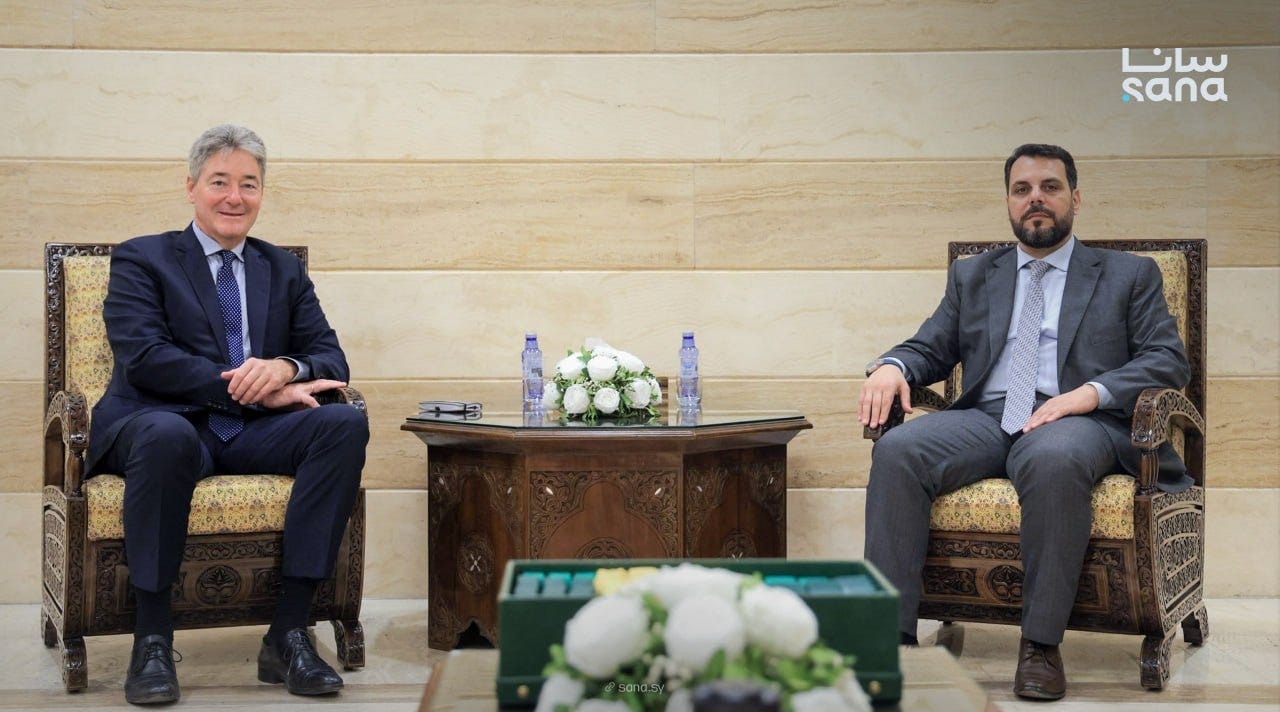
The Foreign Ministry’s Directors of European Affairs (Sally Shobut) and Consular Affairs, Mohammed Yaqoub al-Omar hosted consecutive meetings with UK Special Envoy Barrie Peach on October 28.
Minister of Health Musab al-Ali hosted a meeting with Brazilian Ambassador Eduardo Barbosa on October 28 to discuss cooperation in supporting Syria’s health sector.
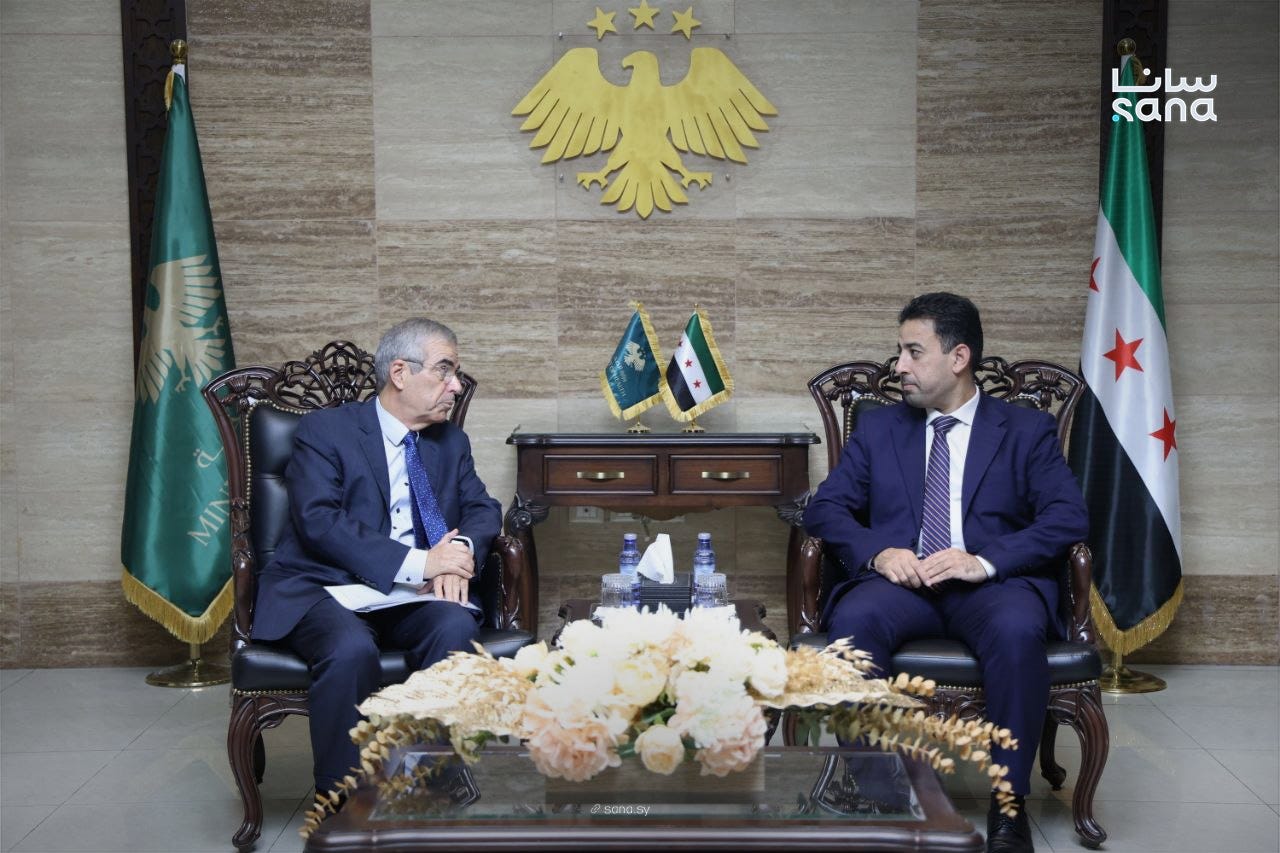
The Ministers of Higher Education (Marwan al-Halabi) and Transport (Yaroub Badr) attended the opening of the inaugural Syrian-German Forum for Cooperation in Higher Education at Damascus University on October 28.
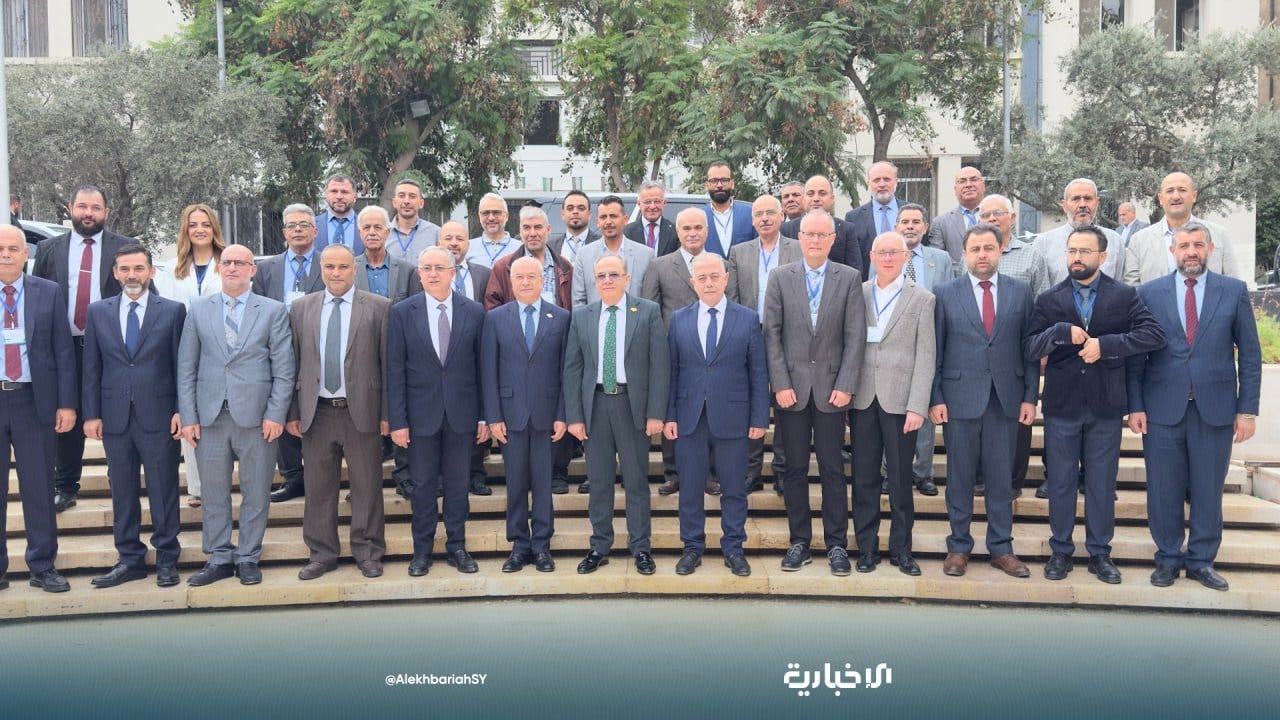
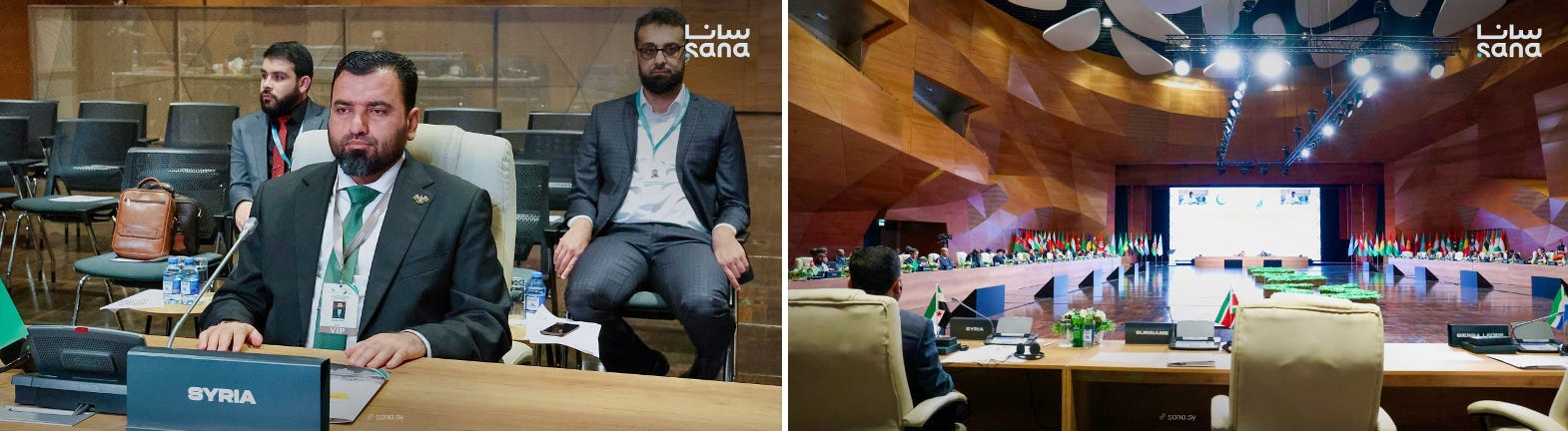
A delegation from the Central Agency for Control and Auditing, led by its president Amer al-Ali, traveled to Baku, Azerbaijan to participate in the 3rd Ministerial meeting of anti-corruption law enforcement agencies in member states of the OIC on October 28.
October 29:
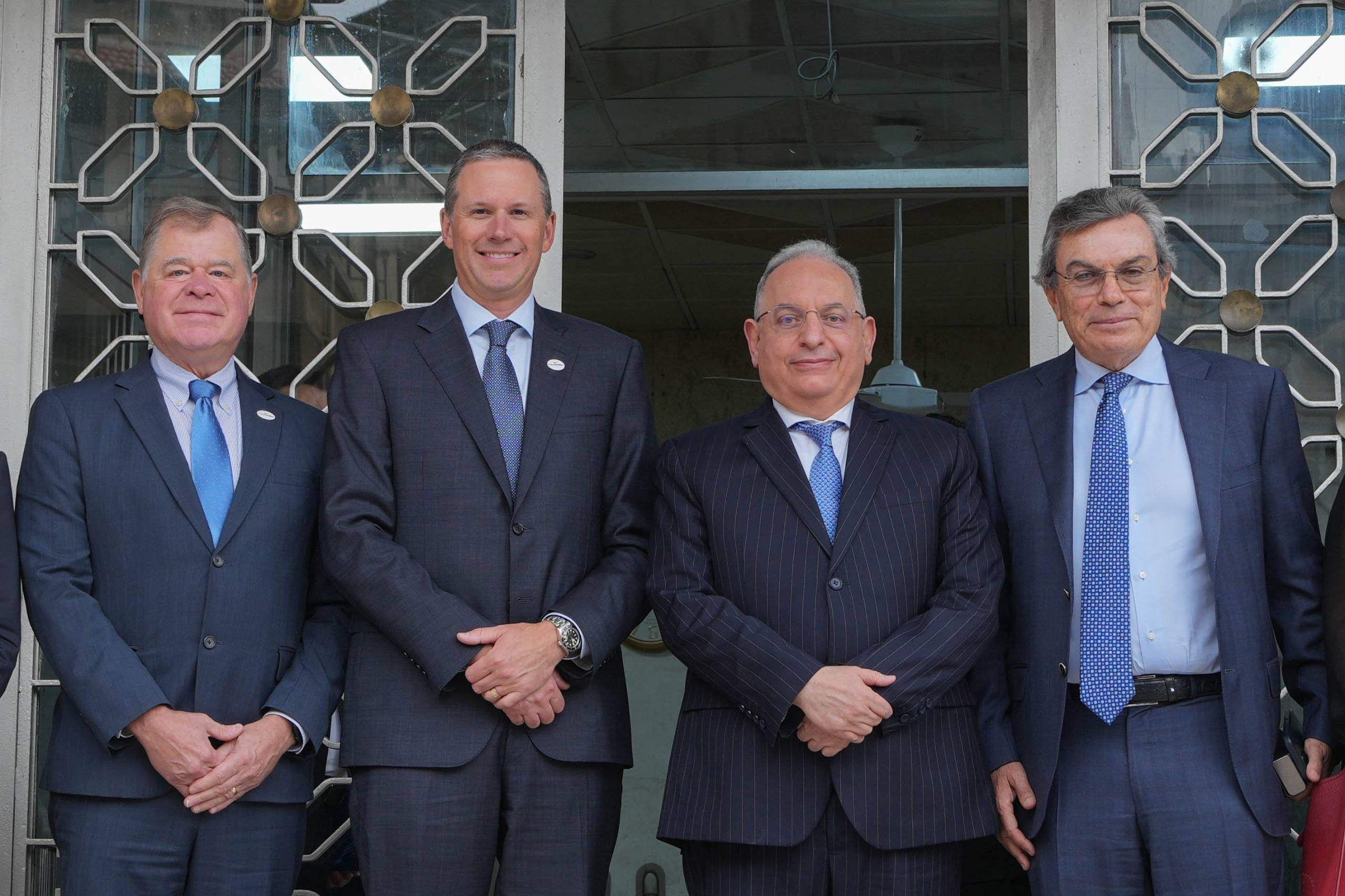
Finance Minister Mohammed Barnieh hosted a meeting with a delegation from U.S. energy company Conoco Phillips and the Chairman of the Board of Directors of Novaterra Energy, Ayman Asfari, on October 29. According to a public readout, Minister Barnieh “affirmed the Ministry of Finance’s willingness to consider providing sovereign guarantees for qualified projects that require them, in accordance with established legal and financial frameworks. The Ministry also pledged to expedite administrative and legal procedures and complete them within standard timeframes, which would enhance investor confidence and contribute to the rapid implementation of projects.”
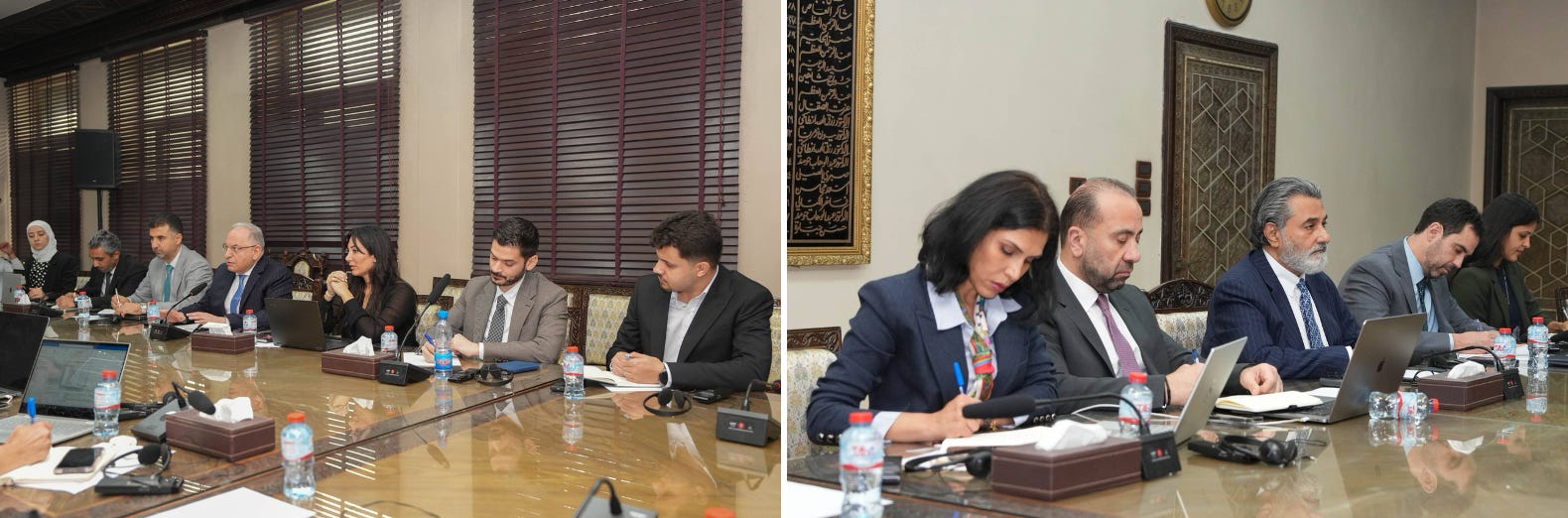
Later that day, Finance Minister Barnieh hosted a meeting with a delegation from the World Bank to discuss “progress made in establishing a Public-Private Partnership (PPP) unit within the Ministry of Finance, the preparation of a list of priority investment projects, including those considered within the state’s investment budget, as well as a discussion of the significant financing needs for reconstruction and the role of the Ministry of Finance in assessing projects and their financial risks.”
The Foreign Ministry’s Senior Advisor on American Affairs, Jihad Maqdissi, hosted a meeting with former Chair of the United States Commission on International Religious Freedom and Co-Chair of the International Religious Freedom Roundtable, Nadine Maenza, on October 29.
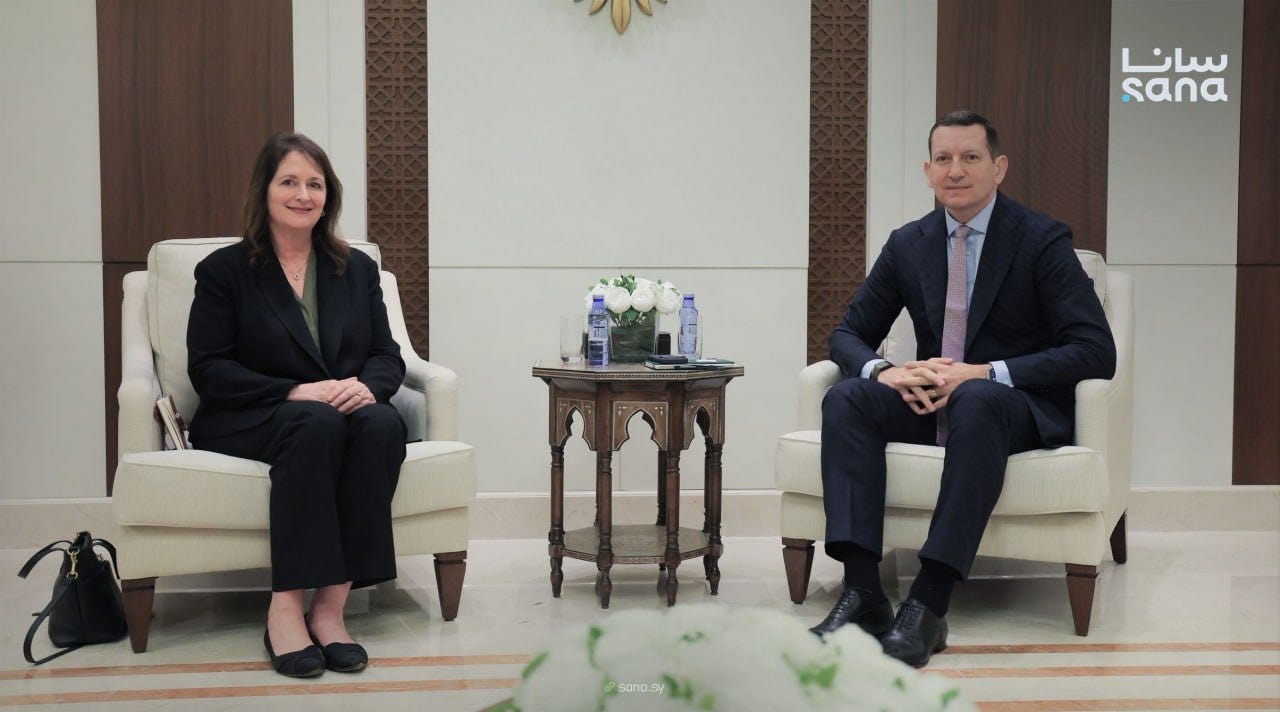
Later that day, Jihad Maqdissi and the Foreign Ministry’s Director of American Affairs, Saad Baroud, hosted a visit by a delegation from U.S.-based Evangelical Churches, during which they discussed interfaith dialogue and promoting coexistence and communication.
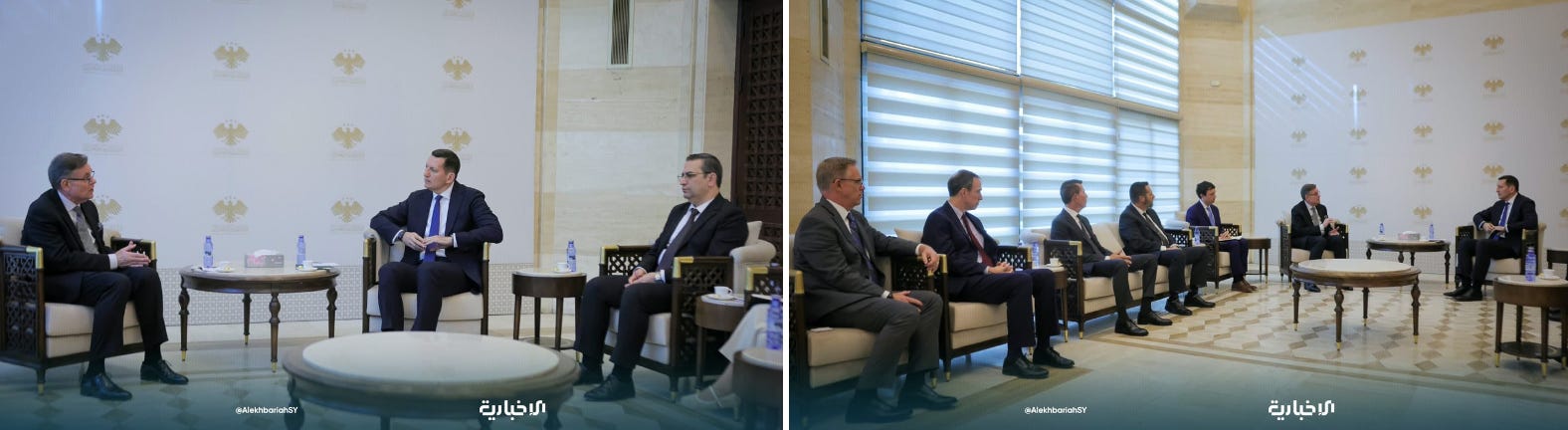
The Foreign Ministry’s Director of International Cooperation, Qutaiba Qadesh, hosted a meeting with UAE Ambassador Hamad Rashid bin Alwan Al Habsi on October 29, during which they discussed bilateral ties, as well as ongoing UAE projects to support the health sector in Raqqa (including rehabilitating and equipping a children’s hospital and a women’s hospital) and in Homs (a project to rehabilitate and expand the al-Naimi Hospital).
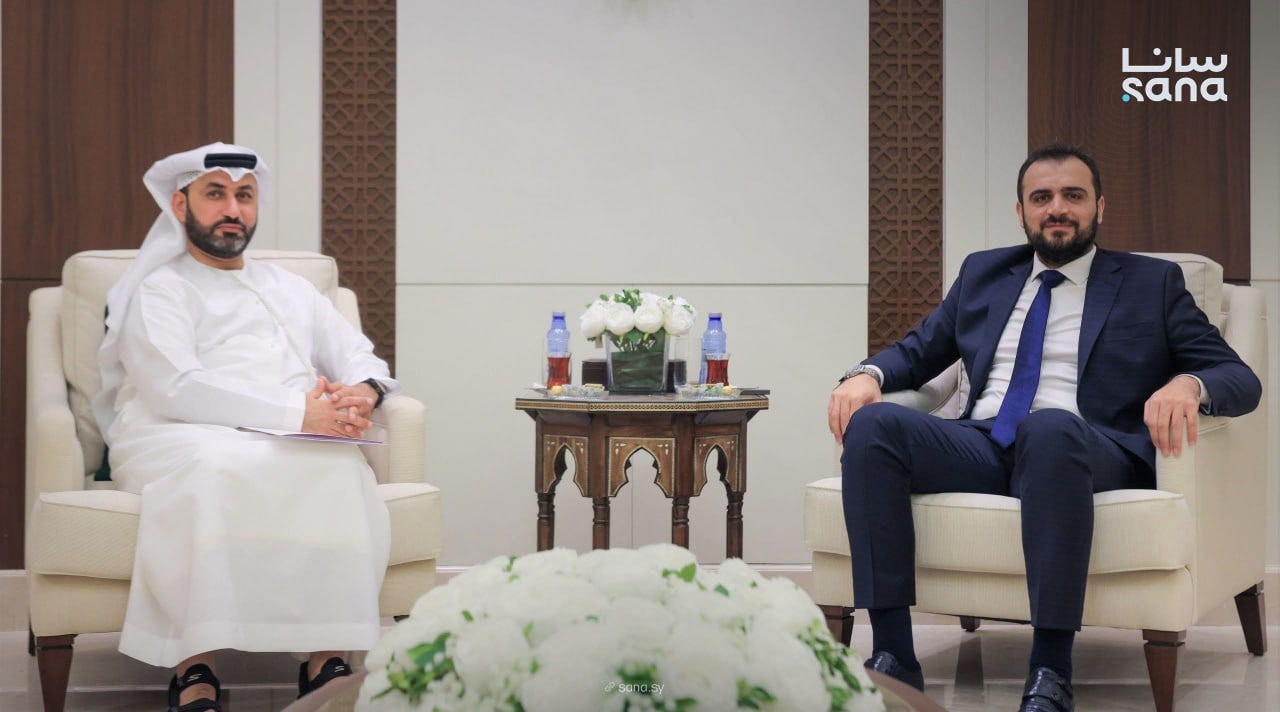
Later that day, Qutaiba Qadesh also hosted a meeting with Dutch Ambassador to Syria Lex Gertz to discuss the Dutch allocation of 100 million euros for humanitarian assistance through UN agencies, in addition to a 15 million euro donation to the newly established World Bank-managed START trust fund.
The Assistant Minister of Energy for Oil Affairs, Ghiath Diab, participated in a virtual call with the Saudi Minister of Energy’s Senior Advisor and General Supervisor of the International Projects Office, Fuad Musa, on October 29 during which they confirmed the continuation of Aramco oil supplies to Syria and coordinating the next delivery in November.
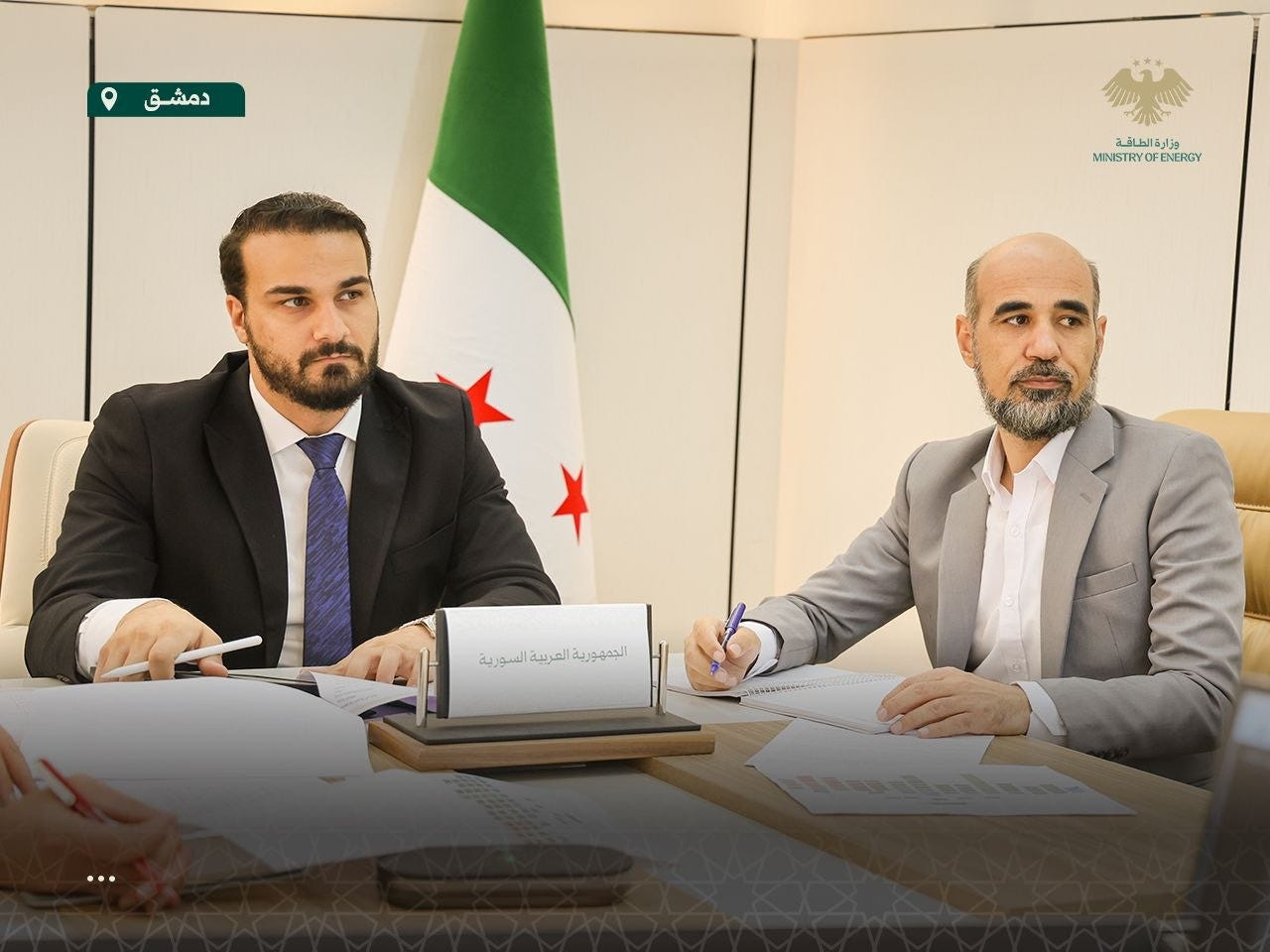
The Foreign Ministry’s Director of European Affairs Sally Shobut hosted a meeting with Cypriot Ambassador Sevag Avedissian on October 20 to discuss bilateral ties and several proposals for cooperation.
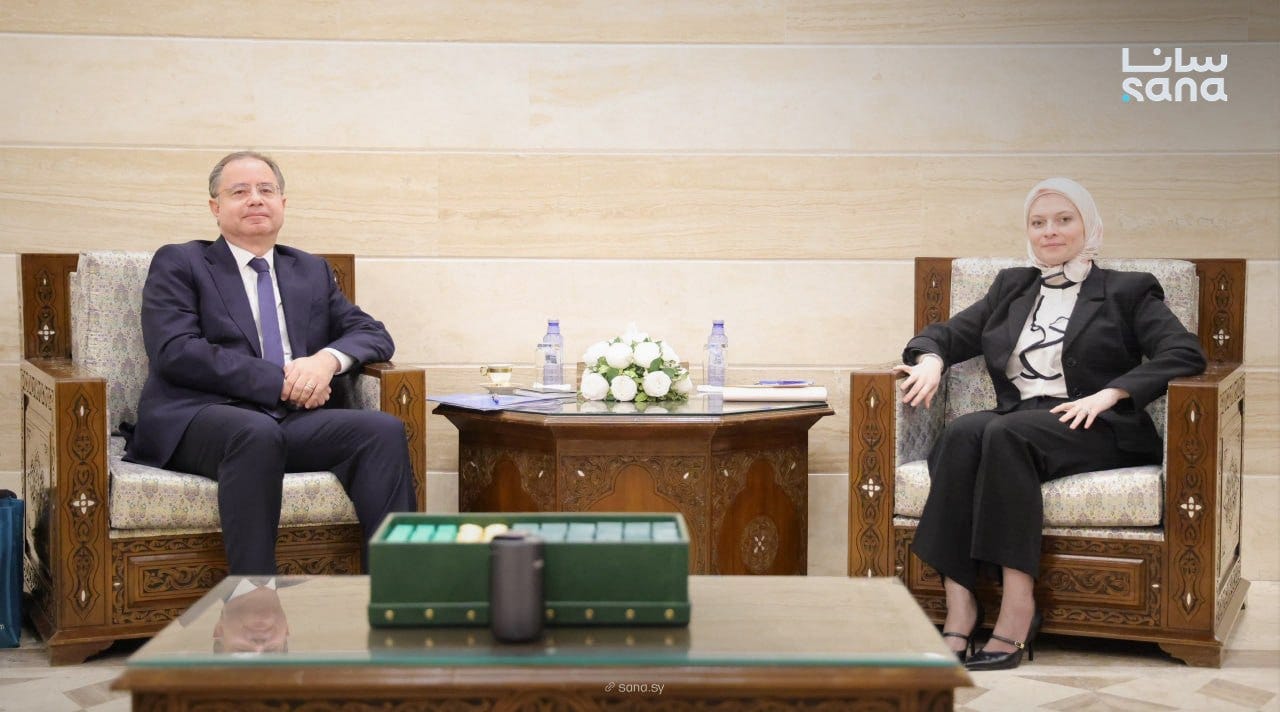
Minister of Social Affairs and Labor Hind Kabwat hosted a meeting with UK Special Envoy Barrie Peach on October 29 to discuss actions to support the vulnerable and the importance of civil society.
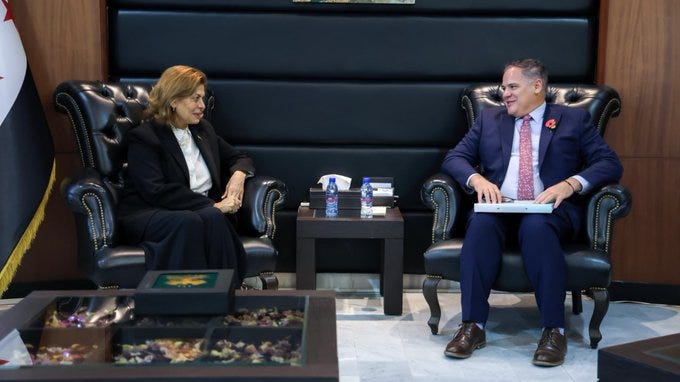
October 30:
Foreign Minister Asaad al-Shaybani traveled to Manama, Bahrain on October 30 to participate in the Manama Dialogue 2026.
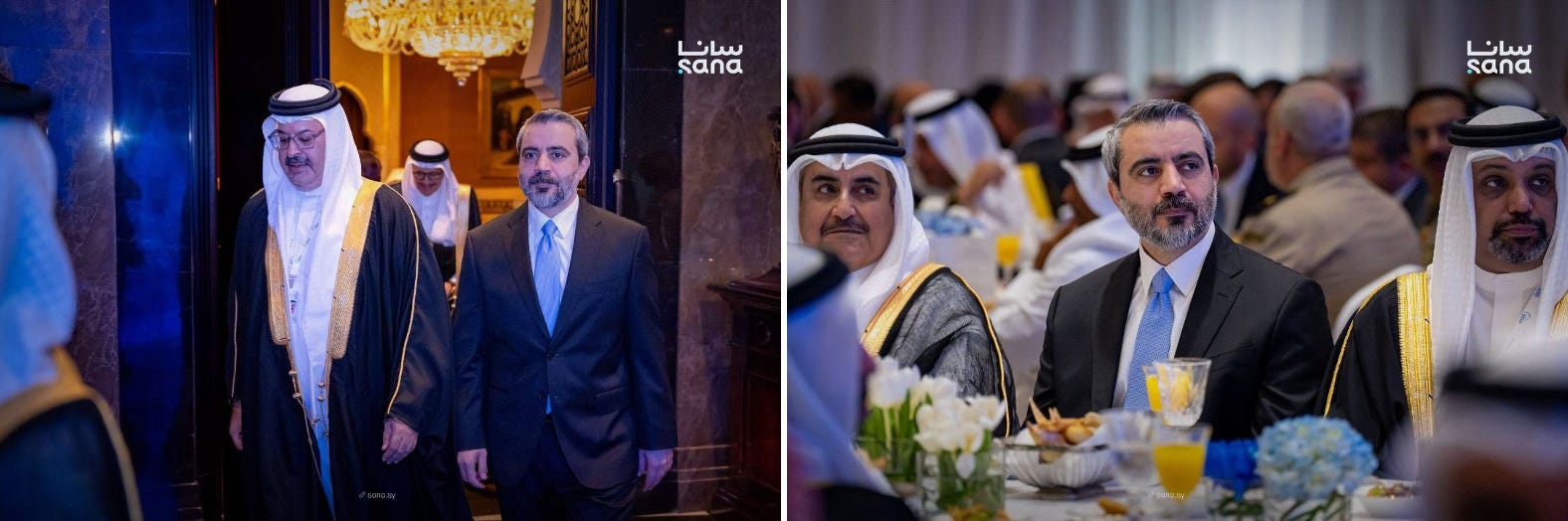
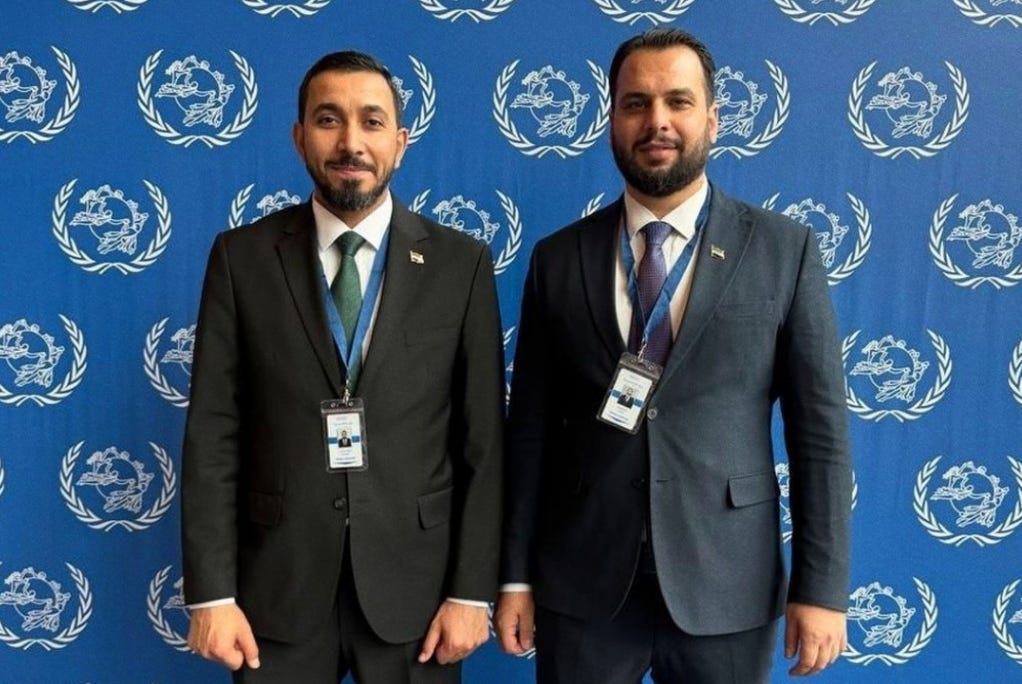
The General Director of Syria’s Postal Institution, Imad Eddin Hamad, traveled to Bern, Switzerland to participate in the board of directors of the Universal Postal Union annual meeting on October 30.
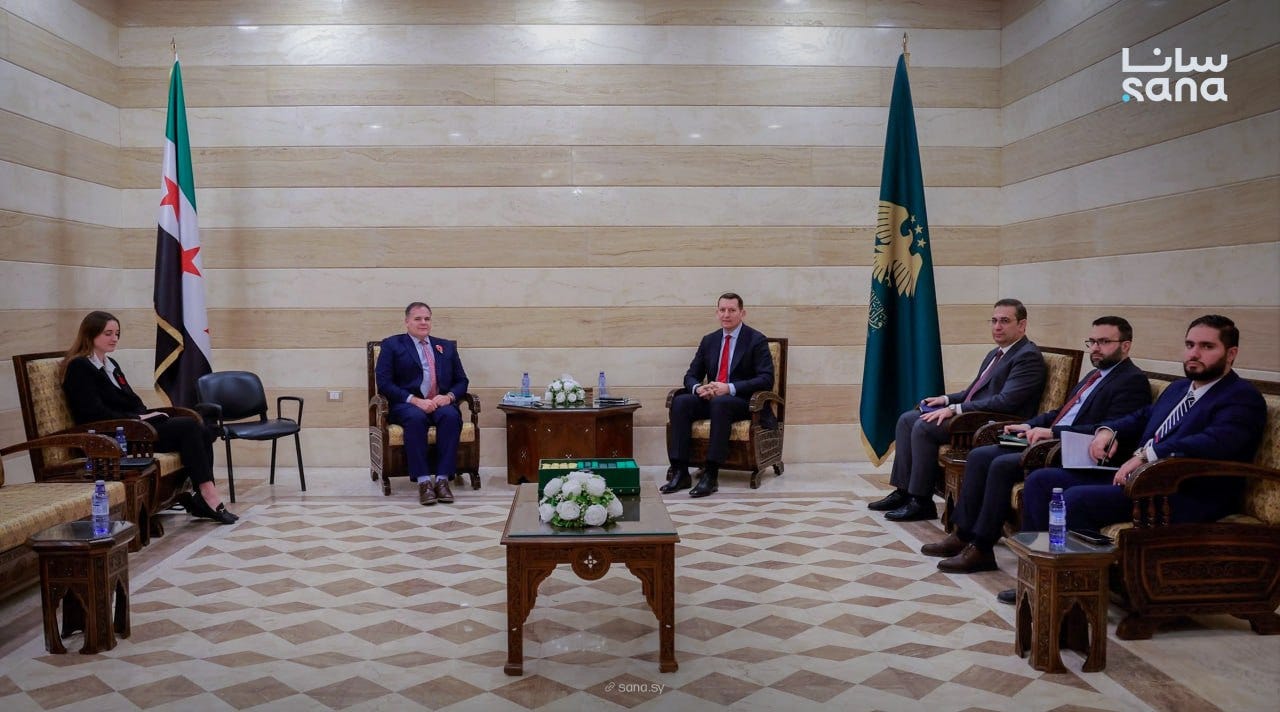
The Foreign Ministry’s Senior Advisor on American Affairs, Jihad al-Makdissi, hosted a meeting with UK Special Envoy Barrie Peach on October 30.
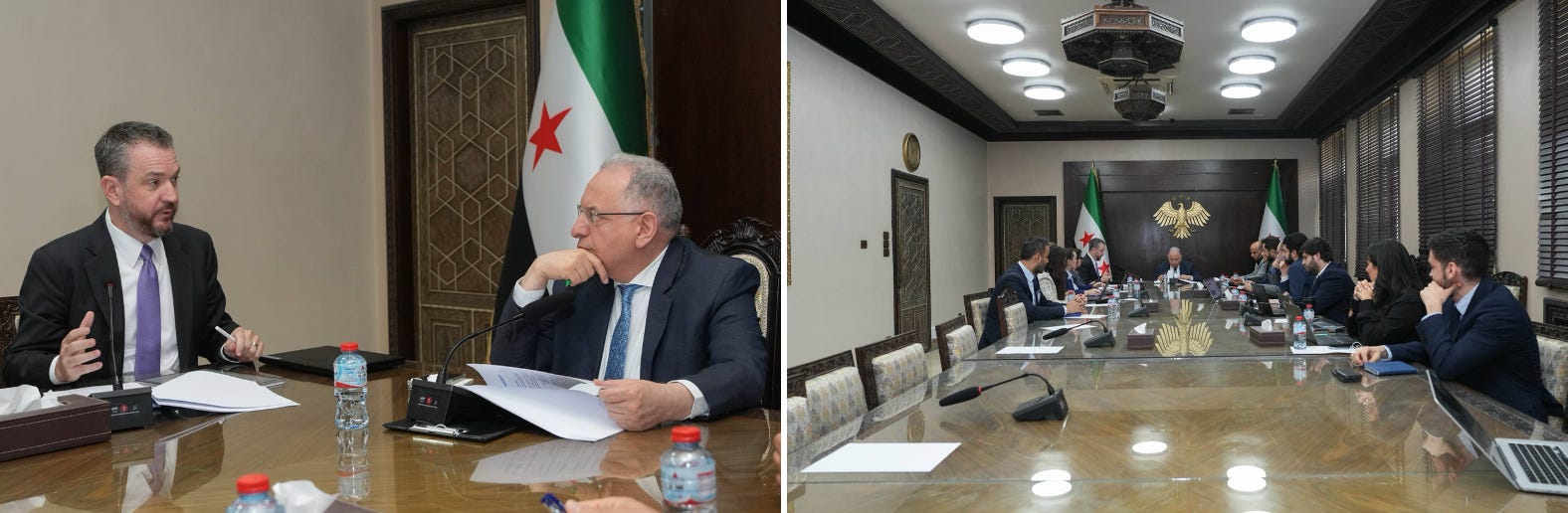
Finance Minister Mohammed Barnieh convened a concluding meeting with the latest IMF mission in Syria to review the results of its work on developing macroeconomic forecasts and the medium-term fiscal framework, and to strengthen the link between fiscal policies and the preparation of the general budget.
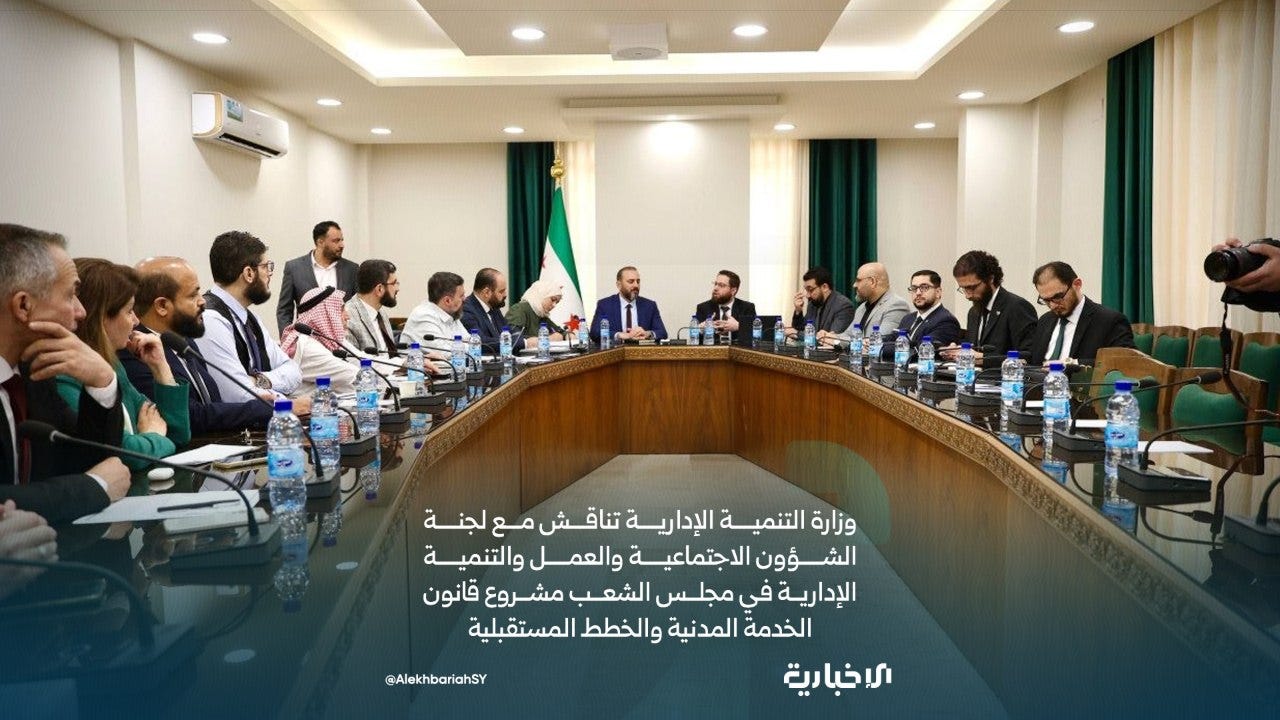
Minister of Administrative Development Mohammed al-Skaf participated in a roundtable discussion with the People’s Assembly committee for Social Affairs, Labor, and Administrative Development on October 30 — during which they discussed the draft Civil Service Law, the Ministry’s strategic plan, and a summary of its achievements.
October 31:
Foreign Minister Asaad al-Shaybani participated in a plenary panel at the Manama Dialogue in Bahrain on October 31, during which he declared that:
“We stand shoulder to shoulder with the Gulf states and Jordan against any aggression, and we strongly condemn the missile attacks and incursions. The stability of the Gulf is a natural extension of Syria’s security… Geography is a given, and integration is a choice. We have chosen to make our lands a bridge for prosperity and the exchange of interests, and to stand as a strong barrier against Syria becoming a platform for threatening our neighbors.”
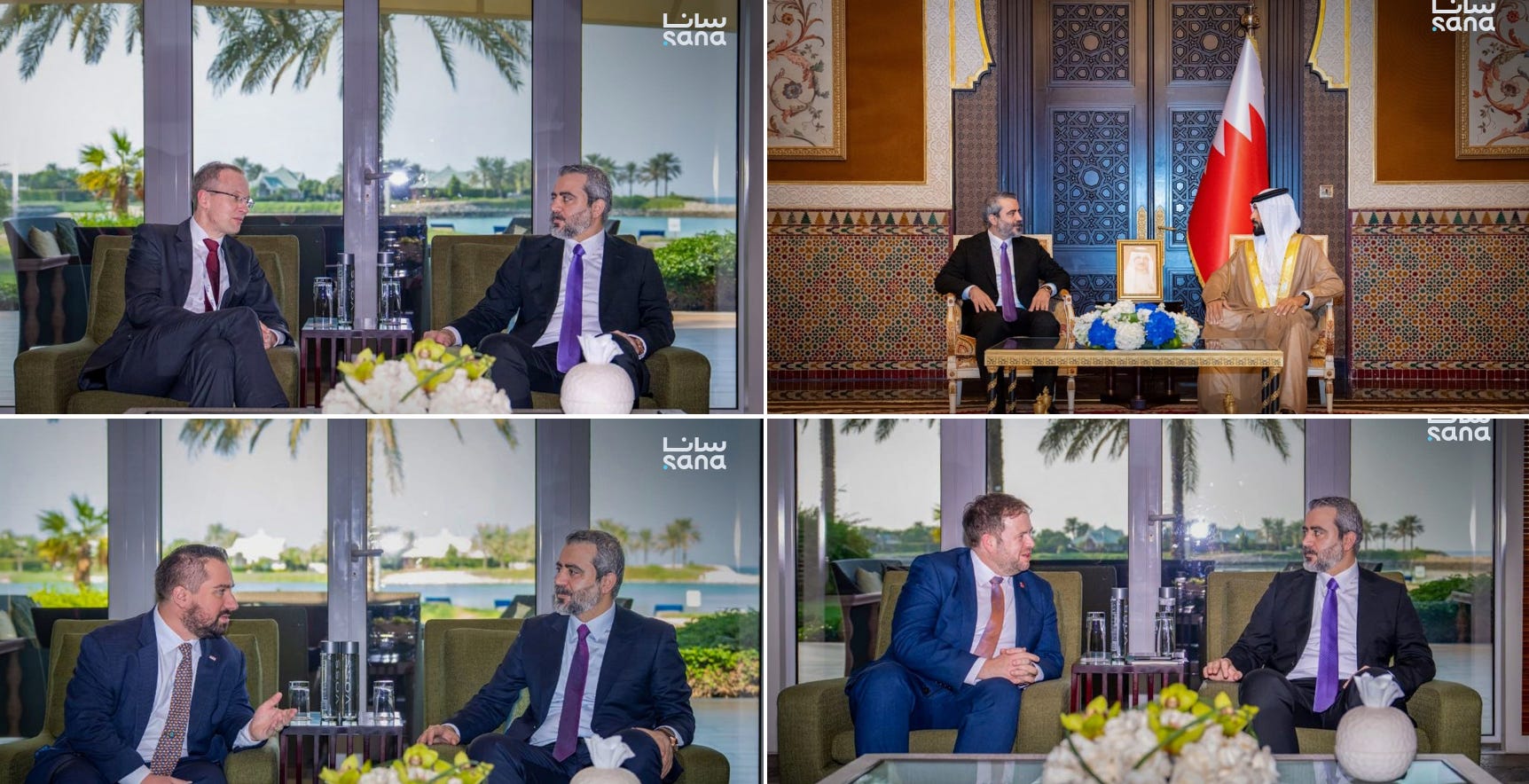
Later that day, Foreign Minister Shaybani met with the U.S. Deputy Assistant Secretary of Defense for the Near East and Central Asia, Michael P. DiMino; Bahraini Royal Guard Commander Sheikh Nasser bin Hamad Al Khalifa; German Deputy National Security Adviser Alexander Eberl; and British Minister of State for the Middle East Stephen Doughty.
An additional meeting was also held with Airbus; Regional Vice President for Business Development, Thierry Clotet.

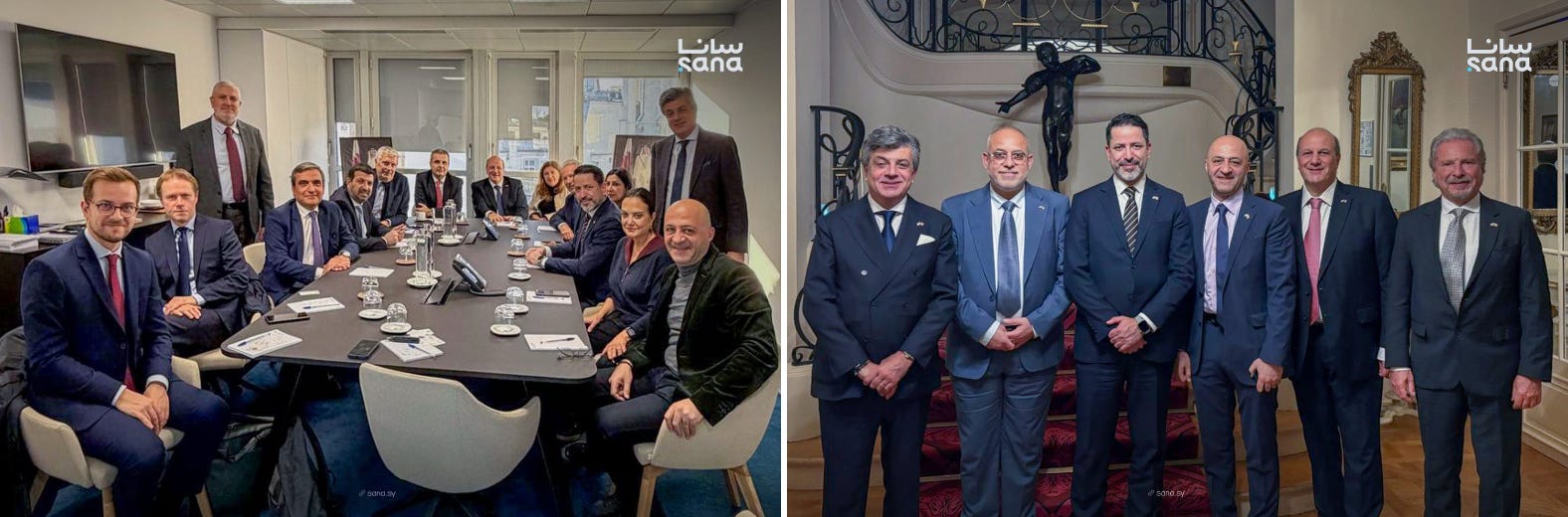
Central Bank Governor Safwat Raslan traveled to Paris, France on October 31 and participated in meetings with Bank Al Khaliji France S.A, First Abu Dhabi Bank (FAB), Banque de France and Fransabank regarding restoring banking relations and expanding corresponding banking networks.
Later that day, additional meetings were held with the French Financial Intelligence Unit and the French-Syrian Business Council.
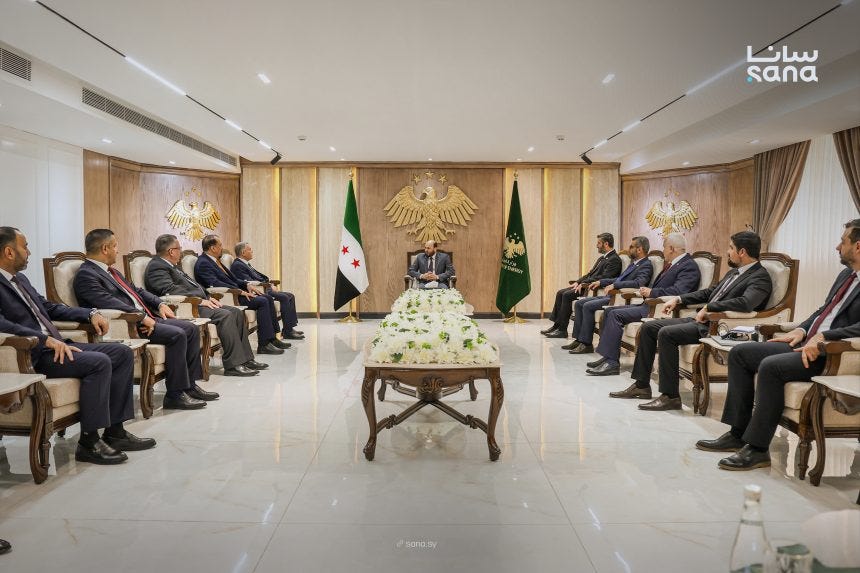
Minister of Energy Mohammed al-Bashir hosted a meeting with a a delegation from the Iraqi Ministry of Water Resources, led by the Ministry’s Technical Deputy, Hussein Abdul-Amir Bakkah on October 31, during which they focused on water-related cooperation and coordination in water resource management.
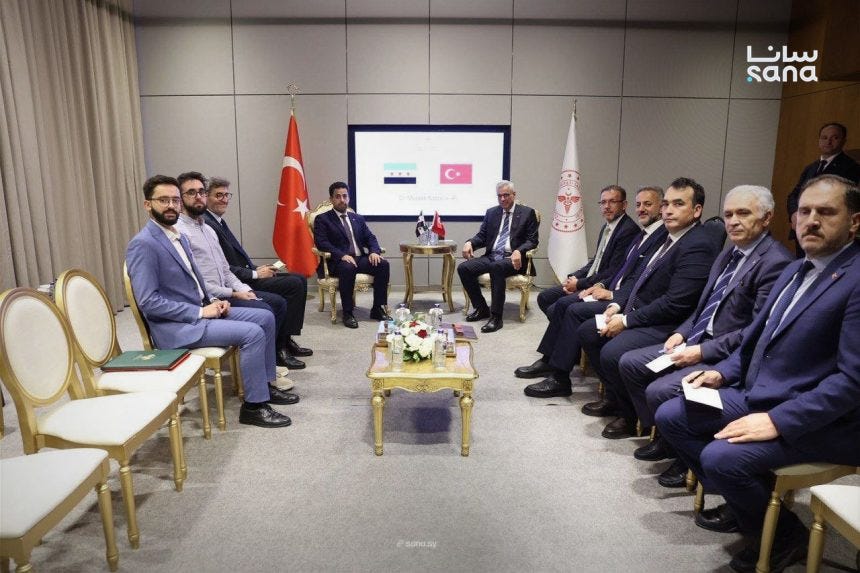
Health Minister Musab al-Ali traveled to Istanbul, Turkey on October 31 to participate in the 12th Turkish Medical Congress and to meet with his Turkish counterpart Kemal Memişoğlu.
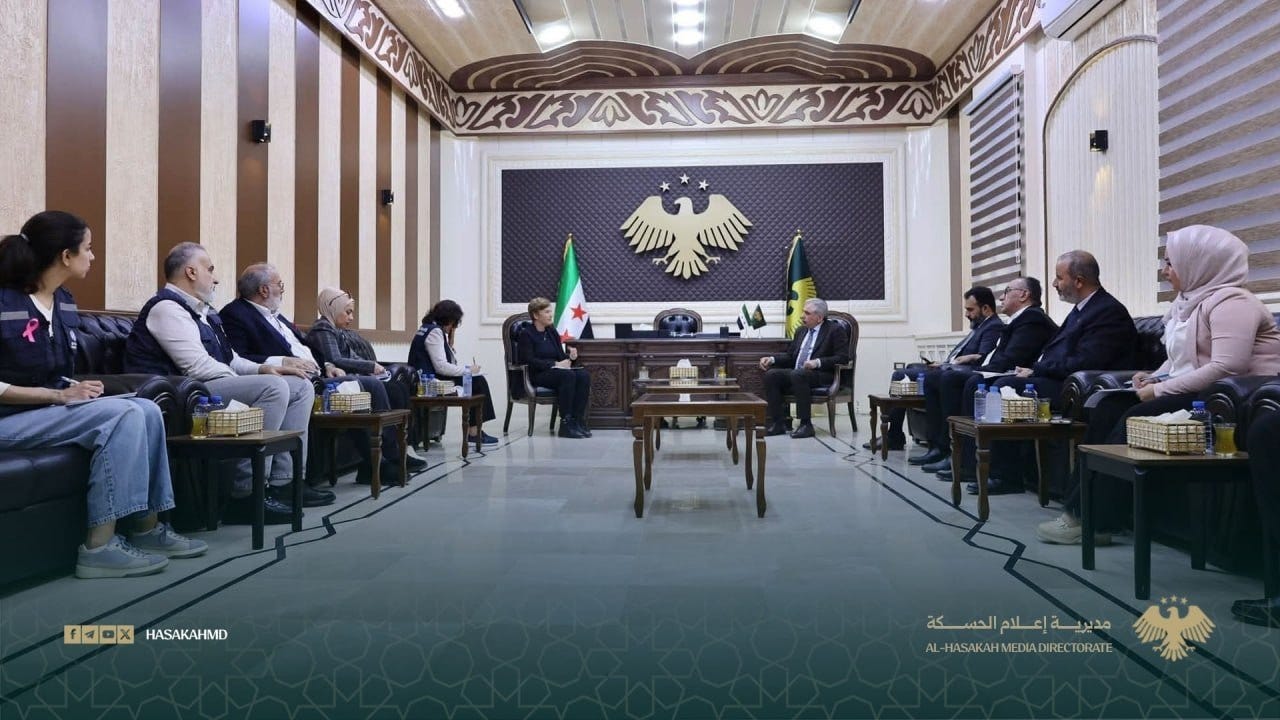
Deputy Governor of Hasakeh Ahmed al-Hilali and Deputy Commander of Internal Security Mahmoud Khalil hosted a meeting with Sheikh Manea al-Jarba of the Shammar tribe on October 31 to discuss the state of local civil peace and local services.
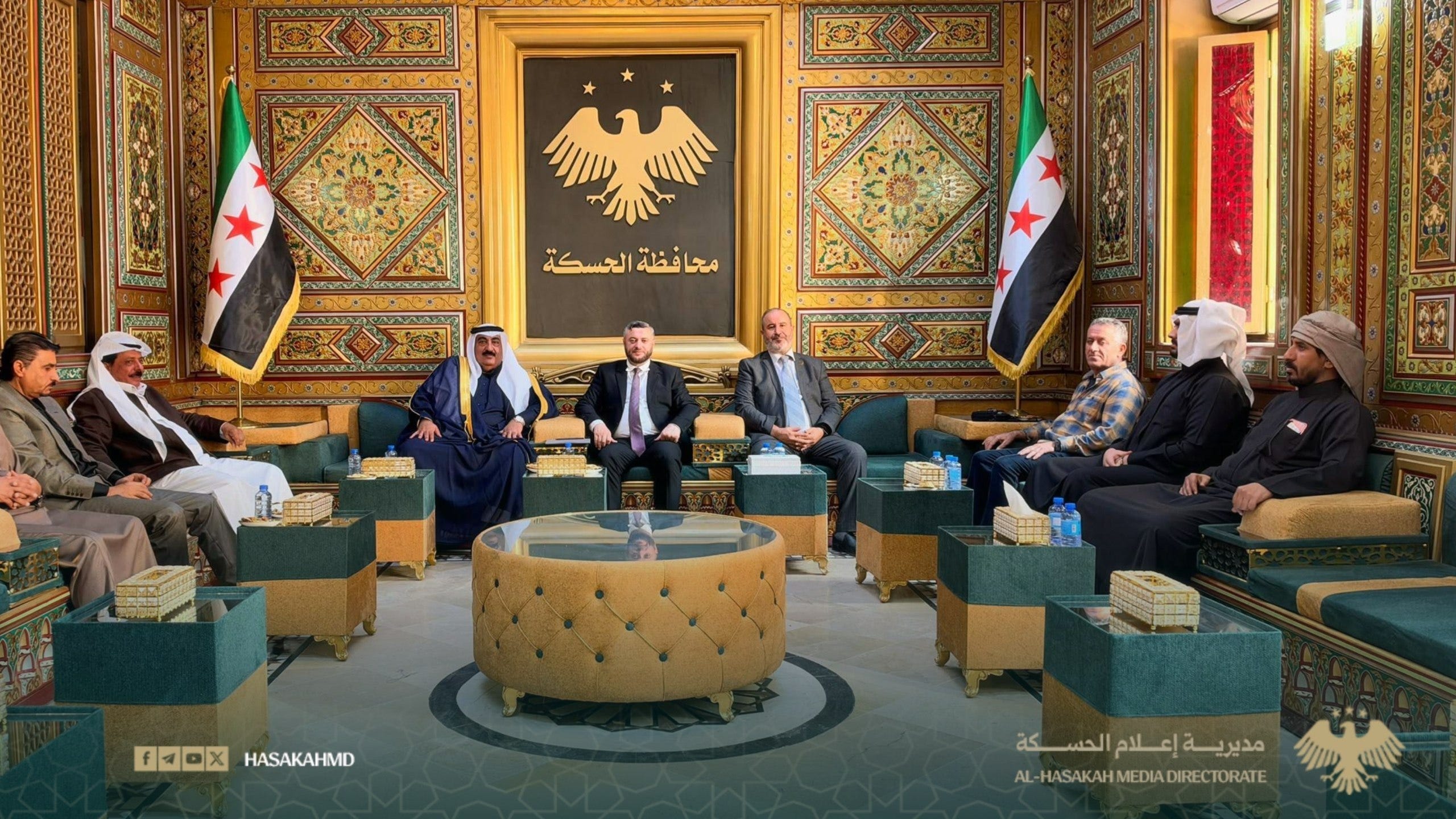
Later that day, Deputy Governor of Hasakeh Ahmed al-Hilali and Deputy Commander of Internal Security Mahmoud Khalil also met with Sheikh Muhammad Al-Hilu of the Adwan tribe.
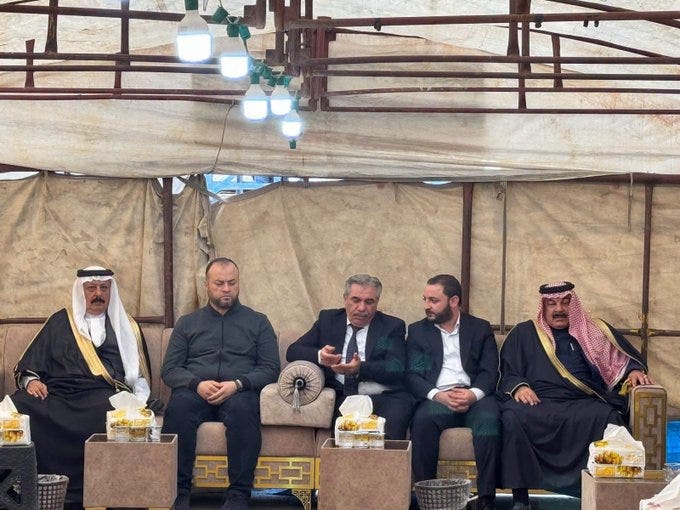
November 1:
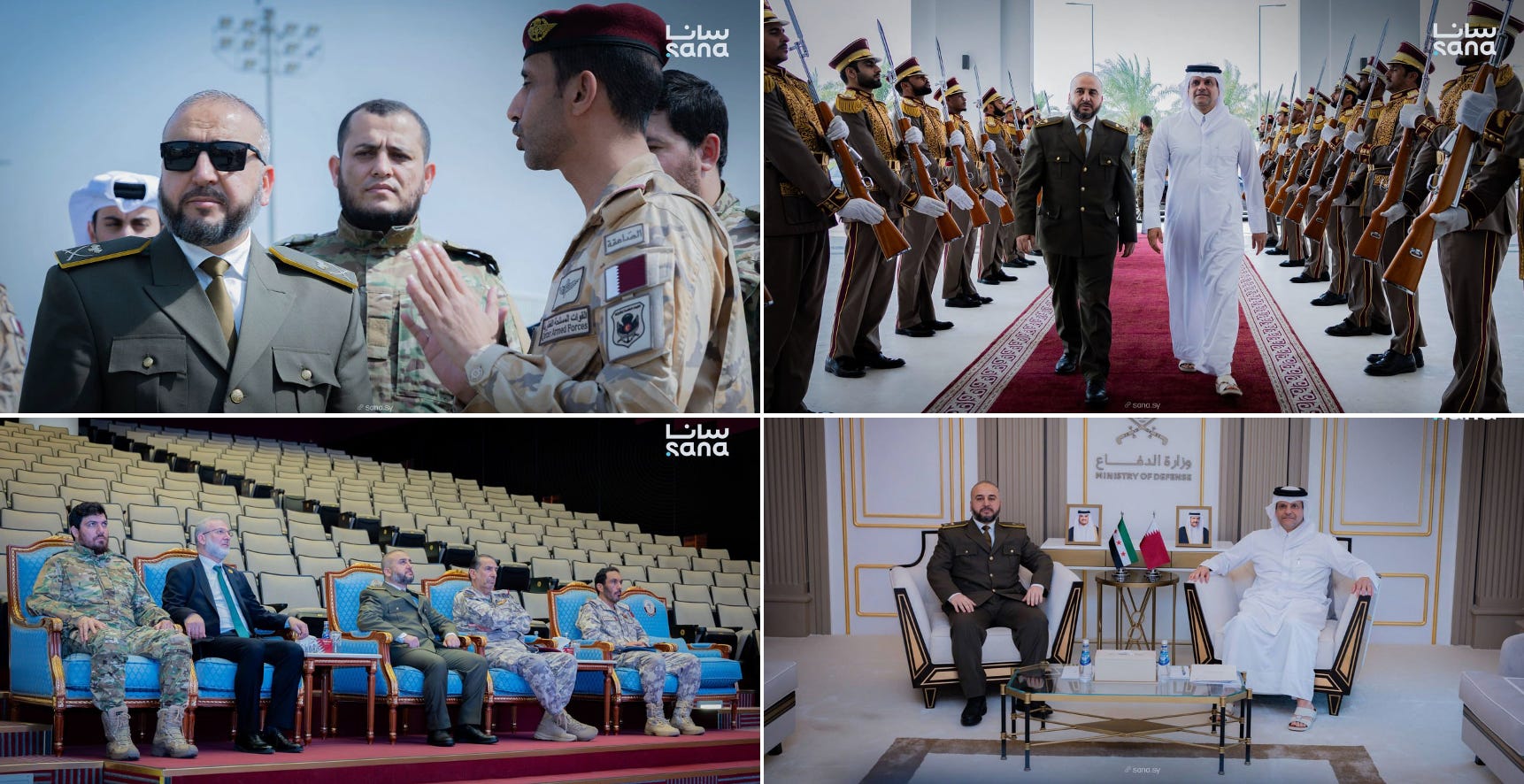
Minister of Defense Murhaf Abu Qasra traveled to Doha, Qatar on November 1 and met with his Qatari counterpart Deputy Prime Minister and Minister of State for Defense Affairs, Sheikh Saud bin Abdulrahman al-Thani.
Later that day, Defense Minister Abu Qasra visited the Tamim bin Hamad University for Military and Technology Sciences, which had been established earlier in 2026; as well as headquarters of Qatar’s Joint Special Forces Command.
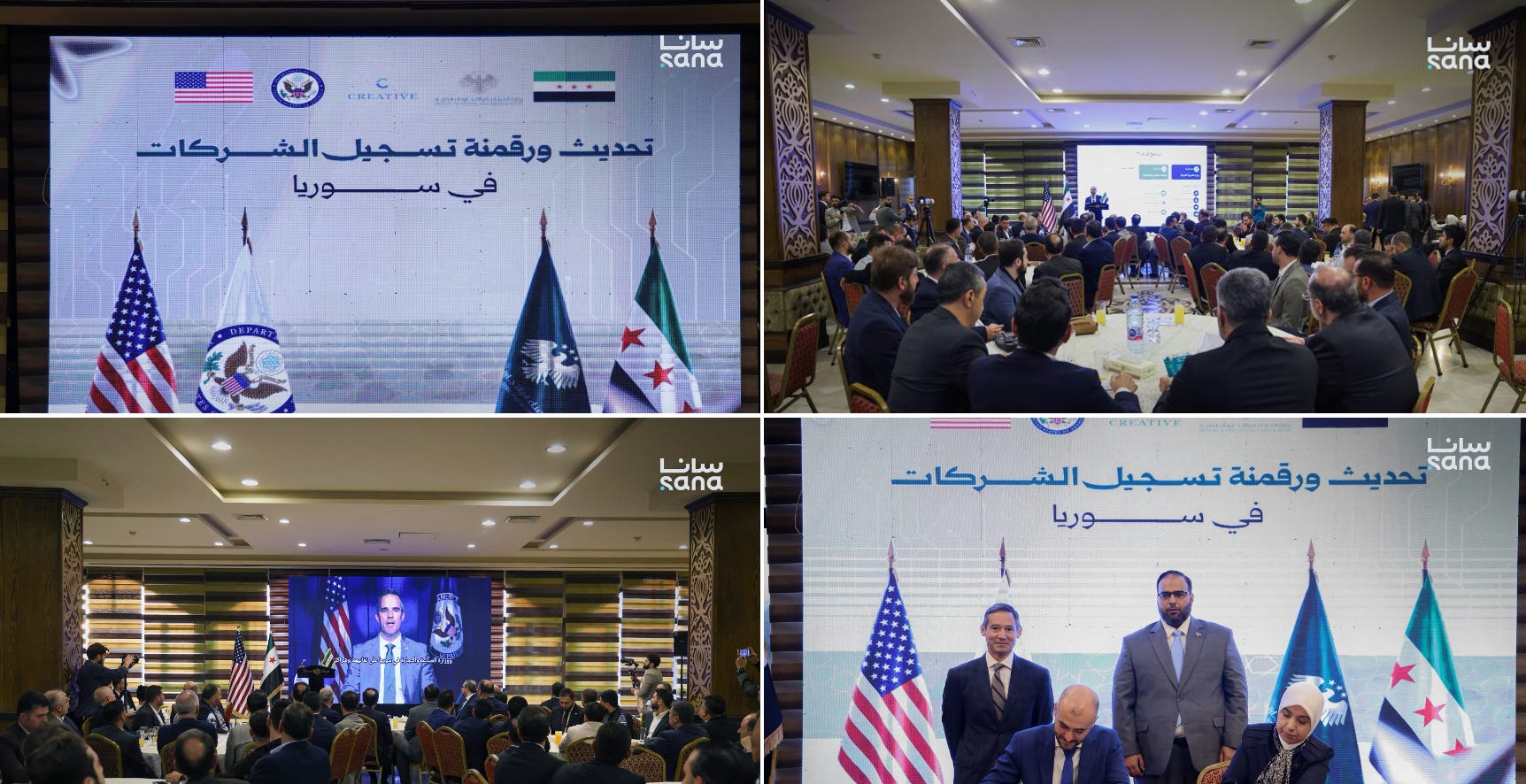
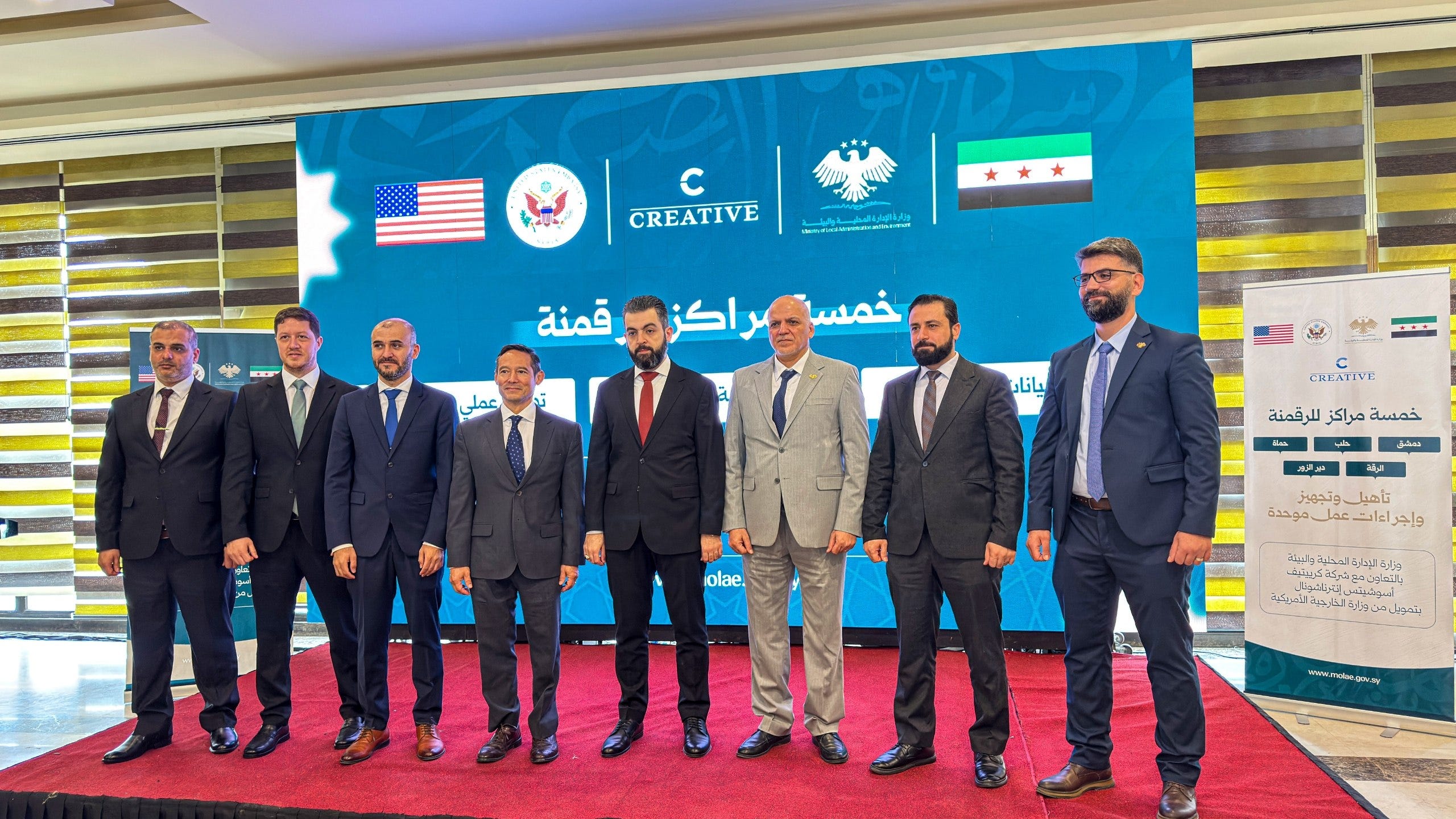
The Foreign Ministry and Ministry of Industry and Internal Trade co-hosted a conference at Damascus’ Dama Rose Hotel on November 1 to launch a new project to modernize and digitize company registration nationwide — an initiative between the U.S. Department of State and the Ministry of Internal Trade, in collaboration with Creative Associates International.
Minister of Social Affairs and Labor Hind Kabawat hosted a meeting with Saudi Ambassador Ghazi bin Rafeh Al-Anzi on November 1 during which they discussed cooperation in humanitarian aid and development, as well as programs for rehabilitation and recovery from drug addiction.
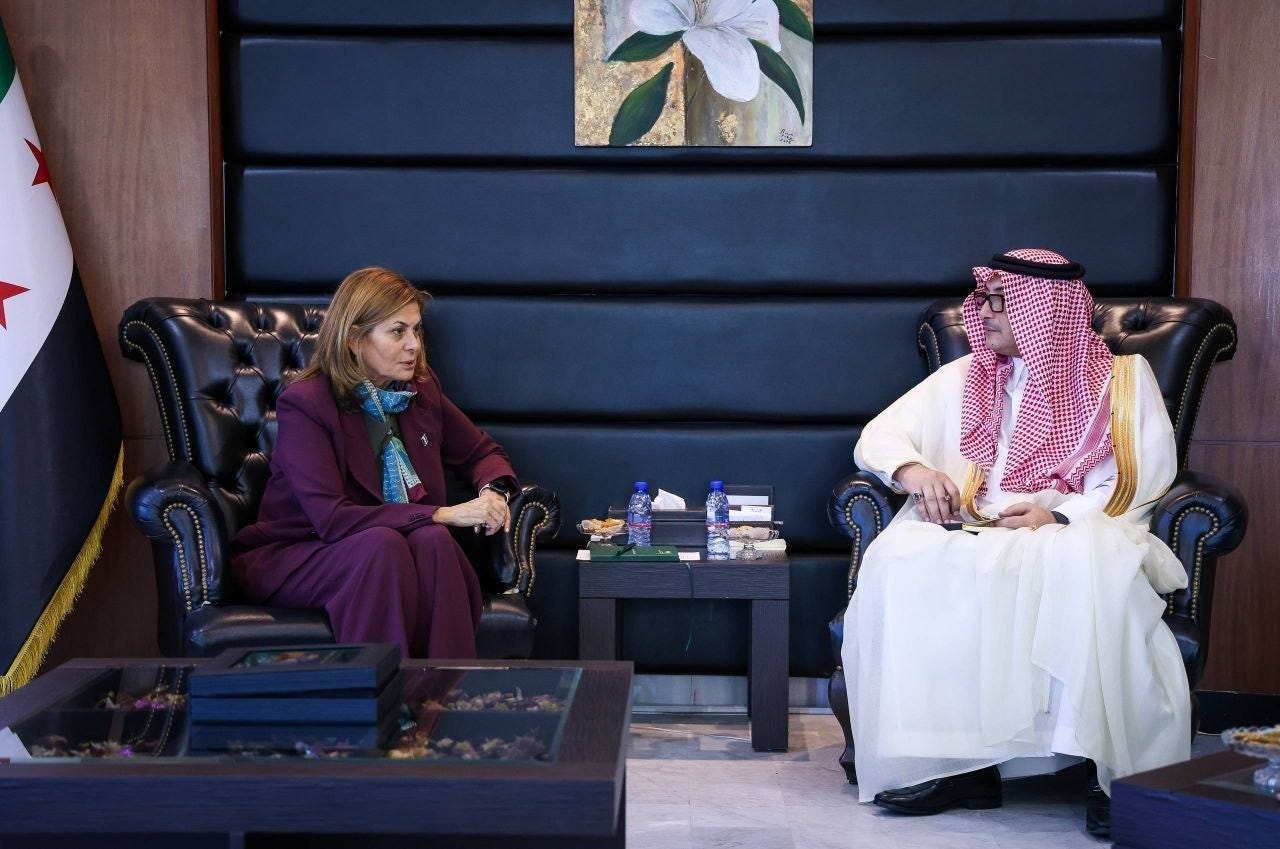
The Foreign Ministry’s Advisor on Arab Affairs, Mohammed Taha al-Ahmed, hosted a meeting with EU Ambassador Michael Ohnmacht on November 1.
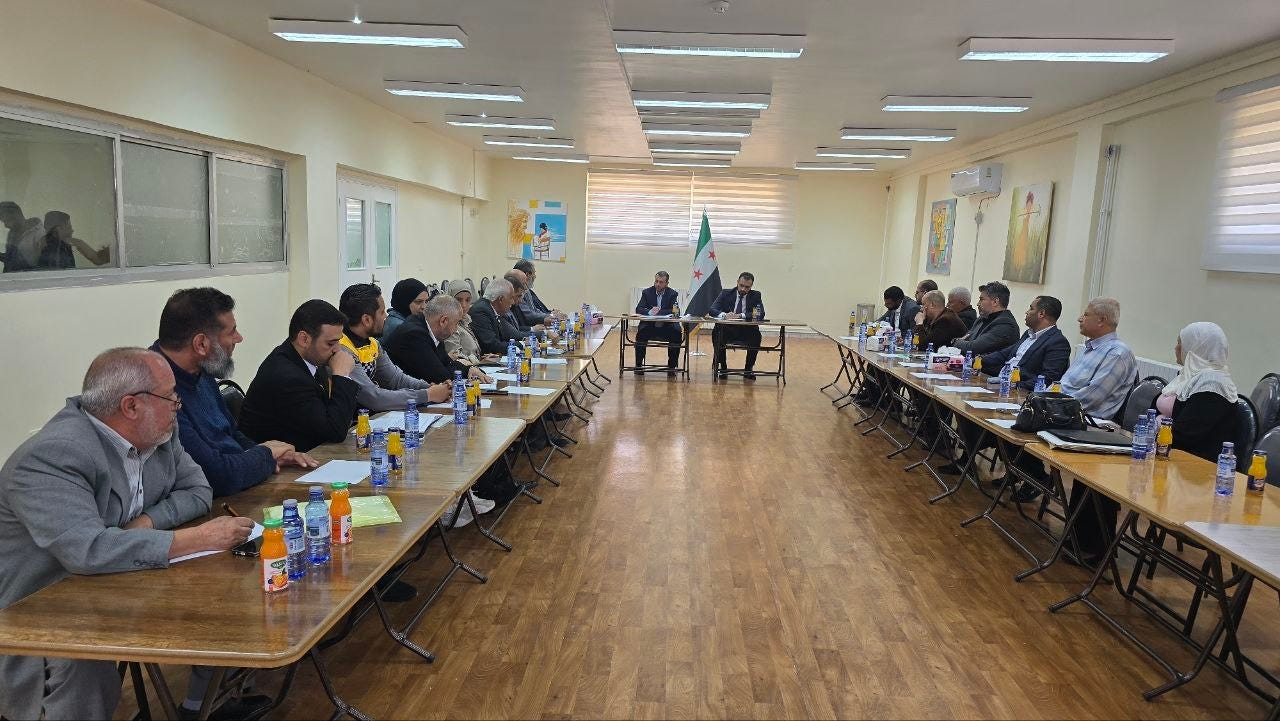
The Foreign Ministry’s Director of International Cooperation, Qutaiba Qadesh, traveled to Quneitra on November 1 and met with officials from across the provincial government and NGOs to discuss the state of conditions in the region and their prevailing needs.
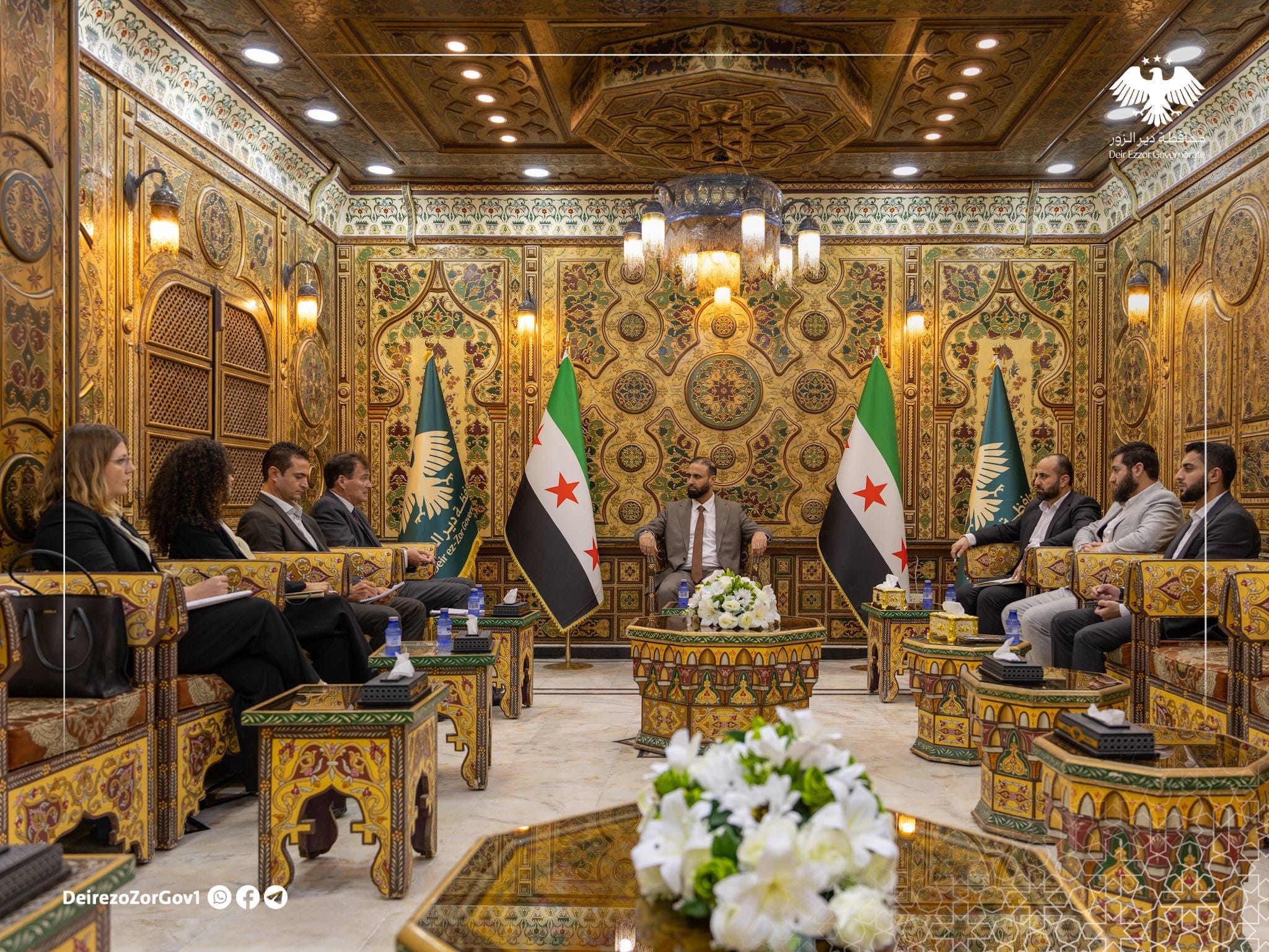
Governor of Deir ez Zour Ziyad al-Ayyash hosted a visit by a delegation from the Swiss Foreign Ministry on November 1, led by Director of the Human Rights and Peacebuilding Department, Jonas Ghait, during which they discussed ongoing peacebuilding and social cohesion projects in the region.
Deputy Governor of Hasakeh Ahmed al-Hilali hosted a delegation from the WHO, led by country representative Caroline Clarenval on November 1.
November 2:
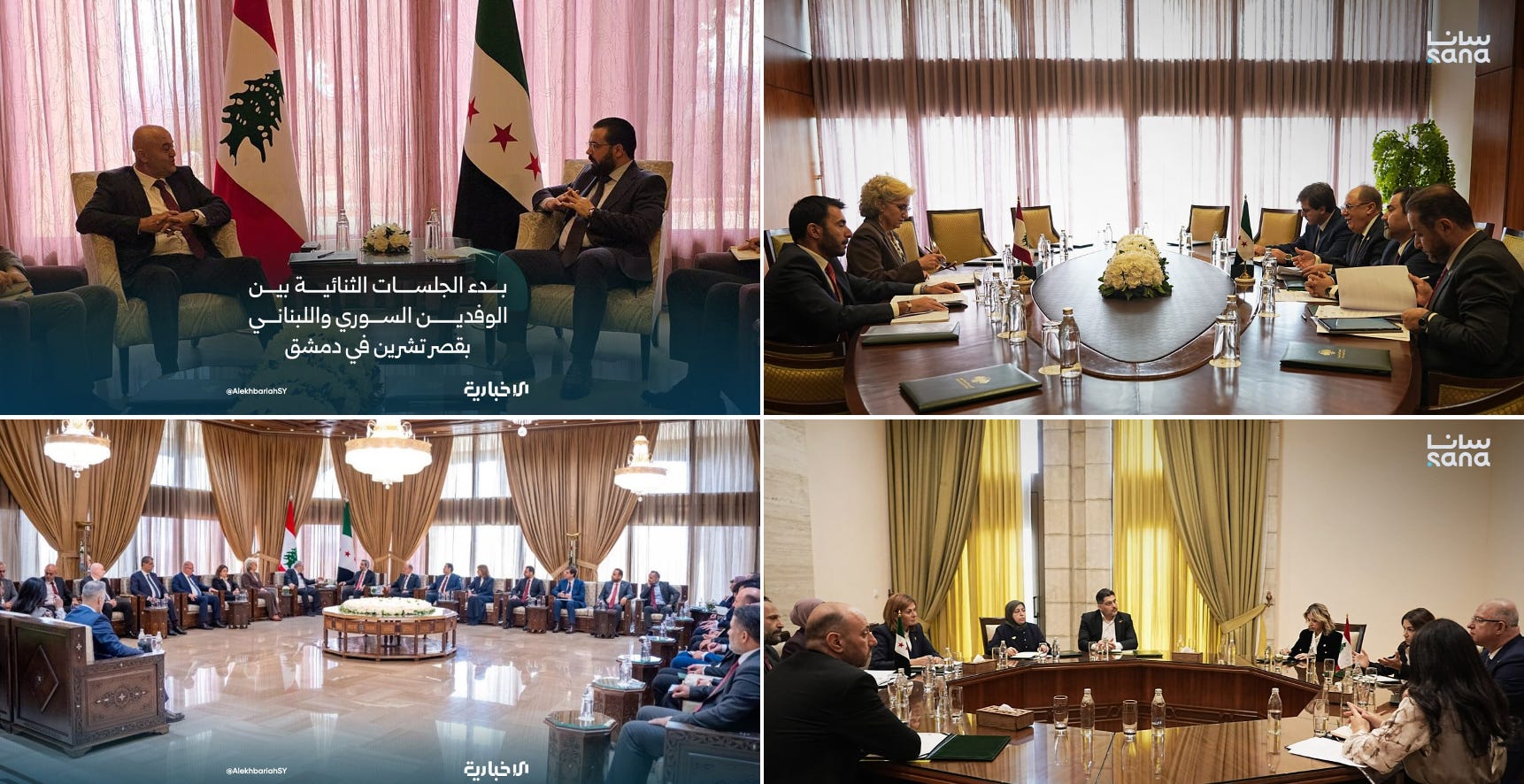
Foreign Minister Asaad al-Shaybani hosted a visit by a Lebanese delegation led by Deputy Prime Minister Tarek Mitri at the Tishreen Palace on November 2 for talks that also included each country’s Ministers of Education, Higher Education and Social Affairs and Labor.
Following a meeting with the full delegations, delegates met separately to focus on their respective portfolios.
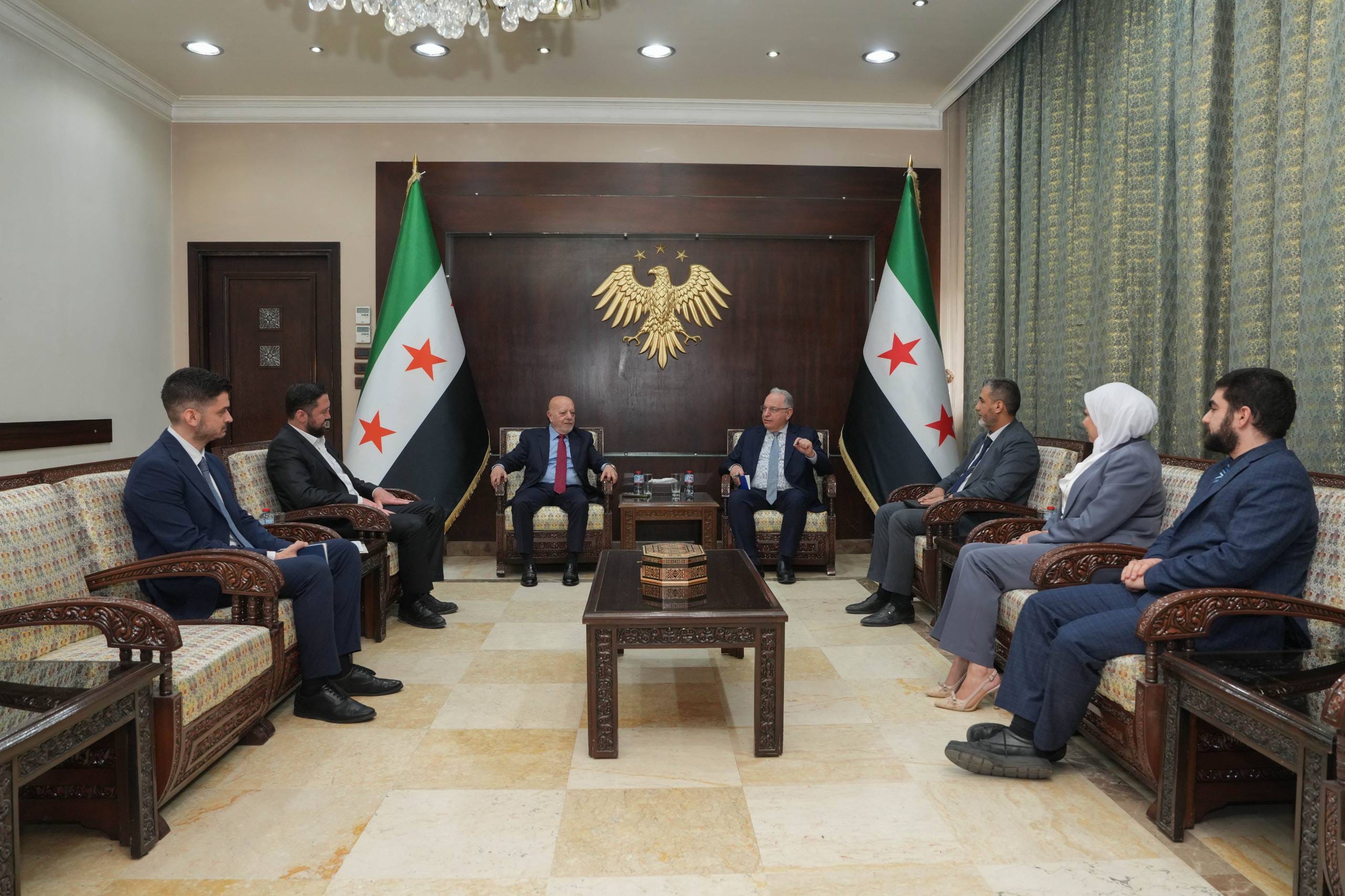
Minister of Finance Mohammed Barnieh hosted a meeting with Minister of Economy Nidal al-Shaar on November 2 to discuss the 2027 budget and planned support for the financing of small and medium-sized enterprises.
November 3:
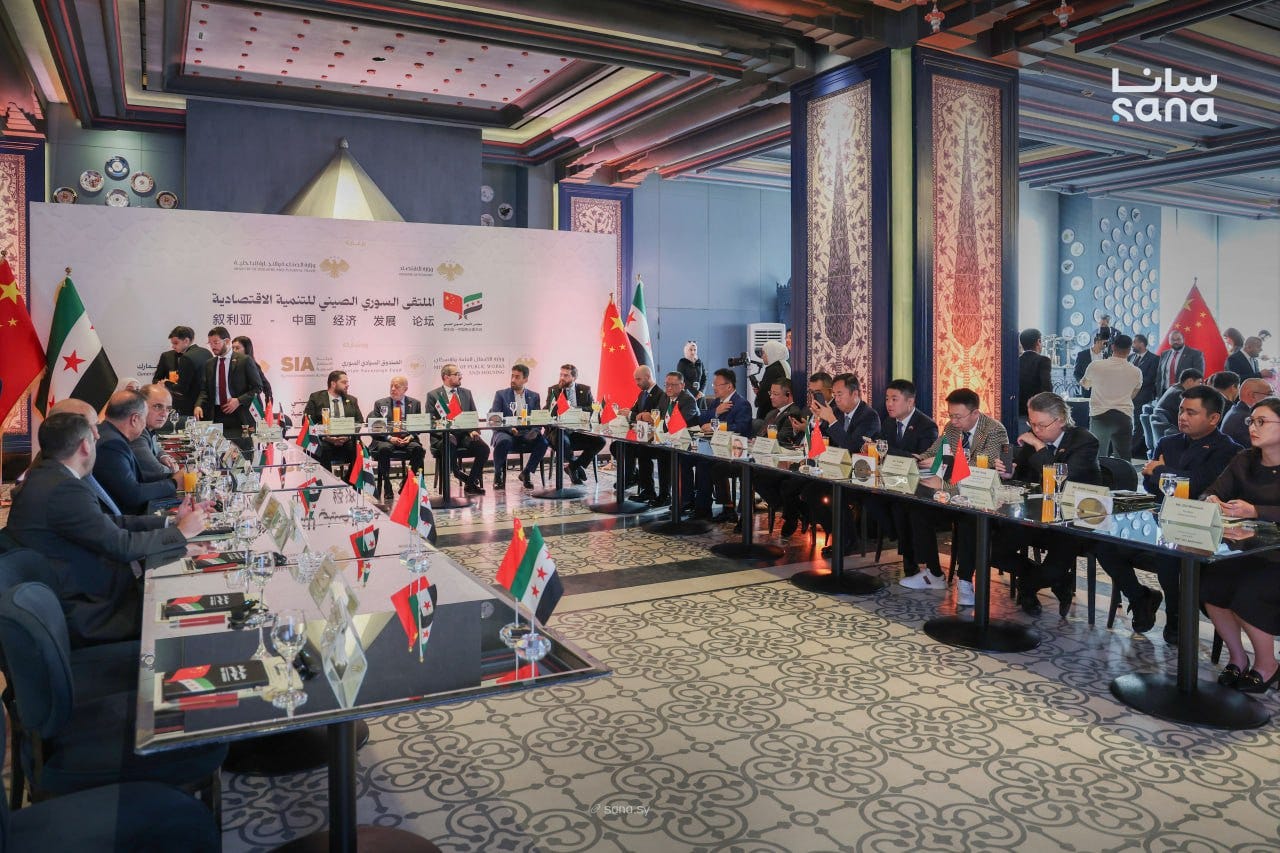
The inaugural Syrian-Chinese Economic Development Forum was launched in Damascus’ Four Seasons Hotel on November 3, convened in collaboration with the Syrian-Chinese Business Council, the Syrian-Chinese Center for Industrial City Partnerships and the Ministries of Economy, Industry and Internal Trade, and Consumer Protection.
In his keynote speech, Minister of Economy Nidal al-Shaar said that “Syria is going through a historical period aimed at rebuilding a more productive, competitive, and open economy, rather than simply rebuilding what has been destroyed. We aspire to an economy driven by the private sector, where the state provides the regulatory and institutional environment that encourages competition, initiative, and investment.”
Minister of Finance Mohammed Barnieh met with a delegation from the World Bank-linked International Finance Corporation (IFC), led by regional Vice President Imad Fakhoury on November 3 and confirmed that the IFC was studying the possibility of financing 6 private sector projects in Syria in the energy, transportation, industry, agriculture and food security.
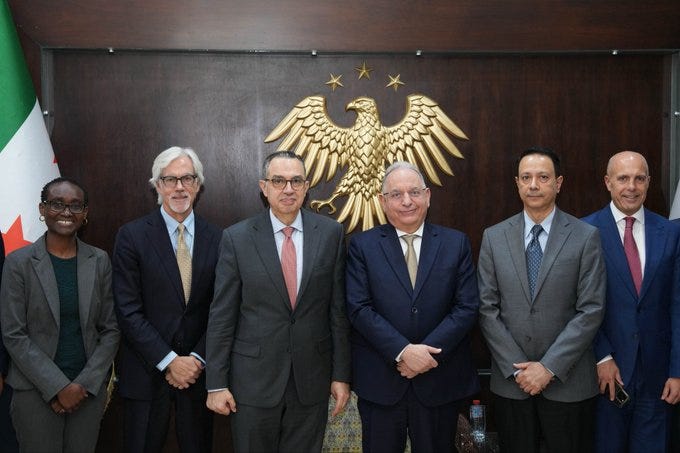
Later that day, Finance Minister Mohammed Barnieh and Minister of Health Musab al-Ali convened a meeting with UNICEF on November 3 to discuss the UN organization’s proposed support for health services and child health programs in Syria.
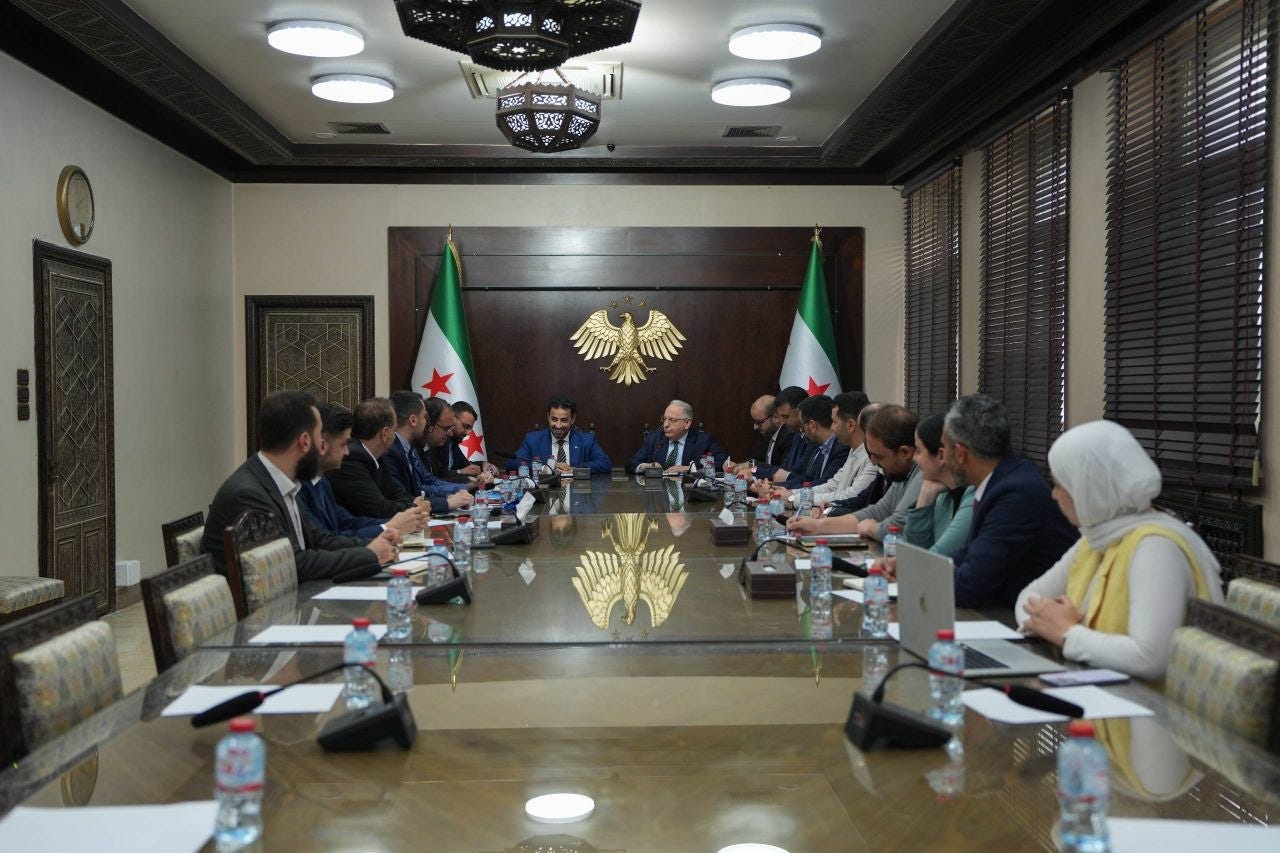
Minister of Telecommunications and Information Technology Abdulsalam Haykal hosted a meeting with a delegation from the World Bank-linked International Finance Corporation (IFC), led by regional Vice President Imad Fakhoury on November 3 and discussed mechanisms for financing telecoms projects and strategic digital infrastructure across Syria.
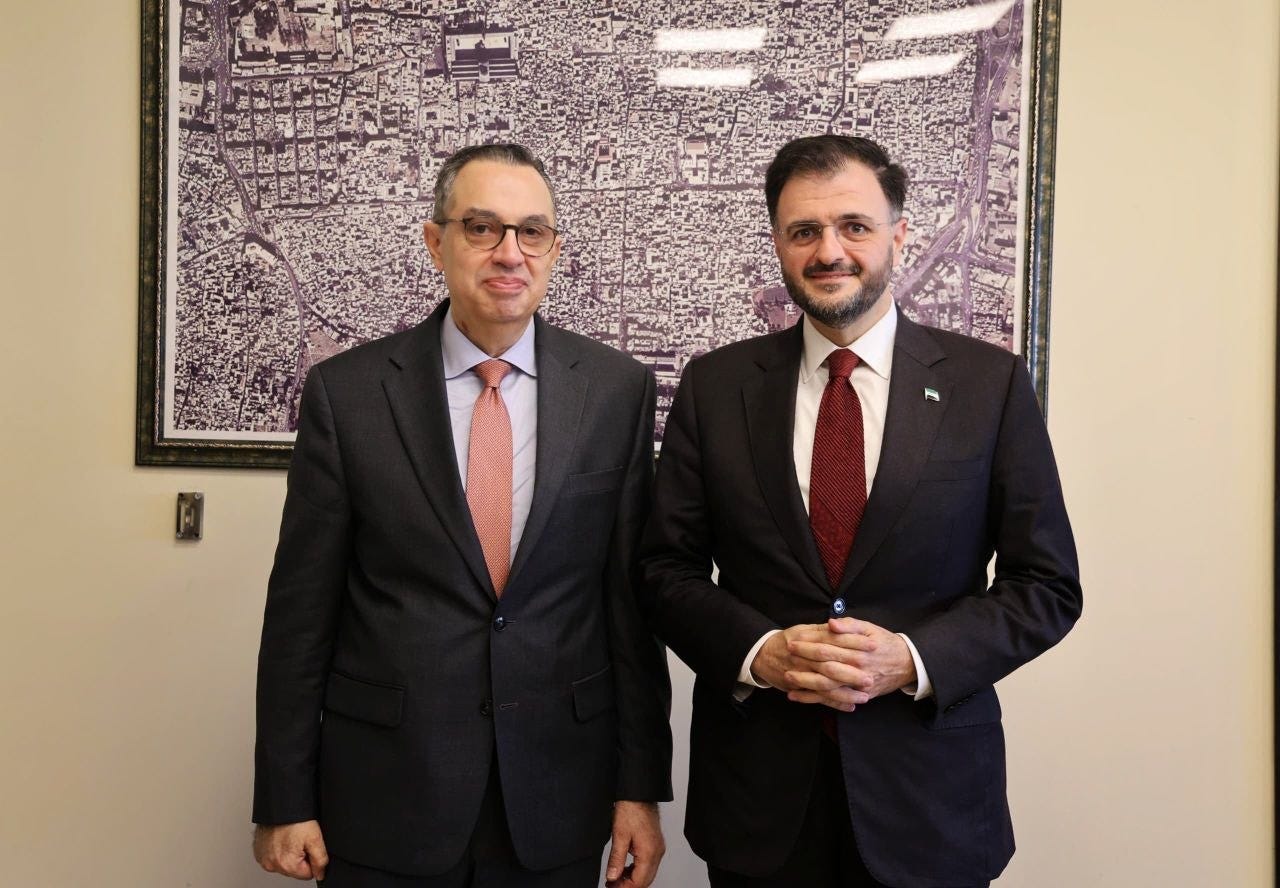
Speaker of Parliament Abdulhamid al-Awak hosted a meeting with a delegation from the Inter-Parliamentary Union (IPU), led by its Secretary General Andra Filip on November 3.
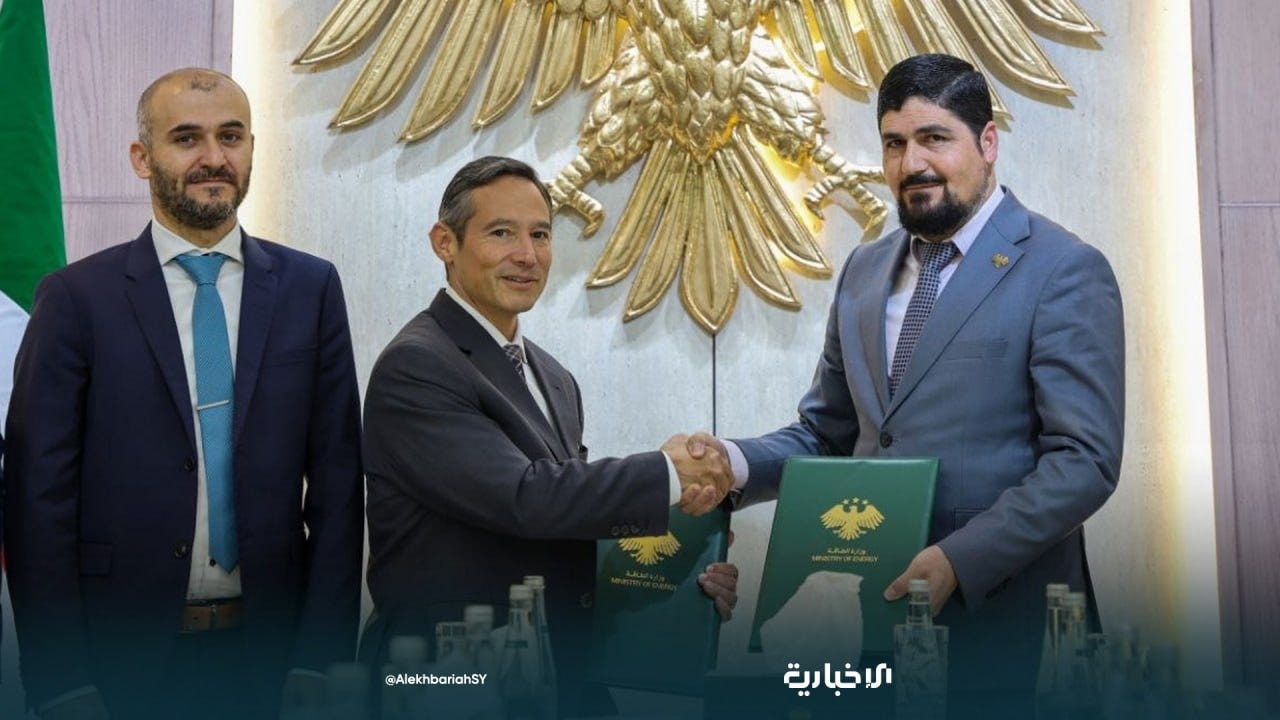
Minister of Local Administration and Environment, Mohammed Anjarani, signed a contract with the US-based Creative Associates International on November 3 to establish the technical infrastructure and train personnel for the digitization of real estate records.
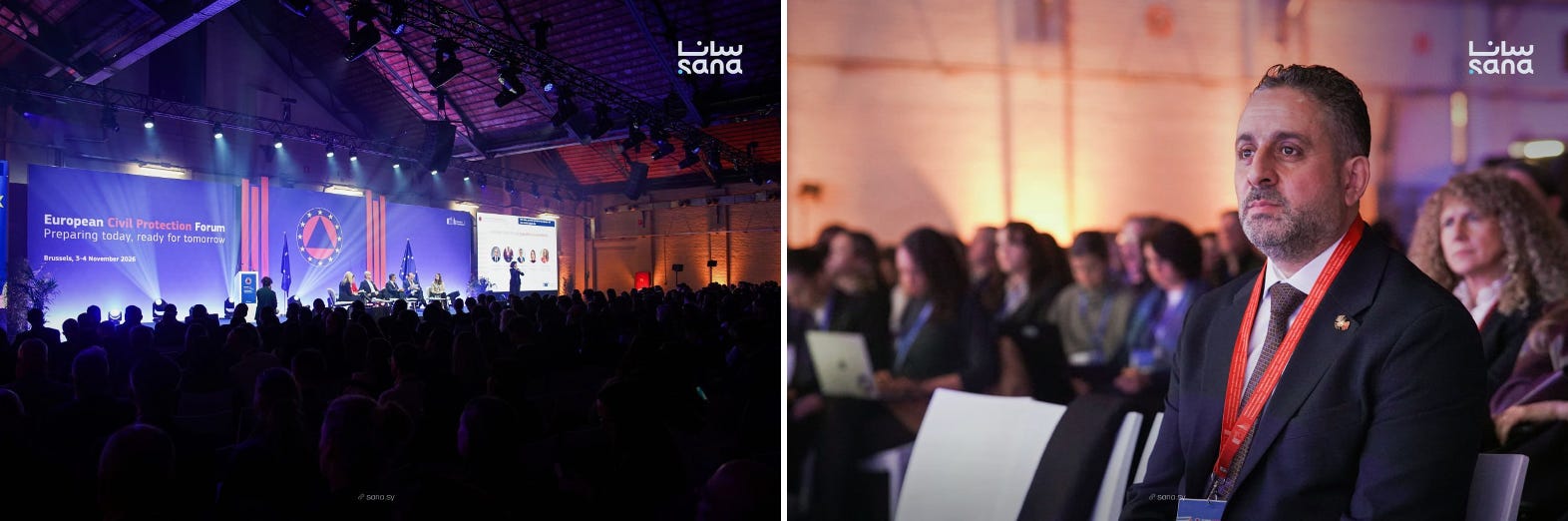
Assistant Minister of Emergency and Disaster Response Ahmed Aqiz traveled to Brussels, Belgium on November 3 to participate in the 9th European Forum for Civil Protection.
Appointments:
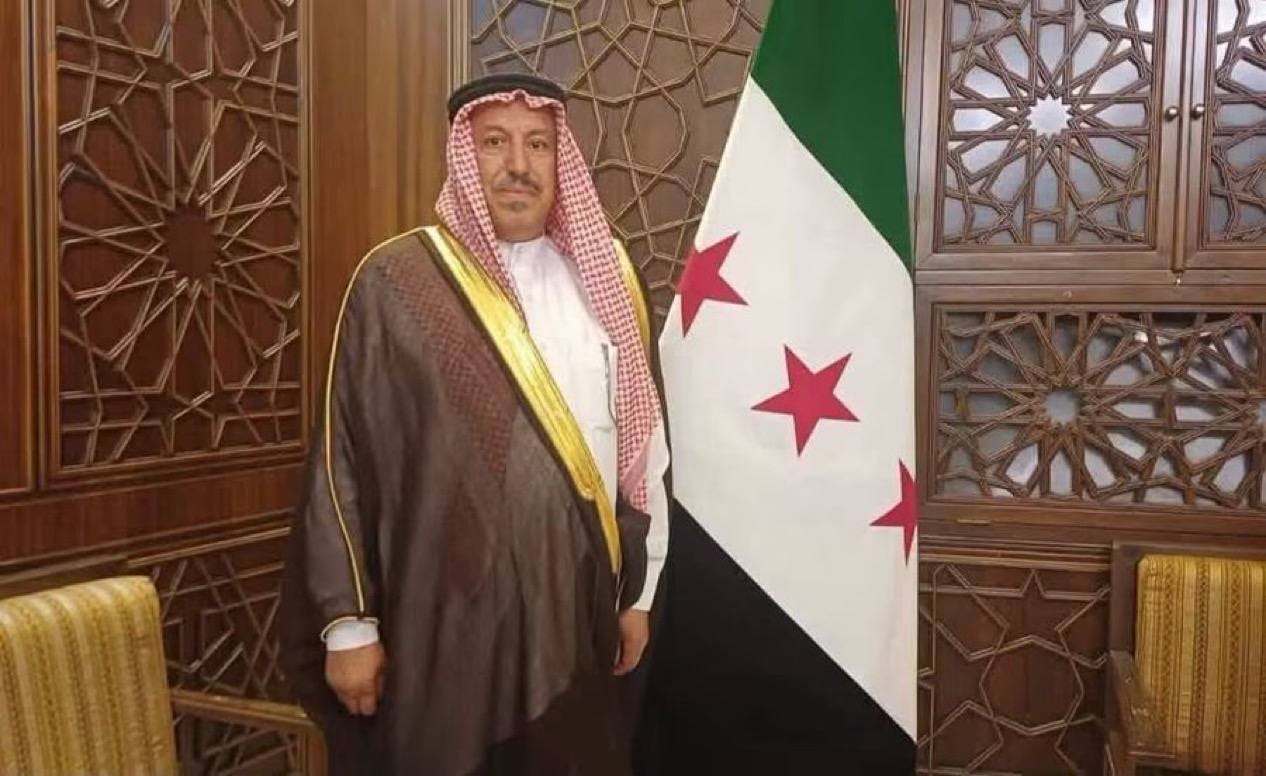
Syrian media sources reported on October 29 that former President of the ETILAF, Salem al-Meslet, had been appointed as the Ambassador to Jordan. The government did not confirm.

Colonel Fayez Issa al-Khatib was appointed by the MOI as the Director of the Immigration and Passports Department in Hasakeh on October 30.
Ahmed Hammad al-Asaad was appointed as the head of the Office of Tribes and Clans in Hasakeh governorate on October 31.
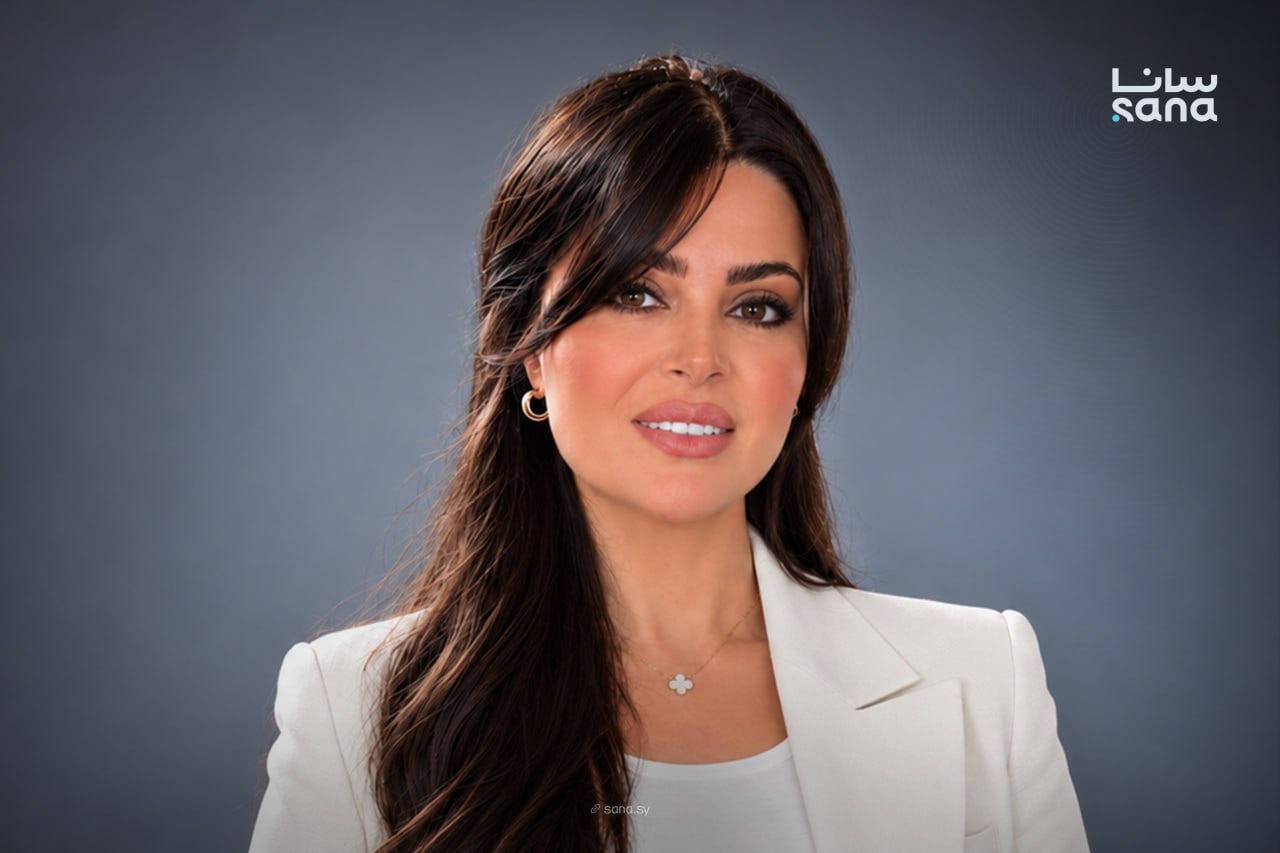
Foreign Minister Asaad al-Shaybani appointed Druze woman Mazna al-Atrash as an Advisor on Peace Affairs within the ministry on November 2. Atrash was previously a member of the UN-managed Syrian Women’s Advisory Council and a member of the former Arab Journalists Union, Syrian Artists Syndicate and a trainer with the SARC.
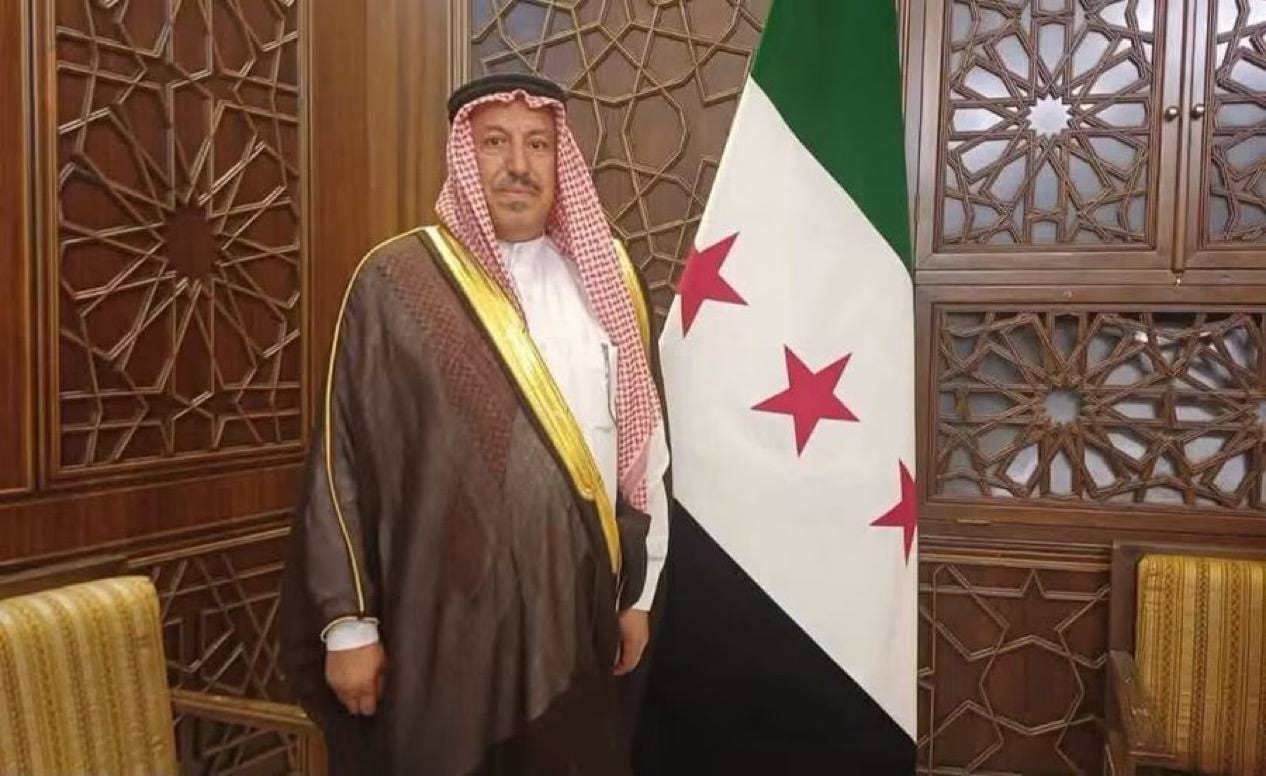
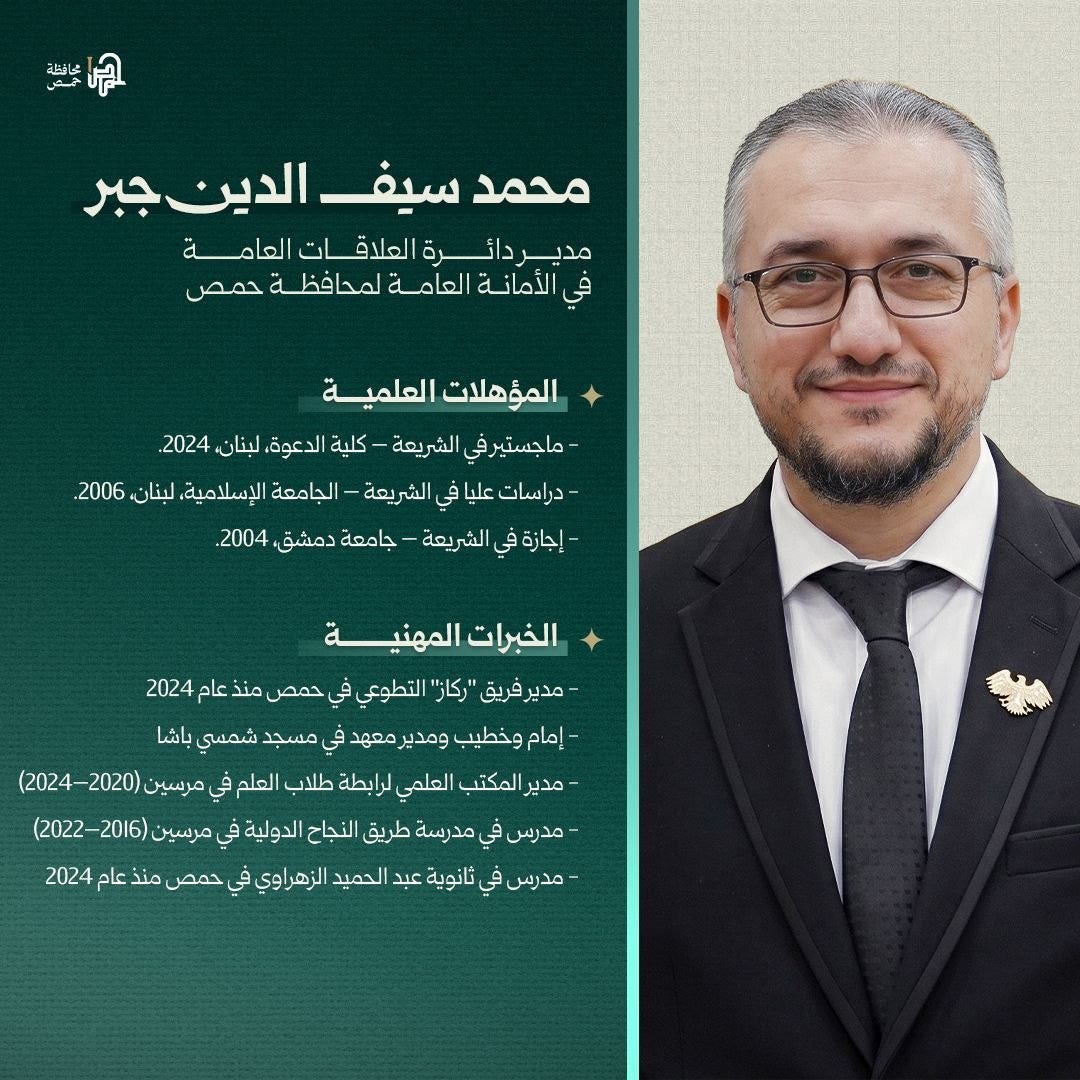
Governor of Homs Murhaf al-Naasan appointed Mohammed Jaber as the Director of Public Relations in the Governorate on November 2.
Captain Khaled al-Samir was appointed as the head of criminal investigations in Deir ez Zour on November 3.
First Lieutenant Ahmed al-Helou was appointed as the director of the al-Bukamal security directorate in Deir ez Zour on November 3.
Colonel Mohammed al-Taqish was appointed as the deputy commander for security affairs in Deir ez Zour governorate on November 3.
Mohammed Yasser al-Qadri was appointed as the Director of Eastern Ghouta district on November, succeeding Mohammed Ali Amer.
Political Developments:
In a joint statement issued alongside Jordan’s Foreign Ministry on October 27, the Syrian Foreign Ministry announced that in a call earlier that day, Foreign Minister Shaybani had talked with Foreign Minister Ayman al-Safadi the recent Jordanian strikes in southern Syria. Minister Safadi reportedly expressed remorse for the death of civilians, while insisting the strikes targeted ISIS. An agreement was made to establish a “joint security committee to investigate all details and facts related to the recent operations, and to follow up on their consequences” as well as to “develop mechanisms for field and intelligence coordination to address terrorist threats, ensuring the preservation of Syrian sovereignty and the protection of the lives of innocent civilians.”
Later that evening, the Nassib crossing with Jordan was re-opened.
The General Secretariat of the Presidency officially set the working hours for all public institutions to 8am to 4pm in a decree issued on November 2.
Economic Developments:
Finance Minister Mohammed Barnieh announced on October 30 that the Syrian Association of Internal Auditors had been granted membership in the Institute of Internal Auditors (IIA), making Syria its 123rd member. Minister Barnieh said the membership was “an important step in the development of financial and oversight professions in Syria… opening new avenues for developing the internal audit profession according to the best international standards and practices.”
The Central Bank relaunched its Banking Training and Qualification Center in Damascus on November 1, following two years of closure. The center will collaborate with the Frankfurt School of Finance & Management.
The Ministry of Agriculture’s committee responsible for managing the effects of natural disasters met on November 3 and approved a total of SYP 211 million in financial compensation for 8,289 farmers recently affected by floods in Daraa, Deir ez Zour, Raqqa, Homs, Hama, Aleppo and Tartus.
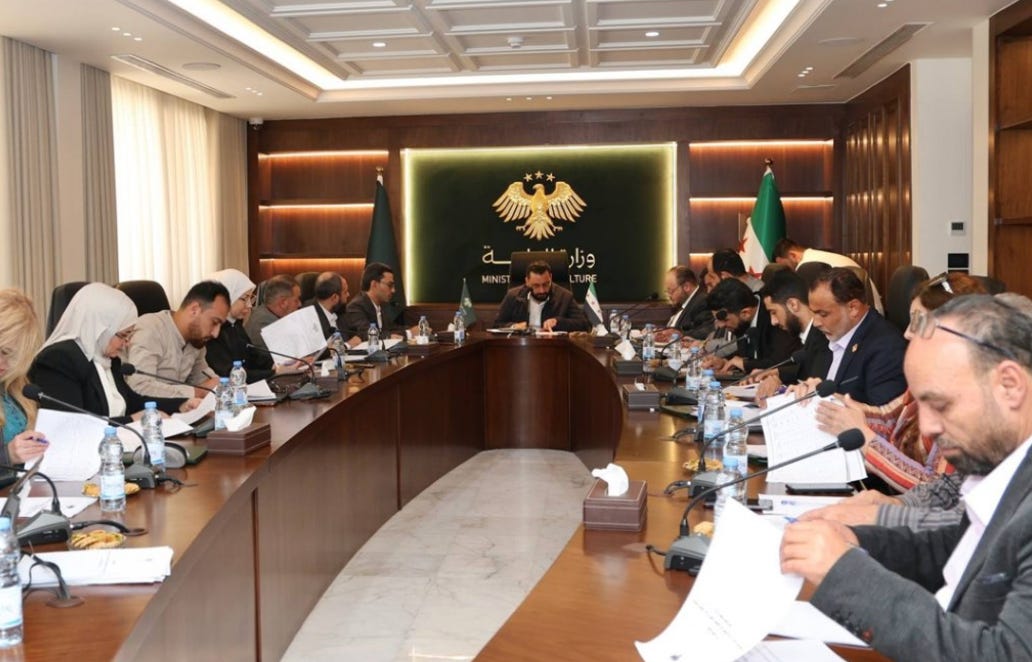
The Ministry of Finance confirmed on November 3 the launch of the “Comprehensive Resolution Plan and Systematic Closure for Accumulated Tax Files”, which will seek to address all tax accumulations from previous years and to complete all pending tax files and accelerate their completion through standardized auditing procedures.
Infrastructure Developments:
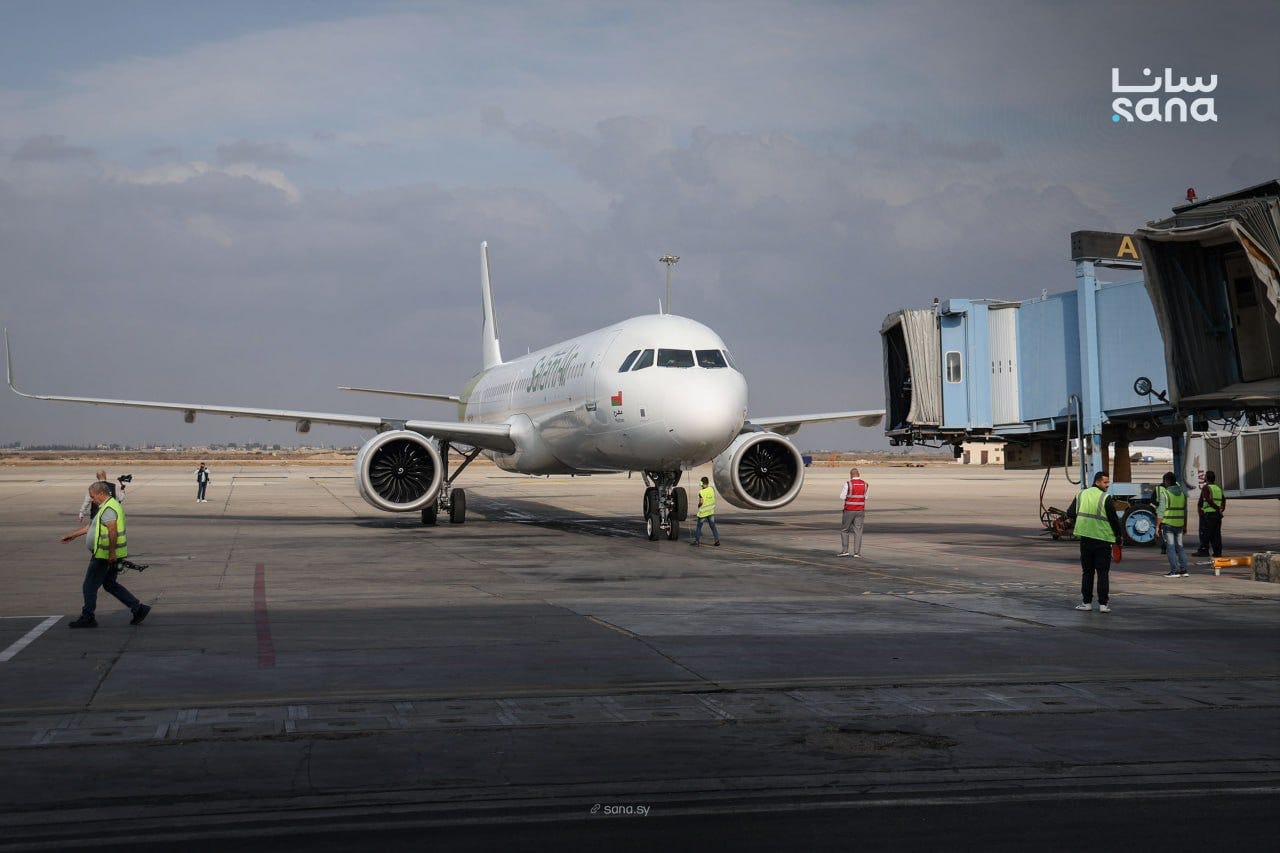
The Chairman of Syria’s General Authority for Civil Aviation and Air Transport, Omar al-Hosari, confirmed on October 27 that Oman’s Salam Air would begin flights between Damascus and Muscat on October 28 — with two flights per week.
The following day, the inaugural flight was completed as planned.
The Nassib crossing between Syria and Jordan was re-opened late on October 27, following a 24-hour closure after deadly Jordanian airstrikes in southern Syria late on October 26.
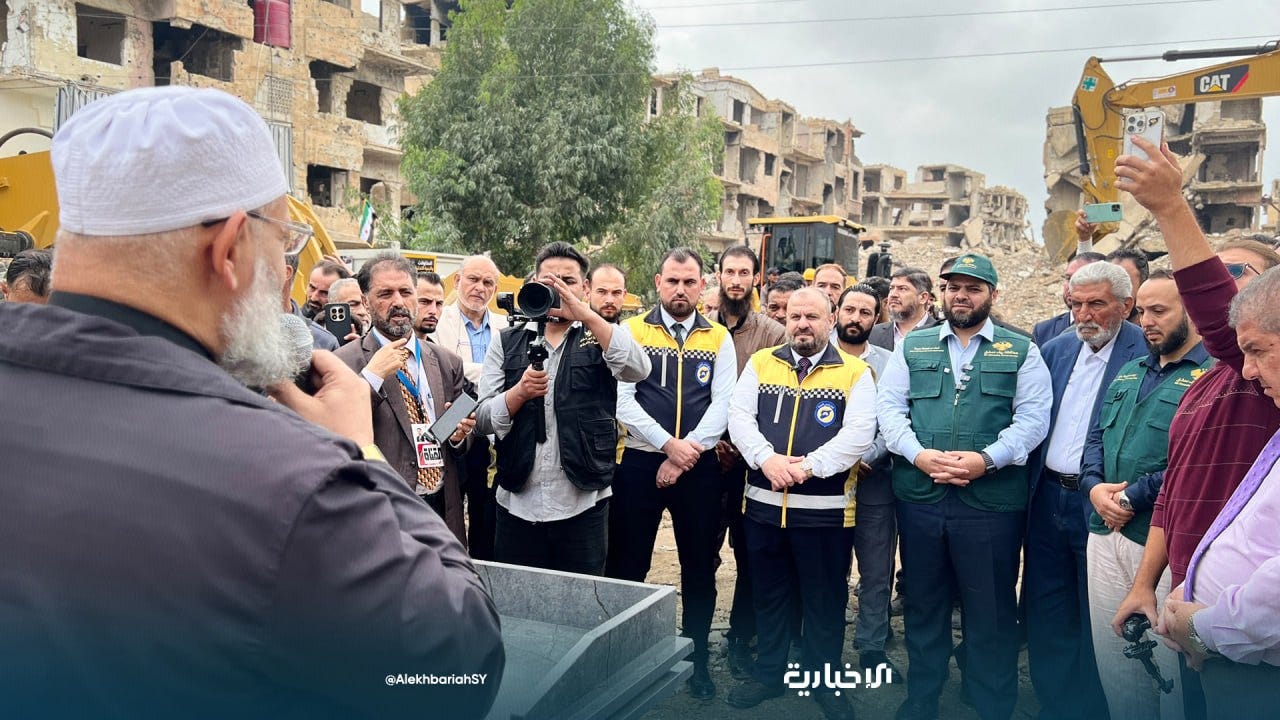
Governor of Rif Dimashq Amer al-Sheikh presided over a ceremony on October 28 in which a new large-scale rubble removal project in Harasta was announced.
The Syrian Electricity Company issued a statement on October 28 explaining that a recent increase in electricity rationing was down to “several interconnected factors,” including (1) routine and emergency maintenance work on a number of generating units at power plants across the country; (2) the continued shutdown of generating units at the Tishreen power plant following an explosion there in September; and (3) a shortage in the quantities of Azerbaijani gas supply via Aleppo.
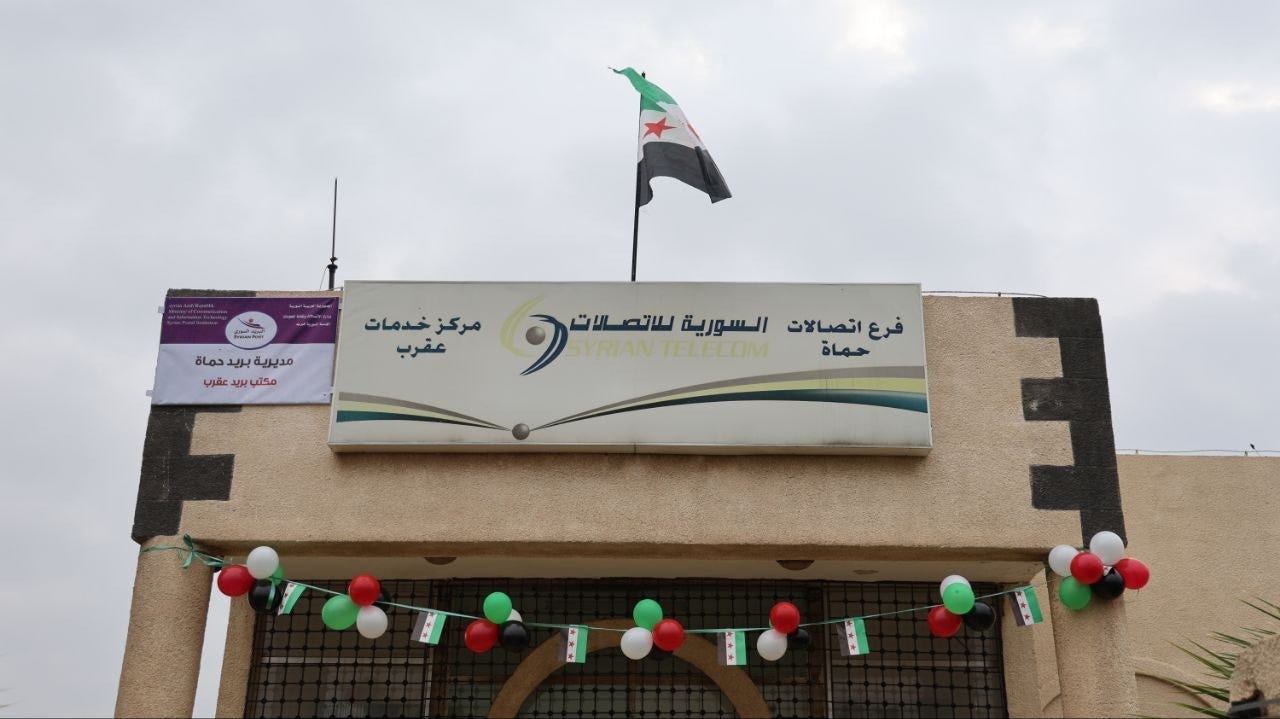
Local authorities inaugurated a new post office in the town of Aqrab in southern rural Hama on October 28.
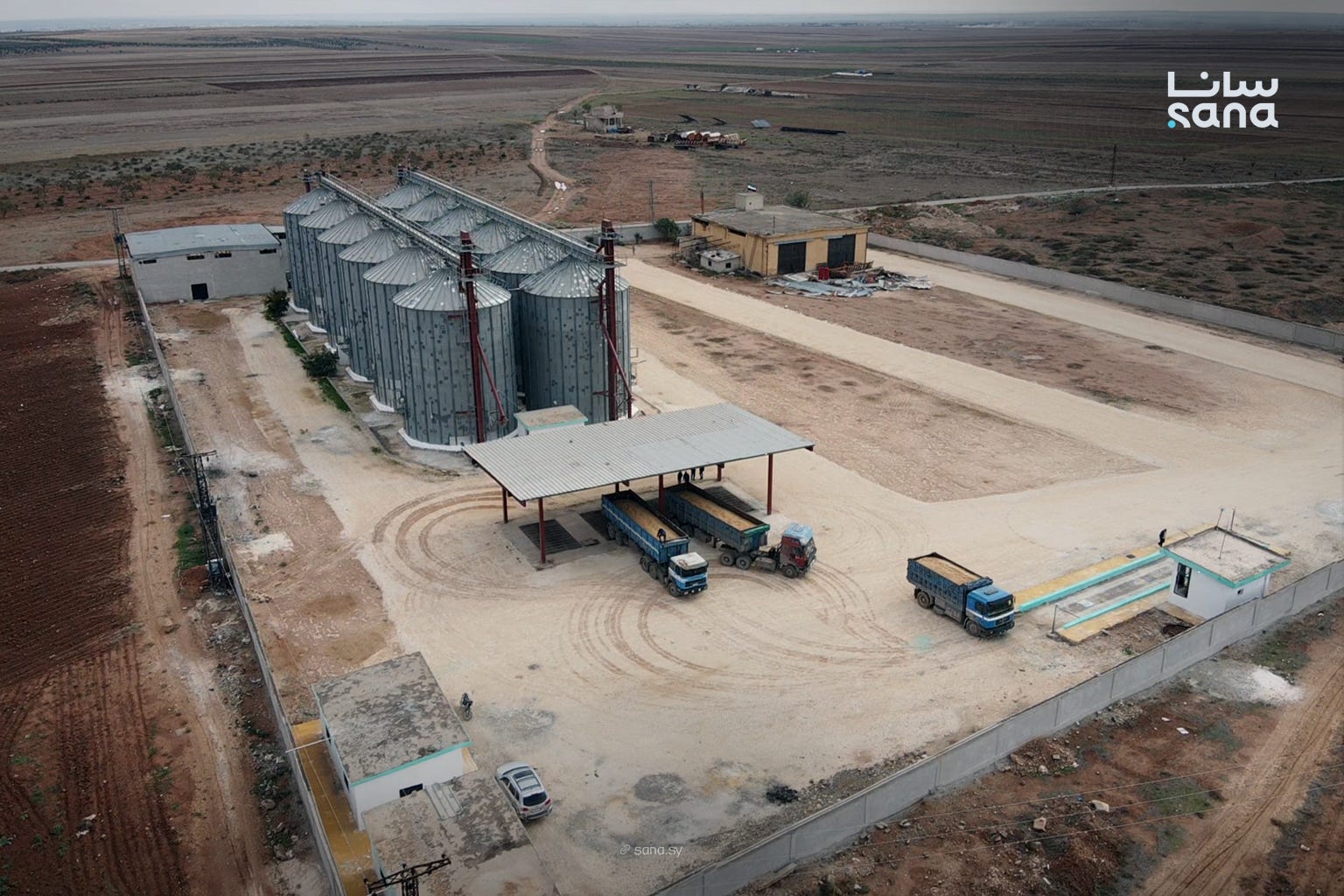
Local authorities inaugurated the newly rehabilitated flour mill and grain silos in Tel Rifat, Aleppo on November 1 following extensive refitting work undertaken with the support of the Shafak and Global Communities NGOs. The silos now have a storage capacity of 12,000 tonnes.
The General Authority for Civil Aviation announced on November 1 that the FlySham airline would begin flights between Damascus and Jeddah, Saudi Arabia that day.
The General Authority for Drinking Water and Sanitation signed a memorandum of understanding with US-based Creative Associates International on November 3 outlining a framework for cooperation lasting 6 months, which includes providing spare parts and technical supplies, as well as carrying out emergency mechanical and electrical maintenance and repair work to enhance the sustainability of water services and support the operation and maintenance of damaged pumping stations across the country.
Education Developments:
Member of the northeast Syria integration committee Hassan Shrou told media reporters on October 29 that a meeting between the Rojava and Kobani Universities and the Ministry of Higher Education had reached an agreement to transform all faculties of Rojava University into a “Qamishli Colleges Complex” which would be affiliated with the al-Furat University. The agreement stipulated that the President of the Qamishli Colleges Complex would have the powers of Vice President of al-Furat University.
The Ministry of Higher Education issued decrees on November 1 for the establishment of Masters degree programs at al-Furat University in Clinical Psychology and in Financial and Banking Sciences.
On November 2, a statement was issued publicly by the Rojava University Council in which the institution rejected an agreement reportedly reached on October 29 to integrate the institution into al-Furat University, but to retain its faculties in Qamishli. The statement claimed the agreement was “unsatisfactory and does not meet our legitimate aspirations,” adding that the “Kurdish character” of the university should be acknowledged and that the university should “retain its full identity.”
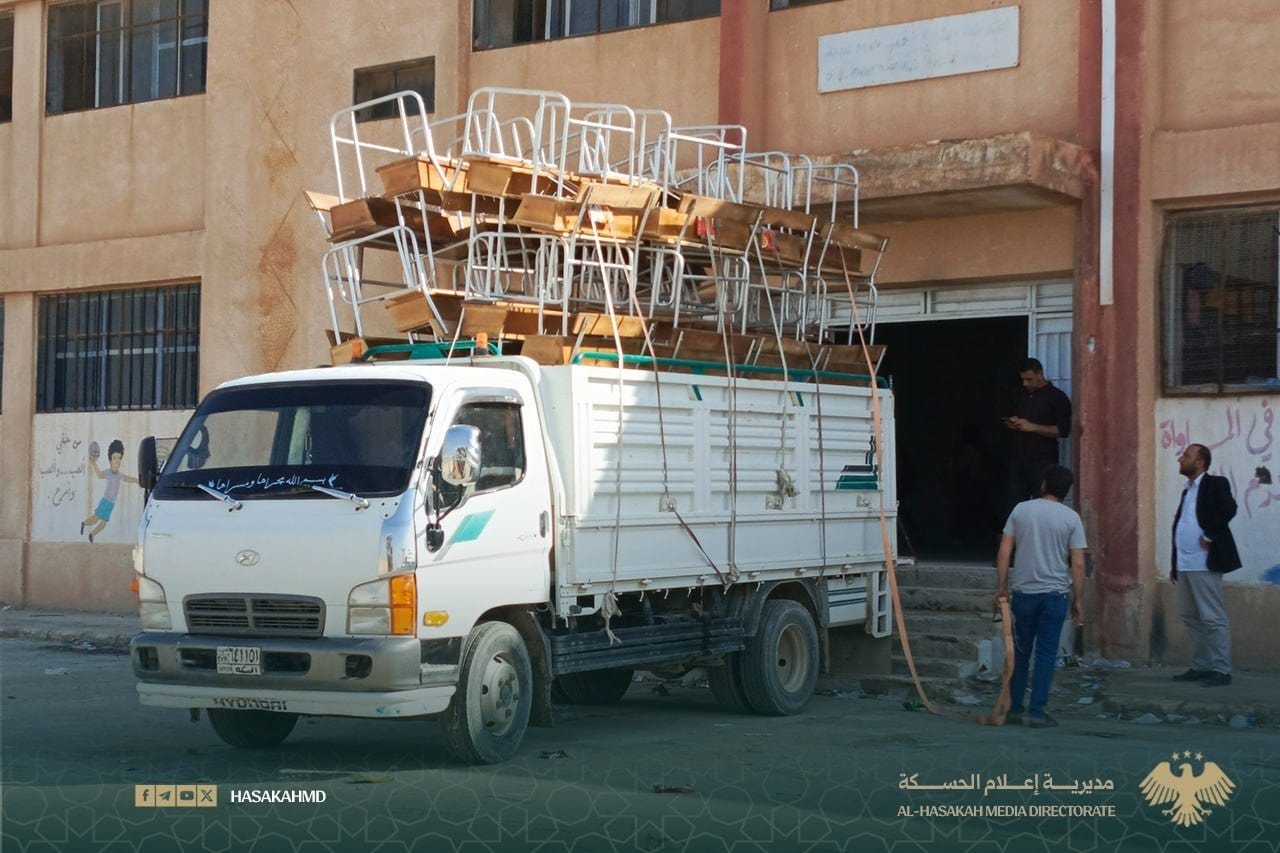
The Hasakeh directorate of education delivered 270 new school desks to schools in al-Shadadi on November 3 — thanks to the support of UNICEF.
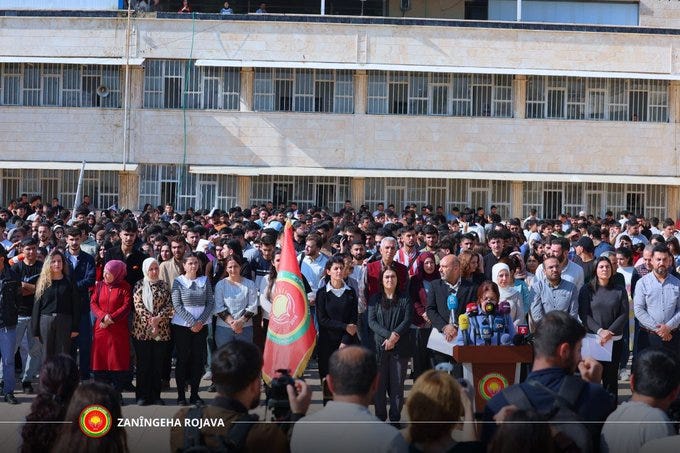
The PYD issued a statement on November 3 “rejecting” the Education Ministry’s decision to teach Kurdish language in Kurdish-majority areas in 3 lessons per week, describing it as “contradicting the aspirations of the Kurdish people and their cultural and educational rights.”
Health Developments:
The Tartus Directorate of Health provided a variety of medical and laboratory equipment to 5 hospitals — the National Hospital of Tartous, the National Children’s Hospital, Al-Darikish Hospital, Al-Qadmos Hospital, and the National Hospital of Baniyas - on October 31. Equipment reportedly included ney dialysis machines, operating tables, anesthesia and medical monitoring devices, incubators, X-ray machines, laboratory equipment, and heart and hearing monitors, in addition to artificial respiration and sterilization devices.
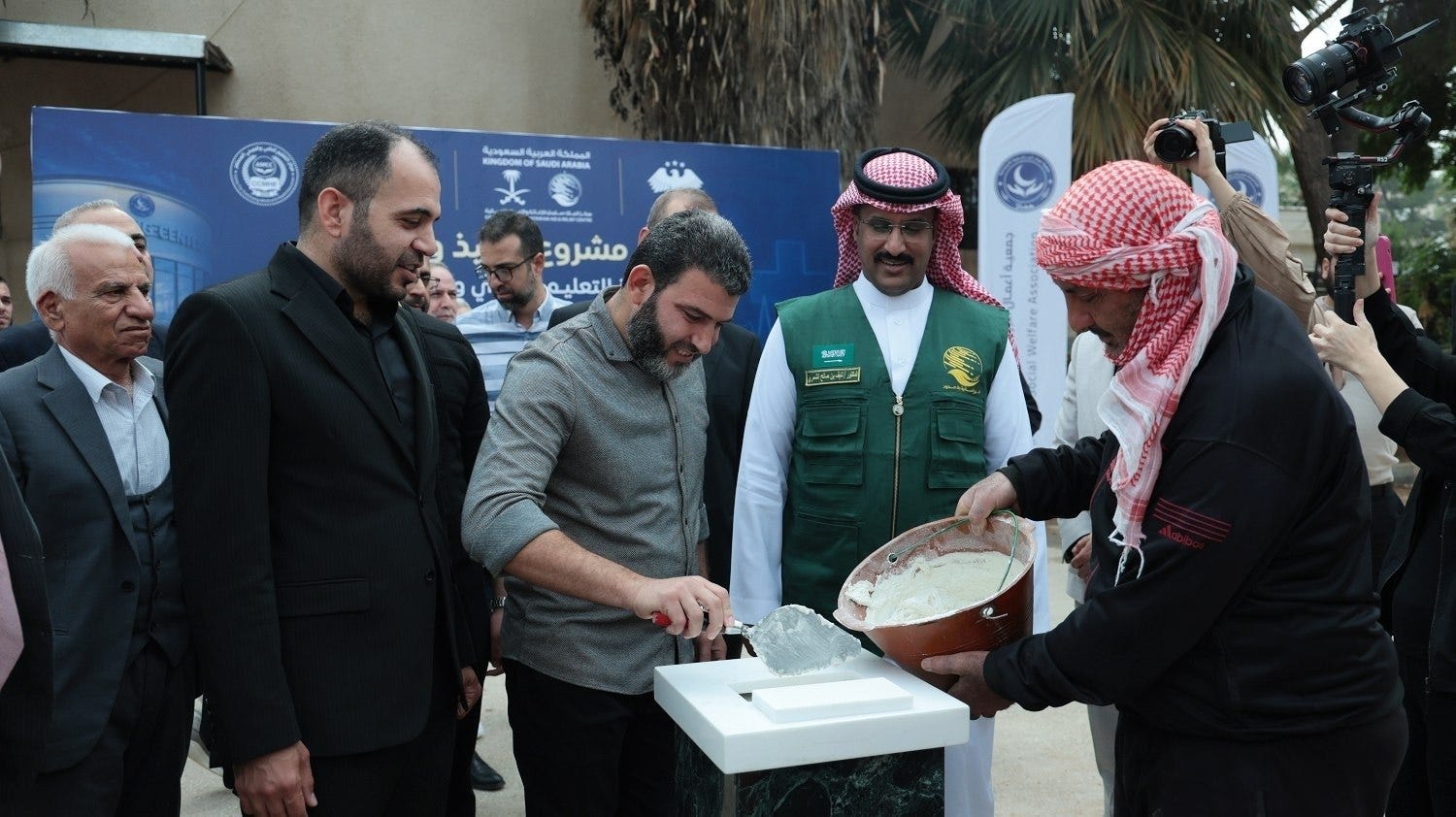
Governor of Hama Abulrahman al-Sahyan laid the foundation stone for the Center for Continuing Health Education in Hama city on November 2 — a project launched in collaboration with the Saudi King Salman Center for Relief and Humanitarian Aid and the Aamal Al-Bar NGO.
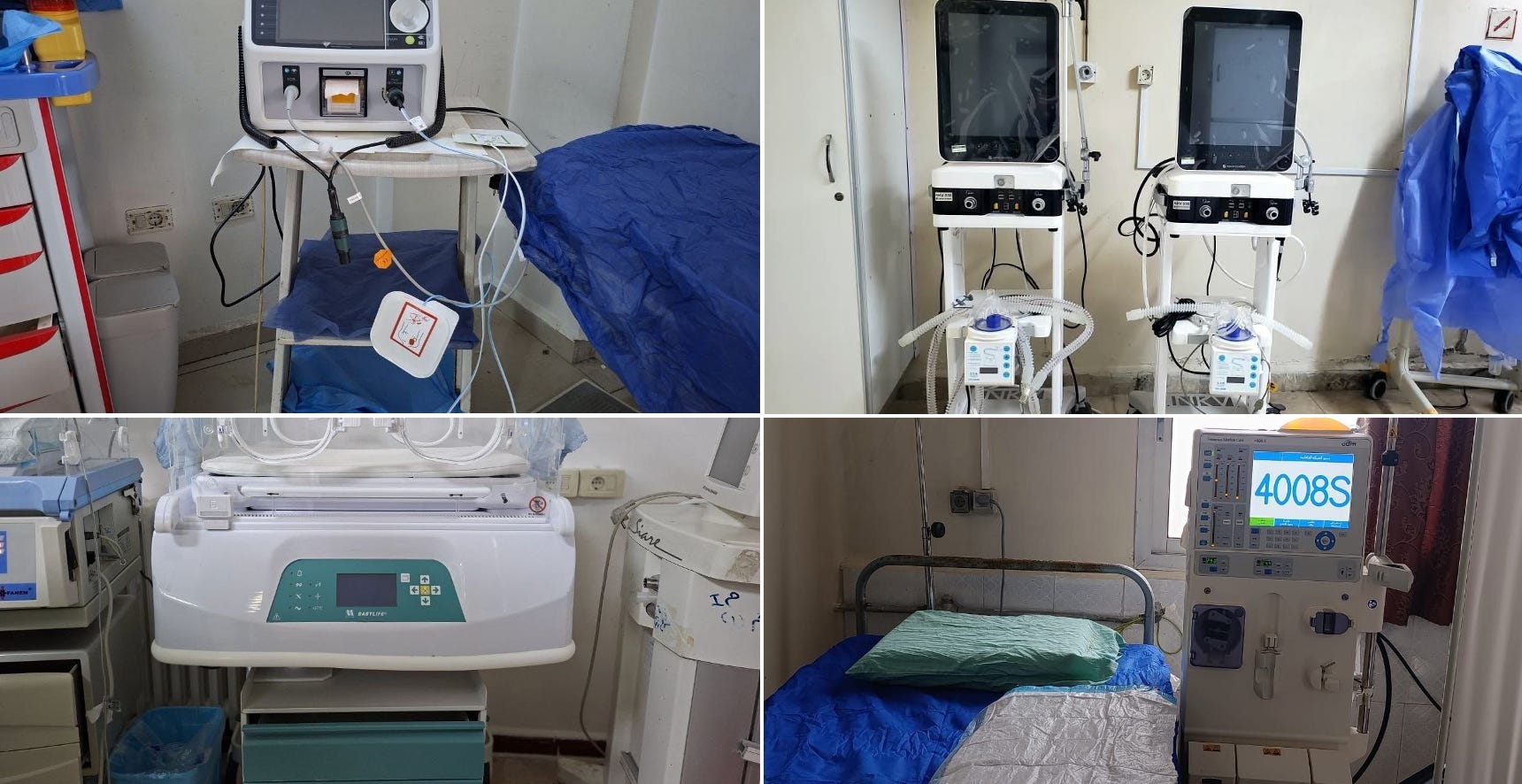
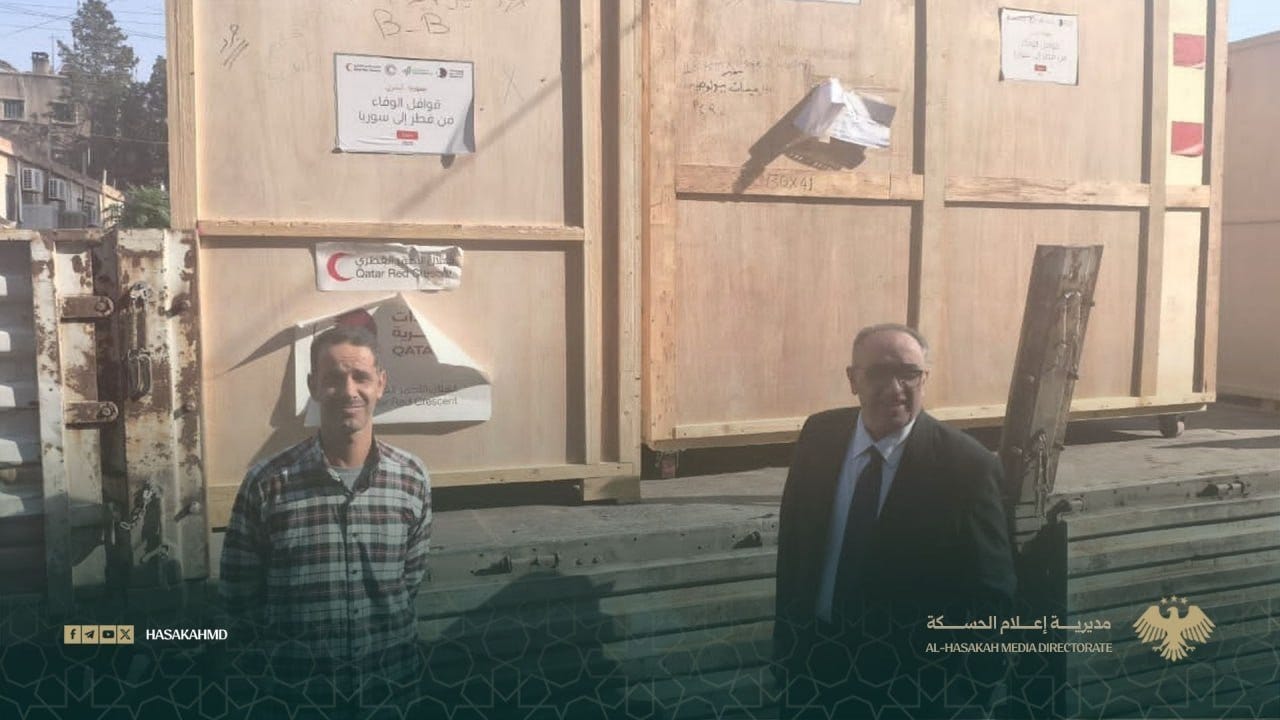
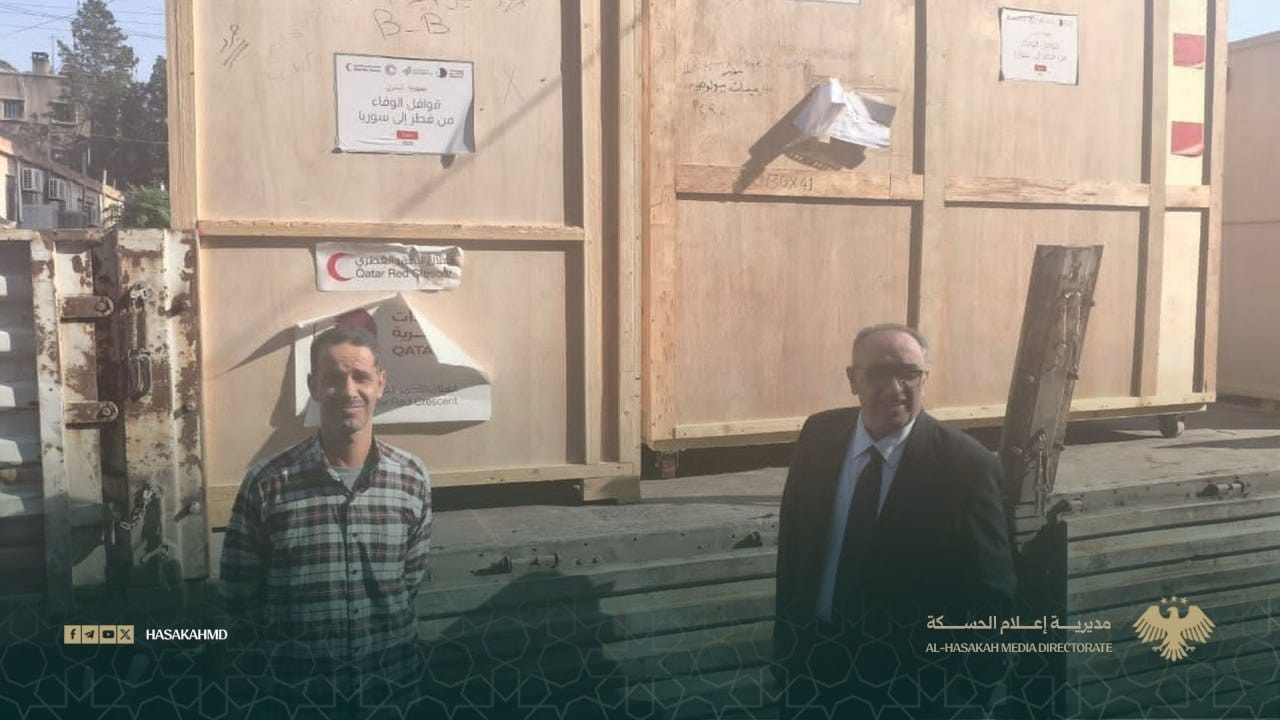
The Hasakeh Directorate of Health received a shipment of medical equipment — including sterilization devices and dialysis machines — from the Qatar Red Crescent on November 2.
Security Developments:
N/A
Humanitarian Developments:
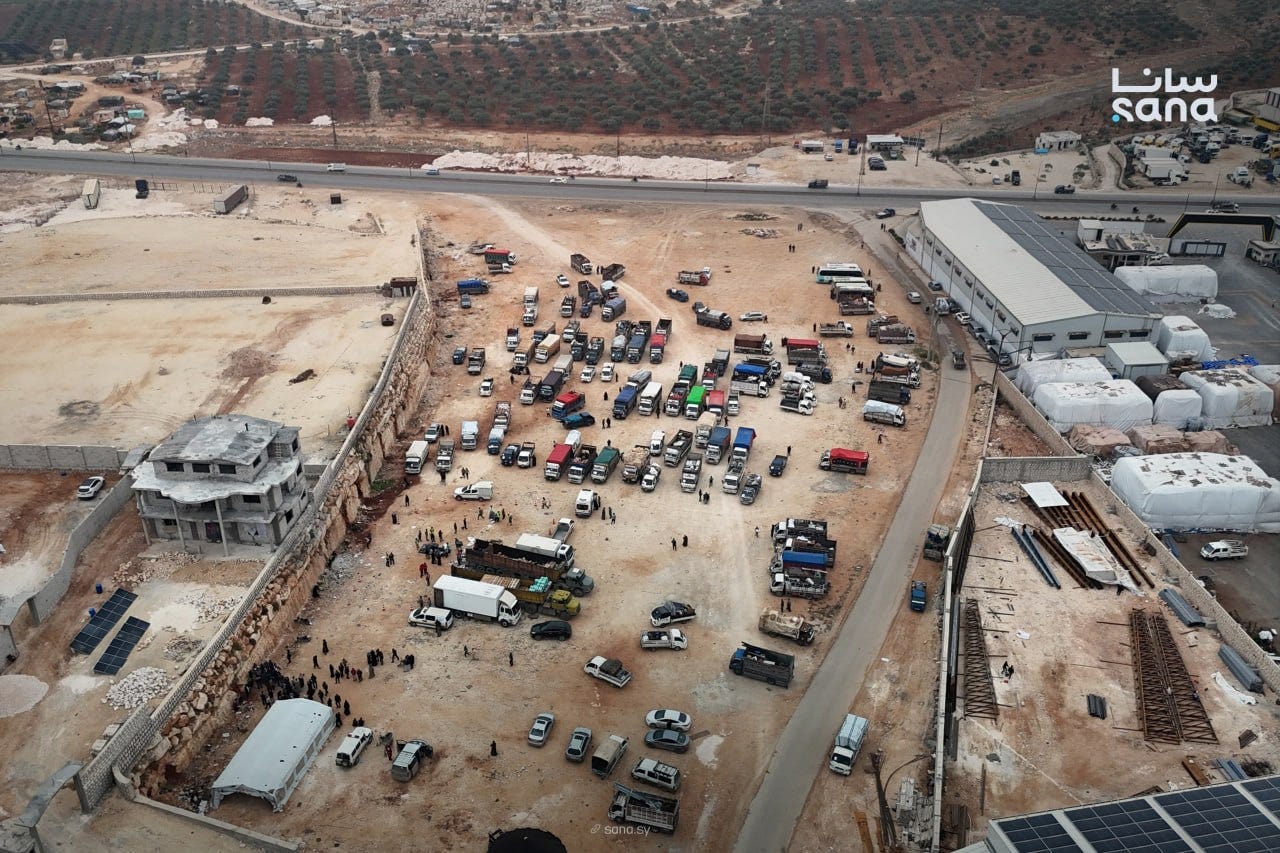
A delegation of 38 displaced families departed IDP camps in al-Atareb, Aleppo on October 228 en route to their areas of origin elsewhere across Syria.
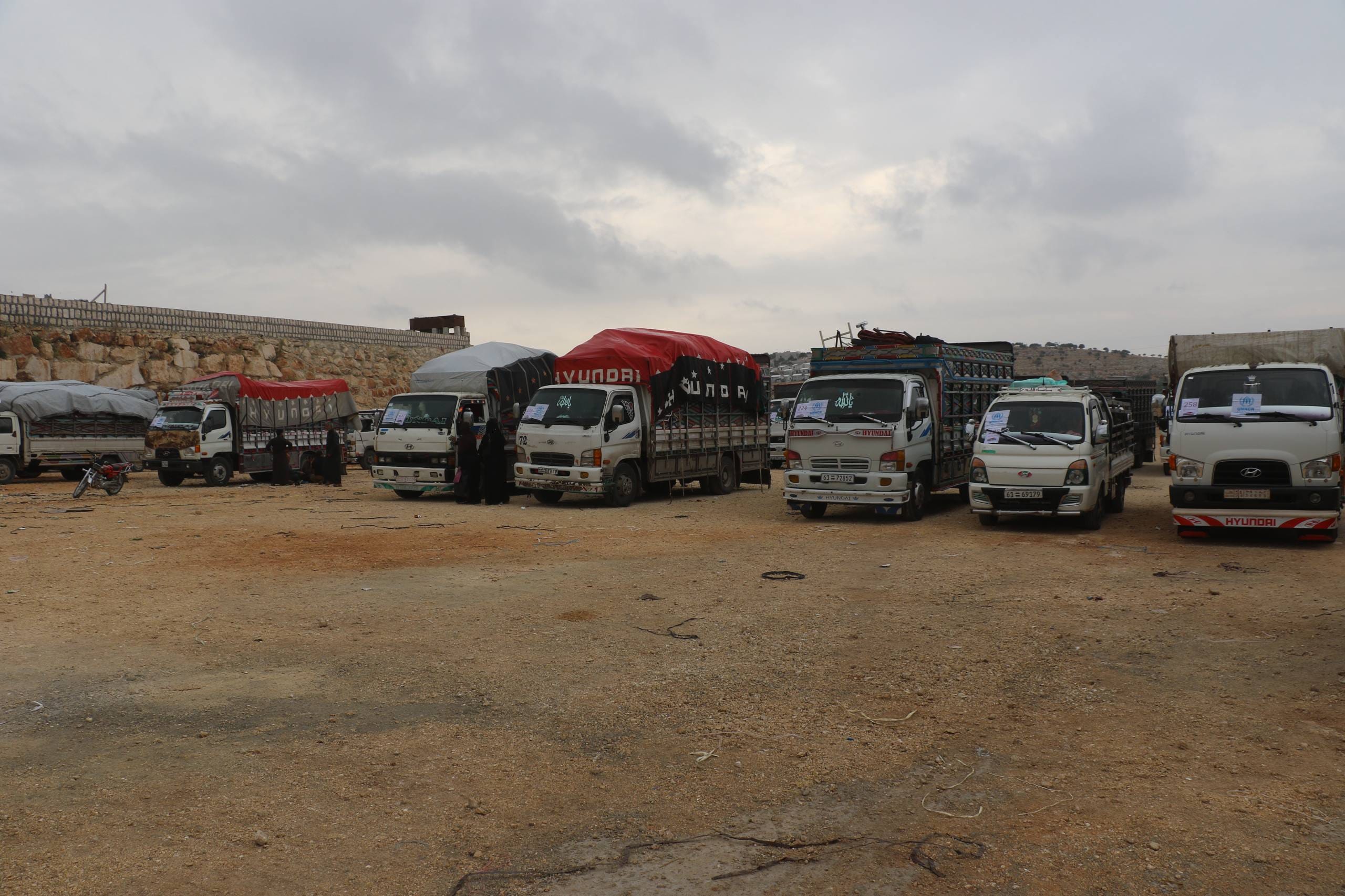
A convoy of 32 displaced families departed IDP camps in Azaz, Aleppo on October 29 en route to their areas of origin elsewhere in Syria.
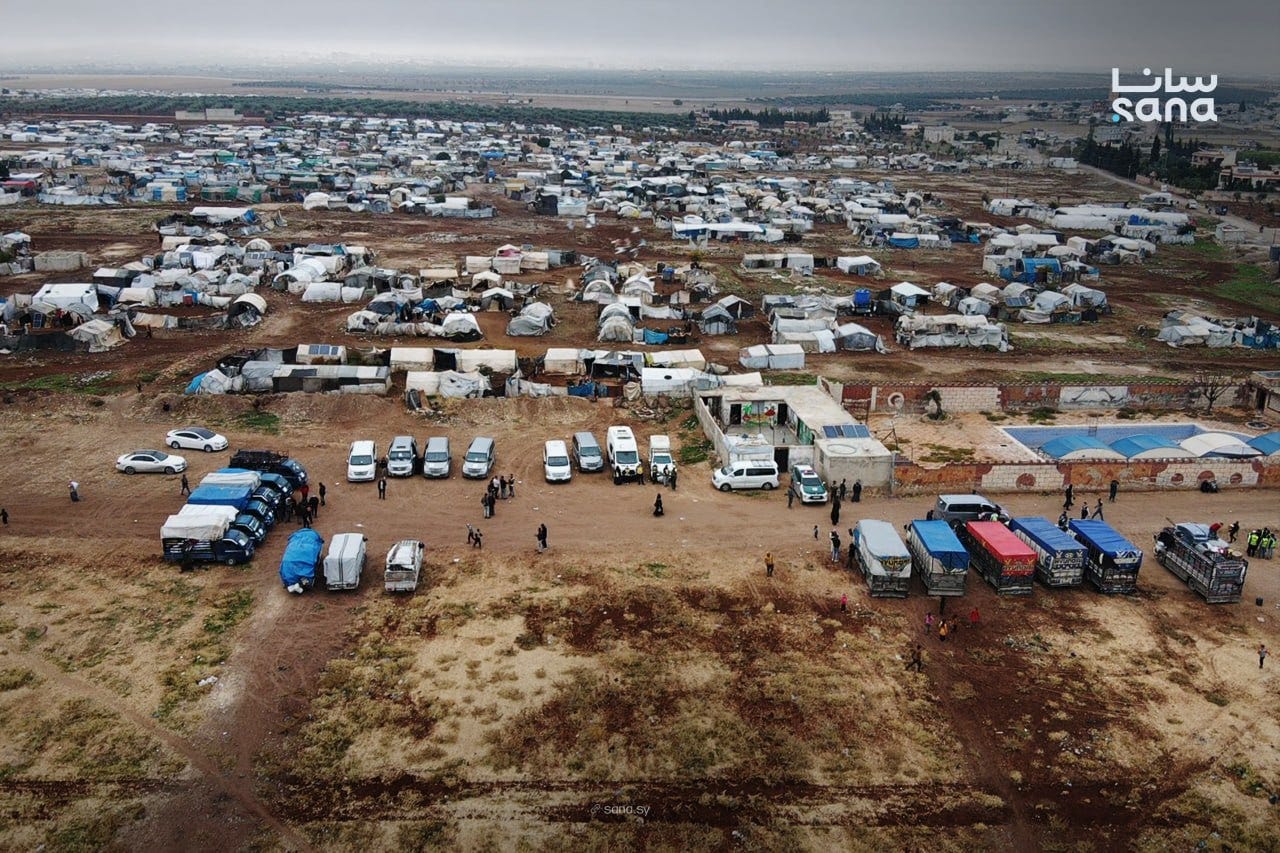
A convoy of 229 displaced families departed IDP camps in northern Idlib on October 29 en route to their areas of origin elsewhere in Syria.
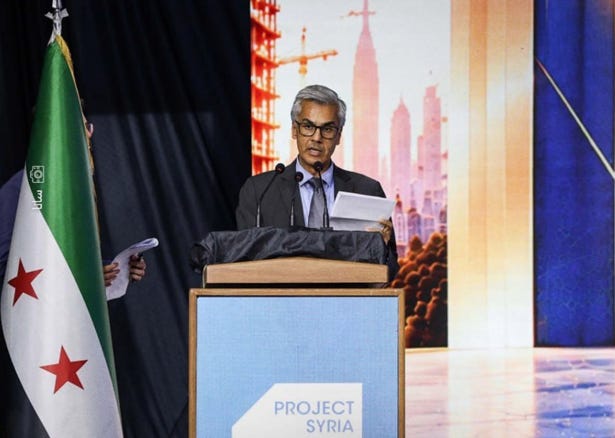
In public comments during the launch of Project Syria 2026 on November 2, the Deputy UNDP representative to Syria Rohi Afghani said that 16.6 million Syrians remained in need of humanitarian assistance, “making investment in recovery and development an urgent necessity, especially given the decline in humanitarian funding.” He added that the construction sector in Syria has the capacity to provide 24% of jobs needed in Syria.
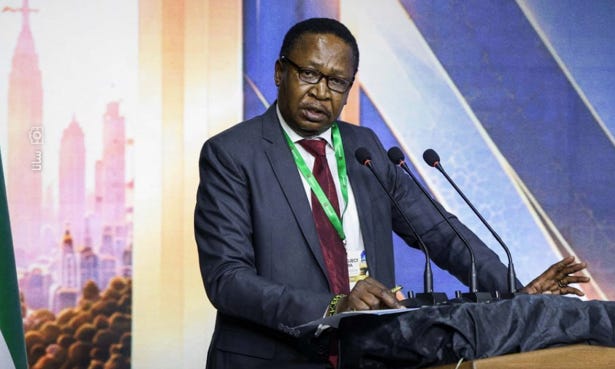
In public comments during the launch of Project Syria 2026 on November 2, UNICEF’s deputy representative to Syria Laurence Ondo said that more than 2 million IDPs and 1.8 million refugees had returned to Syria since Assad’s fall nearly two years earlier. He added that UNICEF had so far supported the rehabilitation of 200 schools, at a cost of $20 million; as well as 256 health clinics at a cost of $24 million.
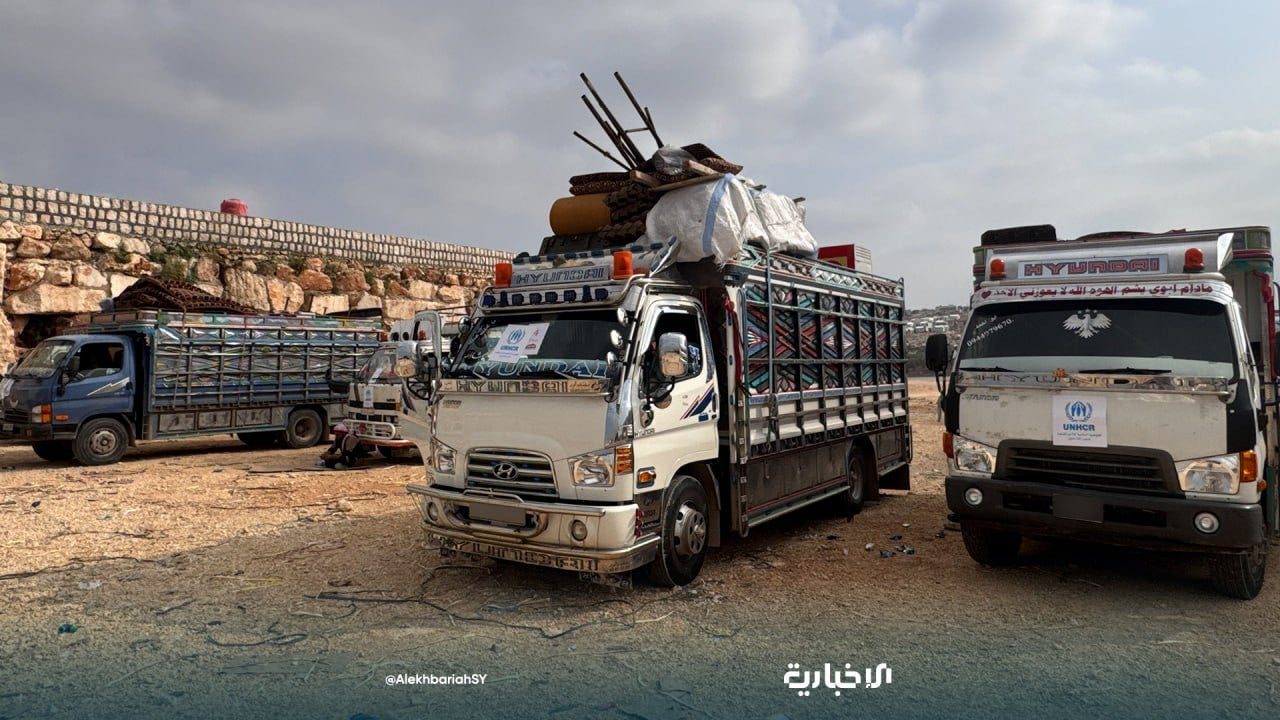
A convoy of 203 displaced families departed their IDP camps in northern Idlib en route to their places of origin elsewhere in Syria on November 3.
Justice Developments:
Damascus’ Fourth Criminal Court sentenced a former Assad regime Political Security officer, Mohammed Islam Arnaouti, to 15 years in prison on October 27 on charges of “the felony of ‘deprivation of liberty by a public official’ under Article 357 of the Penal Code.
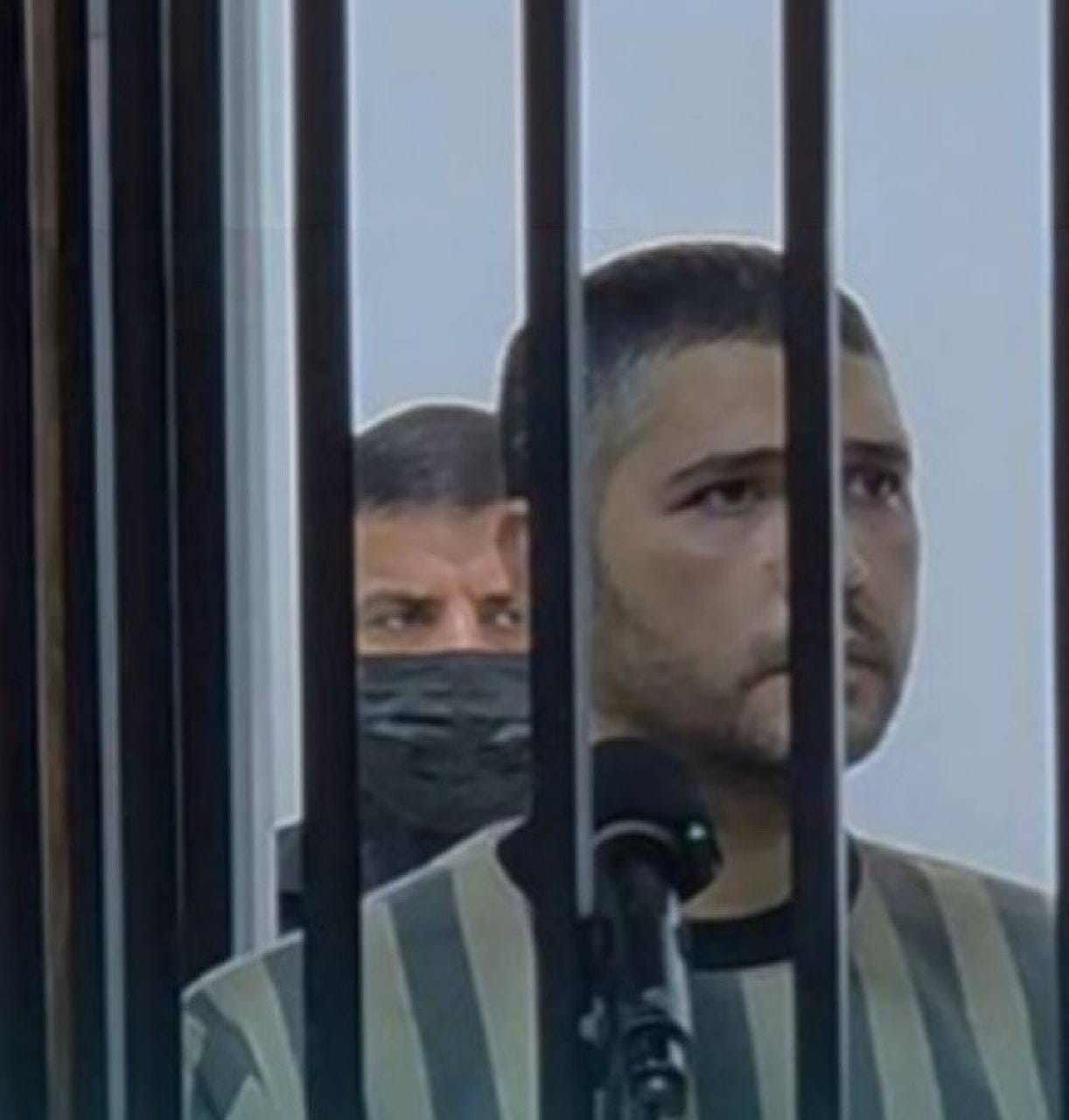
Damascus’ Fourth Criminal Court sentenced Abduljabbar Arzeeq to life in prison on October 28, on charges of membership of the Iranian-backed pro-Assad Liwa al-Quds militia and involvement in war crimes.
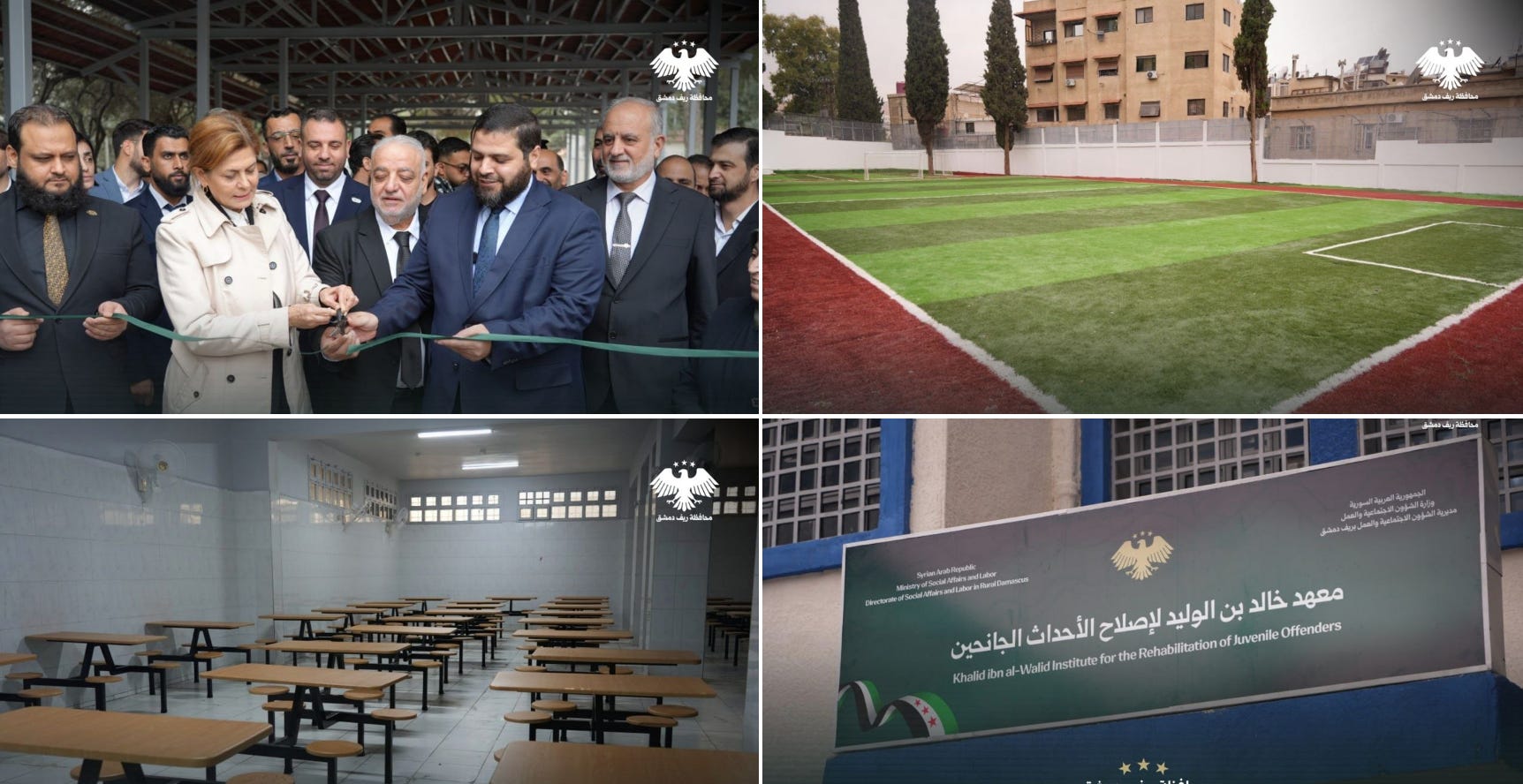
Minister of Social Affairs and Labor Hind Kabawat and Governor of Rif Dimashq Amer al-Sheikh inaugurated the Khalid bin al-Walid Institute for the Rehabilitation of Juvenile Delinquents in Qudsaya, Rif Dimashq on October 29.
International Developments:
Media reporting on October 29 claimed that Norwegian oil and gas company DNO was exploring the possibility of exporting oil from Iraqi Kurdistan to the Mediterranean via Syria.
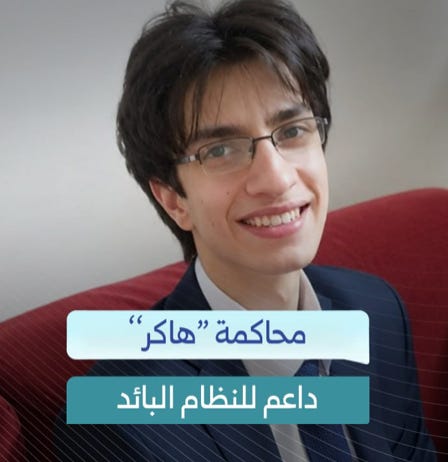
The U.S. Justice Department confirmed on October 29 that Syrian citizen Ahmed Omar Agha (aka “Th3Pr0”) had been sentenced to 42 months in prison after being convicted of conducting at least 47 cyberattacks on media organizations, commercial companies and NGOs on behalf of Assad’s regime during the 2011-2024 conflict. One attack temporarily wiped out $136 billion from U.S. investors.
The government of Denmark donated 800,000 euros to the OPCW on November 2 to support the organization’s ongoing work in Syria.
CONFLICT & SECURITY:
Israel:
One local man was detained by Israeli military forces during an incursion into the village of al-Hurriya in Quneitra on October 27.
Later that day, an incursion was launched into the village of Majdaliya in Quneitra.
One local man was detained during an Israeli ground incursion into the village of Abu Mazraa in southern Quneitra on October 28.
Israeli military forces fired at least 4 artillery shells into the outskirts to the village of Sayda al-Golan in southern Quneitra on October 28.
Israeli military forces launched a ground incursion into an area outside Jubata al-Khashab in northern Quneitra on October 29, where one local man was detained and his motorbike destroyed.
Later that day, another incursion was launched into an area located between al-Samdaniya al-Sharqiya and al-Ajraf in central Quneitra.
Israeli military forces launched a ground incursion into an area located between the villages of Jubata al-Khashan and Ayn al-Bayda in northern Quneitra on October 30.
That day, two more incursions were launched — one into the Wadi al-Raqad area in western Daraa’s Yarmouk Basin; and another into the village of al-Mushayfira in Quneitra.
One local man was detained during an Israeli military incursion into the village of al-Hurriya in northern Quneitra on October 31.
Later that day, additional incursions were launched — one into the Tel Kroum area near Beit Jin in Rif Dimashq; one into the village of Abidin in Daraa’s Yarmouk Basin; one into the village of al-Mushayfira in Quneitra; one into the outskirts of Jubata al-Khashab in Quneitra; and another into the village of Ofaniya in Quneitra, where four local men were detained.
Israeli military forces launched a ground incursion into an area located between the villages of Jubata al-Khashab and Ayn al-Bayda in northern Quneitra on November 1.
Later that day, additional incursions were launched — one into the village of Koya in Quneitra, where one local olive harvester was detained; one into the Wadi al-Raqad area of Daraa’s Yarmouk Basin; and another incursion into the village of Taranja, where a home and a commercial store were raided.
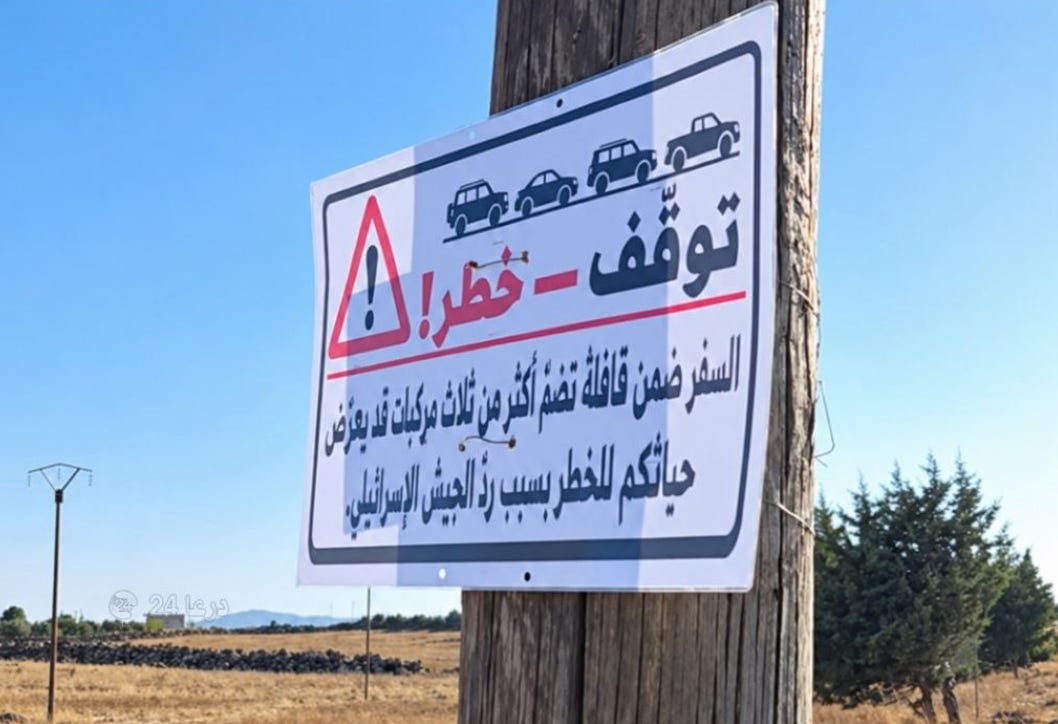
The Israeli military issued public notices in the villages of al-Samdaniya al-Gharbiya and Rasm al-Rawadi ordering citizens not to travel in convoys of more than 3 vehicles, or else “your life will be at risk.” They were later torn down by locals.
Israeli military forces launched a ground incursion into the village of Maariya in Daraa’s Yarmouk Basin on November 2.
Later that day, another incursion was launched into the village of al-Ruwayhina in Quneitra.
That night, another incursion was launched into the village of al-Isbah in southern Quneitra.
One local man was detained by Israeli military forces during an incursion into the village of al-Isbah in southern Quneitra early on November 3.
Later that day, additional incursions were launched — one into an area between the villages of Jubata al-Khashab and Ayn al-Bayda in Quneitra; and one towards the al-Mantara Dam.
Israeli military forces destroyed with explosives an abandoned Assad regime military post near the village of Darba in southwest Rif Dimashq on November 3.
Israeli military forces opened fire with heavy machine guns into farmlands in the Wadi al-Abidin area in Daraa’s Yarmouk Basin on November 3.
ISIS:
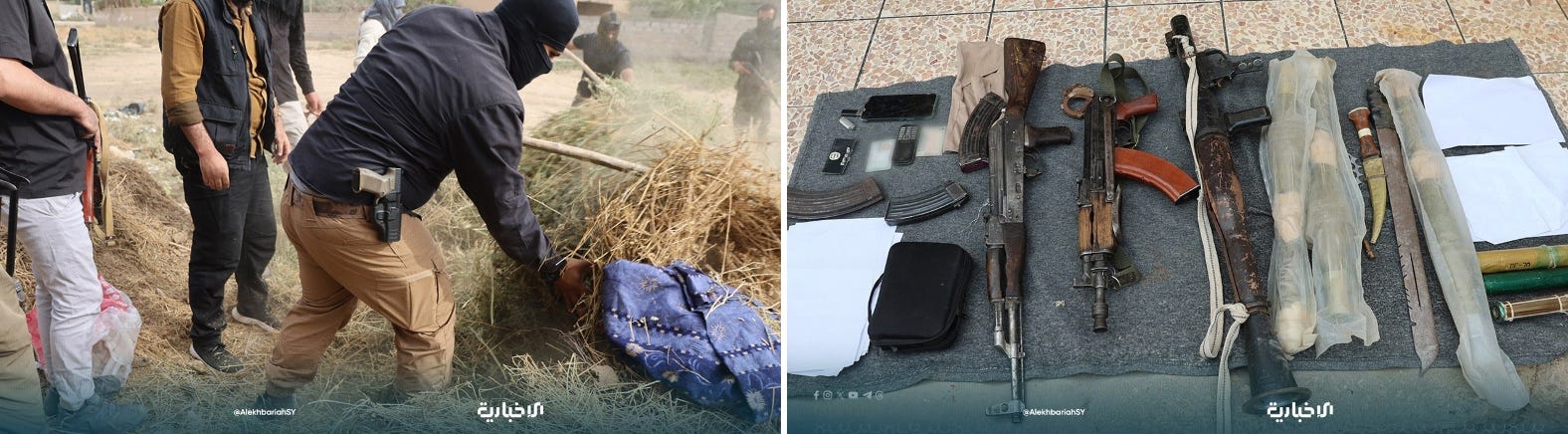
A two-man ISIS cell was captured in an MOI targeted raid in Deir ez Zour on November 1. The cell had reportedly been involved in a series of targeted assassinations in the area, the latest one in al-Mayadin.
Idlib:
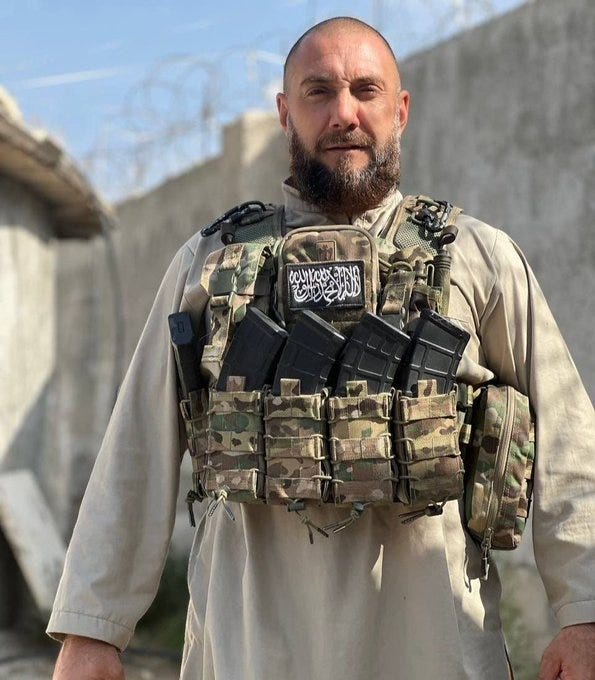
One French jihadist and member of French-speaking faction Firqat al-Ghurabaa - identified as Abu Ayman al-Fransi - was shot dead by MOI Internal Security forces after being spotted exiting the group’s al-Fardan camp and then opening fire upon them near Harem, Idlib on October 28. Per an agreement with the group in October 2025, the group’s male members are forbidden from leaving their encampment with weapons.
Two MOD soldiers were shot dead in a targeted attack by unidentified gunmen near al-Fuah in northern Idlib late on October 28. Some local speculation claimed the attack was linked to the earlier killing of a French Firqat al-Ghurabaa jihadist earlier that day.
One child was killed and a woman injured after triggering an unexploded landmine in the village of Kafr Sajna in southern Idlib on November 3.
Aleppo:
A former Assad regime 25th Special Mission Forces officer was shot dead by unidentified gunmen in Aleppo late on October 28.
A civilian vehicle containing 7 people triggered an unexploded landmine while driving outside the village of Shash Hamdan near Manbij on October 29, but no casualties were reported.
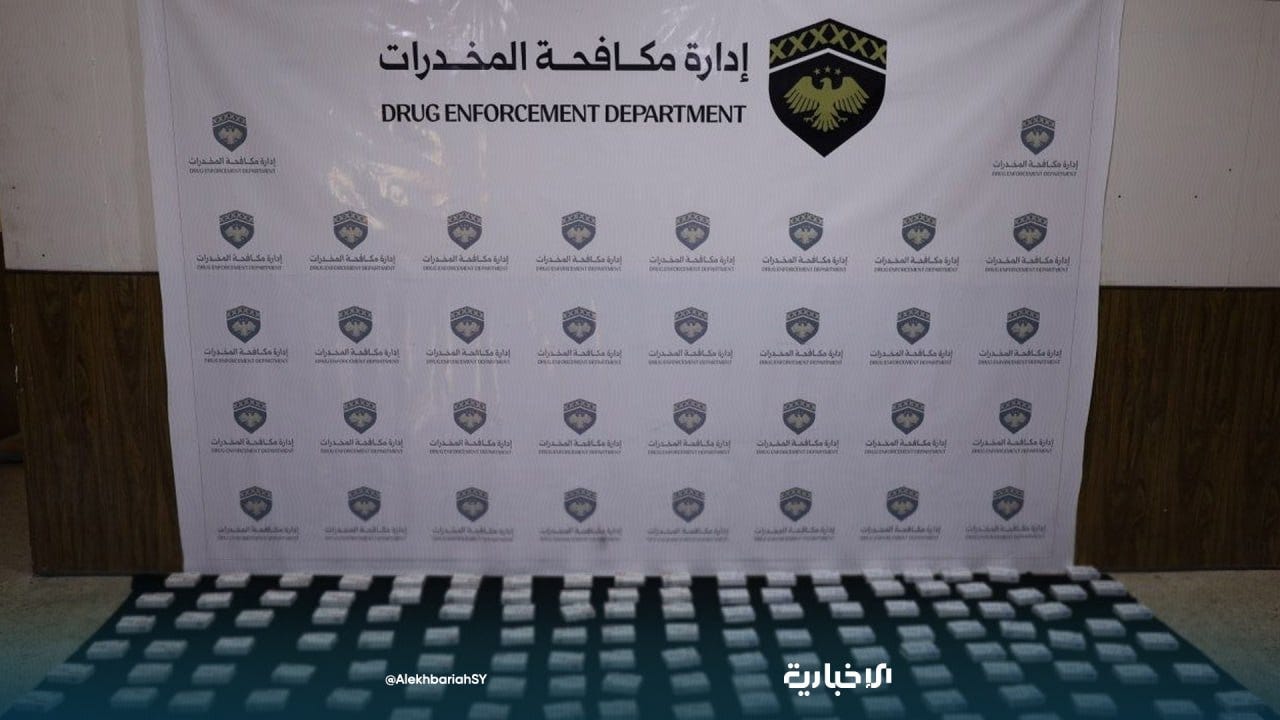
The MOI announced on October 31 that a total of 51,000 captagon pills, 9,571 kg of hashish and other narcotics had been seized in a series of raids in Aleppo in recent days.
Latakia:
N/A
Tartus:
One MOI Customs officer was killed and two others were injured in an ambush by suspected anti-government insurgents on the main road between Baniyas and Tartus late on October 29.
Hama:
One child was killed and two others were injured after triggering an unexploded cluster munition near Latamineh on October 30.
Rival families engaged in clashes in the al-Sawaiq district of Hama city late on November 2, but no casualties were confirmed. Several suspects were subsequently detained when MOI Internal Security deployed to the area.
Homs:
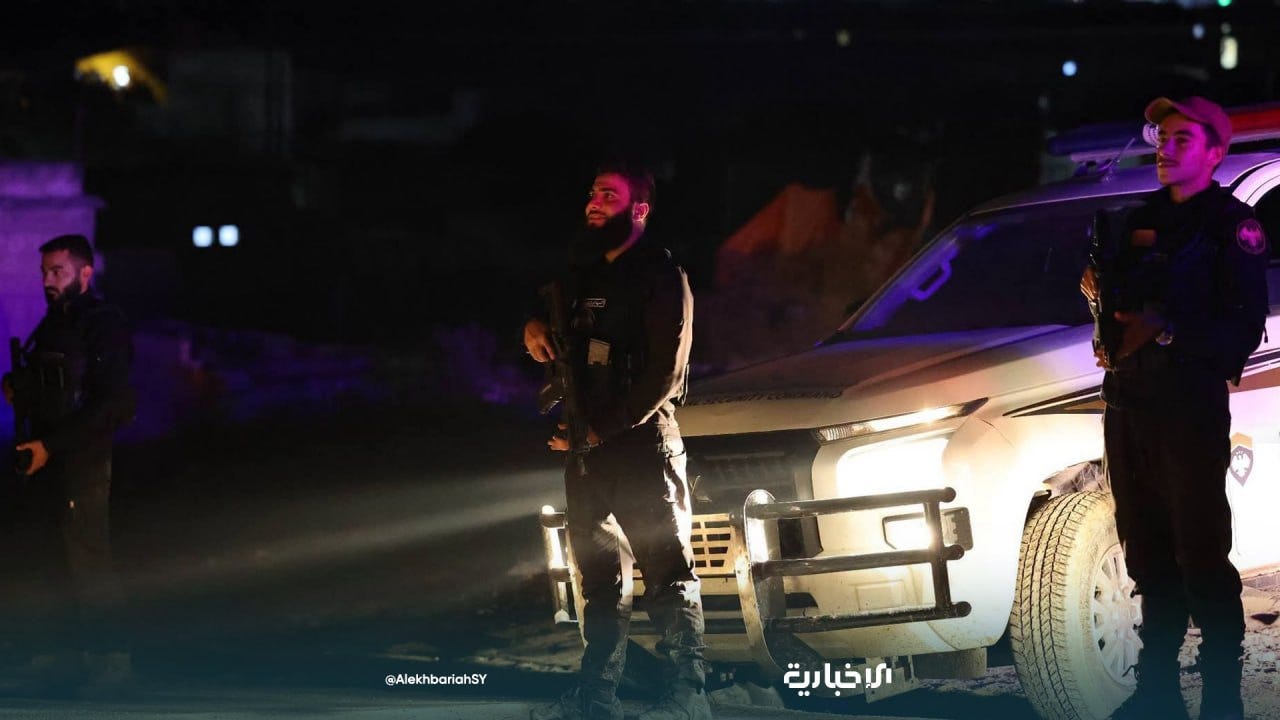
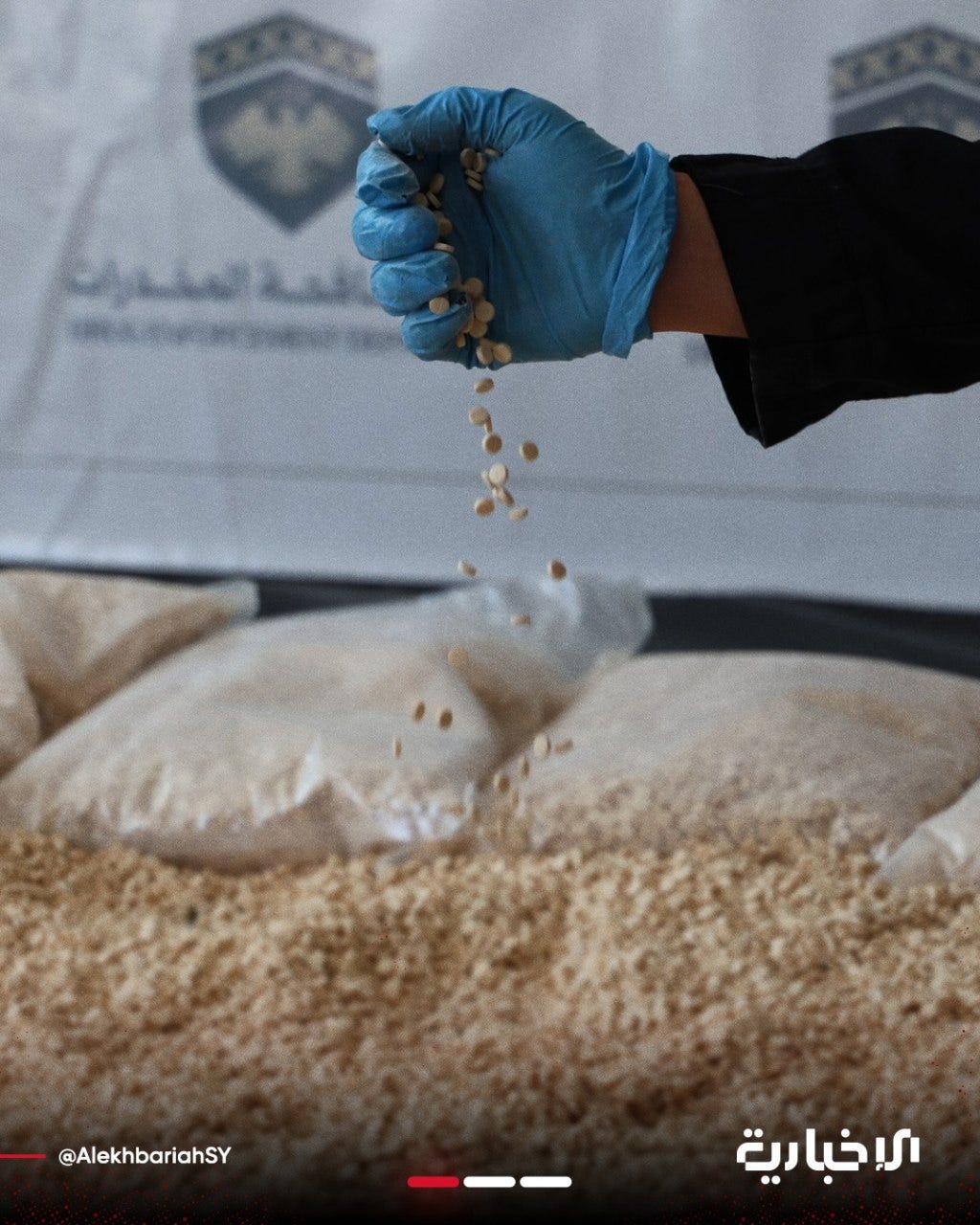
Two drug traffickers were detained and 200,000 Captagon pills were seized from their possession during an MOI counternarcotics raid in rural Homs on October 28. The narcotics had recently arrived from neighboring Lebanon.
Unidentified gunmen opened fire on a vehicle driving past the town of Hassiya late on October 28, but no casualties were caused.
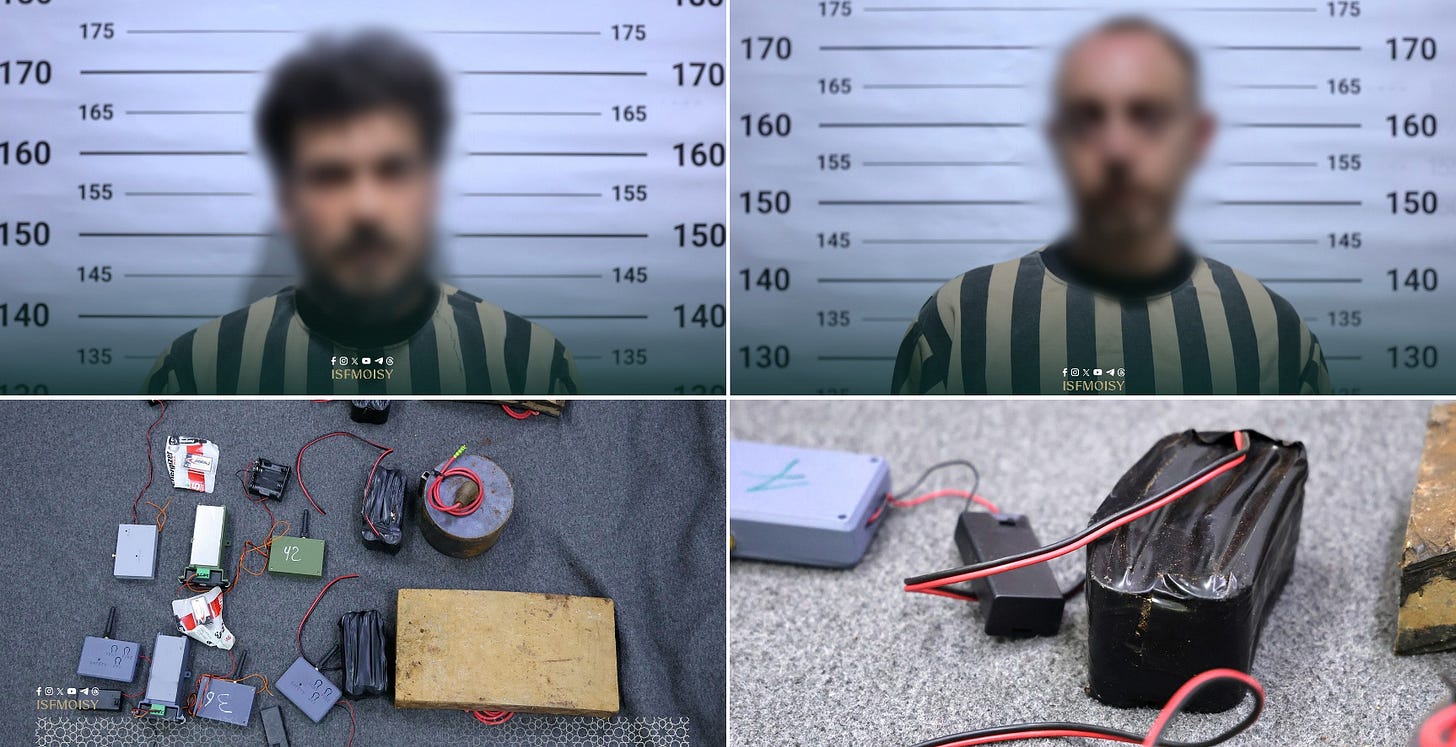
General Intelligence sources reported on November 1 that a plot to sabotage the Homs oil refinery had been foiled — though the identity of the perpetrators was not specified. On November 3, the MOI added that the plot was tied to Hezbollah, had involved explosive devices, and that two cell members had been captured alive.
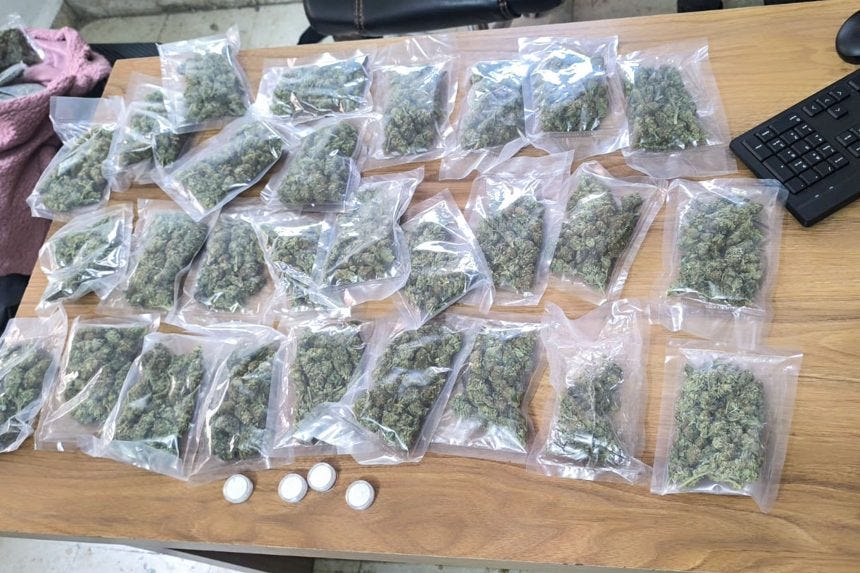
MOI Customs officers at the Jisr Qamar crossing with Lebanon seized a shipment of 2.6kg of hashish and 17g of heroin being smuggled into Syria from neighboring Lebanon on November 1.
Raqqa:
N/A
Hasakeh:
N/A
Deir ez Zour:
Five weapons traffickers were detained and a cache of rifles, one heavy machine gun, a handgun, and ammunition — along with 1,000 Captagon pills — was seized from their possession in an MOI Internal Security raid in Deir ez Zour on October 28.
MOI Internal Security in Deir ez Zour announced on October 28 that a series of weapons systems - including an RPG launcher and 5 RPG rounds, as well as a heavy machine gun, 5 rifles, and a large quantity of ammunition - had been seized in a series of raids in al-Mayadin earlier that day.
Two children were killed and two others injured after triggering an unexploded landmine in the village of Muayzilah on November 2.
Rif Dimashq:
A local engineer working within the local municipal office was shot dead by unidentified gunmen in a targeted attack in Zabadani on November 1.
Damascus:
N/A
Daraa:
Two children were injured after triggering an unexploded landmine near Khirbet al-Ghazaleh on October 30.
Jordanian armed forces claimed on October 31 to have intercepted a group of Syrian gunmen in an attempted infiltration of Jordanian territory from southern Daraa early on October 31. The Jordanian statement was later deleted and Syrian sources clarified the group had in fact been children and that Syrian MOD Border Guards had rescued them. No casualties were caused.
Suwayda:
Druze National Guard militiamen engaged MOI Internal Security forces in armed clashes along the al-Majdal and al-Mazraa frontline in western Suwayda on October 28. But no casualties were confirmed.
Druze National Guard militiamen mobilized at the Umm al-Zaytoun checkpoint on October 29 and blocked all employees of Suwayda’s General Secretariat from crossing into the government-controlled village of al-Suwara al-Saghir to attend work.
Heavy clashes - involving RPGs and heavy machine guns - erupted between rival Druze militiamen linked to the Rizwan and Abu Sarhan families in the al-Haroubi and al-Mohandiseen districts of Suwayda city late on October 29, resulting in several combatant casualties.
A Jordanian UN employee was injured in crossfire.
Druze National Guard militiamen launched several mortar shells towards MOI Internal Security positions along the al-Majdal and Tel Hadid frontline in western Suwayda late on October 29. The shelling triggered clashes, but no confirmed casualties.
Jordanian armed forces intercepted three heavy-lift helium balloons carrying approximately 250,000 captagon pills after their launch from Suwayda’s southern desert in the early hours of October 31.
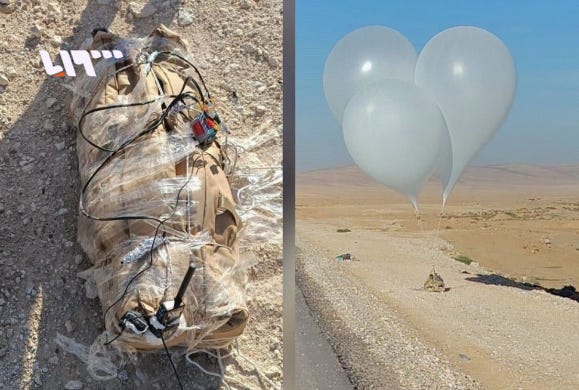
Druze National Guard militiamen under the command of Uday Murshid kidnapped one man on the Damascus highway outside Suwayda city late on November 1.
Unidentified gunmen fired one RPG towards the home of prominent Druze National Guard commander Nour Azzam near the al-Thaala roundabout in Suwayda city on November 2, but no casualties were caused.