

FREE -- Syria Weekly: May 26-June 2, 2026
Sharaa-Trump call heralds potential SST breakthrough; Suwayda exam crisis talks break down; East flooding causes widespread damage; OPCW seizes Sarin materials; Abassi deaths trigger anger; & more.

Dear readers,
Welcome to this FREE first-of-the-month newsletter. To receive more full posts, and all the weekly dataset updates & analysis, as well as weekly videos and other posts, please consider becoming a paid subscriber:
SYRIA’S TRANSITION:
Transition Meetings:
May 26:
Deputy Interior Minister Major General Abdulqader Tahhan hosted a meeting with Canadian Ambassador Gregory Galligan in Damascus on May 26, during which they primarily discussed immigration and visa matters and steps to better facilitate procedures for travel.
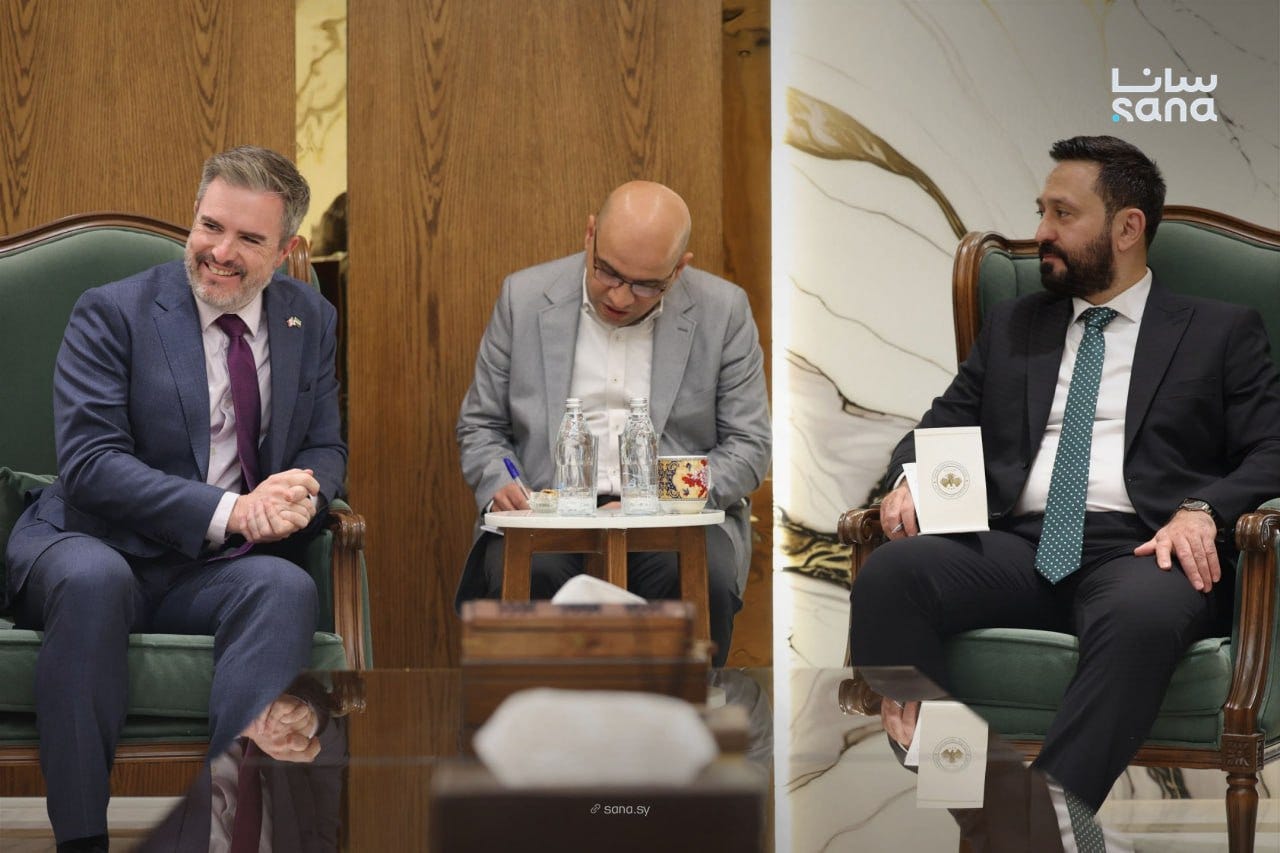
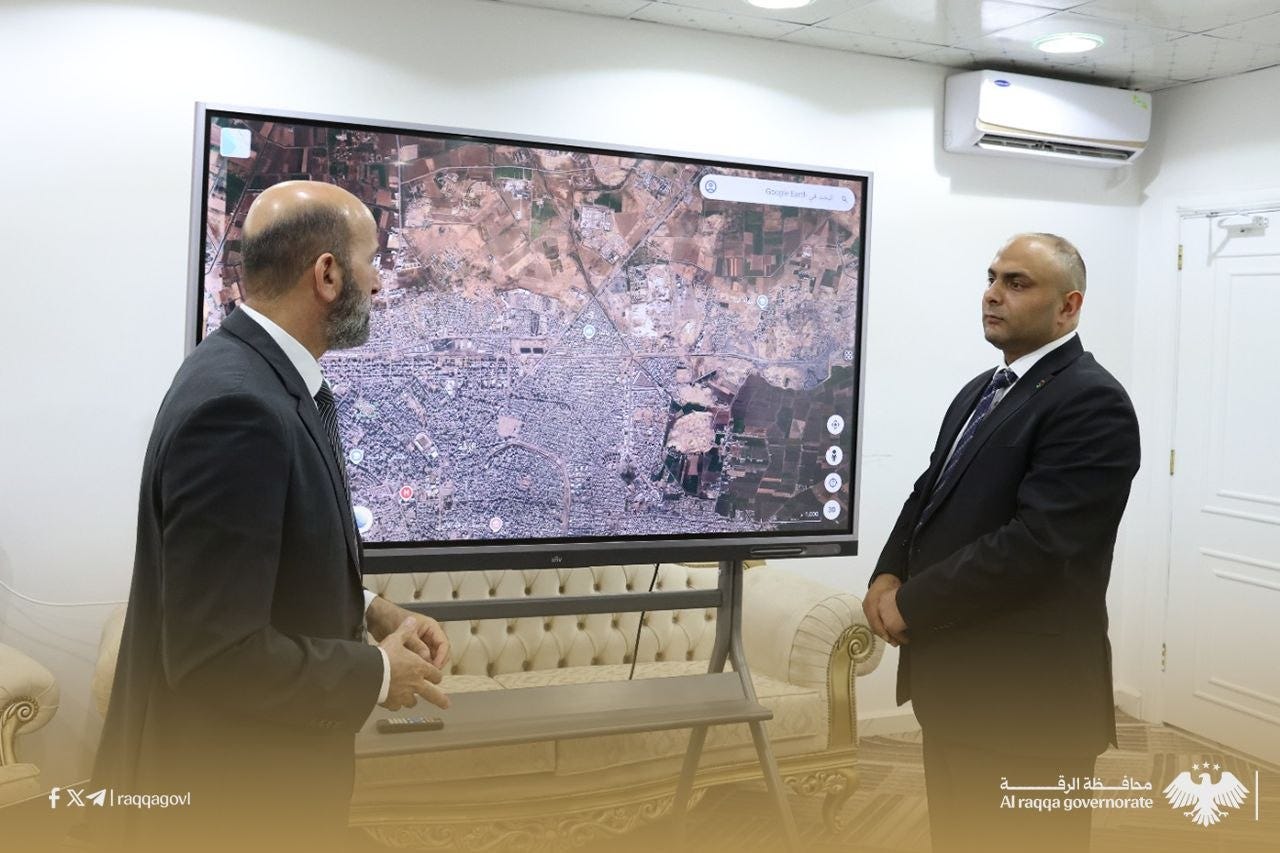
Libya’s Deputy Ambassador, Mohammed al-Qamishi, traveled to Raqqa on May 26 and met with Governor Abdulrahman Salama to discuss conditions in the governorate, as well as ongoing rehabilitation and construction work on mosques, parks, the municipal stadium and historic sites.
May 27:
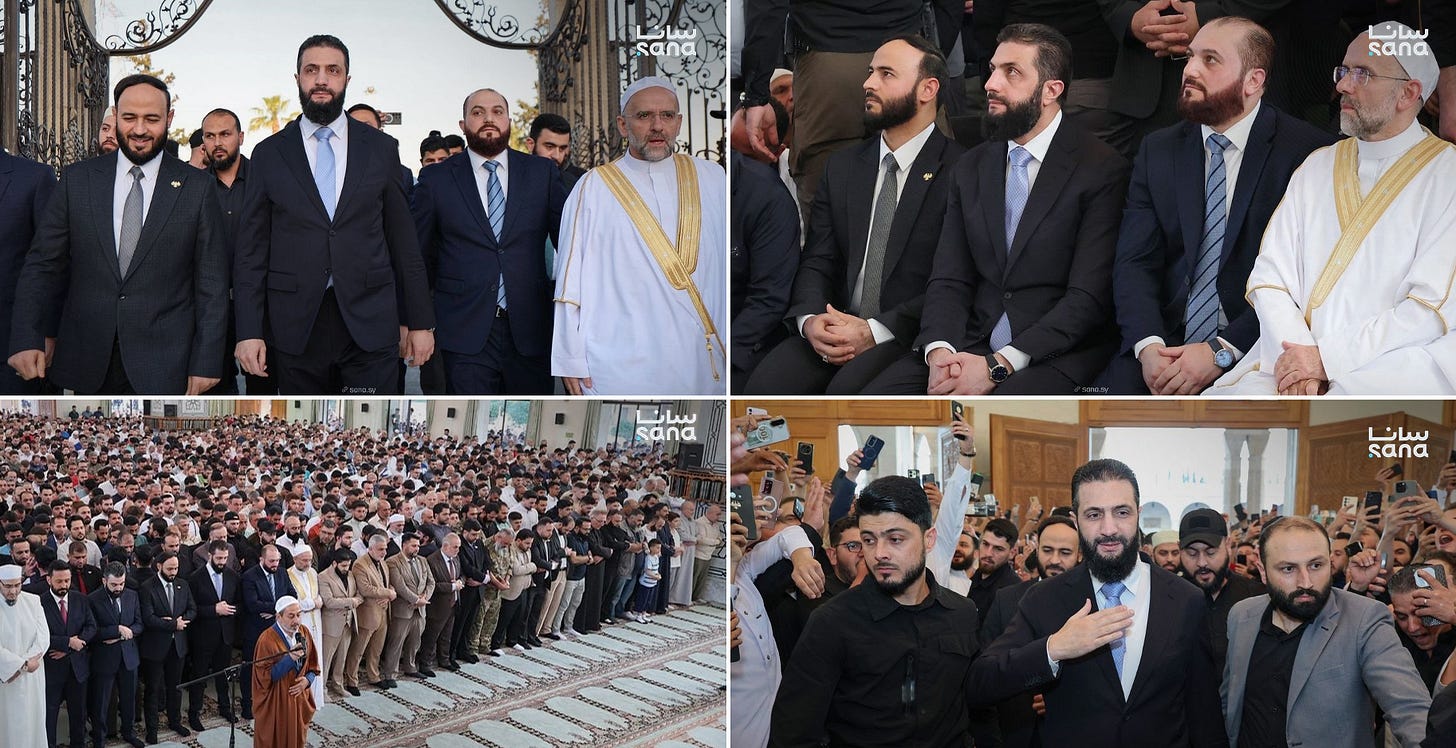
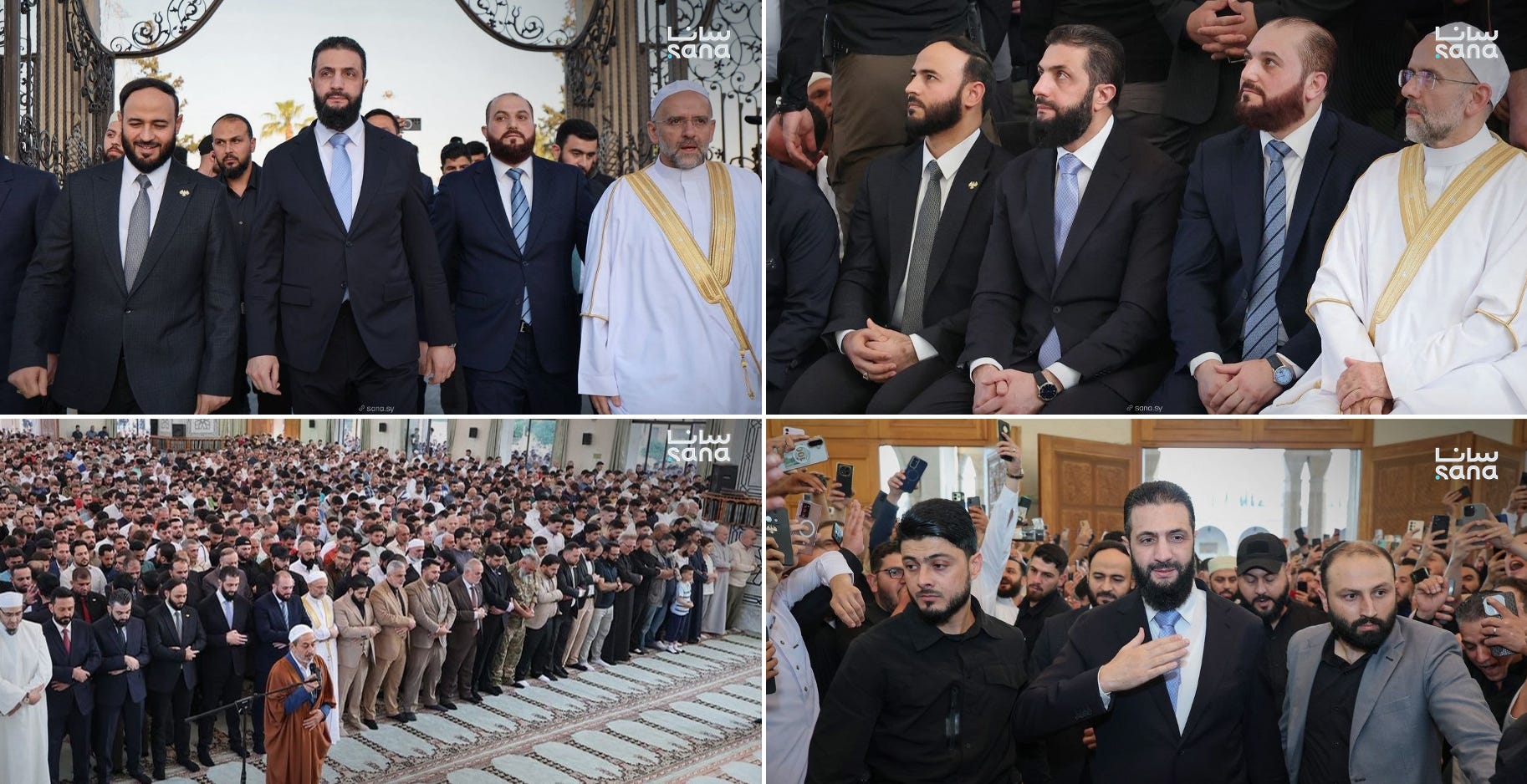
President Ahmed al-Sharaa traveled to Aleppo early on May 27 in order to participate in Eid al-Adha prayers at the Abdullah bin Abbas Mosque, alongside Governor of Damascus (Maher Marwan), Governor of Aleppo (Azzam al-Gharib), Minister of Local Administration (Mohammed Anjarani) and Minister of Economy and Industry (Nidal al-Shaar).
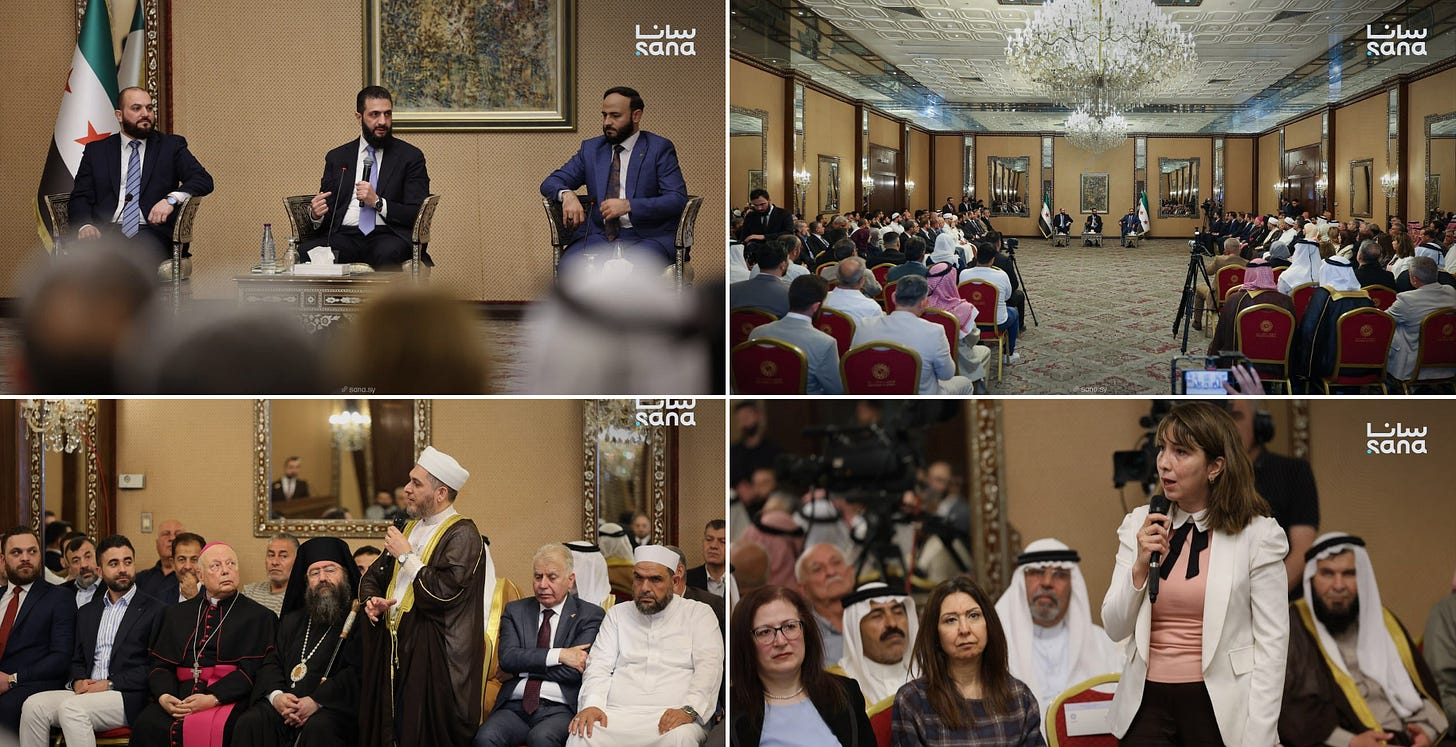
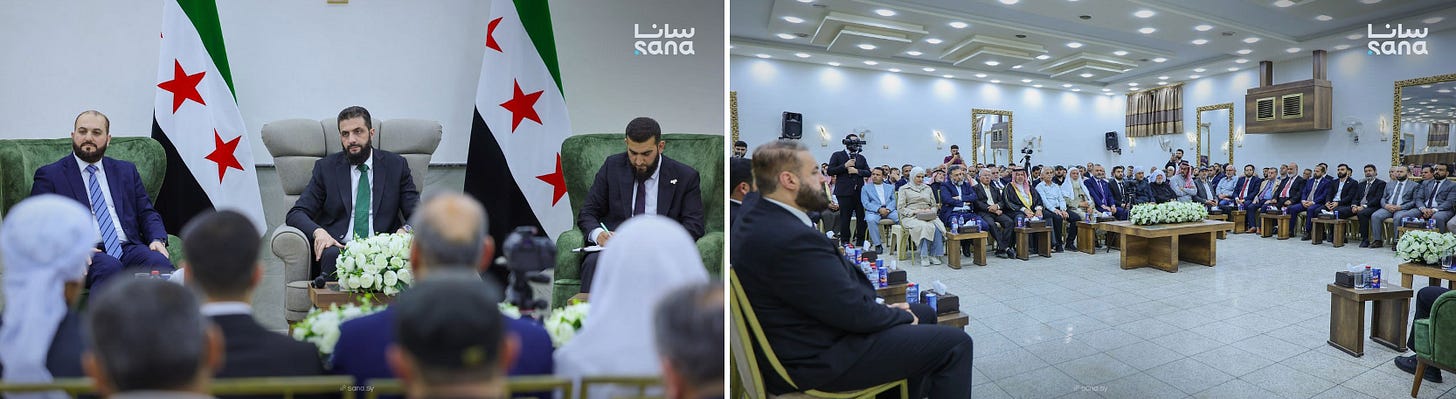
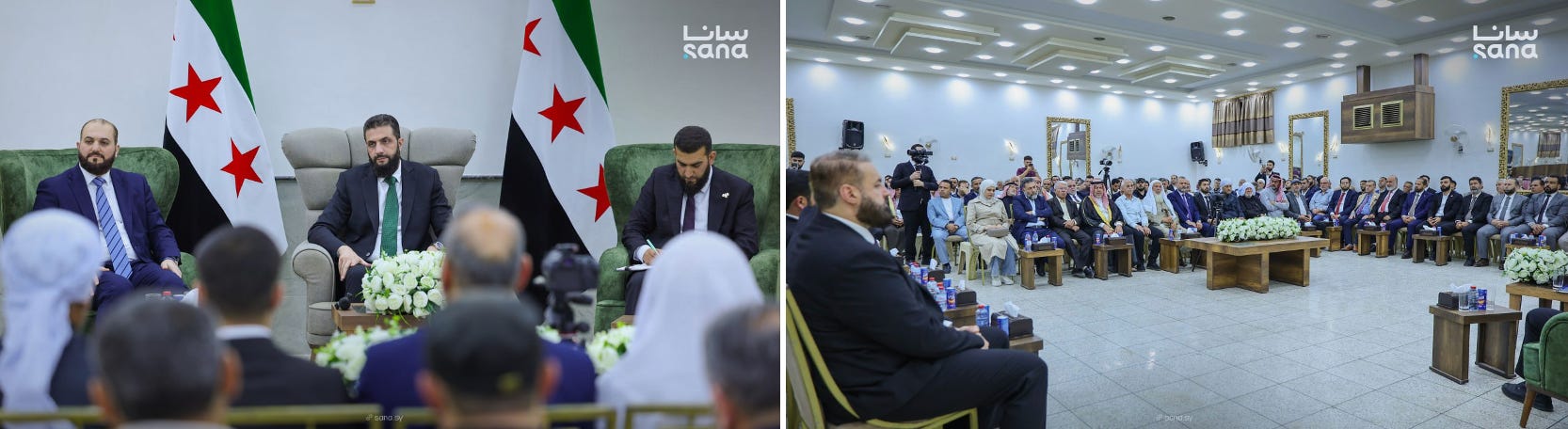
Later that day, President al-Sharaa participated in a meeting with a large group of Aleppo’s notables, from religious leaders, tribal leaders, the business community and civil society.
That evening, President al-Sharaa also traveled to Idlib city and met with a group of notables.
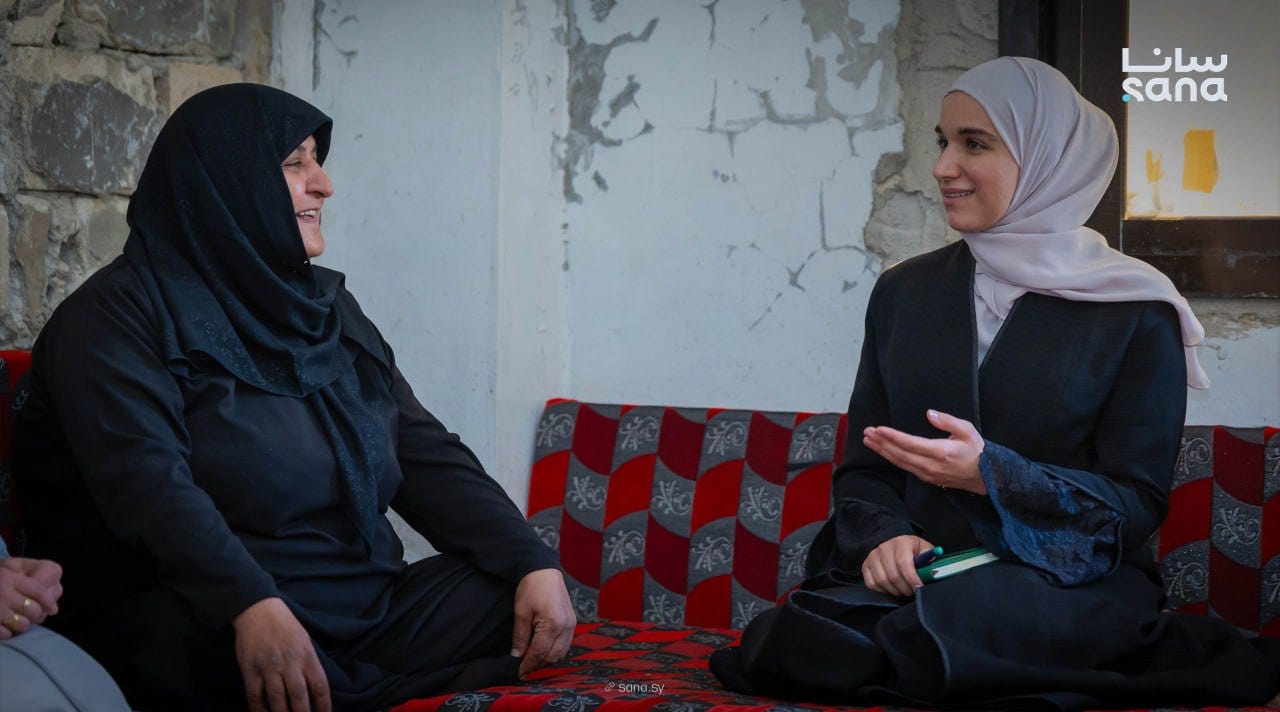
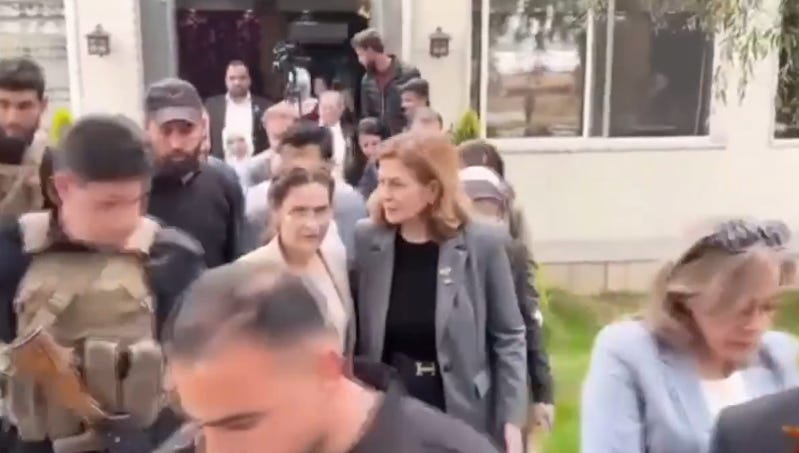
Syria’s First Lady, Latifa al-Droubi, visited Samir al-Qaddour, the director of a school in rural Idlib and mother of a man killed in the war who is well known for her social and educational leadership and activism. Qaddour had returned to her hometown of Kafranbel in December 2024 and led the rehabilitation of a local school by a team of women.
May 28:
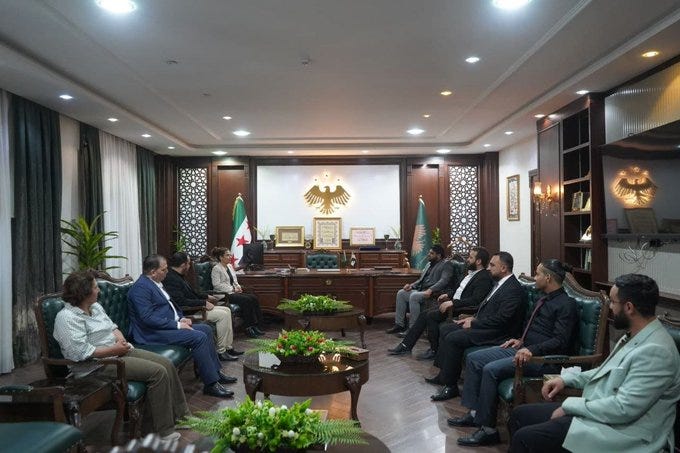
Senior SDF official Ilham Ahmed visited Afrin, Aleppo on May 28, meeting with district official Khayro Dawoud and other district staff.
May 29:
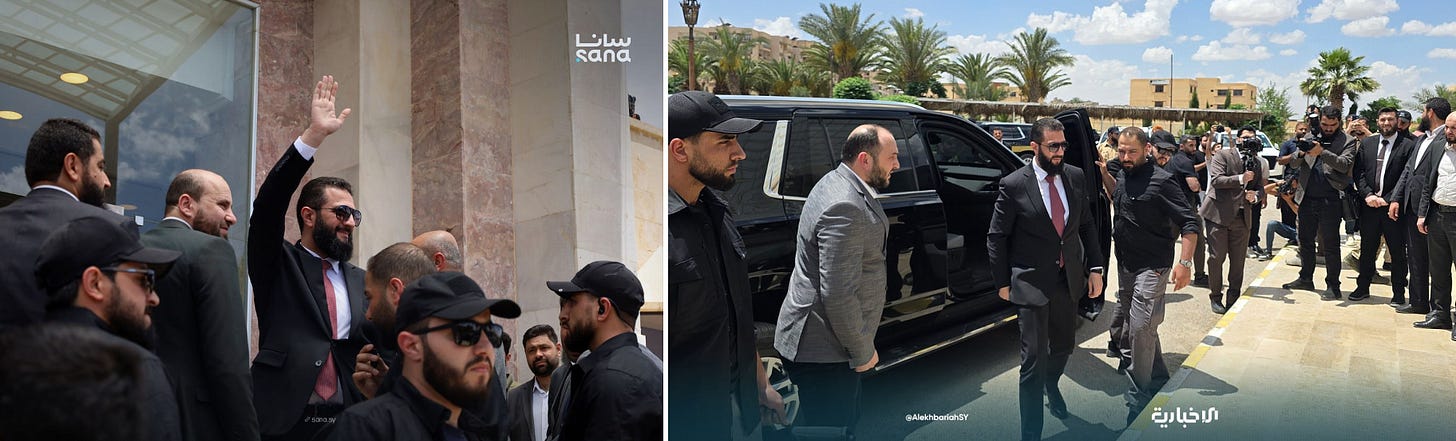
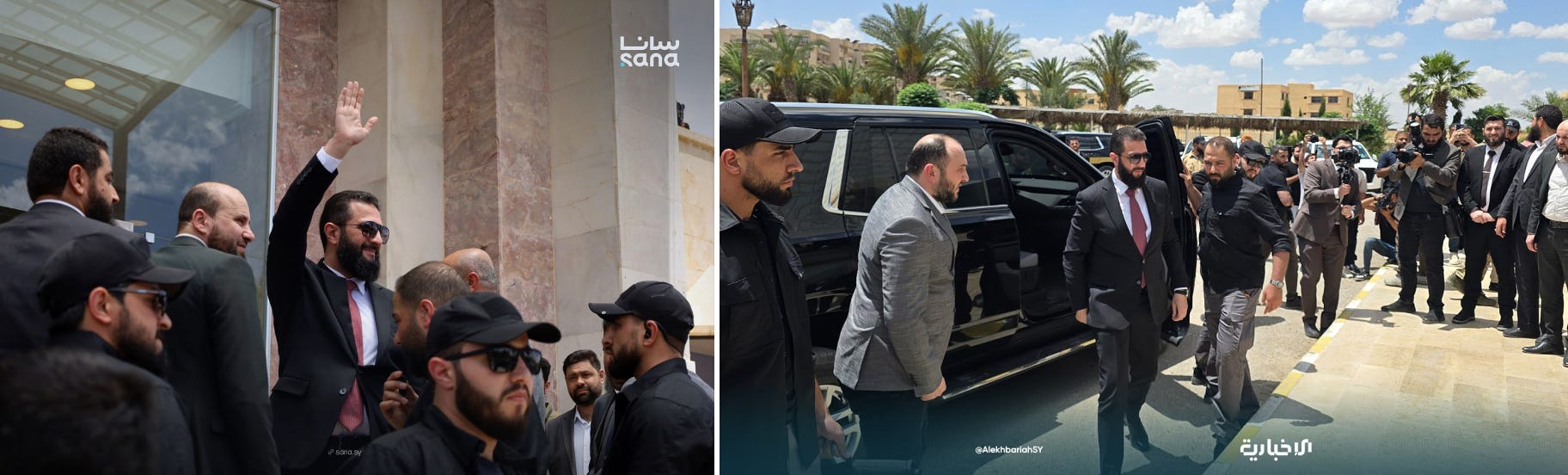
President Ahmed al-Sharaa traveled to Deir ez Your on May 29 to assess damage from the ongoing flooding and to lead a meeting with senior government officials managing the emergency response at the Badia al-Sham Hotel.
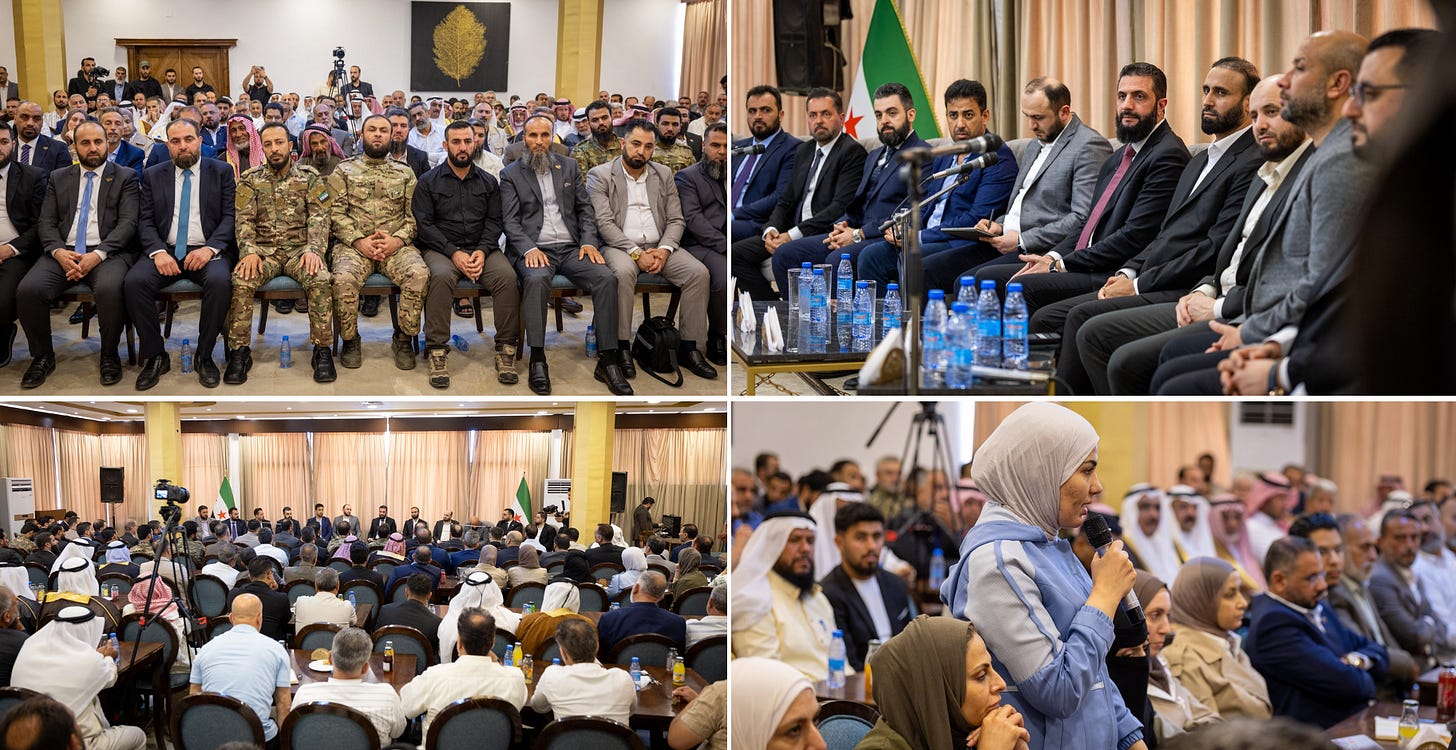
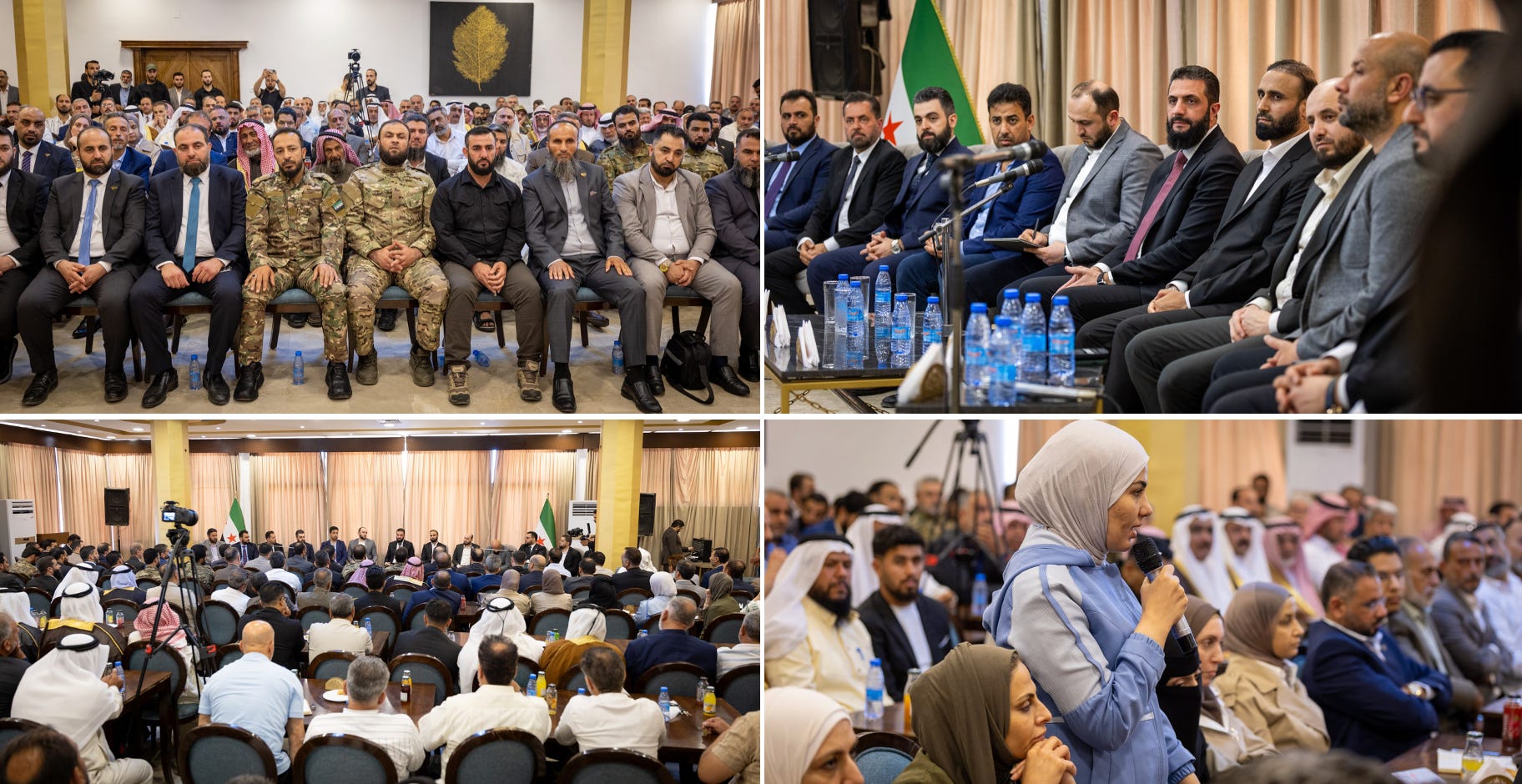
Later that day, President al-Sharaa attended a large gathering of regional notables, to discuss and take questions regarding the flooding, as well as broader issues of service, development, and livelihood concerns. The meeting was attended by Governor Ziyad al-Ayyash, the Ministers of Energy (Mohammed al-Bashir), Health (Musab al-Ali), Emergency and Disaster Response (Raed al-Saleh), Agriculture (Bassel al-Suwaydan), Public Housing (Mustafa Abdulrazzaq) and Administration and Environment (Mohammed Anjarani), as well as the Foreign Ministry’s Director of International Cooperation (Qutaiba Qadesh), and the CEO of the Syrian Petroleum Company (Yousef al-Qablawi).
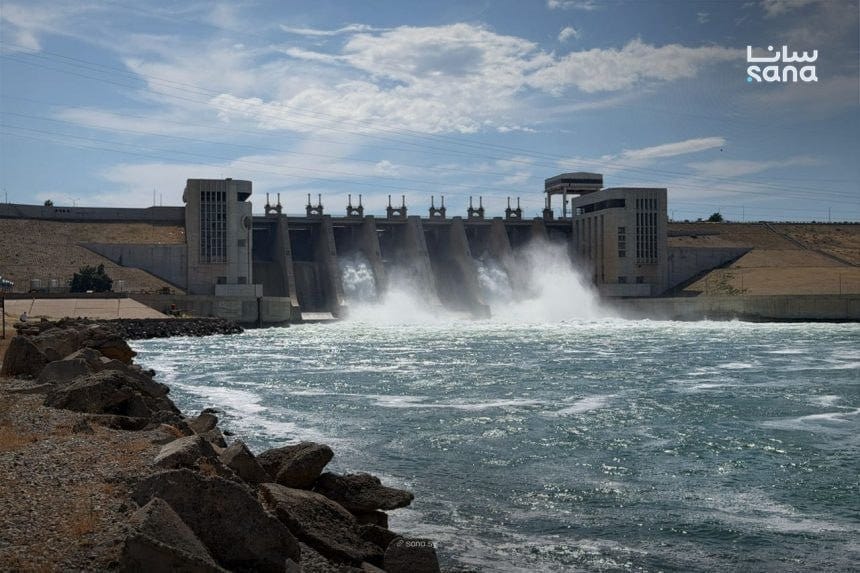
Late on May 29, Energy Minister al-Bashir traveled to Raqqa and inspected conditions at the Euphrates Dam, where water release had been reduced by approximately 100 cubic meters per second, to coincide with a reduction in the flow from Turkey to the north.
May 30:
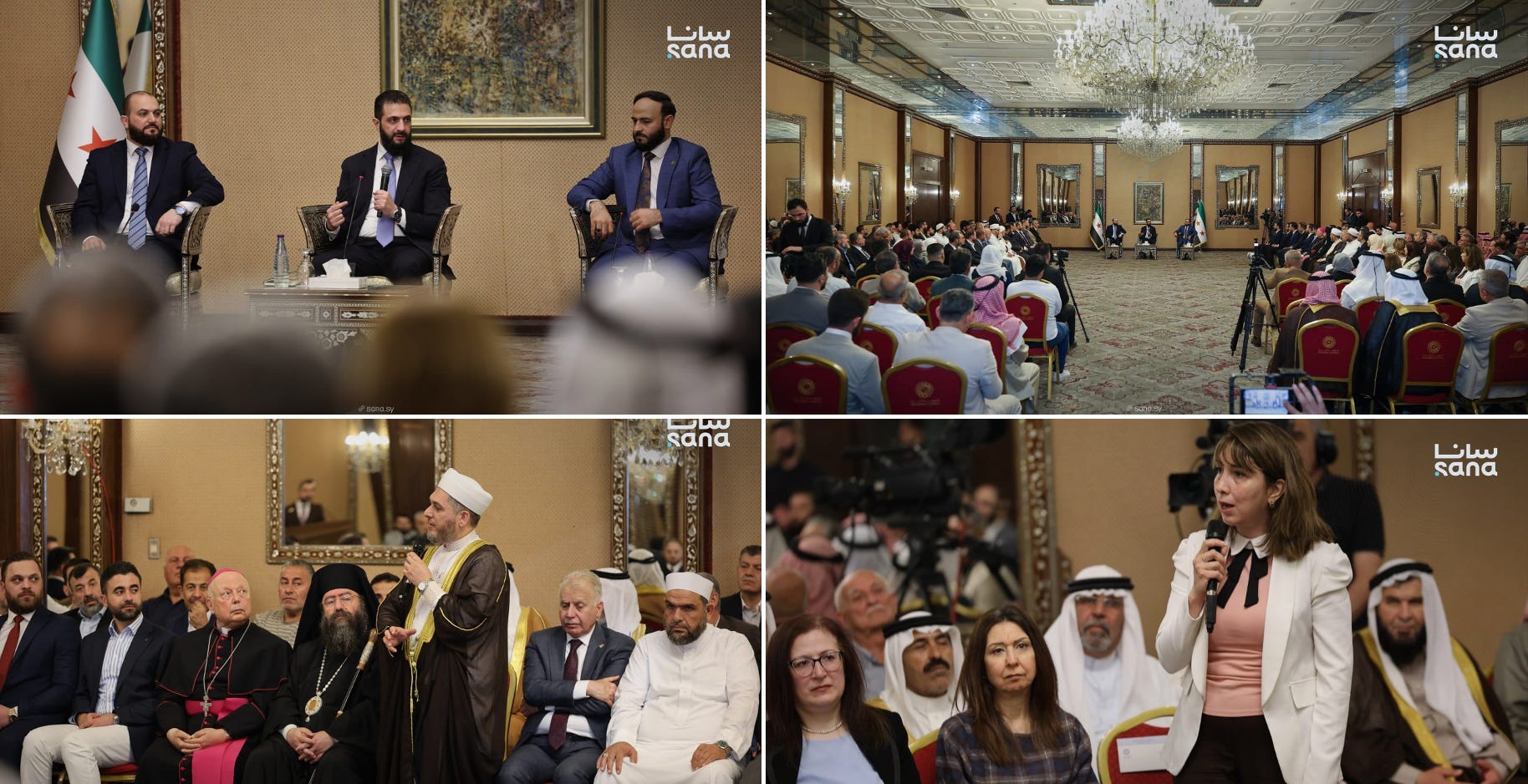
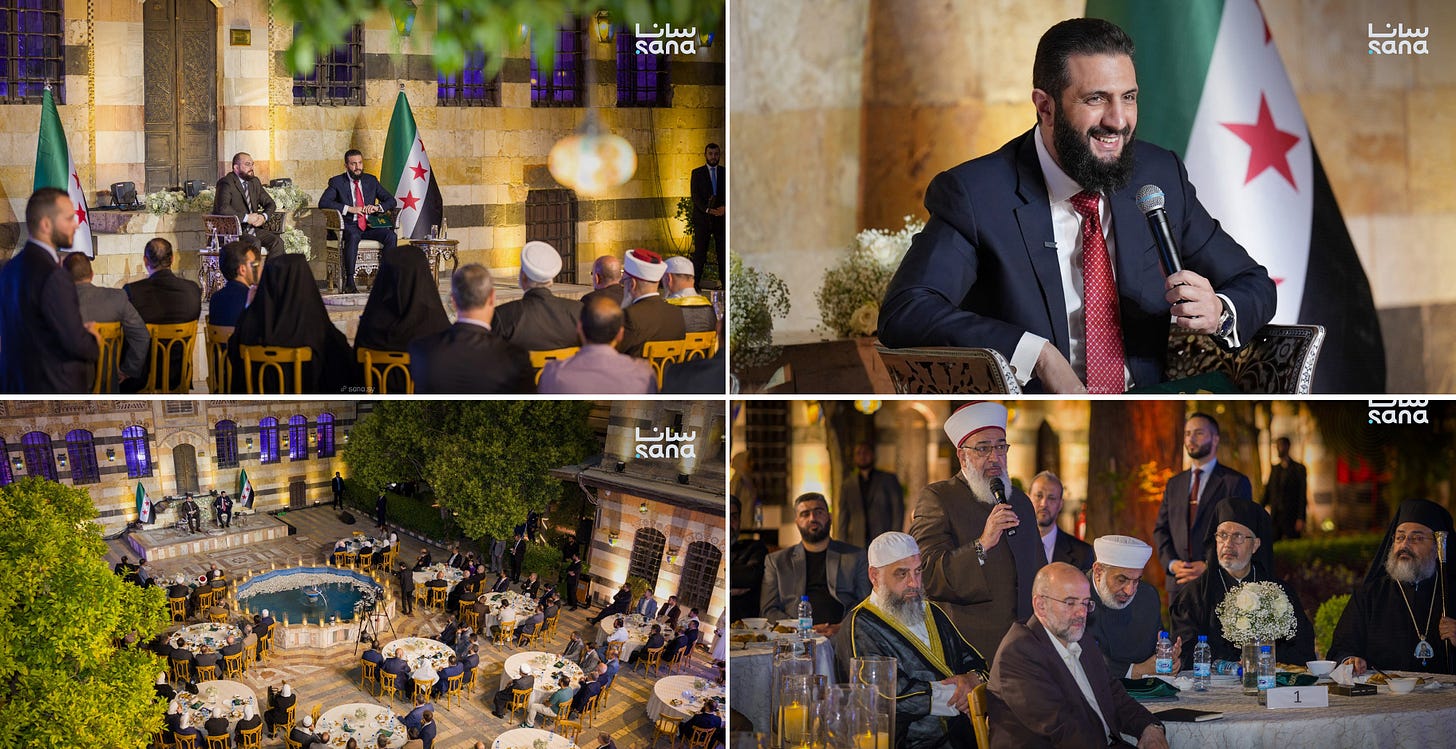
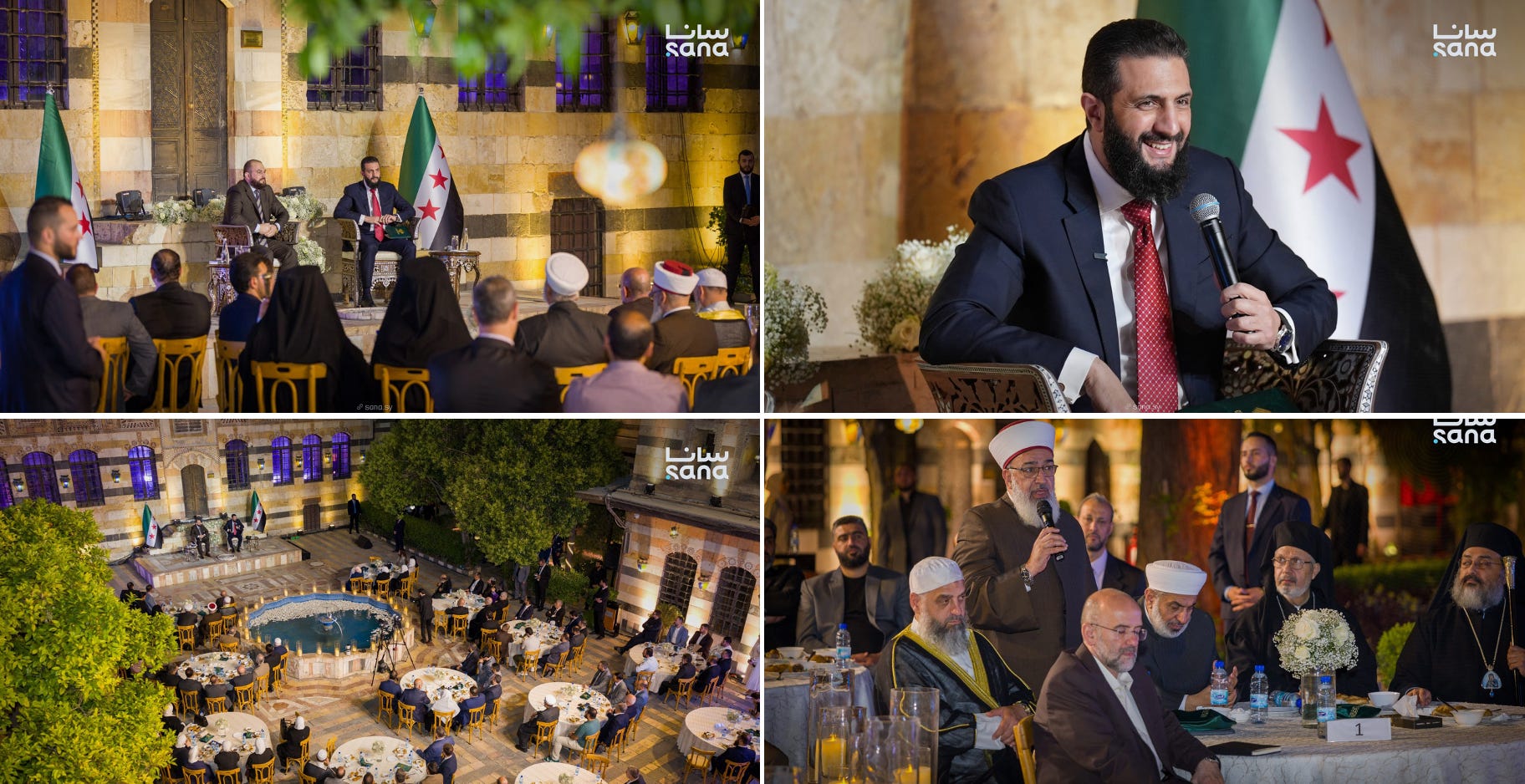
President Ahmed al-Sharaa met with a group of civil, religious, business and political notables from across Damascus at the al-Azm Palace on May 30, to mark Eid al-Adha.
Minister of Social Affairs and Labor Hind Kabawat accompanied senior SDF political leader Ilham Ahmed on a visit to, and tour of areas of Afrin, Aleppo on May 30.
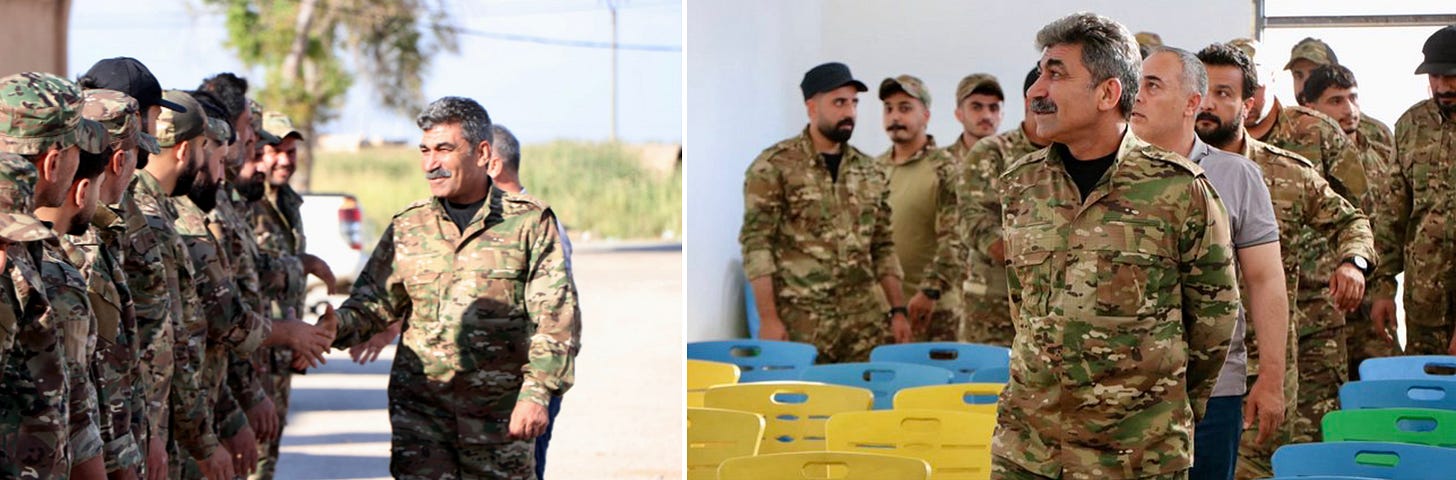
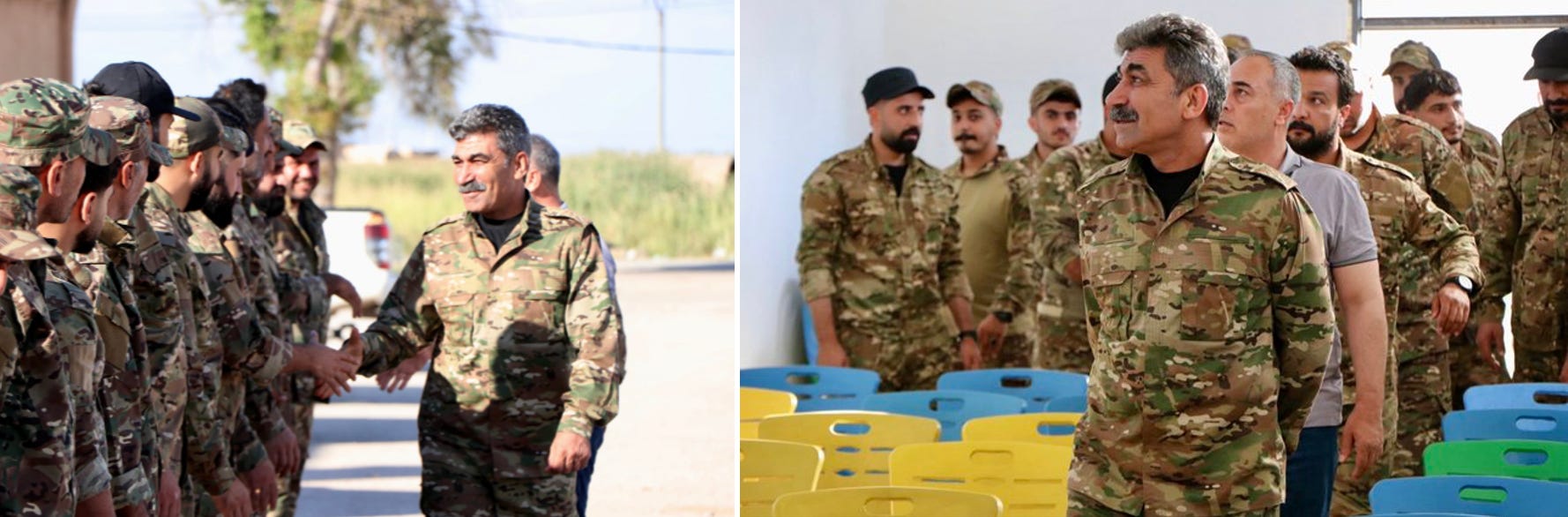
Assistant Minister of Defense for Eastern Region, Sipan Hamo, conducted an inspection tour of the MOD’s 60th Division, Qamishli Brigade on May 30, which Hamo said was to mark Eid al-Adha and to extend his appreciation for the soldiers’ “efforts and sacrifices in performing their national duty, and to congratulate all the officers of the brigade and elements of the Syrian Arab Army.” All members of the 60th Division are former SDF fighters and the Qamishli Brigade is led by Luqman Xelil.
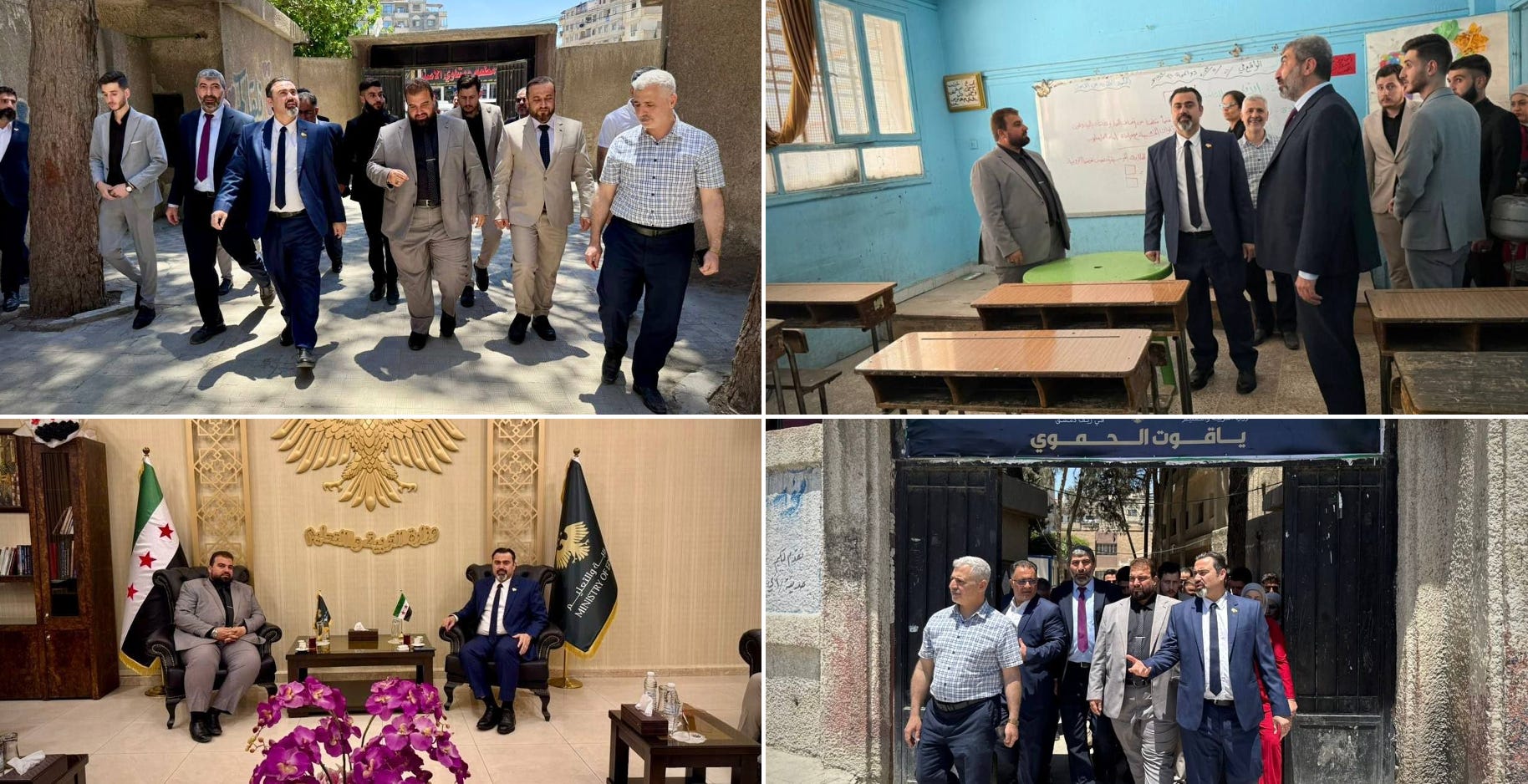
Minister of Education Mohammed Turko hosted a meeting with Governor to Suwayda Mustafa Bakkour on May 30 to discuss preparations being made to facilitate examinations to be taken by students from Suwayda in government-accredited exam centers in Rif Dimashq.
They later visited centers in Jaramana, Sahnaya and al-Ashrafiyeh that were equipped to host students from Suwayda.
May 31:
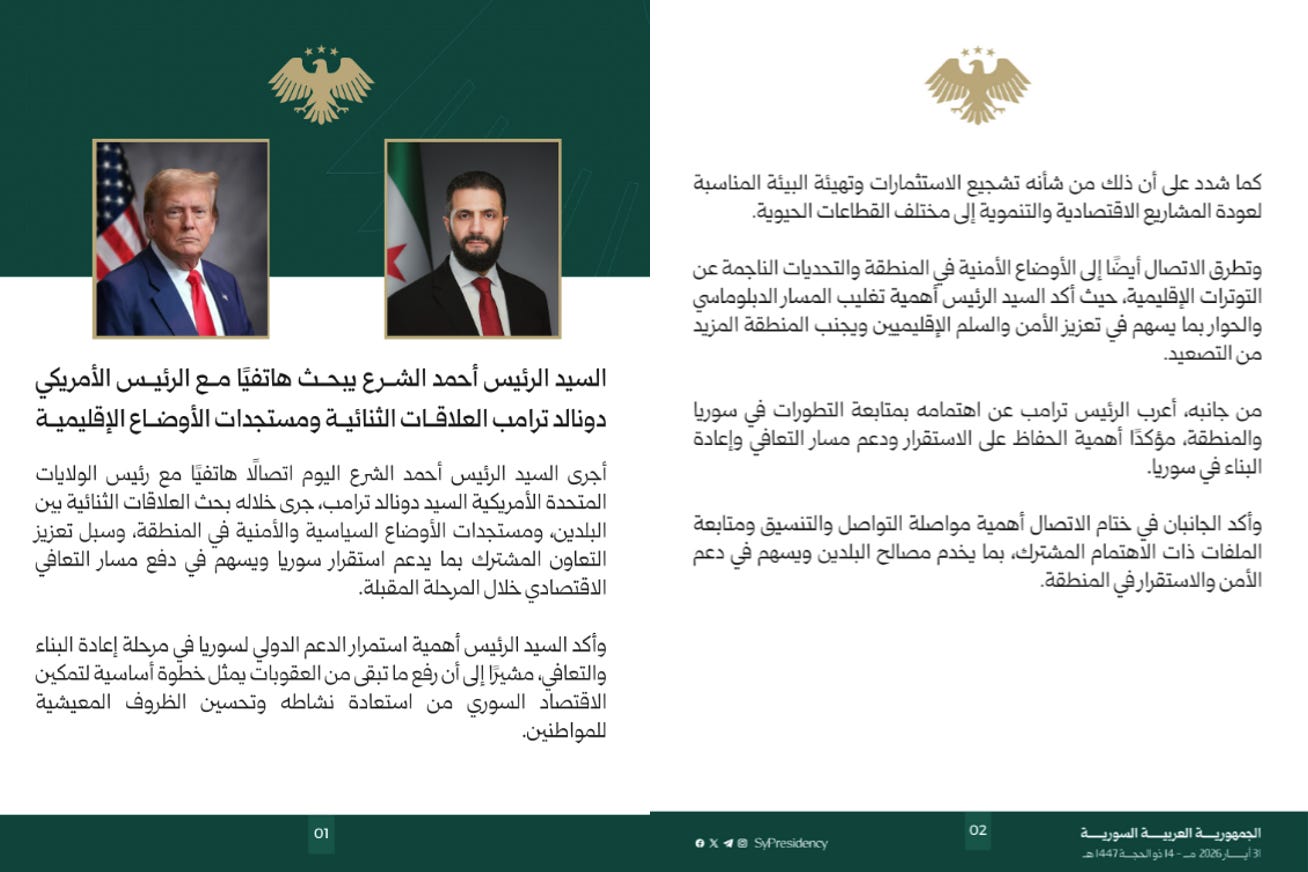
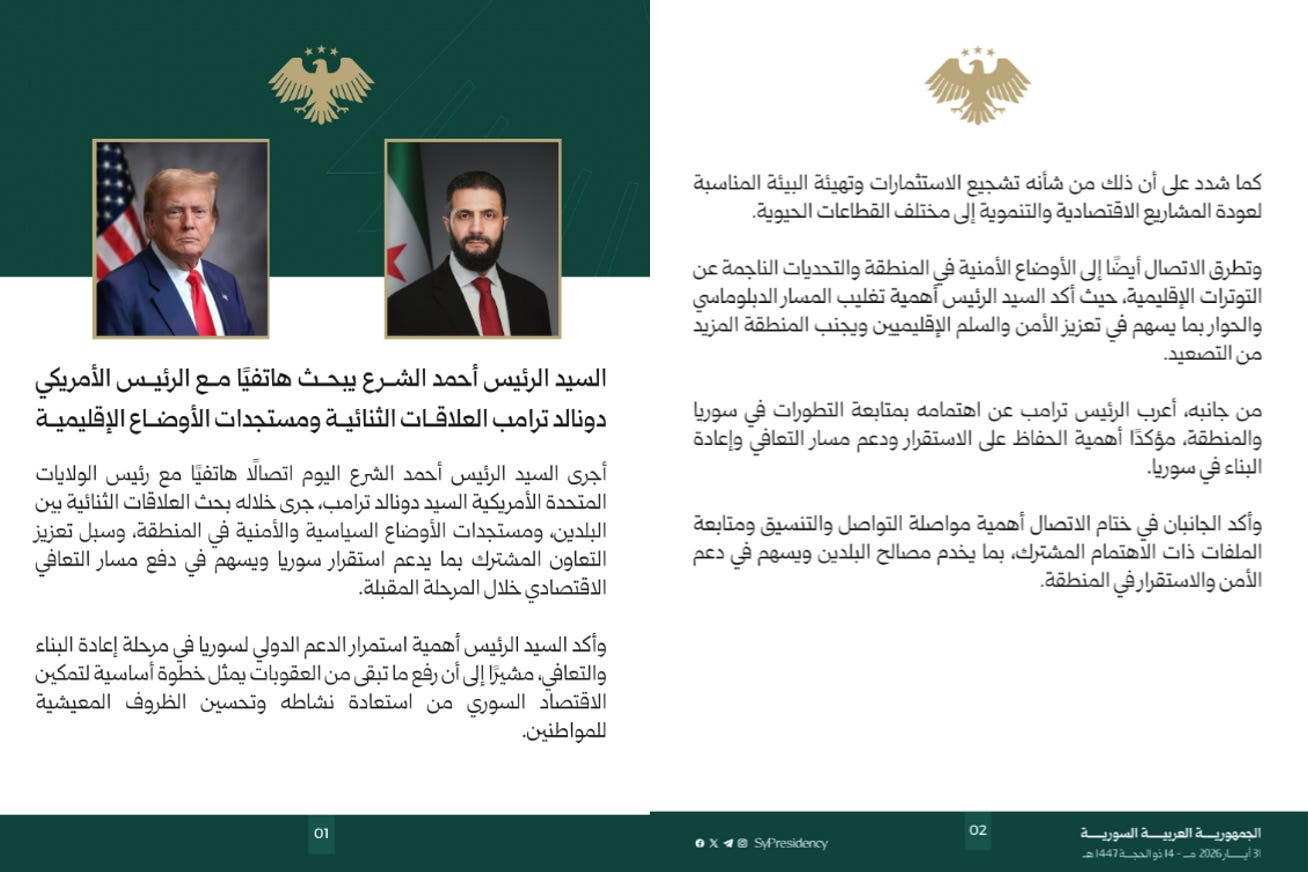
President Ahmed al-Sharaa spoke by phone with U.S. President Donald Trump on May 31, during which they reportedly discussed opportunities to increase cooperation and the importance of continued support to further Syria’s recovery, including in lifting remaining sanctions — a likely reference to the State Sponsor of Terrorism (SST) designation that remains in place.
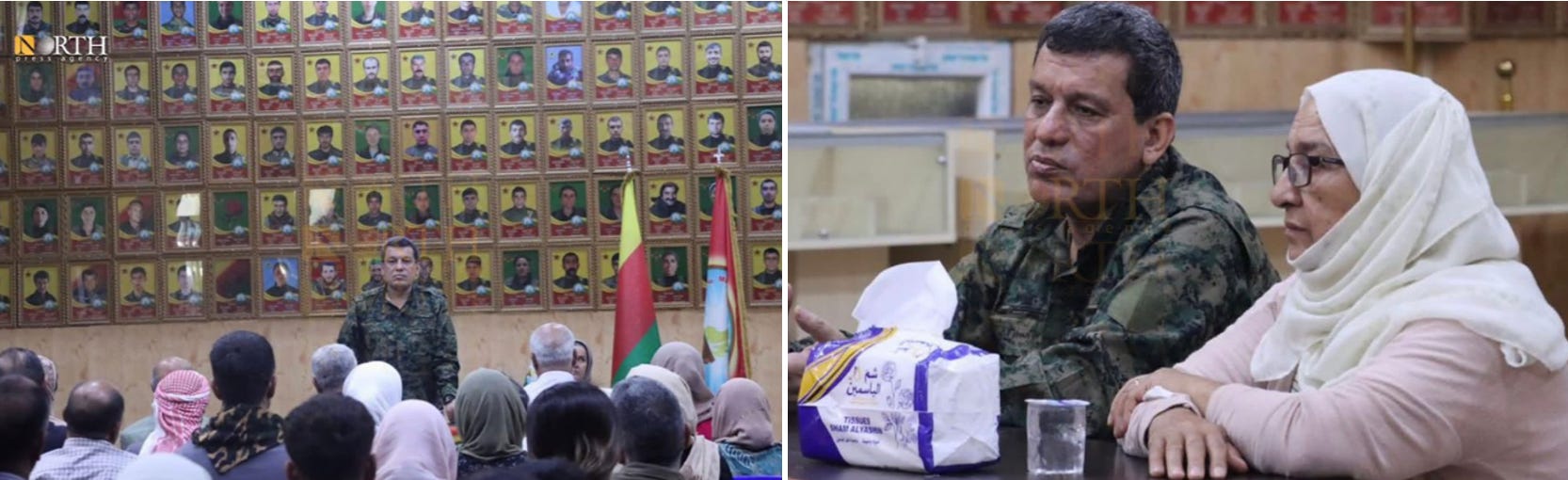
SDF leader Mazloum Abdi participated in a roundtable meeting in Kobani, Aleppo with relatives of Kurdish prisoners currently being held by government authorities.
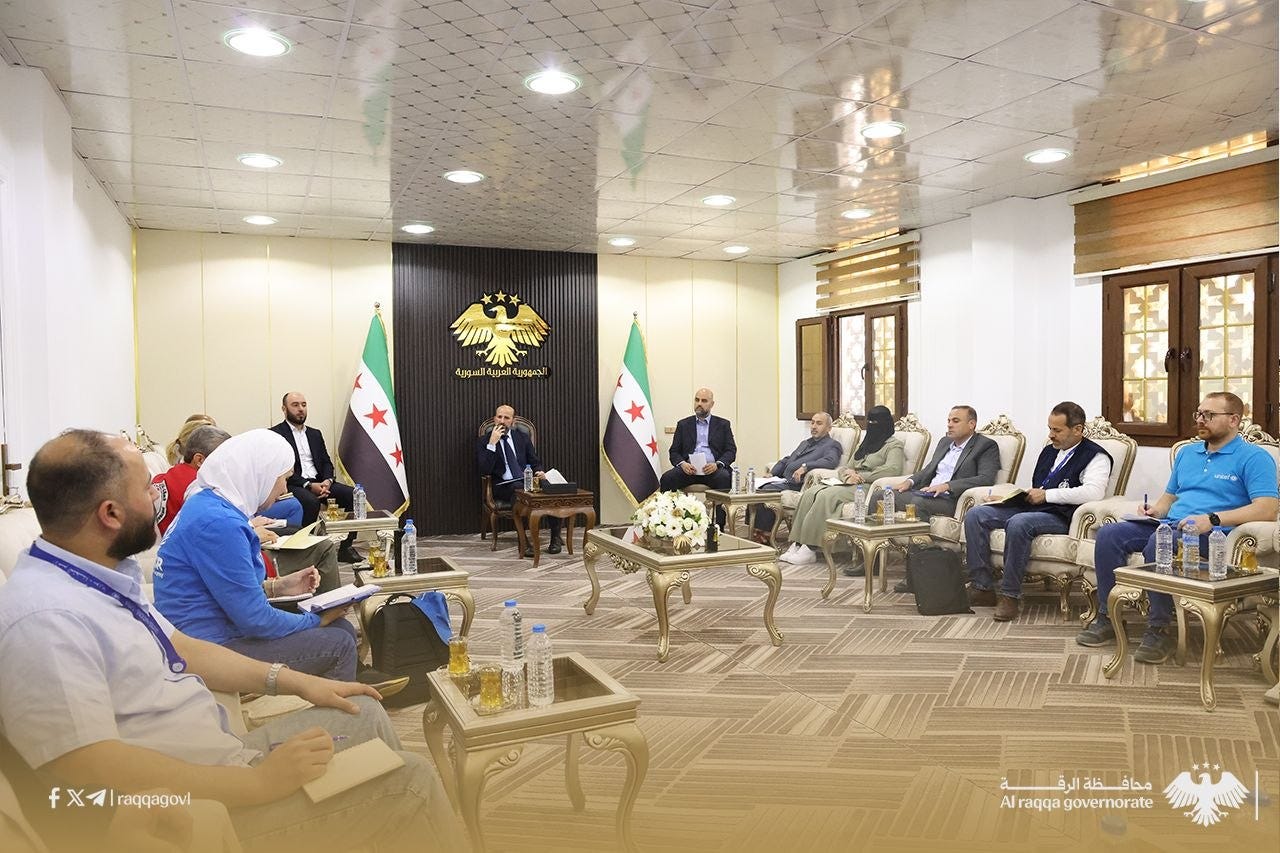
Governor of Raqqa Abdulrahman Salama hosted a meeting with representatives of all UN agencies operating in the governorate on May 30 in order to discuss joint coordination of responses to ongoing flooding.
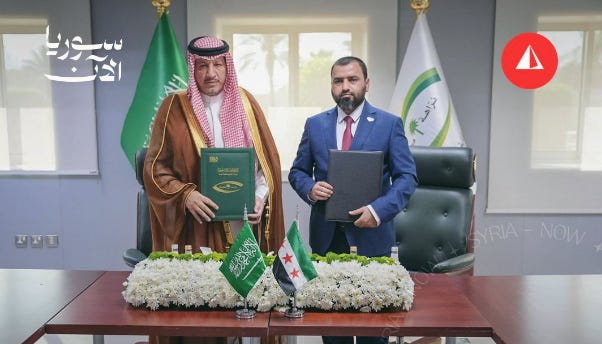
Syria’s Central Authority for Control and Inspection signed a memorandum of understanding with their Saudi counterparts during a visit to Riyadh, Saudi Arabia on May 31 -- specifically to cooperate in countering corruption and cross-border organized crime.
June 1:
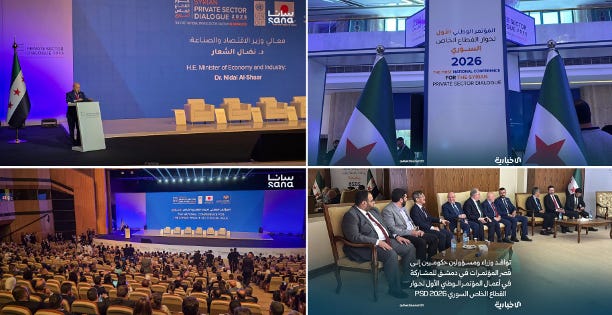
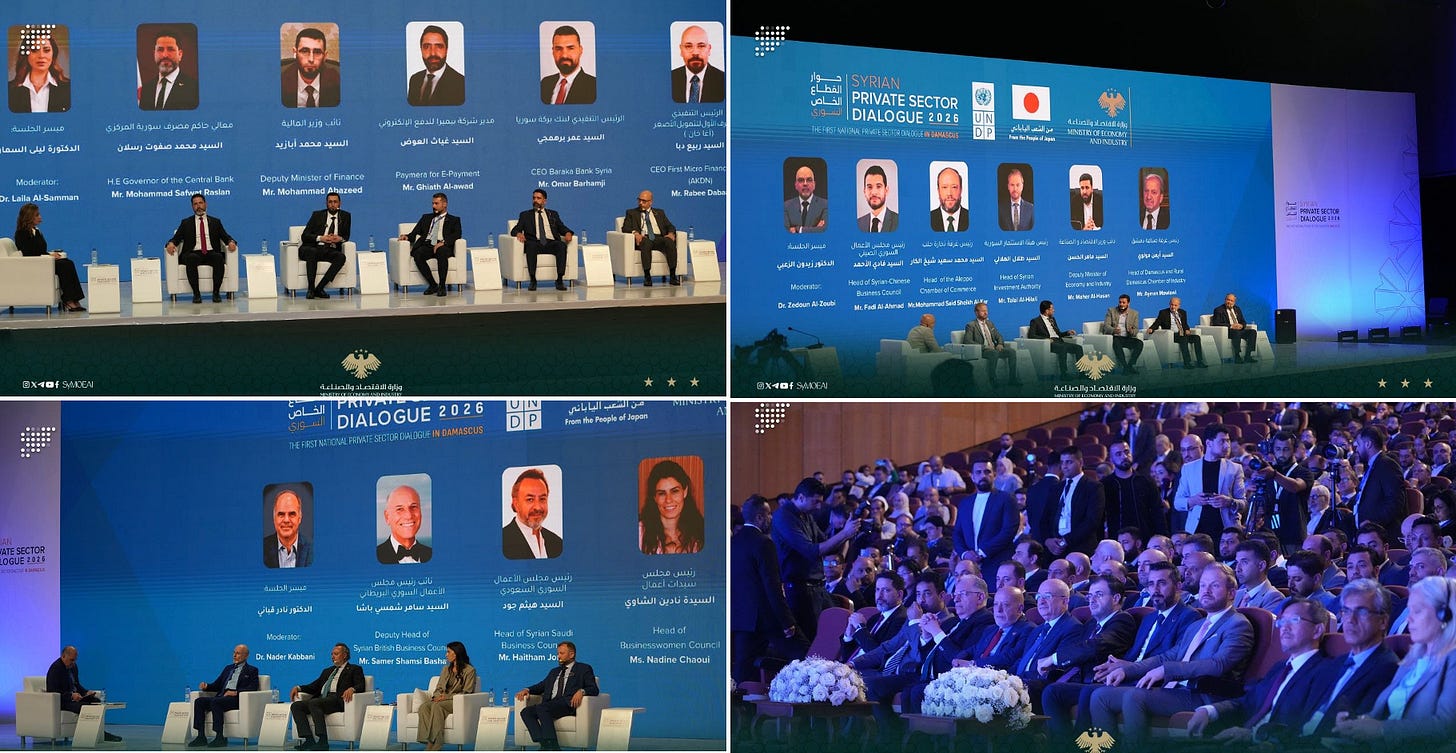
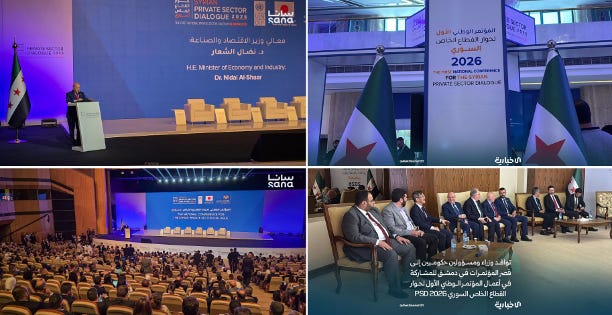
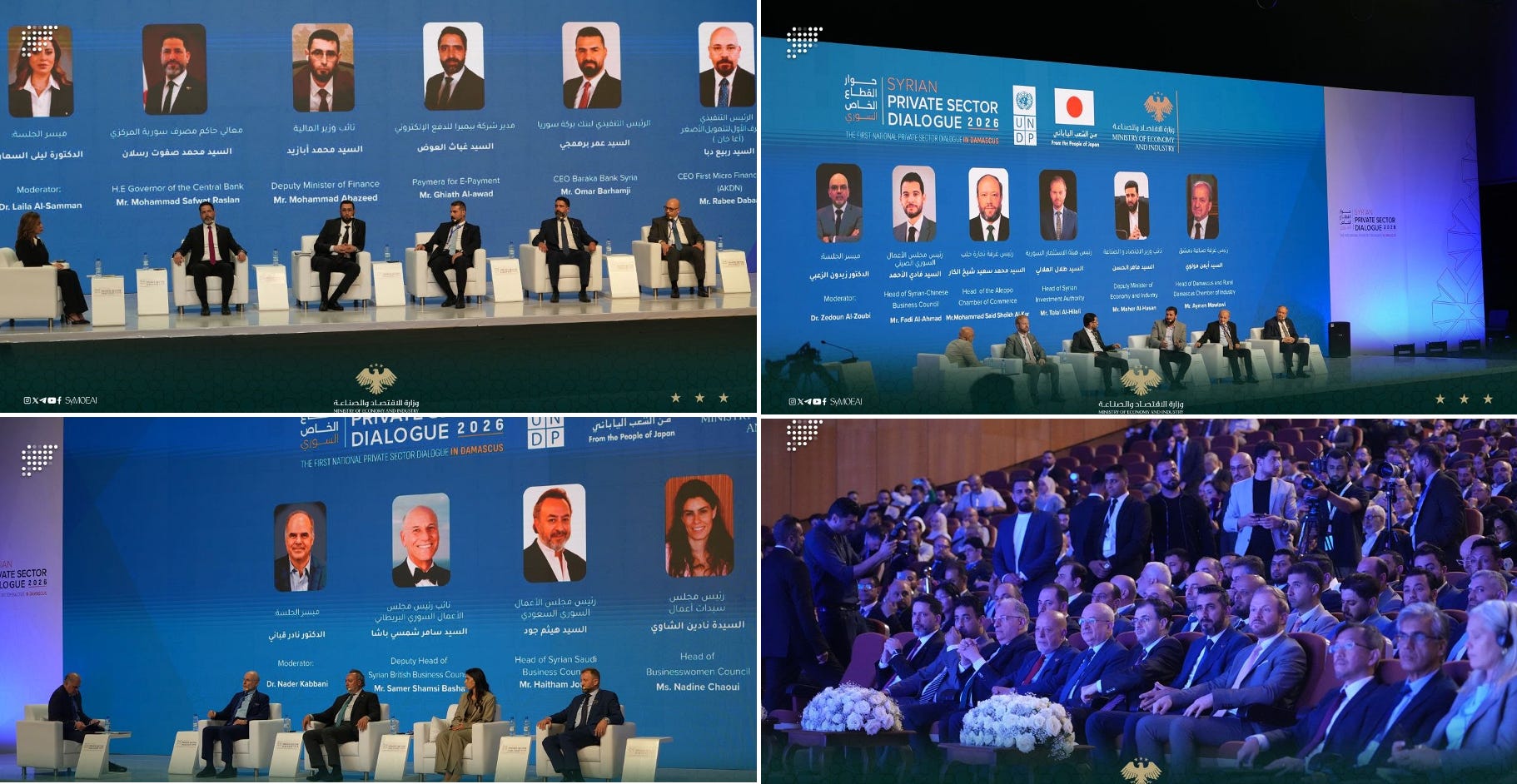
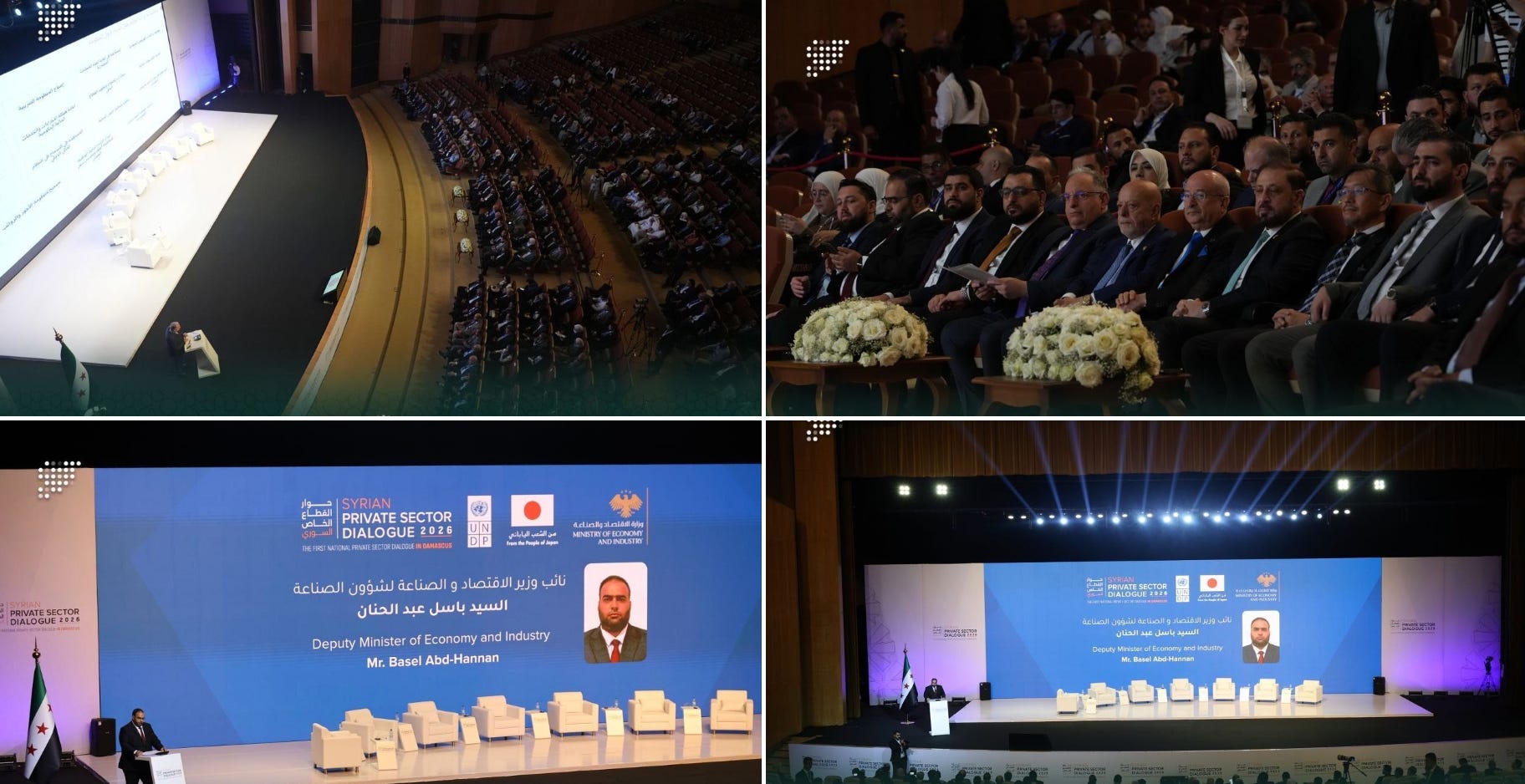
The inaugural “National Conference for the Syrian Private Sector Dialogue” was launched in Damascus on June 1, with proceedings aiming to empower the private sector to contribute towards Syria’s economic recovery.
In a speech at the opening ceremony, Minister of Economy and Industry Nidal al-Shaar said the conference was “not just about discussing economic issues or investment opportunities, but also about participating in thinking about a new economic future” for Syria. He added that “partnership with the private sector does not mean transferring responsibility from the state to the investor… the private sector is more capable of innovation, adapting to changes, and increasing productivity. The role of the state is to build an environment that enables this sector to succeed.”
Additional speeches were given by Japanese Ambassador Tsuji Akihiro and Acting UNDP Resident Representative Rawhi Afaghani.
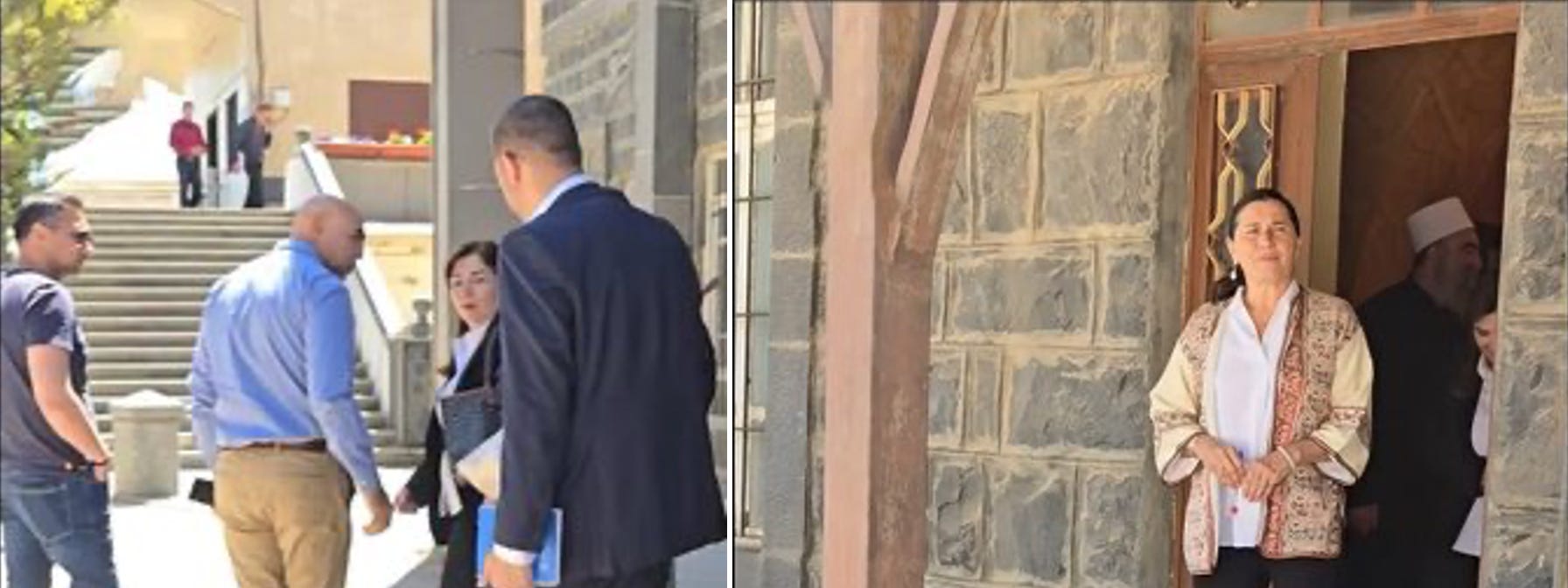
UN Resident Coordinator and Humanitarian Coordinator in Syria, Nathalie Fustier, traveled to Qanawat in Suwayda on June 1 to meet with Druze cleric Hikmat al-Hijri, reportedly to discuss the issue of Druze students and the need for them to sit their examinations under government tutelage. The talks aimed to achieve a compromise deal for Suwayda’s students to sit their exams, but no deal was achieved.
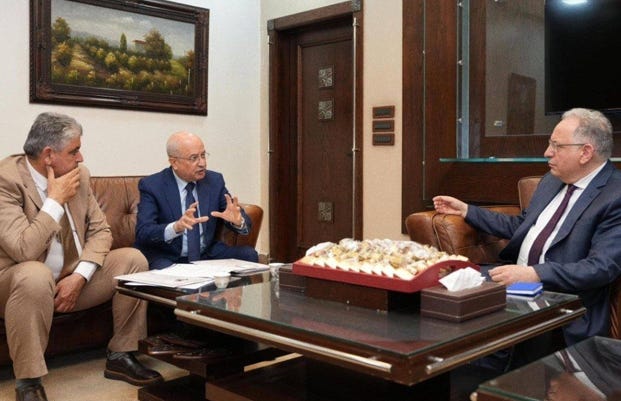
Minister of Finance Mohammed Barnieh met with Minister of Transport Yaroub Badr and the Director General of the Syrian Roads Corporation, Mouaz Najjar, on June 1 to discuss ways to accelerate the rehabilitation of bridges and roads damaged by recent flooding in Raqqa and Deir ez Zour.
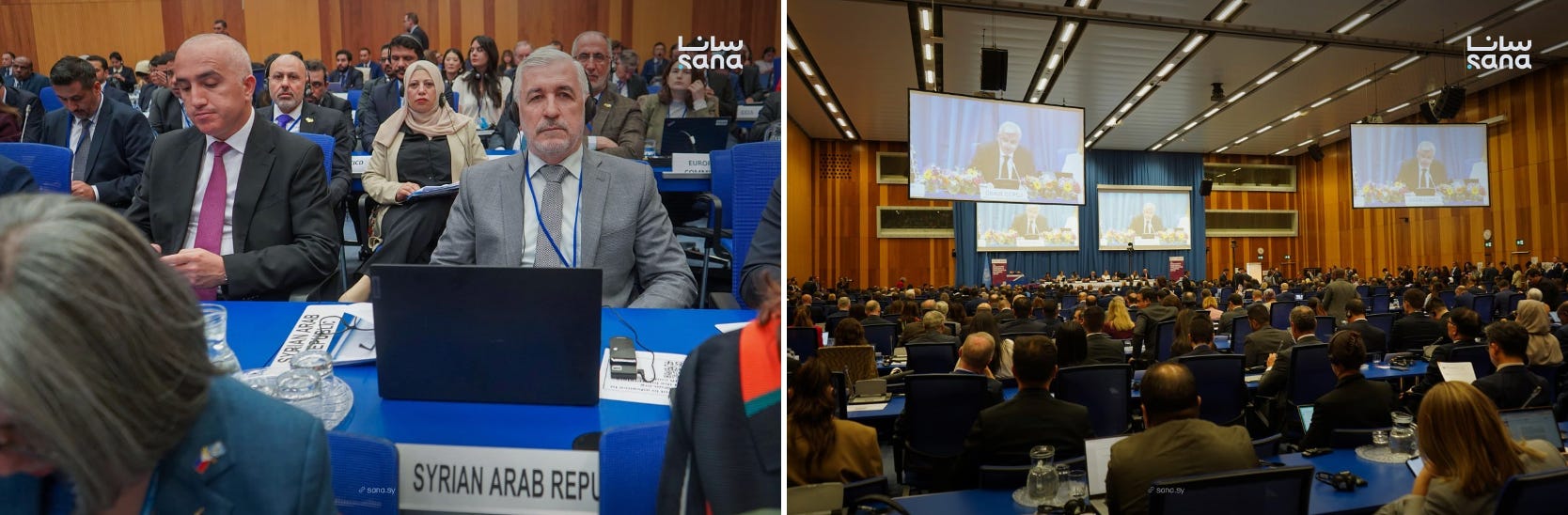
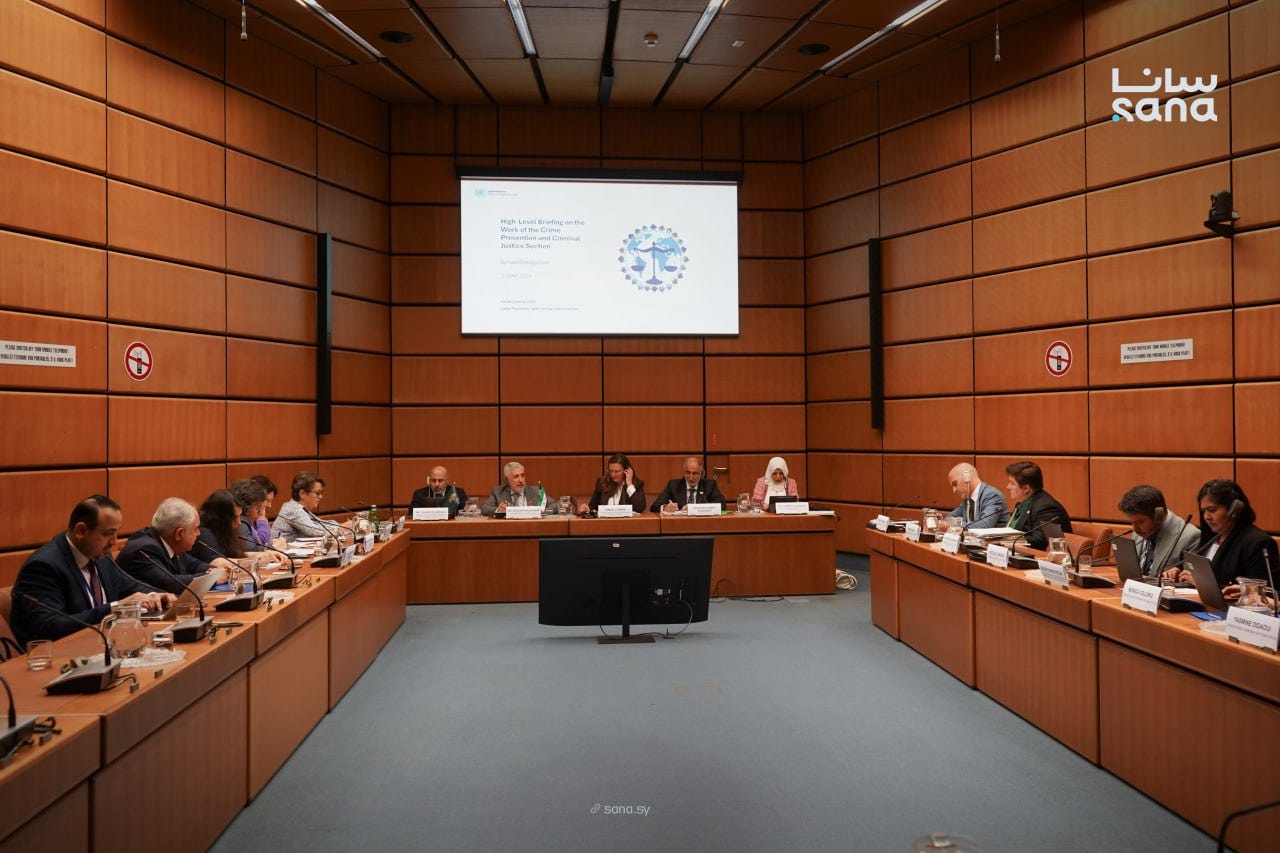
A Syrian delegation traveled to Vienna, Austria on June 1 to participate in the 35th session of the Commission on Crime Prevention and Criminal Justice at the UN headquarters. The delegation was led by Deputy Minister of Justice, Mustafa Al-Qasim and included Brigadier General Samer Al-Hussein, Advisor to the Minister of Interior; Yasmin Mshean, a member of the National Commission for Transitional Justice; Mohammed Samer Al-Abd, Director of International Cooperation at the Ministry of Justice; and Yasser Al-Farhan, Head of the Human Rights and International Treaty Bodies Section in the Department of International Organizations and Conferences at the Ministry of Foreign Affairs and Expatriates.
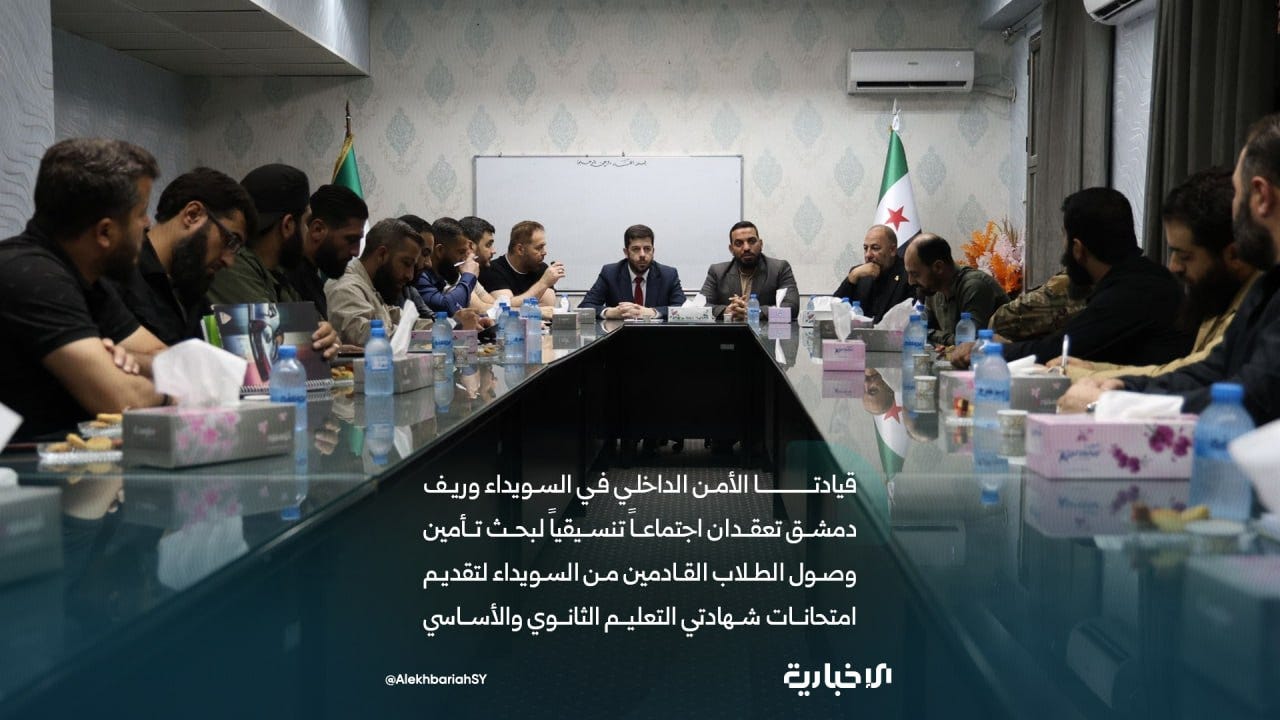
The commanders of internal security in Suwayda and Rif Dimashq, Ahmed al-Dalati and Brigadier General Hussam al-Tahhan, convened a working meeting with district commanders on June 1 to discuss coordinating the transport and security of students from Suwayda due to sit examinations in Rif Dimashq in the coming days.
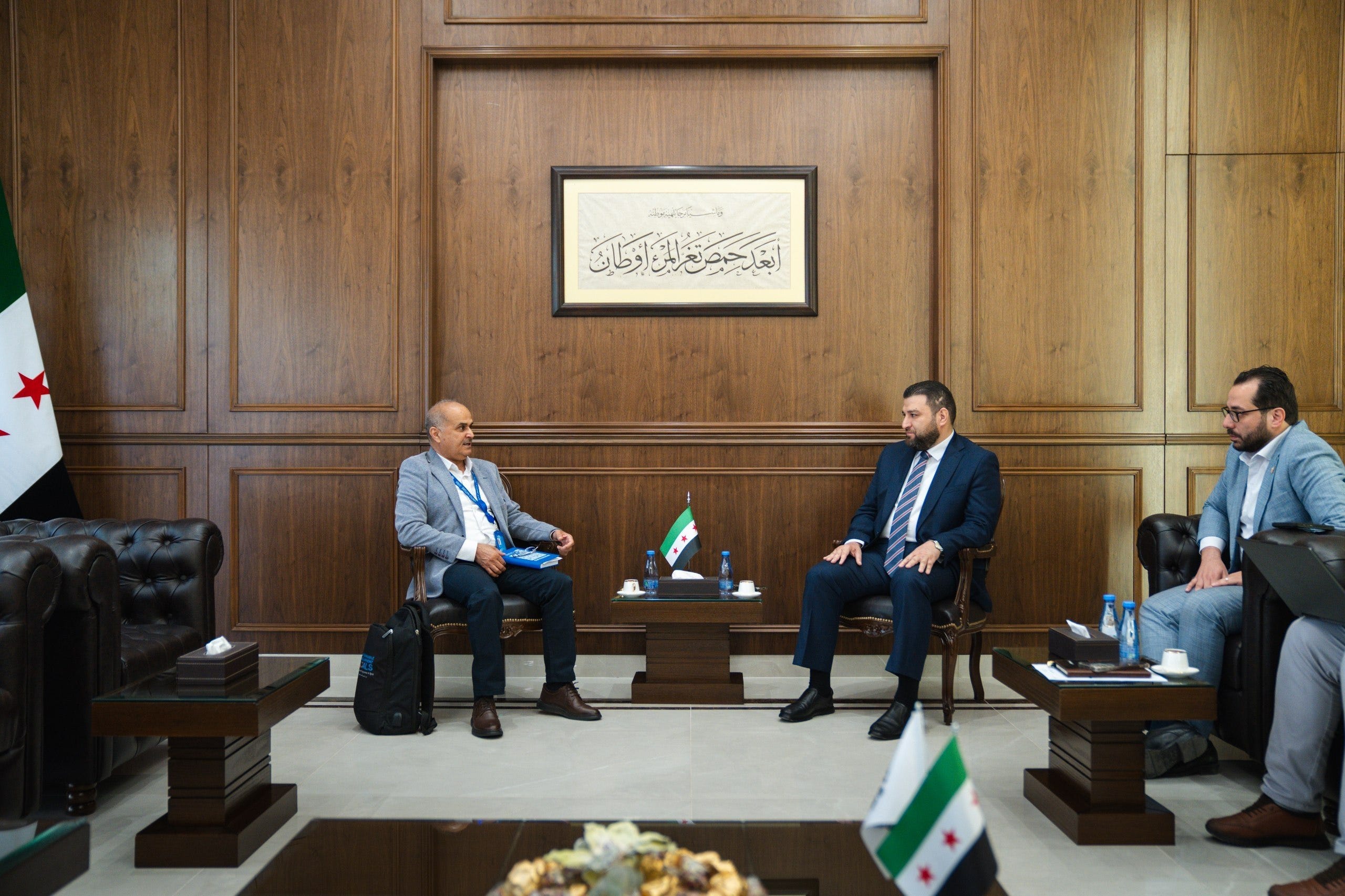
Governor of Homs Marhaf al-Naasan hosted a meeting with regional UNDP office lead Yamen al-Salqini on June 1 to discuss coordinating joint priorities for development programming in 2026.
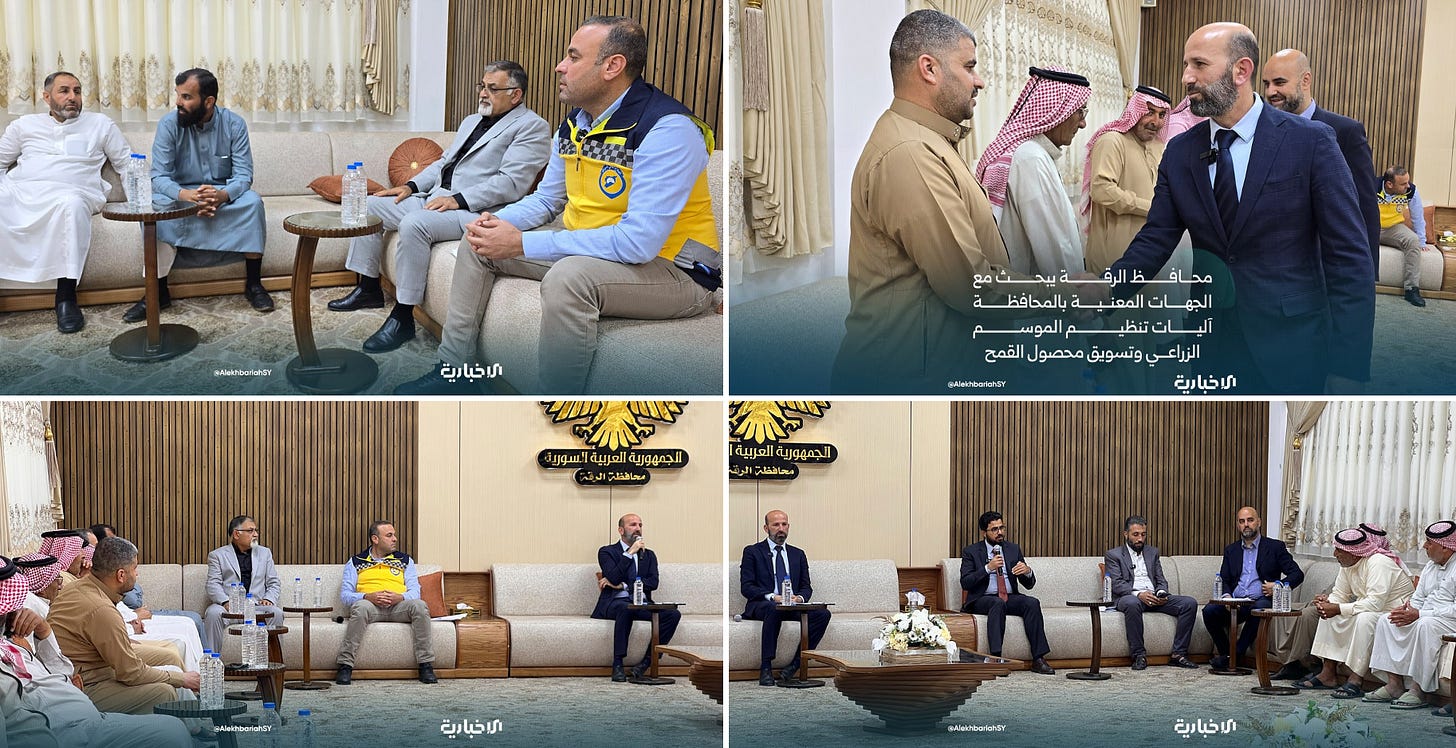
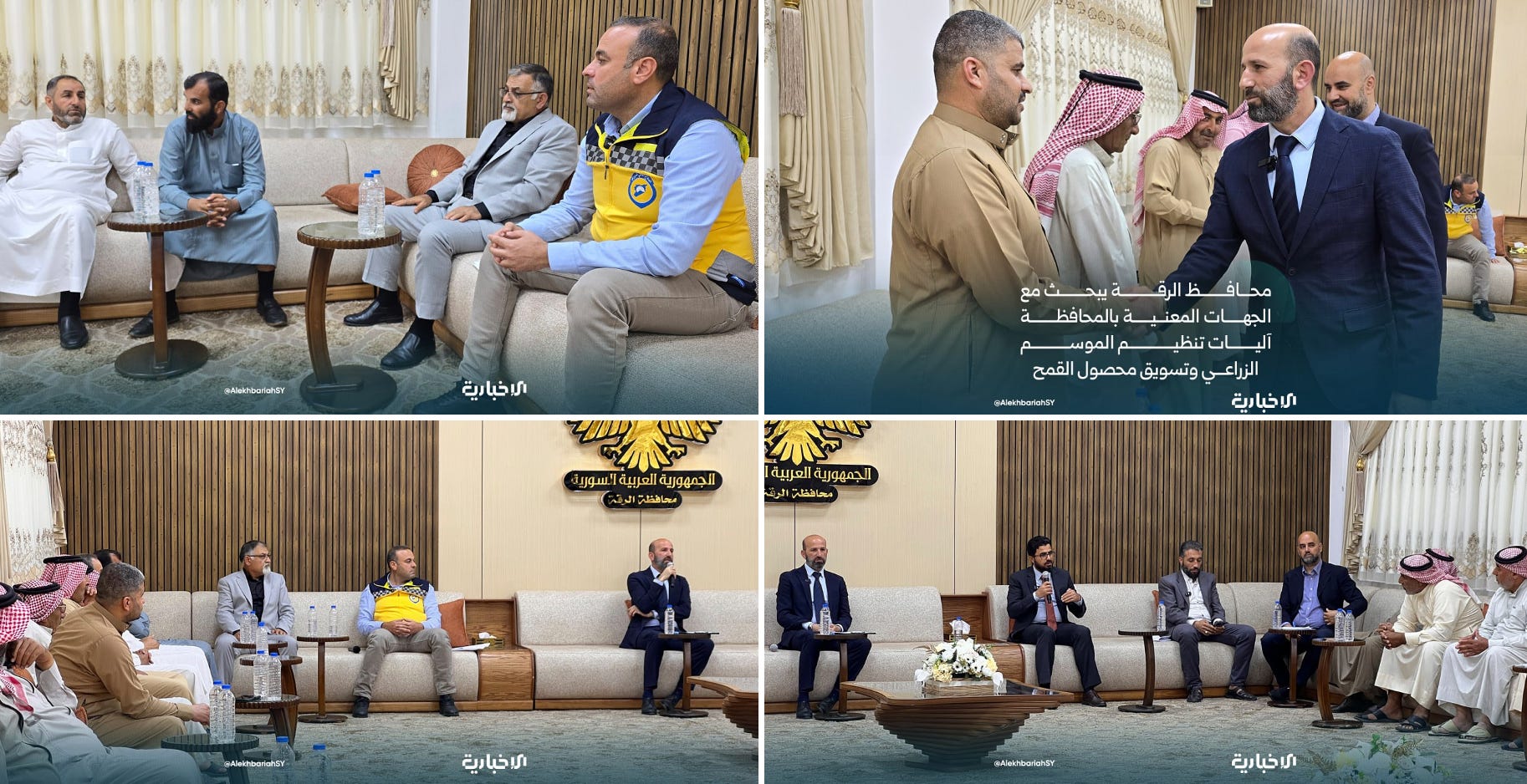
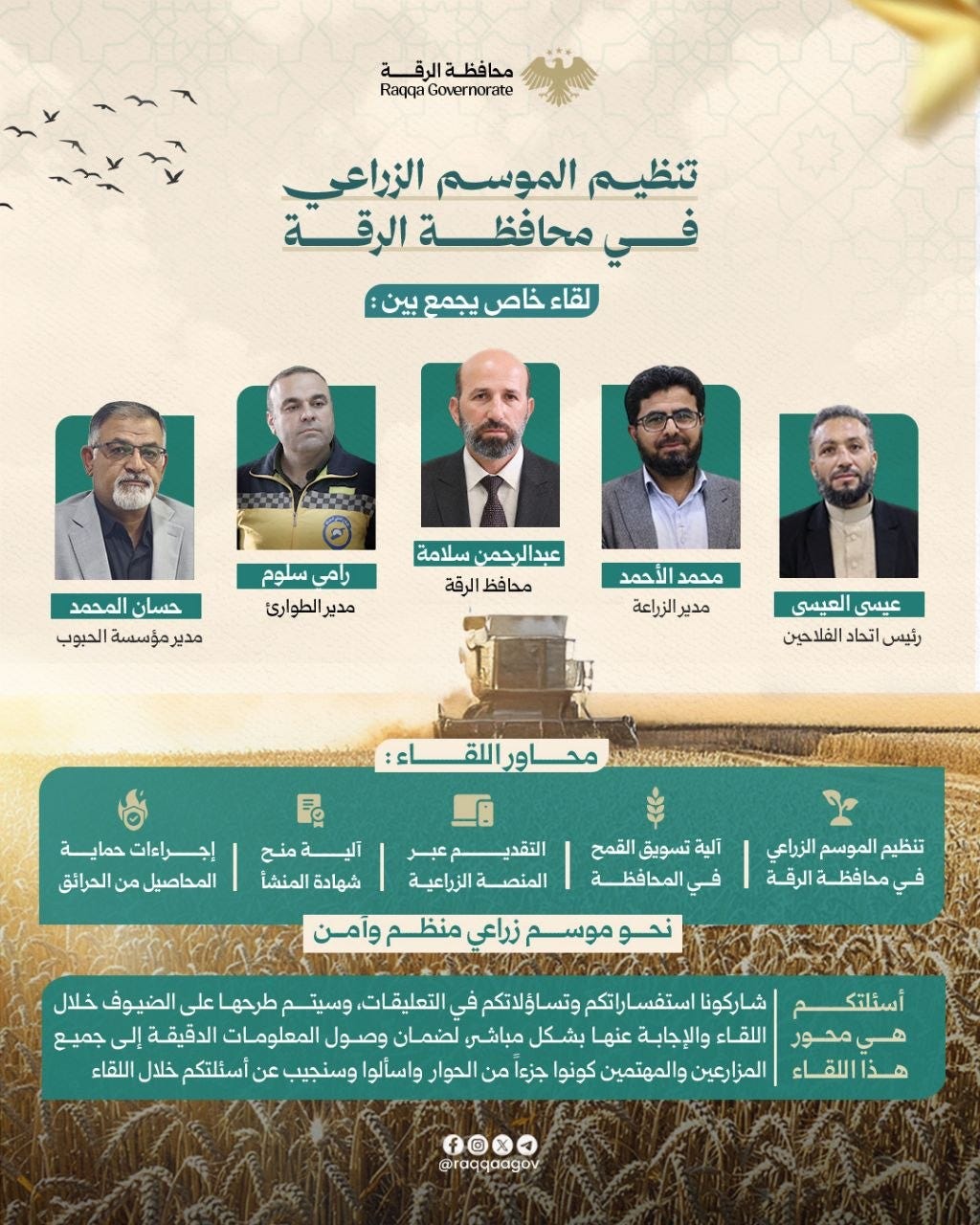
Governor of Raqqa Abdulrahman al-Salama hosted a meeting on June 1 with the director of the Agriculture Directorate, the director of the Grain Foundation, the head of the Farmers’ Union, and the provincial director of Emergency and Disaster Management in order to discuss how best to coordinate the upcoming harvest season and efficient extraction and sale of the wheat crop.
Quneitra’s farmers union met with representatives from UNDOF on June 1 to discuss their situation and security concerns while farming near the Israeli-controlled line of control and newly constructed Israeli military bases.
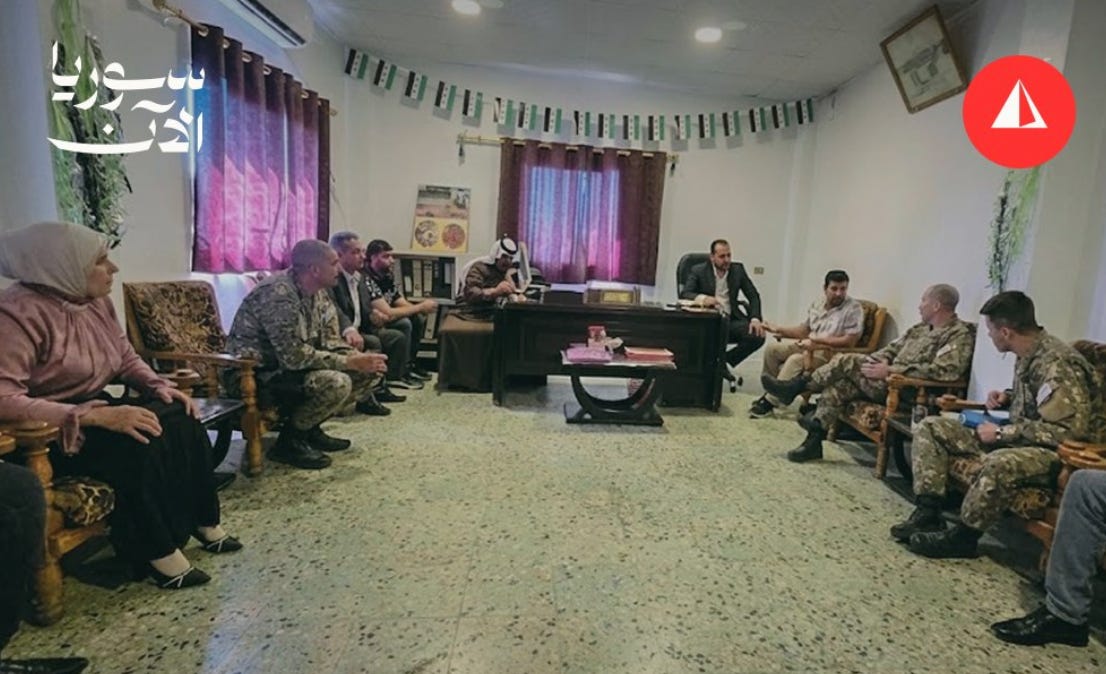
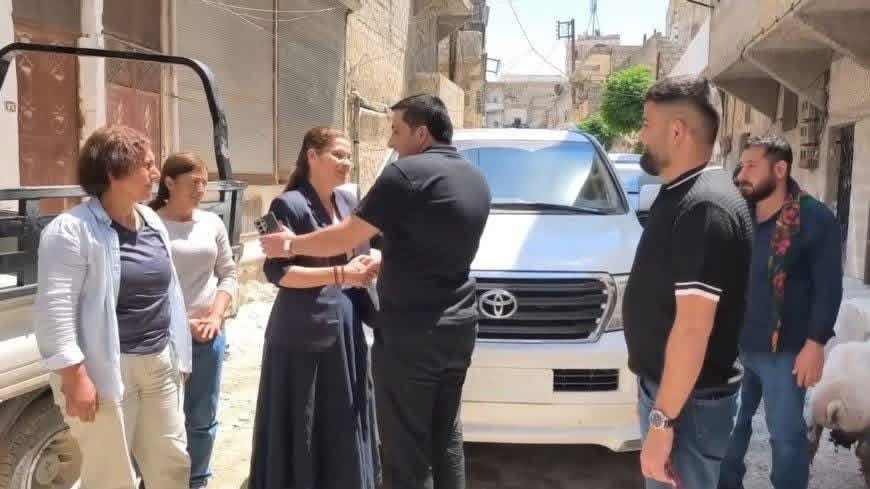
Senior SDF political leader Ilham Ahmed visited the Kurdish-majority Sheikh Maqsoud district in Aleppo city on June 1.
June 2:
The second day of the “National Conference for the Syrian Private Sector Dialogue” continued in Damascus on June 2, with dialogue sessions discussing issues of production, value chains, supply, trade, and market access, as well as skills building, technical knowledge, innovation, as well as a session dedicated to formulating an economic vision, a governance model, and a roadmap for implementation. Speeches were also given by Finance Minister Mohammed Barnieh and Minister of Transport Yaroub Badr.
During remarks in one session, new Agricultural Minister Bassel al-Sweidan confirmed that the Syrian Holding Company for Agricultural Investments would soon be established to coordinate production facilities as public private partnerships.
Assistant Minister of Justice, Mustafa Al-Qasim, led a Syrian delegation in a meeting with the UN Office on Drugs and Crime in Vienna, Austria on June 2.
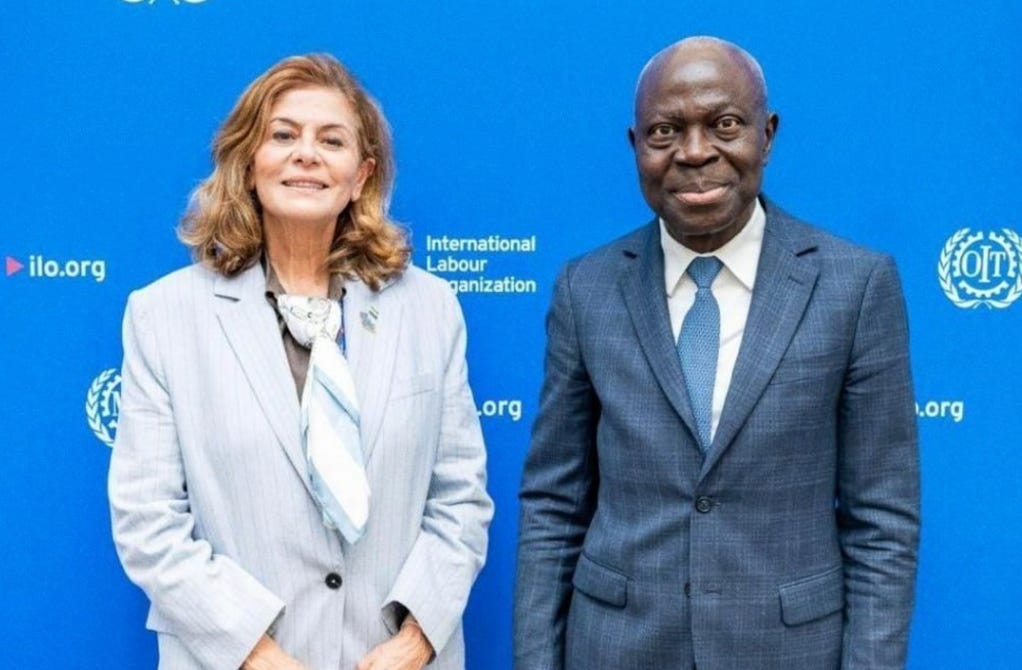
Minister of Social Affairs and Labor Hind Kabawat met with the Director-General of the International Labor Organization, Gilbert Houngbo, on the sidelines of the 114th session of the International Labor Conference held in Geneva, Switzerland on June 2.
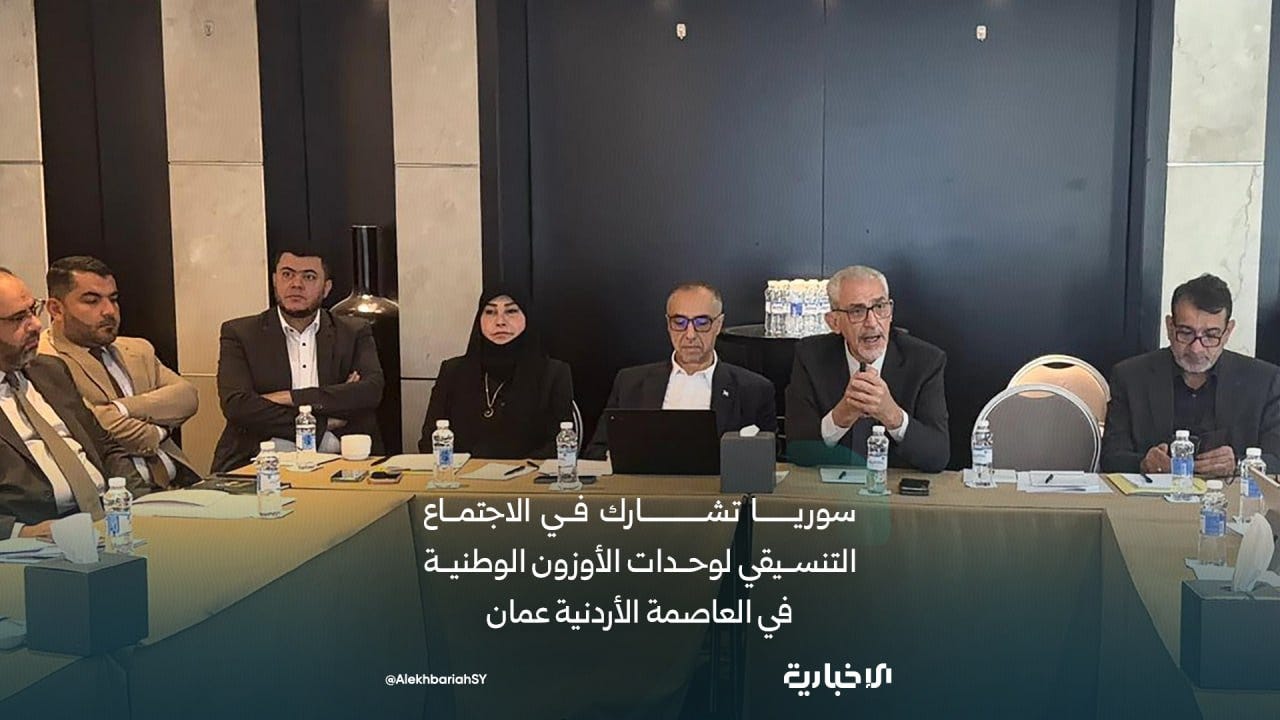
A Syrian delegation with officials from the Ministries of Local Administration and Environment and of Economy and Industry, as well as from the the General Authority for Ports and Customs, traveled to Amman, Jordan to participate in a coordination meeting focused on national ozone units and compliance with the Montreal Protocol and the Kigali Amendment on June 2.
Appointments:
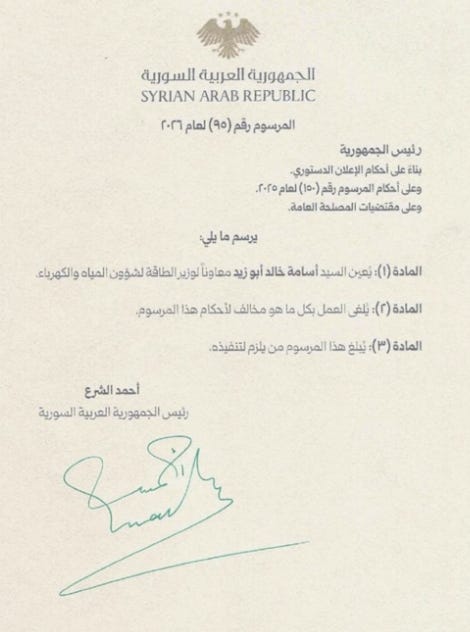
President Ahmed al-Sharaa issued a decree on June 1 appointing Osama Abu Zeid as Assistant Minister of Energy for Water and Electricity Affairs. His portfolio previously covered only water issues.
Political Developments:
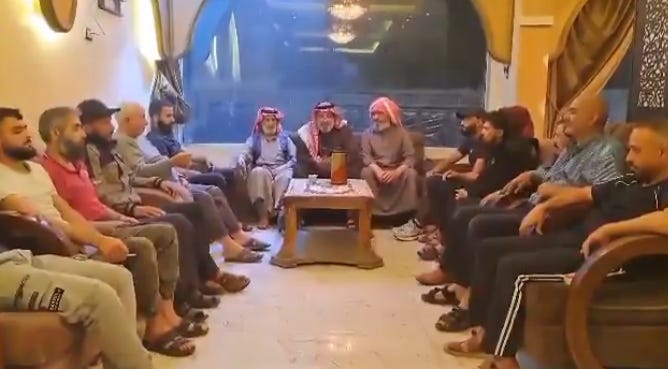
In a statement issued on May 30, notables of tribes whose members had been displaced from Suwayda in July 2025 declared that their “enmity” was not with Syria’s Druze population, but “strictly limited to the parties implicated in the blood of our sons, whom we hold directly responsible for the crimes of displacement, killing, abduction, and the systematic violations that have afflicted our tribes, embodied by (Al-Hijri) and his factional militias.” It added that the tribes would continue to dedicate efforts to “our legitimate right to uncover the truth, achieve comprehensive justice, and hold all those involved accountable”, whilst rejecting efforts to “drag the name of the Sons of the Displaced Tribes into the disputes or internal balances prevailing in Suwayda.”
Economic Developments:
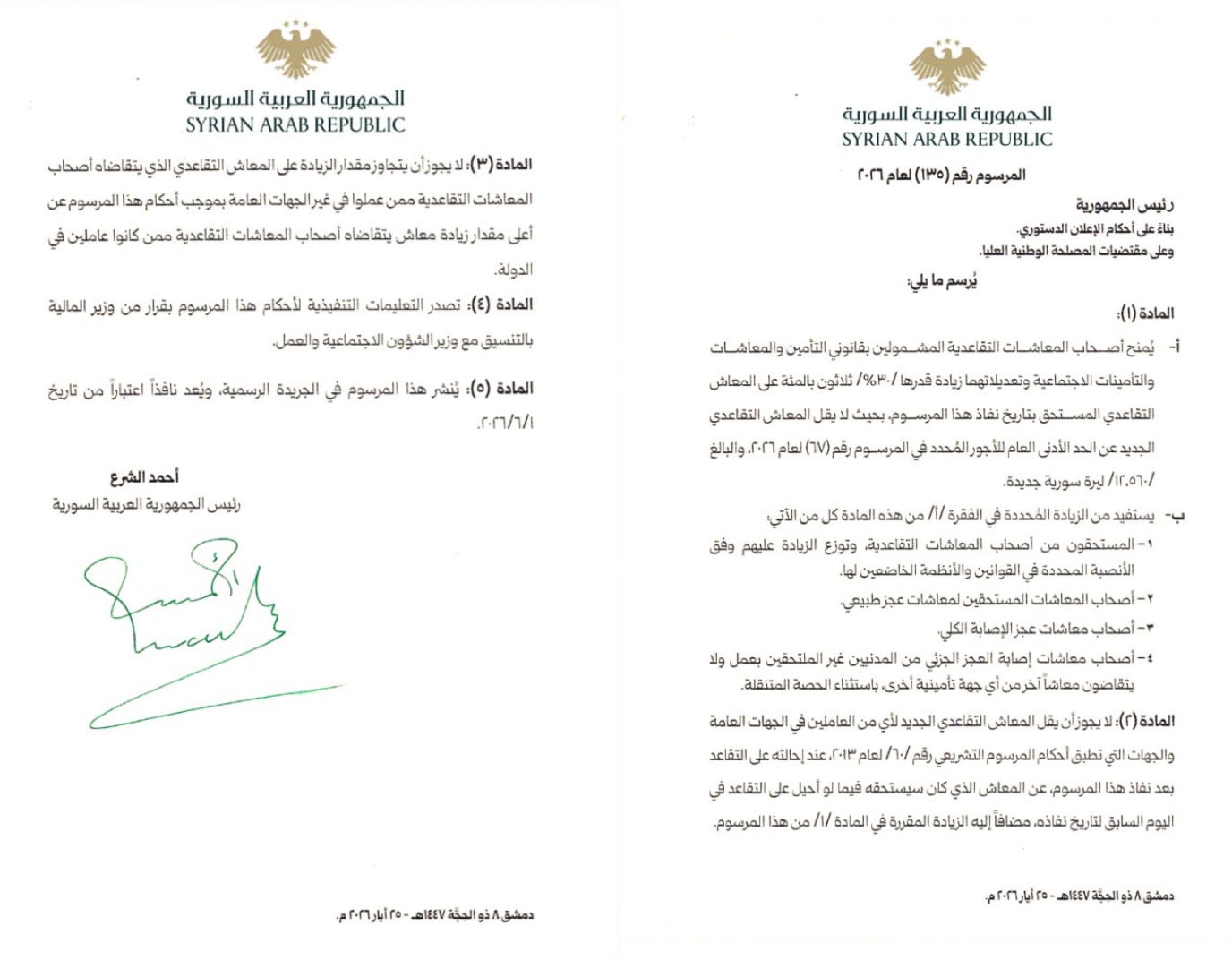
President Ahmed al-Sharaa issued a decree on May 26 granting pensioners in Syria an increase of 30% on their pension payments, ensuring that monthly payments remained at or above the minimum wage of SYP 12,560.
In a subsequent public statement, Finance Minister Mohammed Barnieh confirmed the step, adding that state sector pensions had now been increased on average by approximately 56% since the emergence of Syria’s post-Assad transition.
Finance Minister Mohammed Barnieh issued a decree on May 31 reducing the tax advance levied upon importers of industrial production products to 1%, which would be extracted at the time of importation. The decree also included an exemption for imports below SYP 100,000.
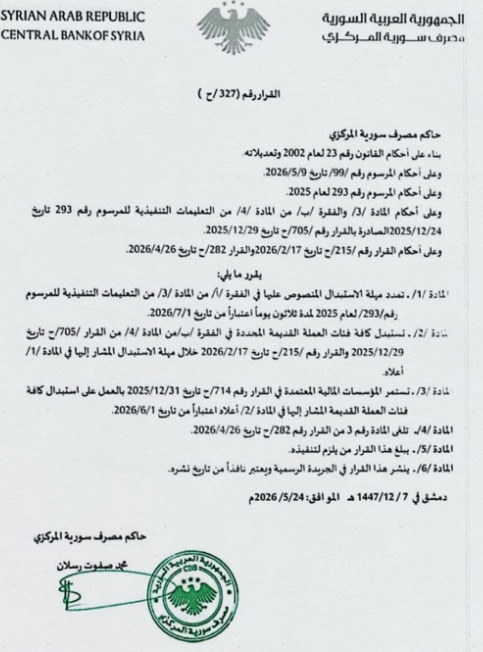
Governor of the Central Bank, Safwat Raslan, confirmed on May 31 that the deadline for replacing Syria’s old currency with new notes would be extended for a further 30 days, to July 31, 2026. He added that at least 63% of the old currency had so far been replaced
Governor of Raqqa Abdulrahman Salama issued a public invitation on June 1 to “stakeholders in the agricultural sector” for a special meeting to “discuss the most pressing issues and challenges facing farmers in the governorate… in an effort to ensure the success of the agricultural season and guarantee the organized and safe conduct of marketing and harvesting operations.”
Jordan’s Minister of Industry, Trade and Supply, Yaroub Qudah, confirmed on June 1 that Jordan’s exports to Syria increased by 45.3% during the first quarter of 2026.
The director of the General Authority for Civil Aviation and Air Transport, Omar al-Hosari, confirmed on June 1 that 11,801 civilian aircraft had transited Syrian airspace in May 2026, which he said was was 378% more than the 2,468 that transited in May 2025.
Infrastructure Developments:
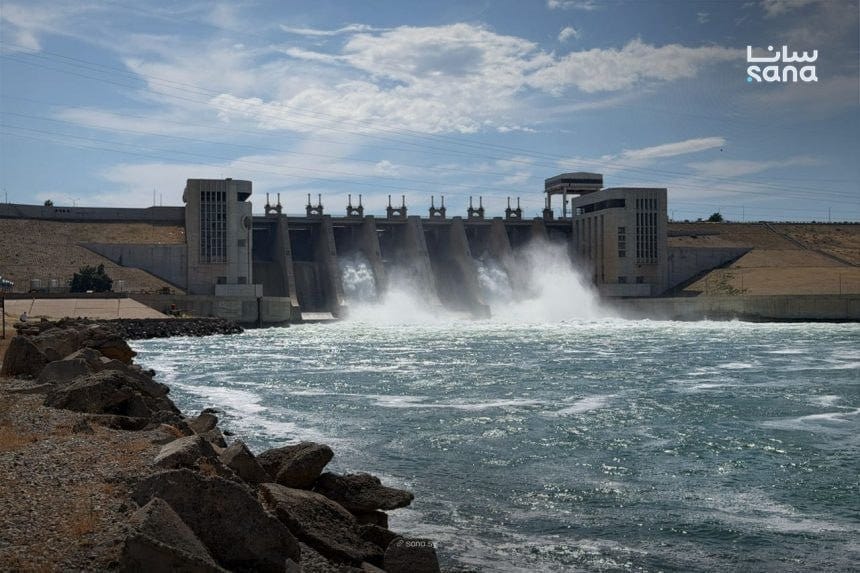
In public comments on May 28, the Ministry of Energy stated that the continued flow of water from Turkey had imposed “an exceptional operational reality” on Syria’s dam infrastructure with 1,800 cubic meters of water per second passing through them into Syria’s Euphrates River network. The Ministry added that water levels in Syria’s dams had reached 98.5% storage capacity, but remained “in a stable and completely safe condition” and “there is no structural danger to the dam bodies, gates, or operational equipment.”
The Ministry of Communications and Information Technology announced on May 28 that it would facilitate the provision of free mobile and internet calls in areas affected by flooding in eastern Syria, beginning from 6pm that day until the end of the emergency situation. The Ministry added that it would temporarily reactivate subscriptions that had been paused due to non-payment of bills.
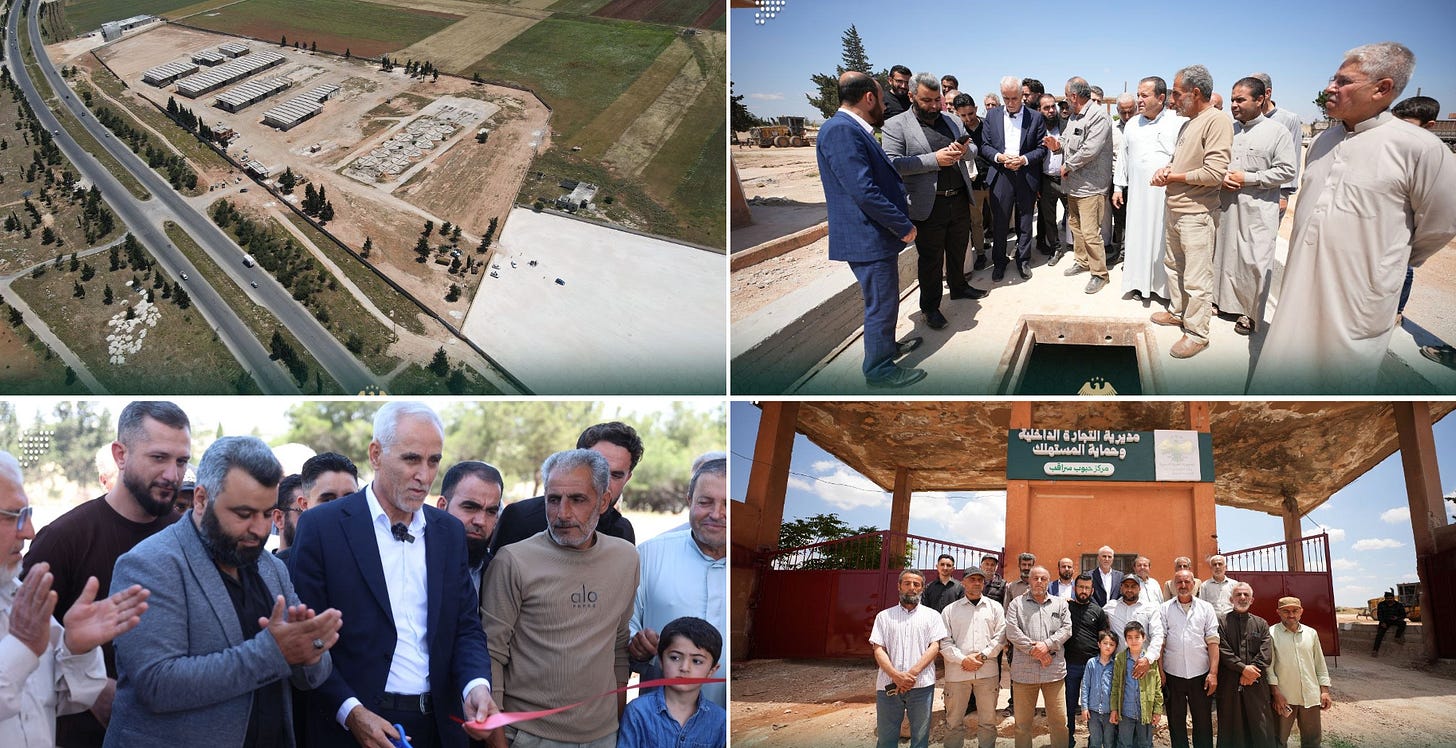
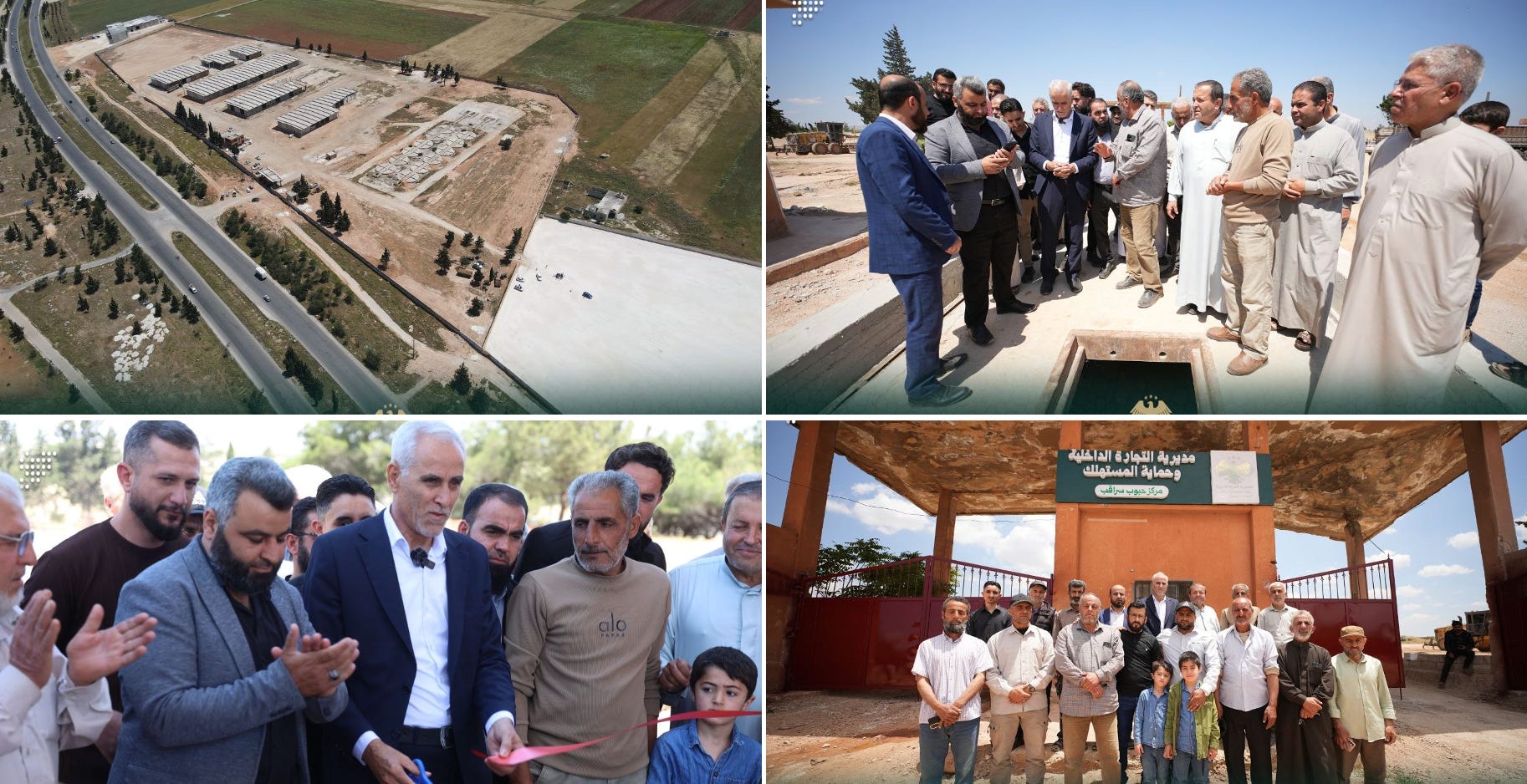
Officials from the General Grain Corporation inaugurated a newly constructed grain warehouse in Saraqeb, Idlib on May 28, with a storage capacity of 70,000 tonnes.
On May 29, Minister of Energy Mohammed al-Bashir confirmed that 16 water stations in Raqqa and 62 water stations in Deir ez Zour were out of service due to flooding, while 90% of sewage drains connecting to rivers and other water sources were flooded. Ministry engineers meanwhile, put 10 water stations (the Al-Zabari, Muhkan, Sabkhan, Al-Ghabra Al-Sukriyya, Al-Twatha, Al-Ghuzl, Shagra, Al-Khariyta, Al-Rasmiyya, April 17, and Oyash facilities) back into service that day.
confirmed that procedures had begun to reduce water discharges into the Euphrates River from the Euphrates Dam, which it added would end rising water levels.
Governor to Suwayda Mustafa Bakkour announced on May 31 that the road linking Suwayda city with al-Mazraa via al-Walgha had been reopened to civilian traffic, with all earthen barriers removed in an operation coordinated between the SARC, the MOI and the Ministry of Emergency and Disaster Response.
The Director of Domestic Trade and Consumer Protection in Latakia and Tartus, Abdul Wahab al-Safar, announced on May 31 that the Qabu al-Awamiyah and Anabiya grain depots in Latakia and Tartus were fully prepared to begin receiving wheat harvests beginning on June 1.
The General Authority for Civil Aviation announced on June 1 that the UAE airline Emirates would begin flights between Abu Dhabi and Damascus on June 14.
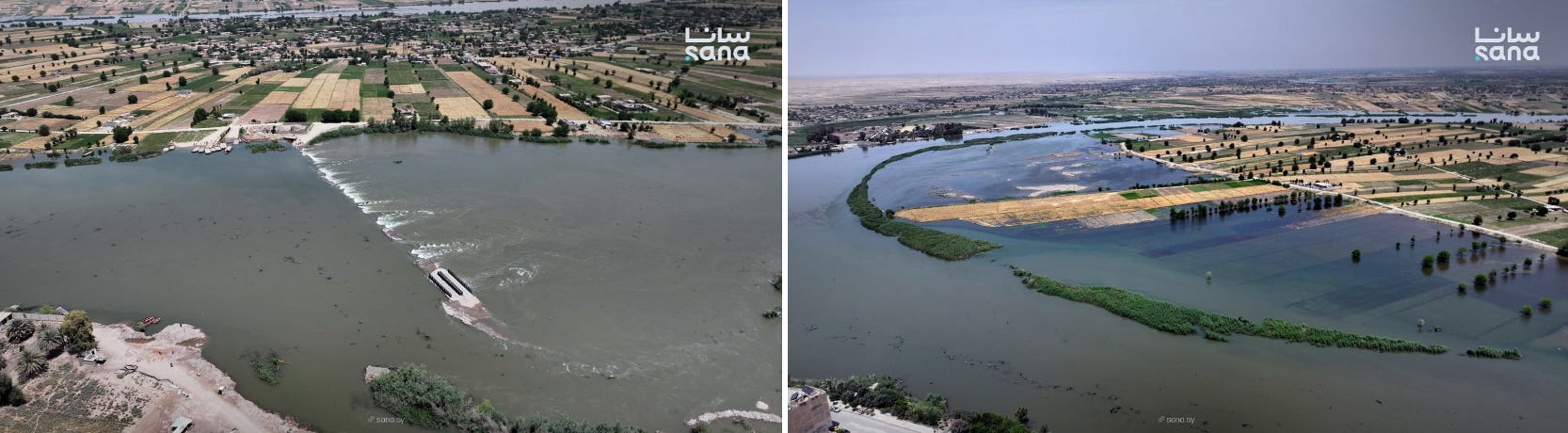
In public comments late on June 1, the Deir ez Zour Emergency Response Committee — established in response to recent widespread flooding - concluded that a total of 16,780 dunams (4,170 acres) of agricultural crops had been submerged and destroyed in the floods, while 83 water pumping stations had been put out of service.
Education Developments:
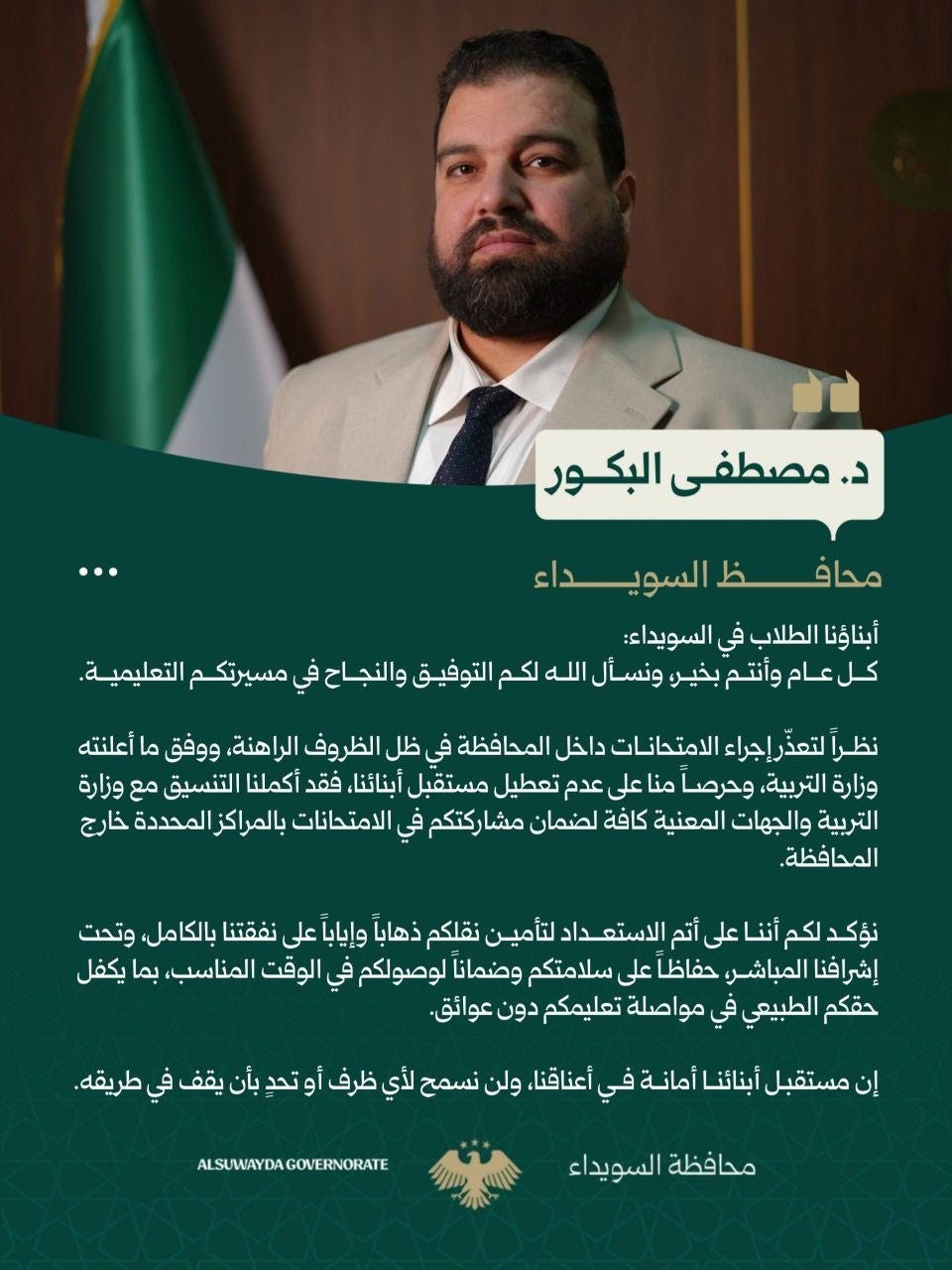
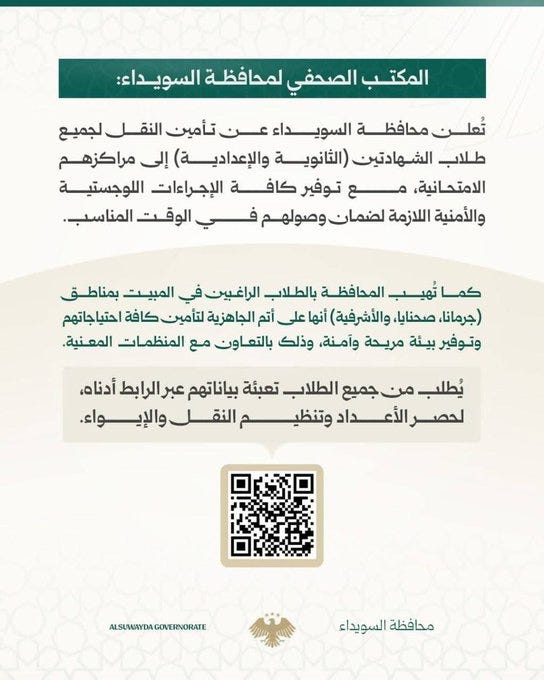
Governor to Suwayda Mustafa Bakkour announced on May 28 that due to “the impossibility of conducting examinations within Suwayda,” free transportation would be provided to students inside Suwayda in order to facilitate their taking examinations in government-approved centers in Rif Dimashq or Damascus. The transportation and examination process would be fully coordinated by the Ministry of Education, Bakkour added.
The Directorate of Education in Hasakah announced on May 31 that 1,411 teachers in the governorate who had previously been dismissed due to their support for the Syrian revolution had been reinstated into their jobs, following work undertaken by a committee to review their cases and applications to resume work.
The Ministry of Education in Damascus announced on June 1 that final examination lists had been produced for students in Suwayda for both basic and secondary examinations to be sat at accredited centers in Rif Dimashq. It added that “all necessary arrangements” had been made to “facilitate students' access to the exam halls, where each student will find their exam card already placed on their seat inside the hall” and for transportation to be provided both to and from the centers. Transportation bookings were made available via an online reservation system, with overnight accommodation available in Jaramana, Sahnaya and al-Ashrafiyeh.
Assistant Minister of Education for Educational Affairs, Yousef Anan, issued public comments to SANA late on June 1 stating that 2,318 examination centers had been prepared across Syria in time for the 2026 examinations, in which more than 832,000 students would sit primary and secondary tests. He added that more than 160,000 observers, supervisors, administrators and technical staff would be involved in monitoring the examination process nationwide.
Security Developments:
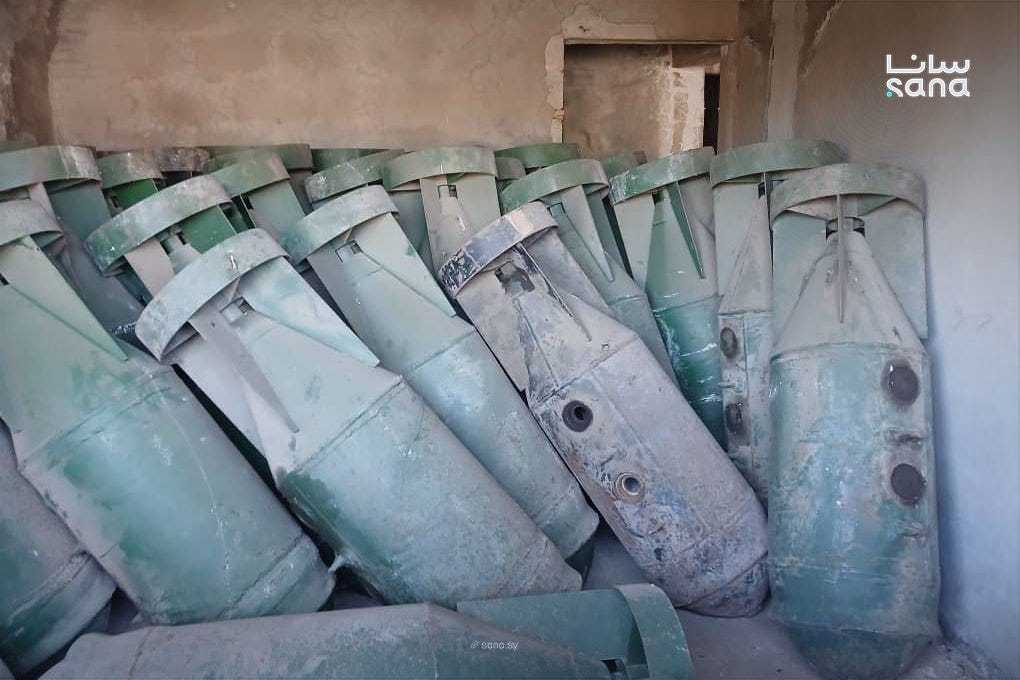
Syrian state media confirmed on May 26 that government authorities, in coordination with the OPCW, had discovered and seized 54 aerial bombs and 25 ground-to-ground munitions capable of carrying Sarin nerve agent during search operations on the Coast and in Central Syria. It added that 18 suspects had been detained and chemicals used in the manufacture of Sarin gas had also been discovered.
Syria’s Mission to the OPCW subsequently issued a statement, declaring:
“All materials, munitions, and equipment were transferred to special facilities for the storage of chemical substances after verification by inspection teams of the OPCW Technical Secretariat, in preparation for their destruction, to ensure the prevention of any danger to civilians, the environment, or national, regional, and international security.”
On May 27, the OPCW issued a statement confirming Syrian reporting from the previous day, noting:
“An expert team of the Organisation for the Prohibition of Chemical Weapons (OPCW) Technical Secretariat, supported by the Syrian authorities, has discovered a significant amount of undeclared chemical weapons, related materials and documentation during its most recent deployment in the Syrian Arab Republic… OPCW Director-General, Ambassador Fernando Arias, said: “The outcome of this deployment is significant. It confirms the Secretariat’s repeated assessment since 2014 that the former Syrian regime withheld information and unsuccessfully attempted to mislead the Secretariat and the international community on the extent of its chemical weapons programme… Since early May, an expert team of the OPCW Technical Secretariat operating under the Office of Special Missions (OSM) has been deployed to the Syrian Arab Republic to advance efforts to establish a complete and accurate inventory of the remnants of the Assad-era Syrian chemical weapons programme… The current deployment focused on a group of sites located in northern coastal and central areas of the country, broadly within a geographic triangle encompassing Hama, Homs, and Latakia. These areas are known to have remained a stronghold of the former regime throughout the 13-year-long conflict in Syria… findings include dozens of chemical munitions previously undeclared to the Organisation, including the same type of aerial bombs that were used in chemical attacks in Ltamenah in March 2017 and Khan Shaykhun in April 2017. Rockets were also found, of the same type as those that were used in the Ghouta chemical weapons attack in August 2013.”
The Director of External Relations at the General Authority for Ports and Customs, Mazen Alloush, announced on May 26 that Coast Guard personnel had rescued 6 people from a smuggling boat that was sinking off the coast of Tartus. He added that 4 other people were missing, but search operations continued.
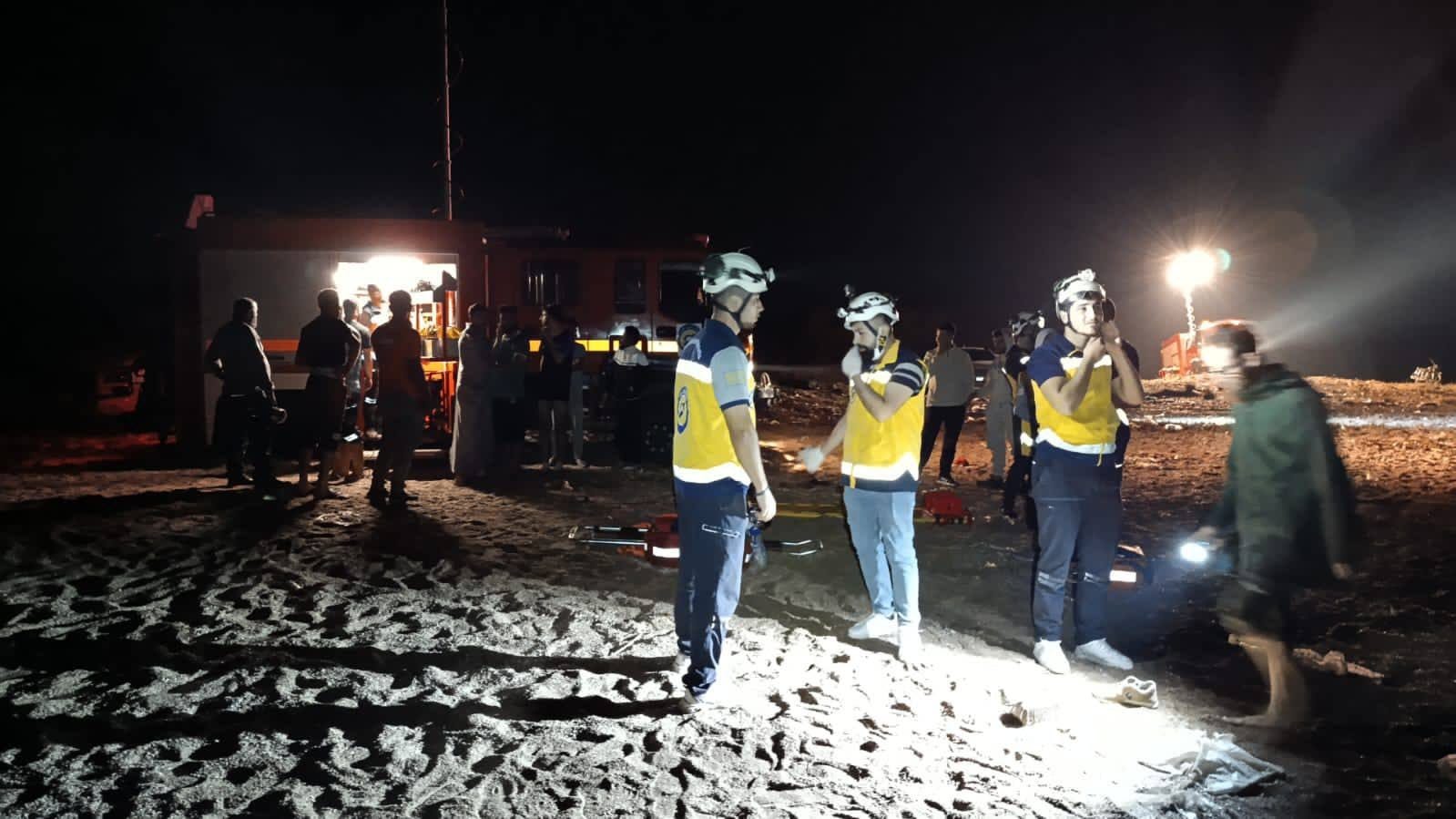
Civil Defense personnel, along with employees of multiple other ministries, mobilized on May 26-28 to respond to widespread flooding in eastern Syria caused initially by a mass release of water from Turkey down the Euphrates, forcing the release of water from Lake Assad via the Euphrates Dam in Raqqa. The flooding forced at least 50 of the region’s 210 water pumping stations out of service, while submerging 24,000 hectares of agricultural crop lands, washing away 3 bridges in Deir ez Zour and killing several people by drowning.
A joint operations room was established on May 28, combining the Ministry of Emergency and Disaster Response and the Ministry of Health, alongside provincial authorities in Raqqa and Deir ez Zour.
On May 28, the Hawija Sakr and Hawija Katah areas were evacuated.
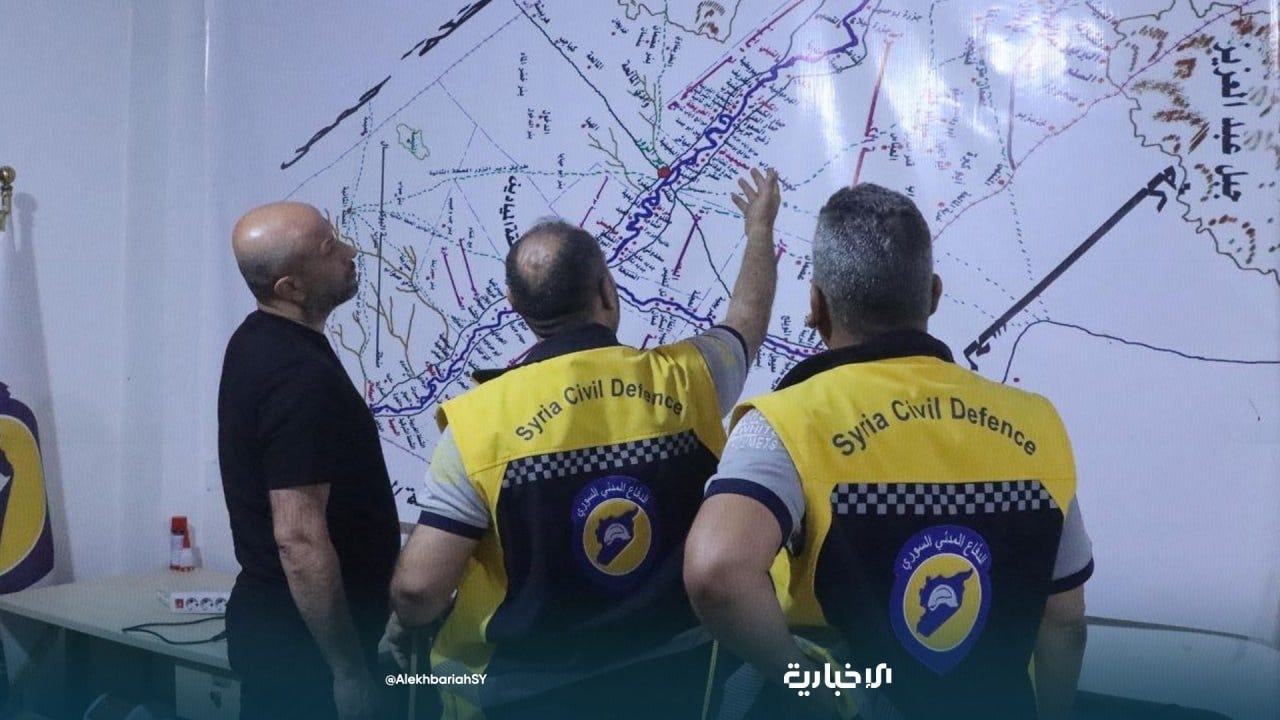
The Ministry of Emergency and Disaster Response confirmed on May 29 that amid widespread flooding, a total of 40 firefighting and emergency response teams had been deployed to Deir ex Zour, comprising 540 personnel and 40 vehicles. Minister Raed al-Saleh added that “specialized committees” would be formed to begin damage assessments and to arrange for financial compensation to victims.
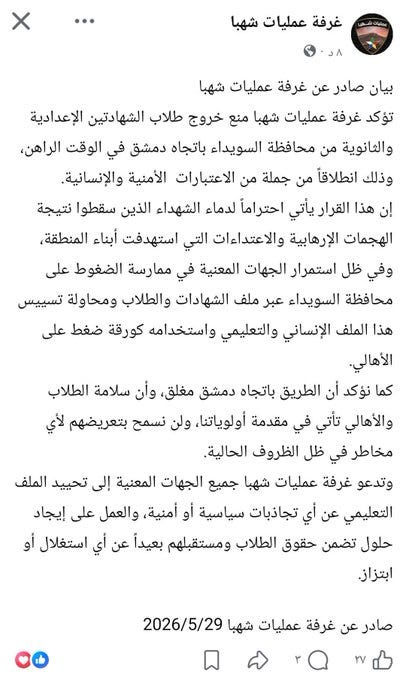
The Druze National Guard’s Shahba Operations Room issued a statement on May 29 declaring its intent to prevent Druze students from traveling to government areas in order to sit basic and secondary examinations.
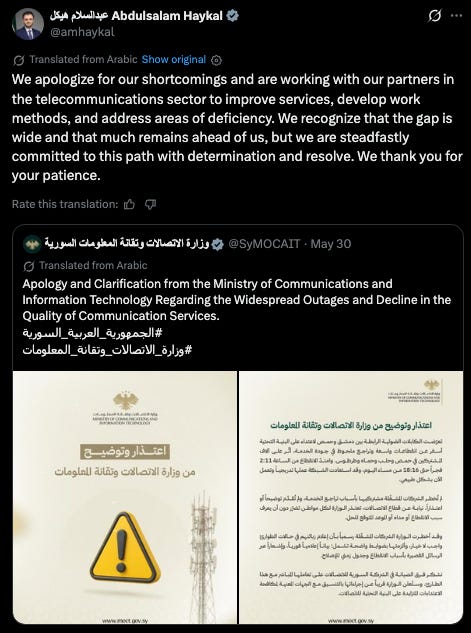
The Ministry of Communications and Information Technology confirmed on May 31 that an attack by unidentified assailants had severed fiber optic cabling between Damascus and Homs, causing knock-on effects in terms of loss of telecommunications coverage for customers in Homs, Hama, Aleppo and Tartus.
In public statements later that day, the Ministry and Minister Abdulsalam Haykal apologized for the “widespread outages" and “noticeable decline in service quality”, noting that following the attack, “operating companies did not inform their subscribers of the reasons for the service disruption, nor did they provide any explanation or apology.” They added that domestic providers had been informed of their “legal obligation” to issue “immediate press releases, SMS notifications, and a repair timeline.”
A total of 28 Kurdish YPJ fighters were released from government detention on June 1, with Deputy Governor of Hasakeh Ahmed al-Hilali clarifying that they had been released “on bail” due to their being investigated on “other cases unrelated to their affiliation with the SDF.”
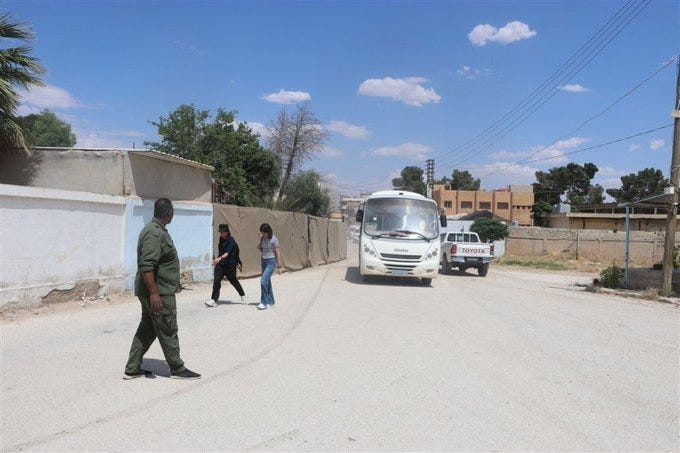
Turkish media confirmed on June 2 that a complete military withdrawal had been conducted from the al-Mastumah base in Idlib.
Deputy Governor of Hasakeh, Ahmed al-Hilali, announced on June 2 that more than 9,000 Kurdish Asayish personnel - including approximately 1,000 women - would soon begin interviews to begin their integration into the MOI’s provincial Public Security apparatus.
Humanitarian Developments:
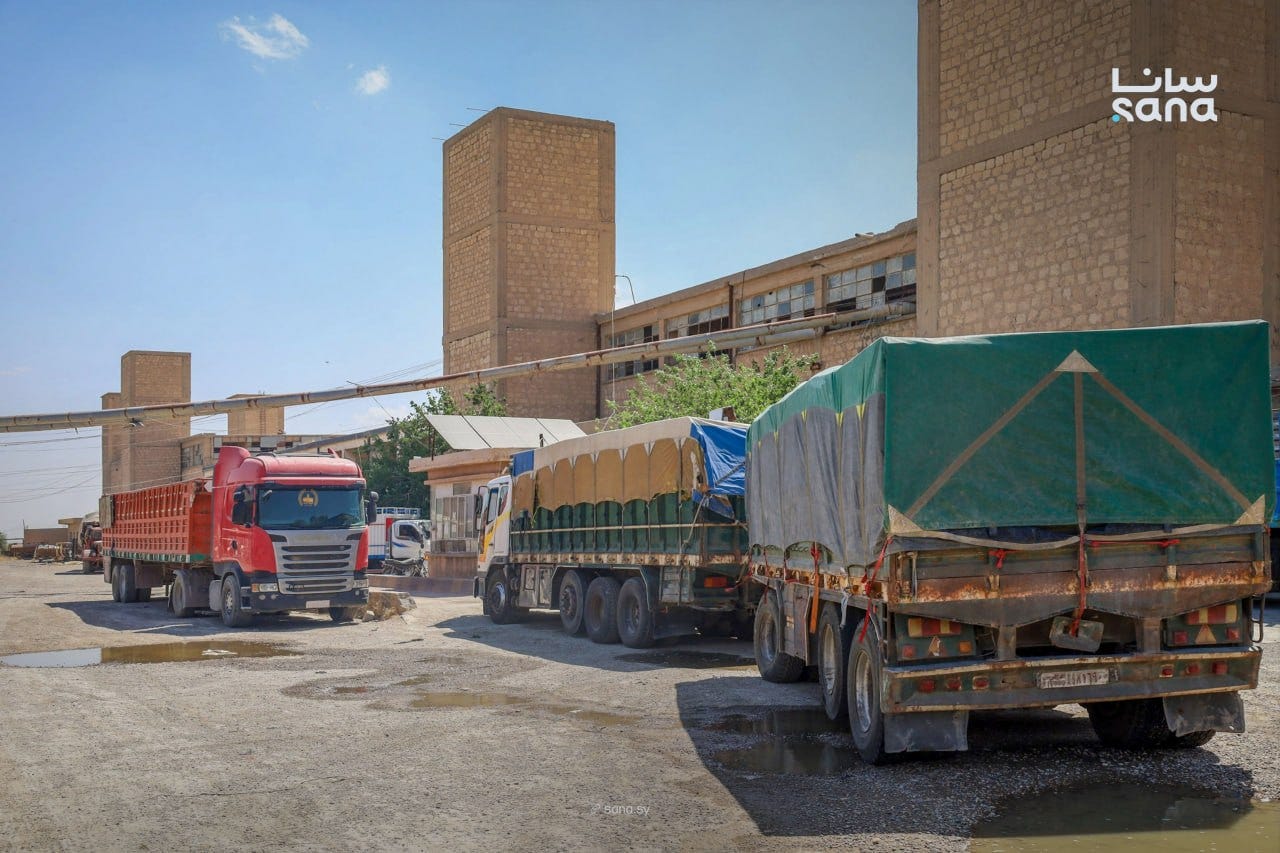
The Ministry of Economy and Industry announced on May 29 that a shipment of flour sufficient to provide bakeries in Deir ez Zour with their operating needs for a period of 10 days was being delivered to respond to ongoing widespread flooding.
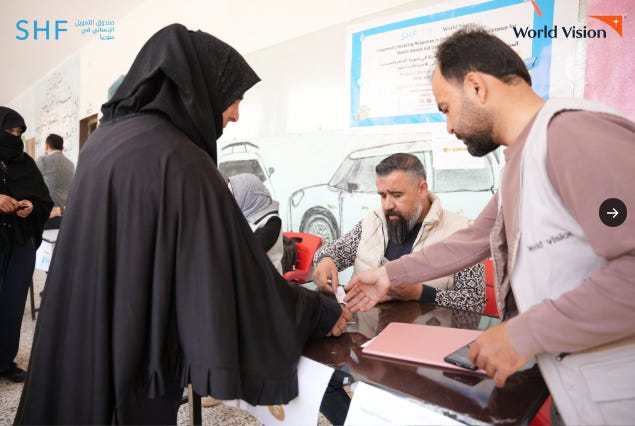
The World Vision Syria Response team announced on May 31 that the SANAD Project -- an EU-funded multi-sectoral humanitarian response program in northwest Syria — had begun, with cash support distribution reaching at least 2,000 households each month.
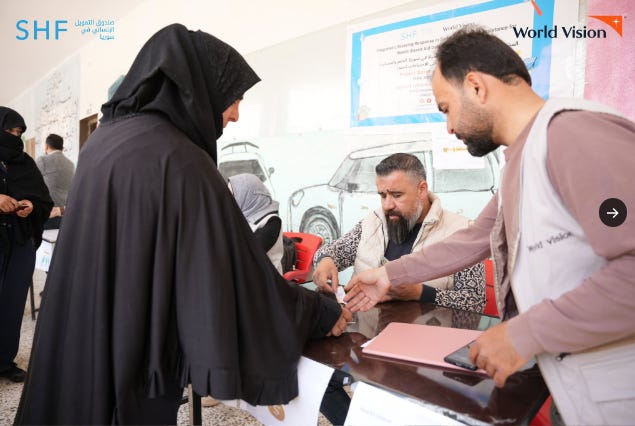
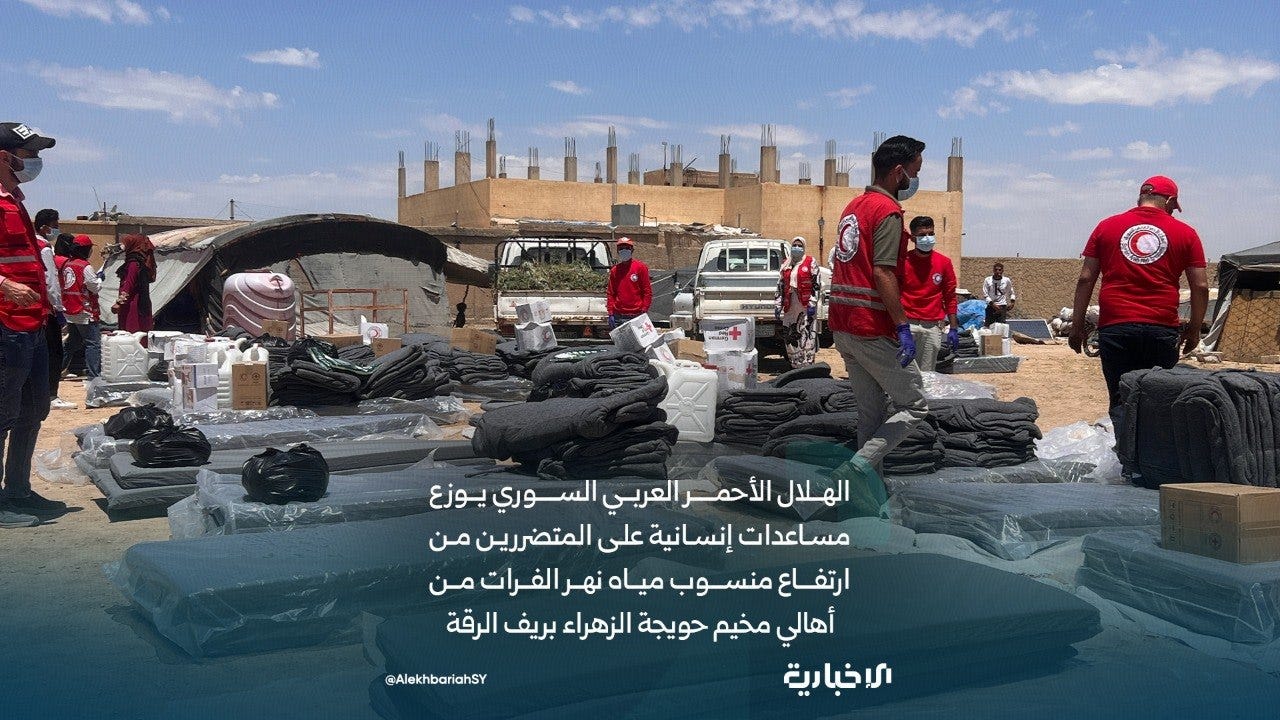
SARC personnel distributed humanitarian aid to people affected and displaced by recent flooding in Raqqa on June 1, with a distribution center established in the Hawijat al-Zahra IDP camp.
Health Developments:
Turkey’s IHH charitable NGO confirmed on May 26 that it had distributed 228 motorized wheelchairs to disabled people in Damascus, Hama, Aleppo, Homs and Idlib.
Minister of Health Musab al-Ali confirmed on May 29 that medical staff throughout eastern Syria had been mobilized to respond to widespread flooding in Raqqa and Deir ez Zour, with 12 ambulances deployed to Euphrates riverbank areas. He added that of the region’s 105 medical clinics, 46 were in “good operating condition” and 23 others were undergoing rehabilitation work.
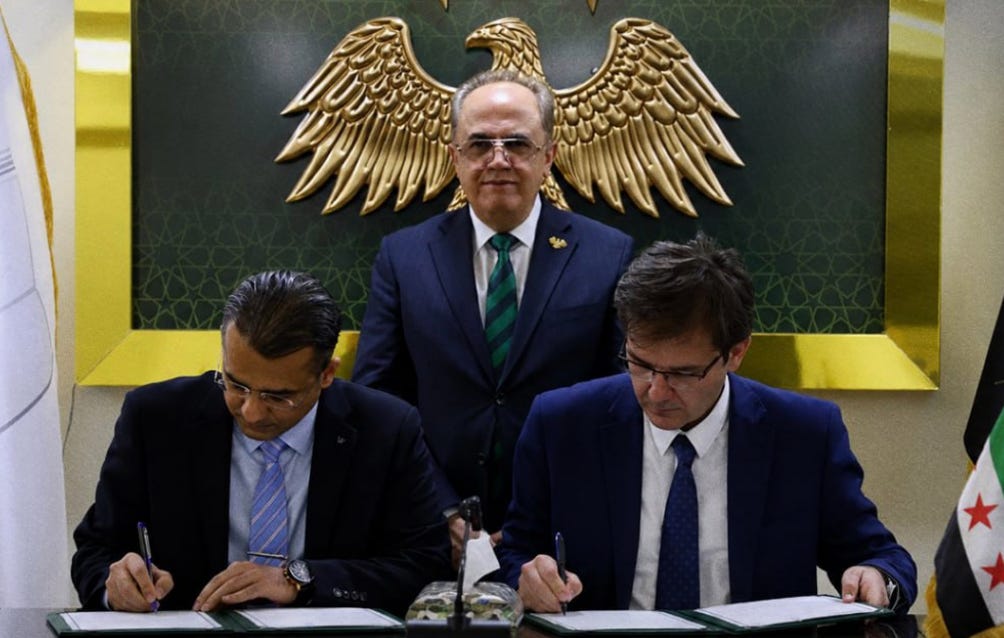
Minister of Higher Education Marwan al-Halabi presided over the signing of a memorandum of understanding with the Chinese biotech company “ETWA” on June 2, to focus on joint efforts in modern biomedicine and establishing and operating a specialized center for research, innovation, and clinical applications in the field of cell therapy.
Justice Developments:
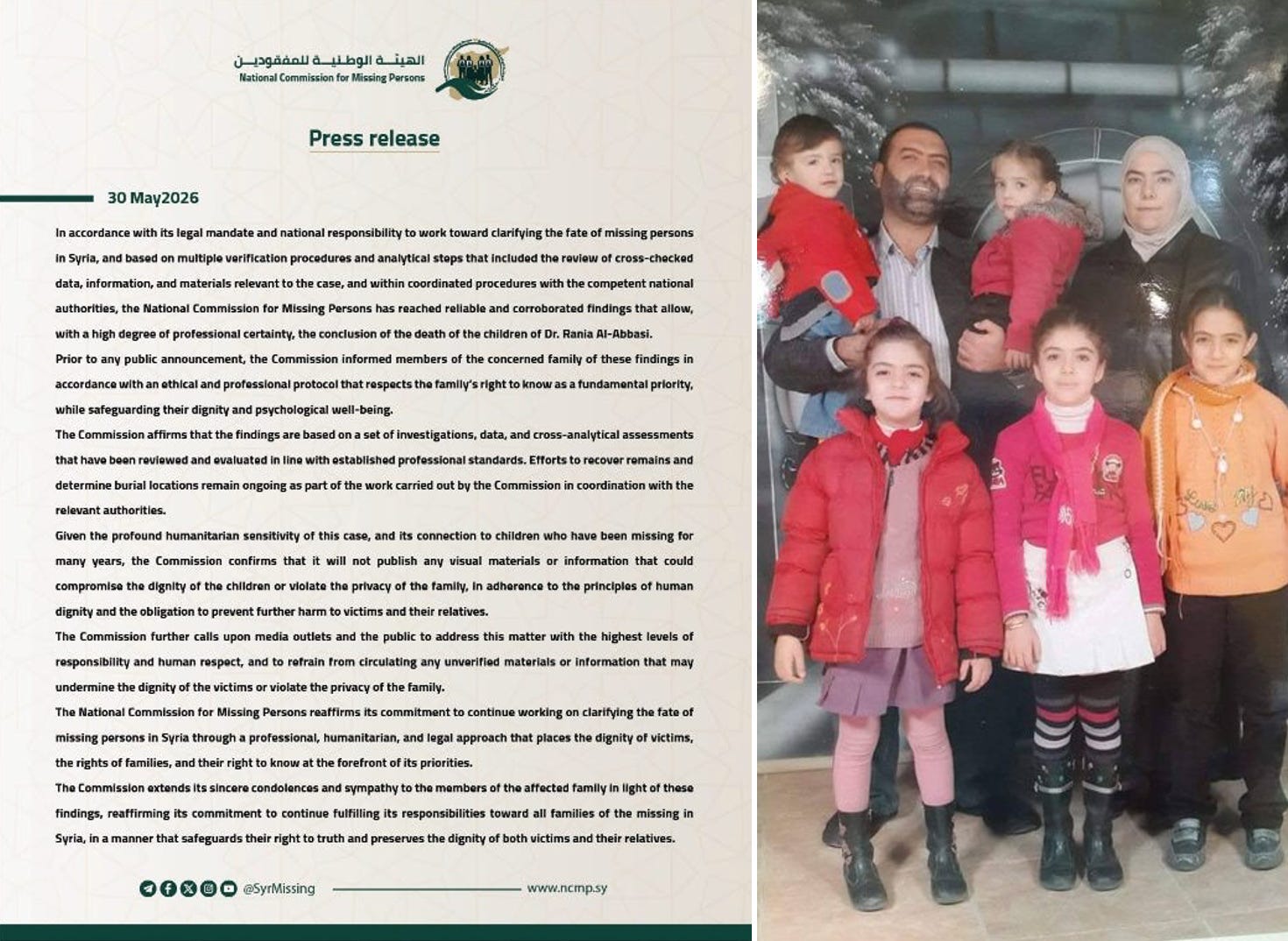
Syria’s National Commission for Missing Persons confirmed on May 30 that based on “cross-checked data, information and materials”, it had concluded that Syrian dentist and famed chess player Rania al-Abassi and her 6 children had been killed at the hands of Assad’s regime.
In subsequent public comments, the commission’s Verification and Documentation Officer, Ammar al-Issa, confirmed that 29 video clips and pieces of criminal evidence had been received on a USB drive in Brussels, Belgium 15 days earlier, in coordination with the MOI. Technical analysis had led to the conclusions, and the family had been informed in advance of the public announcement. The evidence was reportedly linked to Amjad Yousef, the Assad regime militiaman responsible for the Tadamon Massacre.
International Developments:
U.S. President Donald Trump announced on May 31 that Thomas Barrack had been appointed Special Presidential Envoy to Syria and Iraq, thereby sustaining his responsibility for the Syrian file 24-hours after his State Department-appointed role as Special Envoy had ended, per congressional law.
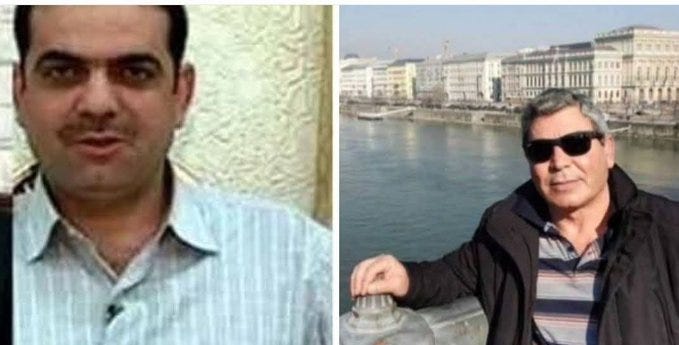
Two former Assad regime military officers - Brigadier General Khaled al-Halabi from the State Security Directorate, and Major “Musab A” from the Political Security Directorate — went on trial in Austria on June 1, charged with involvement in torture of political detainees in Raqqa between 2011-2013.
CONFLICT & SECURITY:
Israel:
Israeli military forces launched a ground incursion into the village of al-Rufayd in Quneitra on May 26.
That day, another incursion was also launched into the Wadi al-Raqad area of western Daraa’s Yarmouk Basin.
Israeli military forces launched a ground incursion into the village of Hayran in southern Quneitra on May 27.
Later that day, another incursion was launched into the village of Tel al-Kroum in central Quneitra.
Israeli military forces launched a ground incursion into the Tel al-Jalah area of southern Quneitra early on May 28.
Later that day, another incursion was launched into the village of al-Isbah in Quneitra.
Israeli military forces launched a ground incursion into the village of al-Ruwayhina in central Quneitra on May 29.
Israeli military forces launched a ground incursion into the villages of al-Kudna and al-Isbah in southern Quneitra on May 30.
Israeli military forces launched a ground incursion into an area located between the villages of Maariya and al-Arada in western Daraa on May 31.
That day, one local sheep herder - identified as Alaa Ahmed al-Khader - was also shot and injured by Israeli military forces during an incursion into the Wadi al-Ruqad area in western Daraa — with UNDOF forces evacuating him for medical treatment in Nawa.
Israeli military forces launched 3 artillery shells into the outskirts of the village of al-Masratiyah in western Daraa on June 1. The shelling triggered a fire in crops, which was later extinguished by locals.
Israeli military forces launched a ground incursion into the Dara’iyat Hill area near al-Muallaqa in Quneitra late on June 1.
Late that night, one local man was detained during another incursion into the village of Ayn Ziwan in southern Quneitra, during which several residential homes were raided.
ISIS:
Two ISIS militants shot dead an MOI officer in a targeted attack after he left Eid al-Adha prayers near al-Bukamal on May 27.
Shortly after, locals managed to capture one of the two perpetrators, handing him over to MOI custody, while the other was captured by MOI personnel later that day. They were locally identified as Omar al-Daoush and “Abdulfattah.”
One would-be ISIS suicide bomber was shot at and forced to detonate his explosives prematurely outside the headquarters of the MOD’s 76th Division in Bzaa in northern Aleppo on May 30. He had reportedly arrived nearby on a motorbike, but was confronted due to suspicions that he had malign motives. No casualties were caused.
Aleppo:
One combatant was killed and 4 others were injured in clashes between rival clans outside al-Atareb on May 26.
One child was killed after triggering an unexploded cluster munition in the village of Hayyan in northern Aleppo on May 31.
One man was injured after triggering an unexploded landmine near Khan al-Asal in western Aleppo on June 1.
Latakia:
One security guard working at Latakia Port, identified as Hussein Ayarik, was shot dead by one unidentified gunman in the Jabal al-Turkman region late on May 30.
The following day, the MOI announced the arrest of the gunman responsible, with the motive under investigation.
Hama:
Two civilian members of the Murshidiya religious minority were shot dead and 4 others were injured in a targeted attack by unidentified gunmen in the village of al-Qahira in the Sahl al-Ghab region on May 28.
A child and his father were injured after triggering an unexploded landmine in the Tahmaz area near al-Salamiya on May 29.
Two civilians were killed after triggering an unexploded landmine in the al-Hamra area of rural eastern Hama on May 31.
Two former Assad regime militiamen inside a commercial store were shot dead by 2 unidentified gunmen on a motorbike in the village of Katiloun near al-Salamiya late on June 1.
Homs:
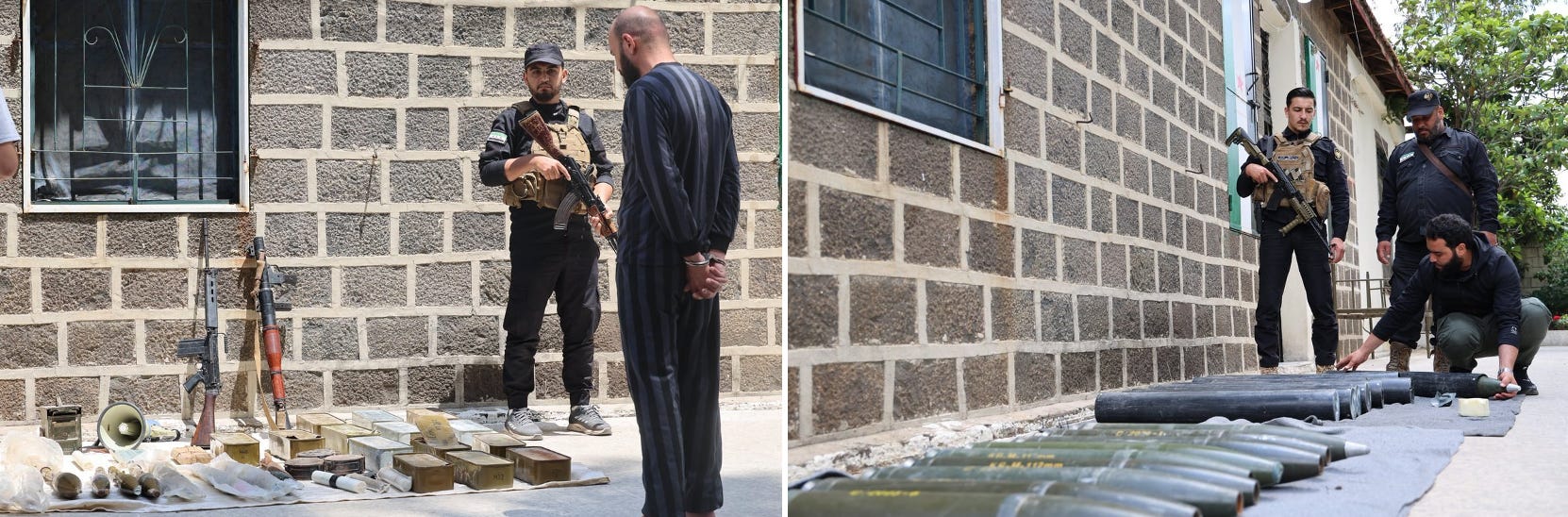
MOI Public Security personnel detained an weapons smuggler and seized a cache of anti-tank rockets, artillery shells and RPGs that were being prepared for shipment to Hezbollah in Lebanon in a raid in Homs city on June 1.
Raqqa:
Three children were killed and 3 other family members were injured after the vehicle were driving in triggered an unexploded landmine in the village of al-Fatisa in northern rural Raqqa on May 27.
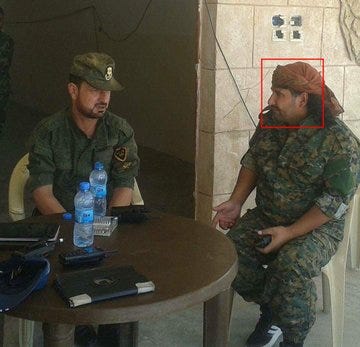
Former Assad regime militiaman and leader of the Tribal Forces militia loyal to Suhail al-Hassan, Turki al-Bouhamad, was detained in a targeted raid by MOI personnel in Raqqa on May 28.
Two children were injured after triggering an unexploded landmine near Ayn Issa on June 1.
Deir ez Zour:
One child was killed and another injured after triggering an unexploded landmine in the village of Abu al-Nital in northern rural Deir ez Zour on May 30.
Rif Dimashq:
One Druze man, identified as Safwan al-Qudmani, was reportedly kidnapped by unidentified gunmen while driving towards Damascus from Suwayda on May 26.
Damascus:
Damascus International Airport’s border security personnel detained Druze citizen Tala’i Ghazi al-Tawil upon his landing back into the country from Saudi Arabia on May 29, following accusations of his involvement in crimes against Bedouin civilians in July 2025.
Daraa:
Two combatants were injured during a brief armed clash in al-Hirak on May 29.
Suwayda:
Druze National Guard militiamen abducted a Sunni Arab man while driving through Suwayda on May 26, accusing him of having been involved in killings in the governorate in July 2025.
Later that day, pro-government gunmen recorded a video in which they said the man that the National Guard claimed to have captured was in fact still free, working as a tanker driver in Homs.
Druze militiamen mobilized along stretches of the Damascus highway inside Suwayda on May 26, amid reports and rumors of attacks on Druze citizens and tit-for-tat kidnappings — much of which ended up being false. In response, government MOI personnel also mobilized along the highway to the north, controlling traffic but keeping it moving in both directions, according to local media.
The highway was temporarily closed on May 27, but re-opened for all traffic early on May 28.
One Druze National Guard militiaman, identified as Raed Mohammed al-Shaer, was shot dead by suspected rival Druze militiamen in Suwayda city late on May 28.
One Druze National Guard militiaman, identified as Laith Nasr, was shot dead by suspected rival Druze militiamen in Suwayda city on May 29.
Unidentified gunmen sabotaged a stretch of telephone cabling in Suwayda city’s industrial zone on May 29, resulting in at least 1,000 people losing phone services.
Druze National Guard militiamen deployed reinforcements on May 30 to the Umm al-Zaytoun and Shahba checkpoints leading towards government-held areas and forcefully disembarked students from vehicles and buses as they sought to travel towards Damascus to undertake examinations. The previous day, the National Guard’s Shahba Operations Room had issued a statement declaring its intent to prevent students from traveling to government areas in order to “respect the blood of the martyrs.”
Four civilians were injured after triggering an unexploded landmine in the village of al-Janinah in eastern rural Suwayda on May 31.
One local woman was injured when rival Druze National Guard militiamen — some from Rawad Abdul Khalik’s “Rapid Intervention Battalion” and others from Yamen Al-Saghir’s “Hamza Knights Battalion” — confronted activists and then each other during a forcible expulsion of people from their homes and commercial properties in the Qanawat area outside Suwayda city on May 31. The properties in dispute belong to the St George Orthodox Church.
One man was injured after triggering an unexploded landmine near al-Majdal in western Suwayda on June 1.
Druze National Guard militiamen stopped and forcefully disembarked students from buses headed towards Damascus on two separate occasions at checkpoints in Malih and in Suwayda city’s northern outskirts on June 1. During the first incident, several students were reportedly beaten.