

FREE -- Syria Weekly: April 28-May 5, 2026
FM leads visit to Egypt; Syria-Jordan-Lebanon energy deal; SDF integration pushes forward; Chinese cement plant for Raqqa; VISA & Mastercard rollout begins; Assad-era Generals detained; & more.

SYRIA’S TRANSITION
Transition Meetings:
April 28:
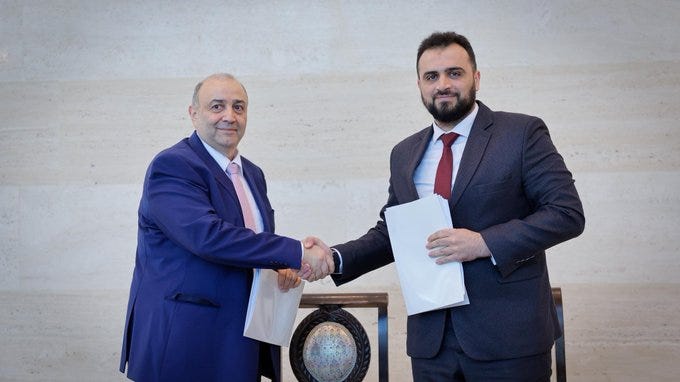
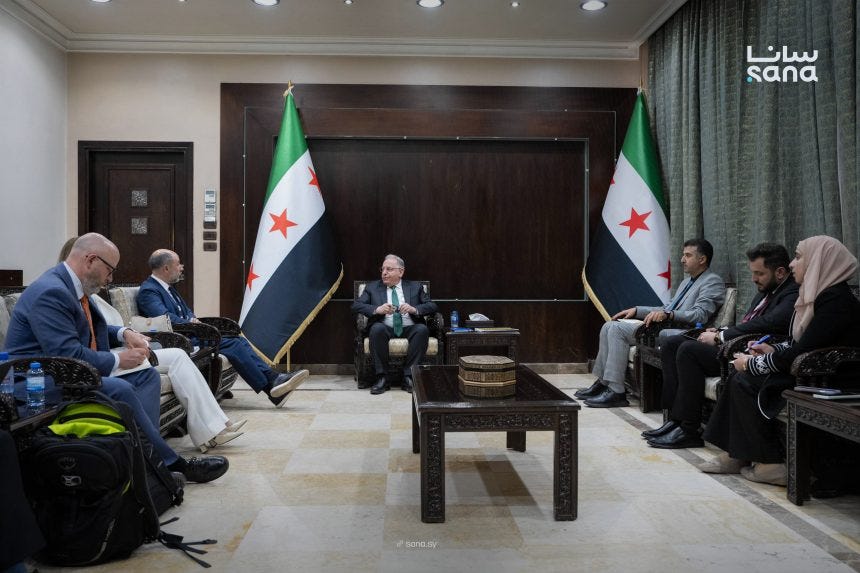
The Foreign Ministry’s Director of International Cooperation Qutaiba Qadesh hosted a meeting with the Aga Khan Development Network’s Syria country representative Ghatfan Ajoob on April 28 and signed a memorandum of understanding to organize and coordinate the network’s cooperation with organizations throughout Syria.
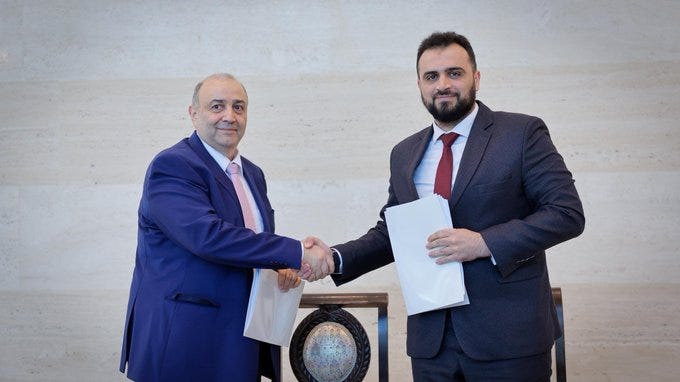
Minister of Communications and Information Technology Abdulsalam Haykal inaugurated the Syria Hi-Tech expo in Damascus on April 28, alongside Minister of Administrative Development, Mohammed al-Skaf, Minister of Transport, Yaroub Badr, and Governor of Damascus Maher Marwan.
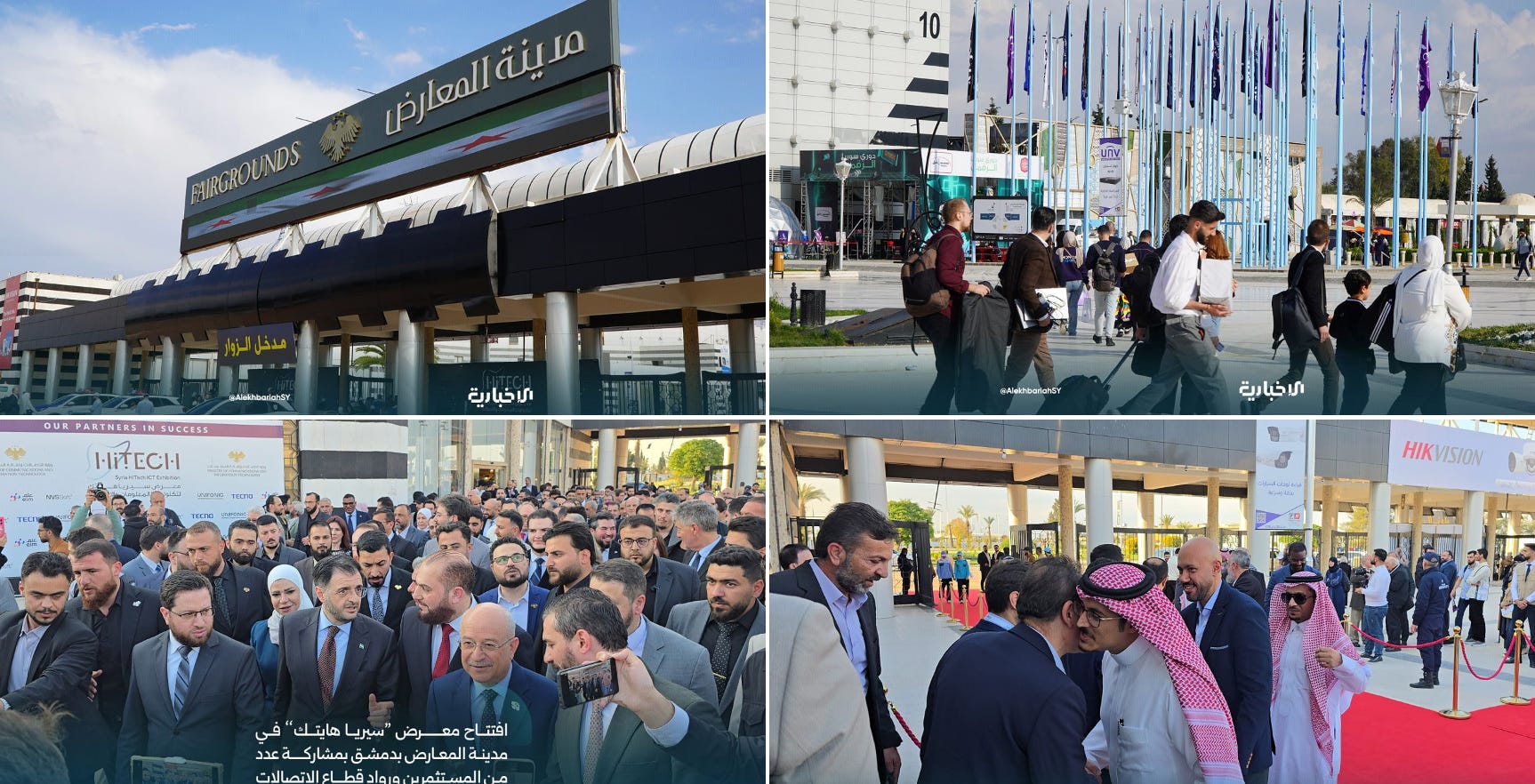
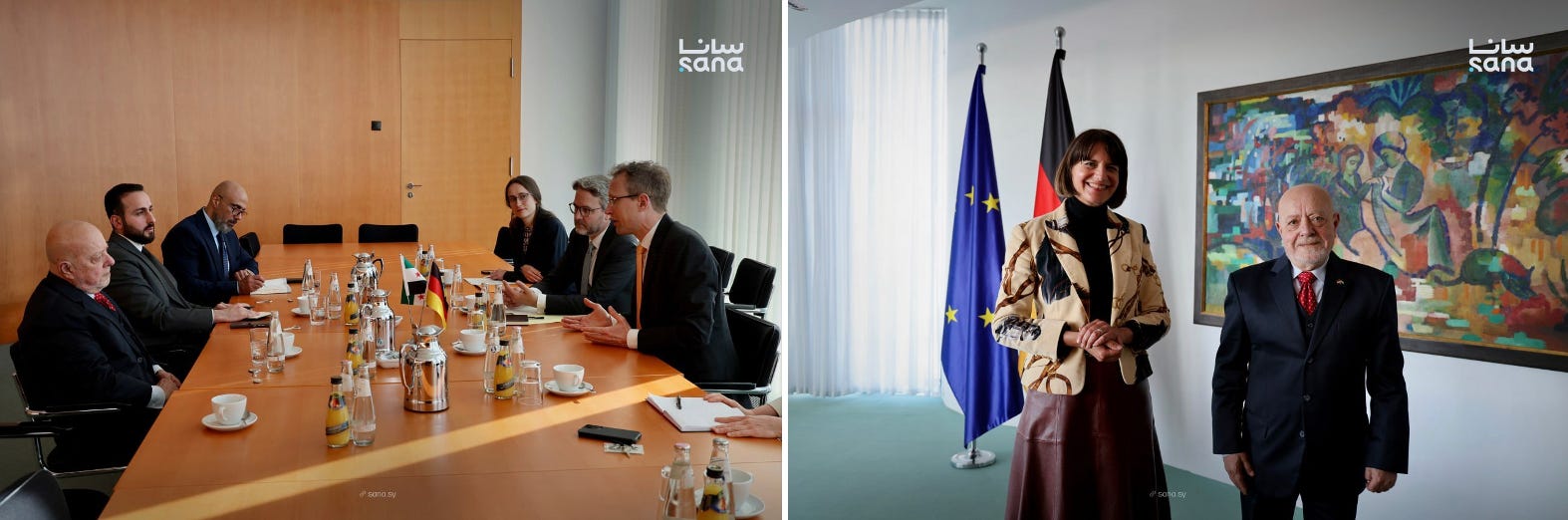
Minister of Economy and Industry Nidal al-Shaar traveled to Berlin, Germany and met with Foreign Policy Advisor to the German Federal Chancellor, Günter Sattler, on April 28 and with State Minister in the German Federal Chancellery, Britta Berendt to discuss bilateral cooperation.
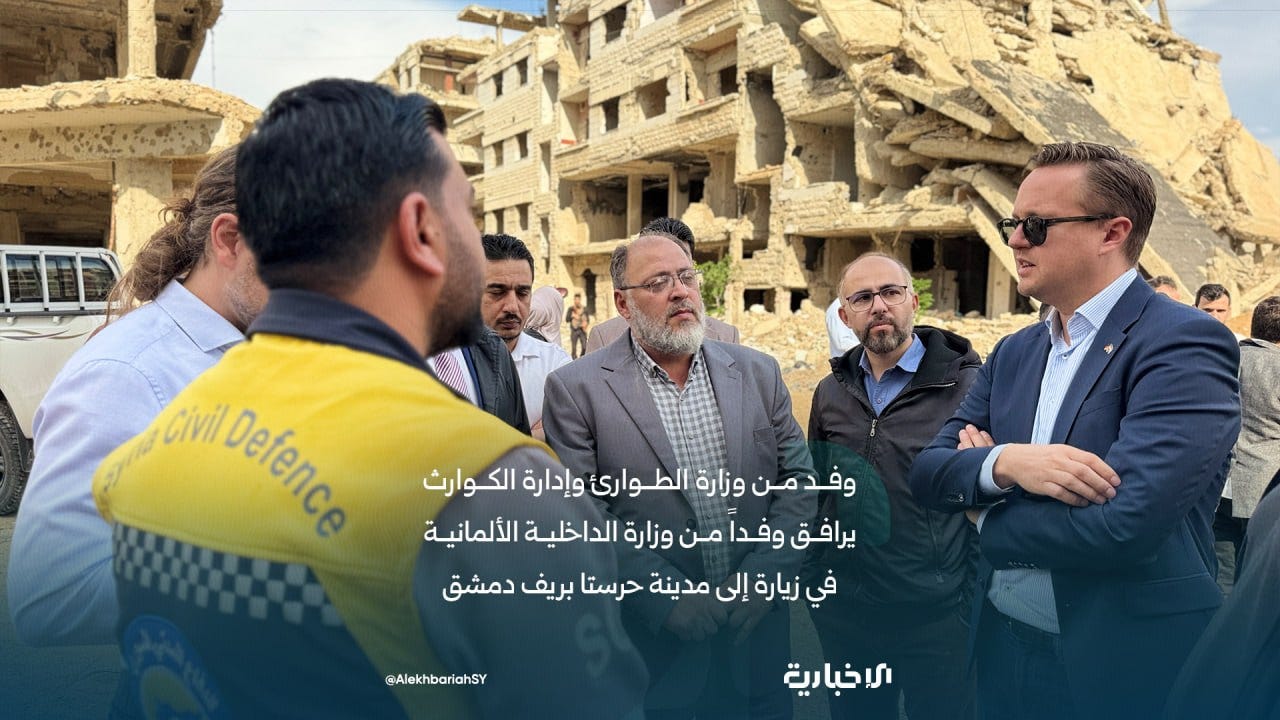
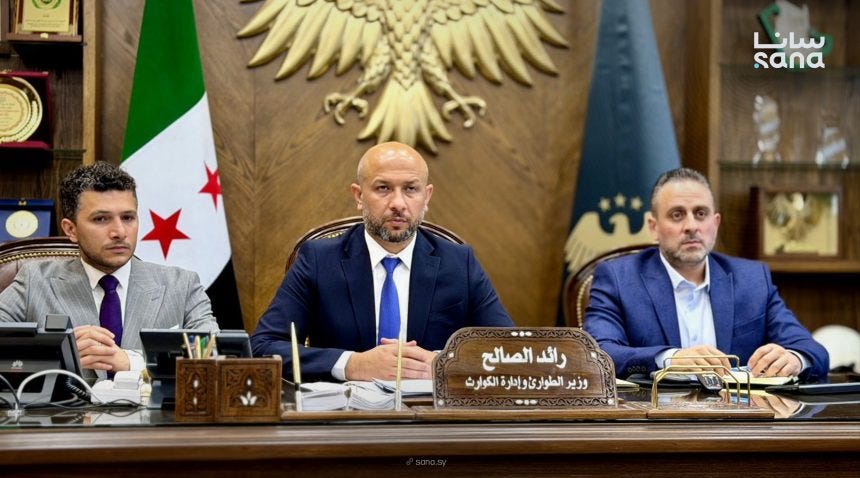
Staff from the Ministry of Emergency and Disaster Response Raed al-Saleh accompanied a delegation from the German Interior Ministry to tour the destruction in Harasta outside Damascus on April 28.
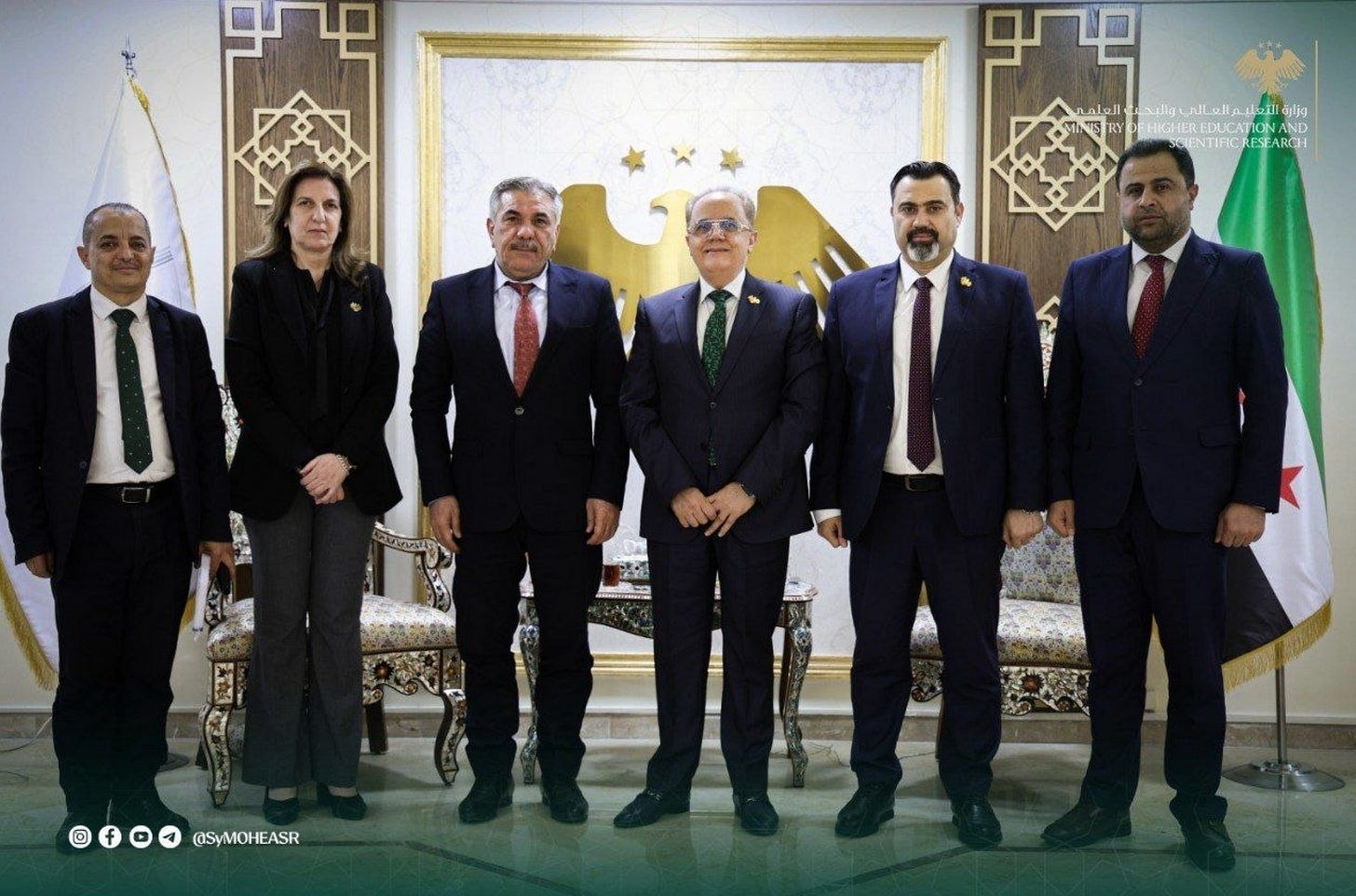
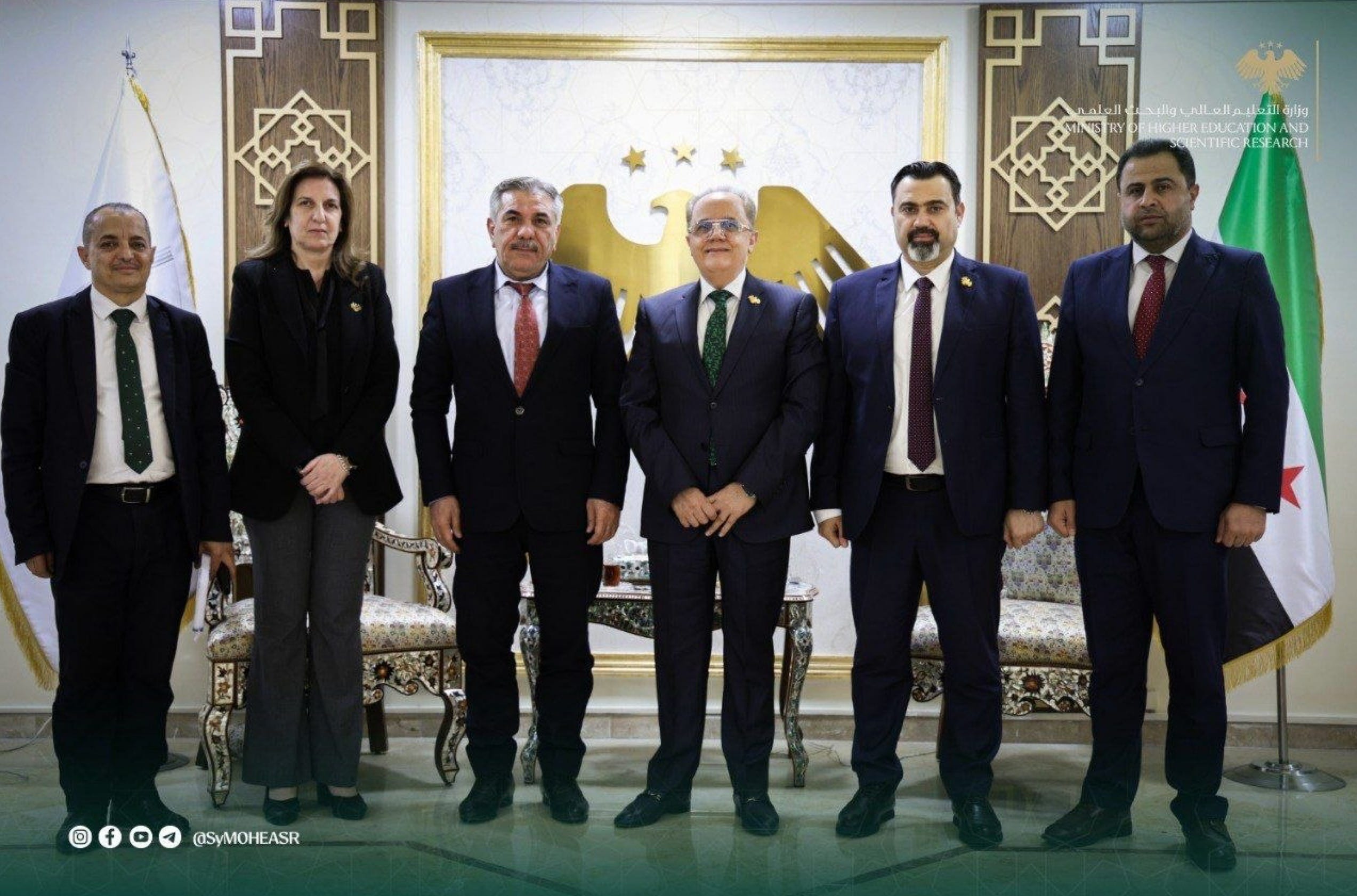
Minister of Higher Education Marwan al-Halabi hosted meeting with Education Minister Mohammed Turko and Governor of Hasakeh Nour al-Din Ahmed on April 28 to discuss increasing support to students at the Hasakeh Branch of the Euphrates University and accelerating the integration and support to the governorate’s education sector.
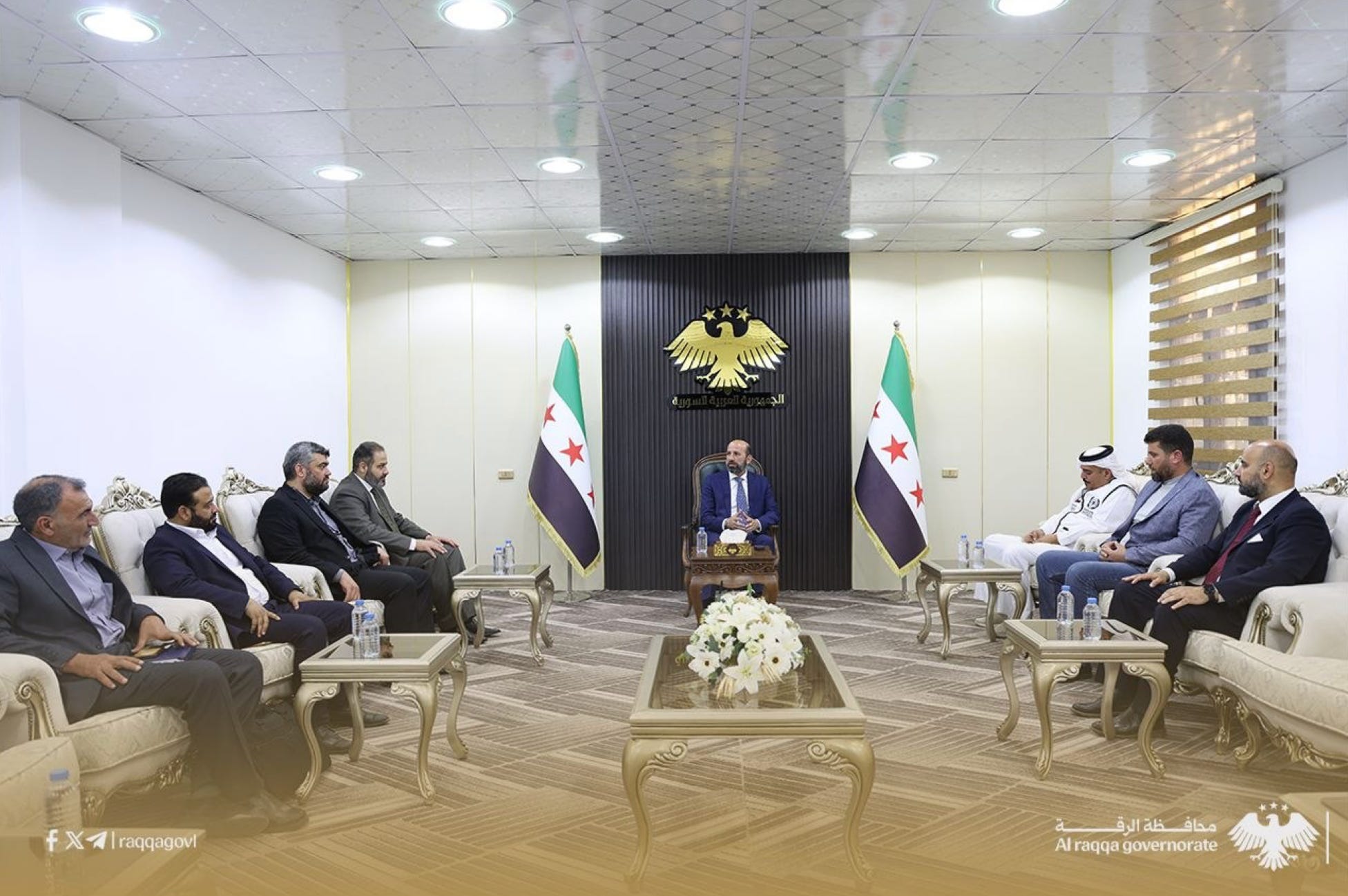
Governor of Raqqa Abdulrahman Salamah hosted a visit by Musab Al Nuaimi from the UAE’s Global Charity Organization on April 28 in order to discuss proposed assistance to health, water, endowments, and education sectors in the governorate.
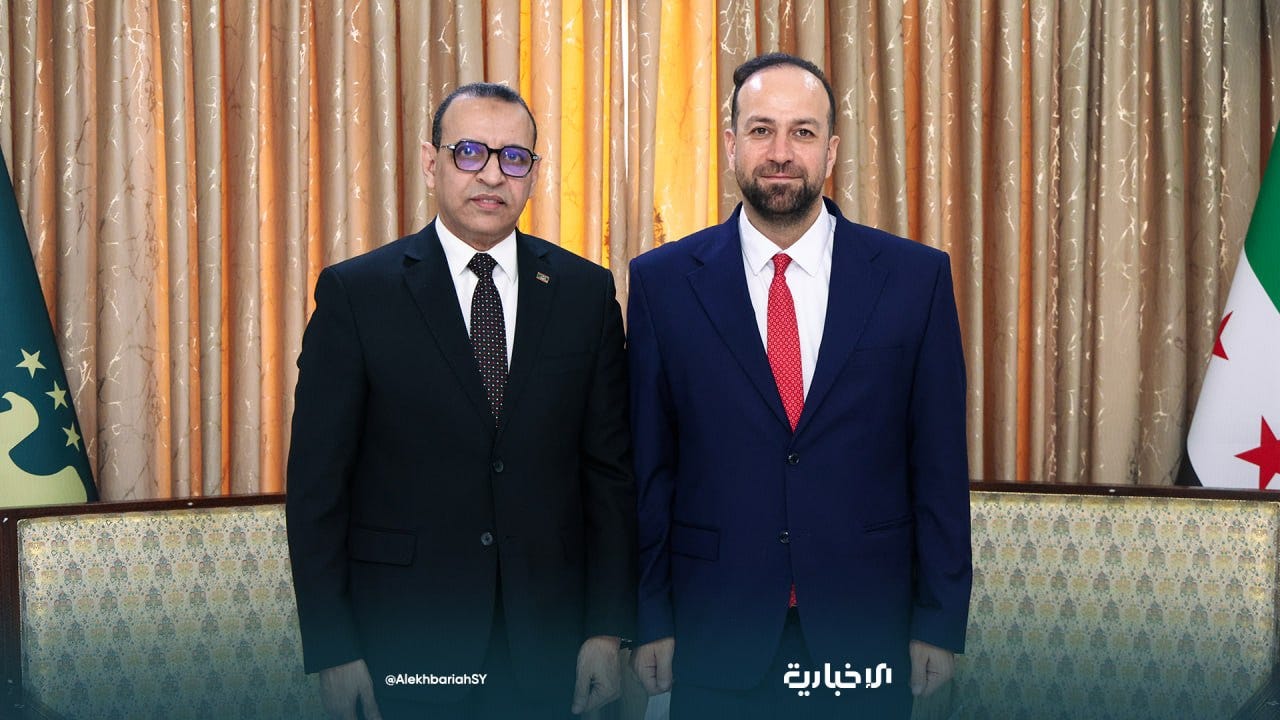
Minister of Information Hamza al-Mustafa hosted a meeting with Mauritanian Ambassador Talib Al-Shaykh Mohammed Al-Muhtab, on April 28.
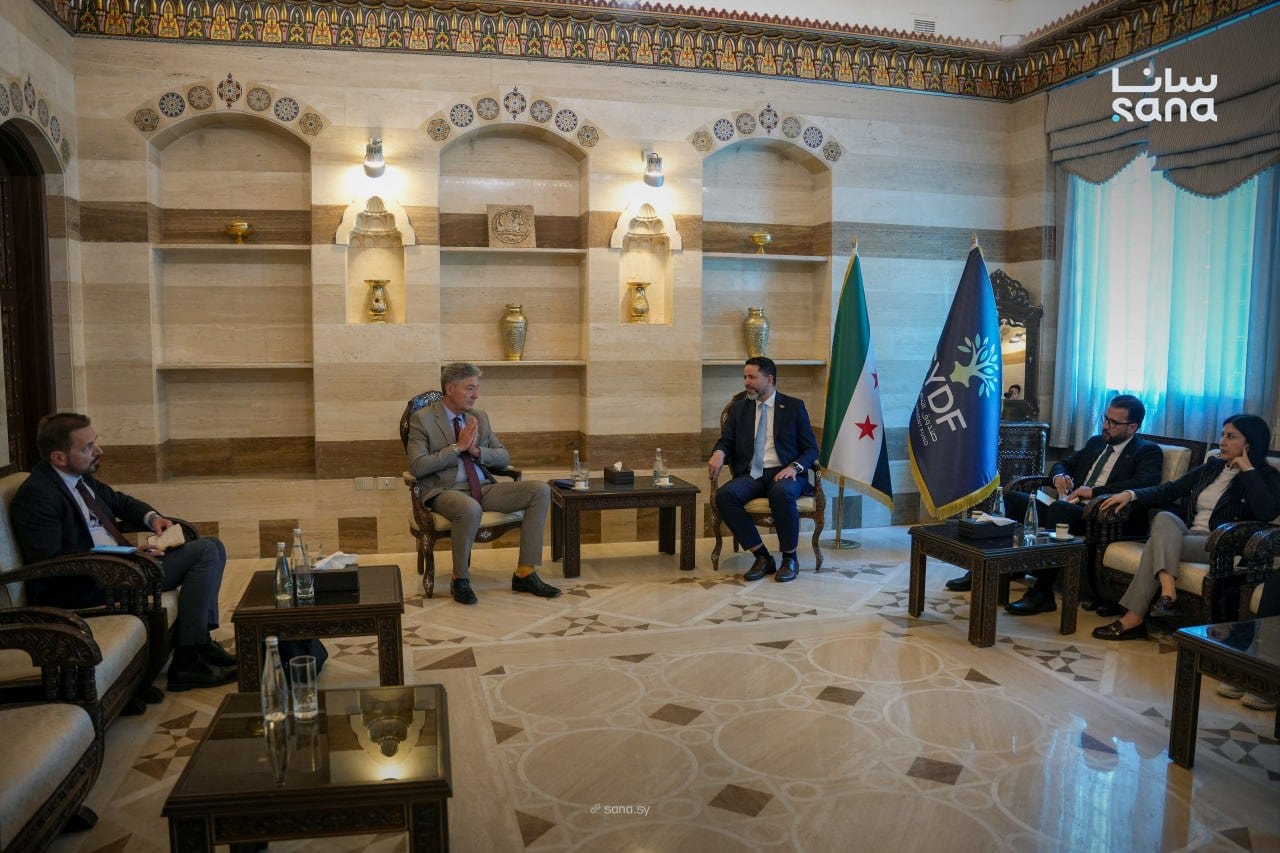
Syrian Development Fund Director Safwat Raslan hosted a meeting with EU Ambassador Michael Ohnmacht on April 28 to discuss cooperation in development efforts and meeting Syria’s priority needs.
April 29:
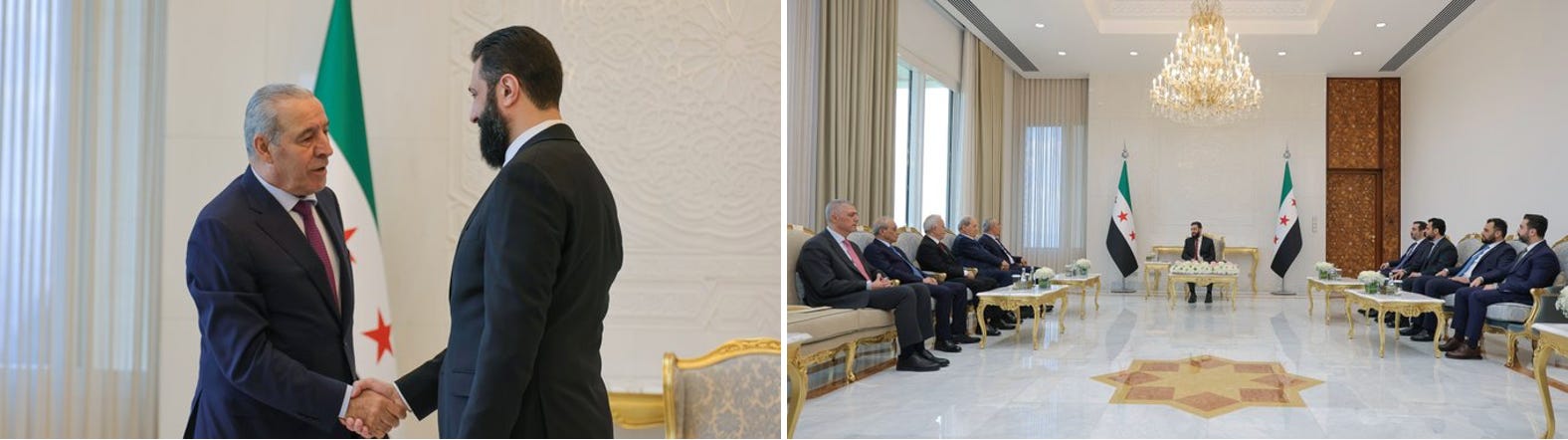
President Ahmed al-Sharaa hosted a visit by Palestinian Vice President Hussein al-Sheikh and his delegation to Damascus on April 29.
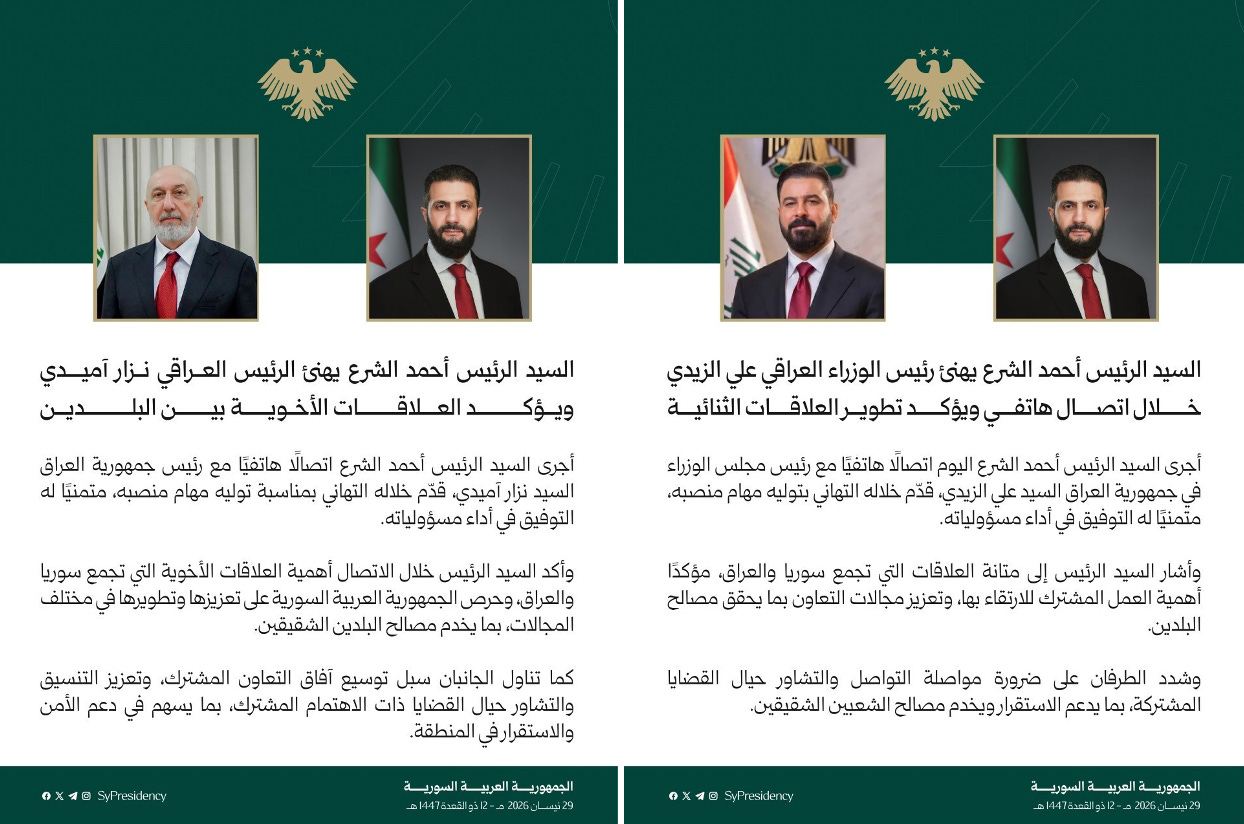
Later that day, President al-Sharaa spoke separately by phone with Iraq’s new Prime Minister Ali al-Zaidi and President Nizar Amidi, to discuss bilateral relations.
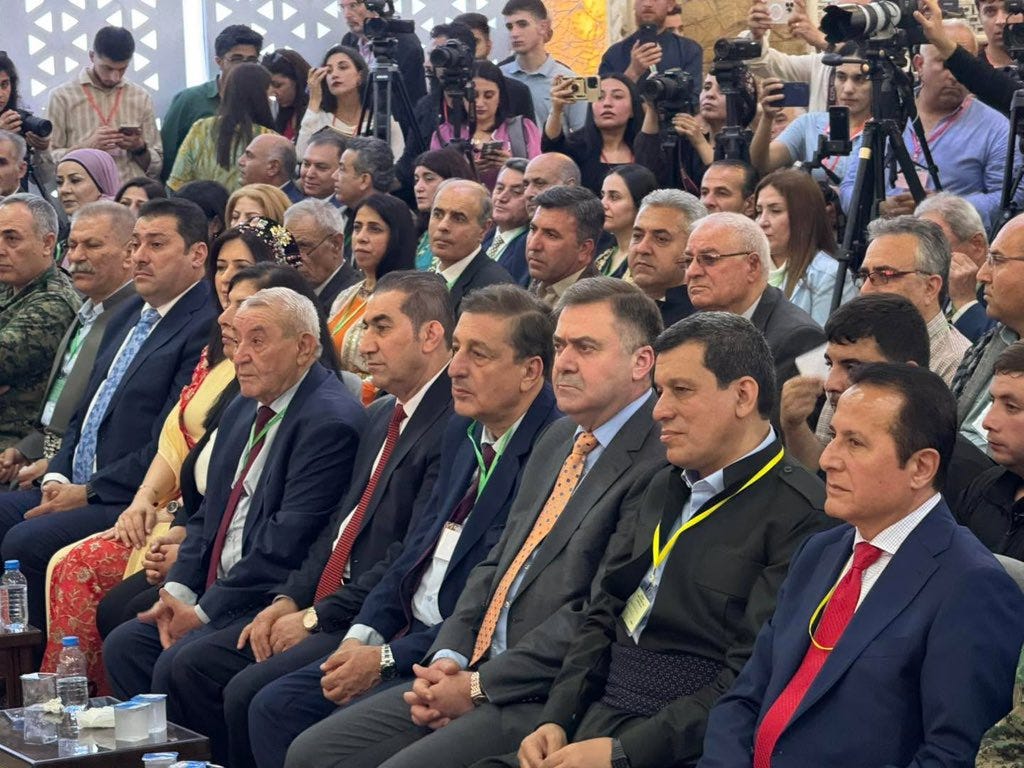
A large gathering of Kurdish notables gathered at a conference in Hasakeh on April 29 to discuss the process of selecting representatives to run for the People’s Assembly.
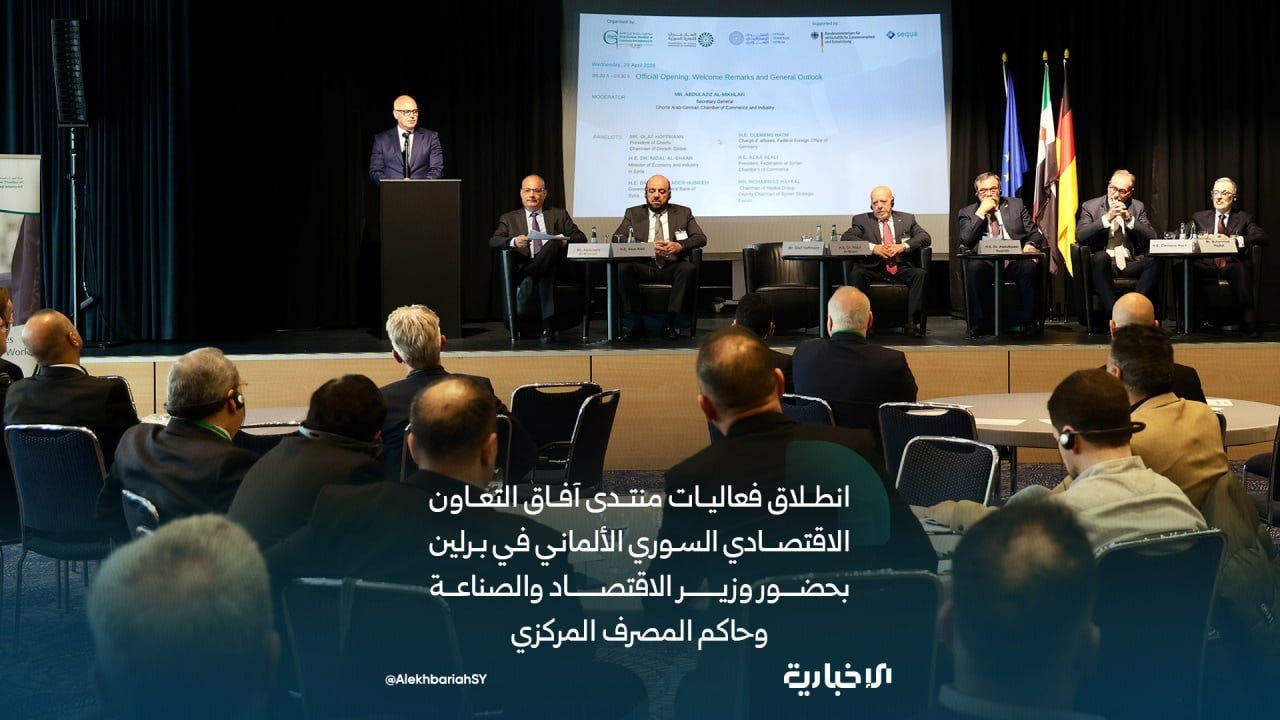
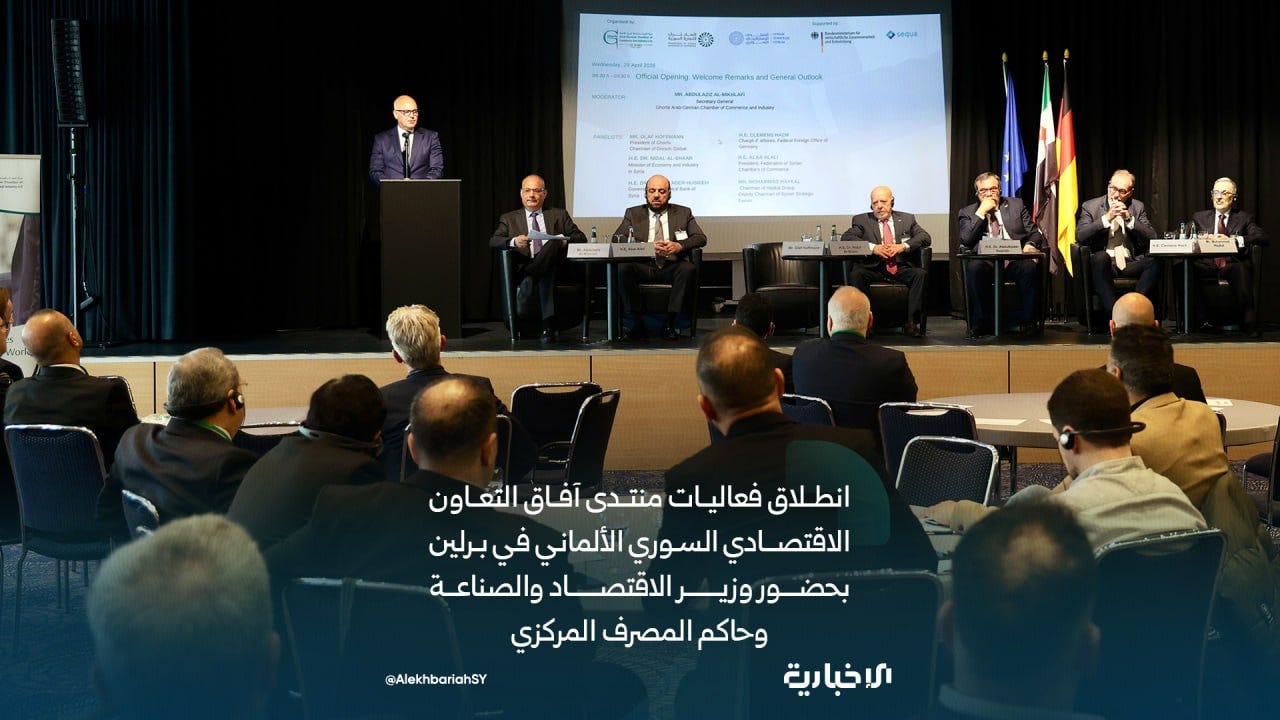
Minister of Economy and Industry Nidal al-Shaar, Central Bank Governor Abdulkader Husrieh and Acting Charge d’Affairs in Berlin, Mohammed Baraa Shukri participated in the opening of the Syrian-German Economic Cooperation Forum in Berlin, Germany on April 29.
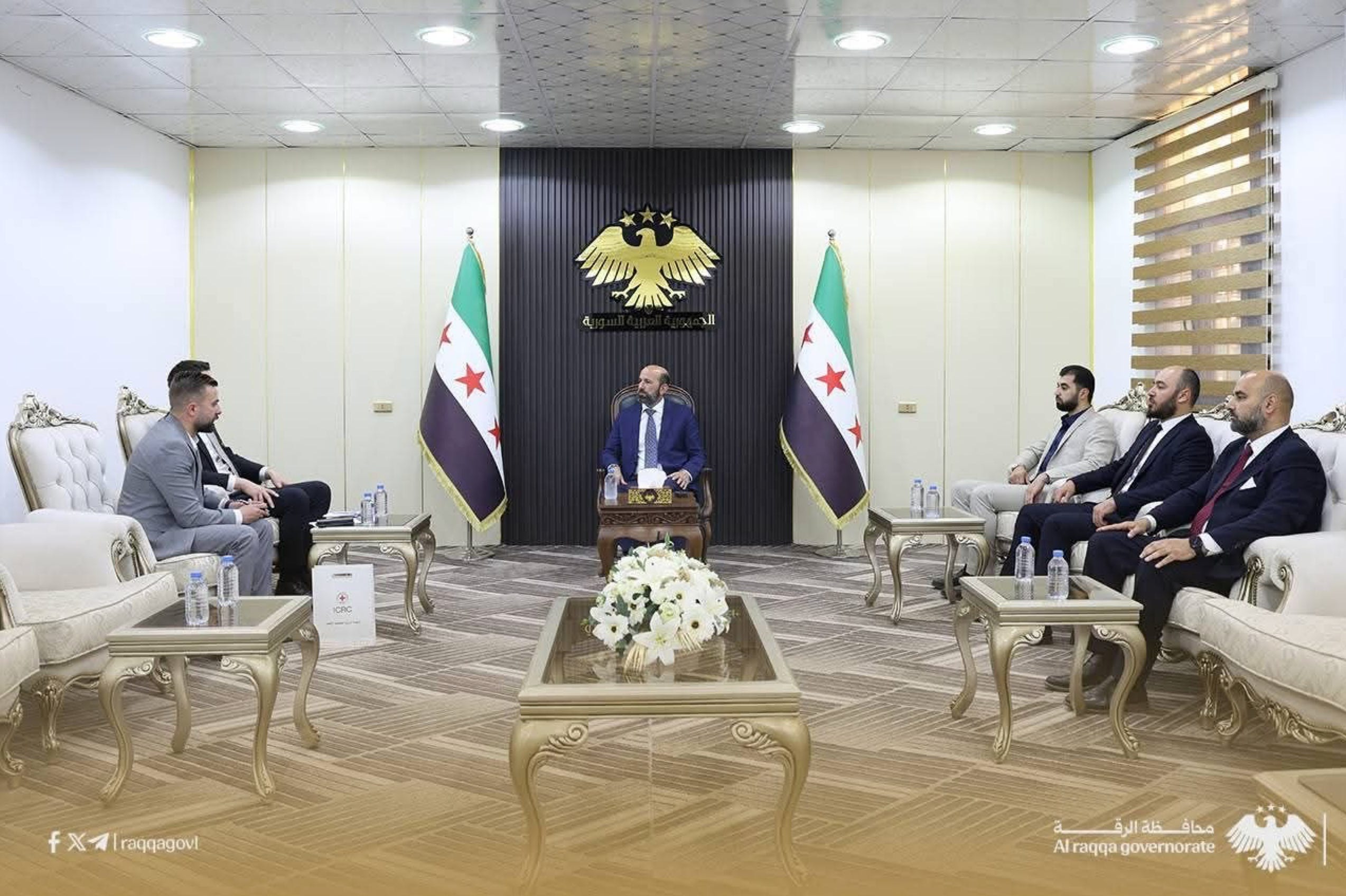
Governor of Raqqa Abdulrahman Salamah hosted a visit by Sebastian Vosthe of the ICRC’s regional mission on April 29 in order to discuss the governorate’s humanitarian conditions and needs.
Minister of Emergency and Disaster Response Raed al-Saleh participated in a virtual meeting with the International Civil Defence Organisation (ICDO) on April 29 to discuss proposals to increase technical support and capacity building to Syria.
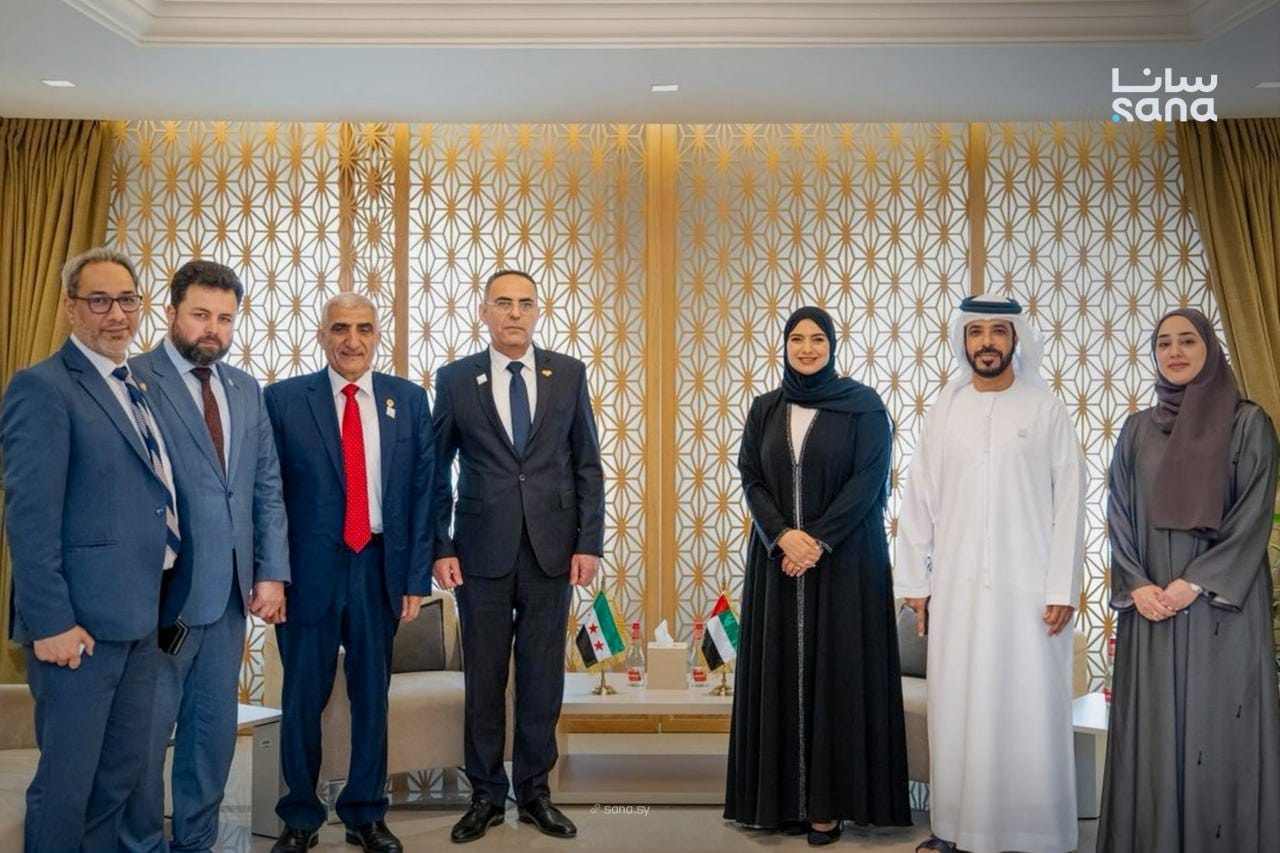
Minister of Agriculture Amjad Badr met with the UAE’s Minister of Climate Change and Environment, Amina Bint Abdullah al-Dahhak in Abu Dhabi, UAE on April 29 to discuss addressing climate challenges through innovation and scientific research.
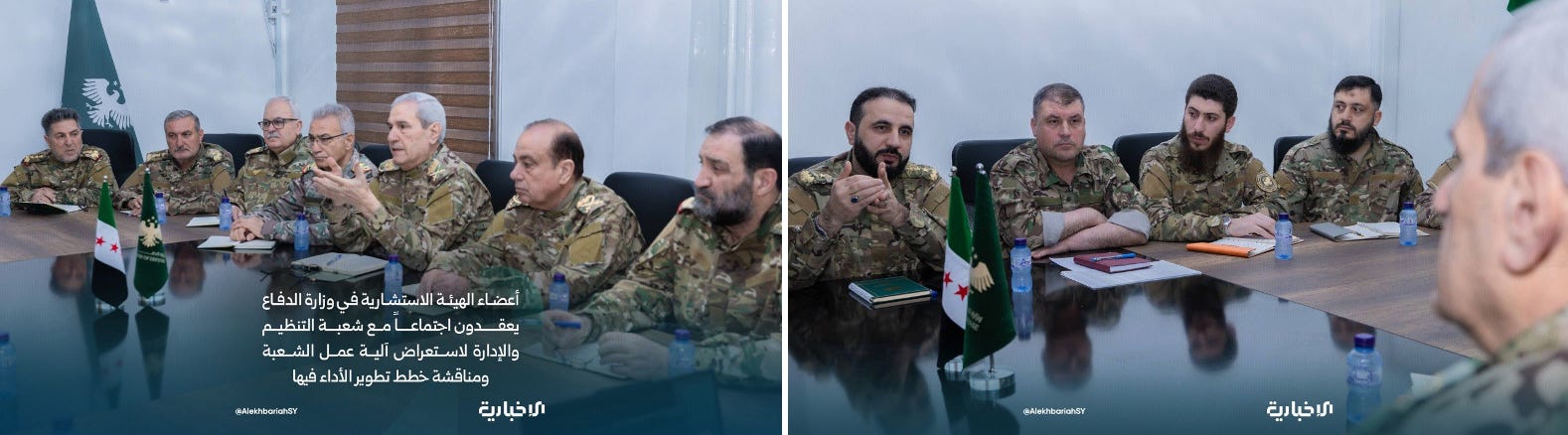
The MOD’s Advisory Board met with the leadership of the MOD’s Organization and Administration Division (led by Brigadier General Anad al-Darwish) on April 29 to discuss its work, plans, and the need for organizational efficiency.
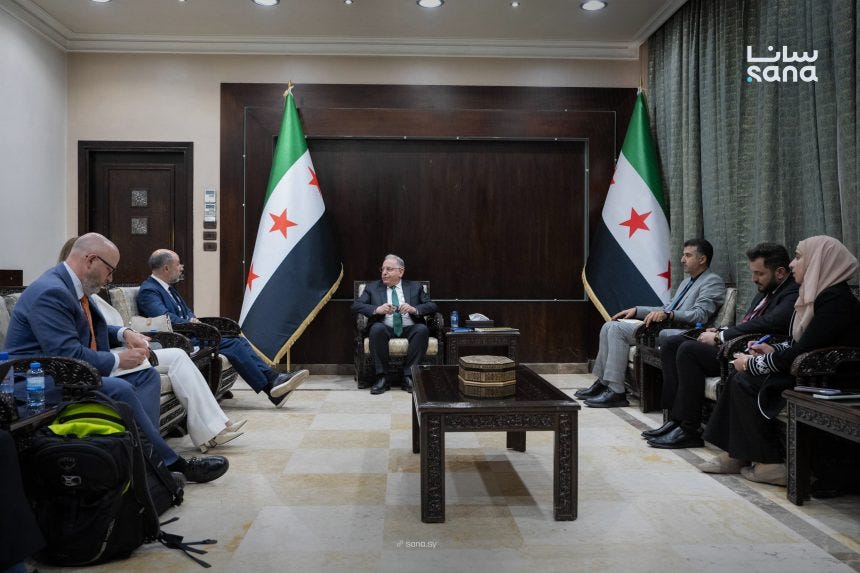
Minister of Finance Mohammed Barnieh hosted a visit by a delegation from the British Overseas Development Institute (ODI Global) on April 29 and discussed the importance of integrating climate change risks into all economic, financial, and investment decisions.
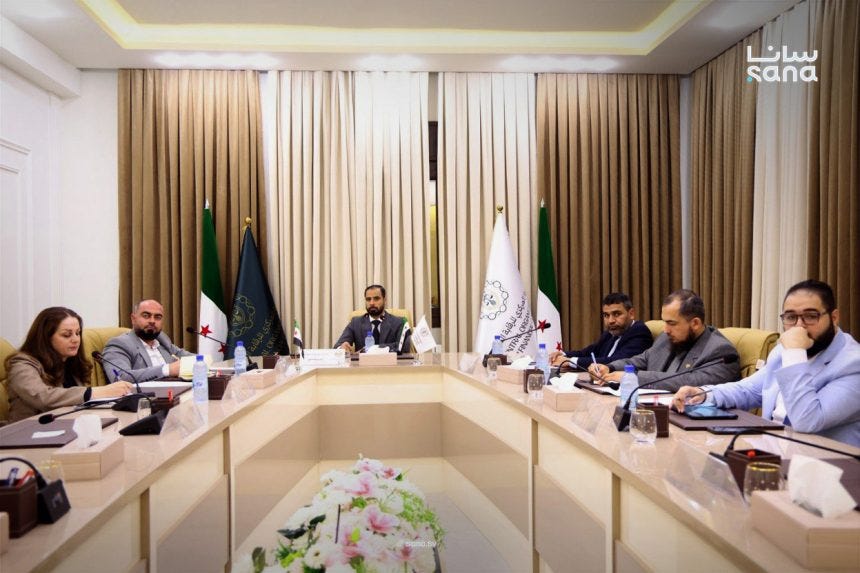
The Vice President of Syria’s Central Commission for Financial Control (CCFC), Wassim al-Mansour, hosted an online meeting with a team from the Netherlands’ Court of Audit and discussed institutional cooperation and the development of oversight operations within the field of financial control.
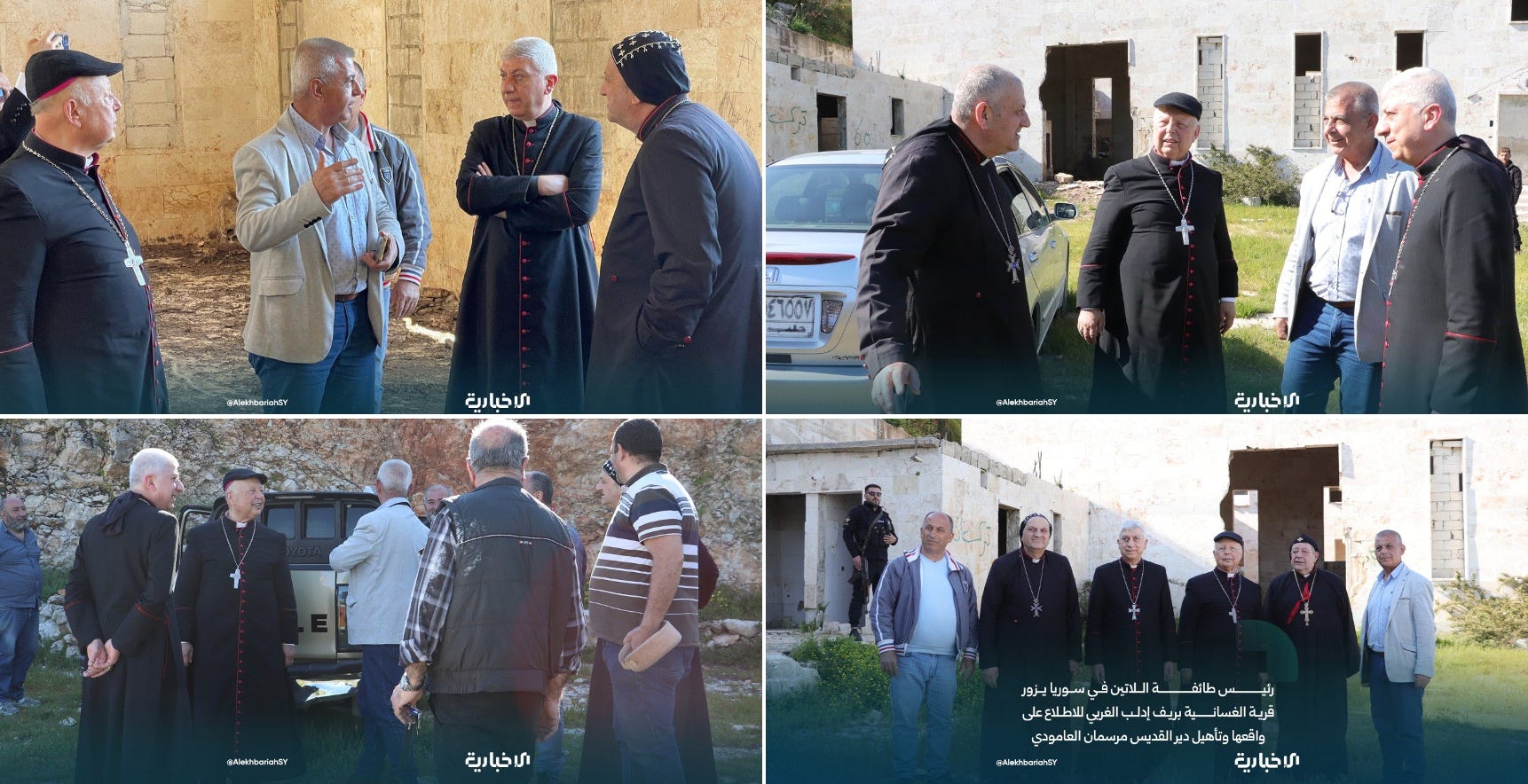
The head of Syria’s Catholic Church, Bishop Hanna Jalouf traveled to Ghassaniya, Idlib on April 29 to meet with the priests and assess the ongoing rehabilitation of the Mar Samuel Monastery.
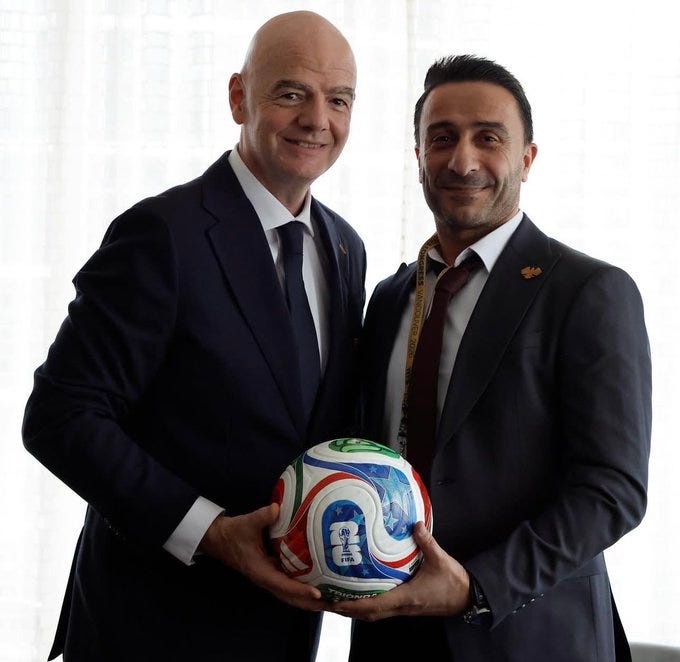
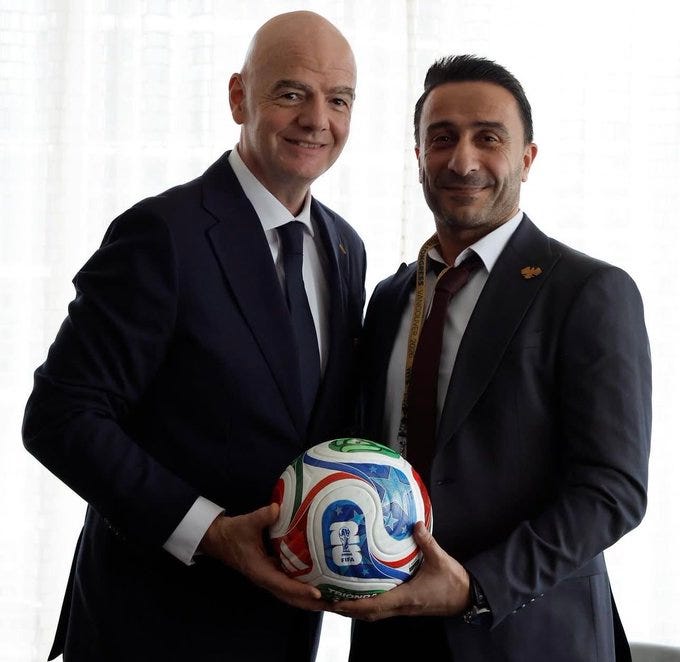
The President of Syria’s Football Association, Firas Tayt, traveled to Canada and participated ion the FIFA Congress on April 29 — during which he met with the FIFA President Gianni Infantino. During the meeting, Infantino projected FIFA’s support for the rehabilitation and expansion of sports infrastructure in Syria.
April 30:
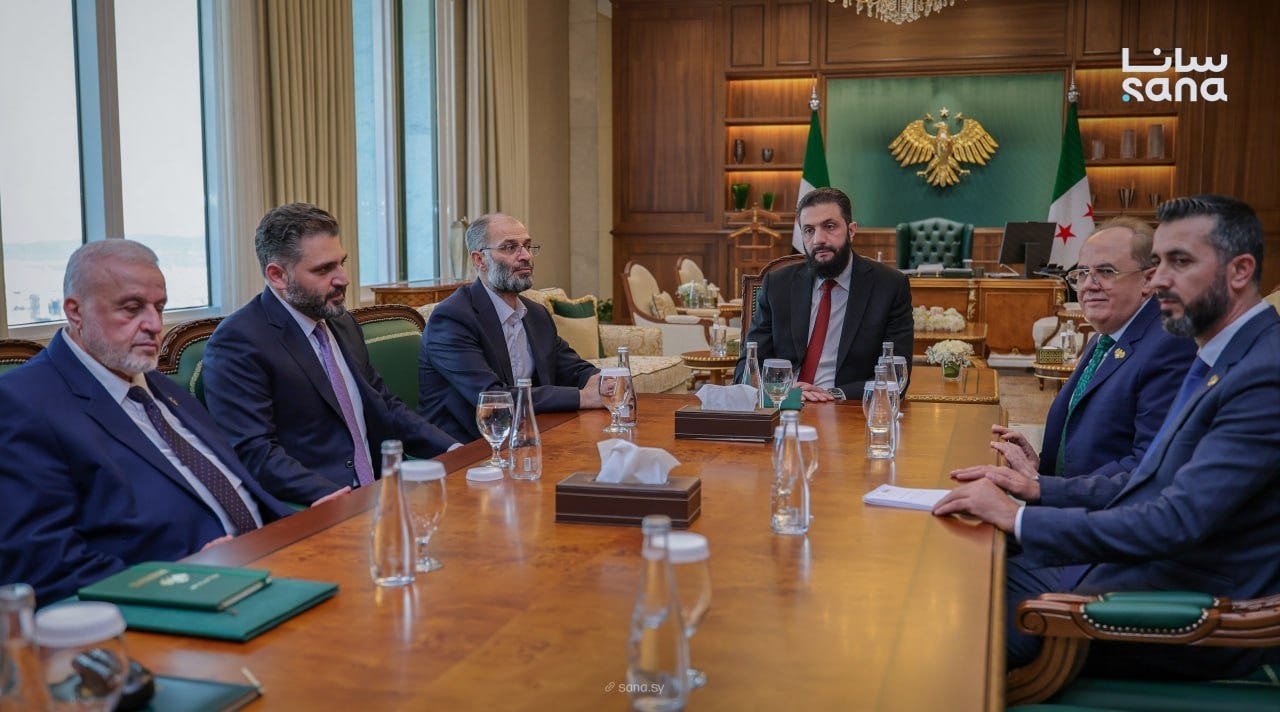
President Ahmed al-Sharaa chaired a meeting of the Supreme Council for Education and Teaching — comprising officials from the Ministries of Education, Higher Education, and Awqaf — at the presidential palace on April 30, to discuss plans to enhance Syria’s education sector and improve cross-departmental coordination.
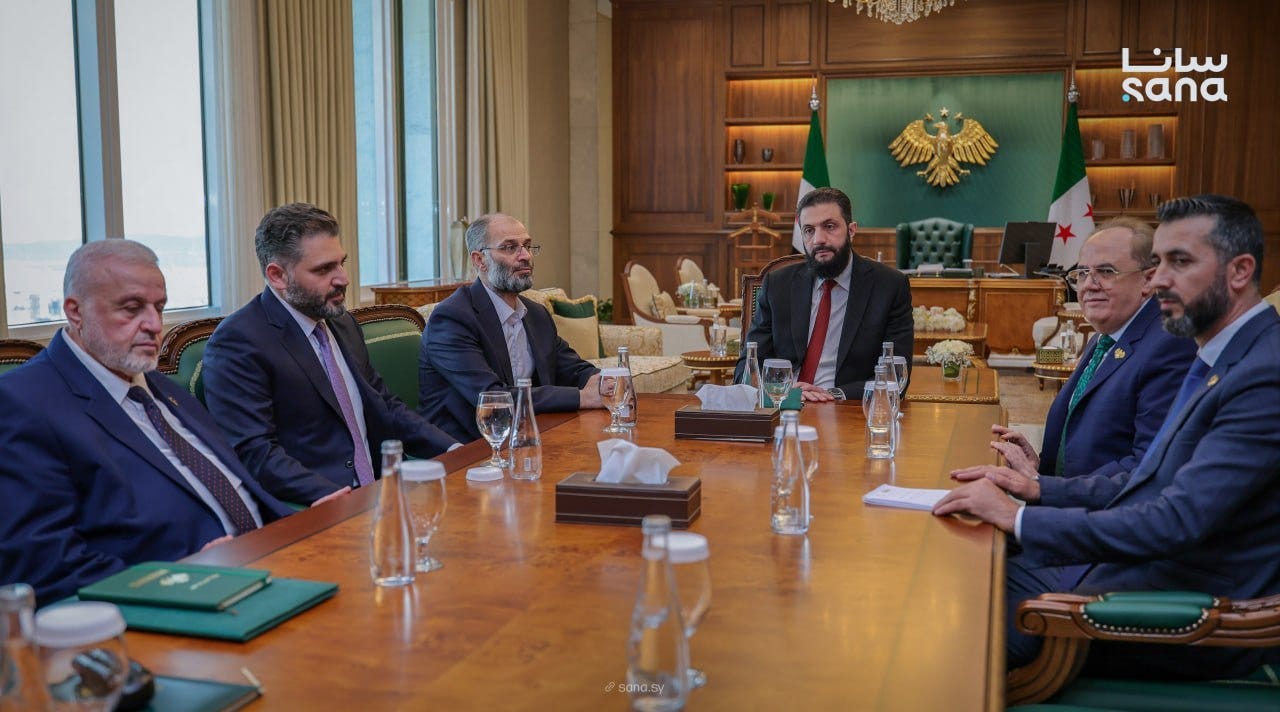
The Presidential team responsible for following up on the SDF integration, led by Brigadier General Ziyad al-Ayyash, met with Governor of Hasakeh Nour al-Din Ahmed in Damascus on April 30 to discuss the judicial file and the need to integrate courts in Hasakeh into the Justice Ministry. According to spokesman for the follow-up team, Ahmed al-Hilali, both Justice Minister Mazhar al-Ways and Attorney General Hassan al-Turaba, were involved in the meetings.
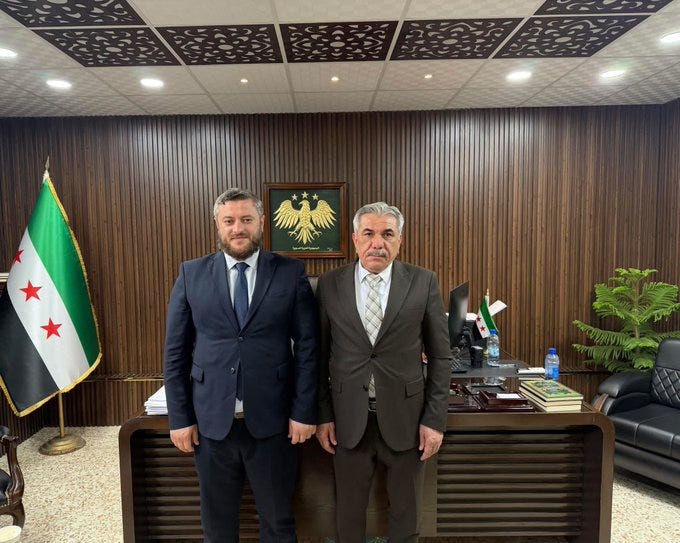
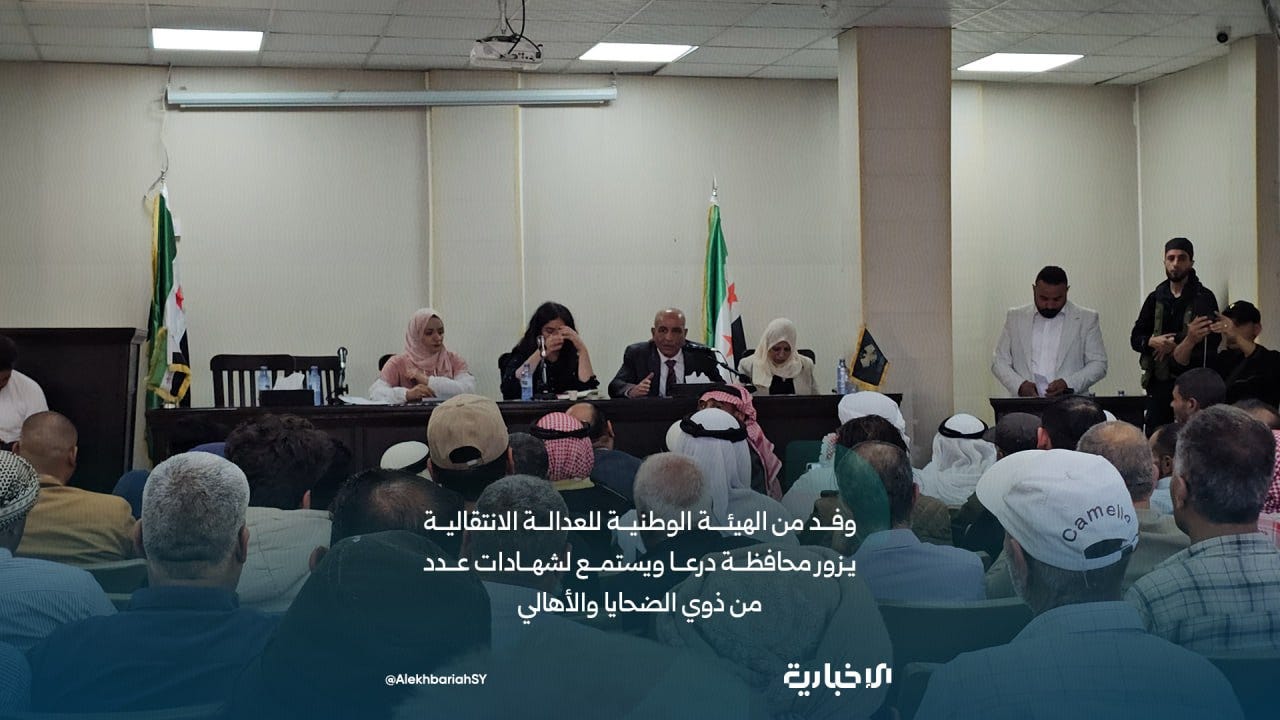
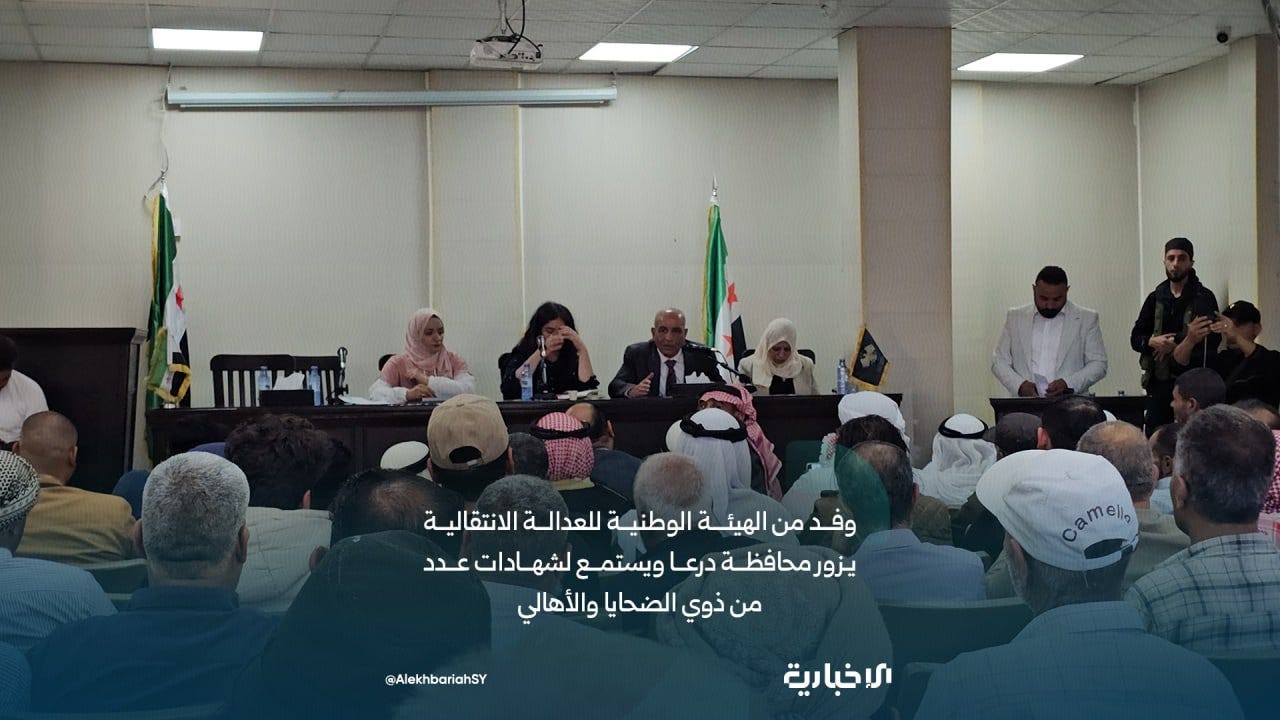
A delegation from the National Commission for Transitional Justice, led by deputy chair Zahra al-Barazi, visited Daraa on April 30 to meet with families of victims killed or abused by Atef Najib, the former provincial intelligence chief who now stands trial in Damascus.
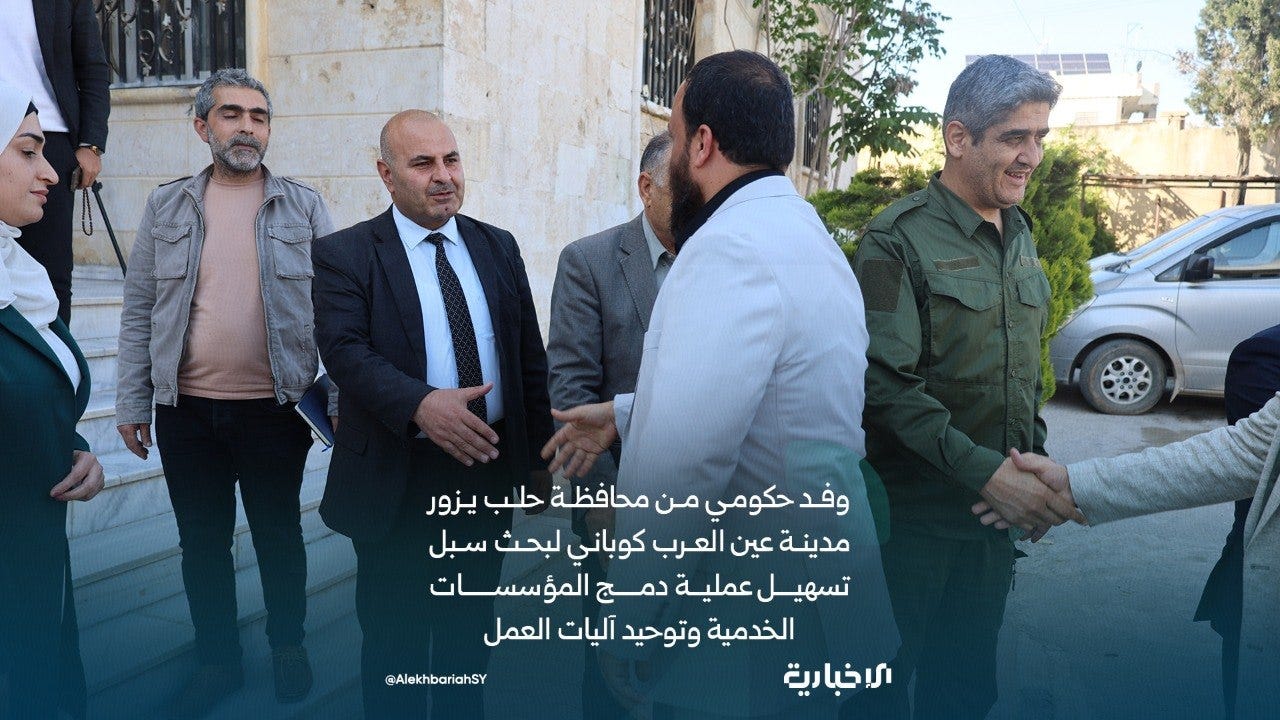
Aleppo’s Director of Internal Trade and other government officials led a delegation to Kobani on April 30 to visit economic and service institutions in the town and to discuss with local notables the upcoming 2026 agricultural season.
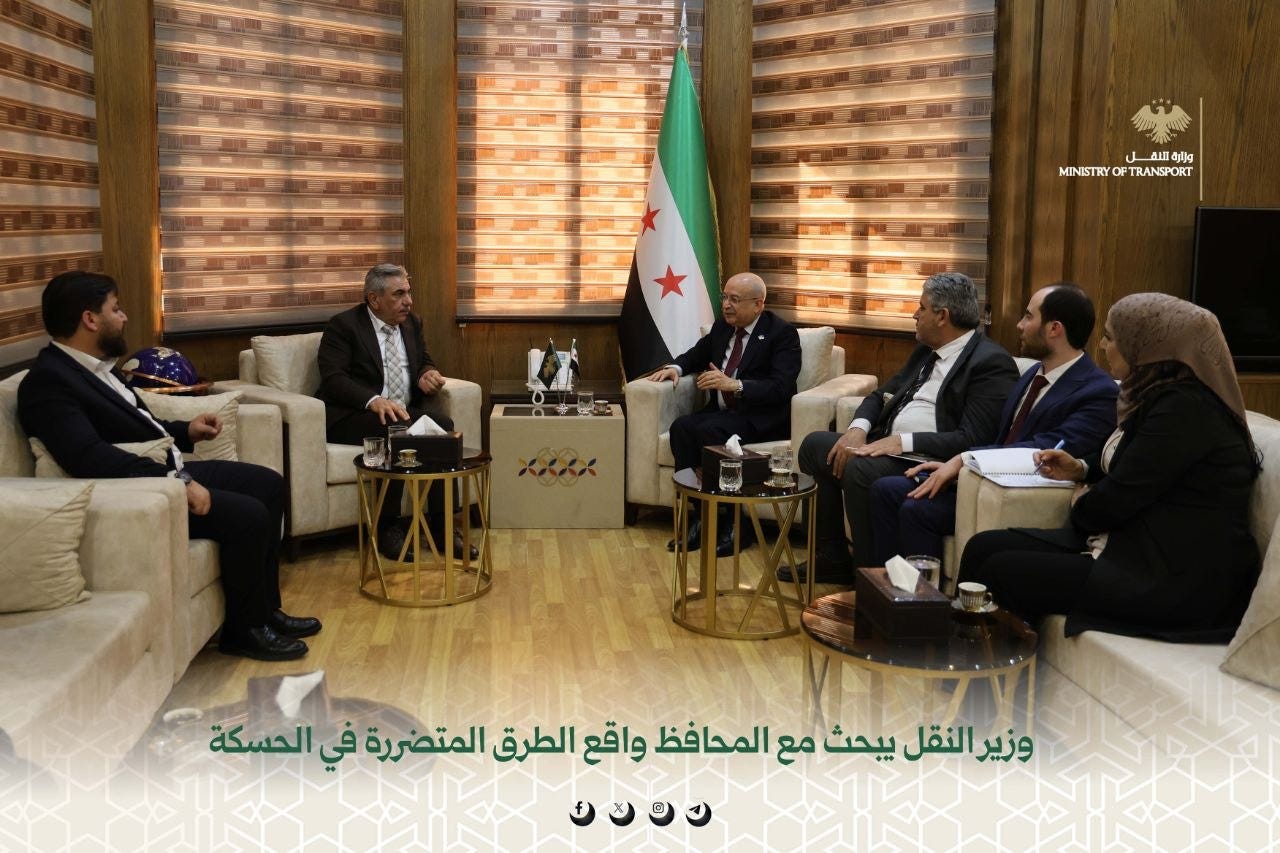
Minister of Transport Yaroub Badr hosted a meeting with Governor of Hasakeh Nour al-Din Ahmed to discuss the state of roads and transport infrastructure in Hasakeh and next steps to integrate the region into the state authority — including the integration of vehicle data into a unified database; roadway rehabilitation and maintenance; and proposals to reactivate the railway.
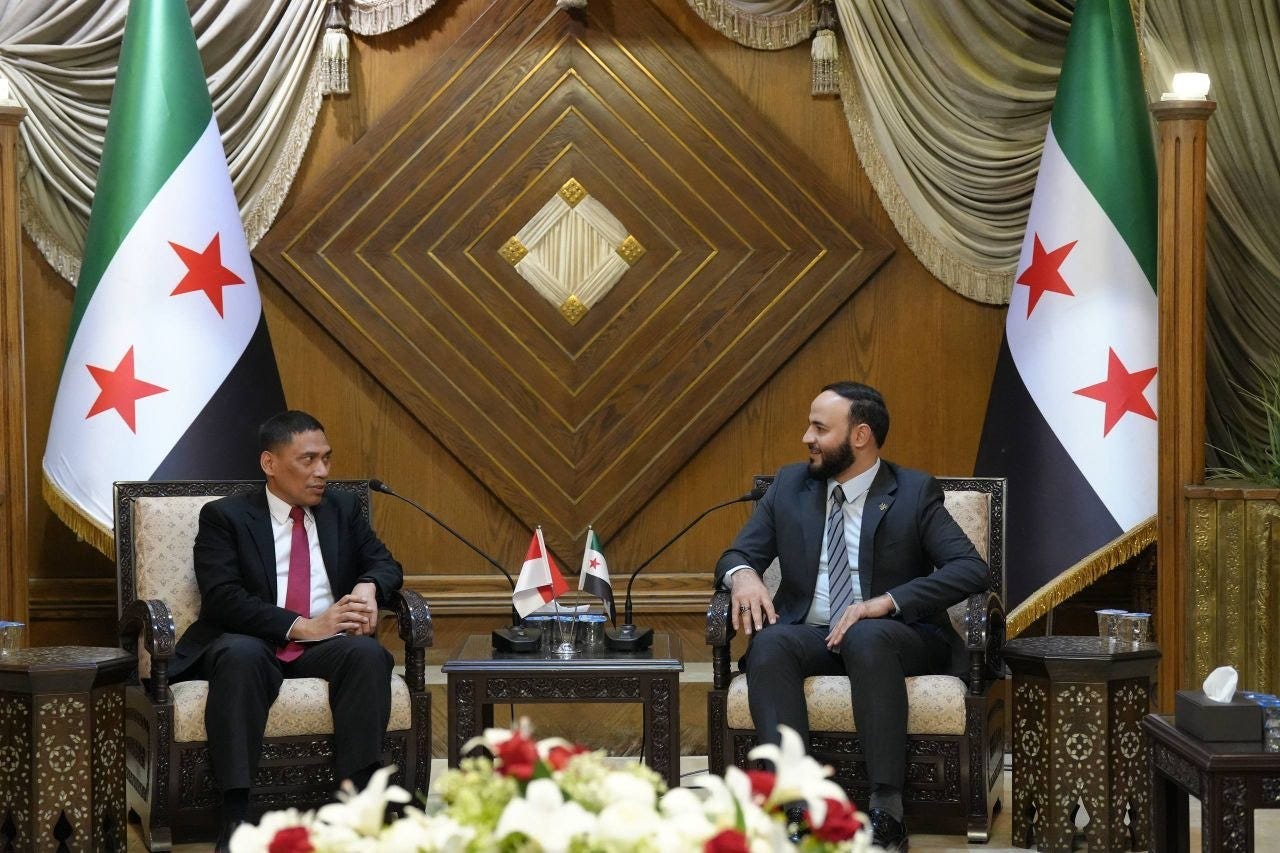
Governor of Aleppo Azzam al-Gharib hosted a visit by Indonesia’s Ambassador to Syria, Lukman al-Hakim Sirajar, on April 30 during which they discussed proposals for economic and cultural exchange and cooperation.
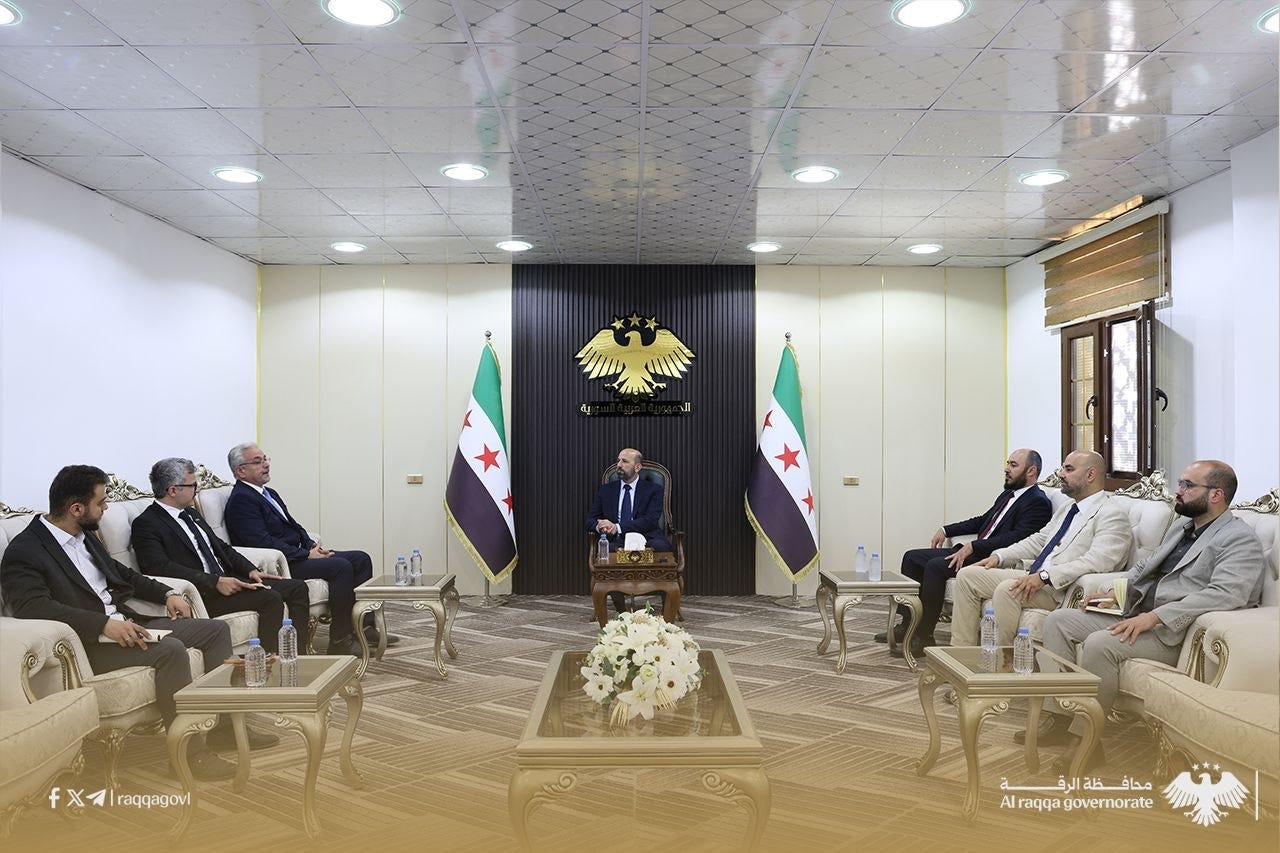
Governor of Raqqa Abdulrahman Salama hosted a meeting with a delegation from Turkey’s Cooperation and Coordination Agency (TIKA) on April 30 to discuss the governorate’s priority needs in agriculture, health, and education.
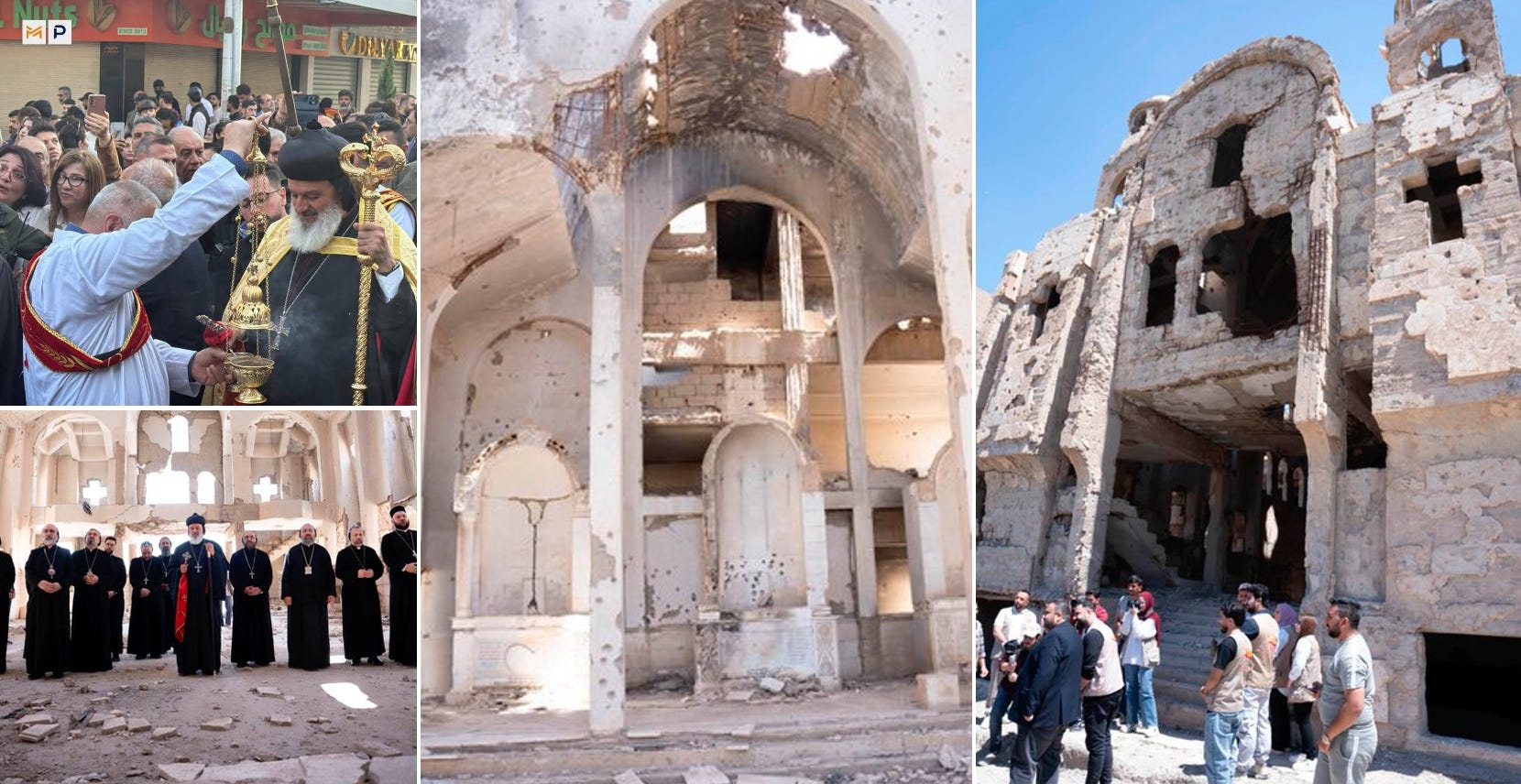
A delegation of Syrian Christian leaders visited the remains of St Mary Church in Deir ez Zour early on April 30, before traveling to Qamishli later that day.
May 1:
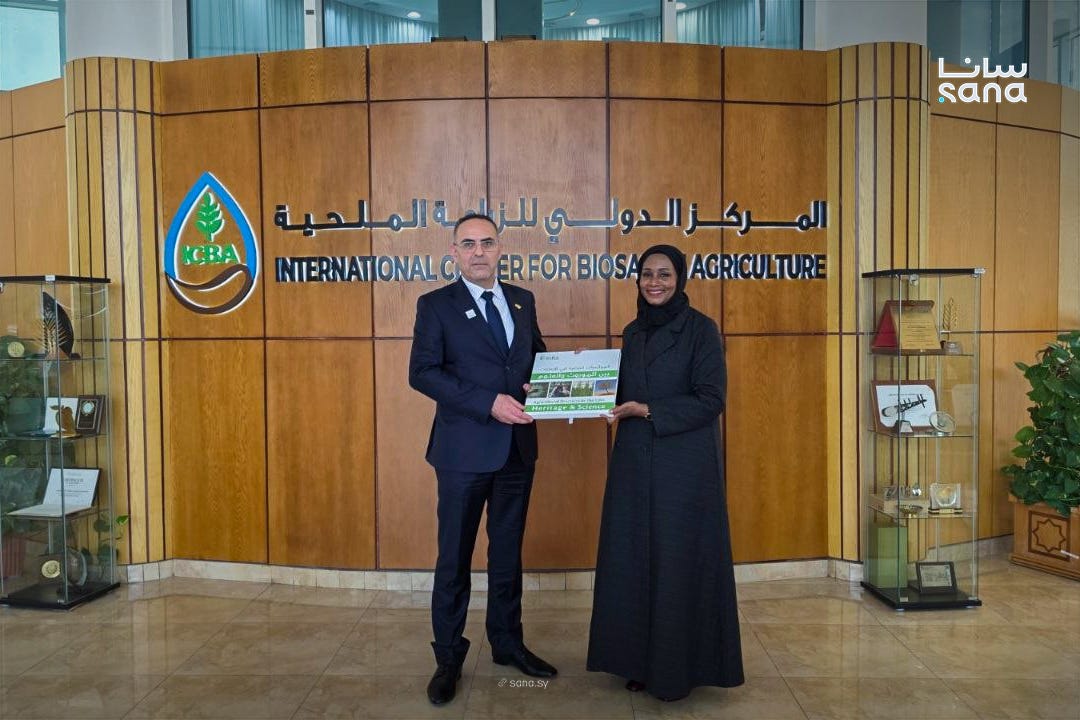
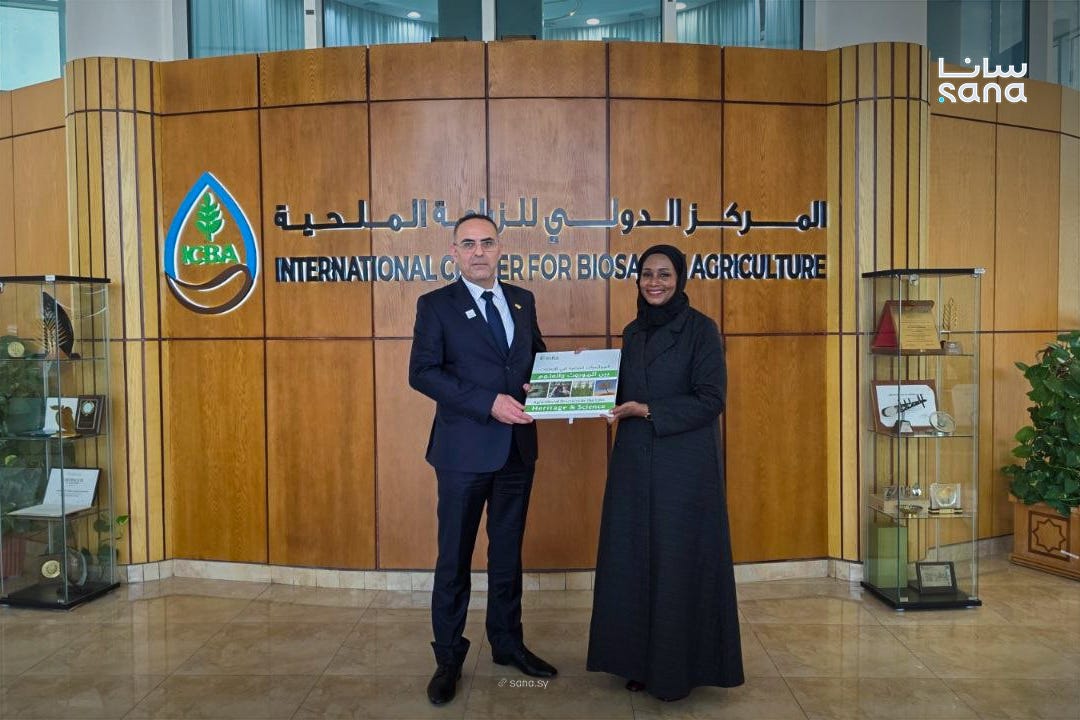
Minister of Agriculture Amjad Badr traveled to Dubai, UAE on May 1 and met with Tarifa Al Zaabi, Director General of the International Center for Biosaline Agriculture (ICBA) to discuss joint cooperation in developing Syria’s agricultural sector amid climate and environment challenges.
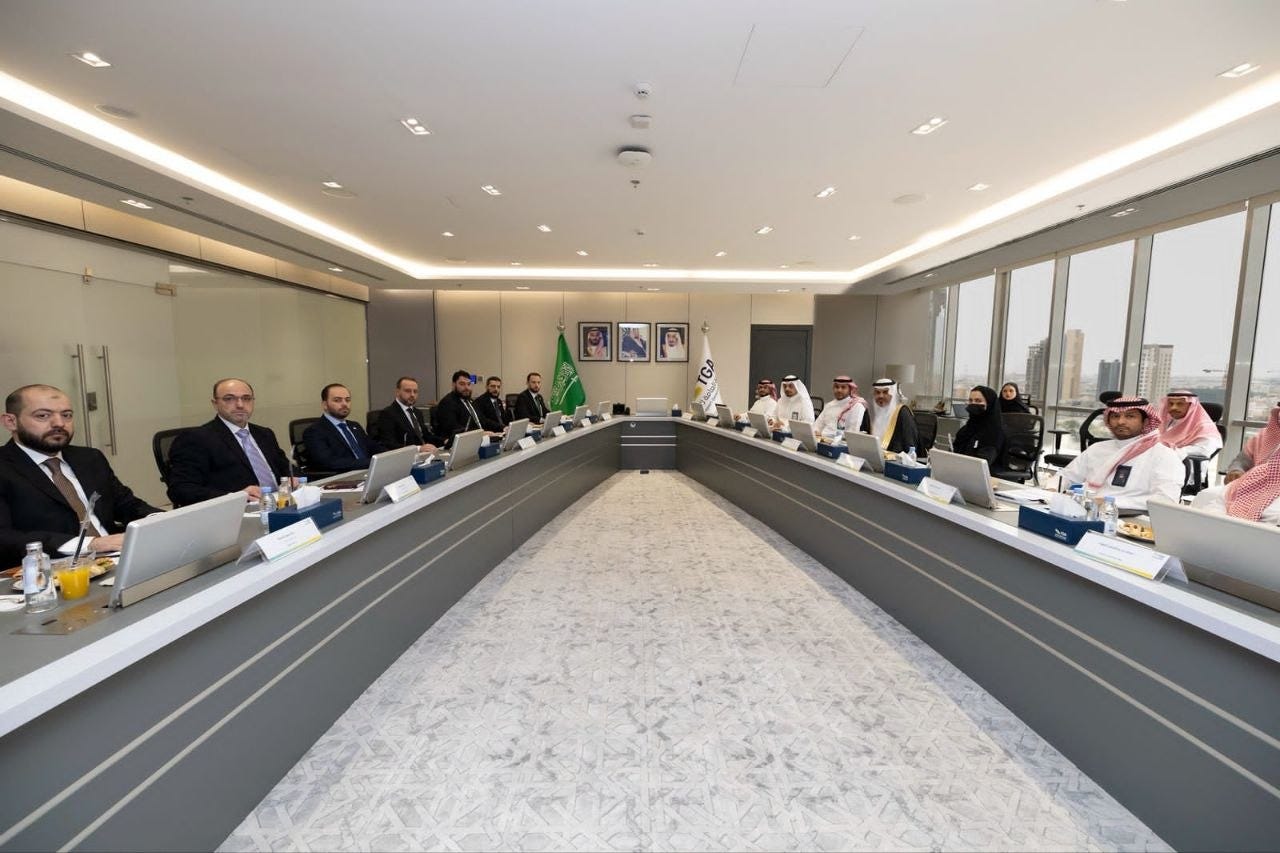
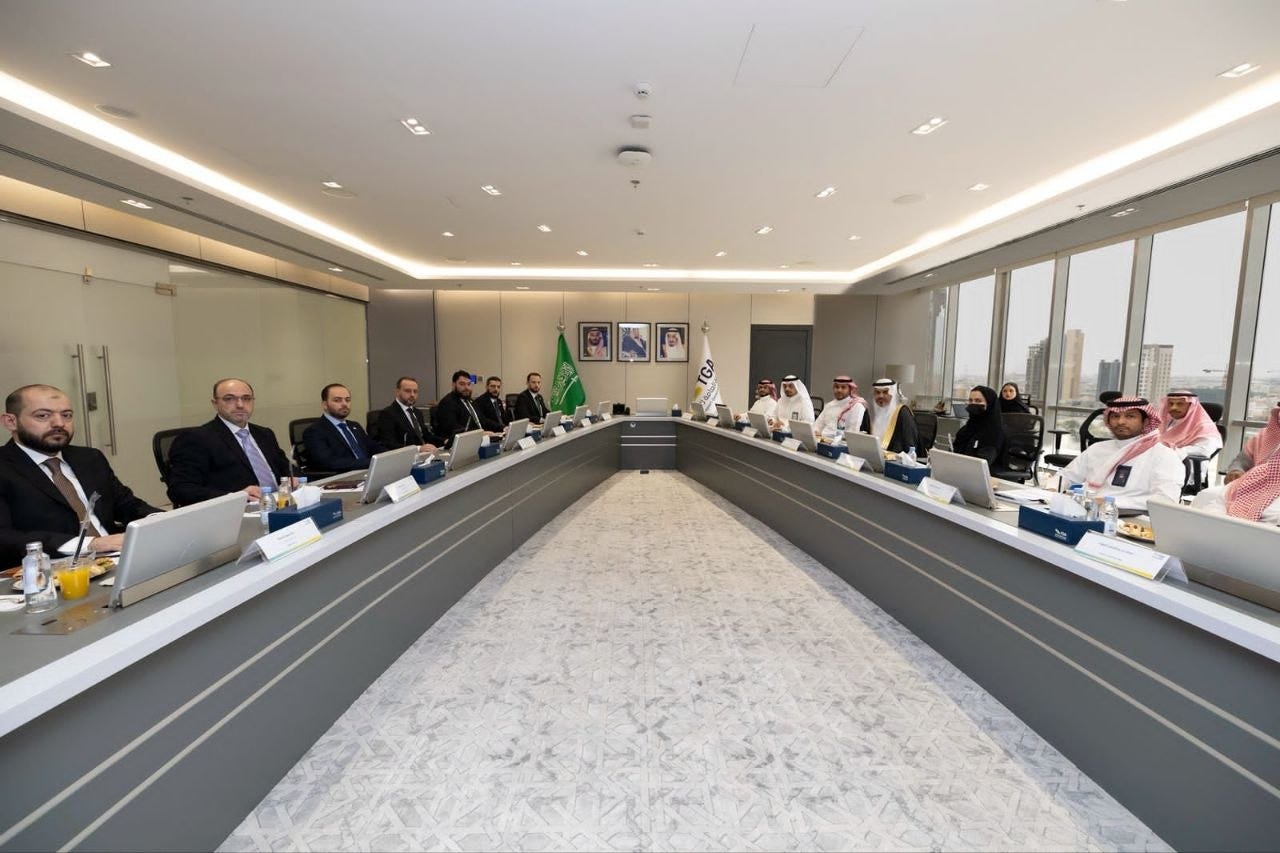
Assistant Minister of Transport, Mohammed Rahhal, visited Riyadh, Saudi Arabia on May 1 and attended meetings with the Saudi General Authority for Transport to discuss shared interests, lessons learned , and proposals for cooperation in cargo transport and passenger movement.
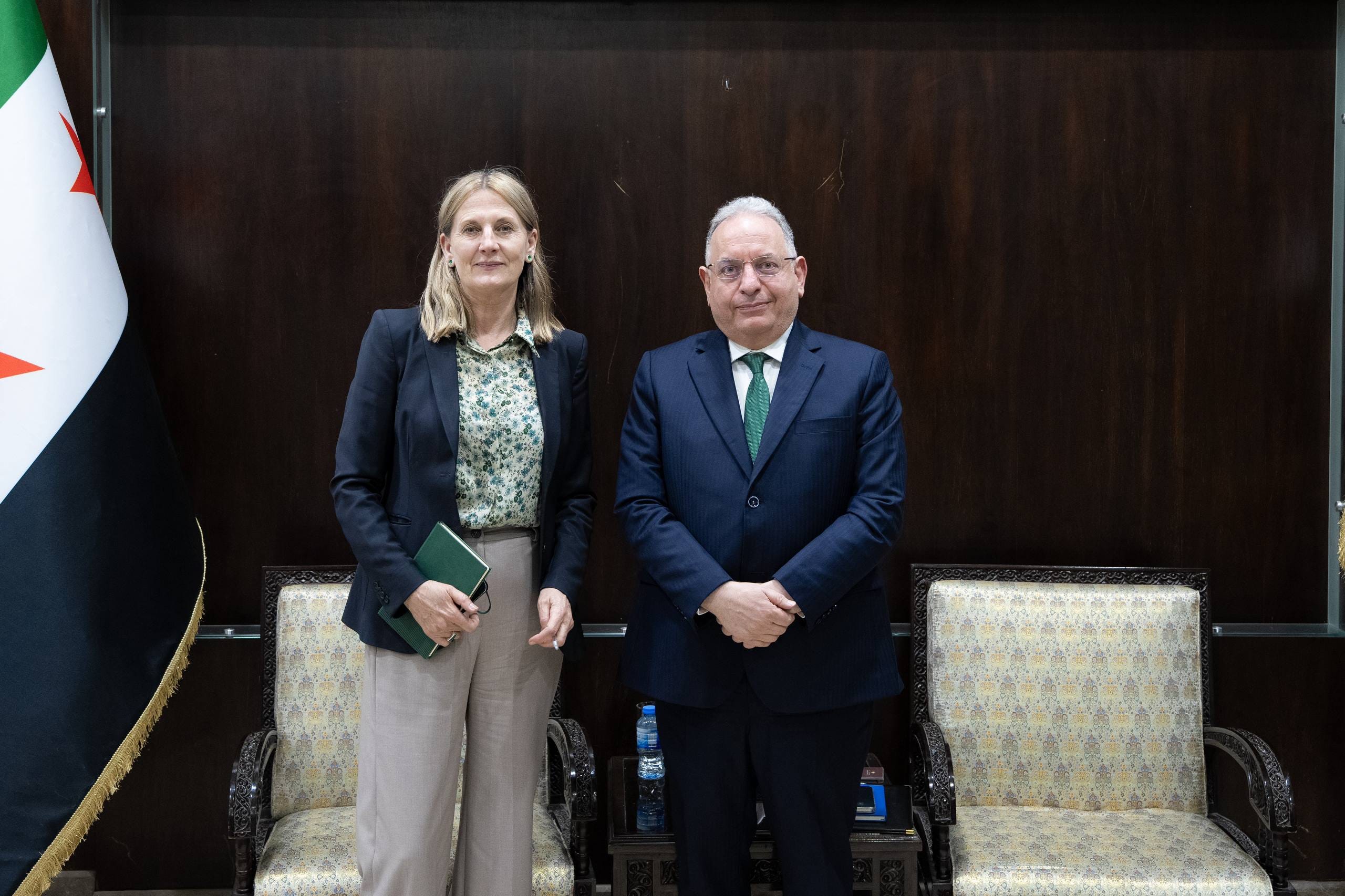
Finance Minister Mohammed Barnieh hosted a meeting with Norwegian Ambassador Hilde Haraldstad on May 1 to discuss proposals for new support to reconstruction efforts in Syria.
Sunni tribes in Hasakeh convened for a tribal meeting in the village of Saranja Daquri near Amuda on May 1 to discuss prevailing social issues and the need to consolidate community cohesion amidst the ongoing integration of the SDF into the state.
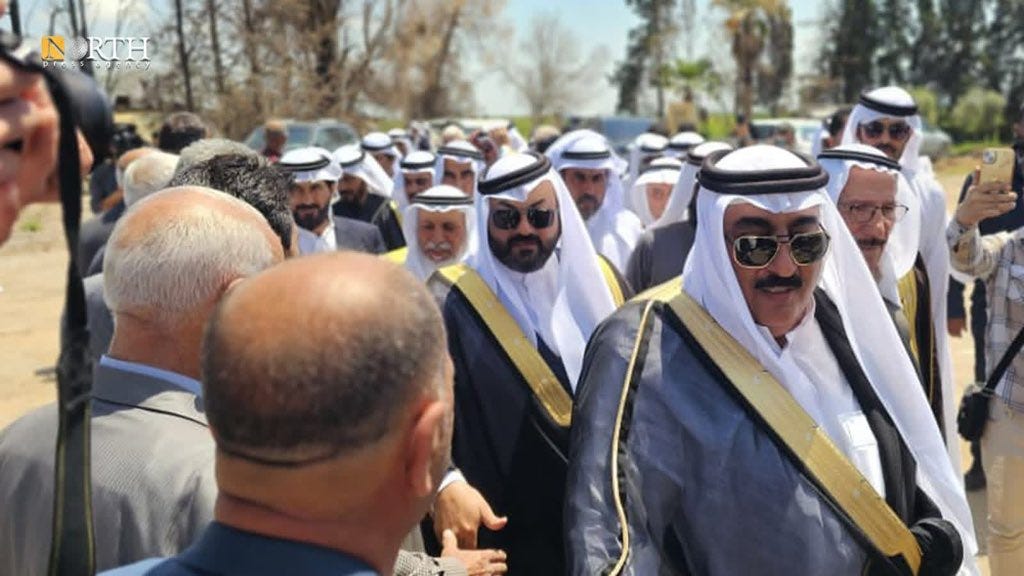
May 2:
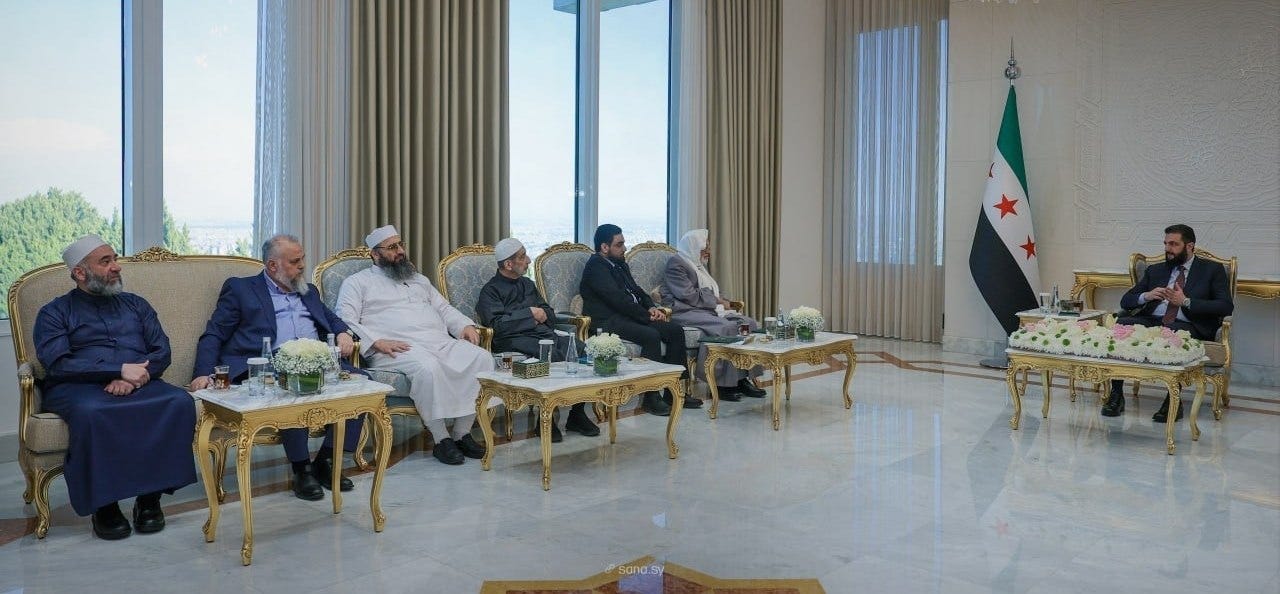
President Ahmed al-Sharaa hosted a meeting with Syria’s Supreme Fatwa Council, led by Grand Mufti Osama al-Rifai, on May 2.
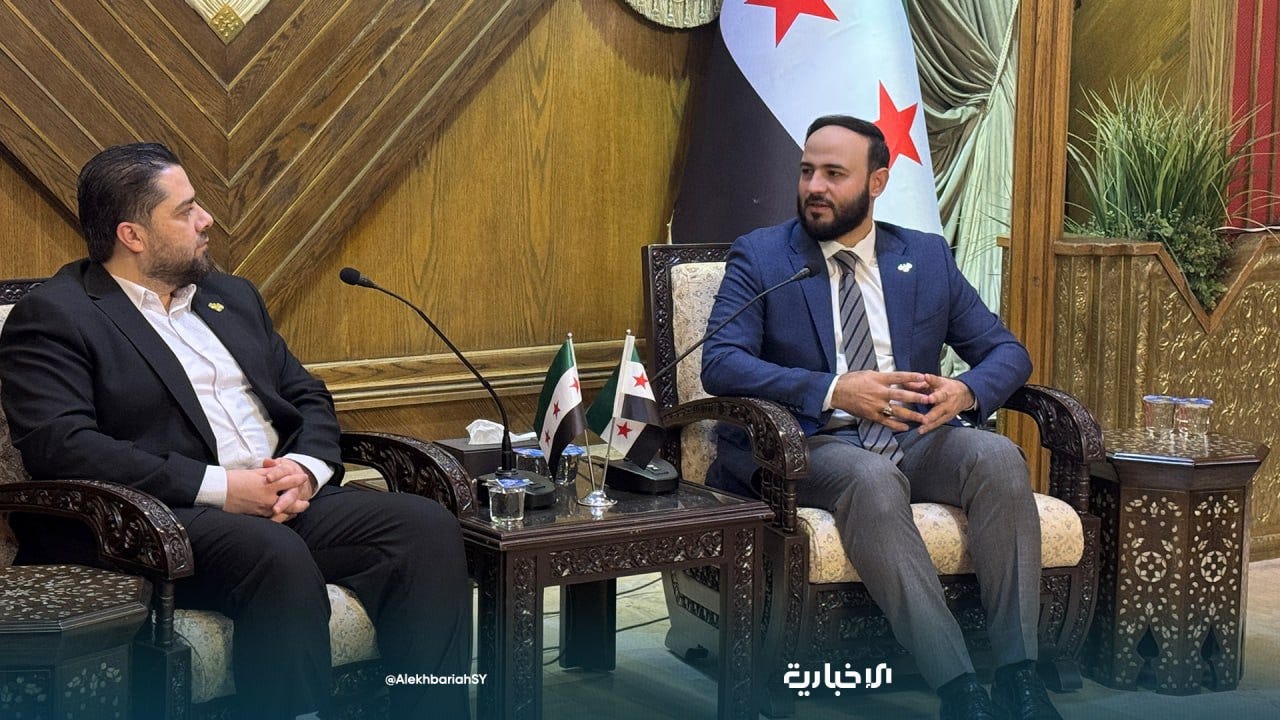
Governor of Aleppo Azzam al-Gharib hosted a meeting with Minister of Public Works and Housing Mustafa Abdulrazzaq on May 2 to discuss the state of the housing situation and efforts to rehabilitate and rebuild.
May 3:
Foreign Minister Asaad al-Shaybani traveled to Cairo, Egypt on May 3 and met with his counterpart, Egyptian Foreign Minister Badr Abdelatty to discuss bilateral relations and proposed new areas for cooperation. In a subsequent Egyptian readout, Cairo said it “supports the legitimate aspirations of the Syrian people in all their components” and “emphasizes full respect for Syria's sovereignty, unity, and stability, and reject any foreign interventions in its affairs.” It added that it supported Syria’s efforts to combat terrorism and resolve challenges associated with foreign fighters.
Later that day, Foreign Minister Shaybani joined Syria’s Minister of Economy and Industry Nidal al-Shaar for meetings with their counterparts, Foreign Minister Abdelatty and Minister of Industry Khaled al-Hashem to discuss and plan new bilateral trade and commercial exchange.
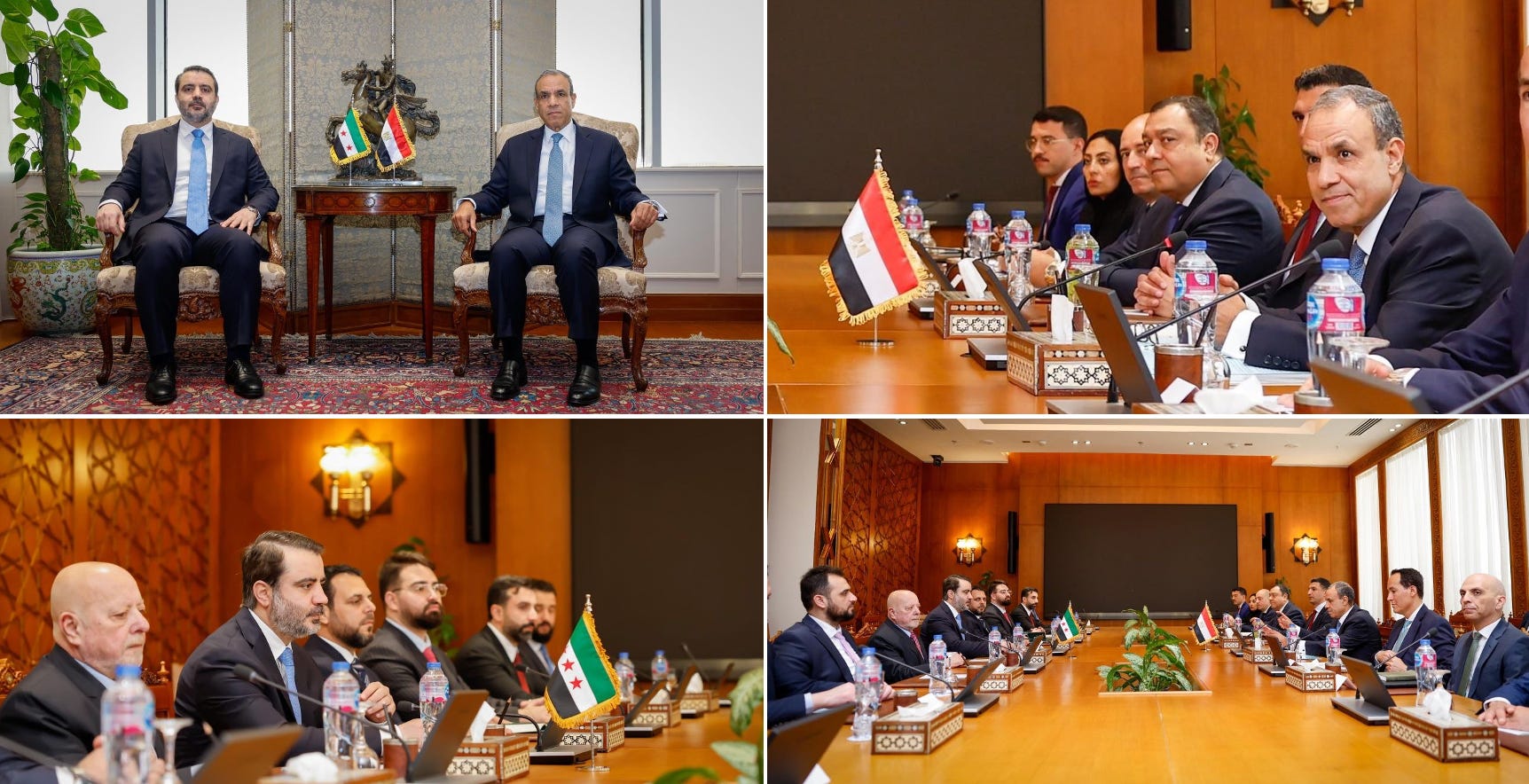
Later that day, Foreign Minister Shaybani and Minister of Economy and Industry al-Shaar participated in a large roundtable with Syrian businessmen living in Egypt, to discuss trade and economic exchange.
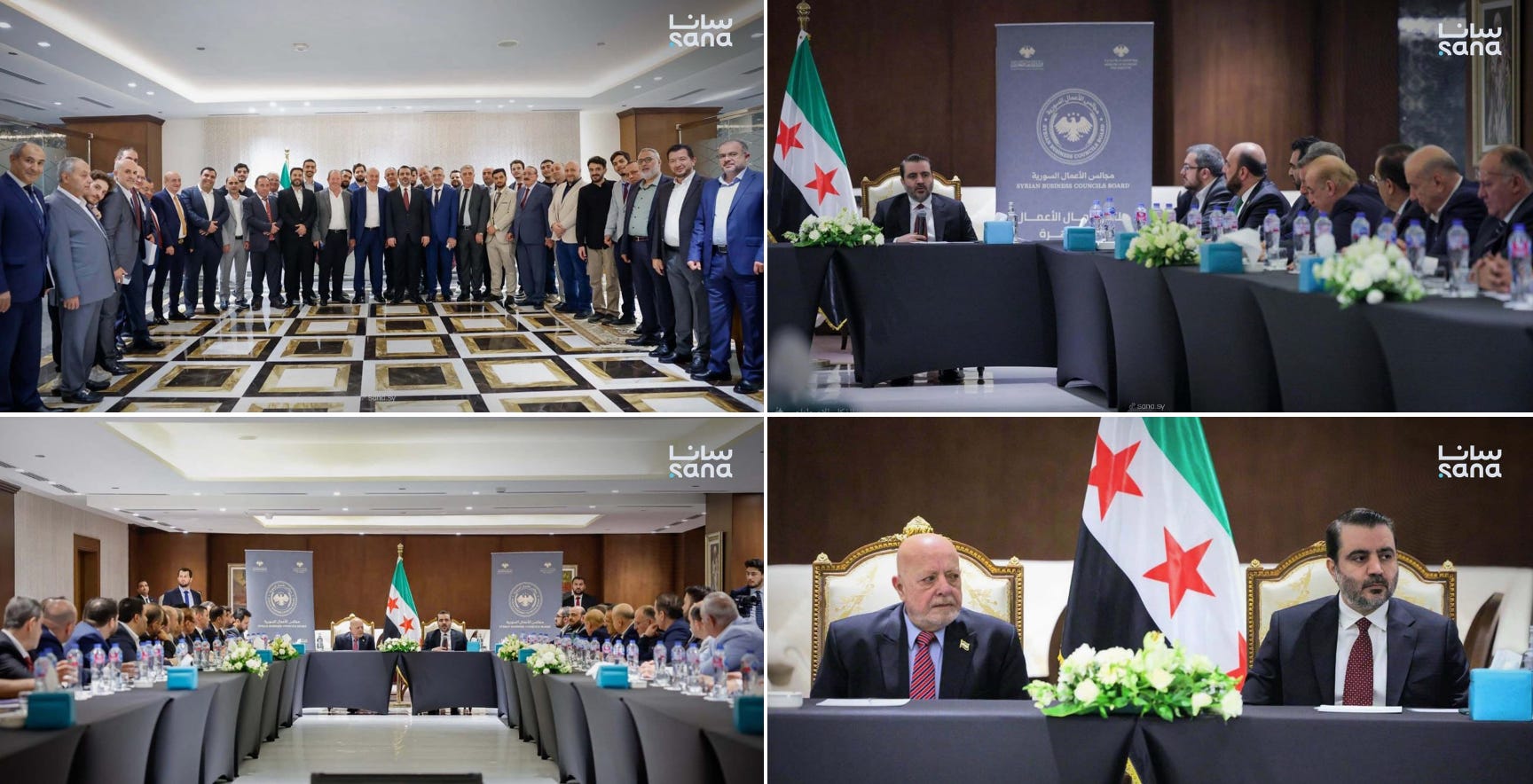
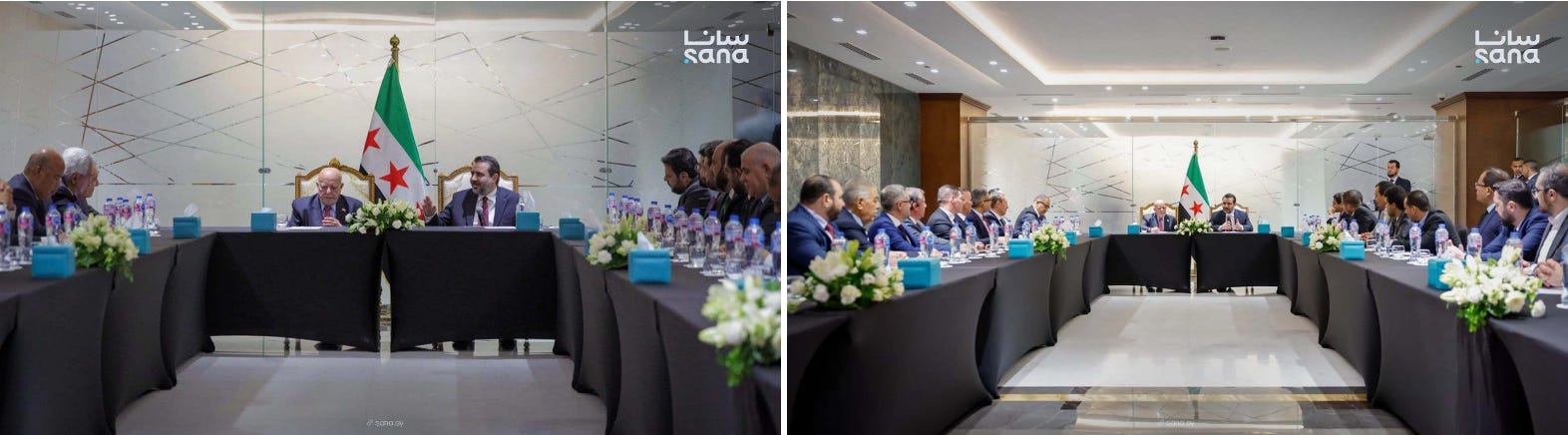
At the close of their visit to Cairo, Foreign Minister Shaybani and Minister of Economy and Industry al-Shaar met with Egypt’s Chamber of Commerce and its Chairman Ahmed al-Wakeel, and then in the same venue, with a group of prominent Egyptian businessmen.
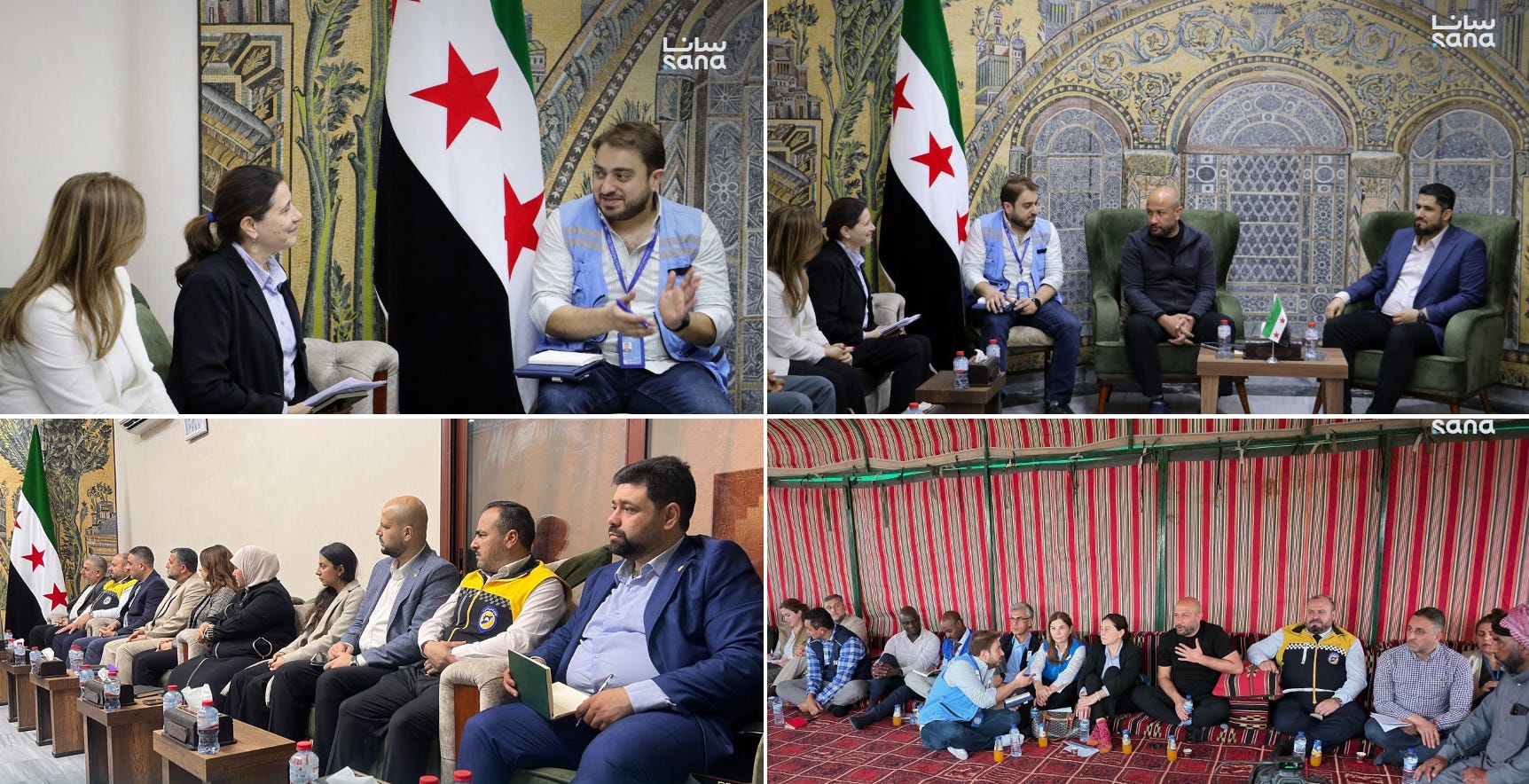
Minister of Emergency and Disaster Response Raed al-Saleh traveled to Idlib on May 3 to accompany the UN Resident Humanitarian Coordinator in Syria, Nathalie Fustier on a trip to meet Governor Mohammed Abdulrahman and to visit IDP camps to assess prevailing needs.
During the visit, Governor Abdulrahman said that large-scale restoration work on the Jisr al-Shughour National Hospital would “soon begin” and that newly planned UN-supported work was set to begin in the education and health sectors.
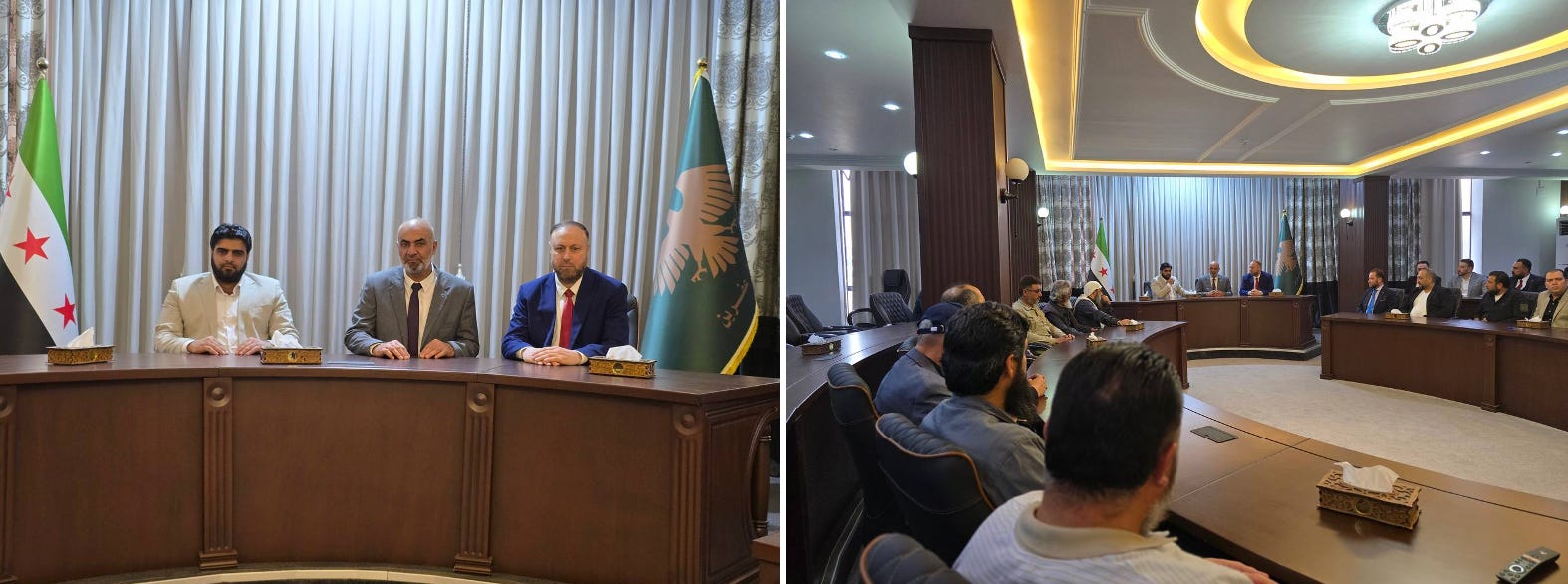
Governor of Deir ez Zour Ghassan al-Sayyed Ahmed, traveled to Afrin, Aleppo on May 3 to meet with Deputy Governor of Aleppo Ali Hanoura and the district head in Afrin, Khairou al-Dawoud in order to discuss the coordination of the return of displaced people.
Justice Minister Mazhar al-Ways hosted a visit by a delegation from Human Rights Watch, led by Program Director Lama Fakih, on May 3.
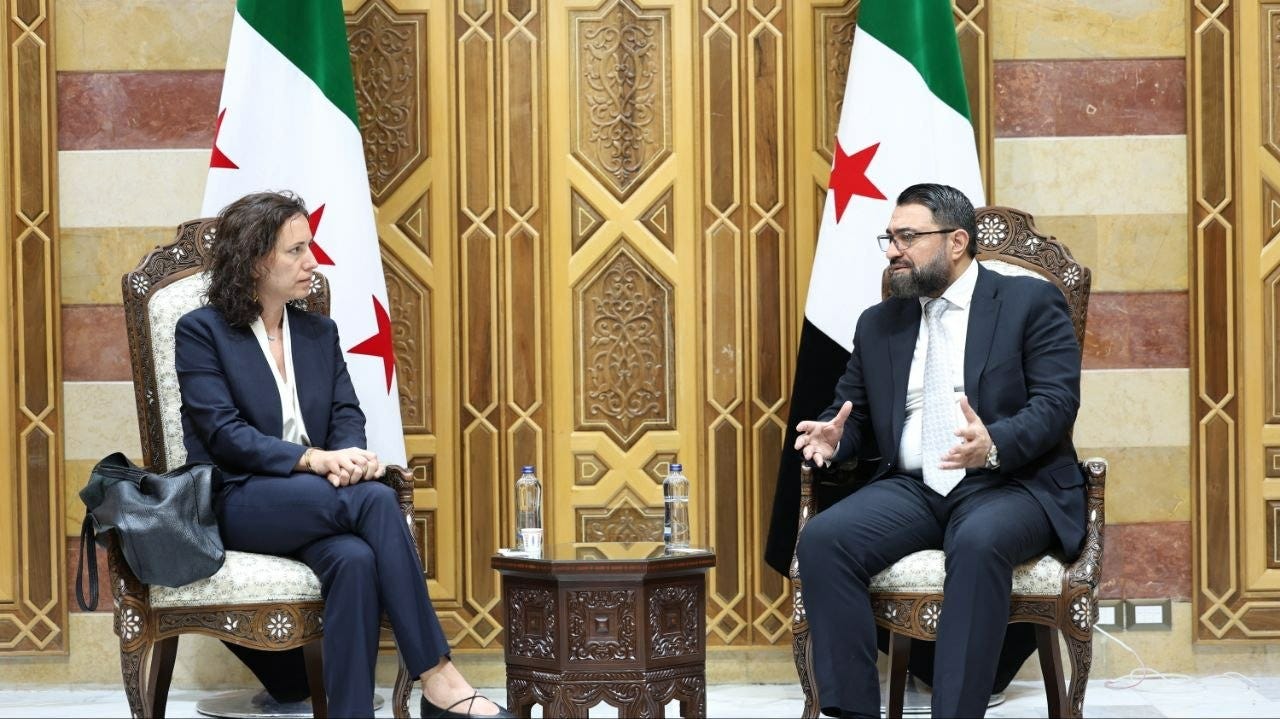
Minister of Justice Mazhar al-Ways hosted a meeting with Libyan Ambassador Walid Ammar to discuss proposed joint training of judicial personnel and cooperation in the sector.
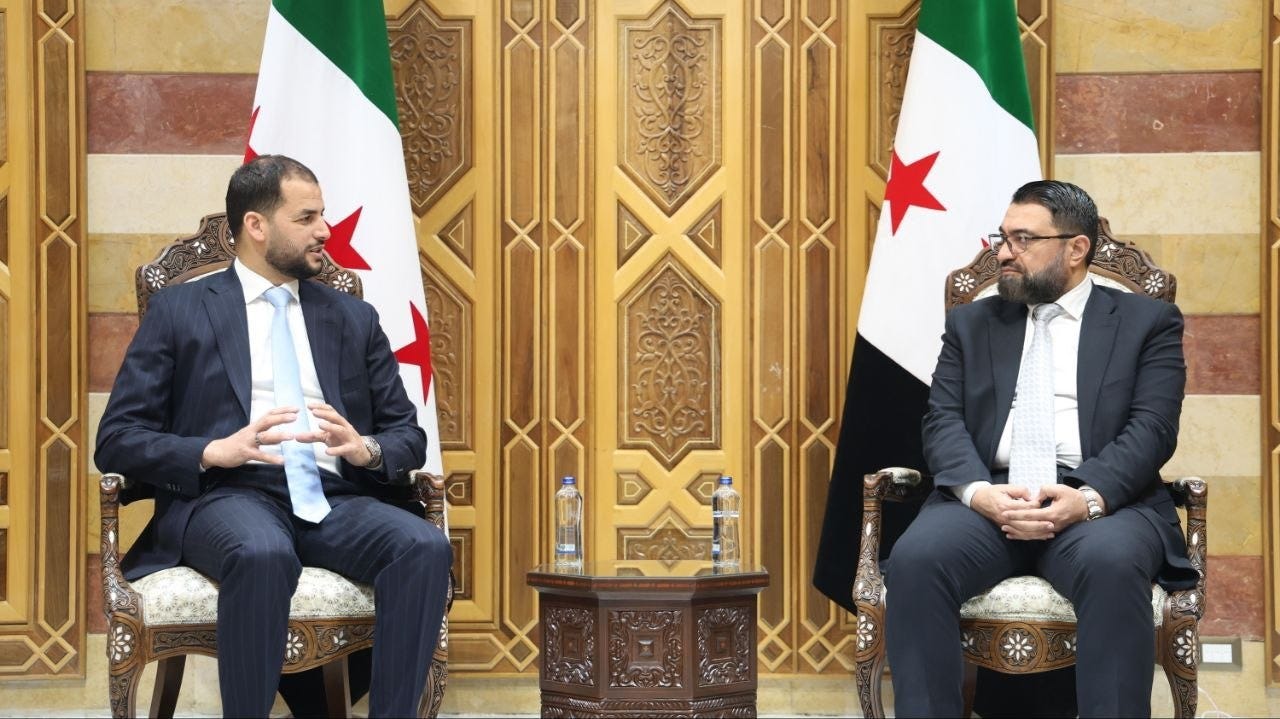
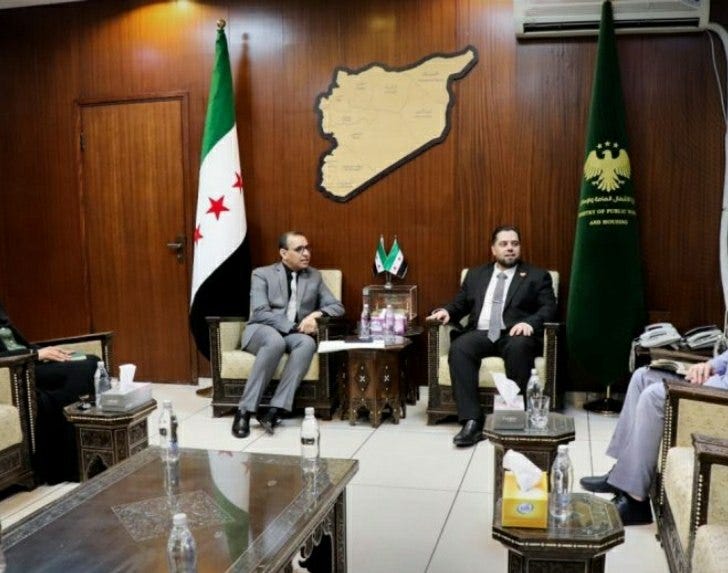
Minister of Public Works and Housing, Mustafa Abdulrazzaq hosted a meeting with Mauritanian Ambassador Taleb Mokhtar Sheikh Mohamed al-Mujtaba on May 3.
The Director of Syria’s General Authority for Ports and Customs, Qutaiba Badawi, visited and inspected the al-Rai border crossing with Turkey on May 3.
May 4:
President Ahmed al-Sharaa met with prominent Turkish businessman Fettah Tamince — the founder of Rixos Hotels — in Damascus on May 4 to discuss potential investments in Syria’s tourism and hospitality sector.
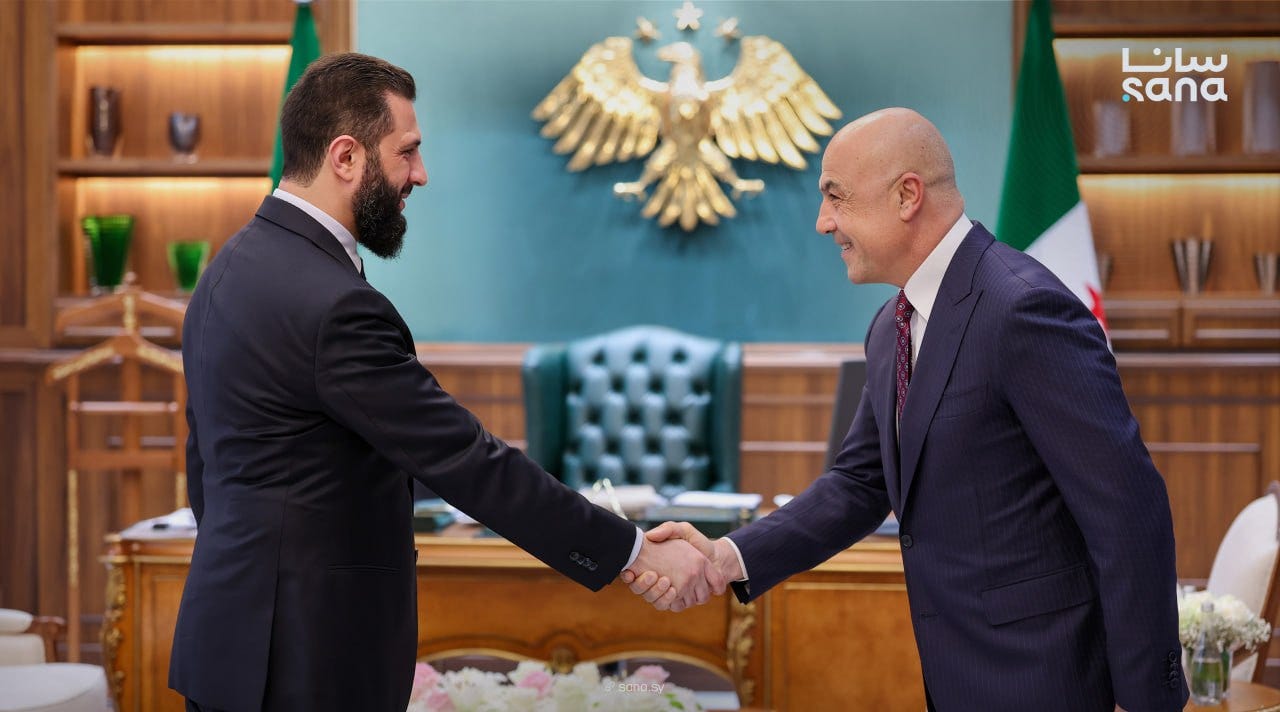
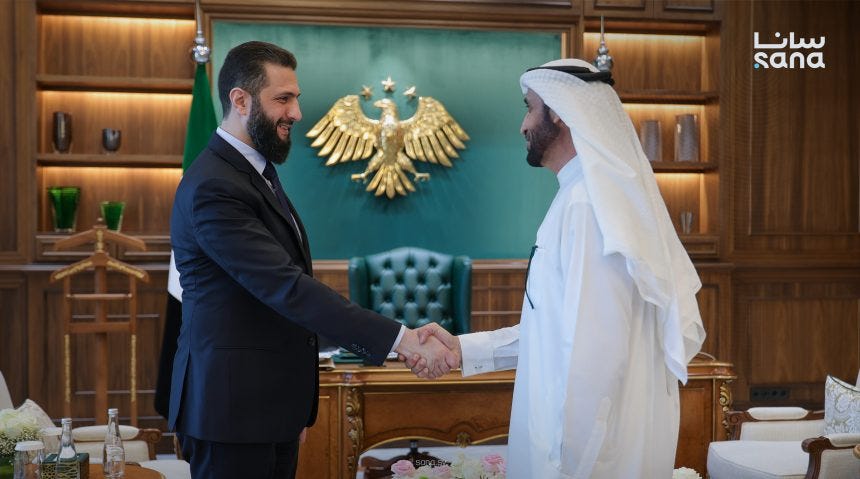
Later that day, President al-Sharaa hosted a visit by UAE businessman Mohammed Ibrahim Al Shaibani — currently the Director General of the Dubai Ruler’s Court, Chairman of Dubai Islamic Bank, and Managing Director of the Investment Corporation of Dubai — to discuss potential investments in reconstruction projects, as well as in real estate development, tourism and the financial sector.
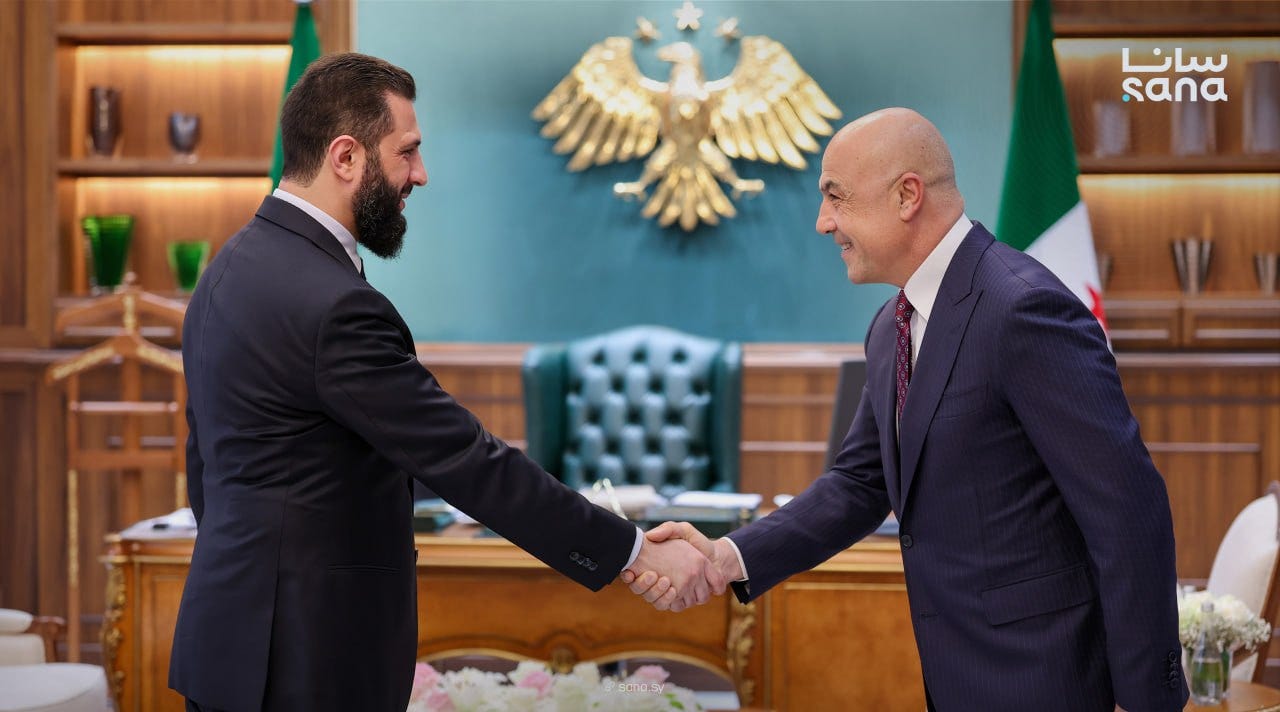
President al-Sharaa also hosted a visit and meeting on May 4 with Egyptian businessman Hassan Allam — the Chairman and CEO of Hassan Allam Holding, one of the Middle East’s biggest engineering conglomerates — to discuss investment opportunities in real estate development, construction, and infrastructure rehabilitation.
Foreign Minister Asaad al-Shaybani hosted a meeting with Turkey’s Ambassador to Syria Nuh Yilmaz on May 4 to discuss ongoing regional developments.
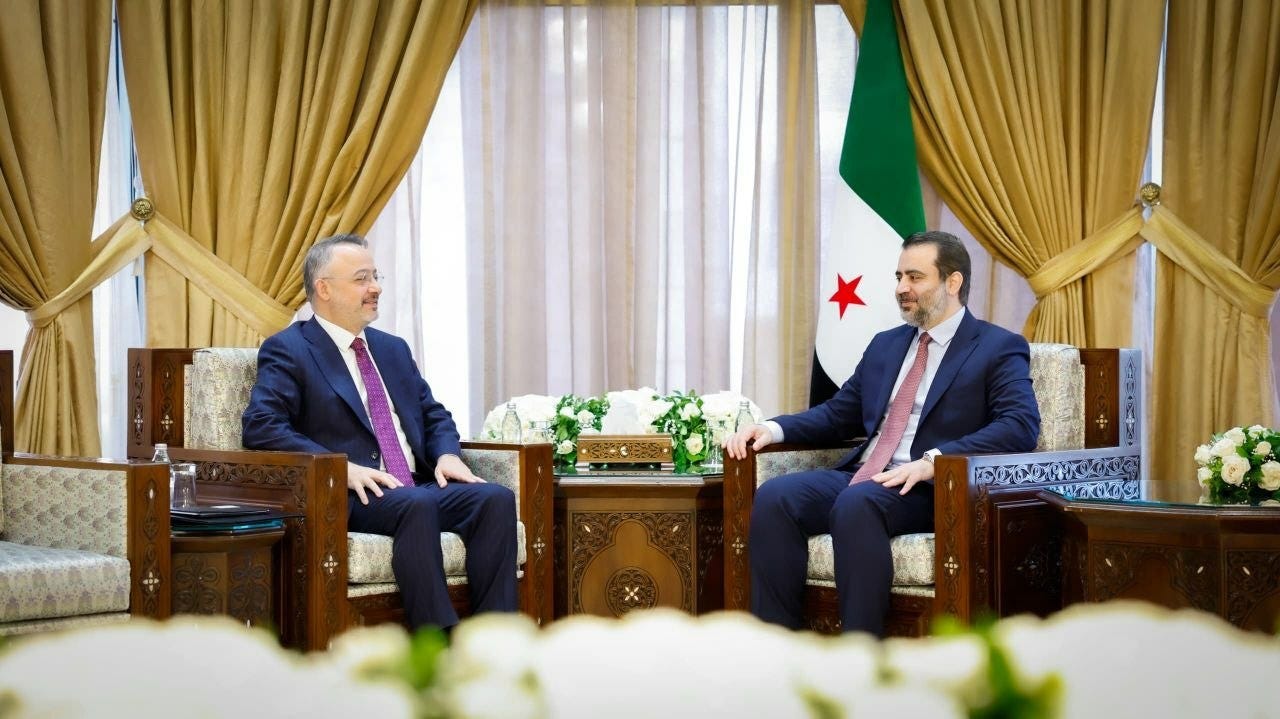
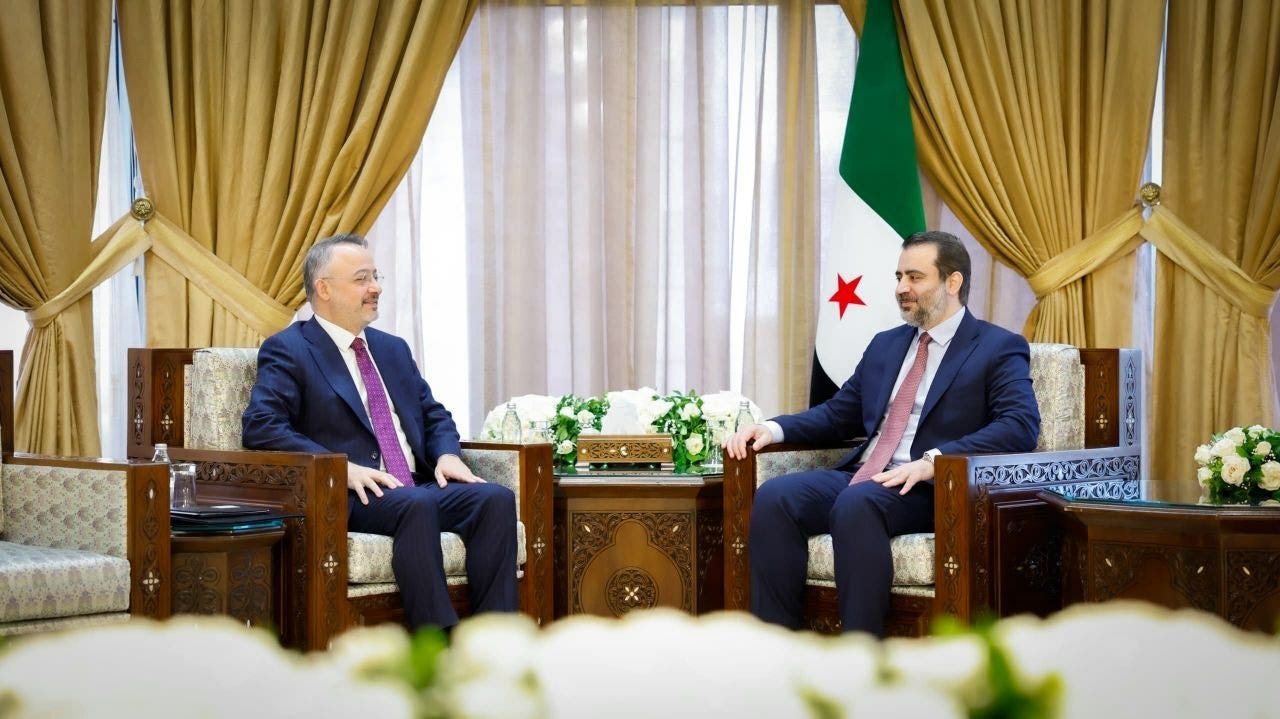
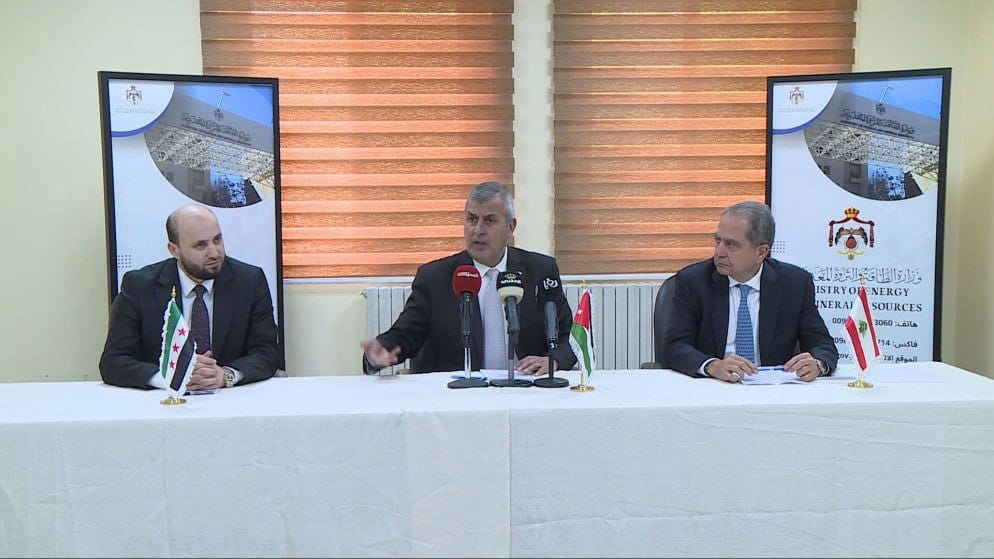
Energy Minister Mohammed al-Bashir traveled to Amman, Jordan on May 4 and announced — alongside his Jordanian and Lebanese counterparts, Saleh al-Kharabsheh and Joe Saddi — a trilateral gas and electricity interconnection deal via the Arab Gas Pipeline and transnational electricity networks.
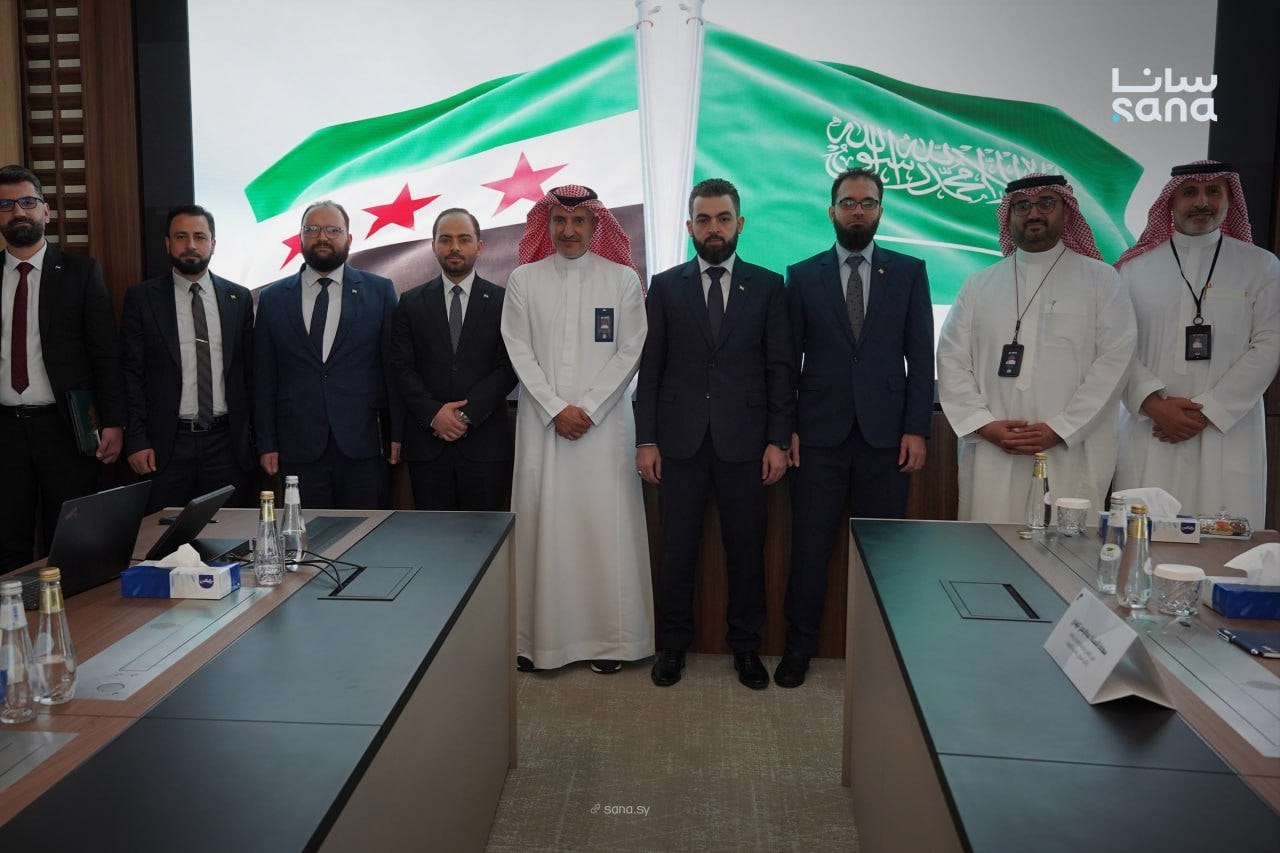
Minister of Local Administration and Environment, Mohammed Anjarani, traveled to Riyadh, Saudi Arabia on May 4 and met with Minister of Municipal Affairs and Housing, Majed bin Abdullah Al-Haqil, to discuss expertise exchange in municipal work, urban development, and infrastructure improvement. At the close of the meetings, a memorandum of understanding was signed aimed at raising the level of technical and institutional cooperation in “urban planning, the development of public services, and the strengthening of human capacities in the field of municipal administration.”
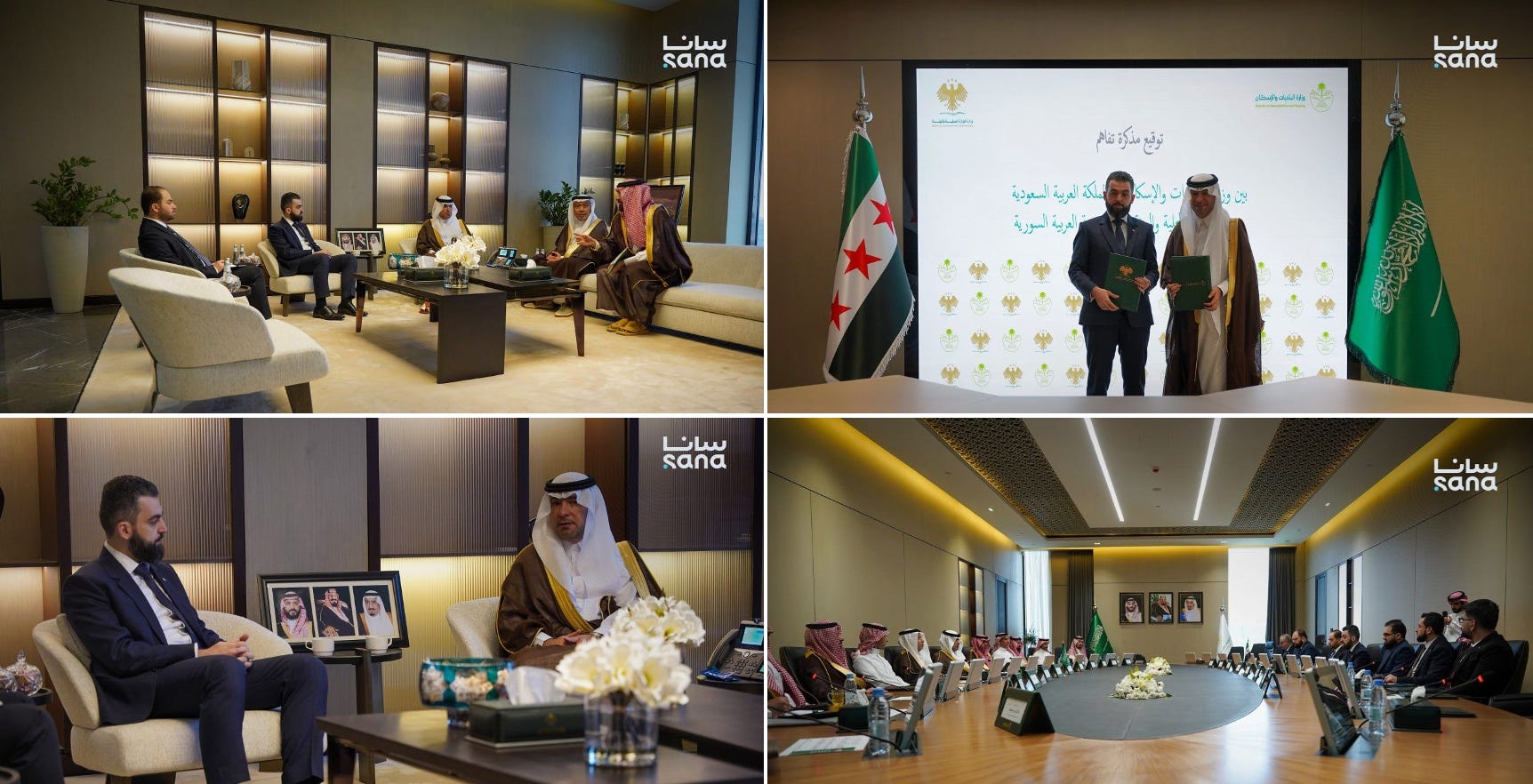
Later that day, Minister Anjarani also visited the headquarters of Saudi Arabia’s Real Estate Registry and met with the CEO of the National Company for Real Estate Registration Services, Mohammed Al-Salim.
Governor of Aleppo Azzam al-Gharib hosted a visit by UN Resident Coordinator and Humanitarian Coordinator in Syria, Nathalie Fustier, on May 4 to discuss the conditions in IDP camps in the governorate, as well as wider humanitarian conditions and needs.
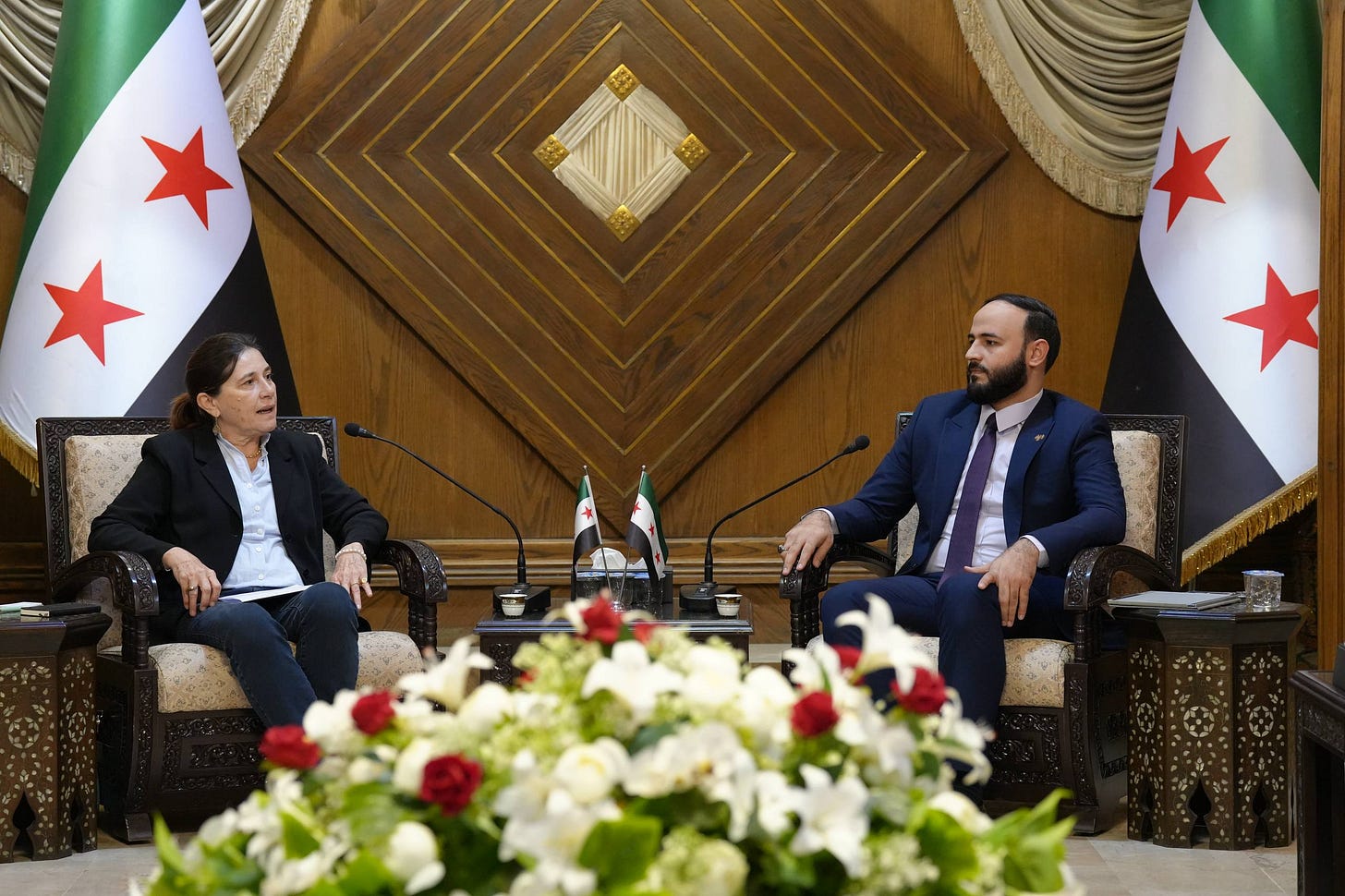
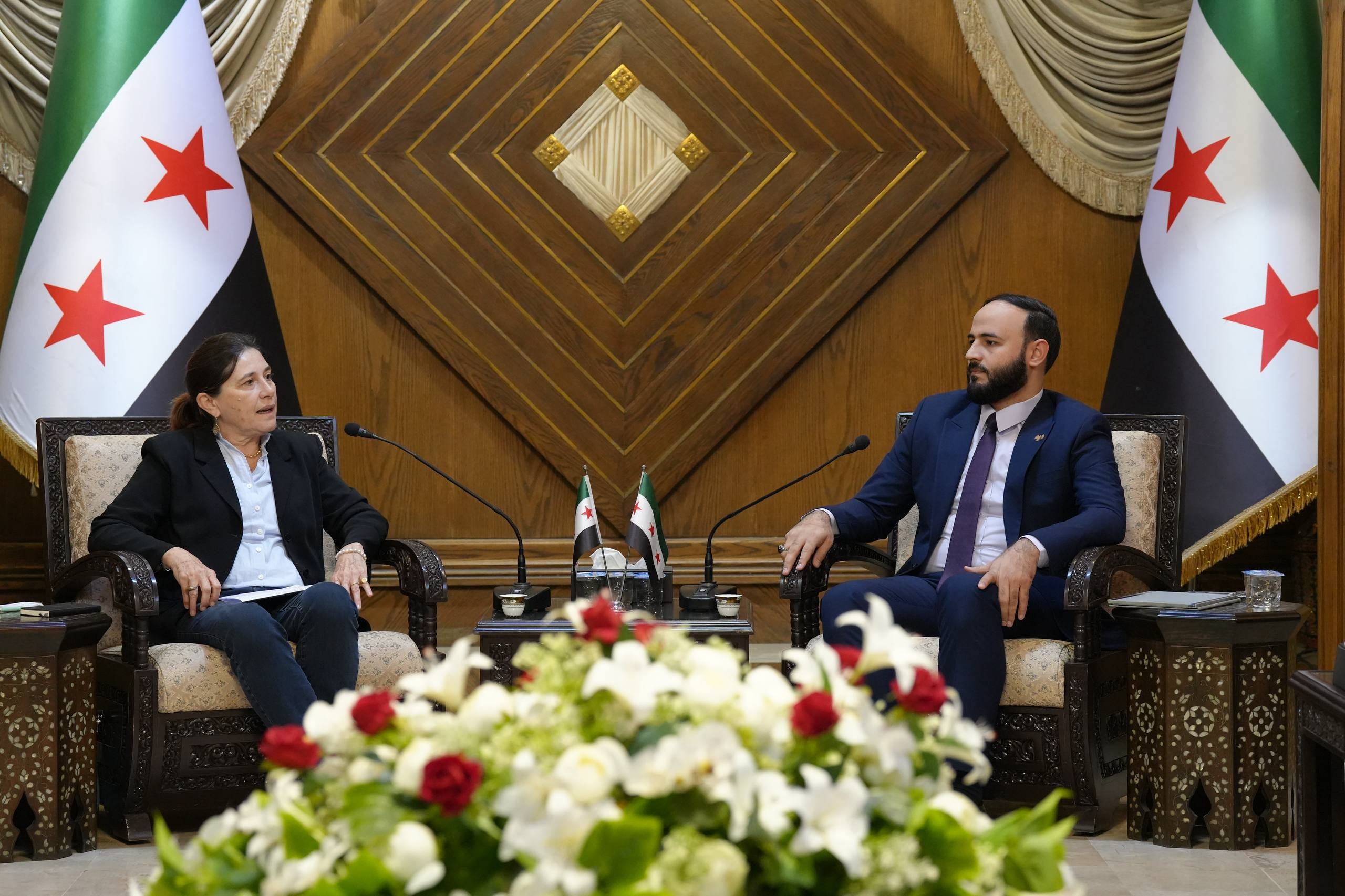
Governor of Raqqa Abdulrahman Salamah hosted a meeting with senior officials from the Turkish Hadi Group and Türk Dünyası companies on May 4 to discuss their interest in constructing water treatment plans in the governorate.
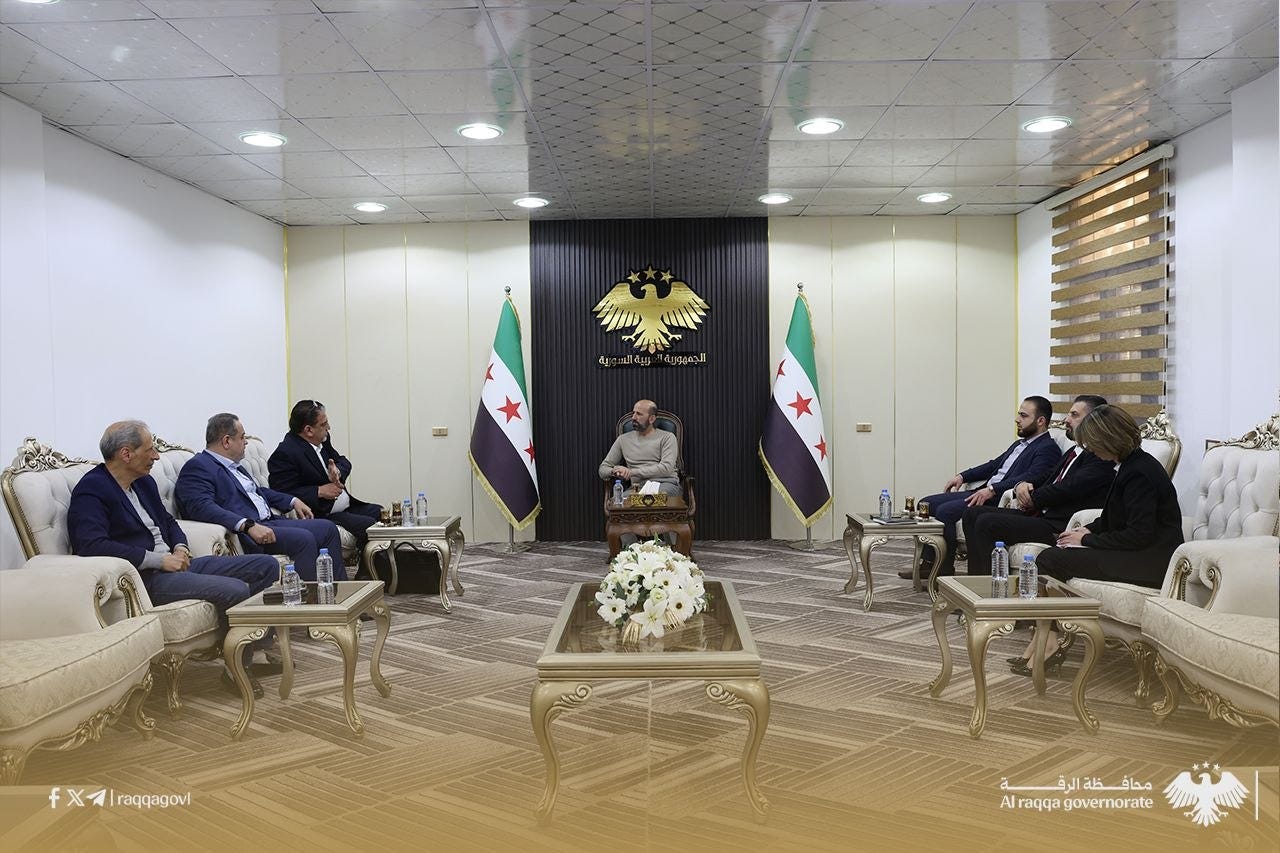
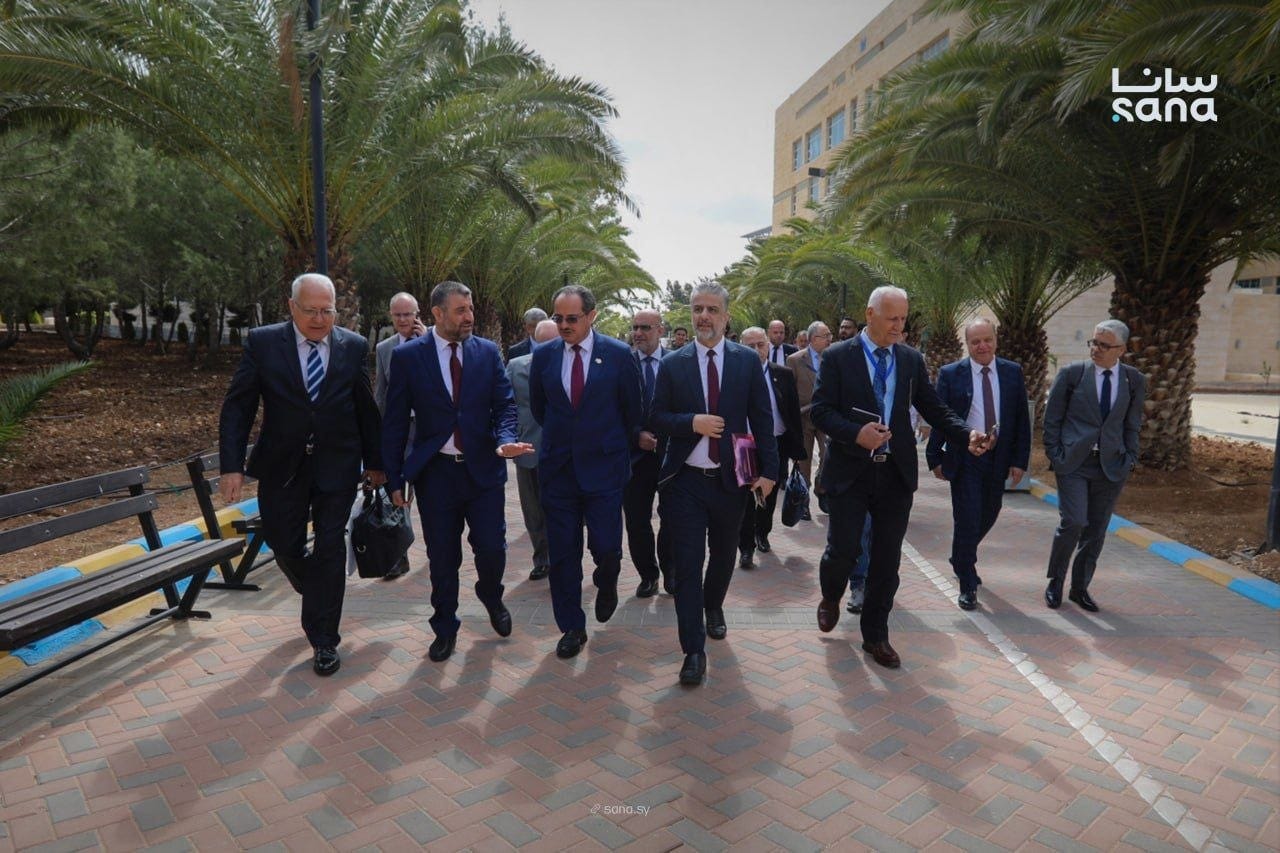
Assistant Minister of Higher Education, Abdulhamid al-Khalidi, led a Syrian delegation of leaders from public and private universities to Amman, Jordan on May 4 and toured German-Jordanian University to discuss potential collaboration.
The Director of Syria’s Postal Corporation, Imad al-Din Hamad, traveled to Bern, Switzerland on May 4 to participate in the World Postal Union’s Board of Directors meeting.
April 5:
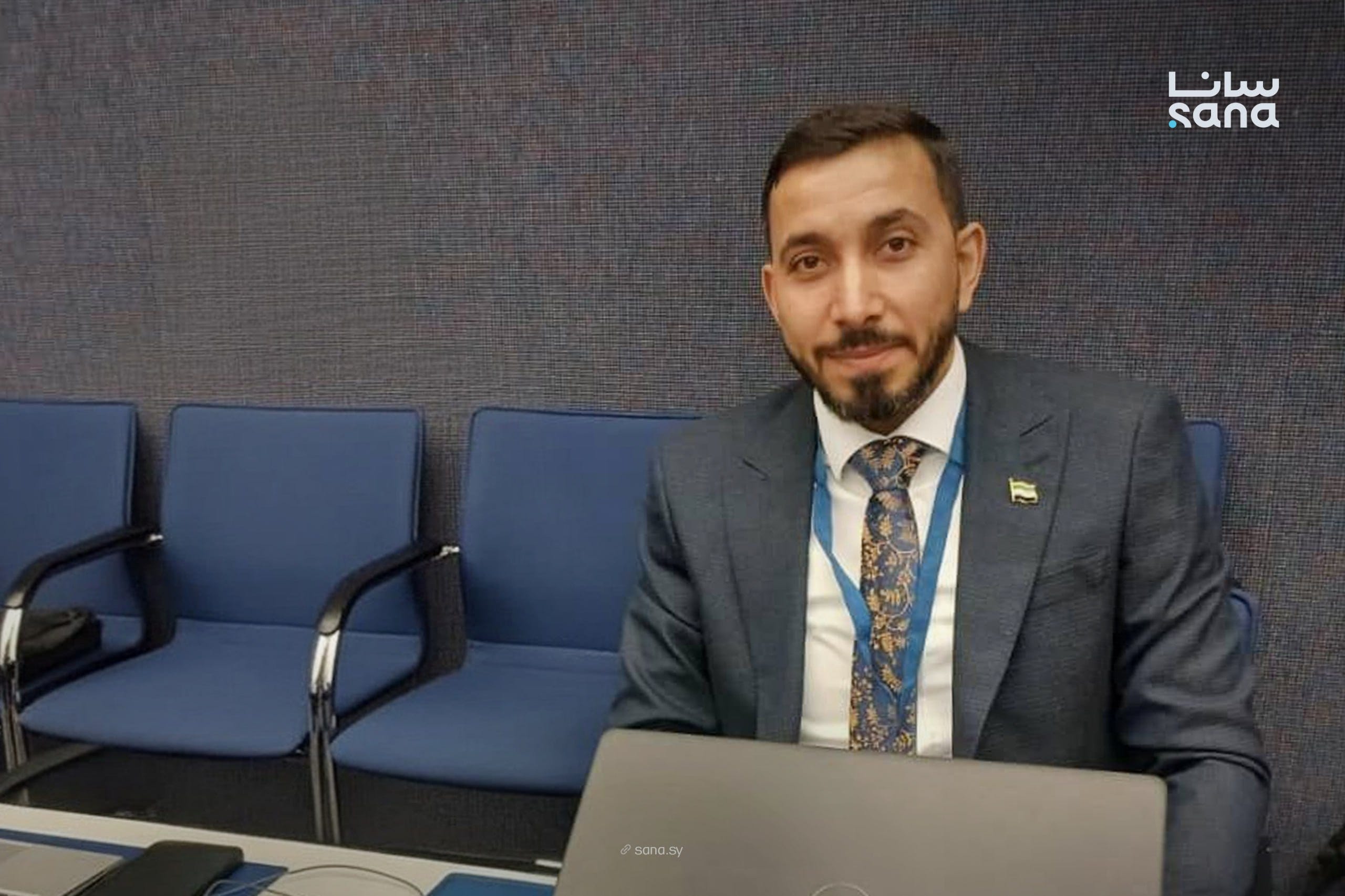
The Director of Syria’s Investment Authority (SIA), Talal al-Hilali, confirmed on May 5 the arrival to Damascus of leading UAE businessman Mohammed Alabbar — the founder and CEO of Emaar Properties and CEO of investment firm Eagle Hills — in preparation for the inaugural Syrian-Emirati Forum. Alabbar’s visit came amid widespread reporting that Eagle Hills was preparing a $50 billion investment in two large-scale construction projects: one in al-Dumayr, Damascus with 73,000 residential units and 3,200 hotel rooms, with an integrated road network and 7 million square meter green space; and another in Latakia with 29,000 residential units and 2,800 hotel rooms, along with public gardens and other services.
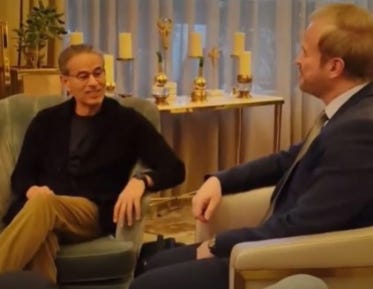
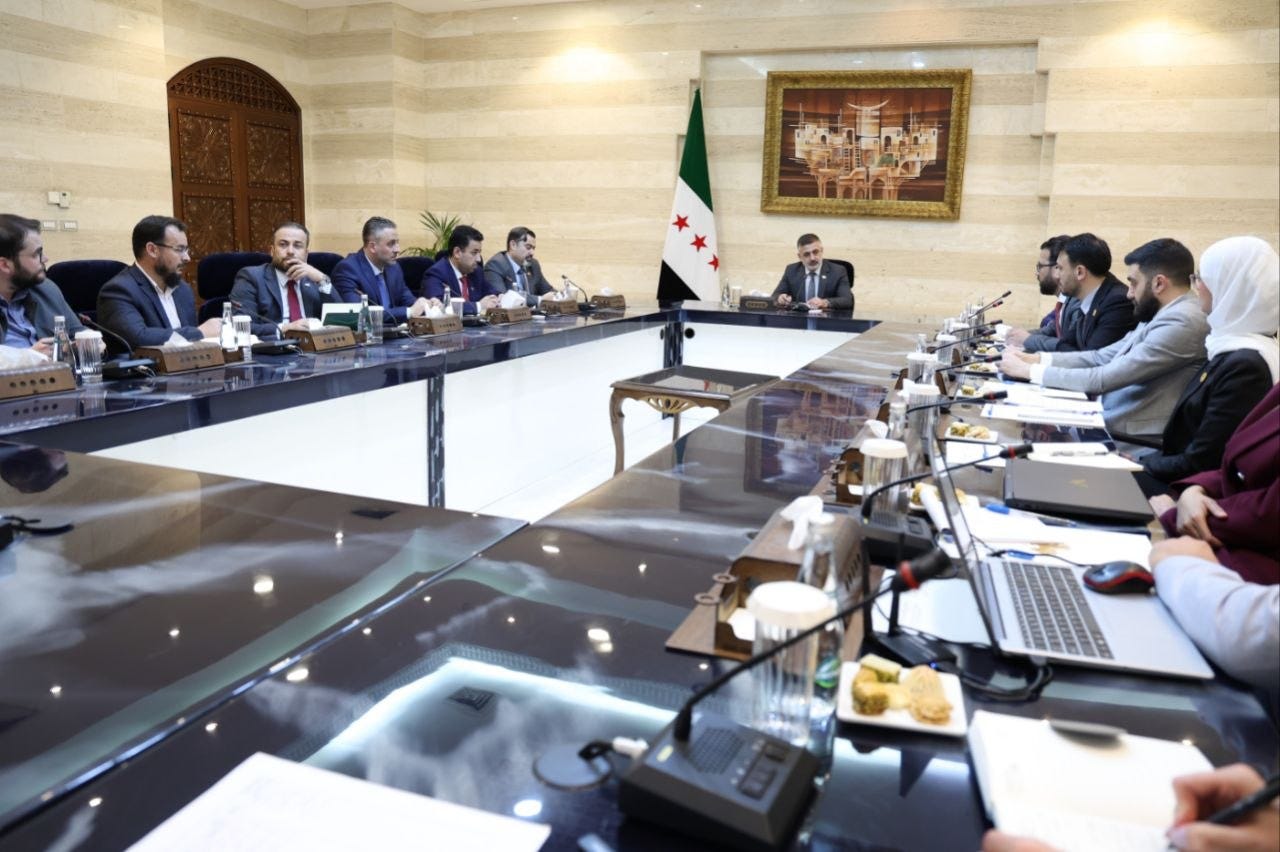
The General Secretariat of the Presidency convened a working meeting involving the Syrian Development Fund and senior officials from the Ministries of Health, Education and Emergency and Disaster Response on May 5 to discuss an integrated roadmap to support service and development programming and efficiently channeling donor funds towards priorities.
Minister of Local Administration and Environment, Mohammed Anjarani continued his visit to Saudi Arabia on April 5, visiting the headquarters of the National Housing Company in Riyadh and meeting with the CEO of the “Baladi and Baladi Plus” application, Yasser al-Obaidan, to discuss digital services facilitating municipal service procedures.
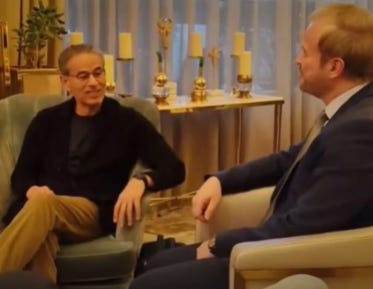
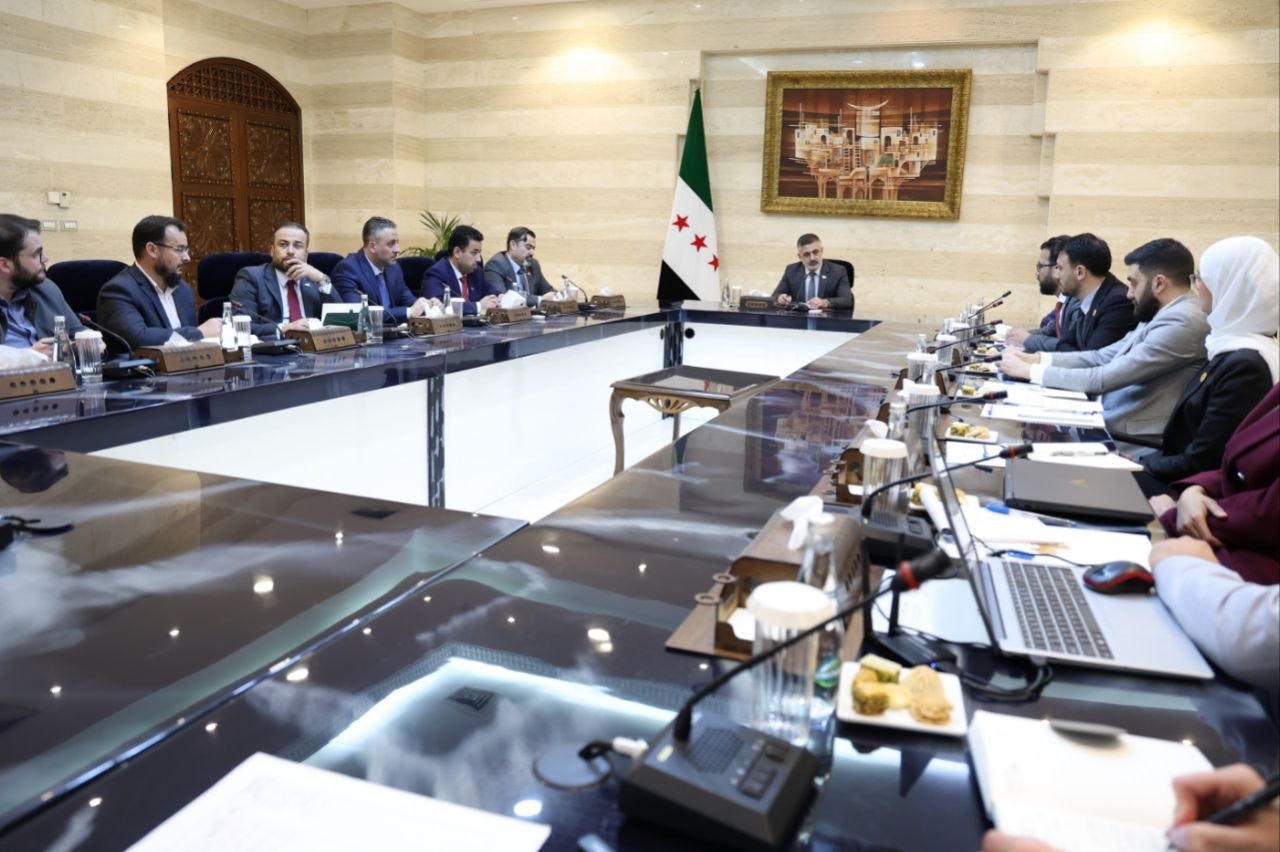
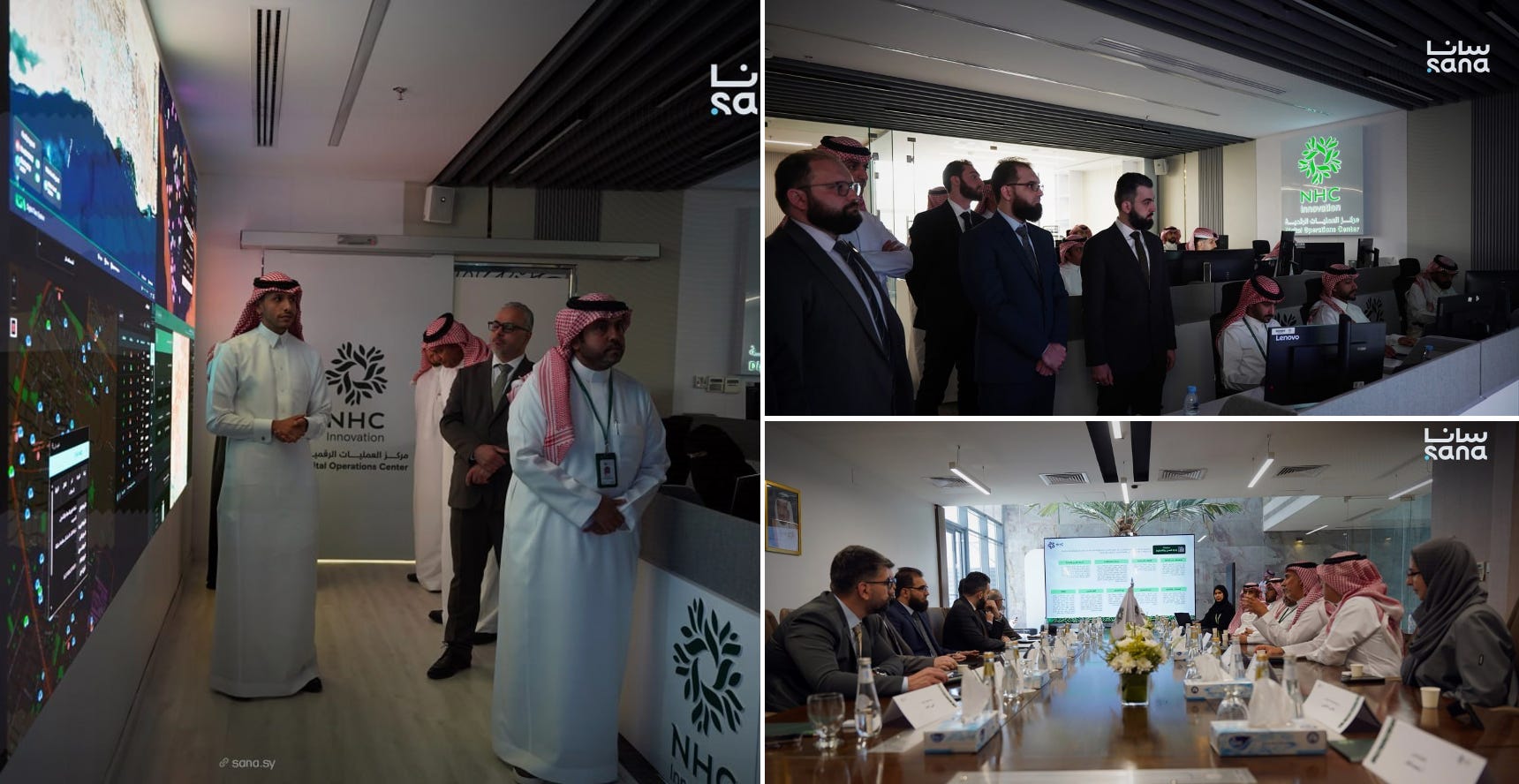
Minister of Communications and Information Technology Abdulsalam Haykal and Central Bank Governor Abdulkader Husrieh met on May 5 to discuss the linking of financial transfer systems in Syria, along with enhanced levels of cybersecurity, digital protection, and digital financial service infrastructure.
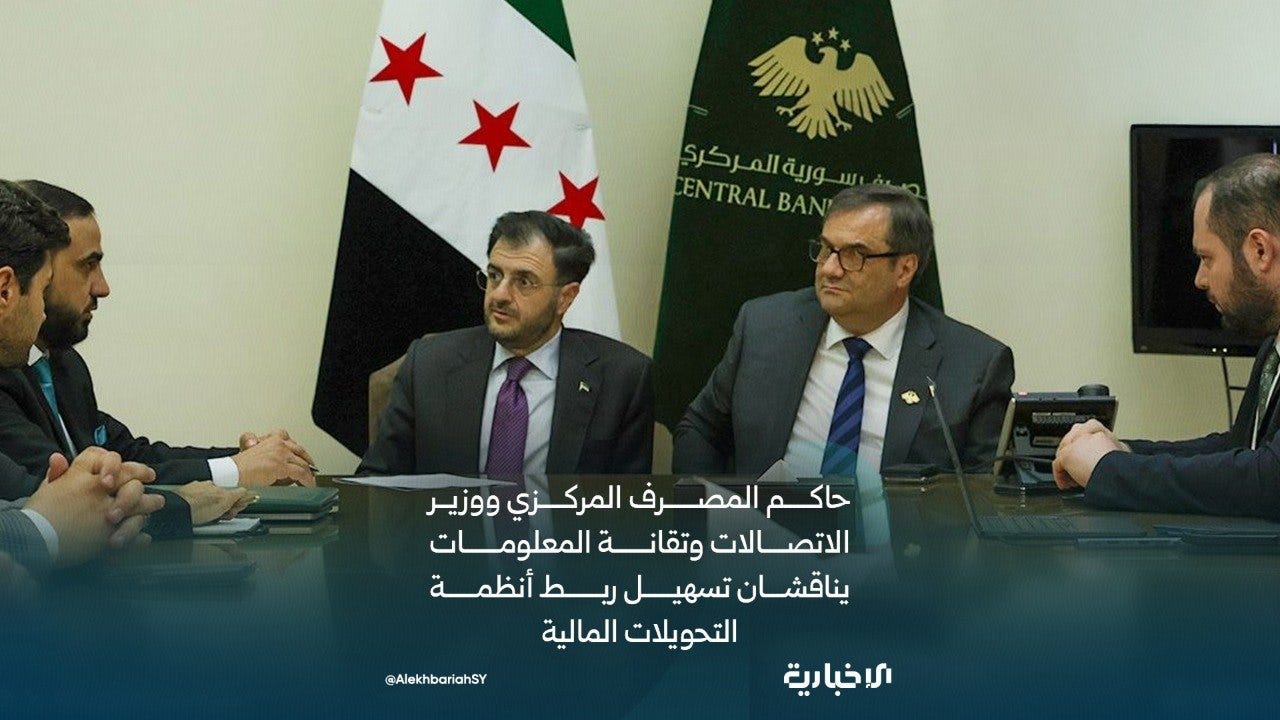
Minister of Social Affairs and Labor Hind Kabawat hosted a meeting with a delegation from Human Rights Watch, led by Lama Fakih, on May 5.
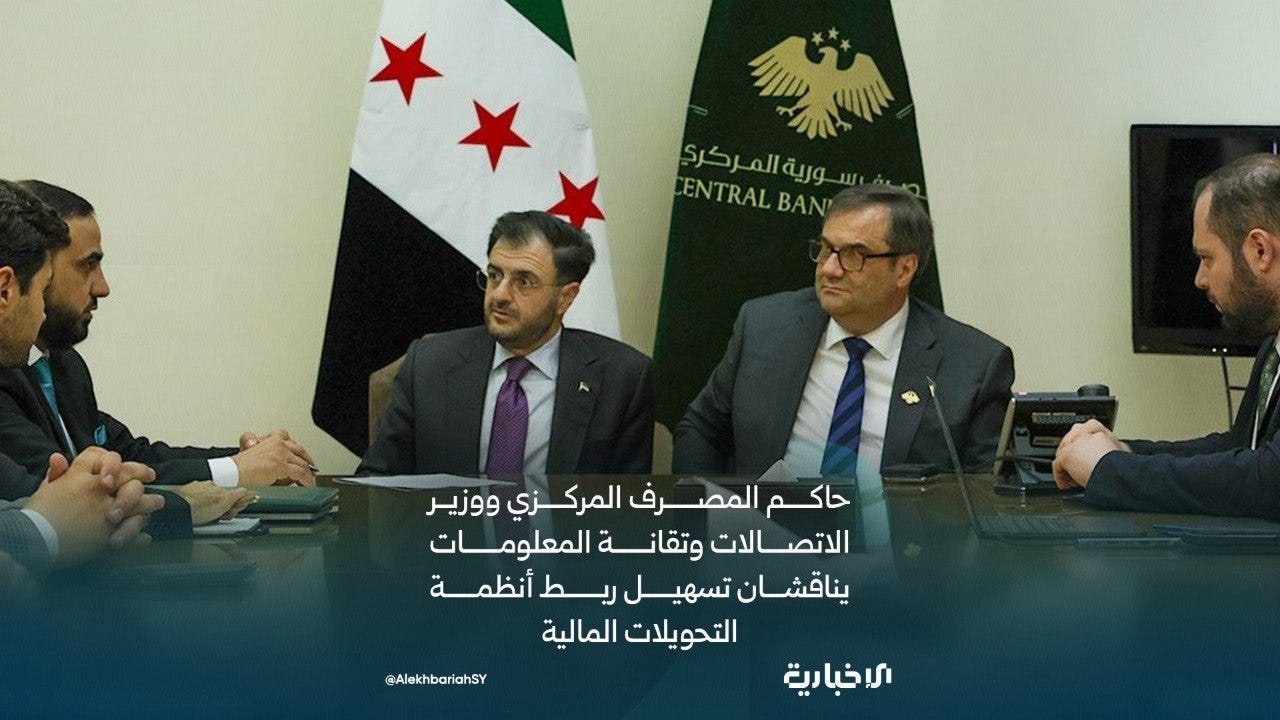
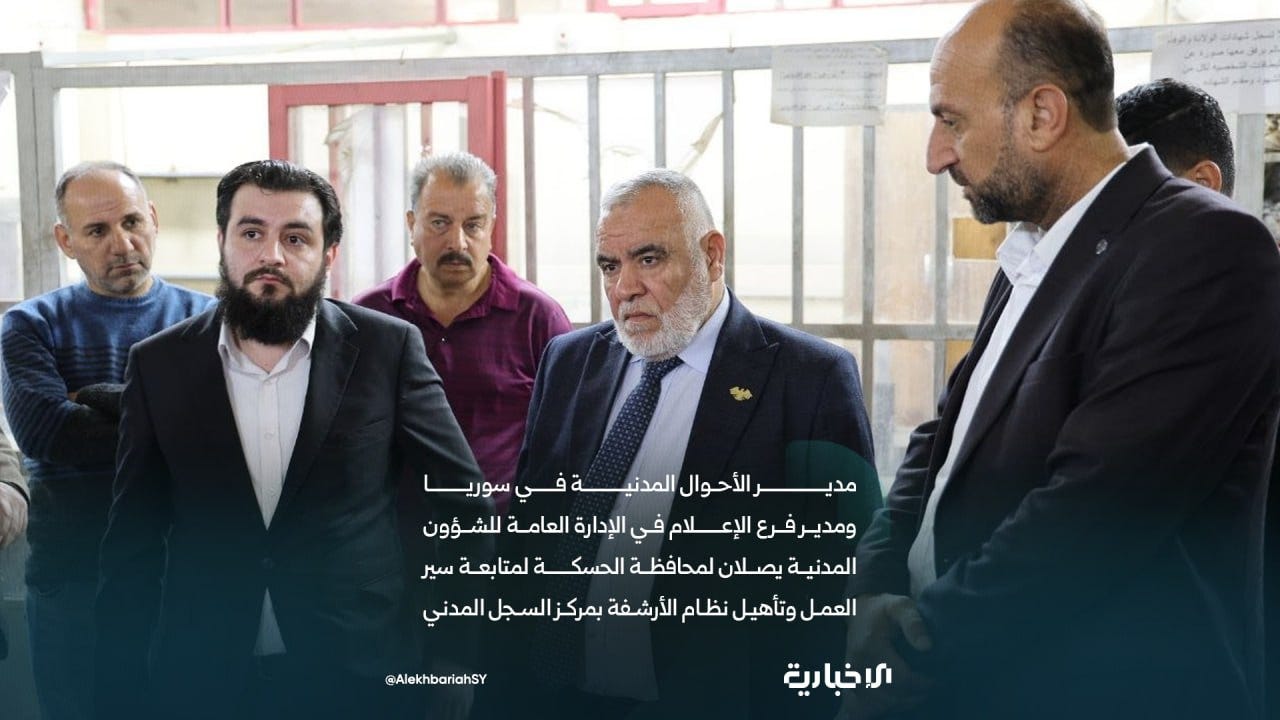
The Director of Civil Status in Syria, Abdullah al-Abdullah and the Director of Media in the General Authority for Civil Affairs, Bilal Saado, visited Hasakeh on May 5 — first to assess ongoing work to rehabilitate and upgrade the Center for Civil Registry in the governorate capital; and later to meet with Kurds seeking to obtain Syrian citizenship.
Appointments:
Amer al-Sarhan was appointed as the Director of the Attorney General’s executive office on April 28.
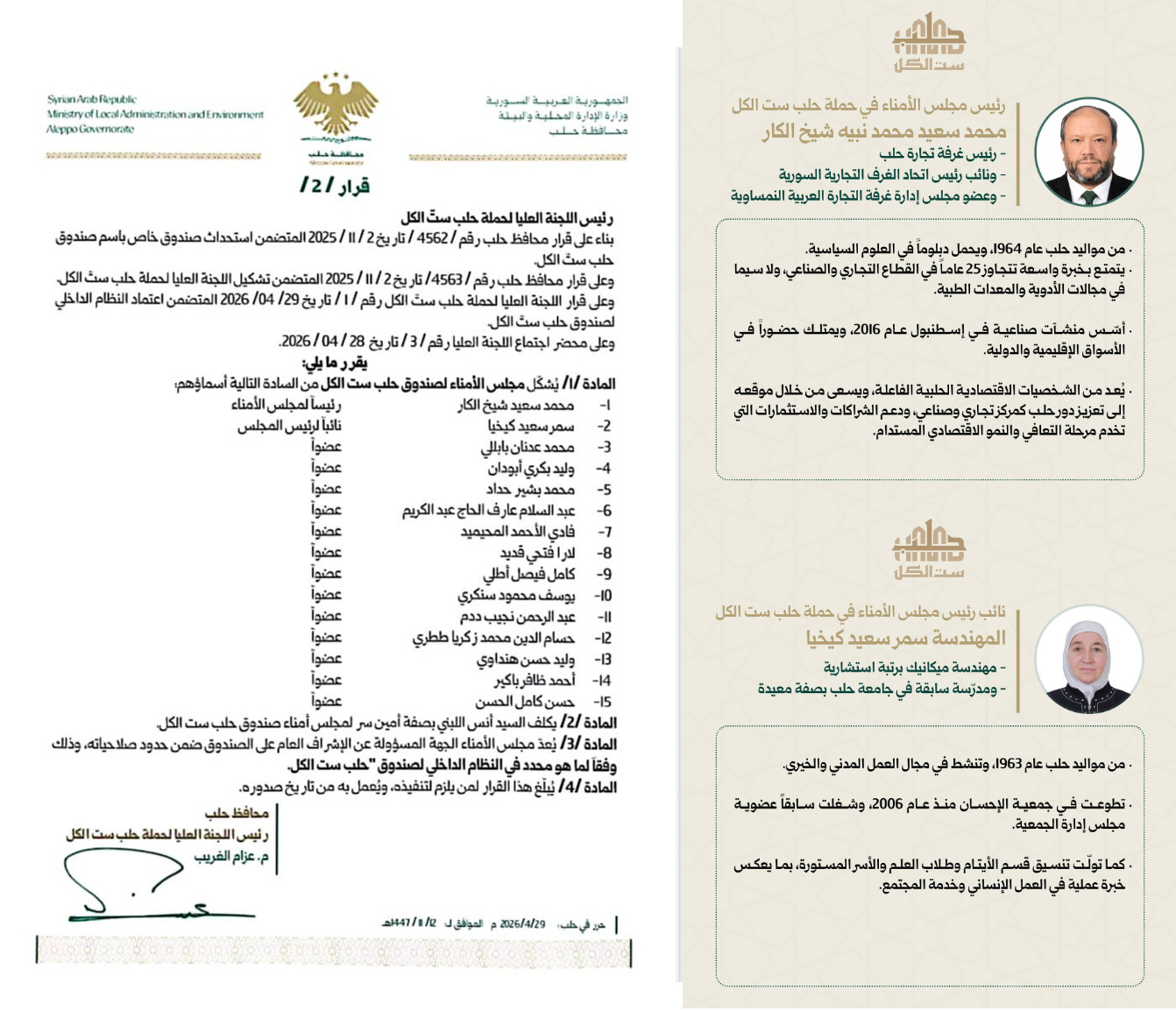
The Governorate of Aleppo appointed a Board of Trustees to manage the “Aleppo Belongs to All” fundraising campaign on April 30 — led by an appointed president, Mohammed Said Sheikh al-Karr and vice president, Samar Khaykhia.
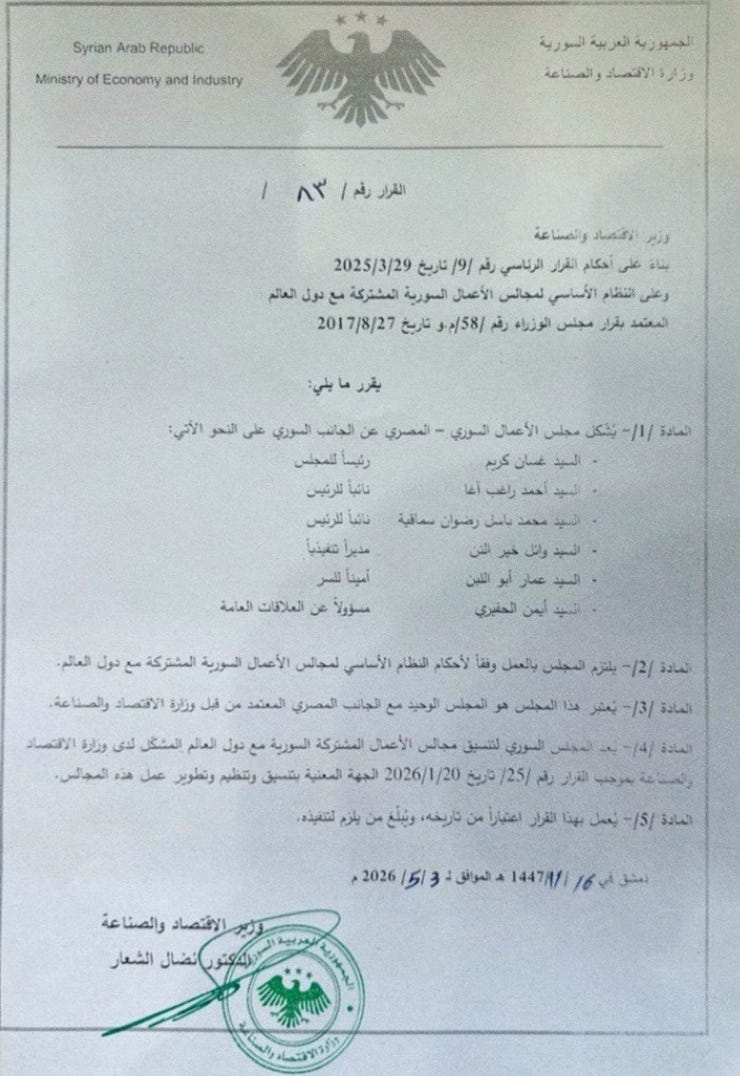
During a visit to Cairo, Egypt, Minister of Economy and Industry Nidal al-Shaar appointed Ghassan Karim as the chairman of the newly established Syrian-Egyptian Business Council on May 3.
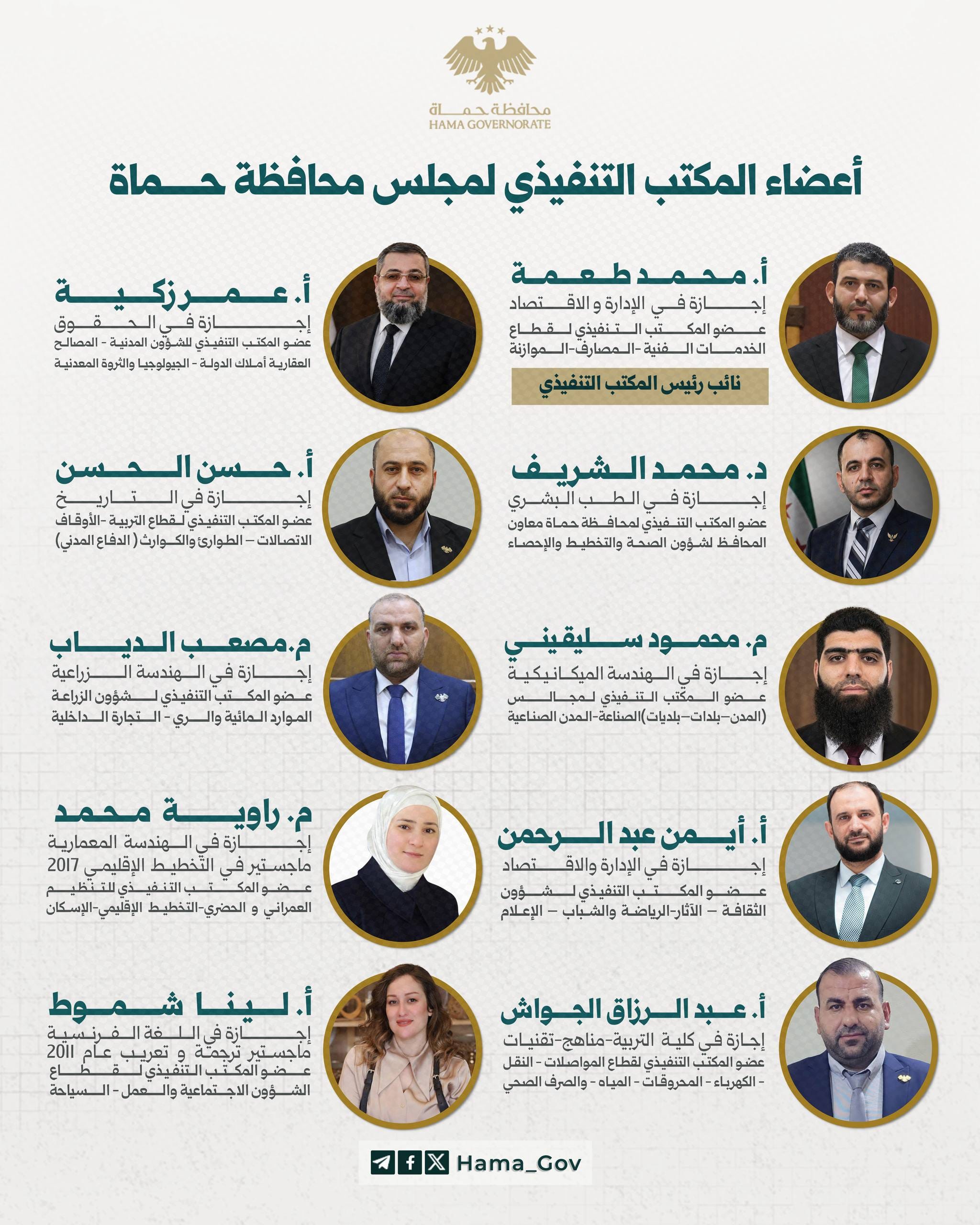
The Hama Governorate Council announced the formation of its executive office on May 5, comprising 8 men and 2 women.
Political Developments:
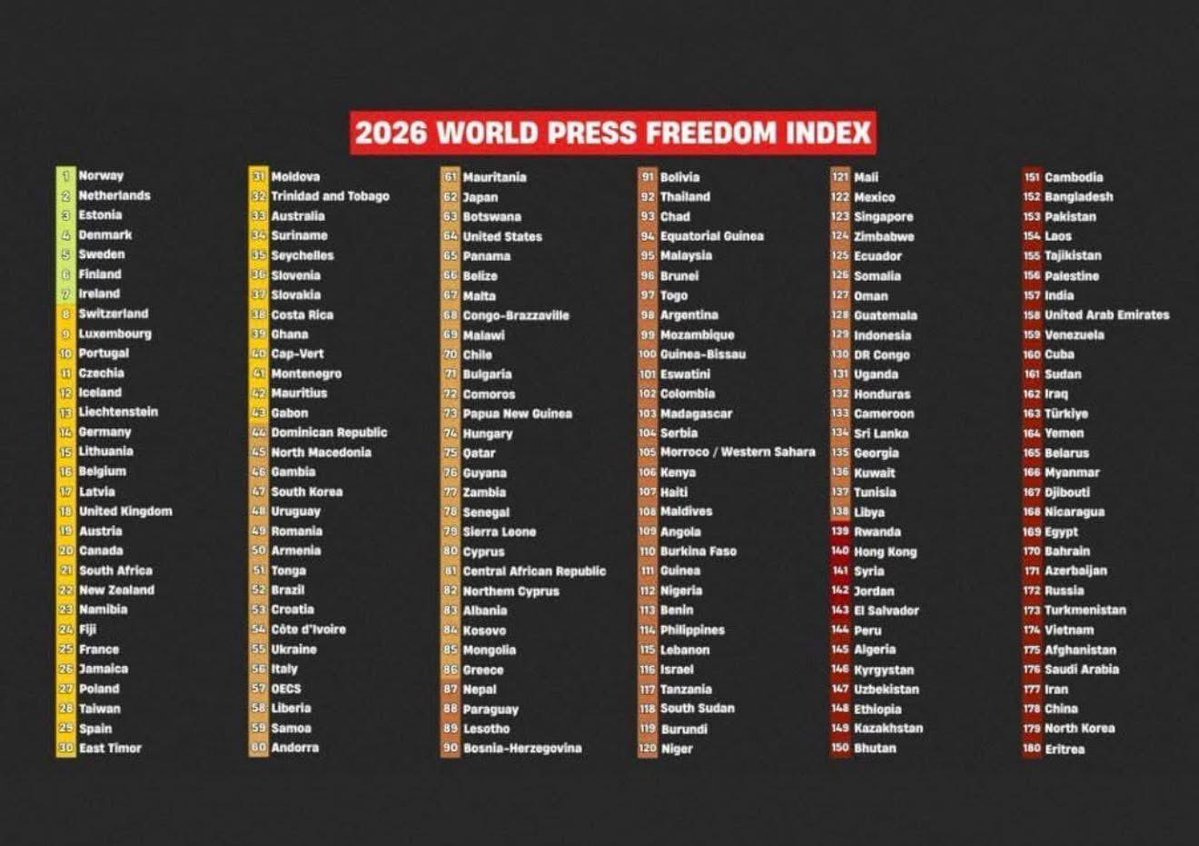
According to the 2026 Press Freedom Index, released on April 30, Syria rose 36 places from 2025 to position 141 — marking the biggest single climb by any country in history. The new ranking placed Syria above much of its regional neighbors, including Saudi Arabia, Bahrain, Egypt, Yemen, Turkey, Iraq, Sudan, the UAE, Palestine, Algeria and Jordan.
The government’s District Director for Kobani, Ibrahim Muslim, confirmed on April 30 that within the next week, a new government Health director would be appointed to run health services in Kobani and that all of the district’s health facilities would be fully integrated into the Ministry of Health.
Economic Developments:
Central Bank Governor Abdulkader Husrieh announced on April 28 that recent meetings in Germany had concluded with an agreement to begin normalizing banking relations between Berlin and Damascus.
CEO of the Syrian Petroleum Company (SPC) Yousef Qablawi told Syrian television on April 28 that Syria’s current oil production stood at 133,000 barrels per day (BPD) and that production would likely remain around 150,000 BPD through to the end of 2026 while the SPC aimed to reach a production capacity of 350,000 BPD by the end of 2027.
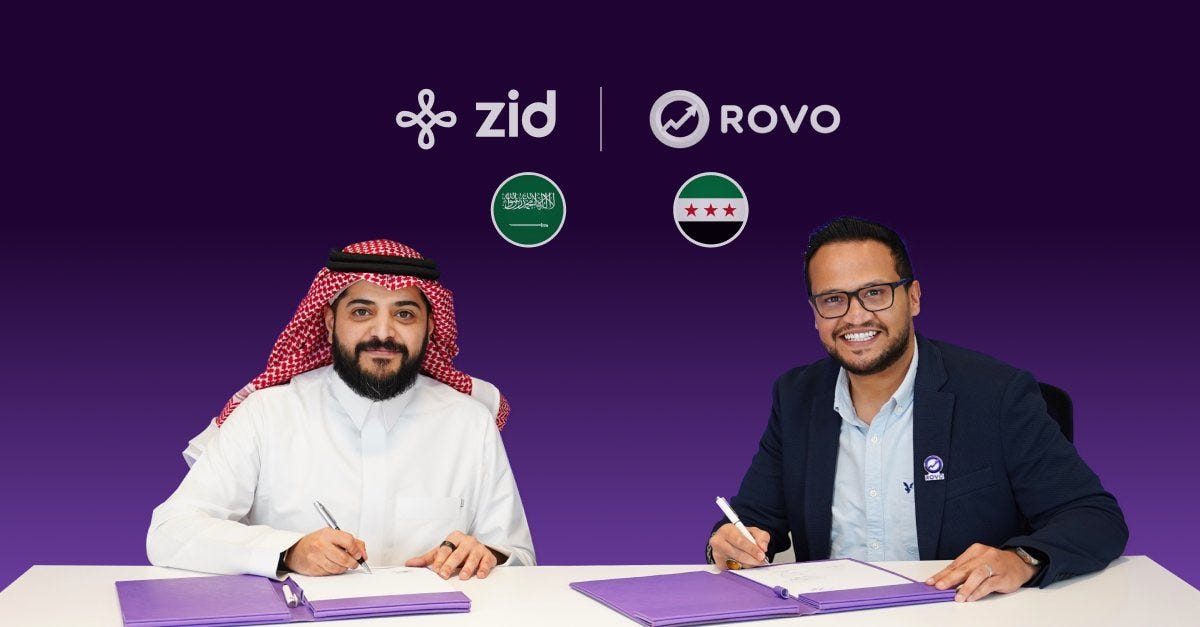
Saudi e-commerce platform Zid announced its entry into the Syrian market on April 28 in partnership with Syrian start-up Rovo through a planned joint fully integrated e-commerce system to include digital storefronts, payment solutions, and logistics solutions.
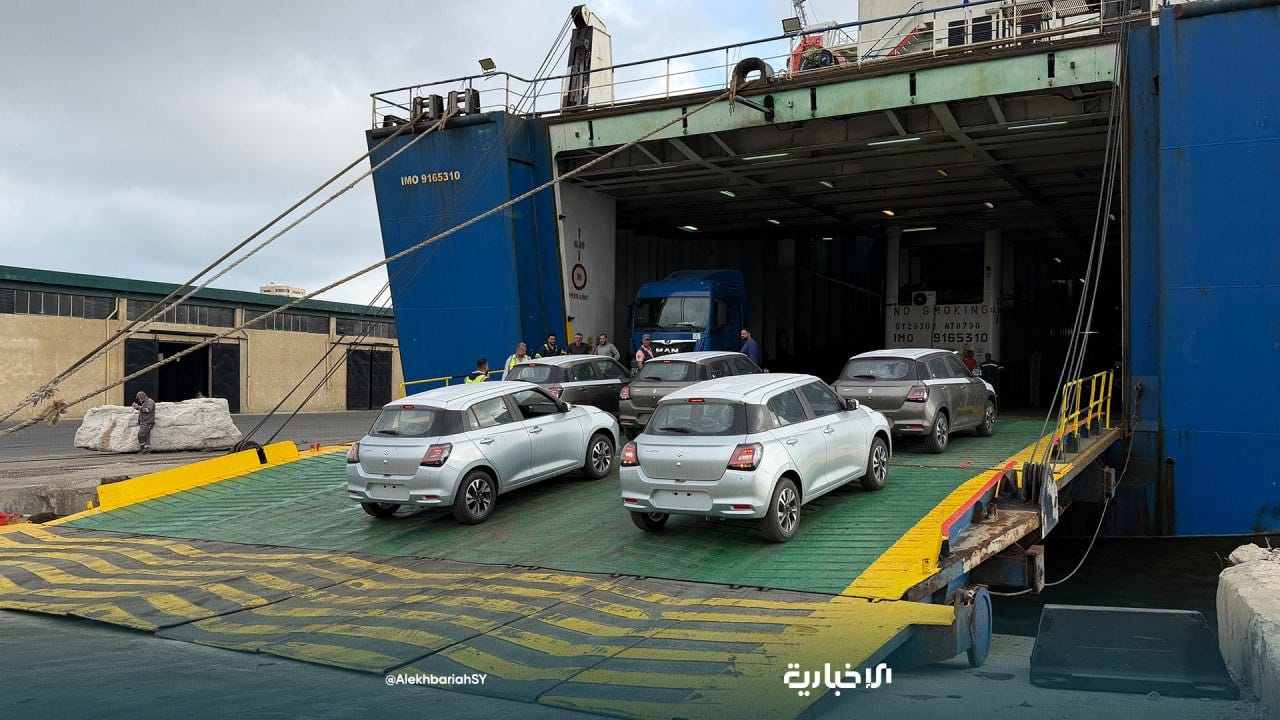
The General Authority for Ports and Customs confirmed on April 28 that car exports from the Port of Latakia had resumed for the first time in years, with a shipment of 246 vehicles being exported via the UAE to Europe. A further 600 vehicles were expected in follow-up shipments.
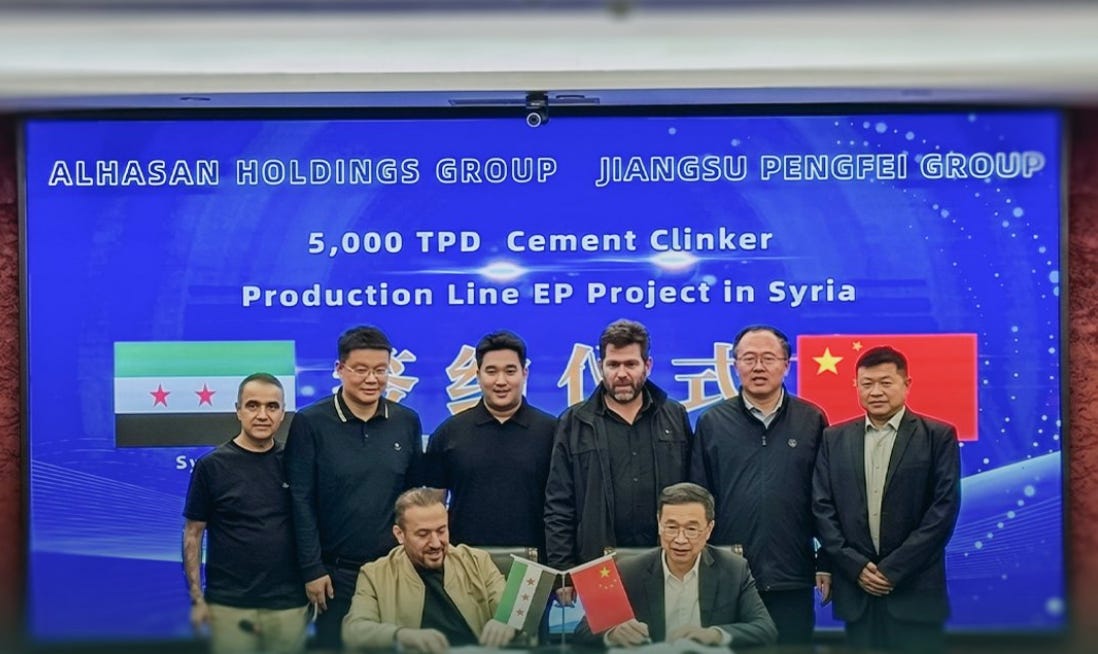
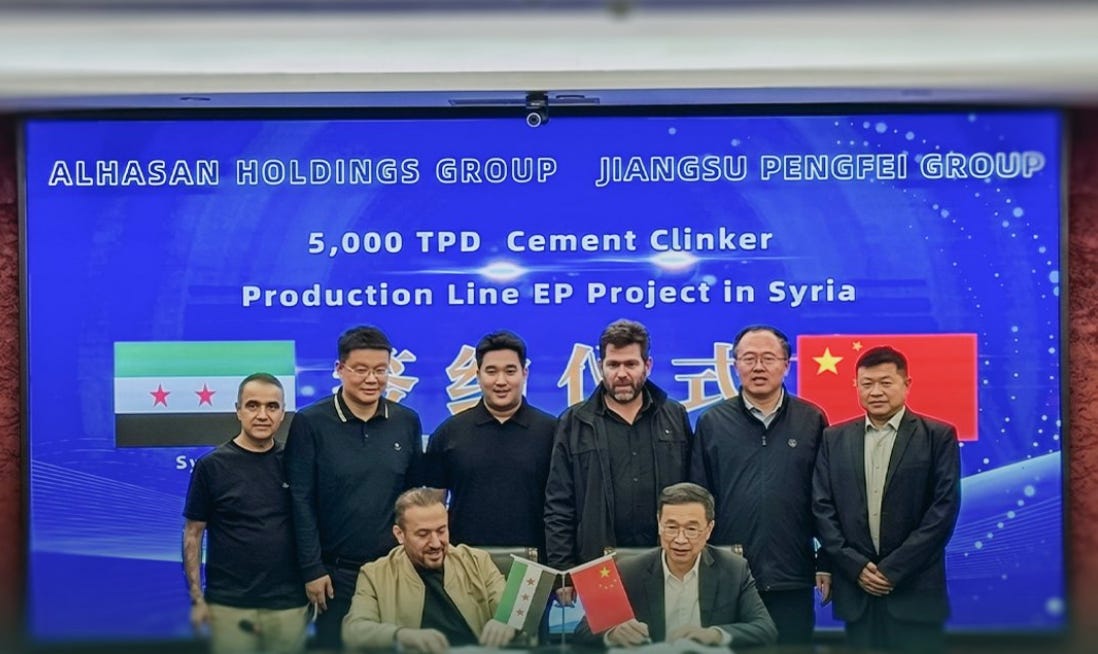
A strategic agreement was signed on April 29 between Syria’s Al-Hassan Holding Group and the Chinese Jaingsu Pengfei Group to establish a cement factory in Raqqa. Plans were agreed for a Chinese delegation to visit Raqqa in May 2026 to finalize preparations for the 2-year construction project.
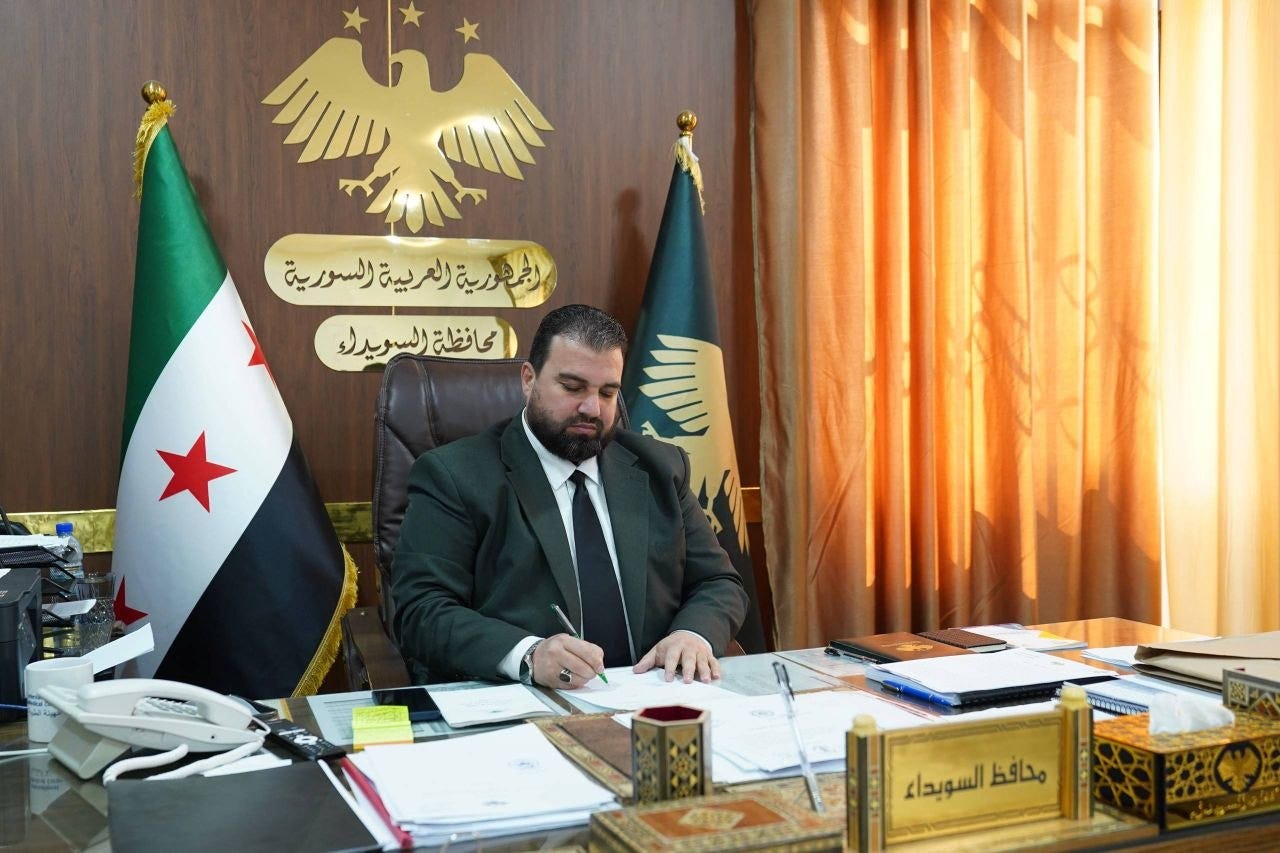
Governor to Suwayda Mustafa Bakkour, in coordination with the Ministry of Local Administration, disbursed a financial grant of nearly $26,000 on April 29 to cover the salaries to administrative staff inside Suwayda.
Governor to Suwayda Mustafa Bakkour processed the disbursement of two months of salaries to employees of the state construction sector inside Suwayda on April 29.
The Director of Syria’s Grain Authority, Hassan Othman, announced on April 30 that after significant rains in early-2026 and effective storage efforts in late-2025, Syria is set to require no wheat imports in 2026 — for the first time in many years.
A Reuters report published on May 1 claimed that Russia has become Syria’s primary oil supplier, at a rate of approximately 60,000 barrels per day in 2026 — a reality described by Syrian government officials as an economic necessity given limited alternatives. The report added that much of the Russian supply comes via internationally-sanctioned Russian tankers.
Central Bank Governor Abdulkader Husrieh announced on May 1 a further 30-day extension for the period of exchanging Syria’s old Pound currency with the new one — running from June 1 to June 30, 2026.
Governor Husrieh later confirmed on May 3 that 56% of the old currency had so far been exchanged out.
The Syrian Petroleum Company (SPC) announced on May 2 that the Baniyas oil terminal had increased its capacity by 30% following rehabilitation and expansion works, making it now capable of processing and unloading 500 trucks of oil per day (equating to approximately 110,000 barrels per day).
Governor to Suwayda issued direct salary payments to workers in the governorate’s Real Estate Directorate on May 3.
The Central Bank issued a decree on May 4 permitting local banks and payment companies in Syria to begin working directly with VISA and Mastercard to facilitate more efficient and interconnected secure payment solutions for individuals and companies. Central Bank Governor Abdulkader Husrieh added that the step would also allow Syrian nationals to use their bank cards abroad, while traveling.
Authorities at the Baniyas Refinery confirmed on May 4 that after significant expansion efforts over the past month, the facility’s capacity to receive tankers of Iraqi oil had increased from 160 tankers per day to 565.
In a decree issued on May 4, Finance Minister Mohammed Barnieh provided instructions to follow-up on Presidential Decree 69 granting tax exemptions to more than 30,000 Syrian businesses that had suffered varying degrees of damage during the 2011-2024 war.
The UN’s Food and Agriculture Organization announced the launch of a $5 million project to support 17,300 vulnerable families in northeast Syria through the delivery of 5,300 tons of animal feed and seeds to prevent the collapse of agricultural activity among rural households in parts of Hasakeh, Raqqa and Deir ez Zour.
The Qatar National Bank (QNB) announced on May 5 the launch of payment card and digital payment solutions in Syria, one day after the Central Bank’s decree permitting the use of VISA and Mastercard payment services. In a subsequent comment, Adel Ali al-Malki, Senior Executive Vice President of Retail Banking at QNB Group, stated: “We are proud to be the first bank globally to support the acceptance of digital payments and international payment cards within the Syrian market. This market is currently undergoing an accelerated transformation driven by the Central Bank of Syria’s efforts to reduce reliance on cash.”
The Ministry of Energy announced on May 5 that it had begun large-scale irrigation operations into 18,000 hectares of agricultural land in Tartus amid farmer requests. The irrigation was being provided via several dams.
Infrastructure Developments:
The Director General of Syria’s General Authority of Civil Aviation and Air Transport Omar al-Hosari announced on April 28 that approximately 80-85% of the maintenance and rehabilitation work at Deir ez Zour Airport had been completed.
Energy Minister Mohammed al-Bashir inaugurated 4 new electricity transformer stations in the al-Shaar district of Aleppo on April 29, whose installation brought electricity back to approximately 15,000 residents of eastern districts of Aleppo city for the first time in 9 years.
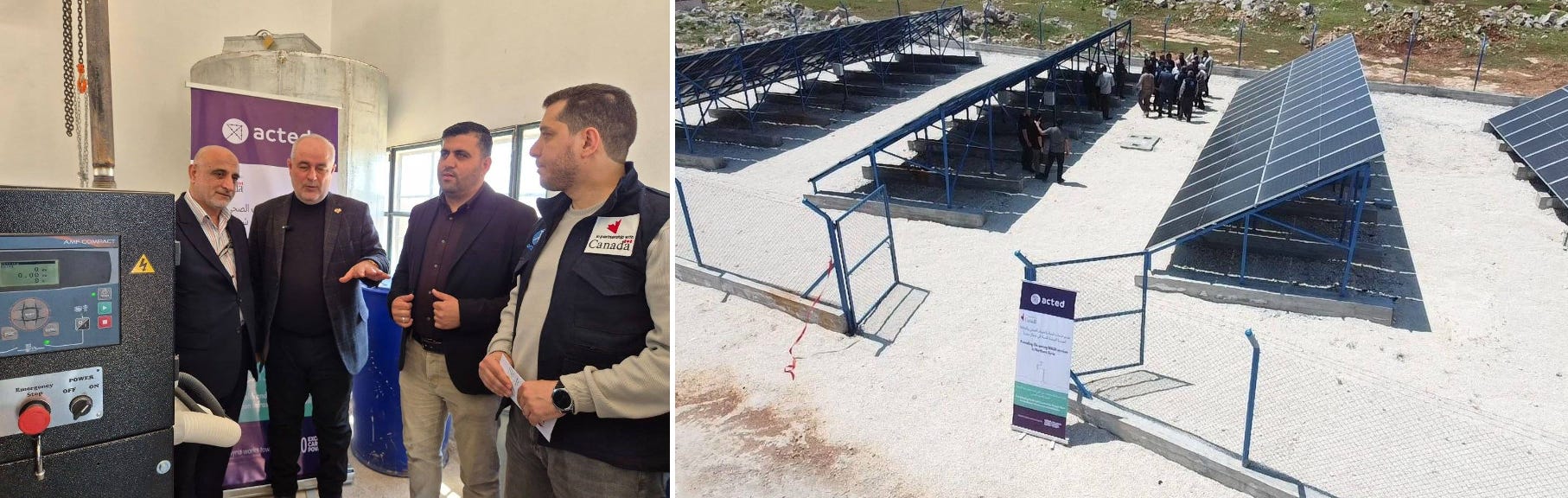
Local authorities in Anadan, Aleppo inaugurated a new solar-powered water pumping station on April 29, constructed jointly by the ACTED Organization and the provincial General Drinking Water Establishment.
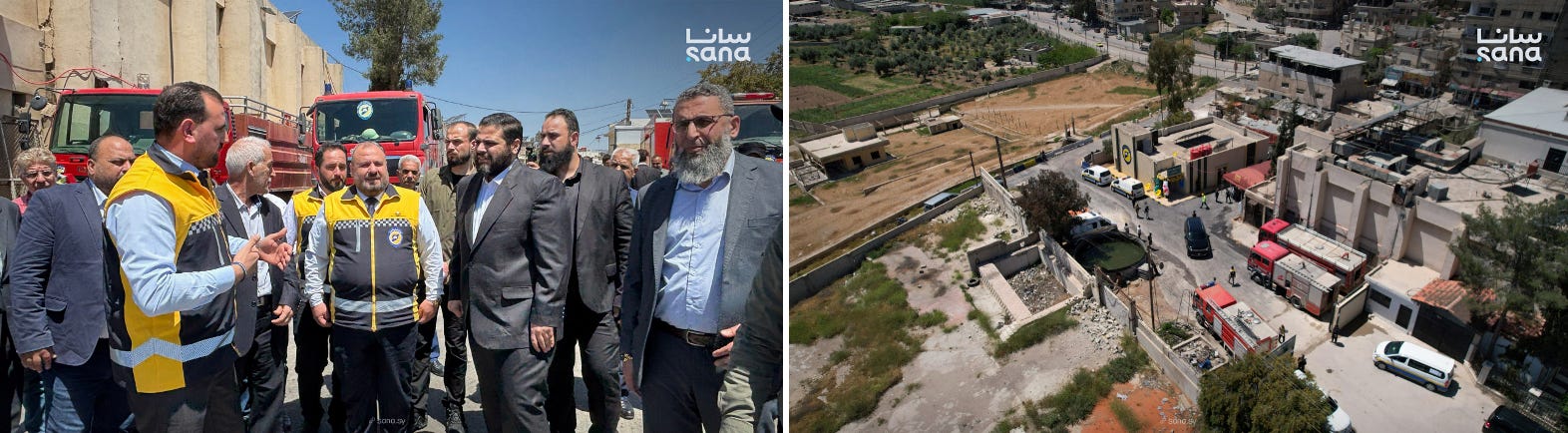
Local authorities and the Director of Syria’s Civil Defense, Mounir Mustafa, inaugurated a new civil defense center in al-Kiswa, Rif Dimashq on April 30.
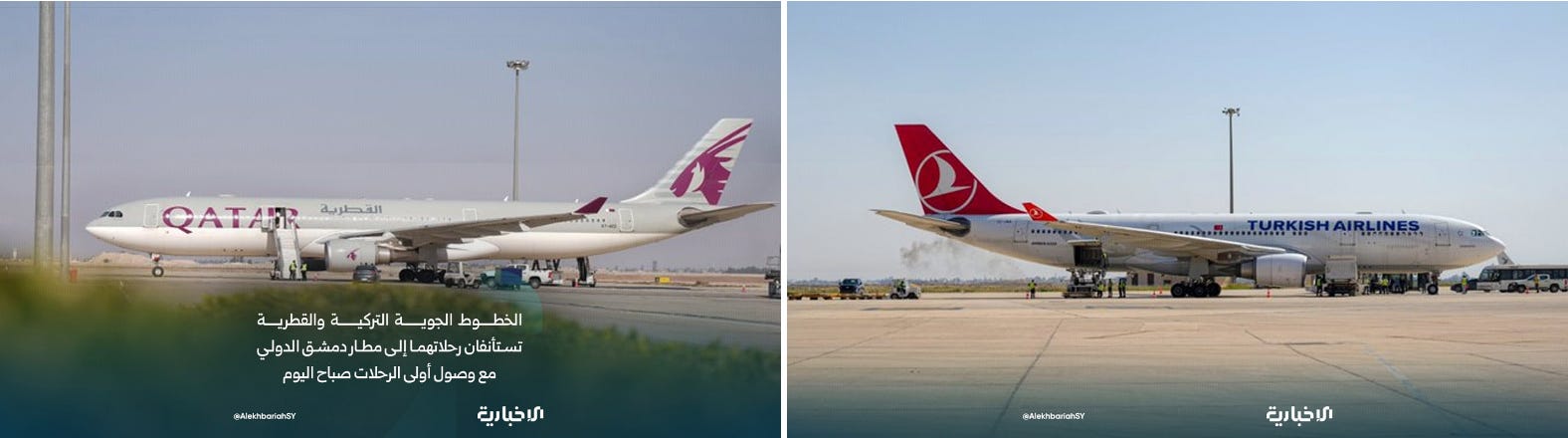
Qatar Airways and Turkish Airlines flights from Doha to Damascus resumed on May 1.
Later that day, the Director of Syria’s General Authority for Civil Aviation, Omar al-Hosari, confirmed that flydubai, Fly Sham, Royal Jordanian, Dan Air, Air Arabia, Fly Nas, Qatar Airways, Turkish Airlines, Jazeera Airways and AJet had resumed flights to Damascus; while Syrian Airlines, Fly Sham, Royal Jordanian, Dan Air, Turkish Airlines and AJet had resumed flights to Aleppo.
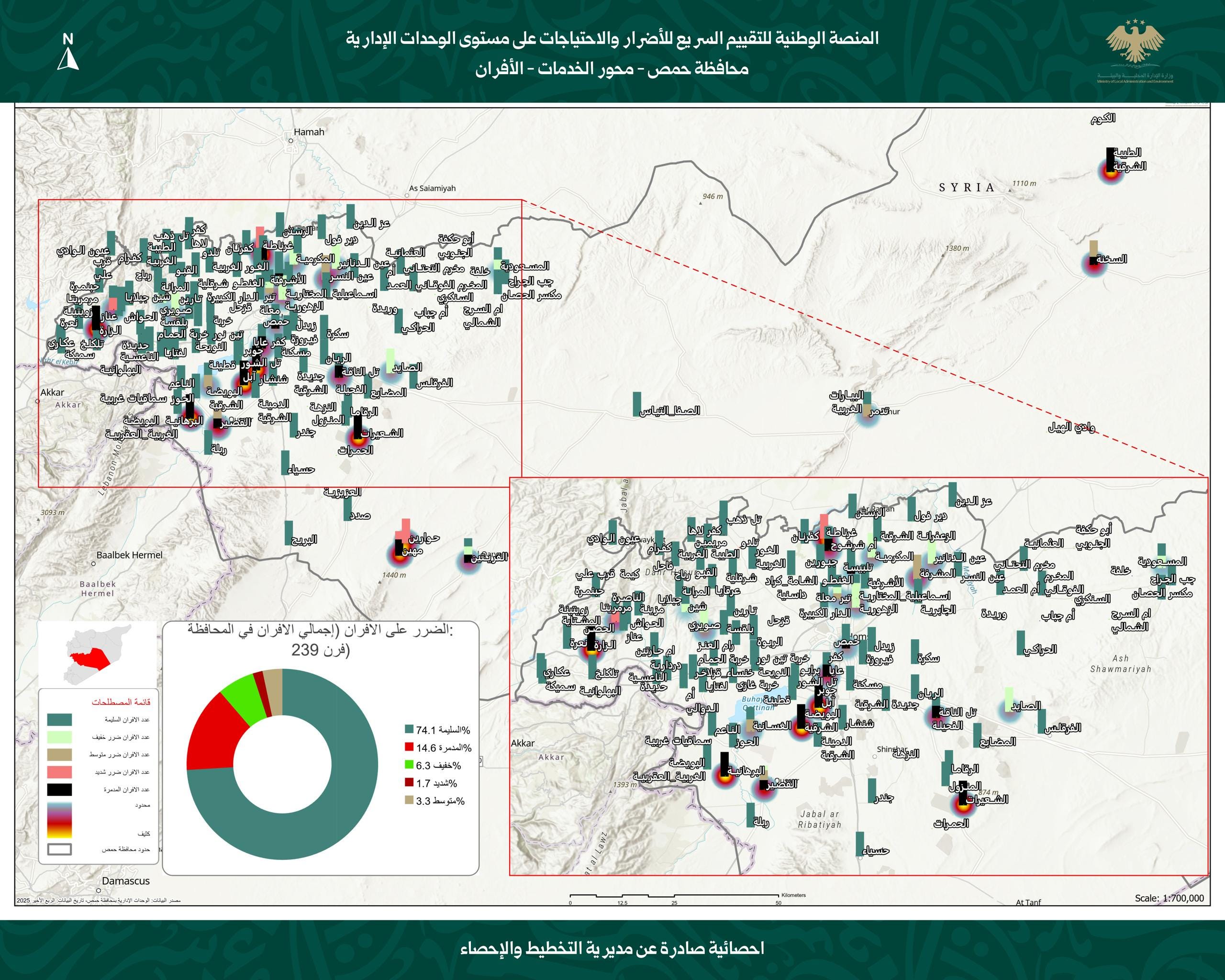
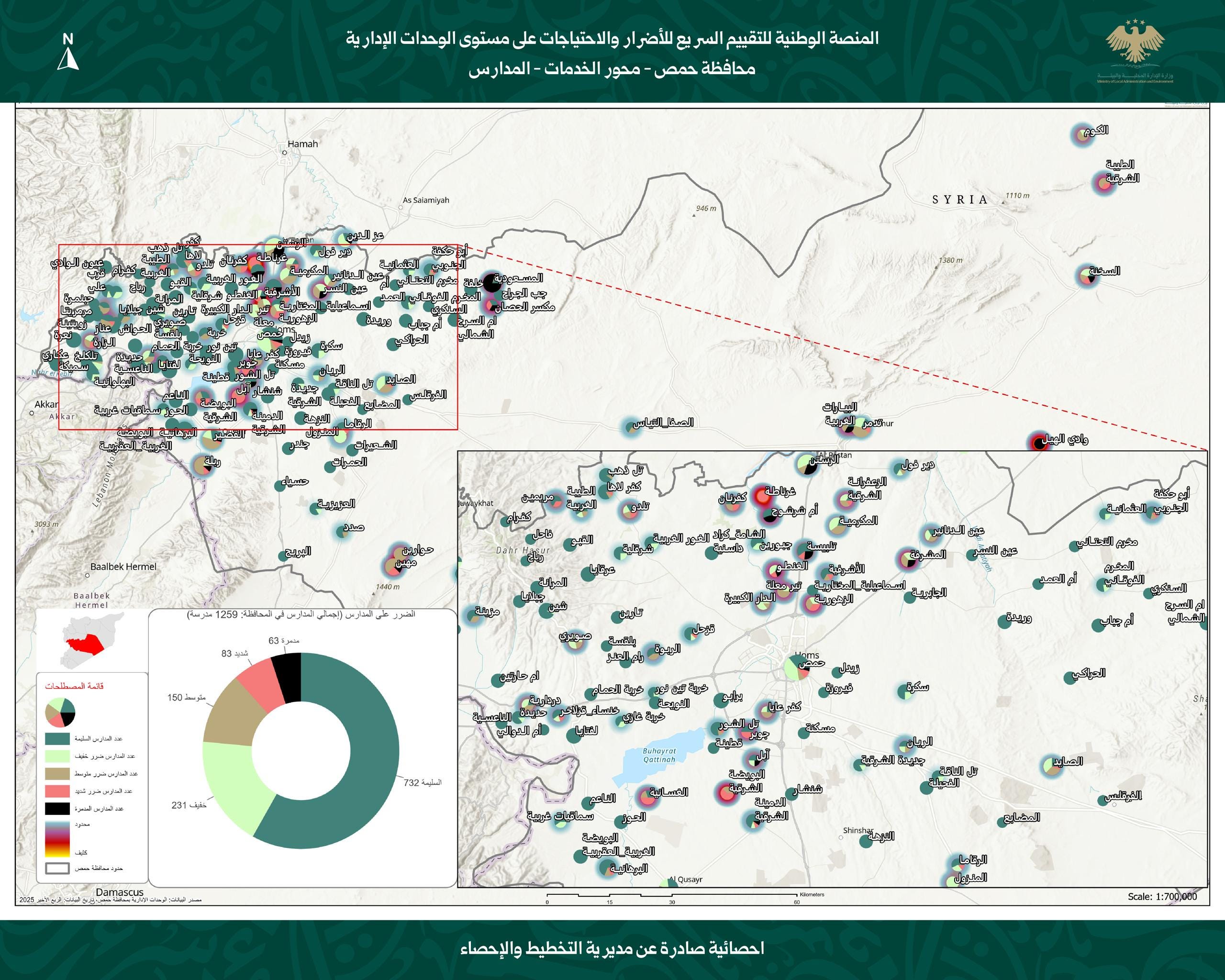
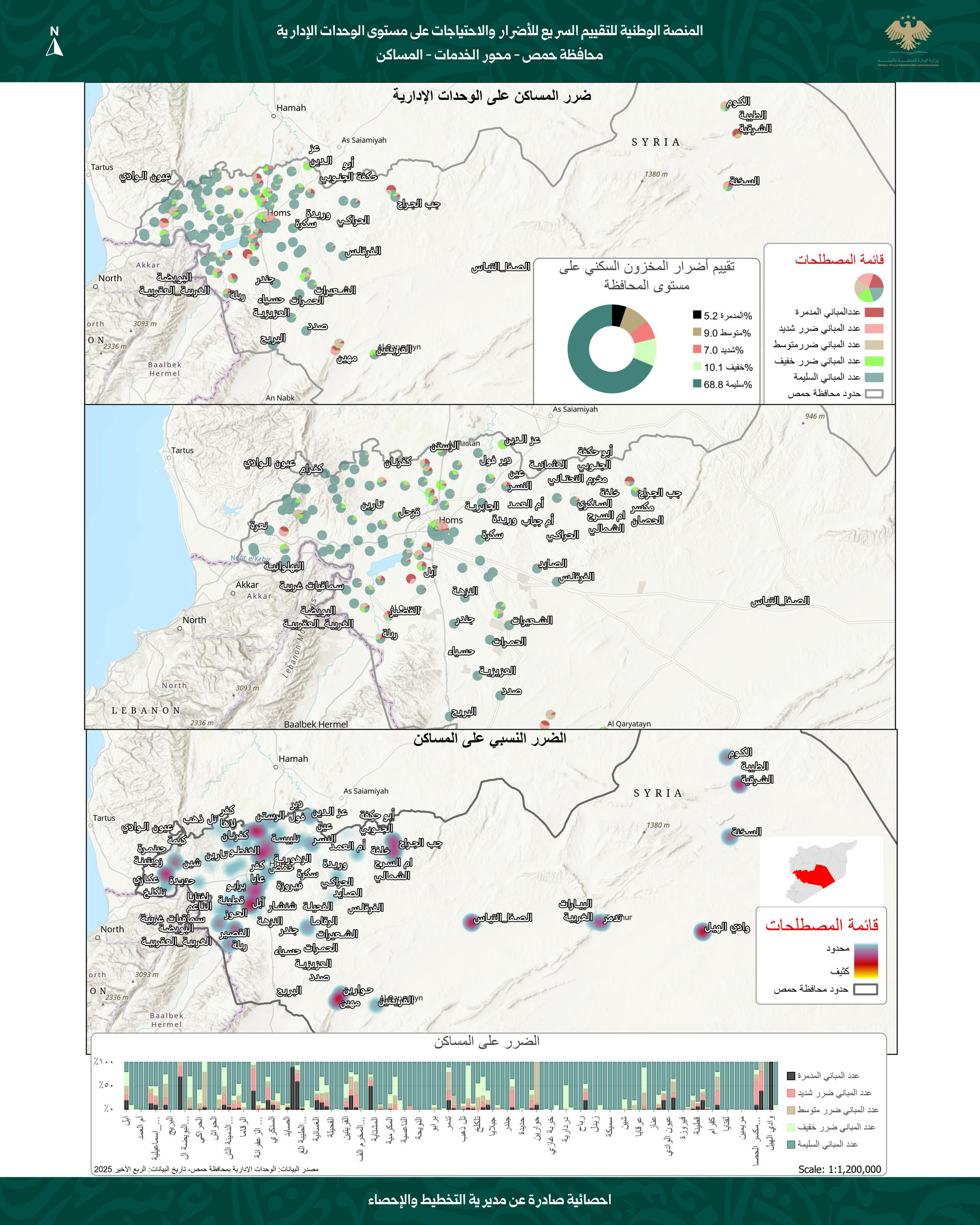
Homs Governorate released on May 2, the findings of a comprehensive damage survey conducted in coordination with UN Habitat concluding that 7% of housing had been severely damaged and 5.2% totally destroyed; while 527 schools had been damaged and 63 destroyed, amongst other metrics.
Syrian media confirmed on May that the Syrian Grain Foundation in Raqqa had allocated 17 different centers for receiving wheat during the 2026 harvest, with a combined storage capacity of 500-600 thousand tons.
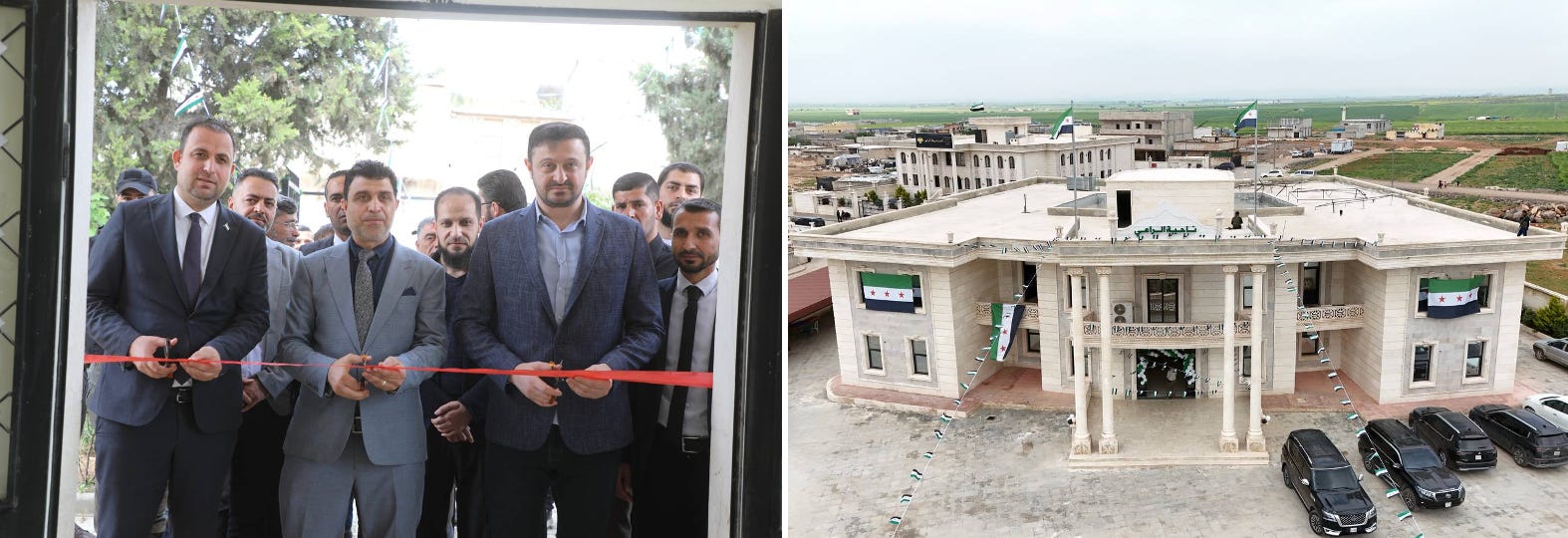
Local authorities inaugurated the newly established sub-district office and Postal Office in al-Rai, Aleppo on May 3.
Local government authorities inaugurated the newly rehabilitated water well in al-Duwayrah in western rural Suwayda on May 3, following work undertaken using funds from the governorate fundraising campaign in 2025.
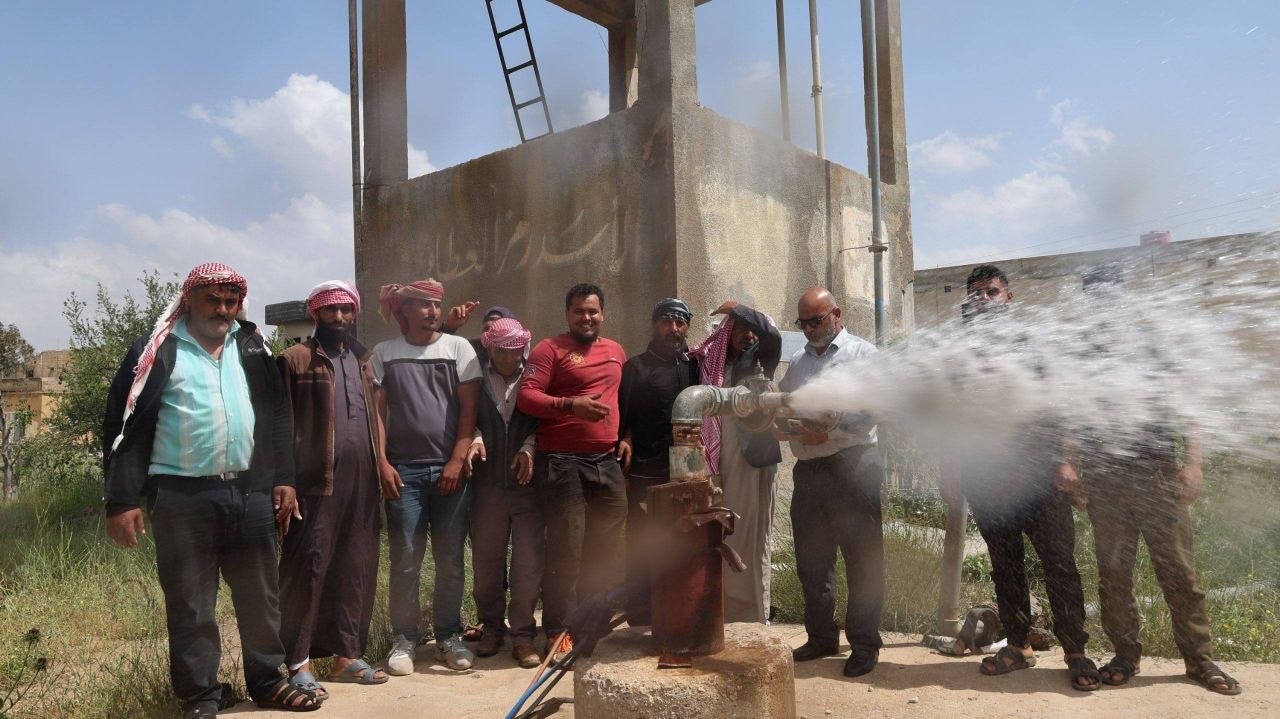
Local authorities reactivated the rehabilitated al-Houta water pumping station in rural Aleppo on May 3.
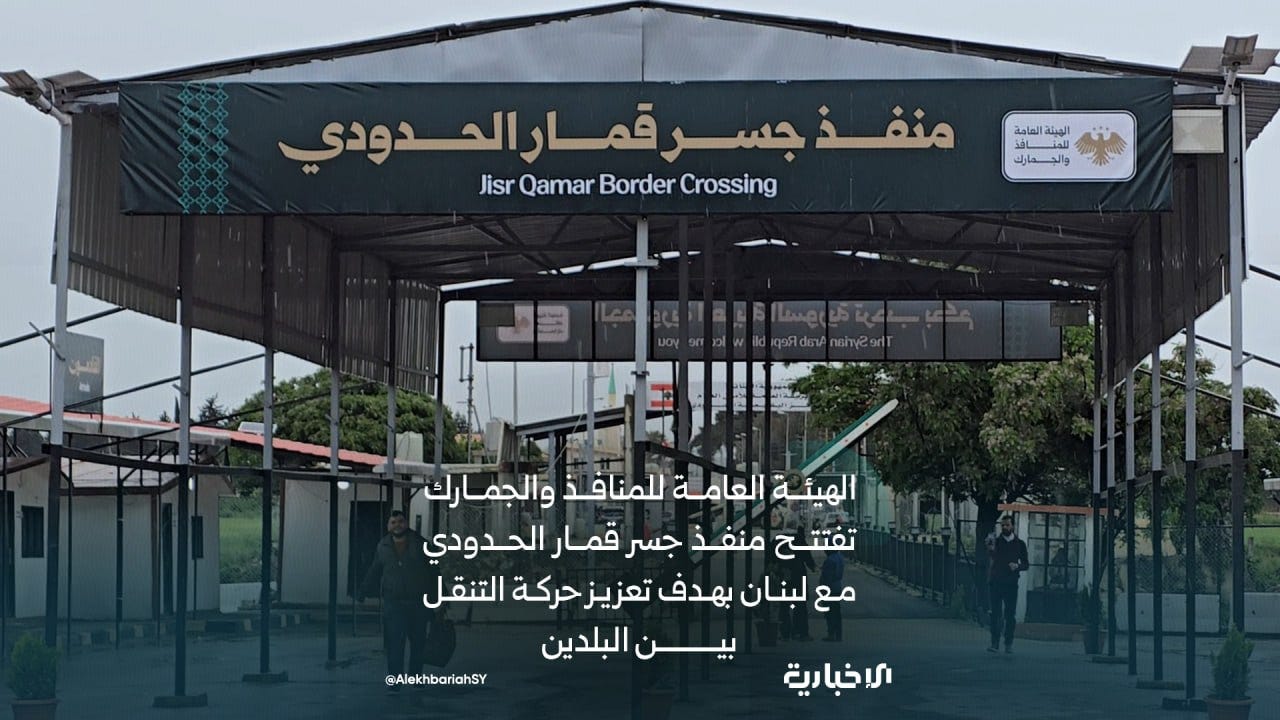
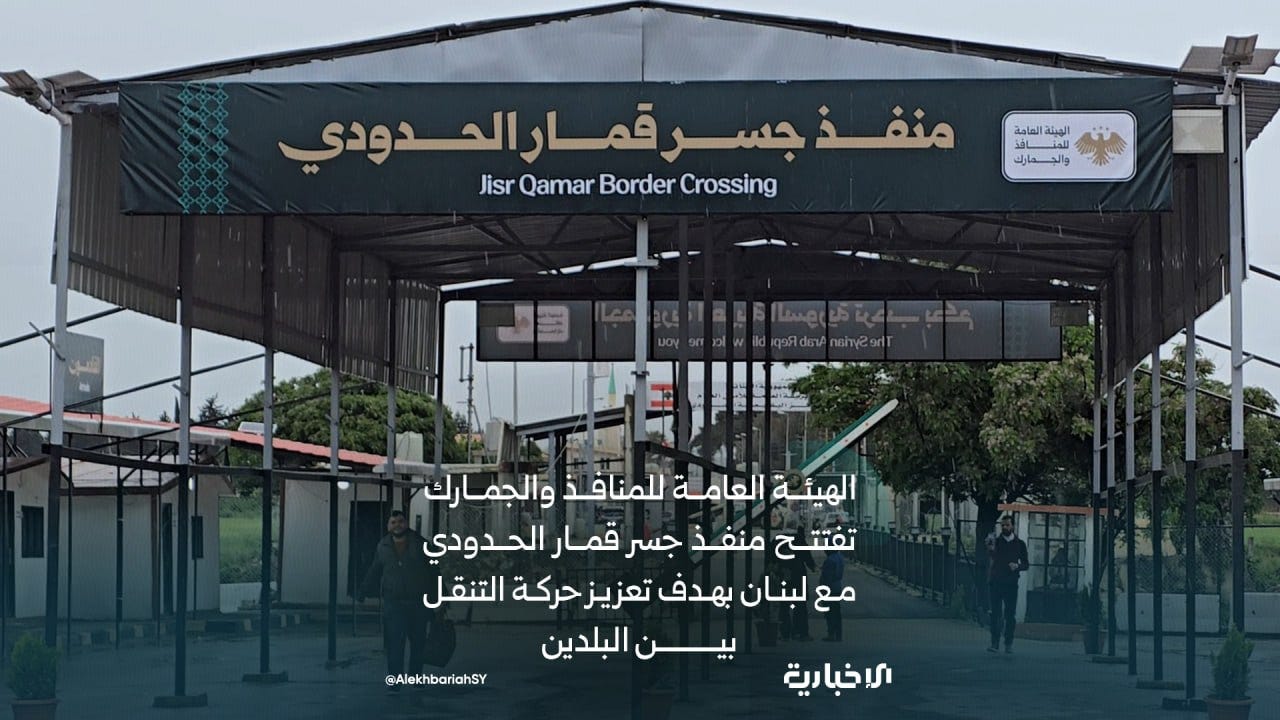
The General Authority of Ports and Customs announced on May 4 the formal re-opening of the Jisr Qamar land crossing into Lebanon, which is located near Telkhalakh.
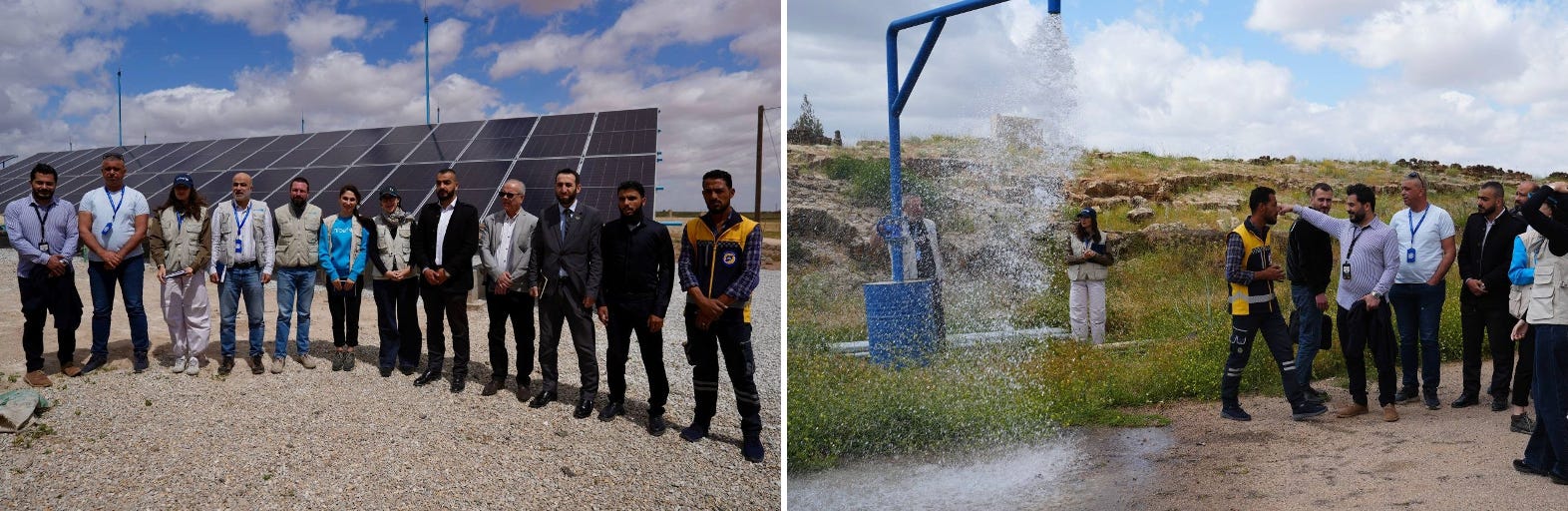
Local authorities inaugurated a newly constructed solar-powered water well and pumping station in al-Shoura in western Suwayda on May 4, following work undertaken with the support of UNICEF.
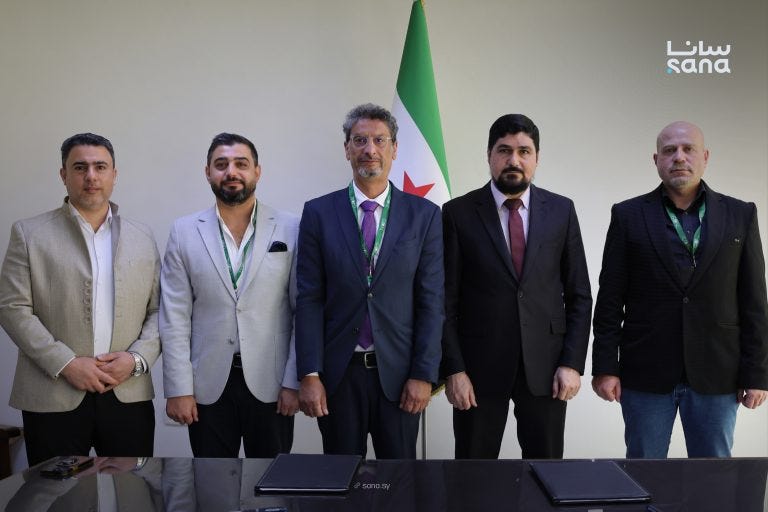
The Ministry of Energy signed a memorandum of understanding with the international GOAL NGO on May 5 to support ministry initiatives aimed at supporting the water and sanitation sectors in Syria, through developing water sector infrastructure, powering pumping stations with solar energy, monitoring groundwater levels, and enhancing wastewater services and treatment.
Education Developments:
Governor to Suwayda Mustafa Bakkour announced on April 28 that salary arrears had been paid out to teachers, substitute teachers and hourly part-time workers in the education sector inside Suwayda.
Media in Suwayda reported on April 29 that the governorate’s Directorate of Education had confirmed its readiness to facilitate — in coordination with the Ministry of Education in Damascus — the holding of general certificate examinations for approximately 13,500 students, including by providing “all necessary supplies, logistical equipment, and required procedures.”
Governor of Hama Abdulrahman al-Aama inaugurated the newly rehabilitated Tawfiq al-Shishikli School in rural Hama on April 29, following work funded by provincial fundraising campaigns.
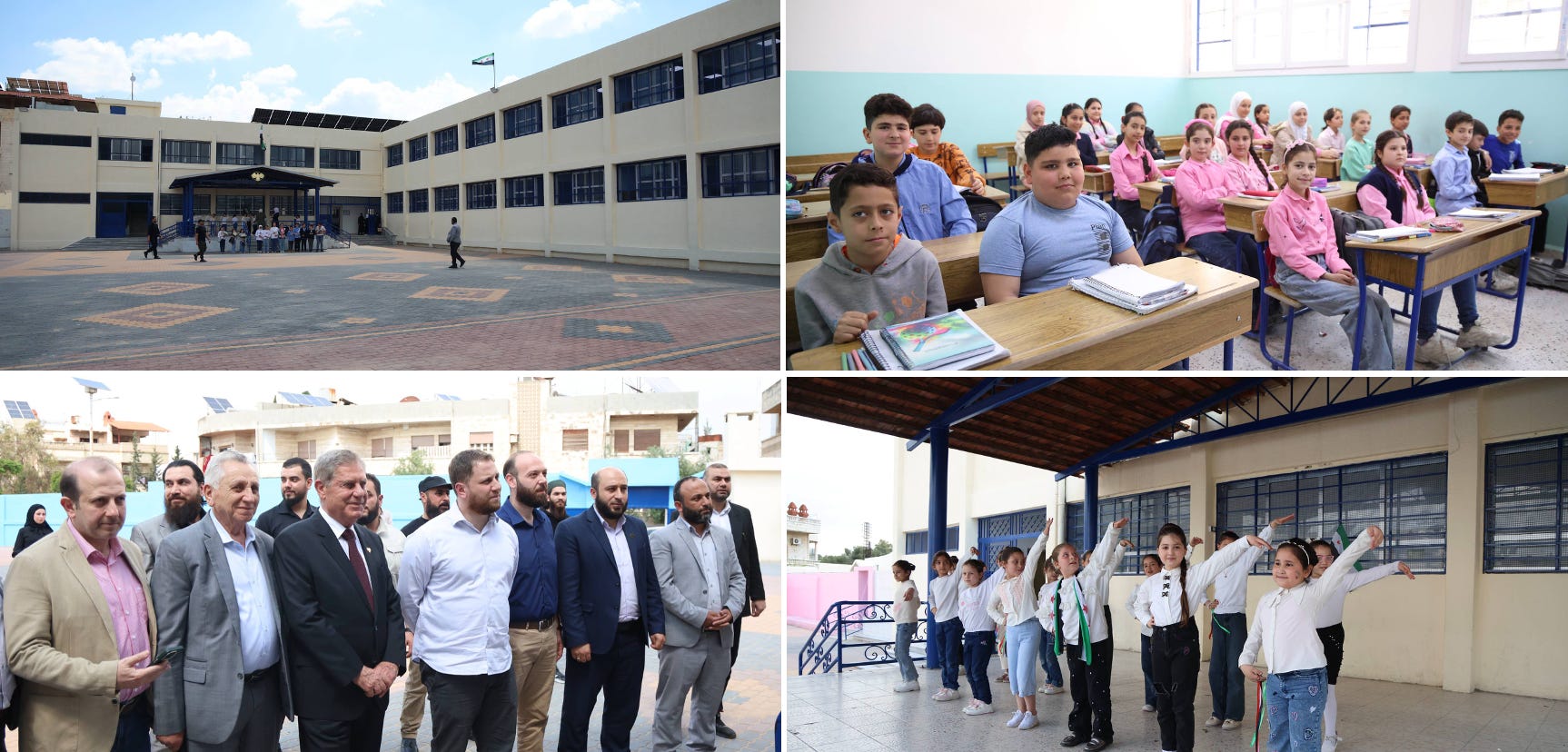
Governor of Daraa Anwar al-Zoubi inaugurated the newly rehabilitated Nawa Primary School on May 4, following extensive work supported by UNDP.
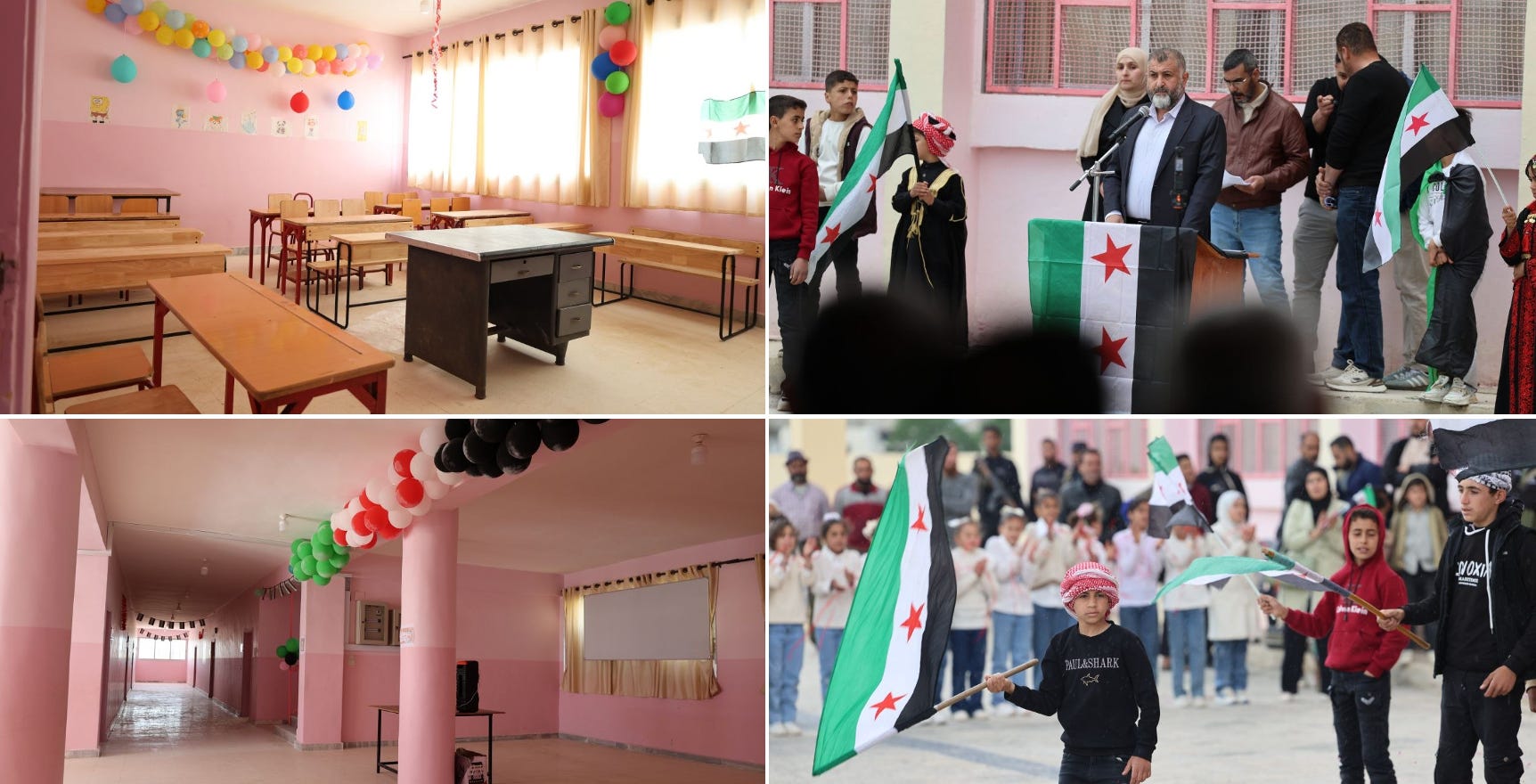
Minister of Education Mohammed Turko confirmed on May 5 that in the past 100 days, a total of 2,236 schools had been reopened under government authorities in former SDF areas of northeastern Syria, providing state education to more than 500,000 students and jobs to 38,000 staff. The Minister added that an emergency rehabilitation plan was underway to support the education sector throughout Deir ez Zour, Hasakeh, Raqqa and eastern areas of Aleppo governorate.
Security Developments:
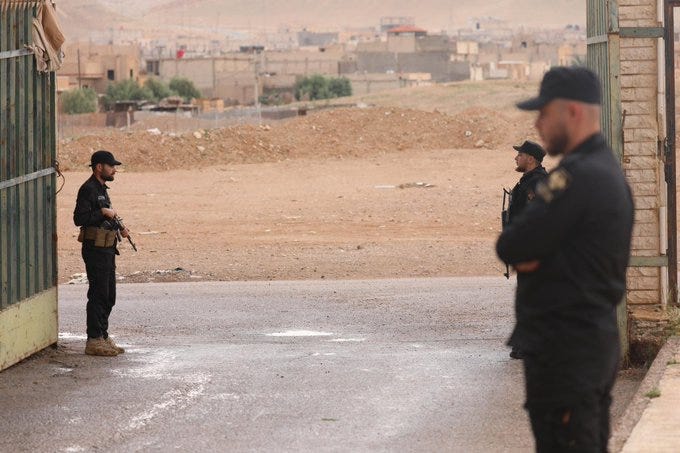
Local media reporting confirmed that the MOI’s Badia Security Force had established a new checkpoint inside the property of Palmyra Hospital in order to strengthen security of the facility and to protect both staff and patients.
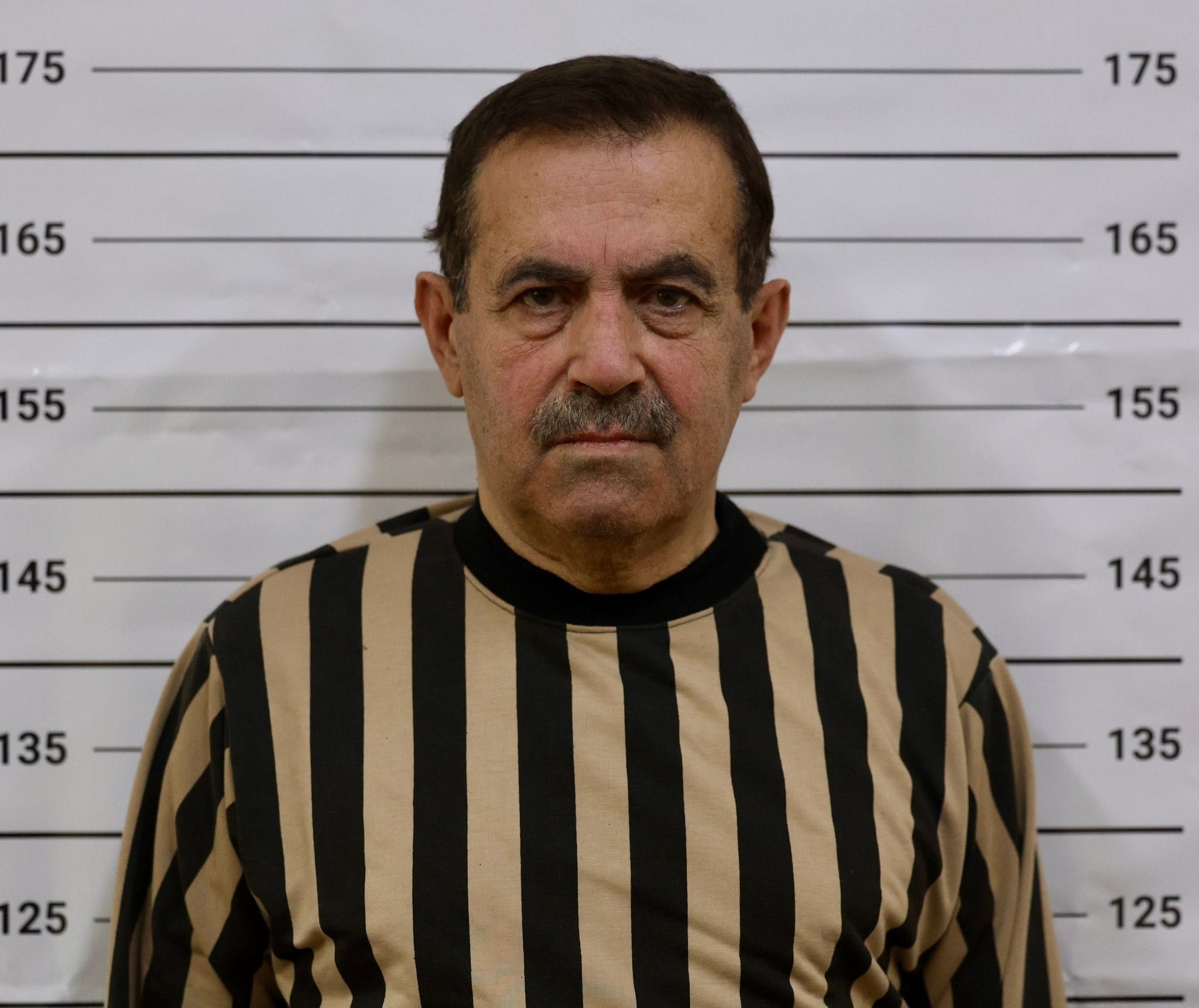
Interior Minister Anas Khattab announced on April 29 that Major General Adnan Aboud Halawa — one of the architects of the August 2013 Eastern Ghouta Sarin gas attack - had been captured.
Lebanon’s General Directorate of Internal Security Forces announced on April 29 that a joint operation coordinated and conducted by Syrian MOI personnel had detained a Lebanese drug trafficker and subsequently deported for prosecution on March 19. The same statement added that a separate operation had seized 476,000 captagon pills intended for smuggling to Kuwait.
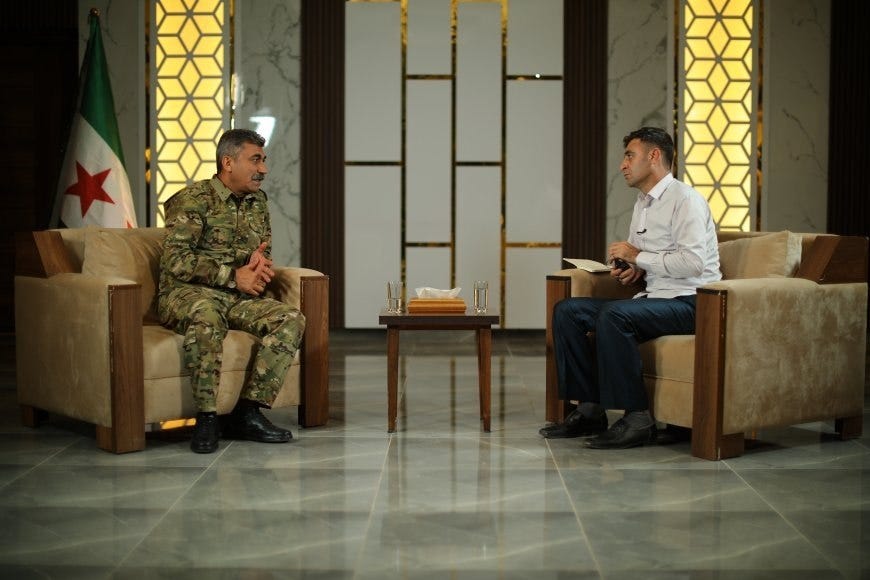
In a televised interview with Hawar News Agency on May 1, Assistant Minister of Defense for the Eastern Region, Sipan Hamo, confirmed that all 4 Kurdish MOD Brigades had formed and training begun, although he added that “we are still in the phase of building a unified Syrian army, and full cohesion has not yet been achieved.” Hamo also said that all SDF fighters who had died in Syria would be recognized by the state as “martyrs of Syria”.
Later reporting confirmed that a total of 5,200 SDF male fighters had been integrated into the 4 MOD Brigades.
The Internal Security Command in Hasakeh announced a full ban on the use of motorbikes in Hasakeh city until further notice on May 1.
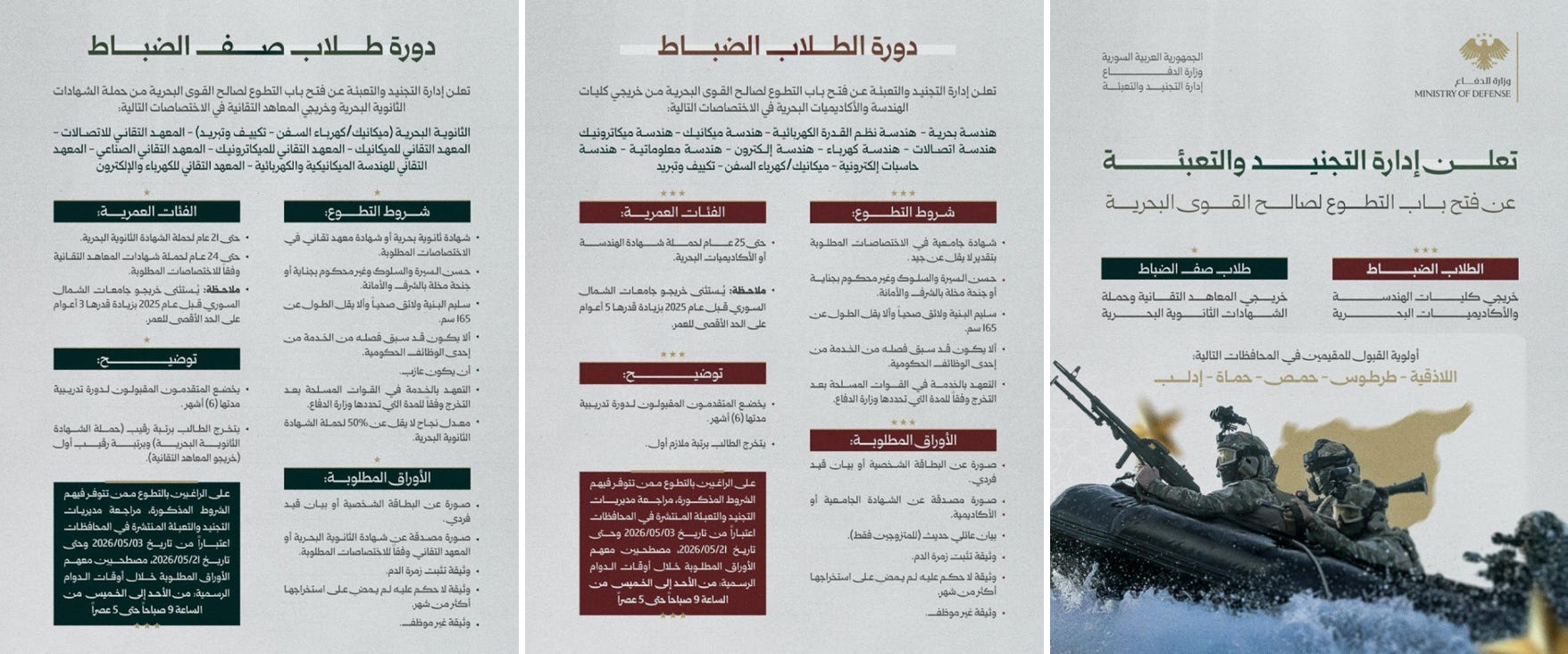
The MOD announced on May 2 the opening for recruitment into the navy.
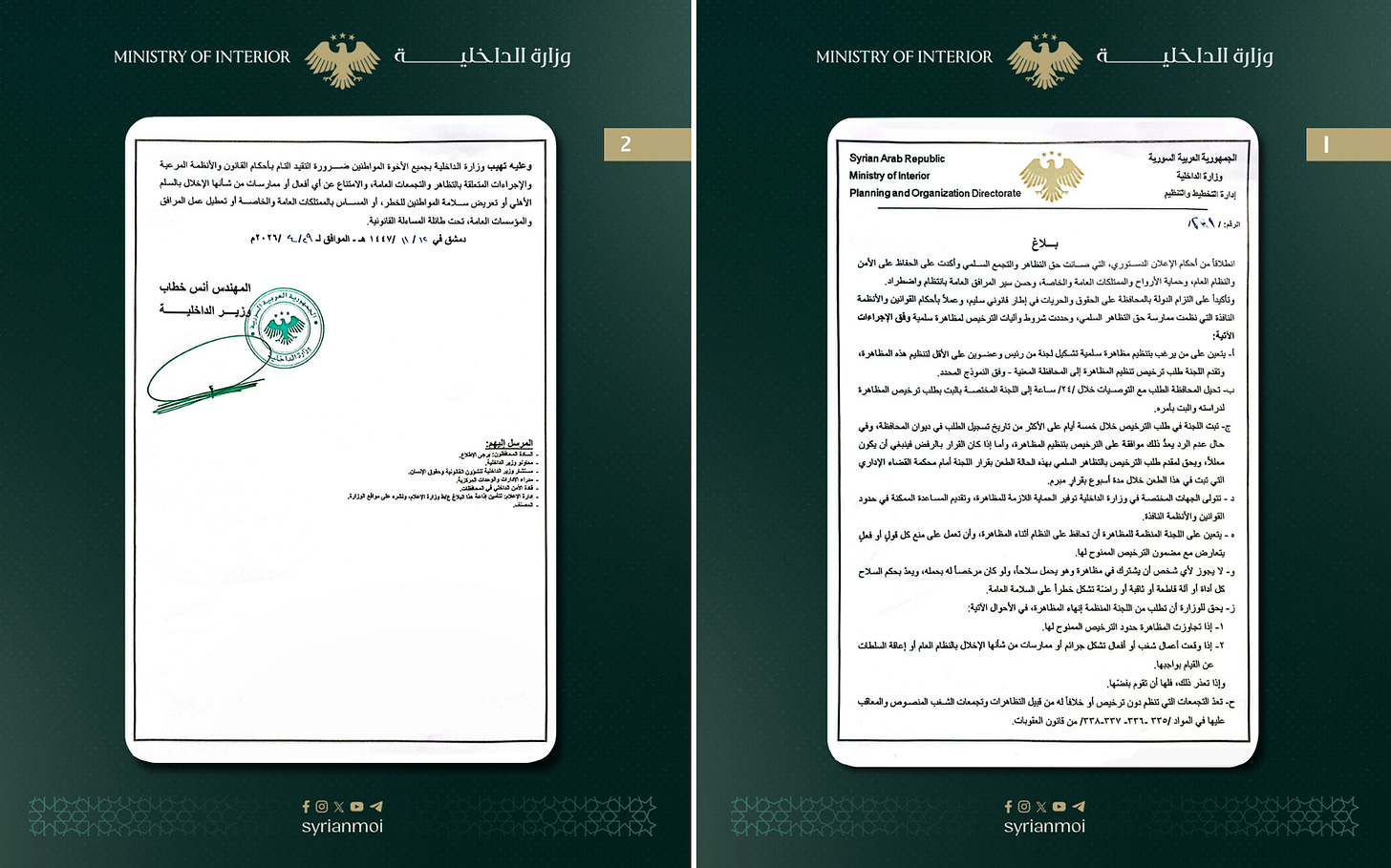
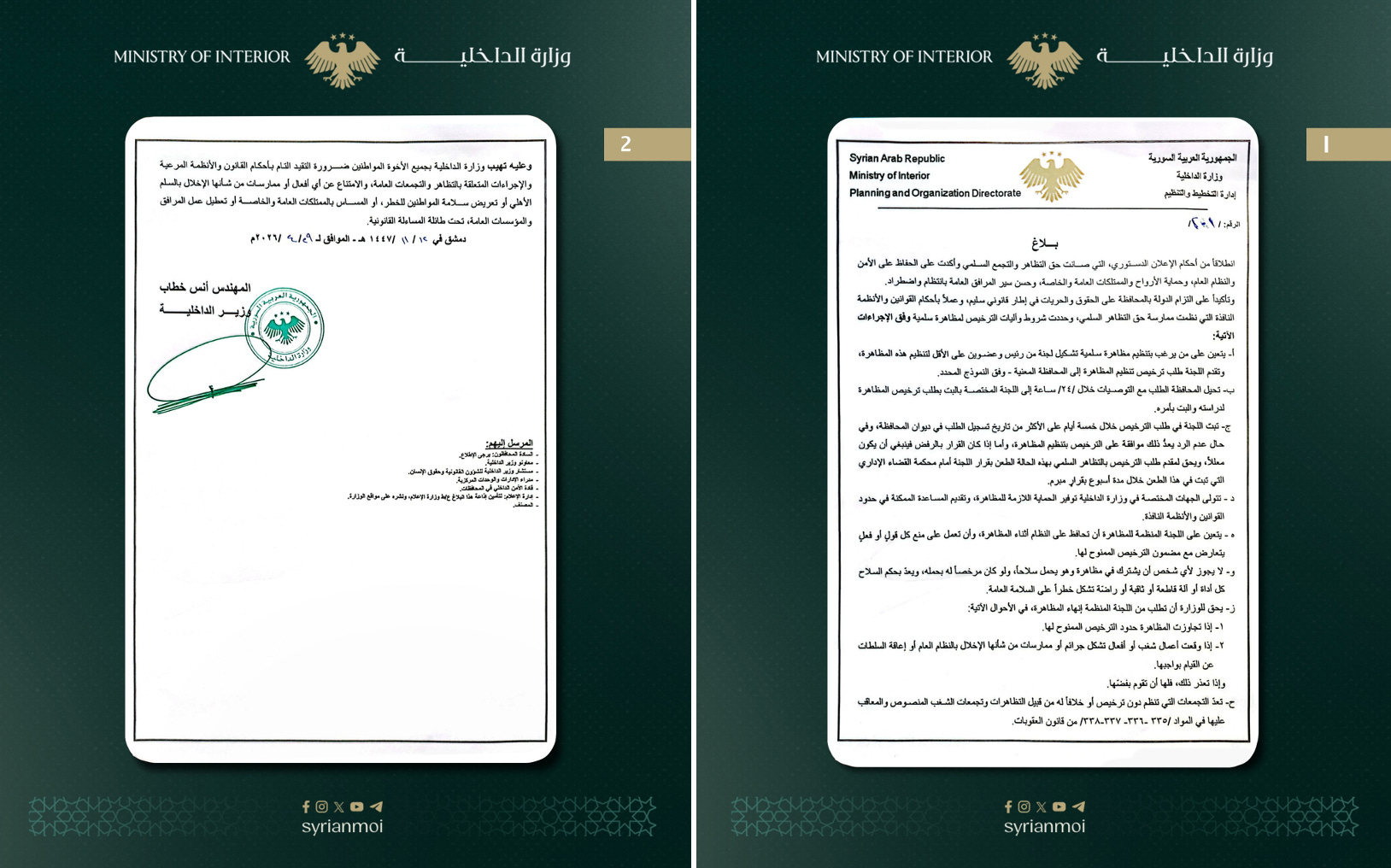
The MOI issued a legal decree on May 3 stipulating that citizens were required to apply for a license to hold a public protest, asserting that protesting was “a right under the Constitutional Declaration” but required a process in order to “control public order and protect stability.” It added that protest organizers would need to form a committee to submit a permit request to governorate authorities and within 24 hours, the governorate would refer the request for consideration within 5 days, with a right of appeal. Should no decision be issued, the protest should be considered to have received “tacit approval.” The decree added that the MOI would provide security for approved protests and that weapons of any kind were strictly prohibited.
The government and SDF exchanged a total of 40 prisoners — 10 from SDF facilities and 30 from government facilities - in Qamishli on May 3.
Humanitarian Developments:
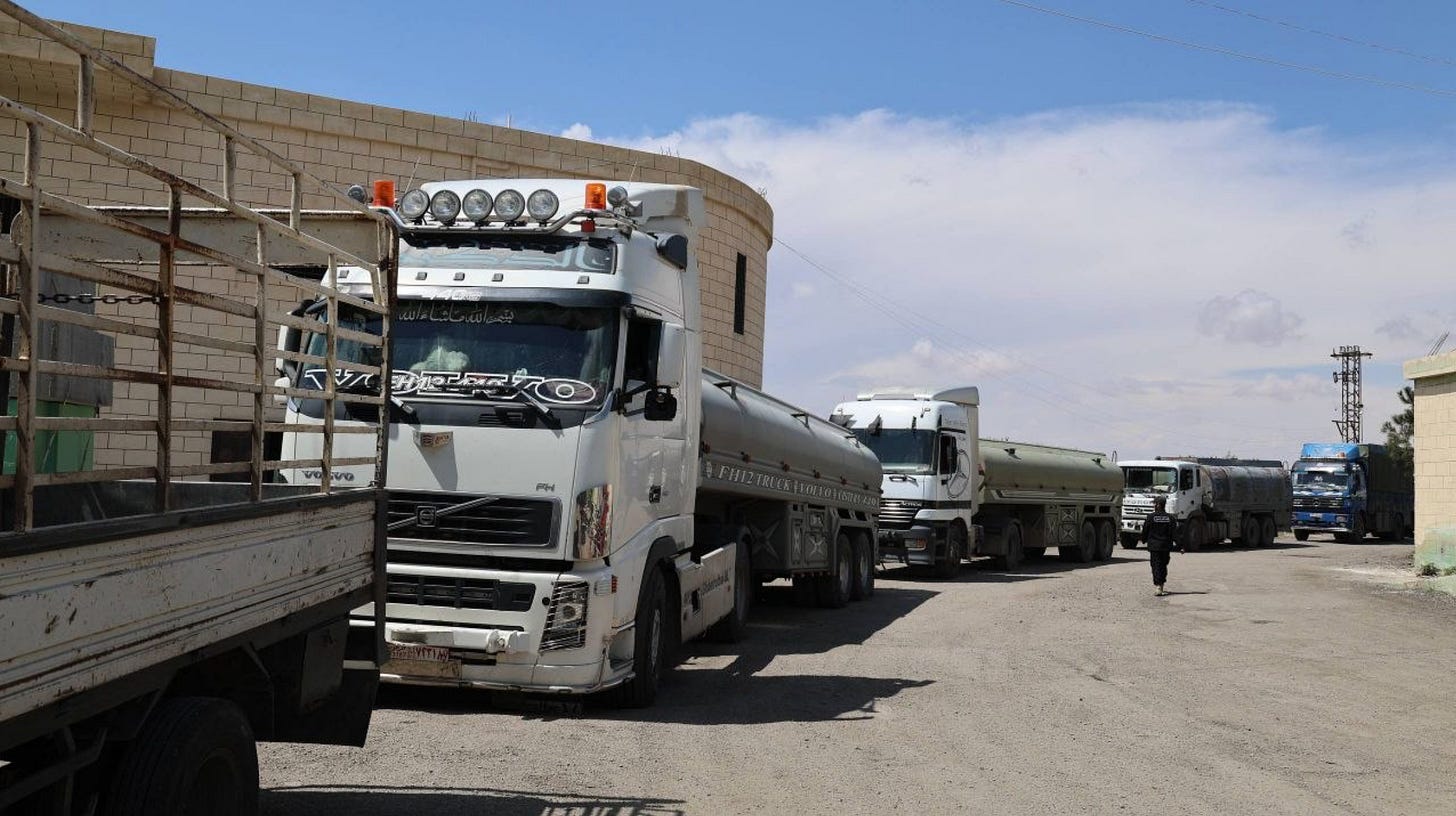
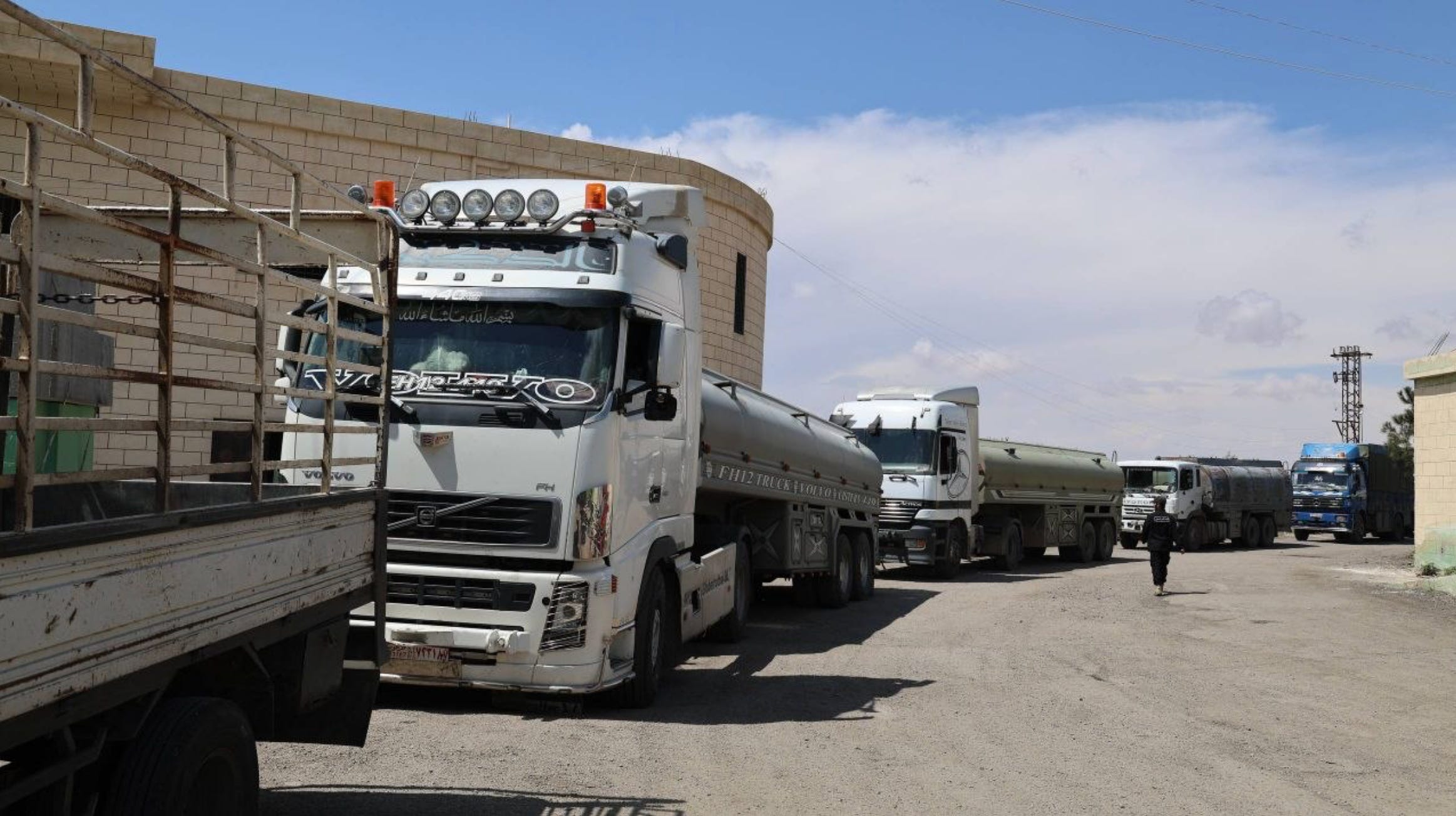
A convoy of fuel entered Suwayda via the Damascus highway on April 28, in coordination with the office of Governor to Suwayda Mustafa Bakkour.
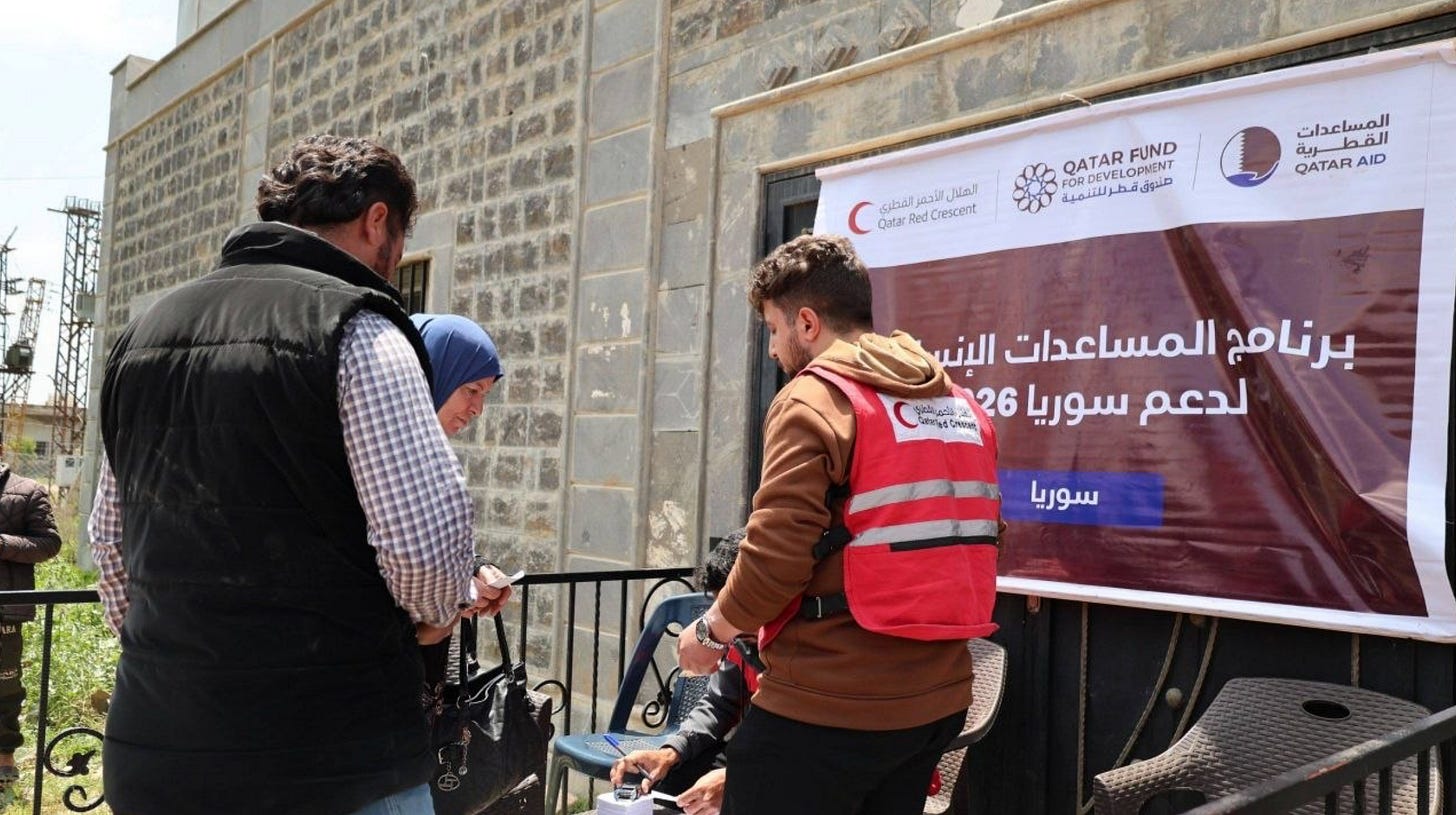
Local NGOs distributed humanitarian aid and hygiene kits to displaced Suwayda residents currently residing in the villages of al-Nimr, Khirbet al-Ghazaleh, al-Ghariya al-Sharqiya and al-Ghariya al-Gharbiya in Daraa on April 28.
UN OCHA confirmed on April 29 that only 57% of Syria’s hospitals were currently functional; 10 million Syrians lacked sufficient access to water; and 91% of households were paying for healthcare out of pocket.
UNCHR in Jordan confirmed on May 3 that officially registered Syrian refugees in Jordan’s Zaatari and Azraq camps are entitled to JD 70 ($100) per person to support their return to Syria, and that families “facing hardship” were entitled to an additional one-time payment of JD 210 ($300).
The UNCHR confirmed on May 3 that a total of 1,638,874 Syrian refugees had returned to Syria, specifying that 634,000 had come from Turkey; 621,000 from Lebanon; 284,000 from Jordan; amid others.
UN OCHA confirmed on May 3 that cross-border humanitarian aid operations from Turkey to Syria had ended, 11 years after their launch. It added that throughout the 11-year operation, more than 65,000 trucks of aid had crossed into northern Syria.
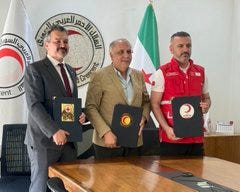
The ICRC, SARC and Turkish Red Crescent signed an agreement on May 3 to coordinate in raising awareness within IDP camps regarding unexploded ordnance (UXO).
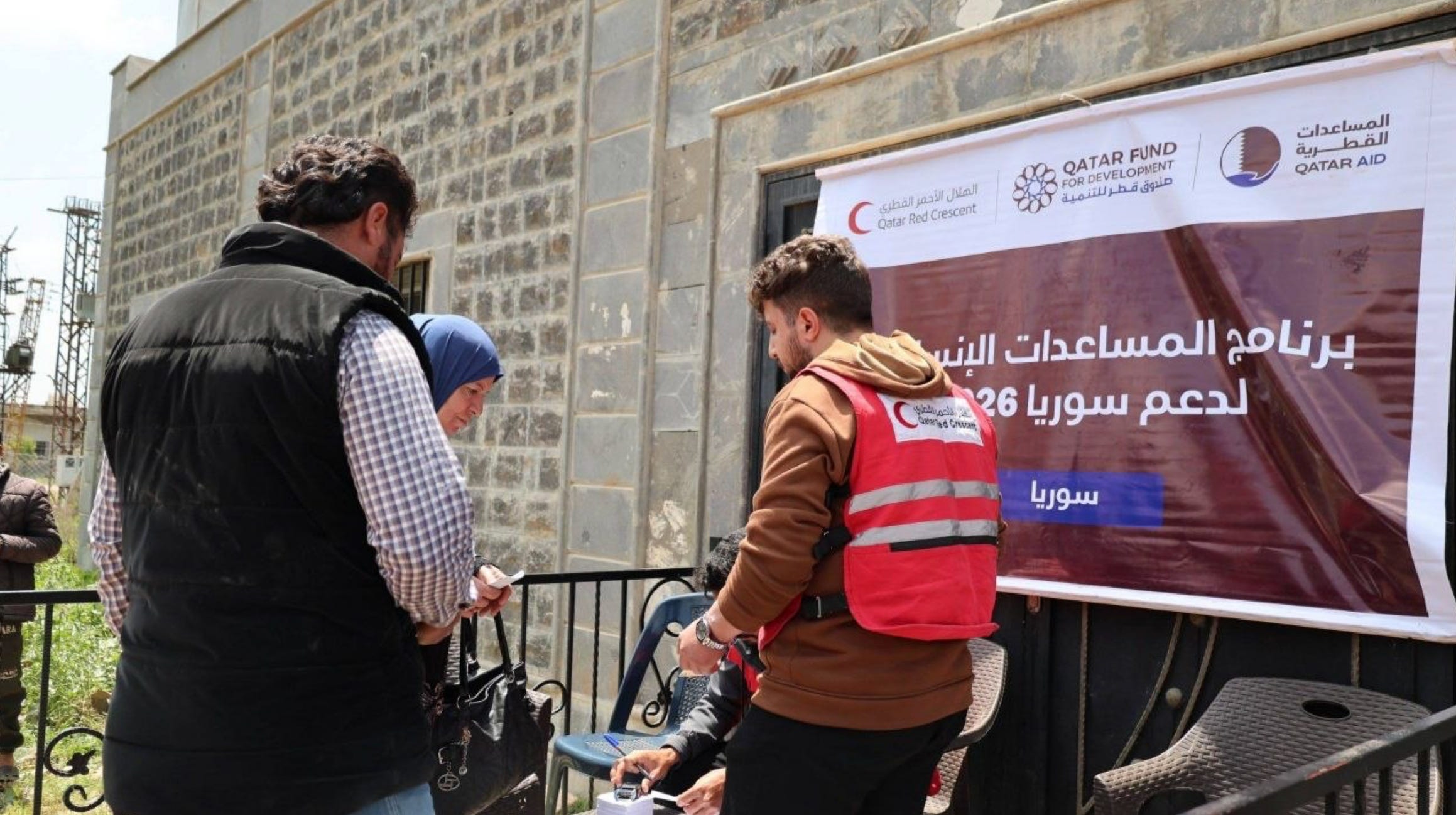
Local NGOs working in coordination with the Governor’s office distributed humanitarian aid and health kits to displaced Suwayda residents currently residing in Busra al-Harir in Daraa on May 4.
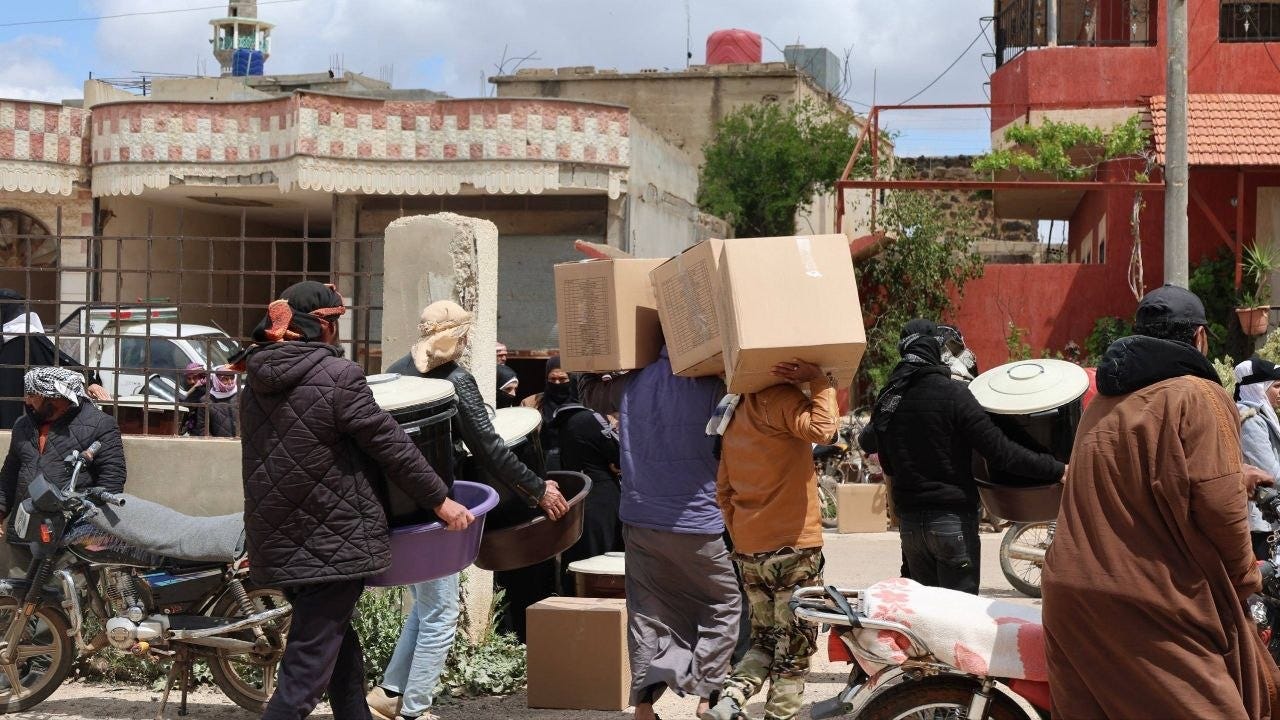
The UNHCR in Jordan announced on May 5 that a total of 190,000 registered Syrian refugees had returned to Syria since Assad’s fall in December 2024 — 46,000 of them coming from the Zaatari and Azraq refugee camps.
Health Developments:
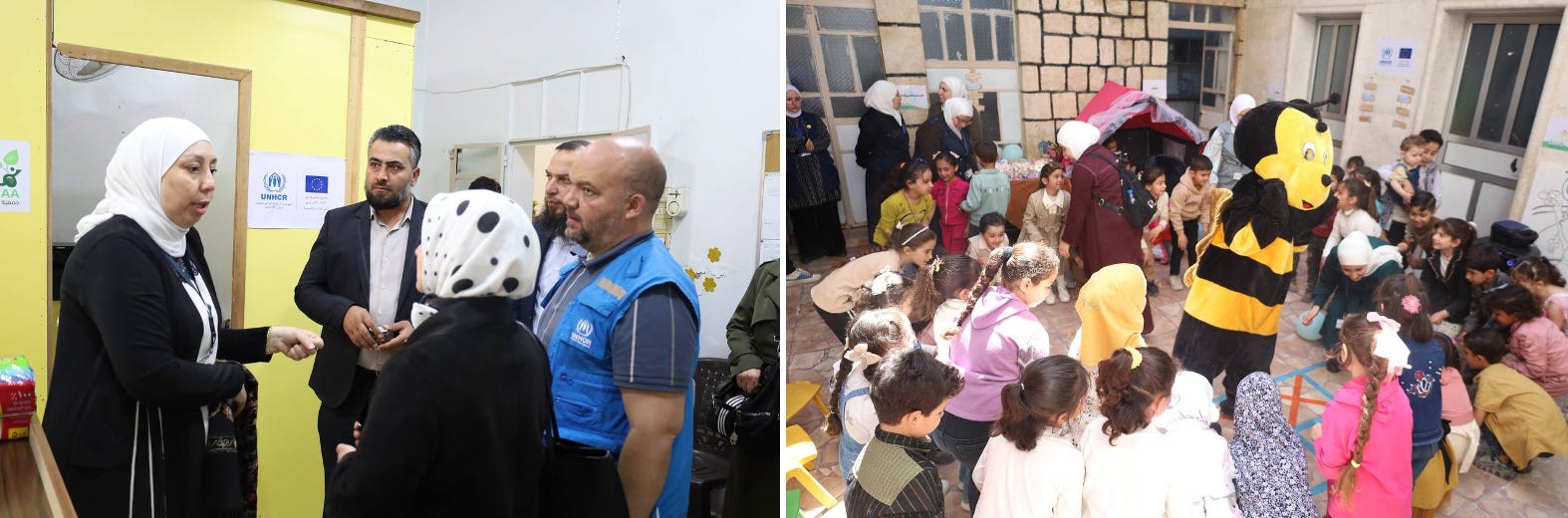
Staff from the Ministry of Social Affairs and Labor inaugurated the newly established al-Bab Community Center on April 29 to support those in need with psychological and social support sessions for women, awareness programs for adolescent girls, as well as child-friendly spaces for play and skills development.
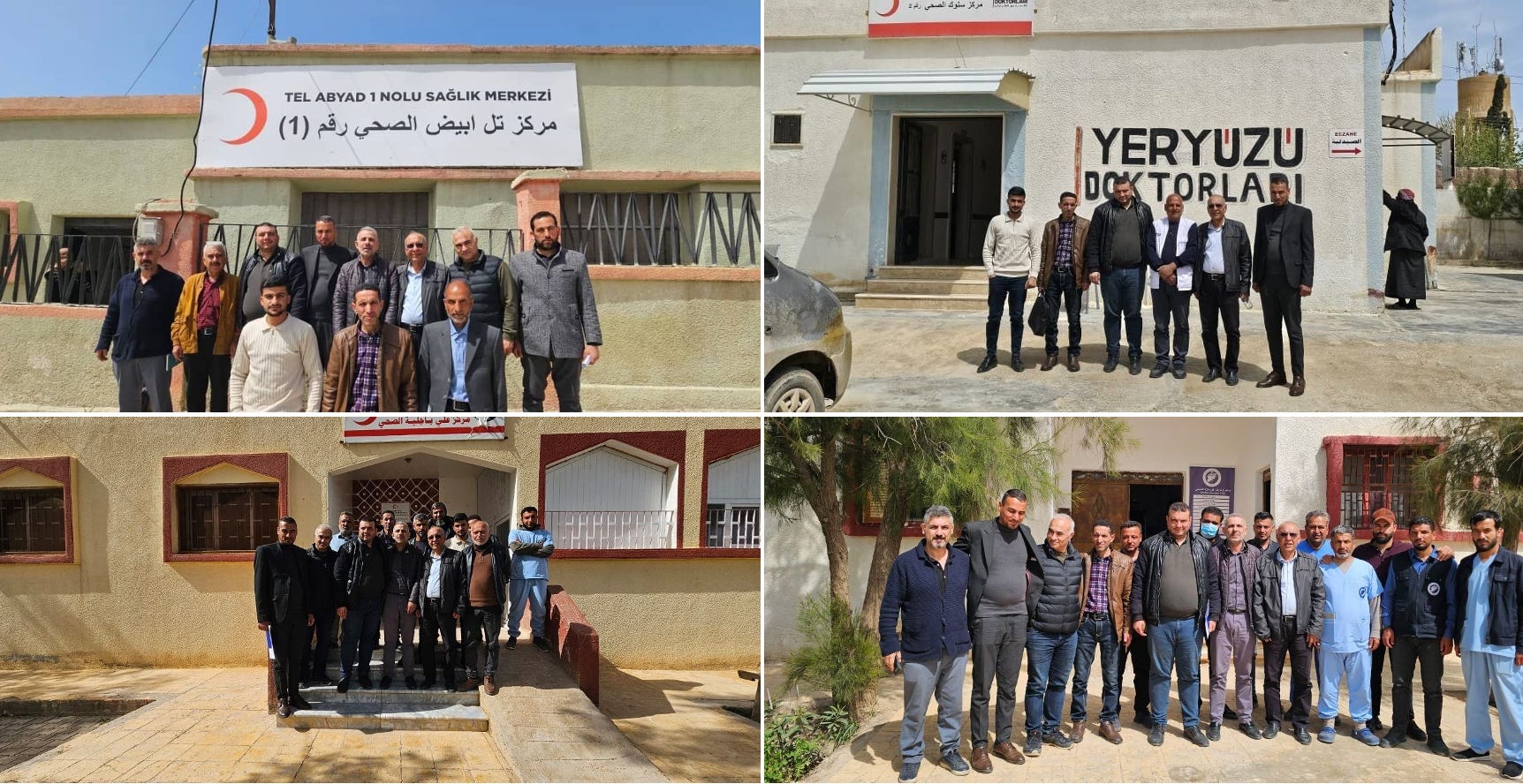
The government’s Raqqa Health Directorate assumed formal control of all health clinics in Tel Abyad, Raqqa on May 1, in coordination with Turkish health authorities which had been running them before.
The Director of Communicable and Non-Communicable Diseases at the Ministry of Health, Yasser Farouh, announced on May 3 that following an emergency response launched the previous week, the Hepatitis A outbreak in Muhajah, Daraa was now decreasing and that poor water sanitation and use of unsafe drinking water was responsible.
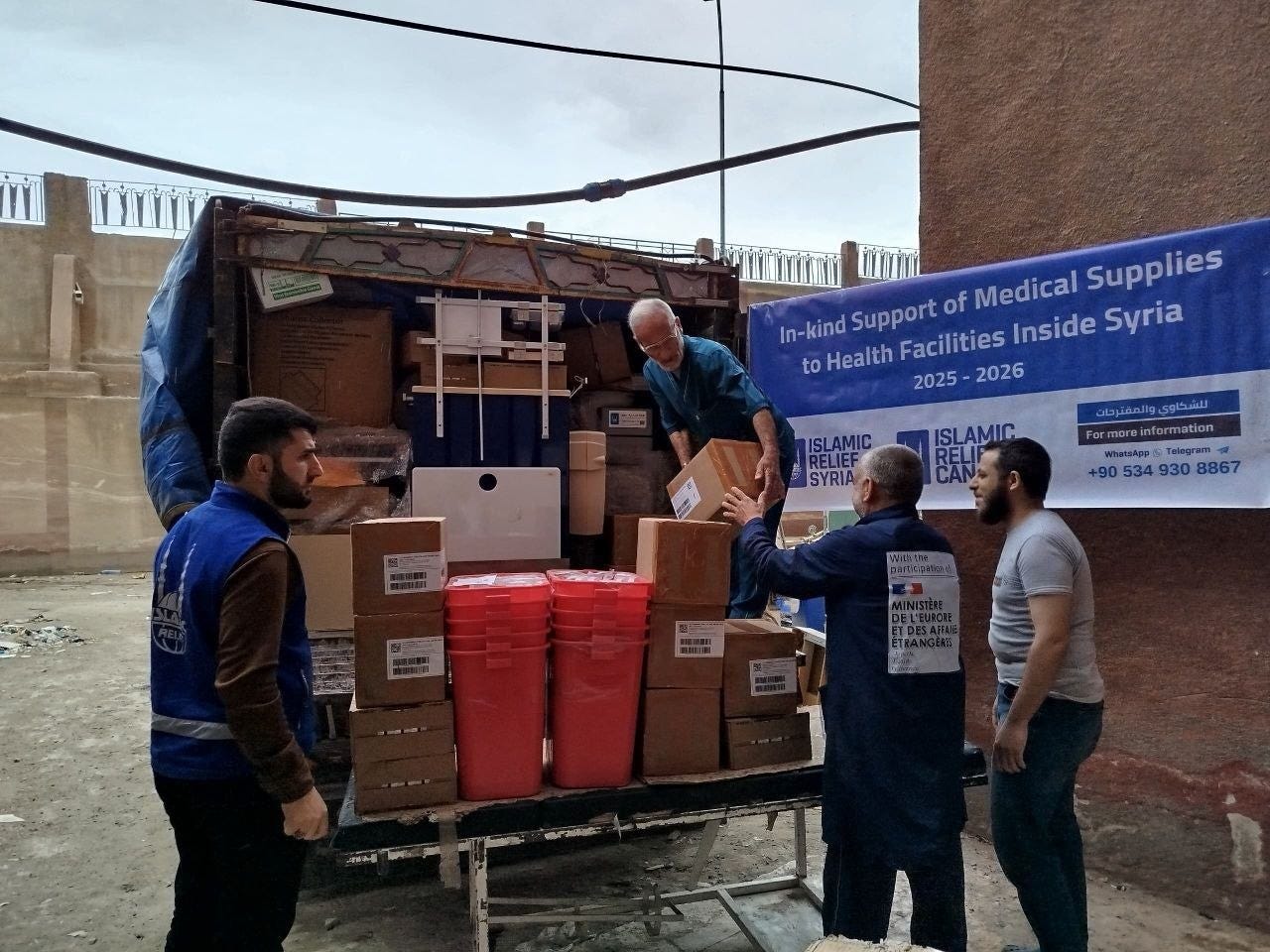
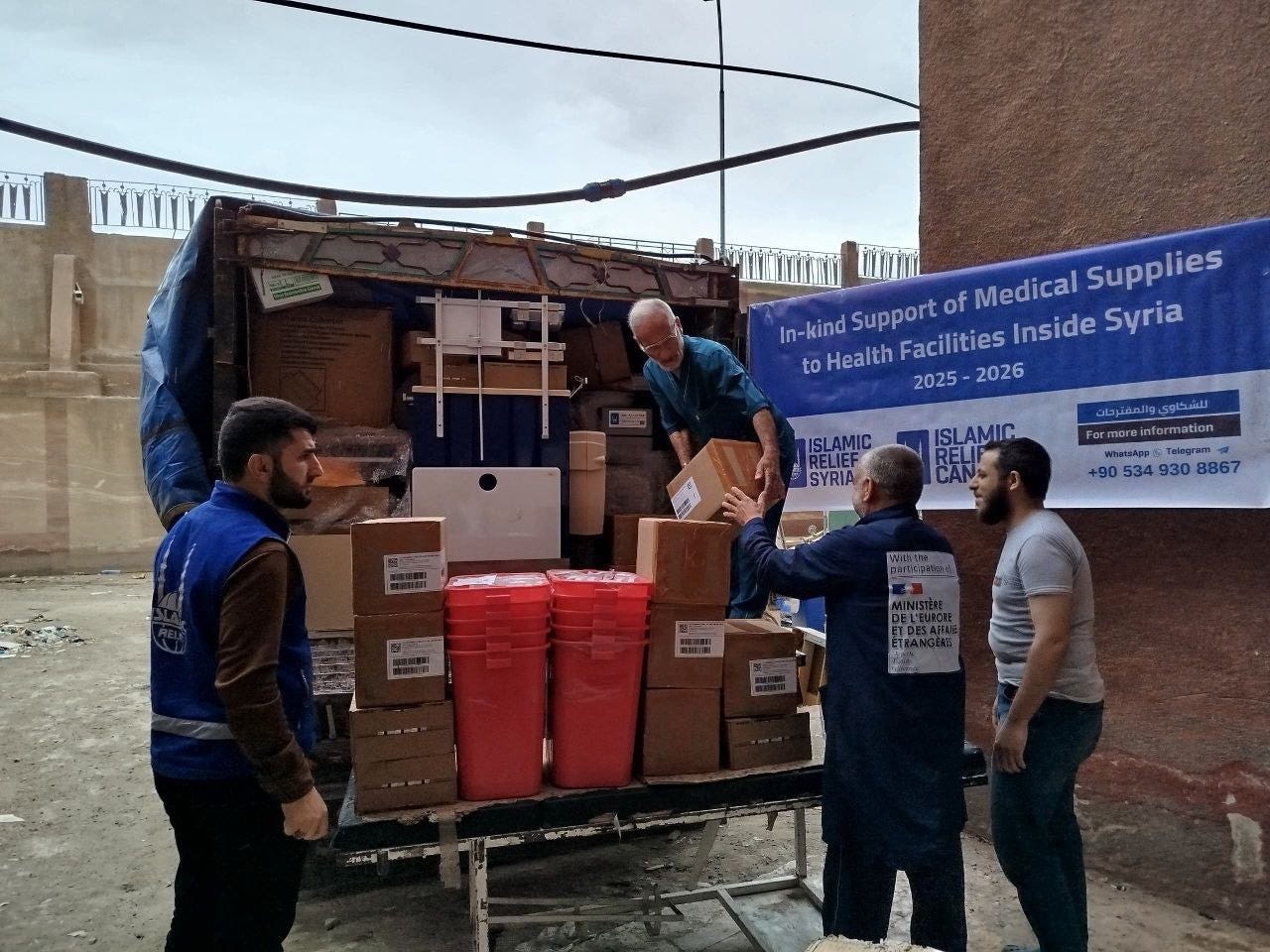
A delivery of medical aid and equipment donated by the Islamic Relief Organization arrived at the Raqqa and al-Tabqa National Hospitals on May 4.
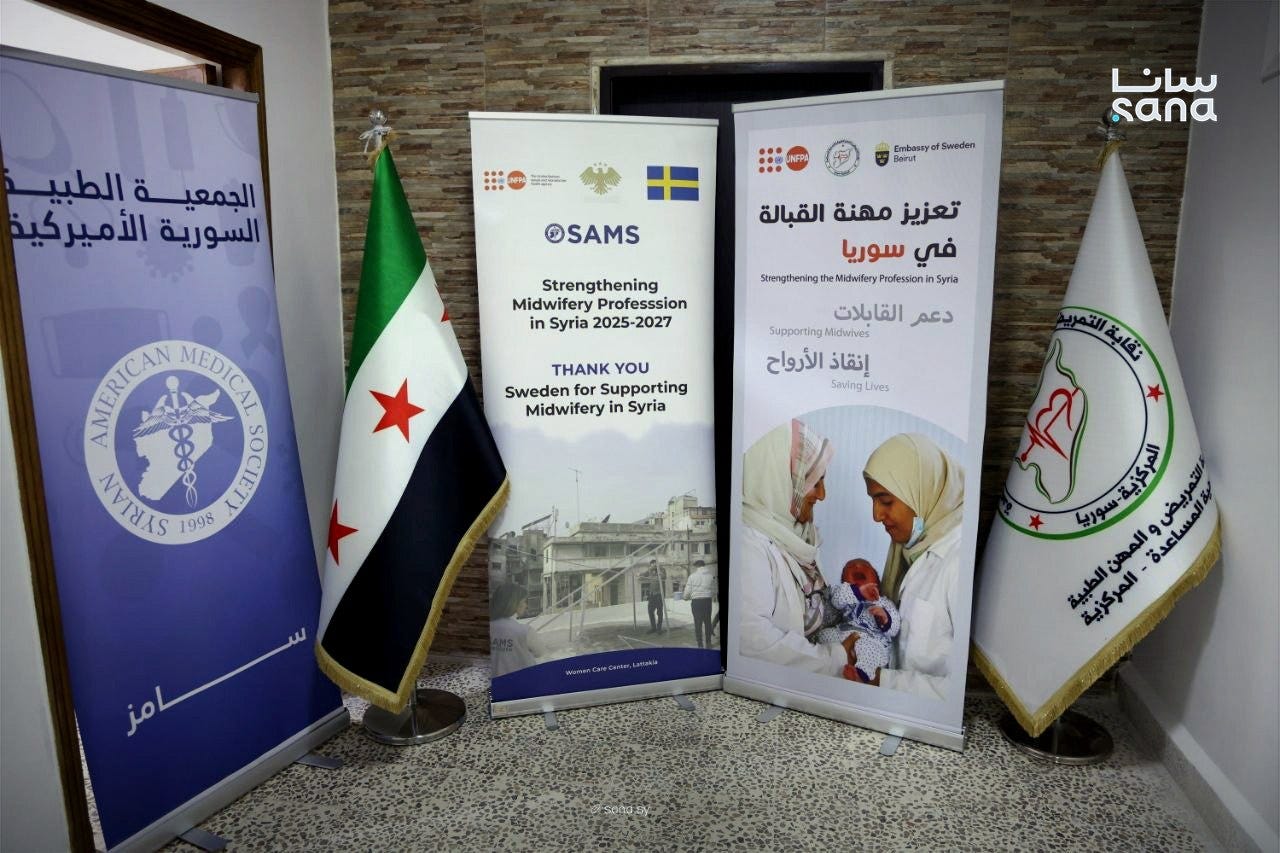
Local authorities inaugurated the newly rehabilitated headquarters of Syria’s Central Nursing and Medical and Auxiliary Health Professions Syndicate in Barzeh, Damascus on May 5, following extensive work undertaken with support by the Swedish government, the UN Population Fund and the Syrian American Medical Society (SAMS).
Justice Developments:
Syria’s Central Agency for Financial Control announced on April 29 that an embezzlement operation had been uncovered in which $764,000 of funds had been removed via the Savings Bank so far in 2026 to an unidentified recipient outside Syria.
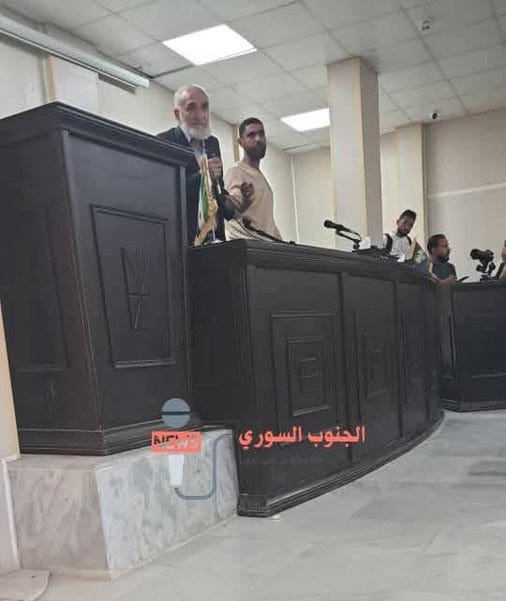
A judicial hearing was held in the Daraa Justice Palace on April 30 during which local residents brought forward their cases against Ahmed al-Awda and the former Assad regime Fifth Legion in the governorate.
According to a Guardian report on April 30, Syria’s National Commission for Transitional Justice has prepared a case to prosecute the former leader of the Assad regime’s National Defense Forces (NDF), Fadi Saqr, for involvement in crimes against humanity and war crimes. The report cited the commission’s deputy chair and advisor in the Foreign Ministry, Zahra al-Barazi, who said the commission was working with NDF victims and referring a case to the Syrian judiciary. Notably, Saqr was subject to an alleged financial deal with Syria’s transitional government, in exchange for his cooperation on security files and the settling of his financial interests in exchange for remaining in the country.
A batch of prisoners were released from Alaya Prison in Qamishli on May 4, as part of a continuing MOI and Justice Ministry review of all detainee files.
Local authorities inaugurated a newly established local reconciliation court in al-Zarab in rural Aleppo on May 4.
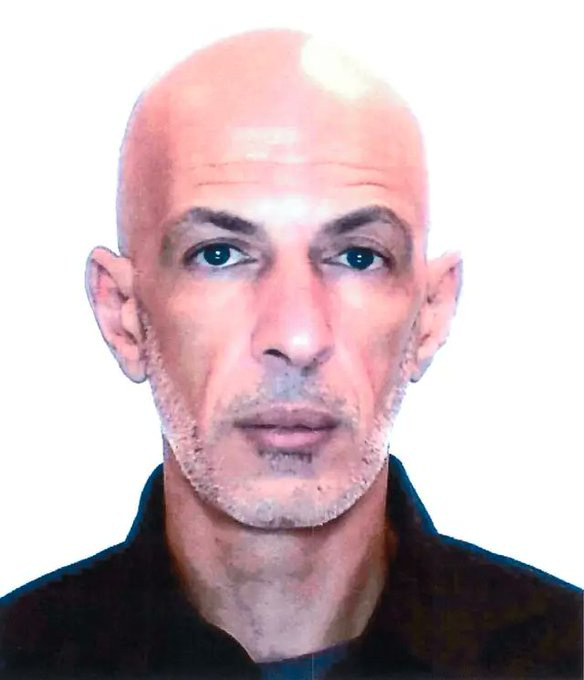
A court in Sweden sentenced 55-year-old Mahmoud Sweden to life in prison on May 4 after convicting him of war crimes committed in Damascus. Specifically, Sweidan was found responsible for killing residents (including children) of the Yarmouk Camp by shooting, as well as torture and execution, between 2012 and 2013.
International Developments:
Jordanian media announced on April 29 that a bilateral guide on “Investment and Establishing Technology Companies” in Syria had been unveiled by the ICT Association of Jordan (INTAJ) to help guide and enable Jordanian companies to enter the Syrian market legally and taking advantage of “low operating costs, market flexibility, and the opportunity for early entry into unsaturated sectors.”
Iraq’s Border and Ports Authority confirmed late on May 1 that the first transfer of oil via 70 tankers across the al-Yaroubiya crossing into Syria was taking place that night, with all oil intended for the Baniyas refinery and then export to Europe.
Iraq’s Oil Ministry announced on May 2 that it was to begin work on constructing a Basra-Haditha oil pipeline capable of pumping 2.5 million barrels per day and expected to connect to Syria’s Baniyas refinery, as well as Turkey’s Cehan and Jordan’s Aqaba Port.
CONFLICT & SECURITY
Israel:
Israeli military forces launched a ground incursion into the Wadi al-Raqad area of western rural Daraa early on April 30.
Israeli military forces launched 5 artillery shells into agricultural areas outside the al-Mantara Dam in central Quneitra on May 1.
Israeli military forces launched 4 artillery shells into the al-Kudna forest area in southern Quneitra on May 2.
Later that day, one artillery strike targeted the outskirts of the village of Jamla in Daraa’s Yarmouk Basin; and two artillery strikes targeted the outskirts of the village of al-Rufayd in southern Quneitra.
Israeli military forces launched a ground incursion into the Saraya al-Jamal area — home previously to an Assad regime checkpoint — in Daraa’s rural Yarmouk Basin on May 3.
Israeli military forces launched a ground incursion into the Wadi al-Ruqad area in western Daraa on May 4.
Israeli military forces launched a ground incursion into the village of al-Rufayd in Quneitra on May 5.
ISIS:
One MOD soldier was shot dead by ISIS militants in a targeted attack near al-Rai, Aleppo late on April 28.
Two ISIS militants threw a grenade into a bakery in Dhiban in eastern Deir ez Zour on April 29, after it had reportedly refused to pay ISIS ‘tax.’ Local media claimed the owners subsequently opened fire on the ISIS militants, forcing them to withdraw.
One MOD soldier was shot dead by ISIS militants in the Manbij area of Aleppo late on April 30.
Idlib:
A child was killed after triggering an unexploded landmine in Khirbet al-Jawz on May 2.
An Uzbek fighter was detained by MOI forces on security charges in Kefraya on May 2, triggering a mobilization of Uzbek jihadists to the local criminal branch to demand his release.
Aleppo:
Two civilians were injured after triggering an unexploded landmine in the village of al-Haj Hussein on May 2.
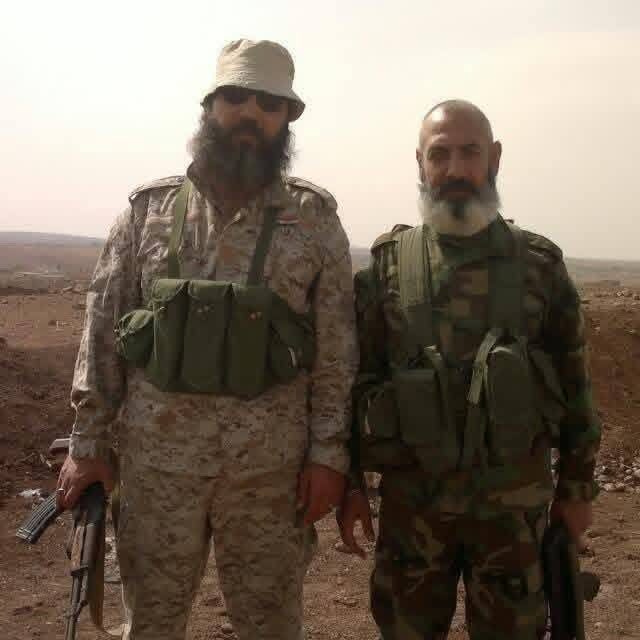
Two former Assad regime militiamen - Osama Salou and Abdelqader Salou - were detained in an undisclosed location in Aleppo on May 2.
Latakia:
The executed body of an MOD soldier was discovered in rural Latakia on April 29.
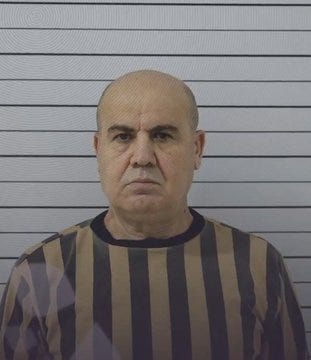
The former Medical Director at Latakia Military Hospital, Brigadier General Akram Mousa, was detained in Jableh on May 3 and accused of complicity in torture.
Tartus:
MOI forces confirme on April 29 that nephew of Brigadier General Assef Shawkat had been detained in a targeted raid in Safsafa and was being chased with involvement in arbitrary detention.
Syrian media confirmed on May 1 that senior Popular Committees militia commander Raafat al-Amoudi (originally from al-Yaduda in Daraa) had been detained by MOI forces following tip-offs from local community members in Tartus.
One man was shot and injured by two unidentified gunmen on a motorbike in Baniyas on May 3.
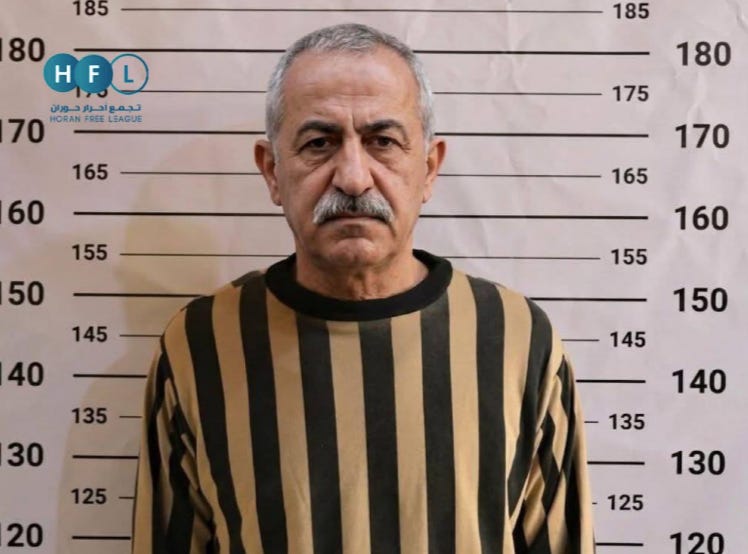
Former Assad regime officer, General Talal al-Ali — the former head of the infamous Saasa 220 Branch in southwest Damascus — was detained by MOI forces in a targeted raid in the village of al-Hattaniya on May 4.
Hama:
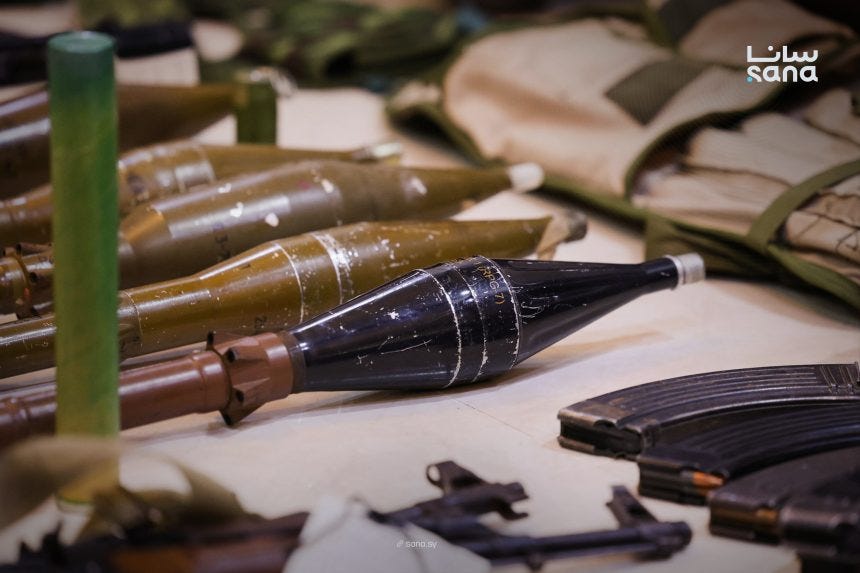
MOI Public Security forces seized a weapons cache - containing RPGs and ammunition - concealed inside an abandoned water well in the village of al-Jayad on May 5.
Homs:
One Alawite man was kidnapped by unidentified gunmen from the al-Waar district of Homs city on April 28 and his executed body was discovered nearby the following day.
The nephew of the district chief in al-Sabil was shot dead by unidentified gunmen on May 1.
One Alawite man was shot dead by unidentified gunmen inside his home in rural Telkhalakh on May 1.
One Alawite man was shot dead by unidentified gunmen inside his home in rural Telkhalakh late on May 1.
One Alawite former NDF militiaman was shot dead by unidentified gunmen in the village of Ayn Kurum on May 2.
MOI forces freed a male hostage during a targeted raid on a kidnapping cell in rural eastern Homs on May 4.
Two Alawite men were killed and another was injured in a targeted attack by two unidentified gunmen on a motorbike in the al-Sabil district of Homs on May 4.
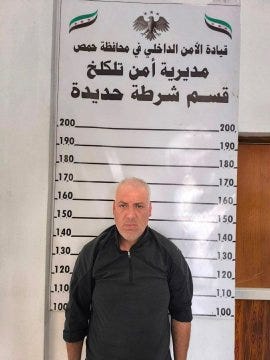
A former Assad regime military officer was detained by MOI Public Security forces in a targeted raid near Telkhalakh on May 5.
Raqqa:
Approximately 1 ton of large IEDs previously belonging to the SDF were discovered and seized by government MOD personnel from within a tunnel near Ayn Issa on April 28.
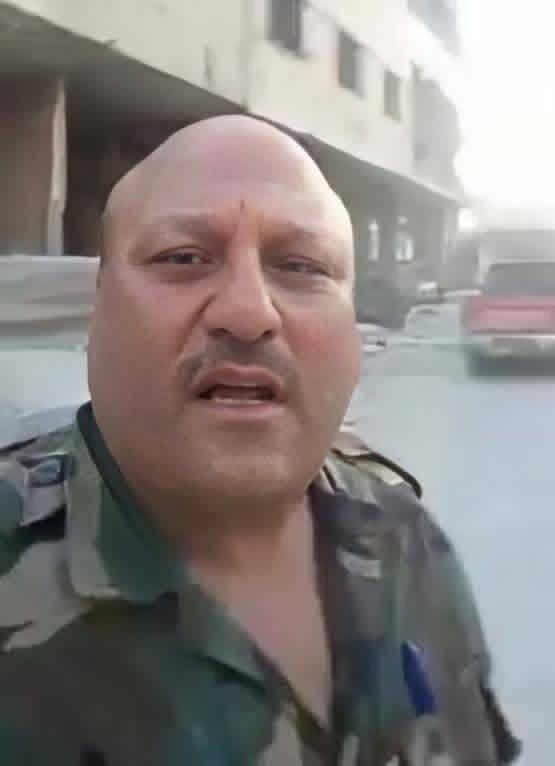
A former Assad regime militia commander, Mohammed Ismail al-Juwayd, was detained by MOI forces in a targeted raid in Raqqa early on May 1. Juwayd had been within the Eagles of Raqqa militia, as well as the head of the Baath Party in his hometown of Hamam al-Turkman.
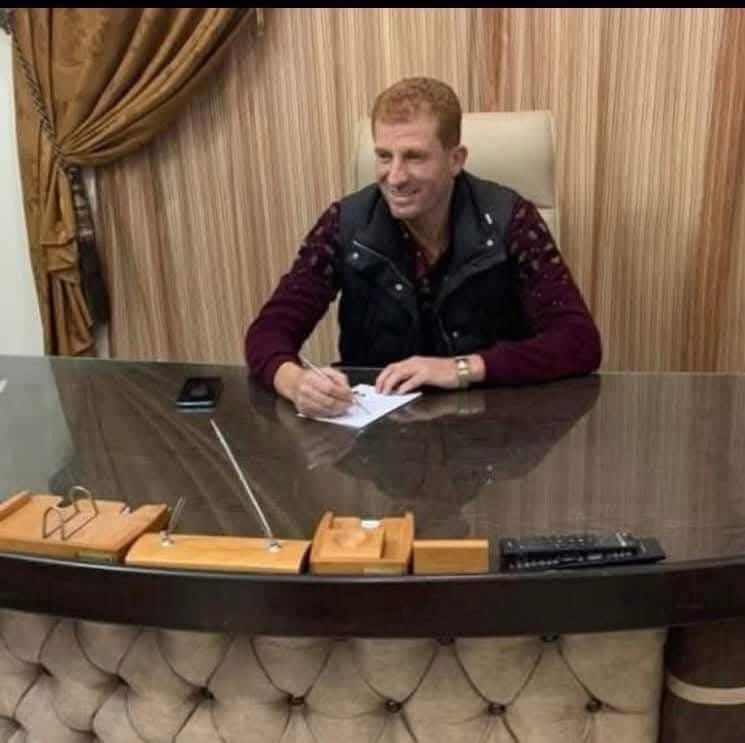
Former SDF intelligence officer (and allegedly a former ISIS operative), Ahmed Mustafa al-Nuwayran was detained by MOI forces in a targeted raid in Raqqa on May 1, accused of complicity in a series of crimes against Arab communities.
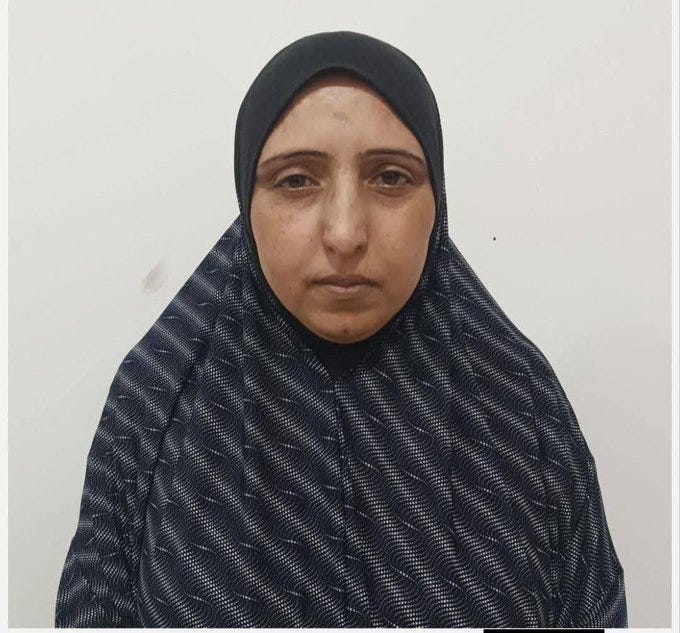
A woman accused of conducting an SDF car bomb attack in Ras al-Ayn in January 2021 that killed 2 children, identified as Ruqaya al-Ba’er, was detained by MOI forces in Raqqa on May 2, following public complaints against her recent release in a government-SDF amnesty.
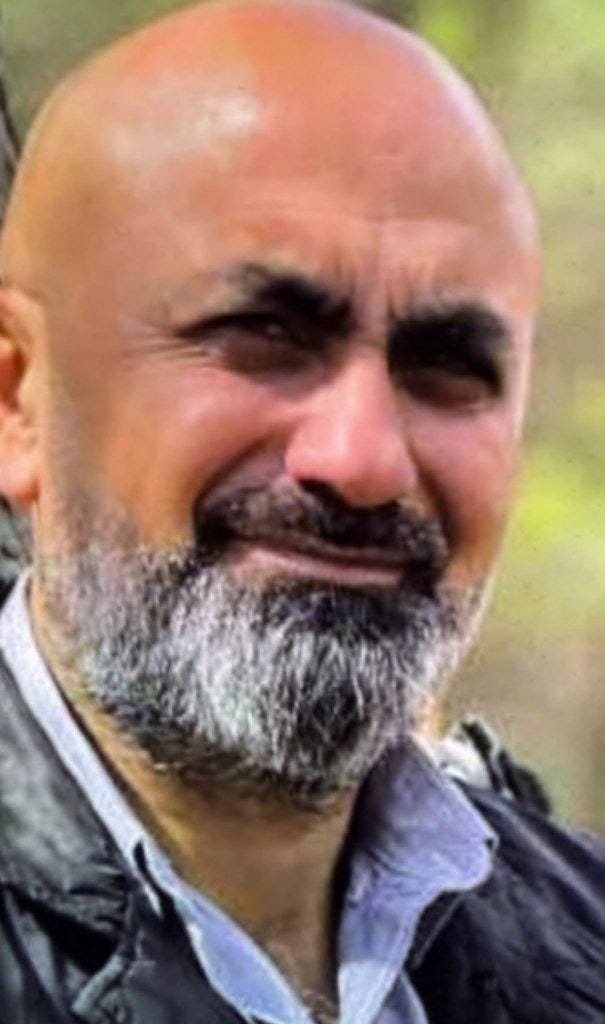
Former SDF intelligence official Fathi Muslim was detained by MOI forces in a targeted raid in Raqqa city on May 4.
Two civilians were injured after triggering an unexploded landmine in the village of al-Khamisiyah in eastern rural Raqqa on May 4.
Three Kurdish civilians were detained by MOI forces in Raqqa city on May 4 in a series of raids — all accused of activities aimed at opposing the government and the integration of the SDF into the state.
Hasakeh:
One person was killed after triggering an unexploded landmine along the Safiya-Hasakeh road in rural Hasakeh on April 29.
Three combatants were injured in clashes between rival clans in the village of Karayki on May 2.
An Arab man, identified as Mohammed Khaled Hamour, was beaten and detained by members of the SDF-linked ‘Revolutionary Youth’ militia in Hasakeh city on May 4.
Deir ez Zour:
Three MOI Public Security forces were injured during clashes that erupted in a targeted raid on an organized crime cell — responsible for drug trafficking and the smuggling of third country nationals from the al-Hol Camp — in the village of al-Duwayr in eastern Deir ez Zour late on April 28. Five members of the cell were injured and detained.
Two civilians were injured after triggering an unexploded munition in the countryside outside al-Bukamal on May 4.
Rif Dimashq:
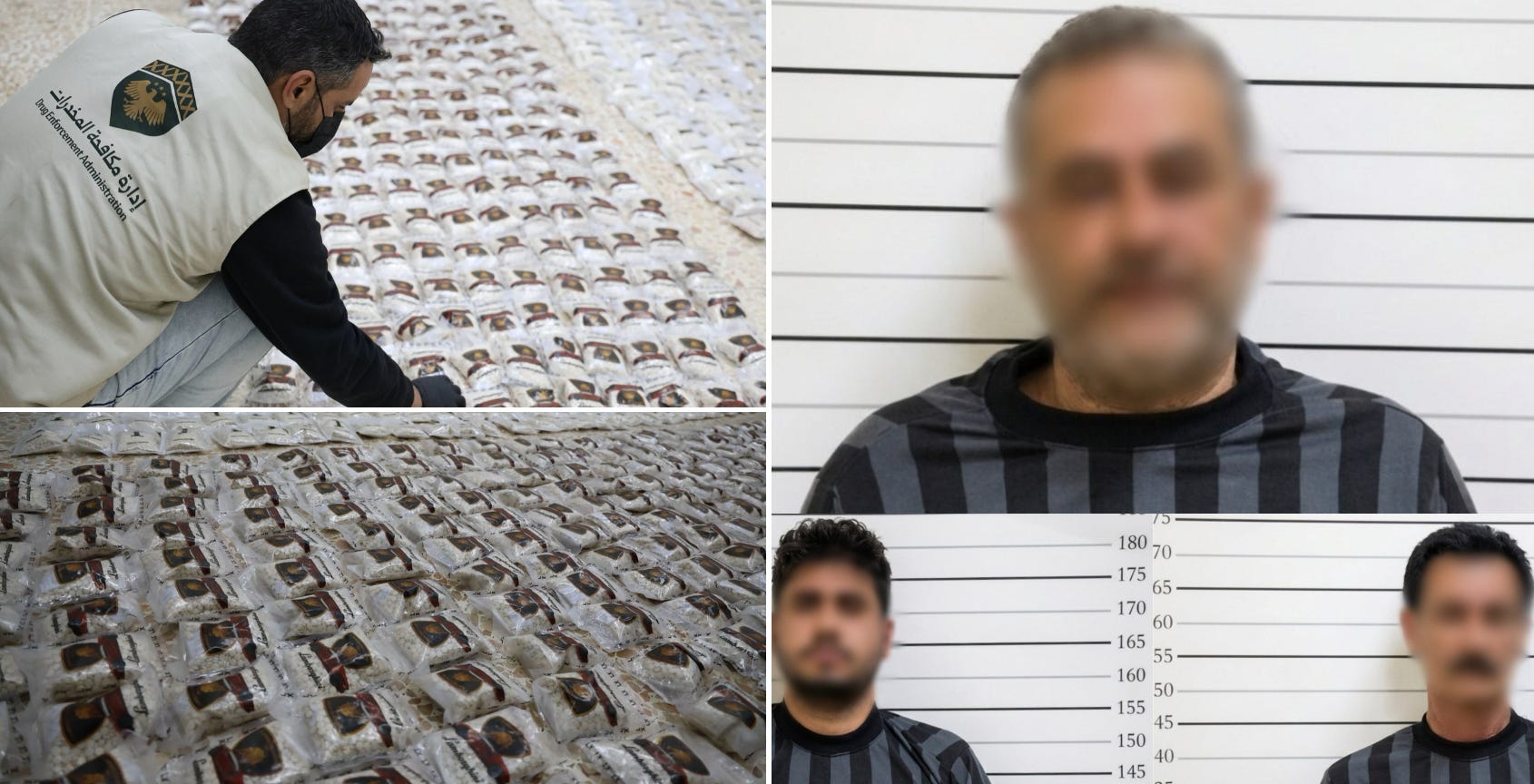
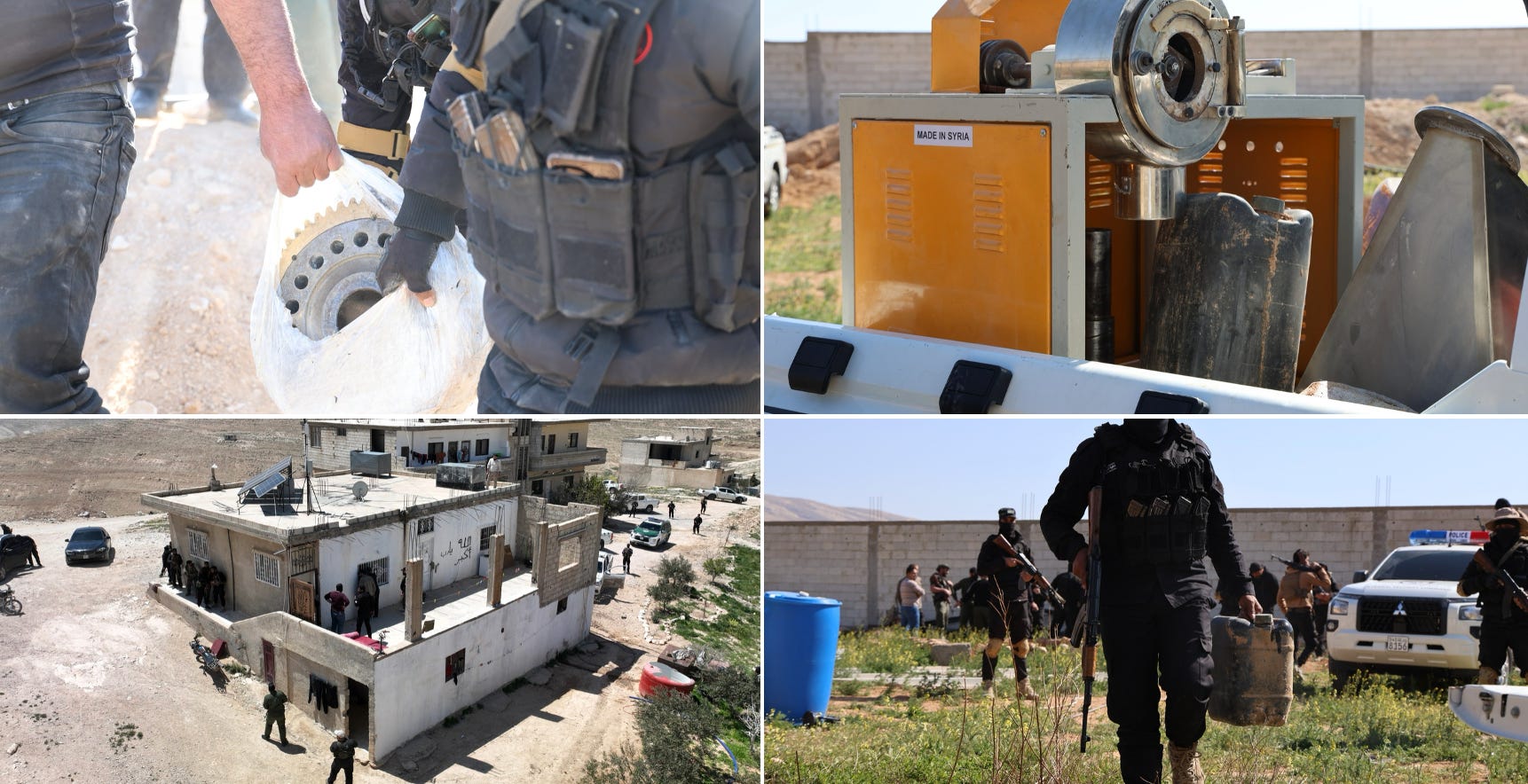
Three drug traffickers were detained and 1 million captagon pills and 1kg of hashish were seized shortly after arriving from neighboring Lebanon in the Rankous area on May 2.
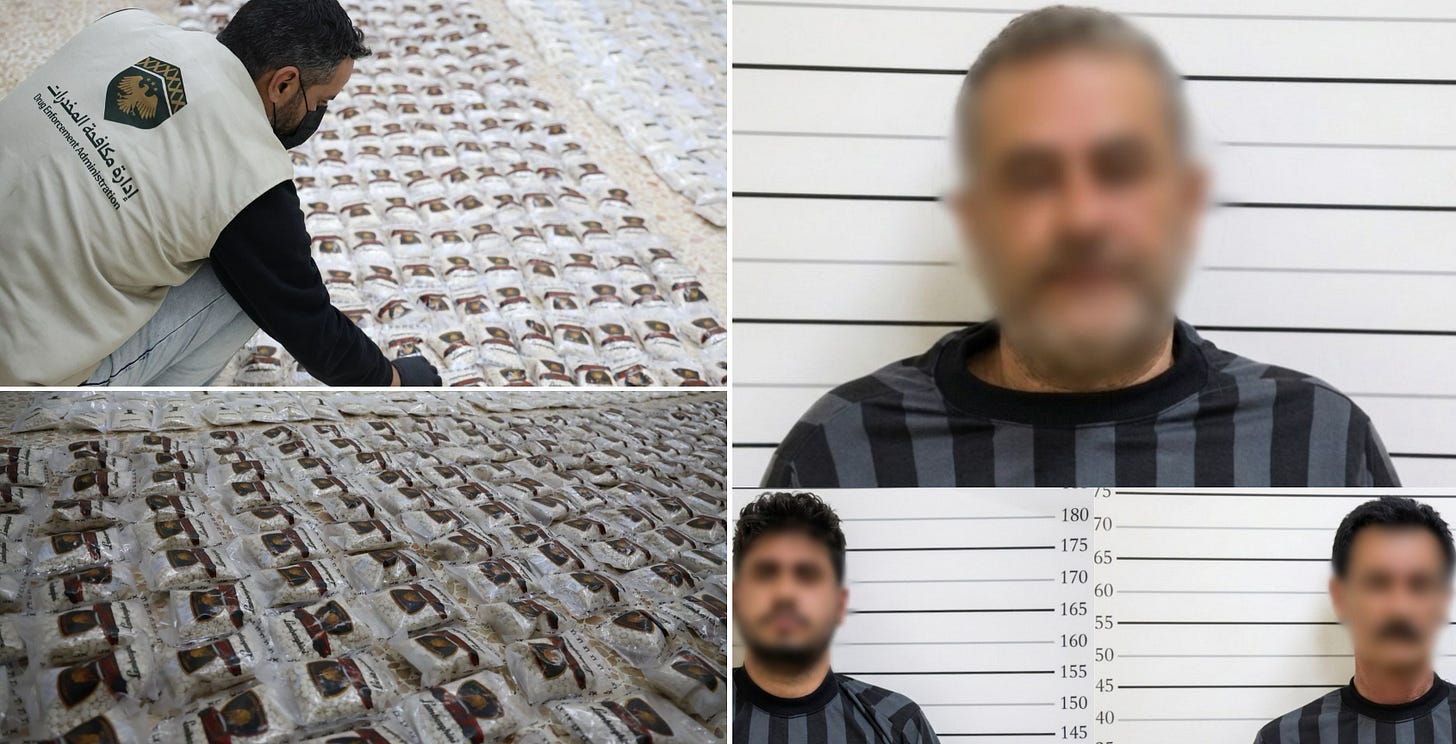
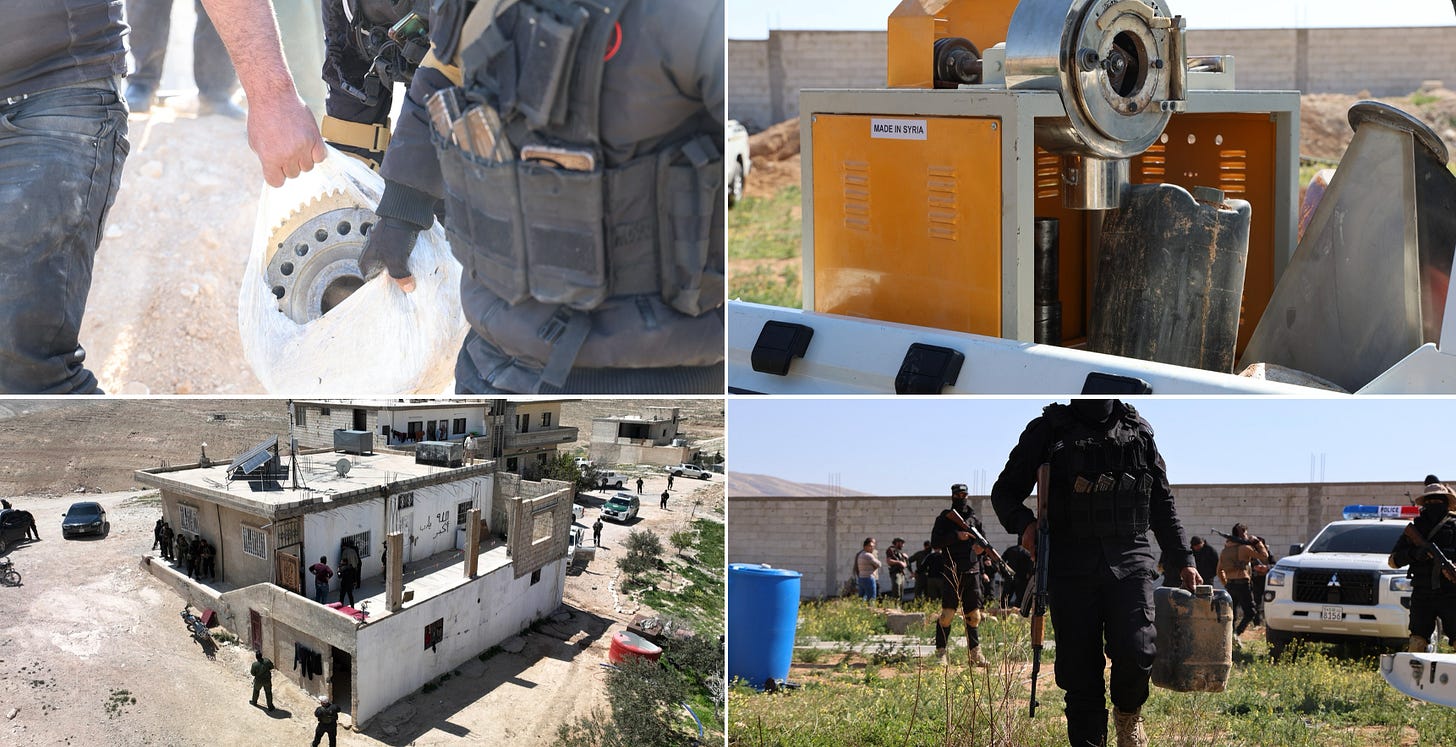
One organized crime operative was detained and a large former captagon production site under his control was seized by MOI forces during a raid near Rankous on May 2.
One drug smuggler posing as a local MOI Public Security officer was detained in a targeted raid in Jaramana on May 2.
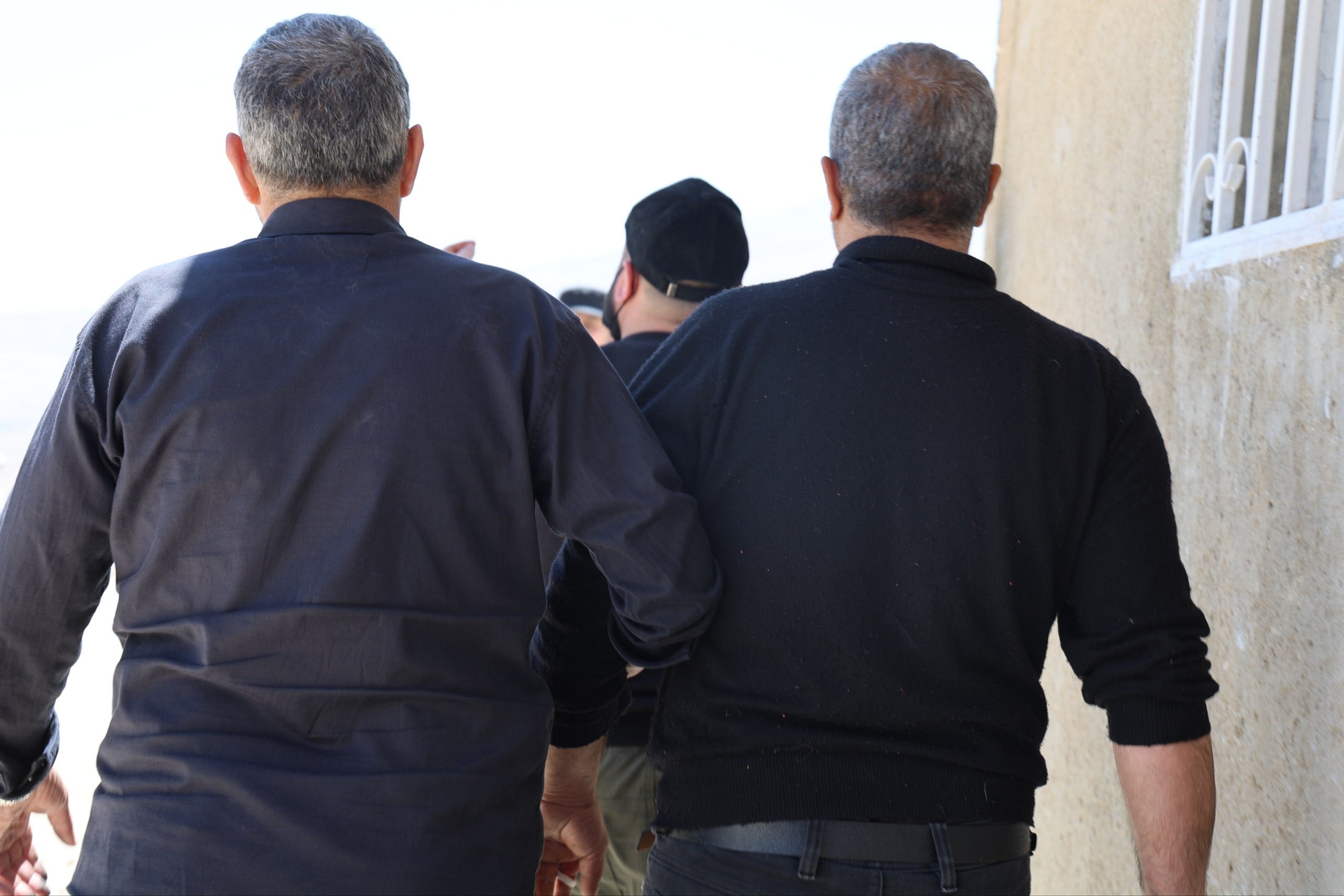
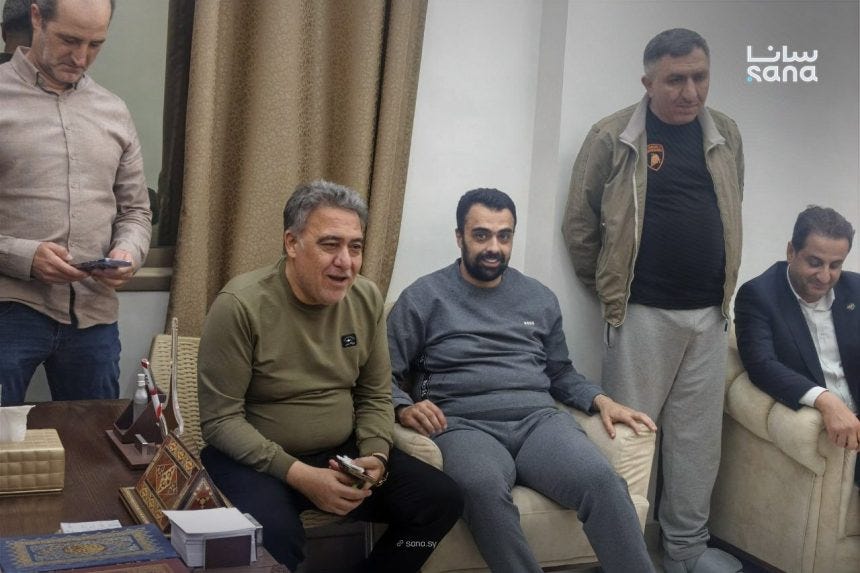
MOI forces detained popular singer Mohammed Sadeq (Abu Hashem) on May 2 following complaints by local residents that he had performed songs celebrating Assad regime crimes.
A senior MOD officer, Mohammed al-Amouri, survived an assassination attempt by unidentified gunmen targeting his vehicle near al-Husayniyah late on May 3.
Damascus:
Two kidnappers were detained and their hostage — Damascus merchant Mohammed al-Bardan — was released in a targeted MOI raid on April 29.
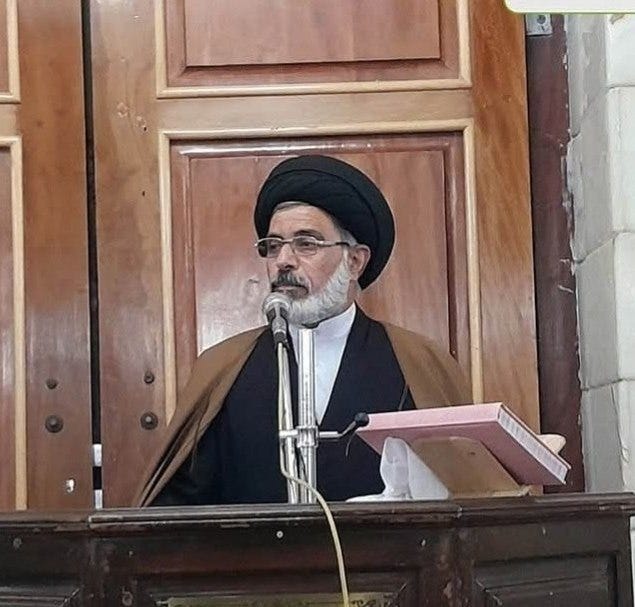
One Shia cleric, Farhan Hassan al-Mansour, was killed when an explosive device detonated inside his vehicle in the predominantly Shia Sayyida Zeinab suburb on May 1.
Former Assad regime militiaman Hassan al-Kurdi was detained by MOI forces in a targeted raid in the Qamariyah district on May 2. He was accused of working within Branch 44 and being involved in arbitrary detentions in Zamalka.
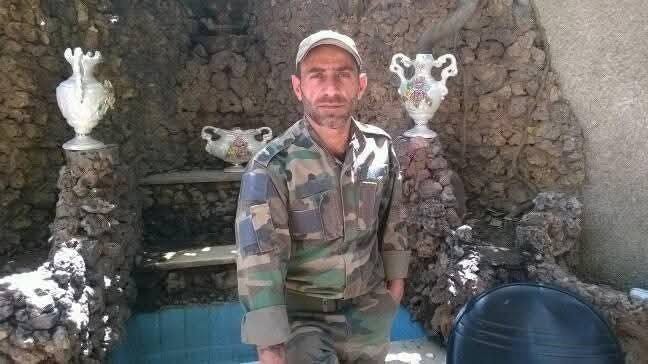
A former Assad regime NDF commander was detained by MOI forces in southern Damascus on May 2. He was accused of complicity in war crimes in al-Tadamon and the Yarmouk Camp.
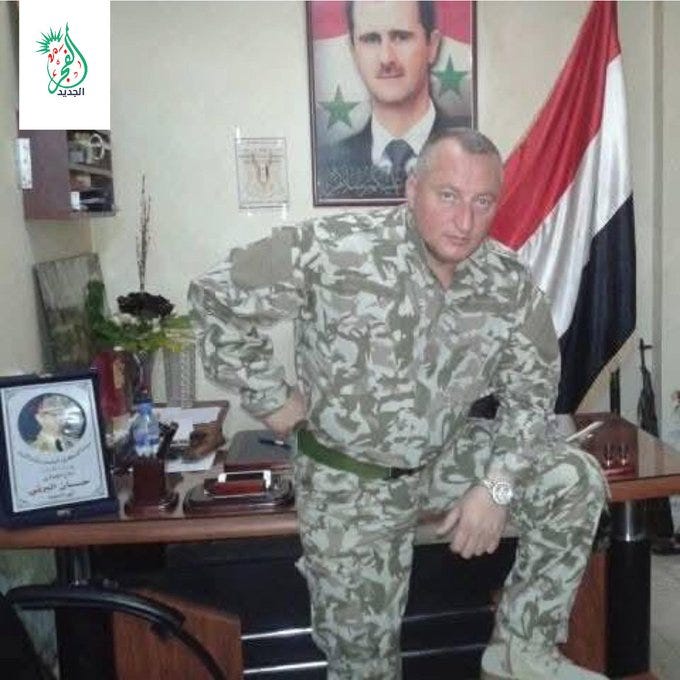
A former Assad regime militiaman was spotted and held by locals in Damascus on May 4, before being handed over to MOI Public Security forces.
Pro-Assad actor Maan Abdelhaq was detained by MOI forces in a targeted raid in Damascus on May 5.
Daraa:
MOI Public Security forces launched a series of coordinated raids in rural western Daraa on April 30 in search of “outlaw” and organized crime cells.
Suwayda:
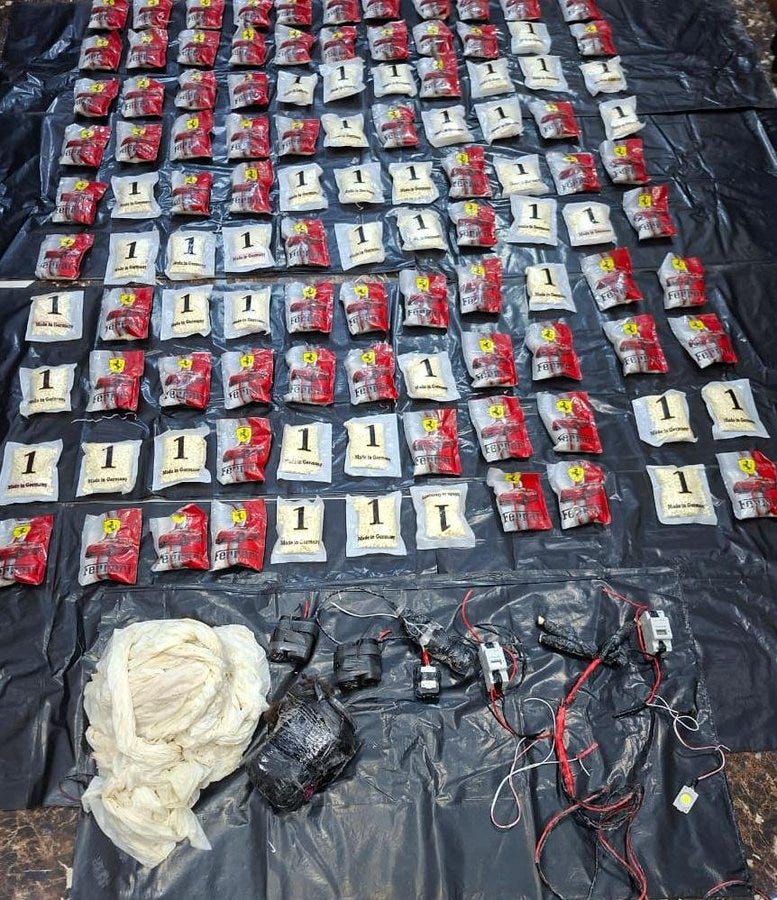
Jordanian armed forces shot down a heavy-lift guided balloon carrying approximately 110,000 captagon pills after being launched from Suwayda’s southern desert in the early hours of April 29.
Rival Druze militiamen engaged in a car chase and machine gunfire in Suwayda late on April 29, but no casualties were confirmed.
Jordanian armed forces shot down a heavy-lift guided balloon carrying approximately 50,000 captagon pills early on May 2, after its launch from Suwayda’s southern desert.
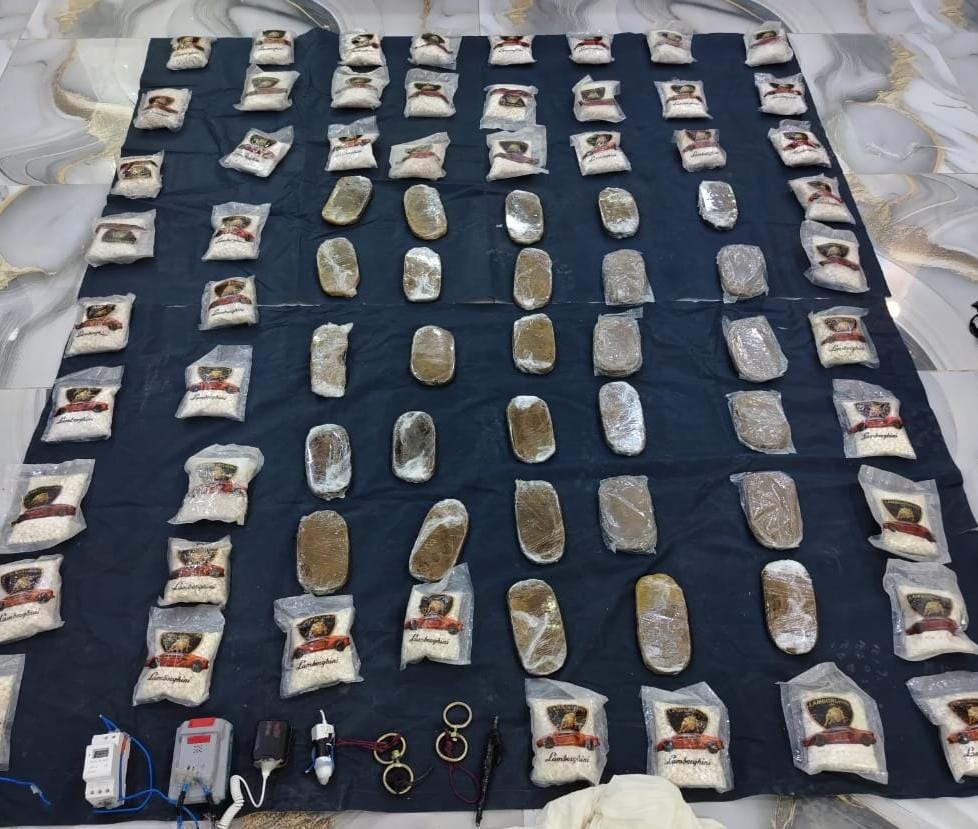
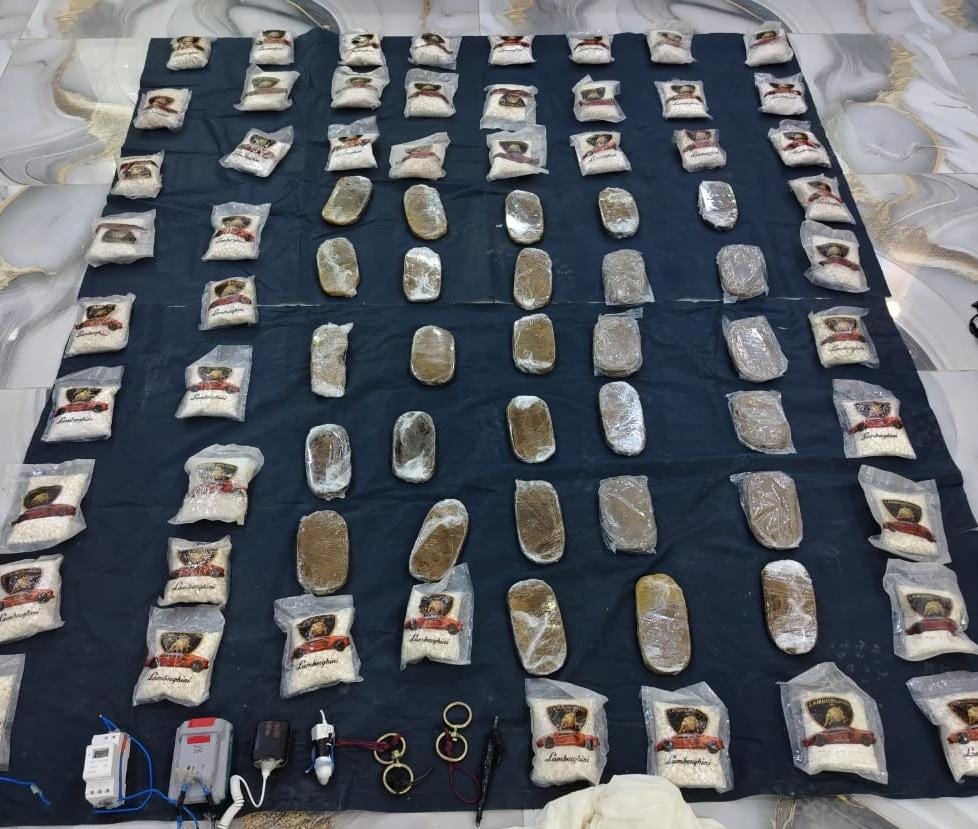
Heavy Jordanian airstrikes targeted drug trafficking and organized crime cells and positions in Shahba and in the southeastern rural region of Suwayda in the early hours of May 3. The Jordanian military later publicly acknowledged the strikes, claiming to have targeted “factories, laboratories, and warehouses from which operations are launched by weapons and drug smugglers into Jordanian territory.”
In a subsequent public statement, the Druze ‘National Guard’ said it was “concerned” about Jordan’s military actions and claimed that all drug production and trafficking emanated from within government-held areas of Syria.
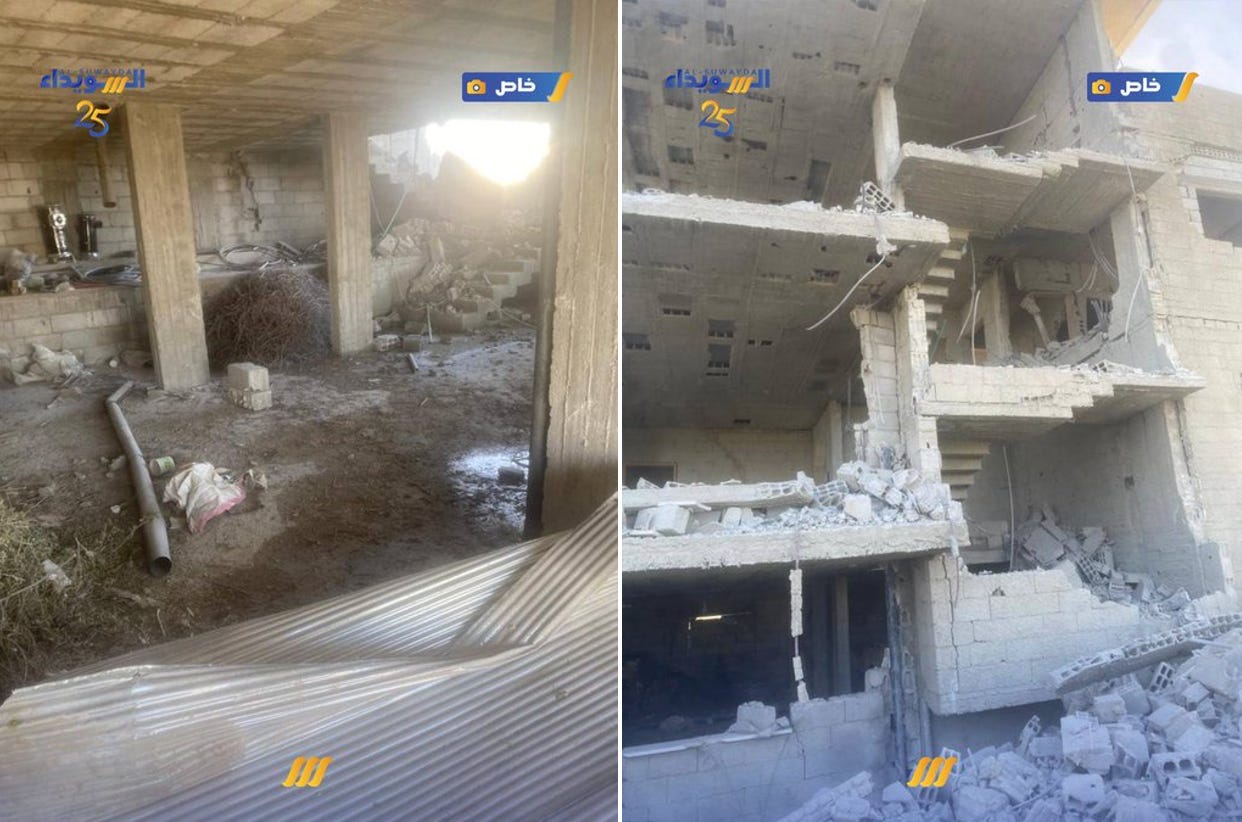
Druze National Guard militiamen launched several coordinated attacks on MOI Public Security frontline positions along the al-Walgha frontline in western rural Suwayda late on May 3, triggering heavy clashes into the night. Five combatants were reportedly injured.