


SYRIA’S TRANSITION:
Transition Meetings:
September 30:
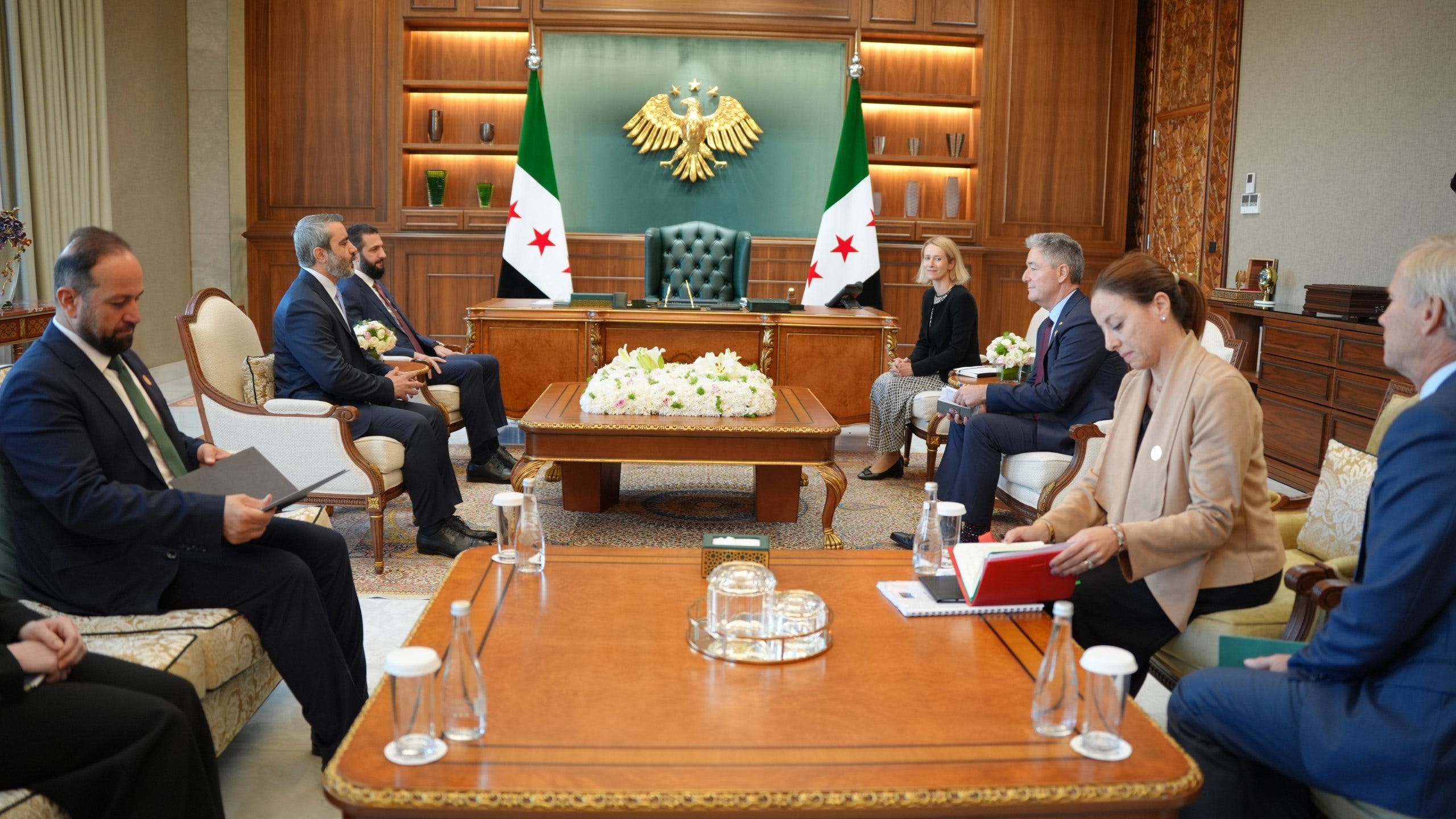
President Ahmed al-Sharaa hosted a meeting with EU High Representative for Foreign Affairs and Security Policy and Vice-President of the European Commission Kaja Kallas in Damascus on September 30. The presidential meeting was in addition to other engagements Kallas had with Foreign Minister Asaad al-Shaybani and Minister of Social Affairs and Labor, Hind Kabawat.
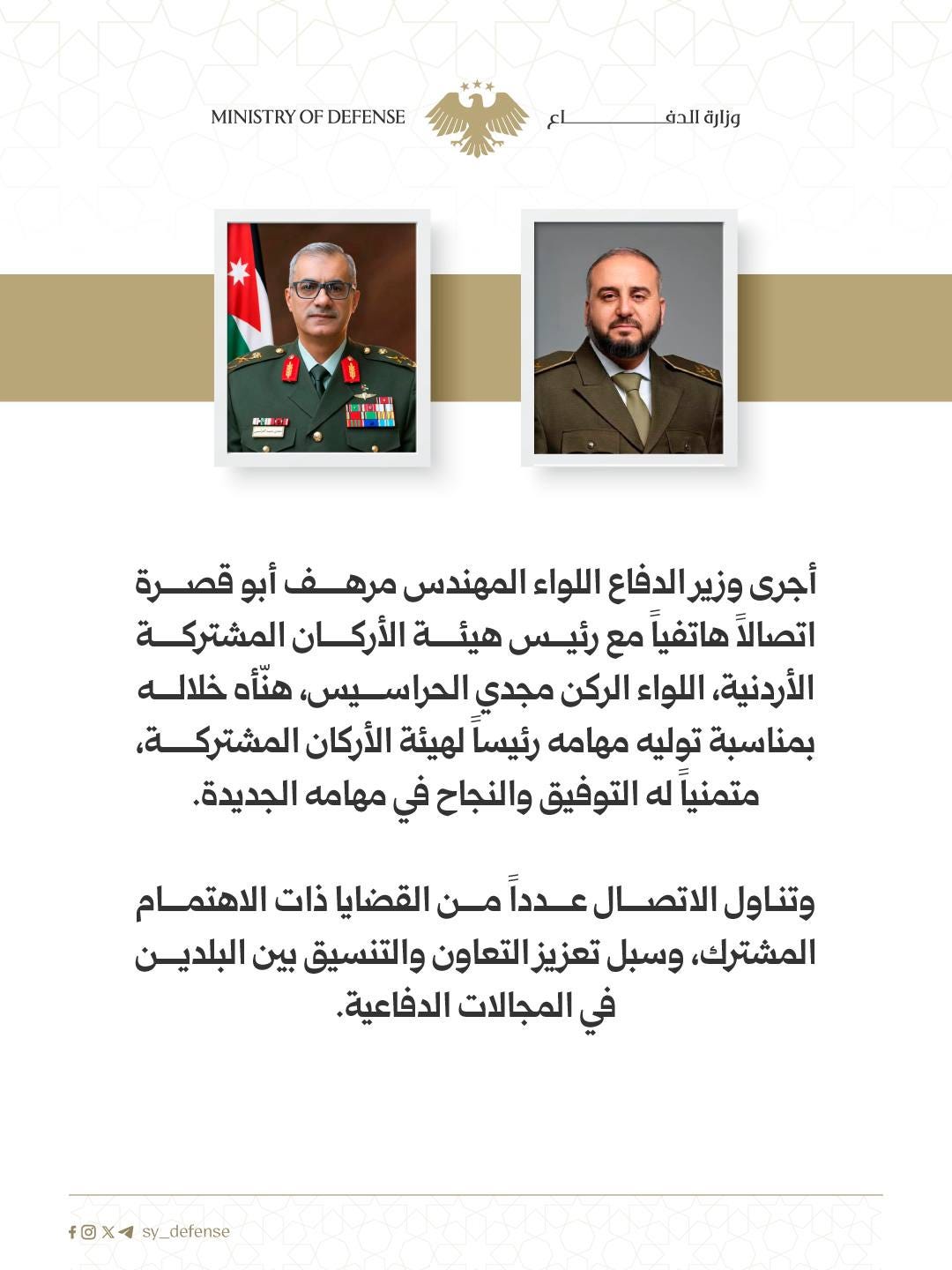
Defense Minister Murhaf Abu Qasra spoke by phone with his Jordanian counterpart, Chairman of the Joint Chiefs of Staff Major General Majdi al-Harasis on September 29.
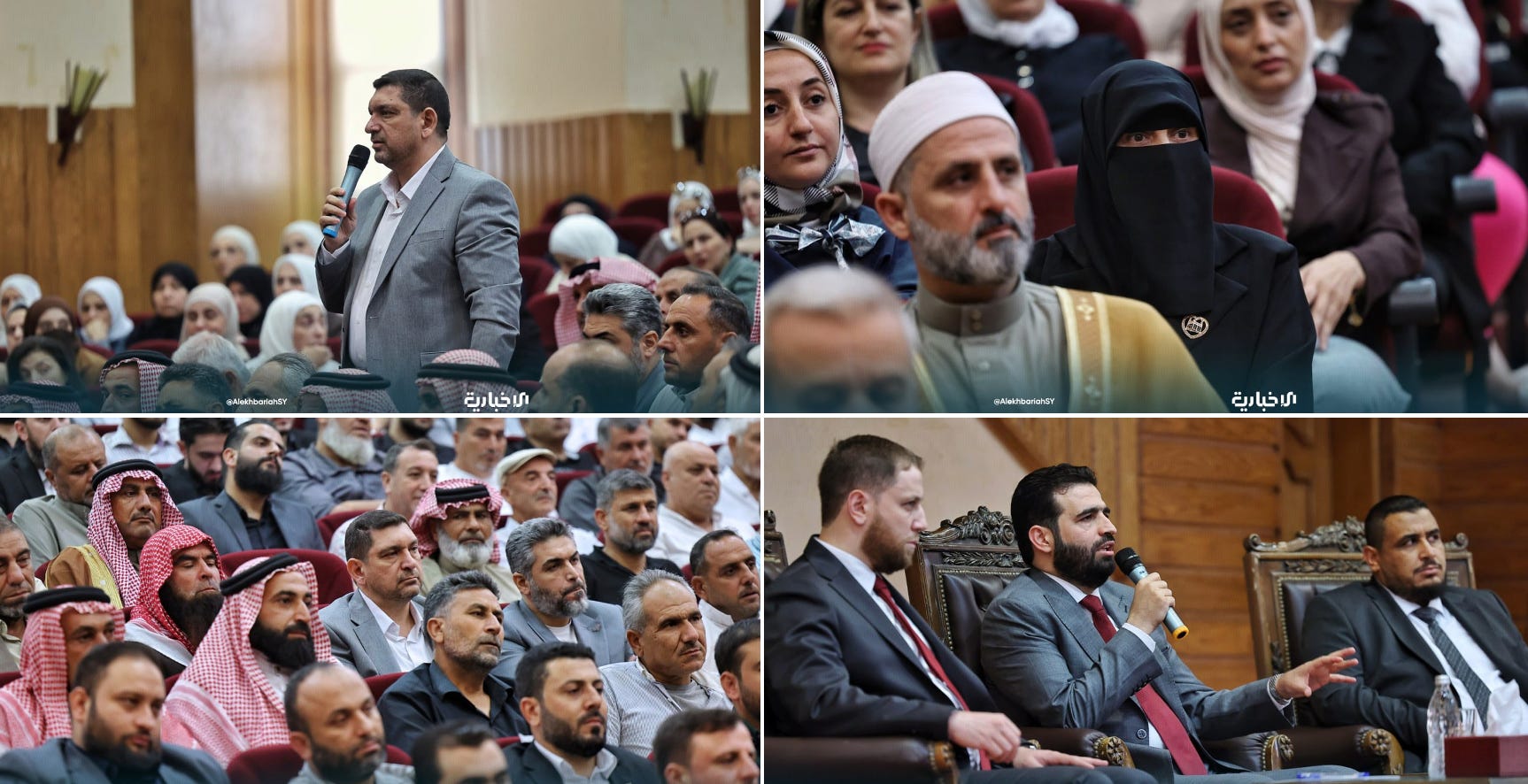
Interior Minister Anas Khattab participated in a public dialogue session with residents from across Hama on September 29, alongside Governor Abdulrahman al-Aama.
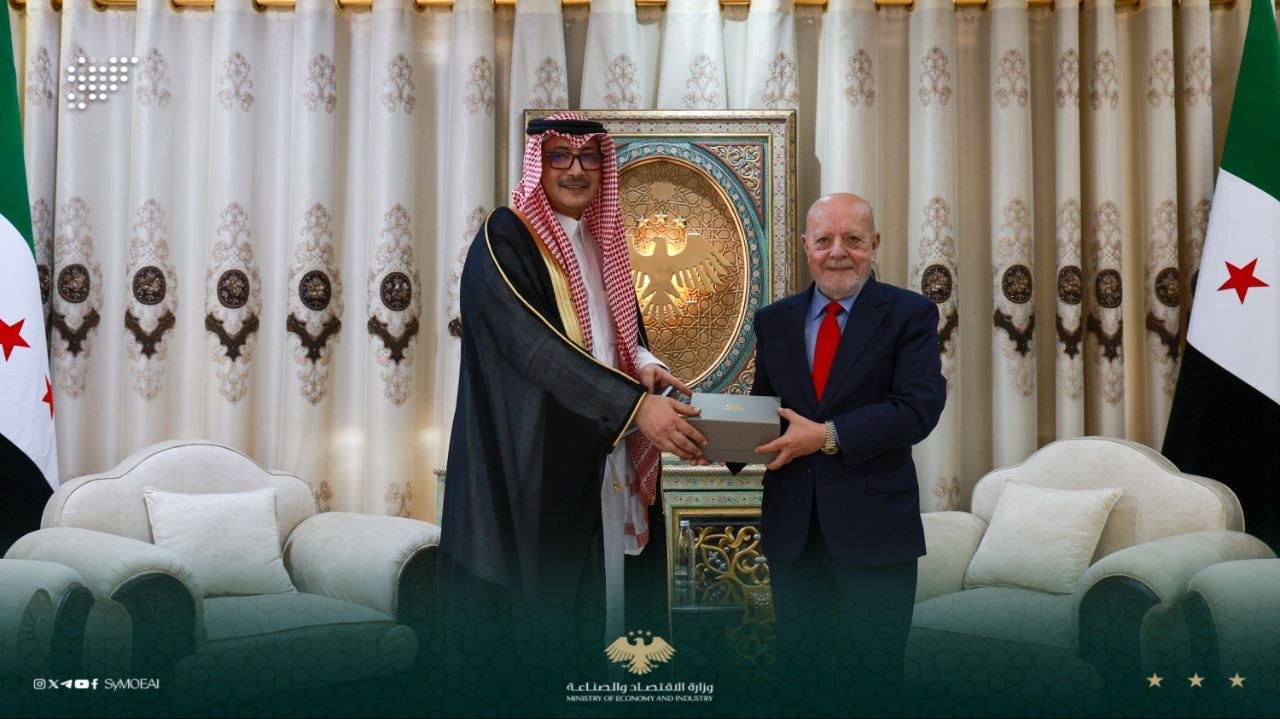
Minister of Economy and Industry Nidal al-Shaar hosted a meeting with Saudi Ambassador Ghazi al-Anzi on September 29, to discuss bilateral cooperation, trade relations, and new investment prospects.
Later that day, Minister al-Shaar also hosted a meeting with UK Charge d’Affairs Barry Peach to discuss activating new roles for the Syrian-British Business Council.
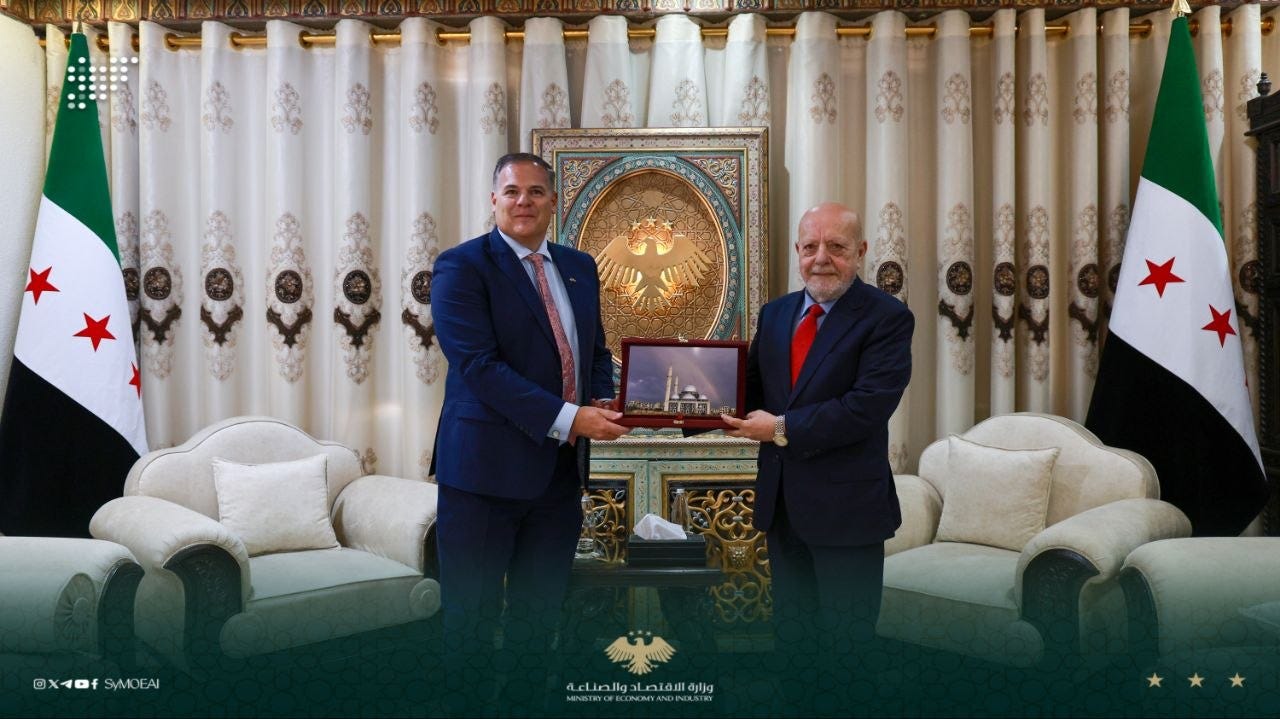
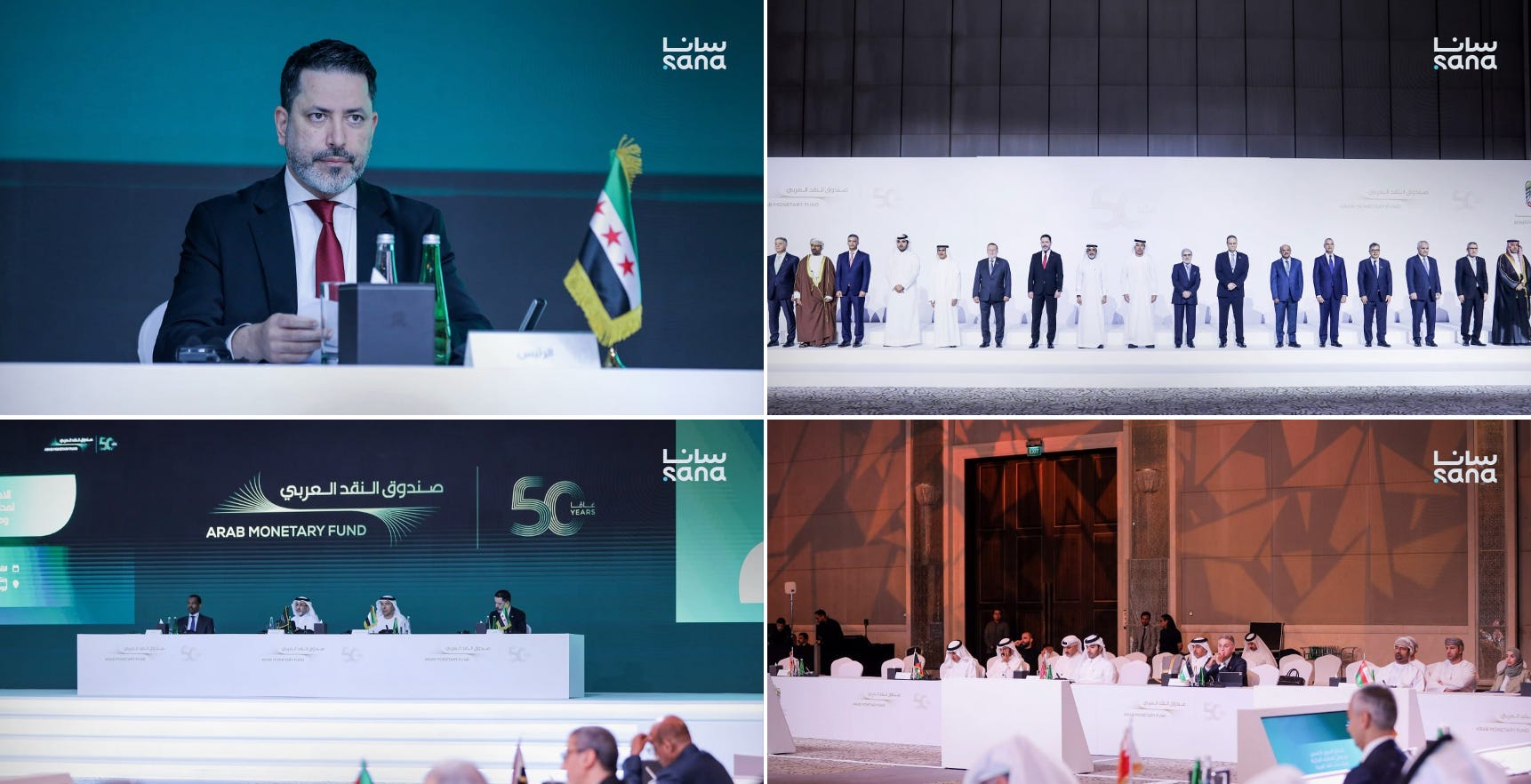
Central Bank Governor Safwat Raslan co-chaired proceedings at the 50th session of the Council of Governors of Central Banks and Monetary Institutions convened by the Arab Monetary Fund in Abu Dhabi, UAE on September 29.
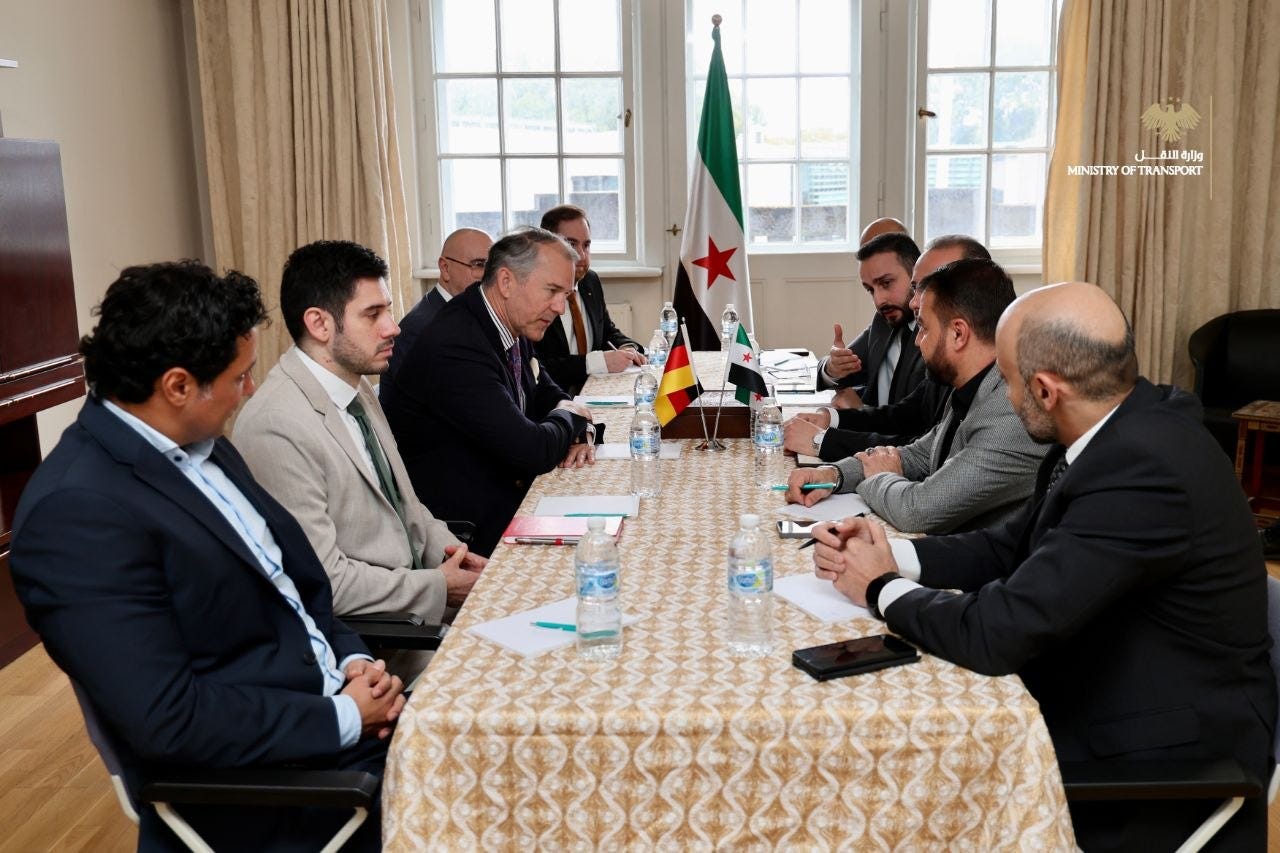
Assistant Minister of Transport Muhammad Rahhal and Deputy Director of the Syrian General Railway Corporation, Ismail al-Sharam, traveled to Berlin, Germany and met on September 29 with officials from Deutsche Bahn AG to discuss potential cooperation and assistance to Syria’s railway sector.
September 30:
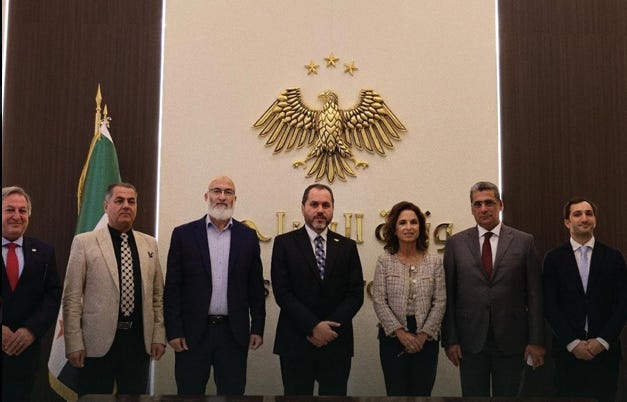
Minister of Tourism Mazen al-Salhani hosted a visit by his Lebanese counterpart, Laura Khazen Lahoud on September 30, during which discussions focused on “facilitating the movement of visitors, developing joint tourism routes extending to Jordan… opening up partnership opportunities for the hospitality and restaurant sectors, and encouraging expansion through franchising.”
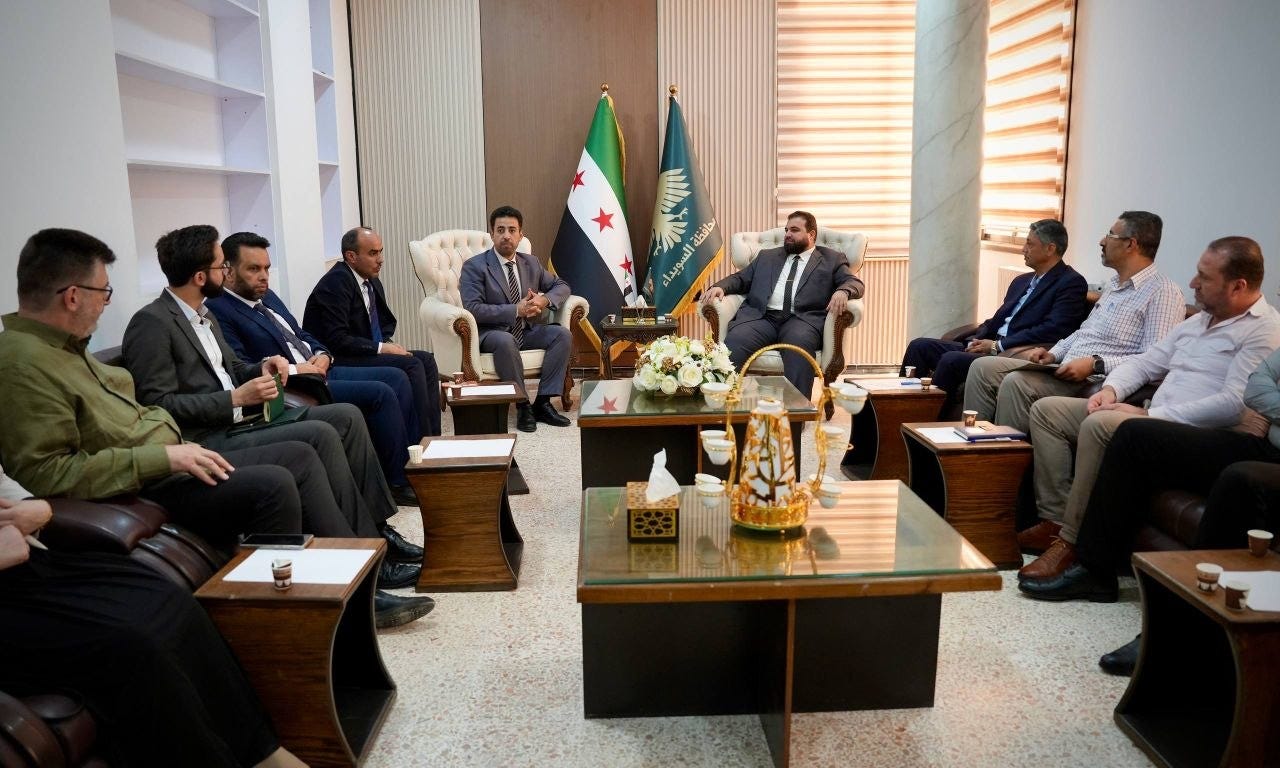
Minister of Health Musab al-Ali traveled to northwestern Suwayda and met with Governor Mustafa al-Bakkour on September 30 in order to discuss the state of the health sector. The meeting was attended by several district health officials from within Suwayda, as well as NGOs.
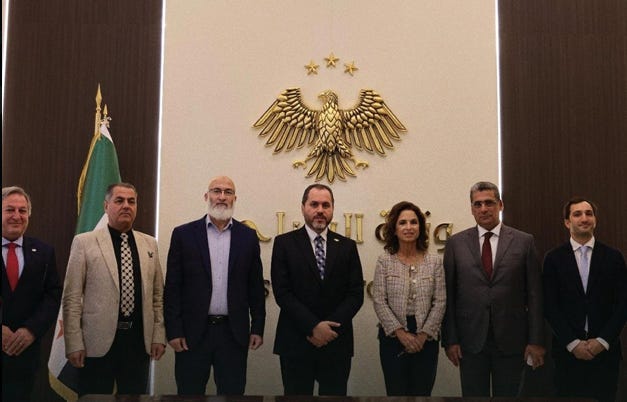
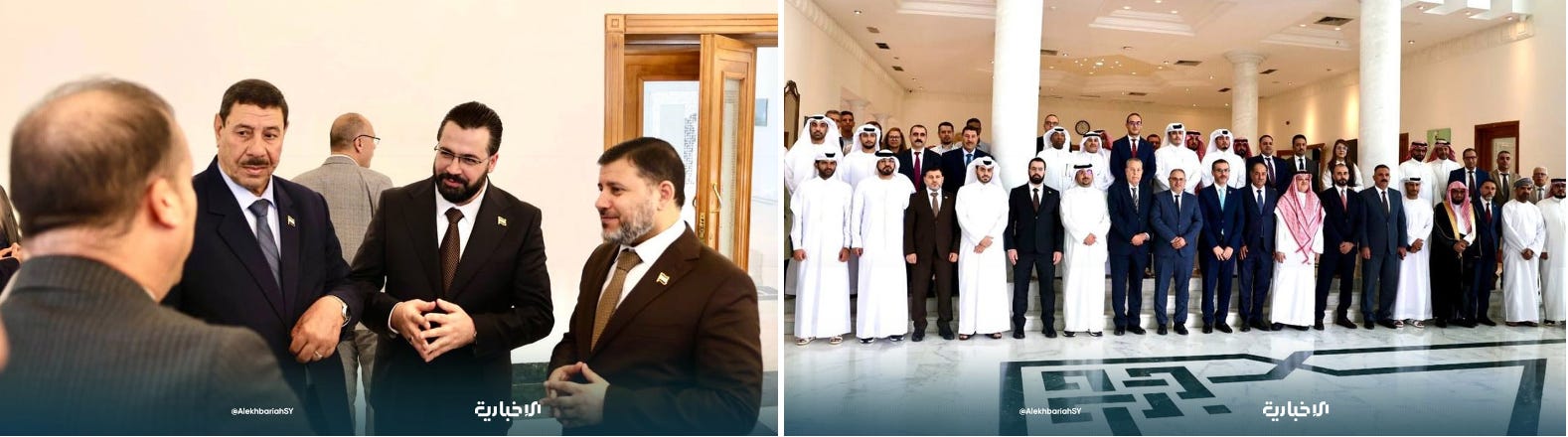
Minister of Local Administration and Environment Mohammed Anjarani met with Oman’s Environment Authority Chairman Abdullah bin Ali Al-Omari on September 30 to discuss exchanging expertise in environmentalism. The meeting took place on the sidelines of the 5th Arab Forum for the Environment at the Arab League headquarters in Cairo, Egypt.
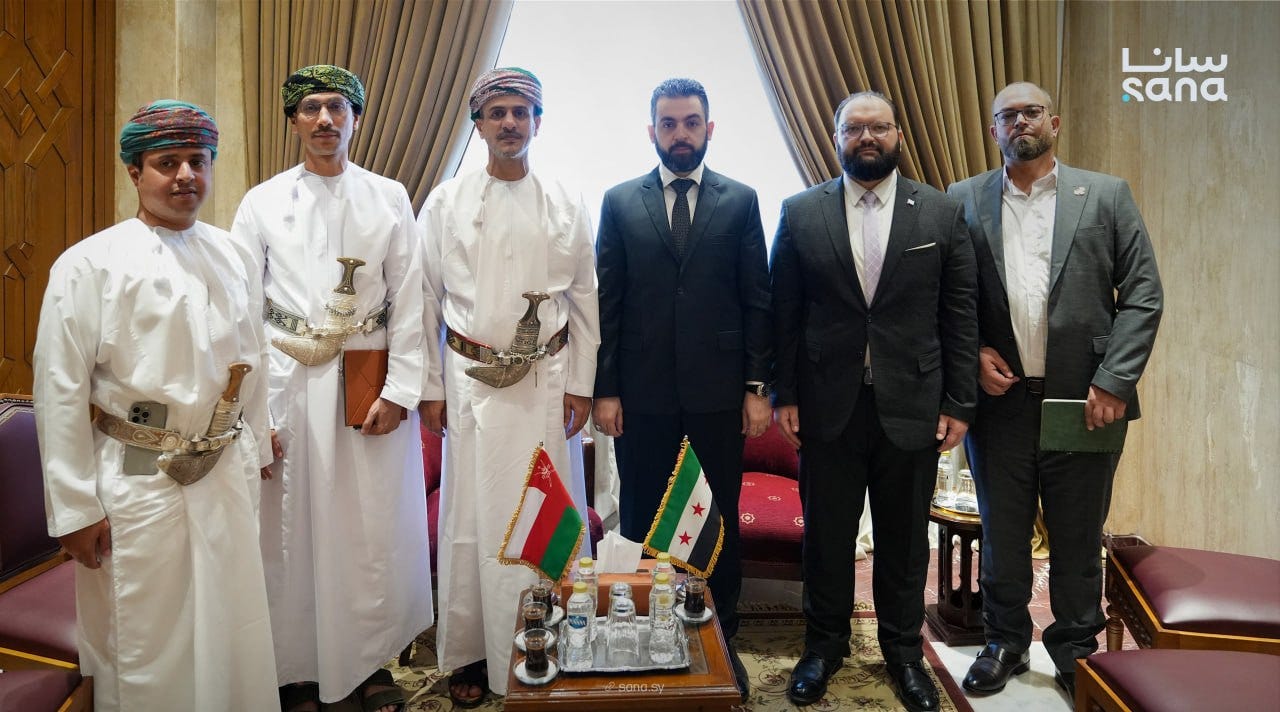
Assistant Minister of Education Abdul Hamid Al-Khalid visited Kobani, Aleppo on September 30 to inspect the city’s University and its President Sharafhan Muslim to discuss continued issues between the university and Aleppo University and steps being taken to reconfirm its status for the 2026-2027 year.
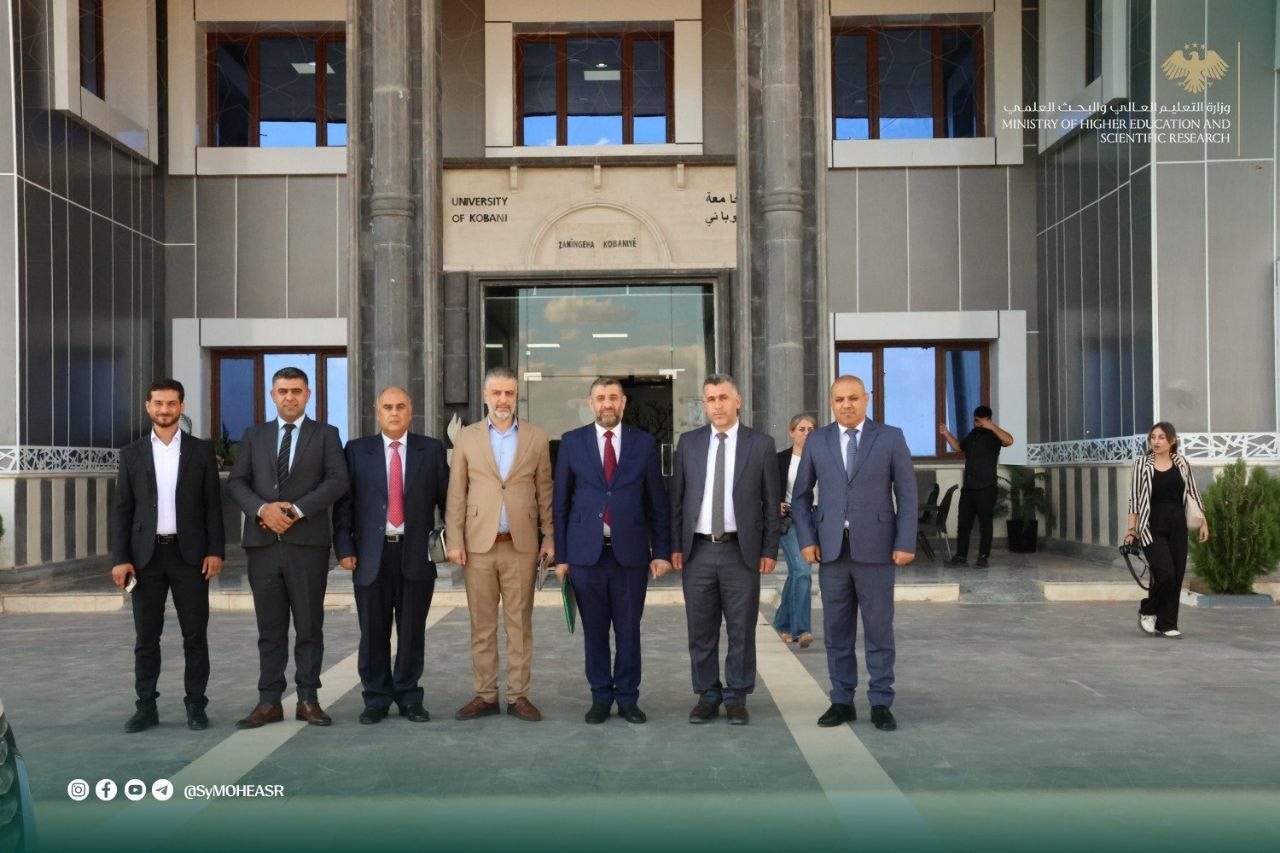
The Foreign Ministry’s Director of Protocol Affairs, Mohammed Abdulsalam, hosted a meeting with Austrian Charge d’Affairs Christoph Vaidinger on September 30.
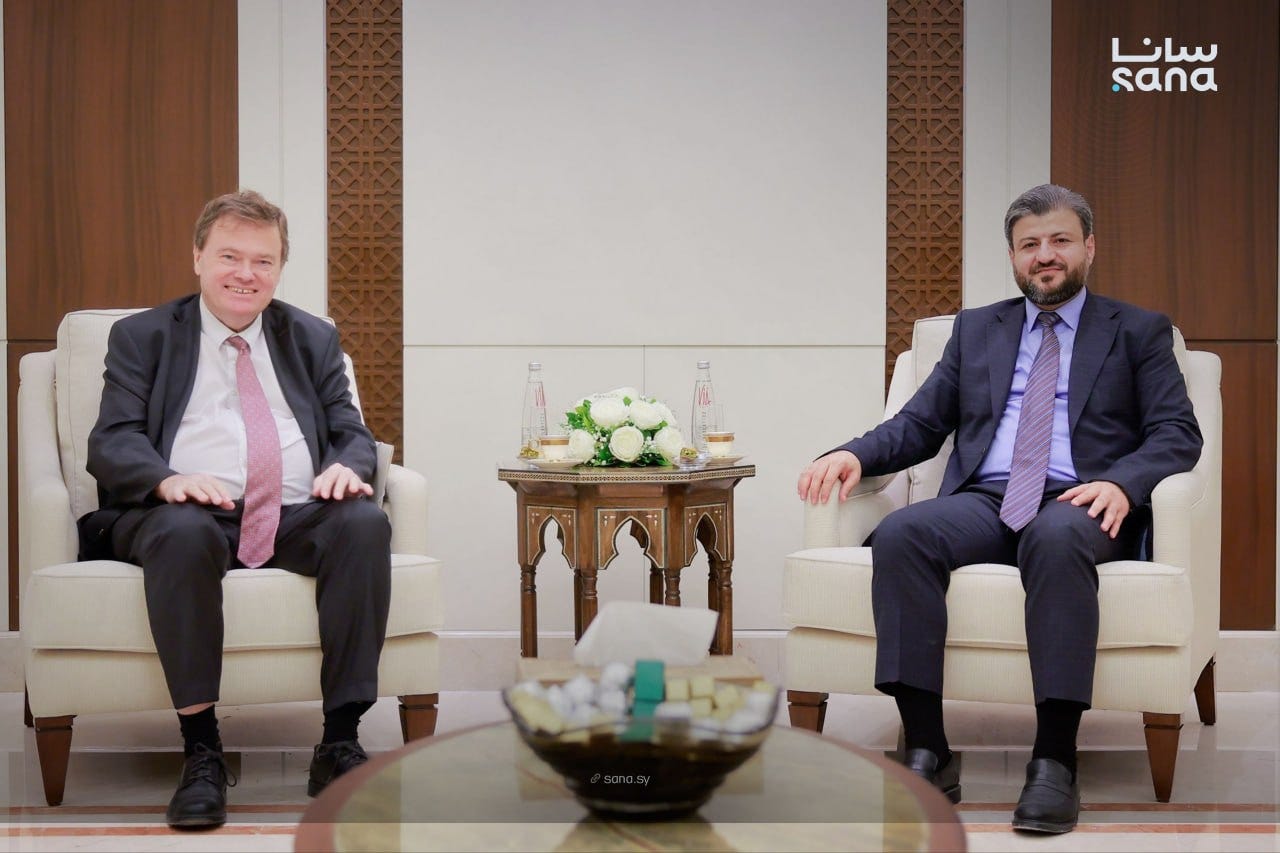
Deputy Governor of Hasakeh Ahmed al-Hilali visited the al-Yaroubiyeh crossing with northern Iraq on September 30 to assess its ongoing operations, facilities, and needs.
October 1:
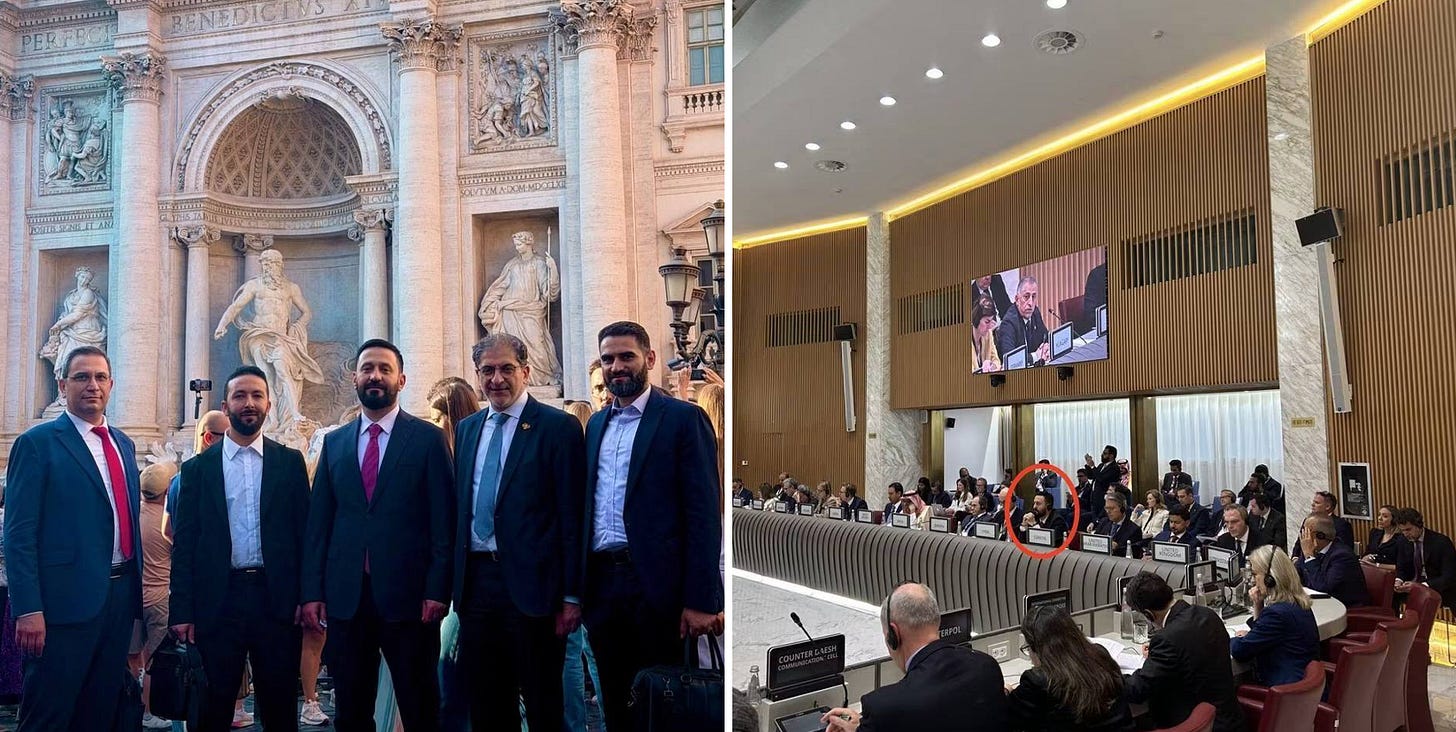
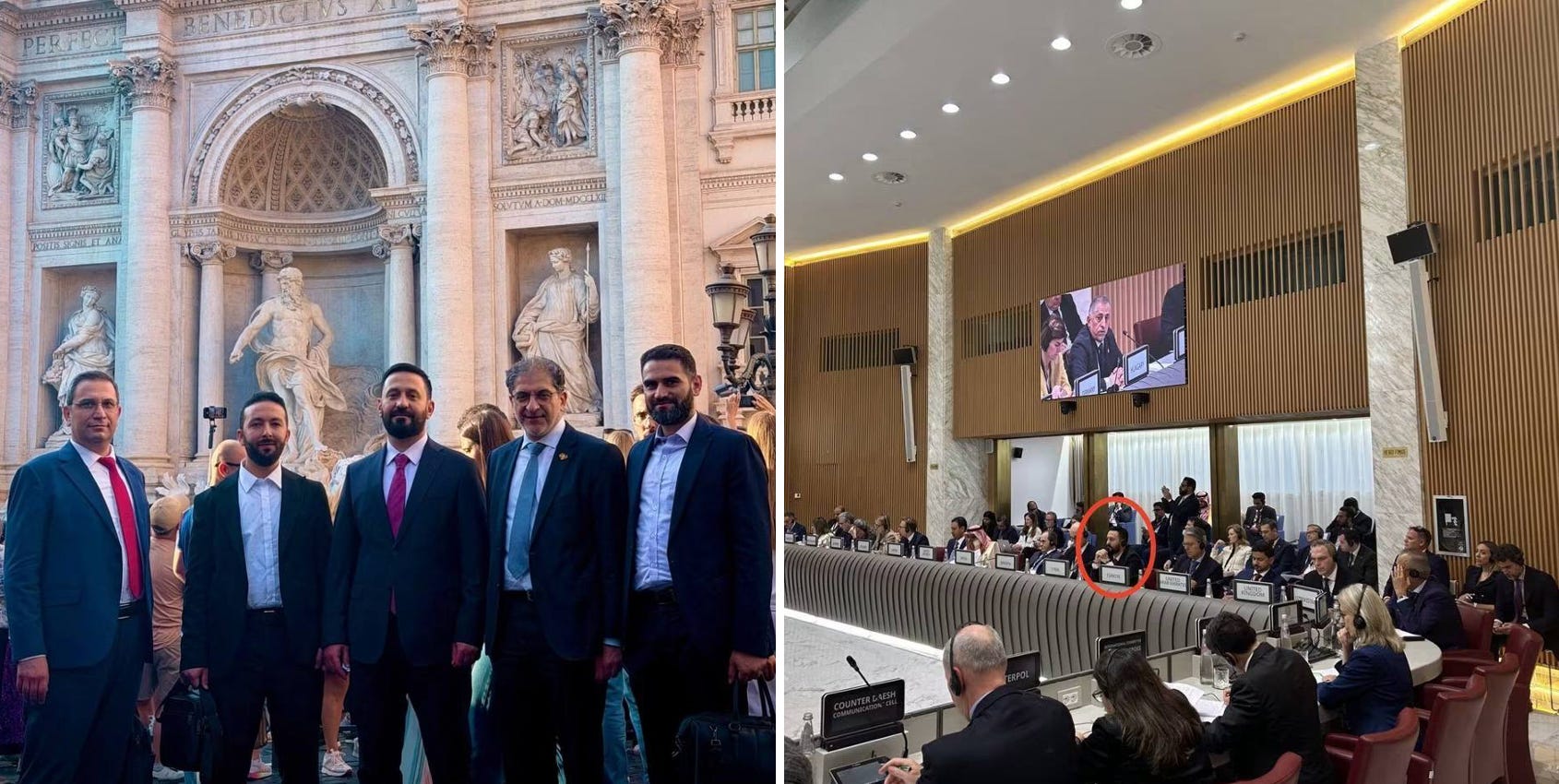
Syria’s chief of the General Intelligence Directorate Abdulqader Tahhan traveled to Rome, Italy to participate in a meeting of the Counter-ISIS Coalition on October 1. He was accompanied by Foreign Ministry Director of American Affairs, Saad Baroud.
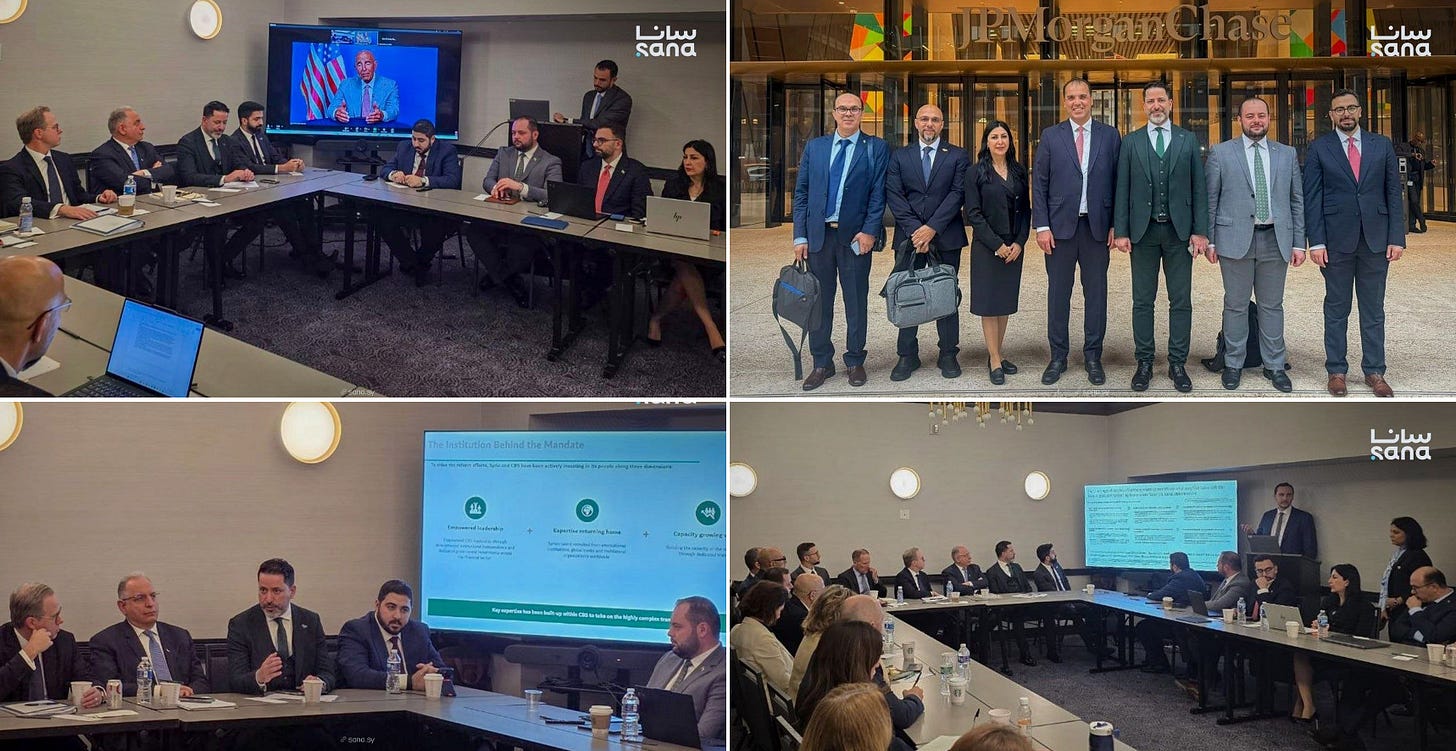
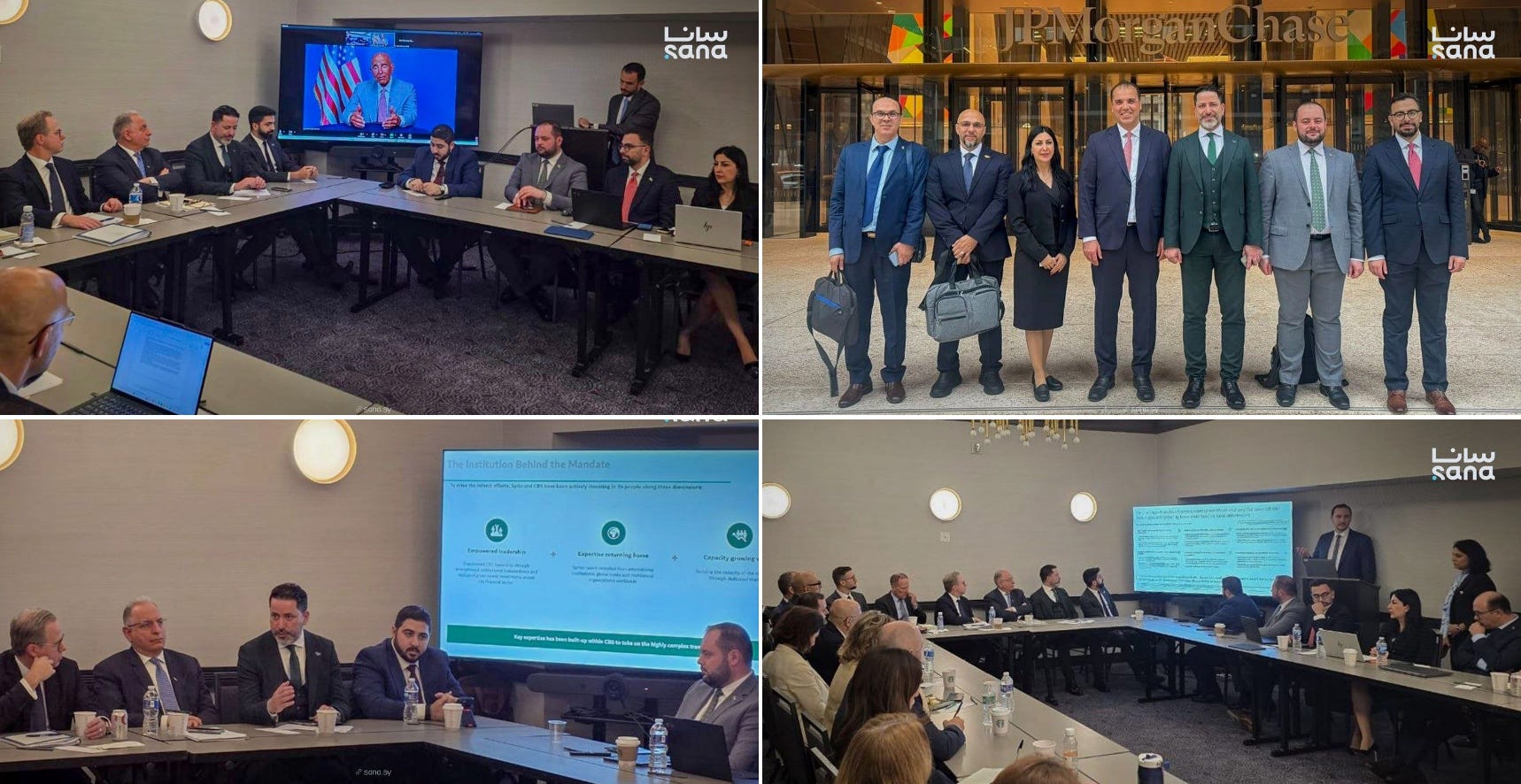
Finance Minister Mohammed Barnieh and Central Bank Governor Safwat Raslan traveled to New York, USA and participated in a working roundtable focused on Syria’s banking sector hosted by the U.S. Department of the Treasury on October 1. They discussed steps ahead to rehabilitate Syria’s banking sector, strengthen its international connectivity and work on combating illicit finance, advancing reforms, and rebuilding confidence. The meeting was attended by U.S. Assistant Secretary of the Treasury for Terrorist Financing and Financial Crimes, Jonathan Burke and representatives from U.S. banks.
Later that day, Bank Governor Raslan held a meeting with JPMorgan Chase in New York.
Agriculture Minister Bassel al-Sweidan met with Secretary General of the Presidency Abdulrahman al-Aama on October 1 to discuss the state strategy to redevelop Syria’s agricultural sector — including through agricultural financing mechanisms and the Good Loan program; as well as a proposal to establish a holding company that would oversee production and investment activities.
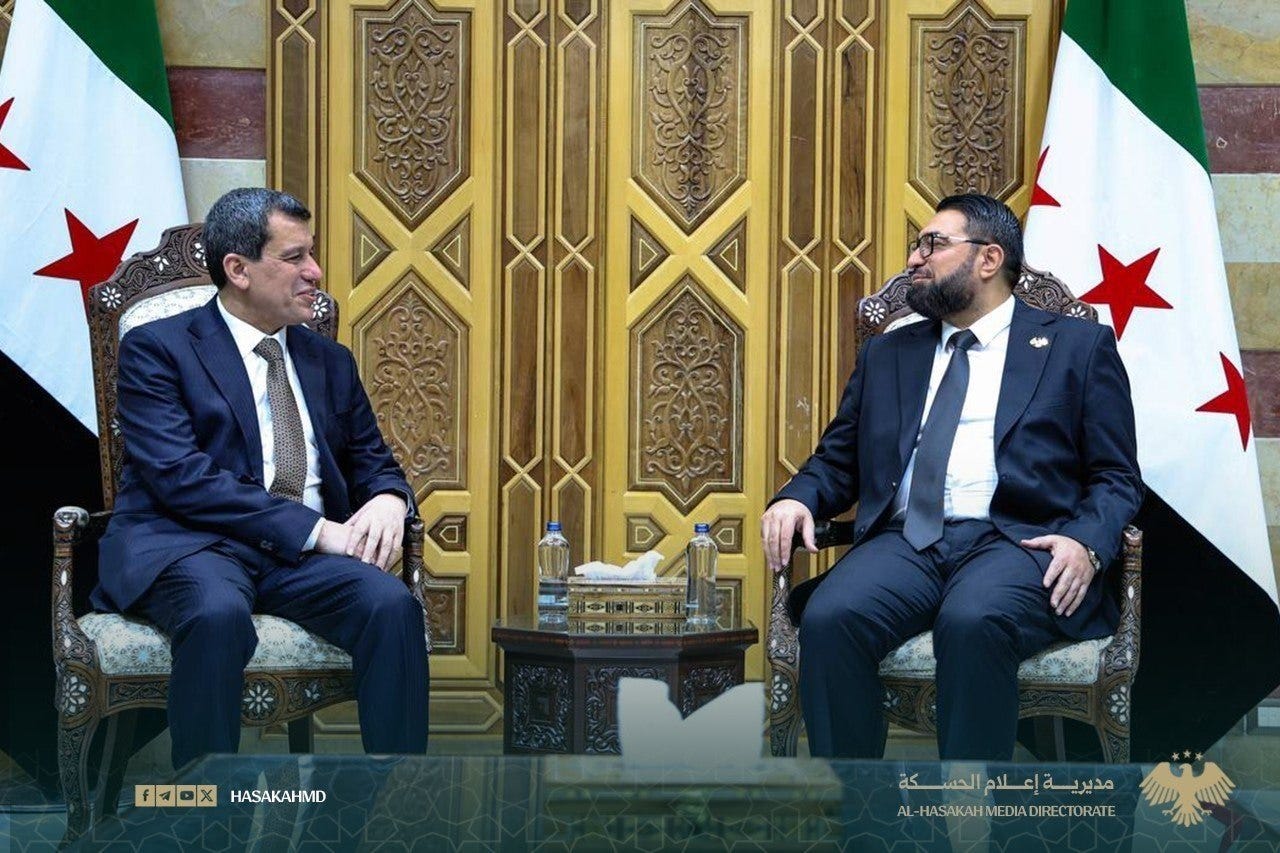
Minister of Justice Mazhar al-Ways hosted a meeting with Presidential Advisor on Kurdish Affairs Mazloum Abdi on October 1, to discuss the ongoing integration process.
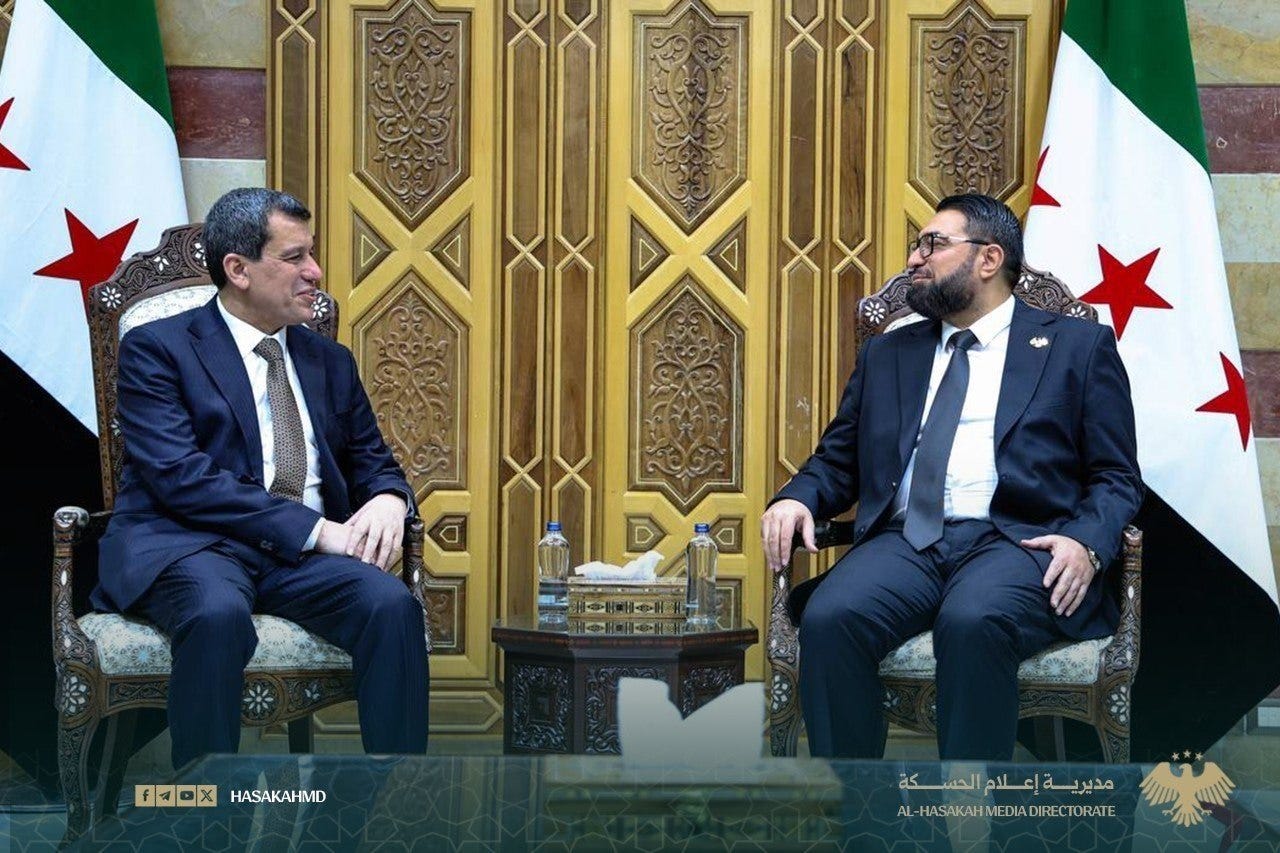
Attorney General Hassan al-Turaba traveled to Tunis, Tunisia on October 1 to participate in a meeting involving regional Ministers of Interior and Justice.
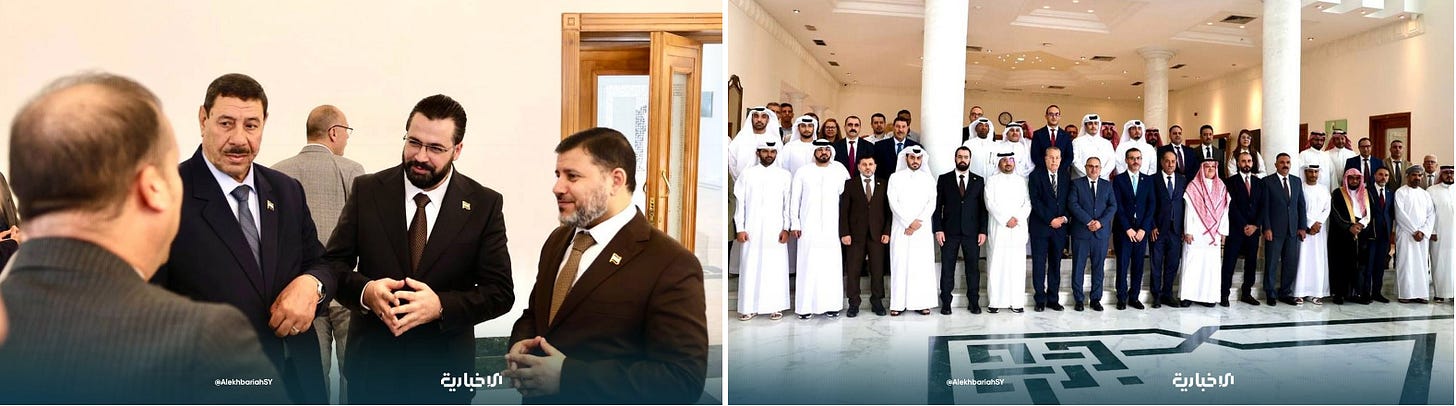
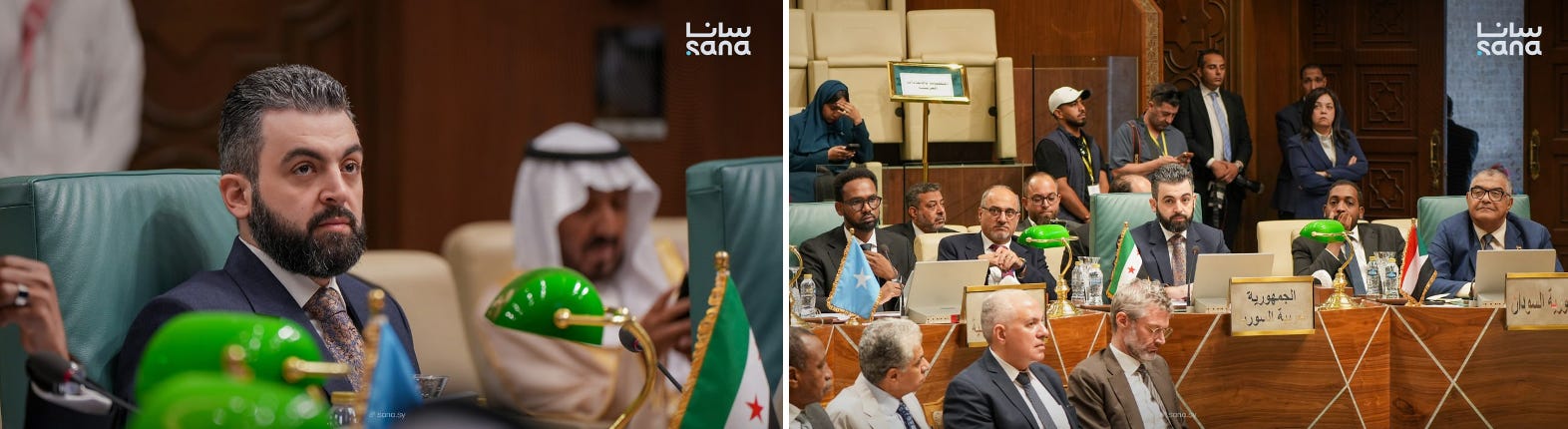
Minister of Local Administration and Environment Mohammed Anjarani participated in the 37th session of the Arab Ministerial Council on Environmental Affairs in Cairo, Egypt on October 1.
Later that day, Minister Anjarani held bilateral meetings with Yemeni Minister of Water and Environment, Tawfiq al-Sharjabi'; Saudi Minister of Environment, Water and Agriculture, Abdulrahman bin Abdulmohsen al-Fadhli; and Qatari Minister of Environment and Climate Change, Abdullah bin Abdulaziz bin Turki al-Subaie.
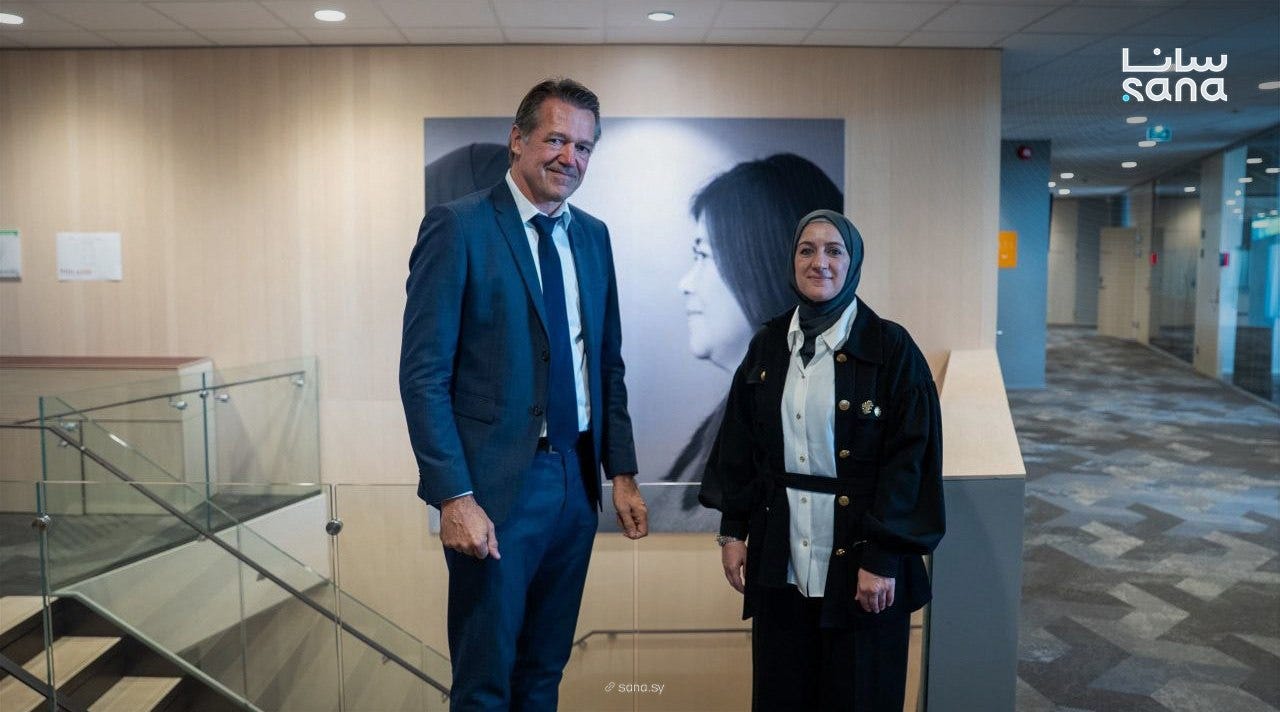
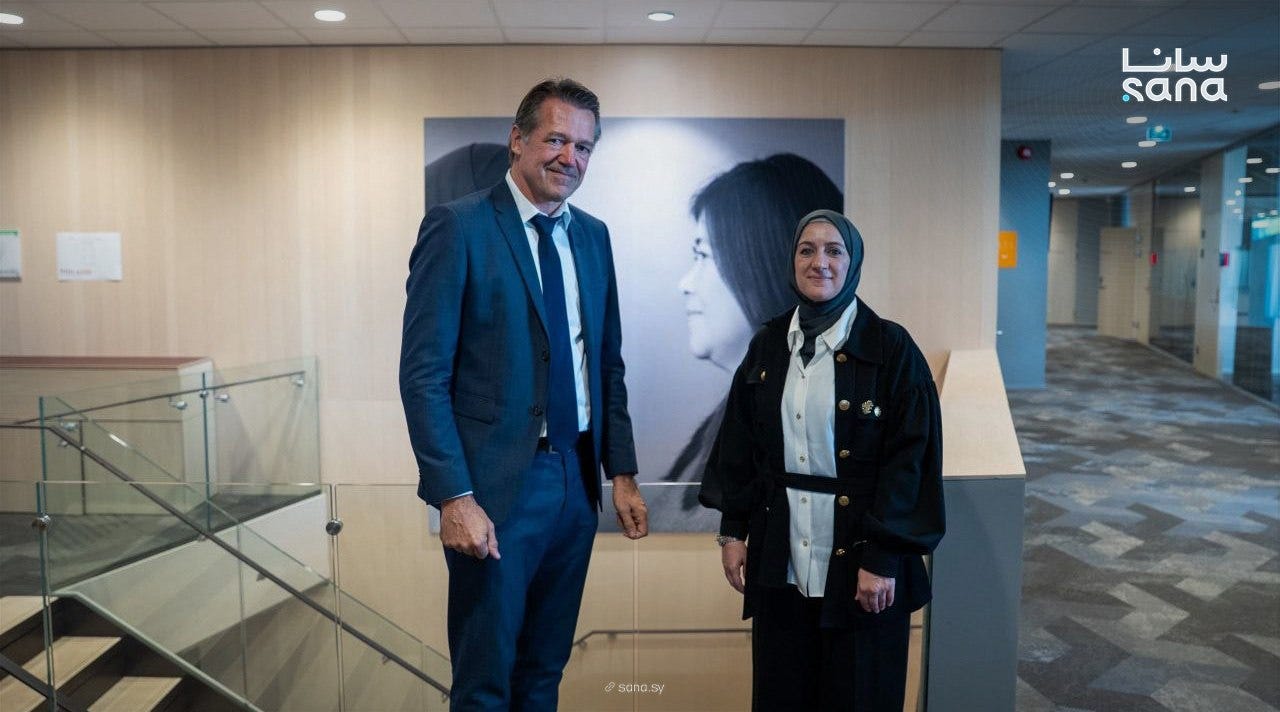
The Foreign Ministry’s Director of Refugees and Expatriate Affairs, Nahla Othman, traveled to Oslo, Norway on October 1 and met with Director General of the Norwegian Directorate of Immigration (UDI), Snorre Søther.
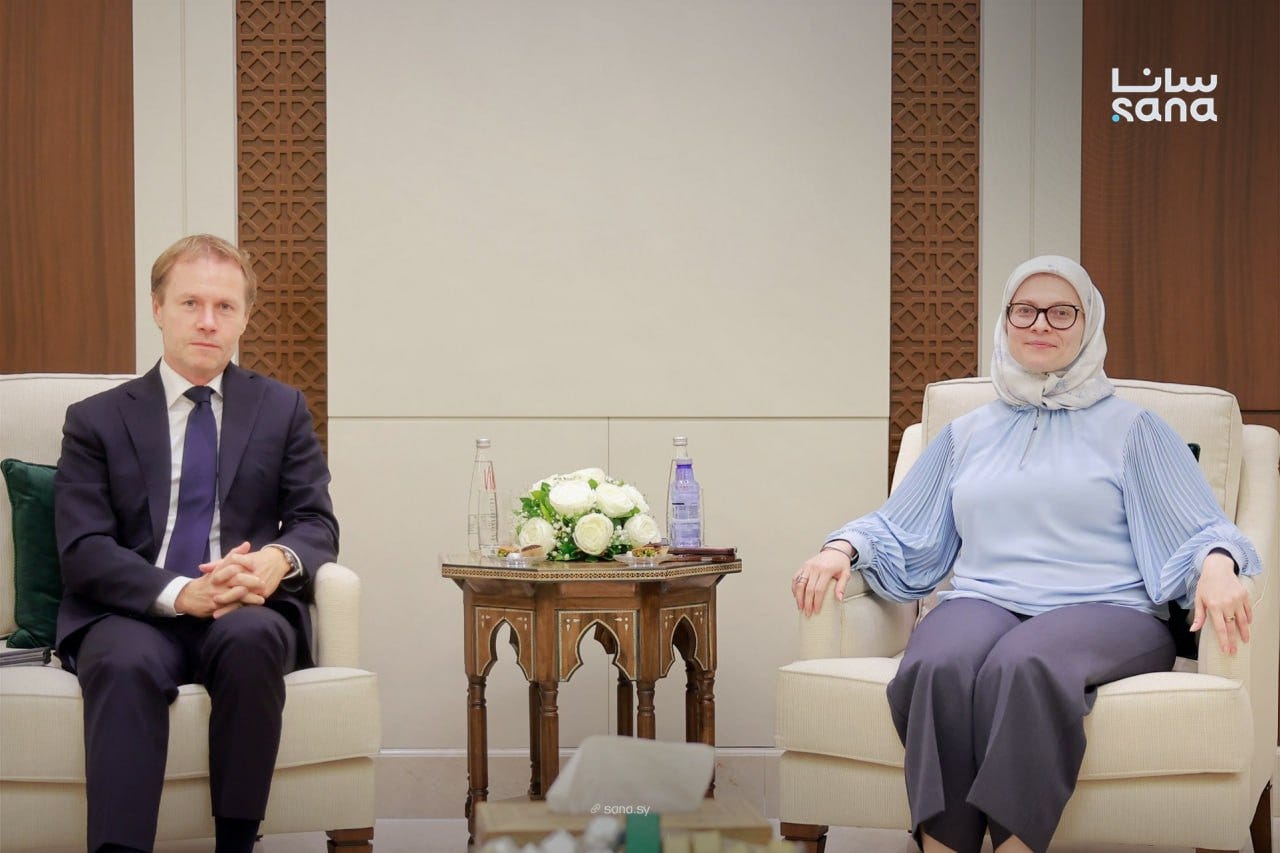
The Foreign Ministry’s Director of European Affairs Sally Shobut hosted a meeting with French Charge d’Affairs Jean-Baptiste Faivre on October 1.
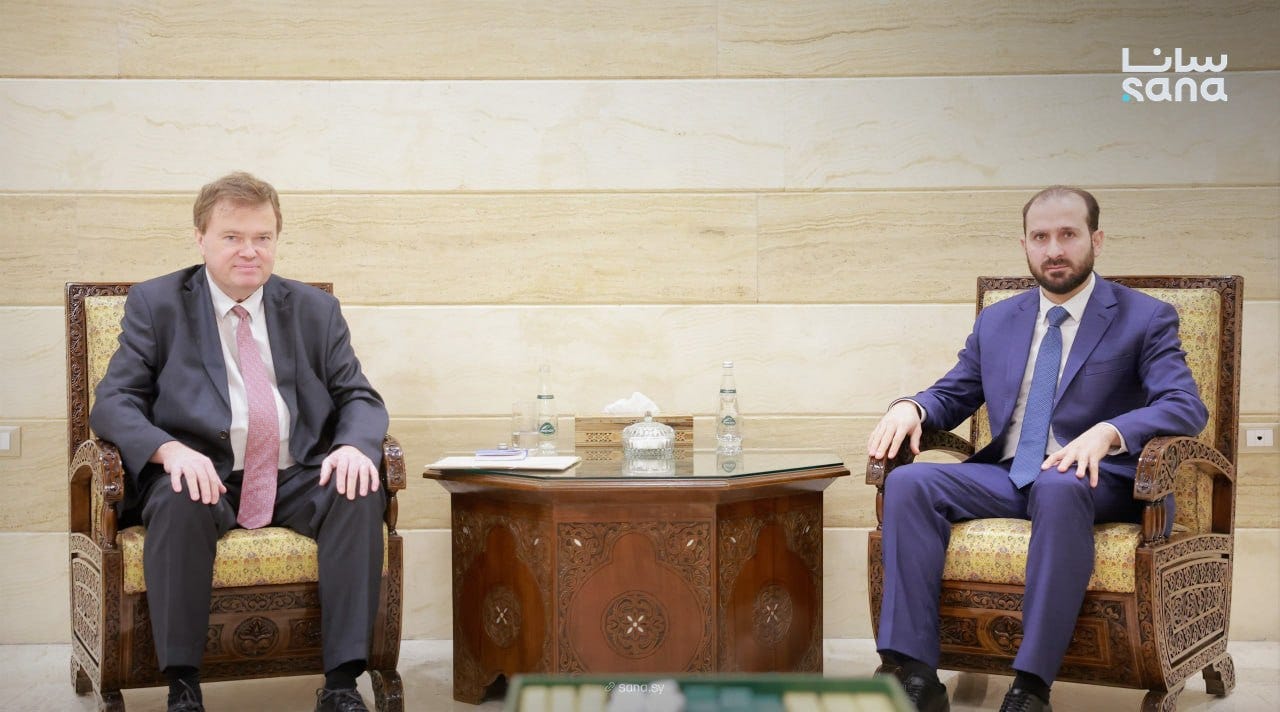
The Foreign Ministry’s Director of Consular Affairs, Mohammed Yaqoub al-Omar, hosted a meeting with Austrian Charge d’Affairs Christoph Weidinger on October 1.
October 2:
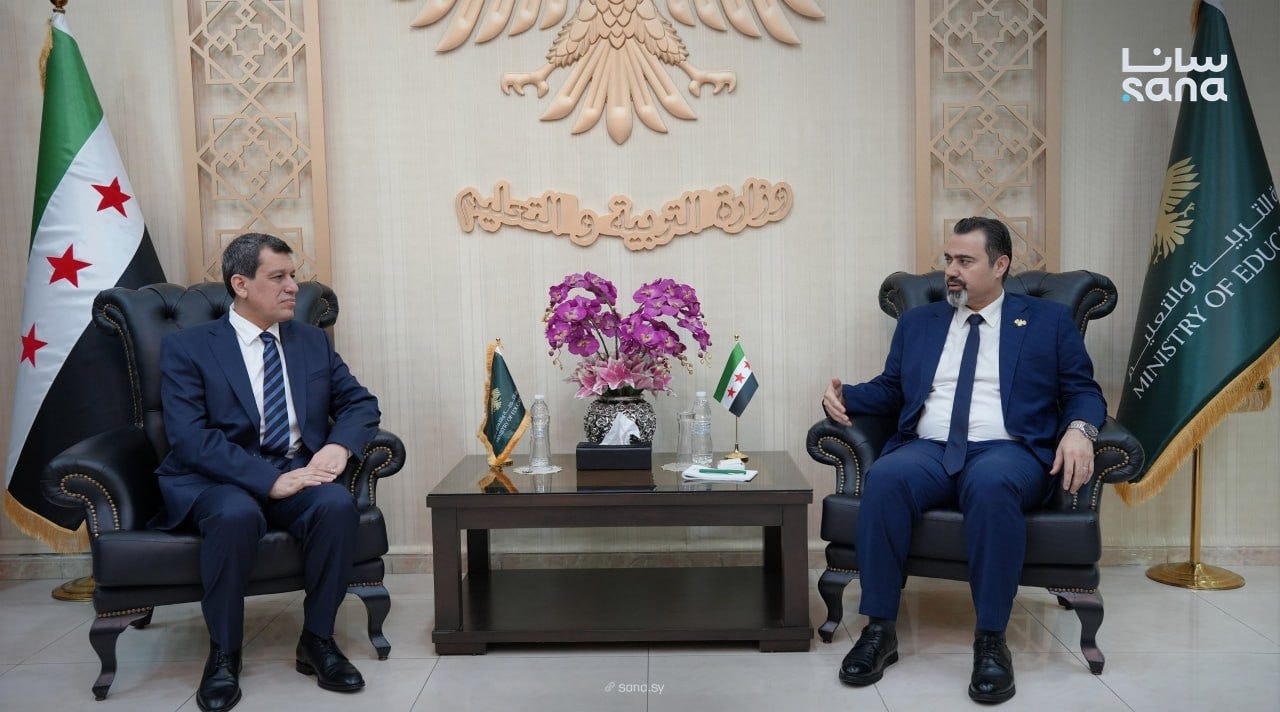
Minister of Education Mohammed Turko hosted a meeting with Presidential Advisor on Kurdish Affairs Mazloum Abdi on October 2, to discuss the ongoing process of education integration in northeast Syria and the adoption of the Kurdish language in textbooks and teaching.
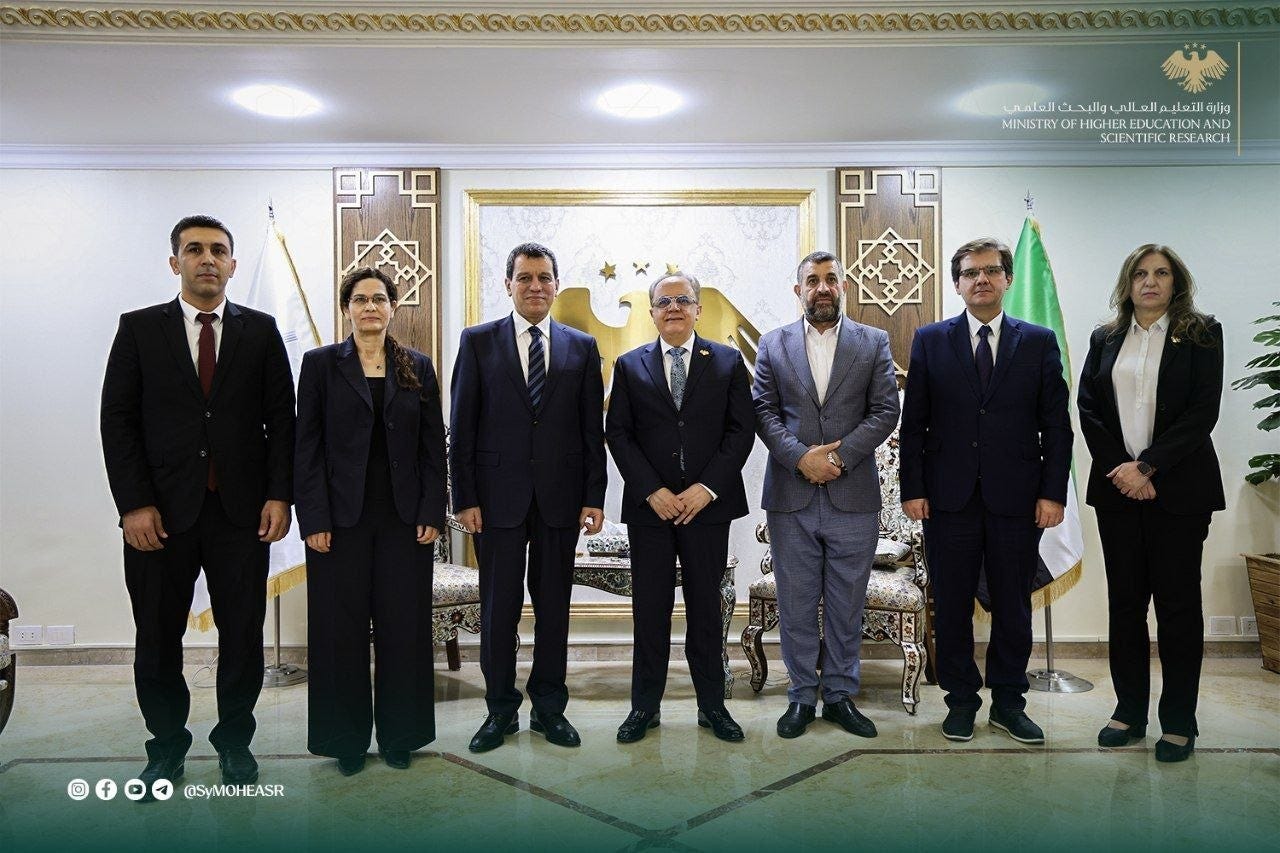
Later that day, Minister of Higher Education Marwan al-Halabi also hosted a meeting with Presidential Advisor on Kurdish Affairs Mazloum Abdi.
October 3:
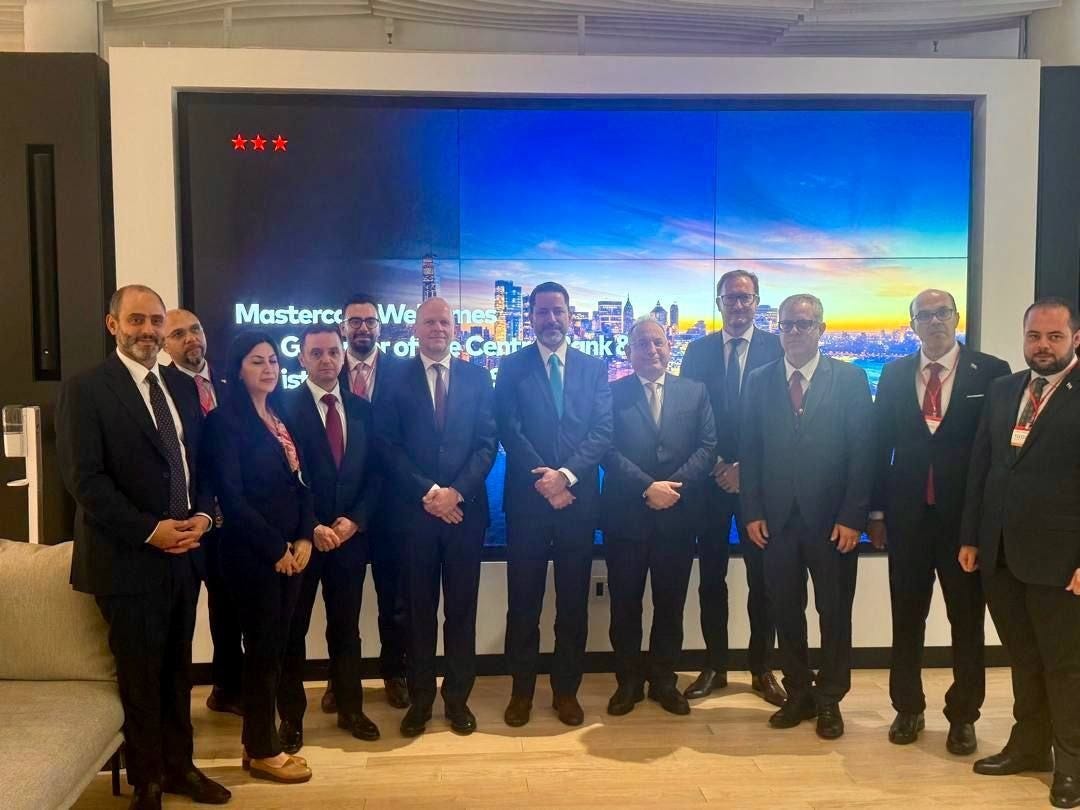
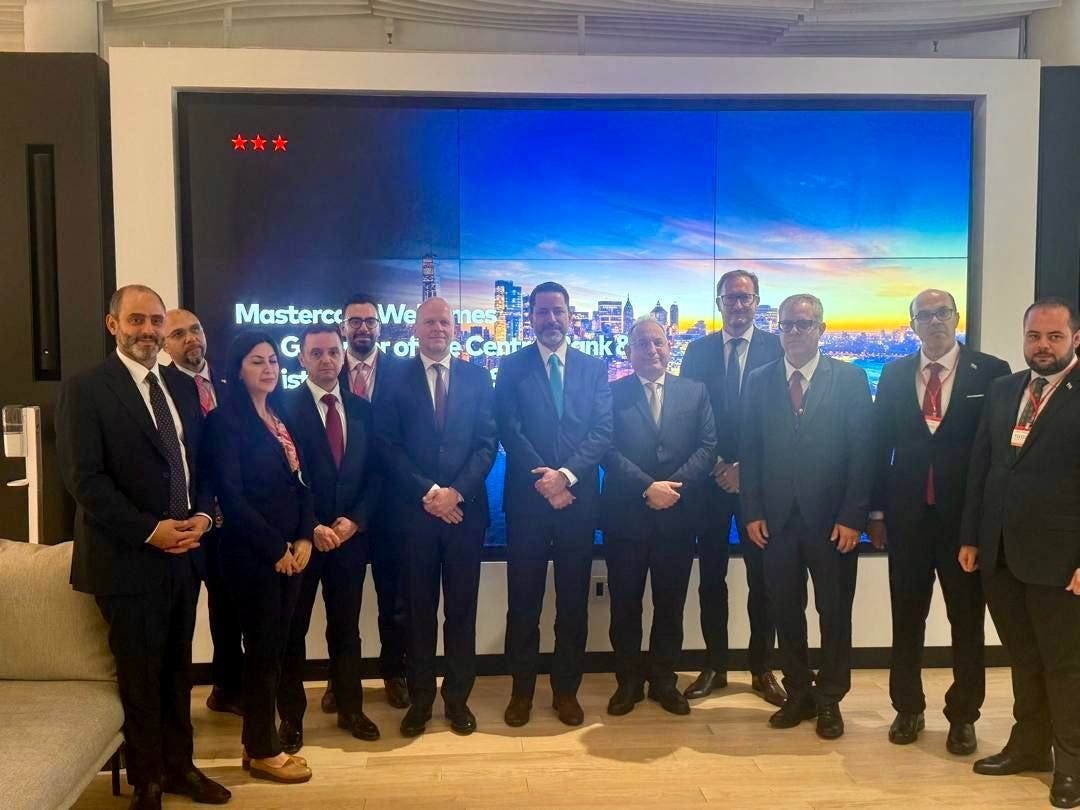
Finance Minister Mohammed Barnieh and Central Bank Governor Safwat Raslan participated in a meeting with the CEO of Mastercard, Michael Miebach, in New York, USA on October 3.
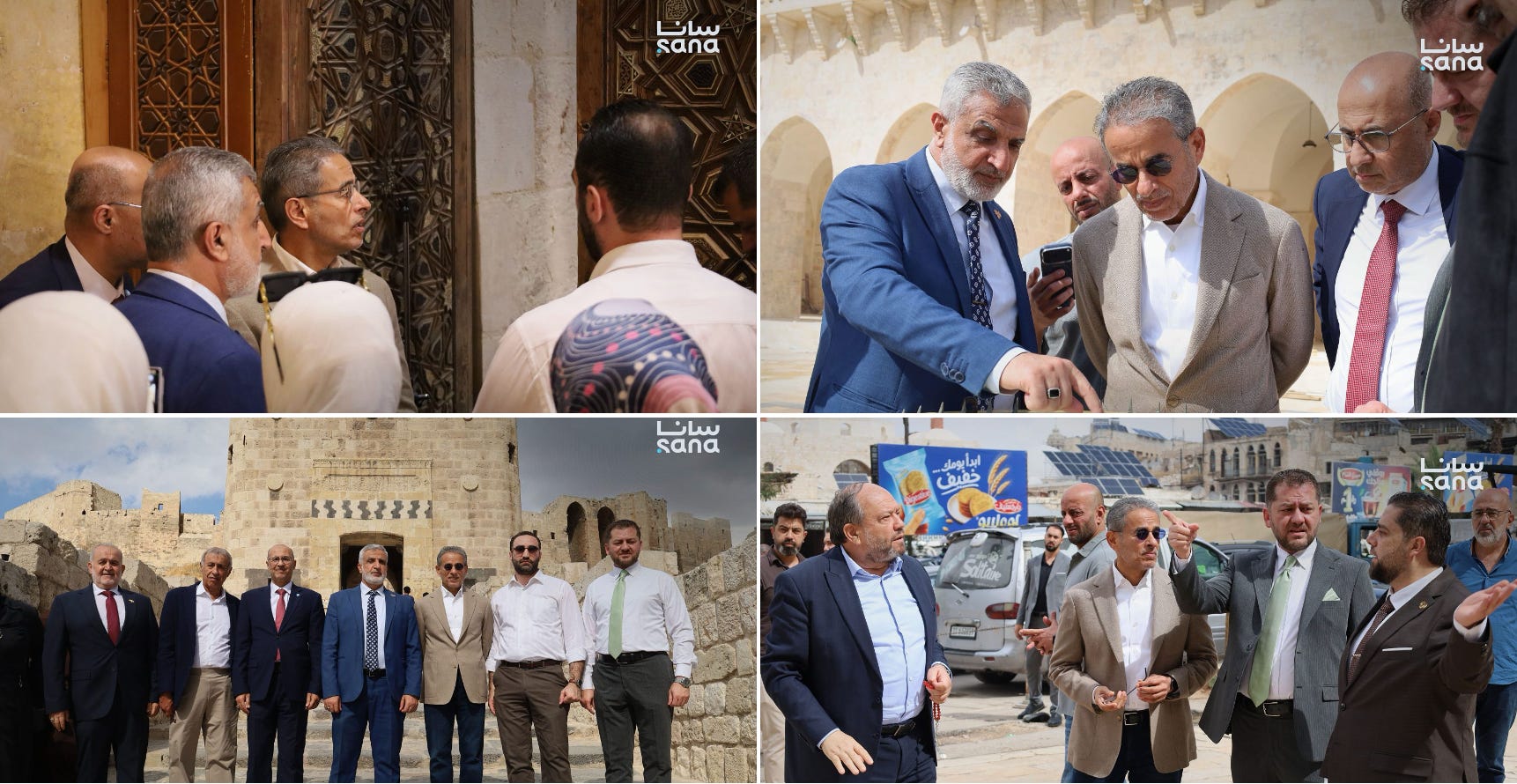
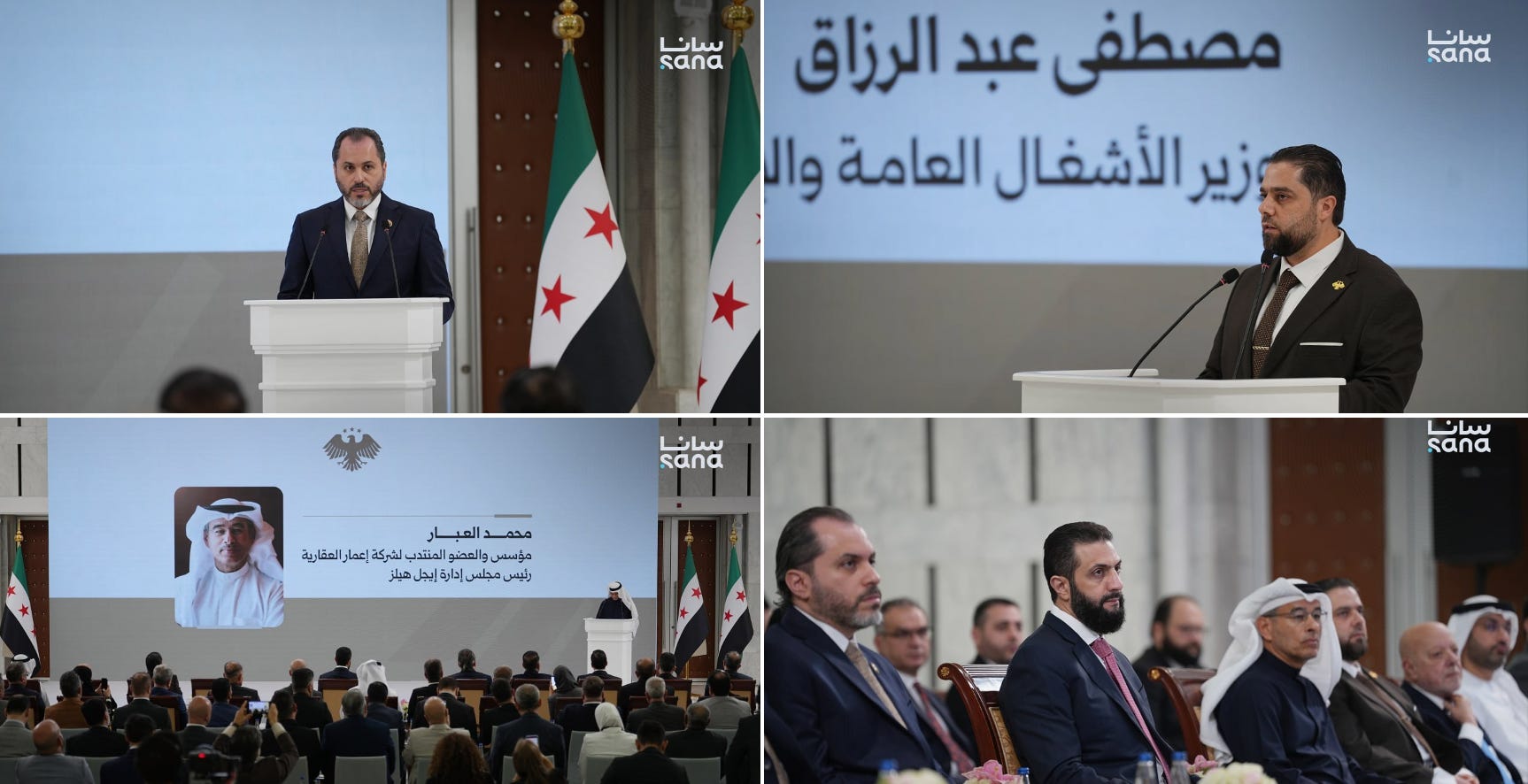
Minister of Public Works and Housing Mustafa Abdulrazzaq and Governor of Aleppo Azzam al-Gharib convened a meeting with UAE businessman Mohammed AlAbbar in Aleppo on October 3 to discuss several proposed investment opportunities in housing, real estate development, and tourism.
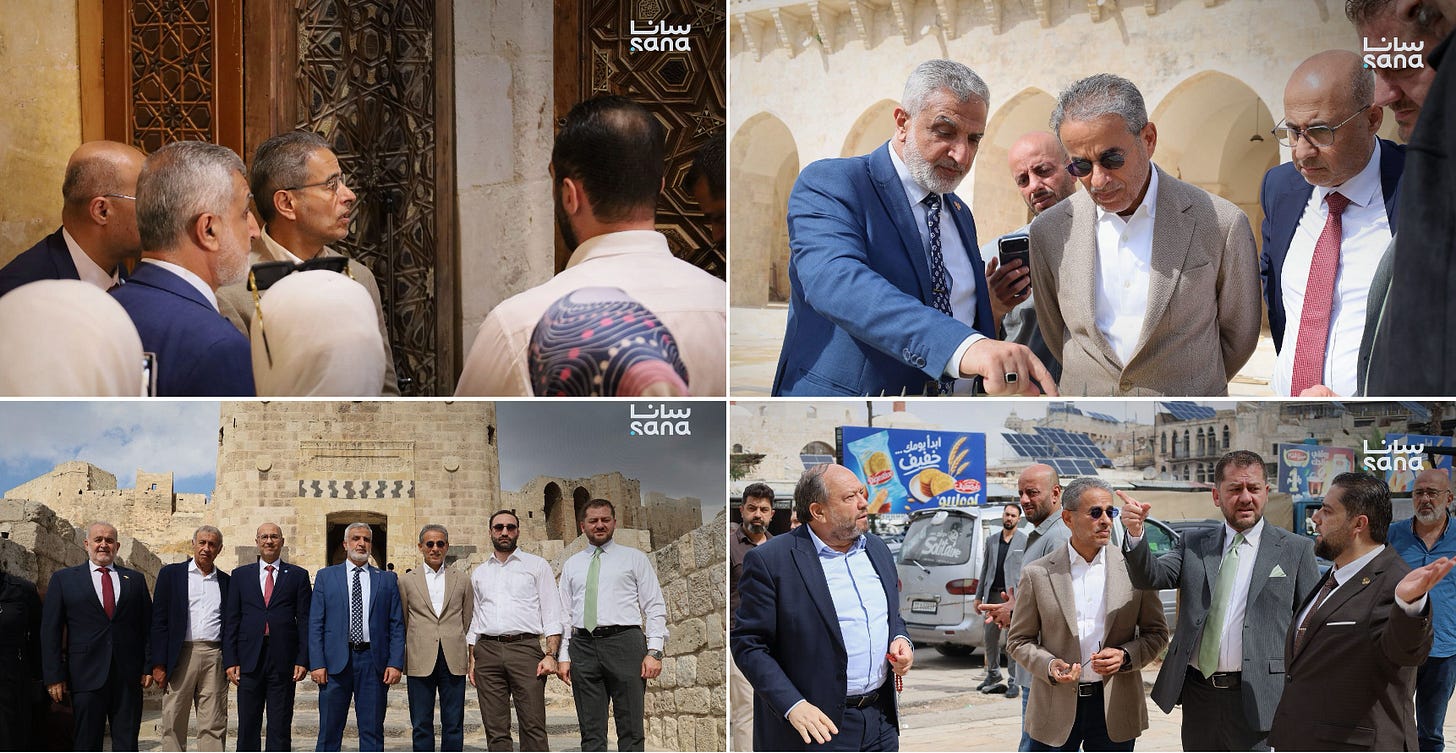
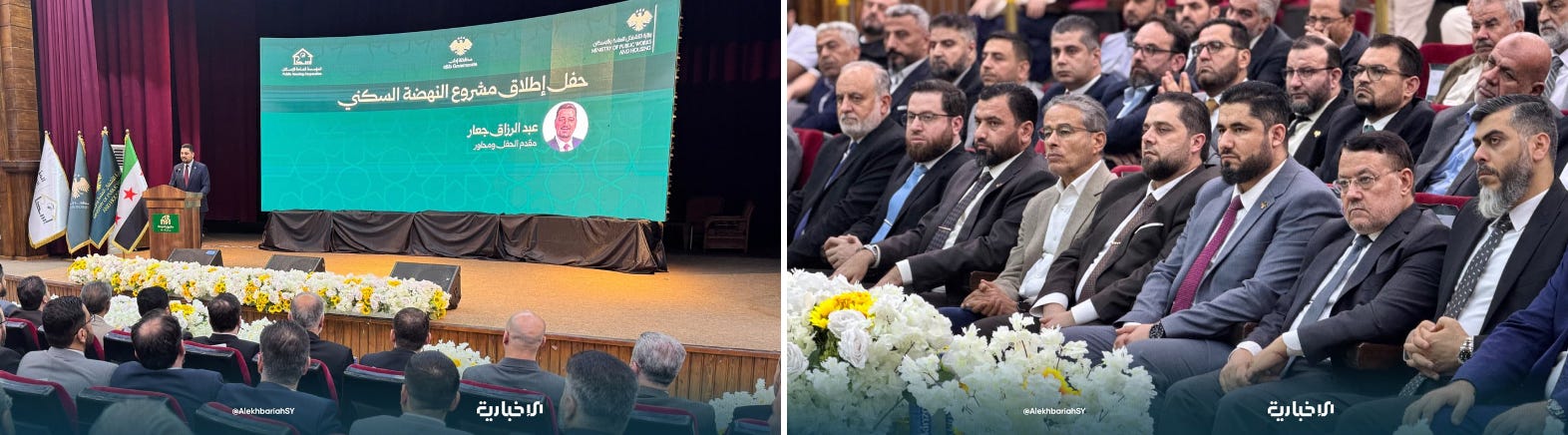
Later that day, Minister Abdulrazzaq and UAE businessman AlAbbar traveled to Idlib to participate in a ceremony marking the launch of the ‘Renaissance’ construction project, which will include 3,000 housing units along with properties devoted to educational, medical, recreational, commercial, and religious facilities in a space of 340,000 square meters.
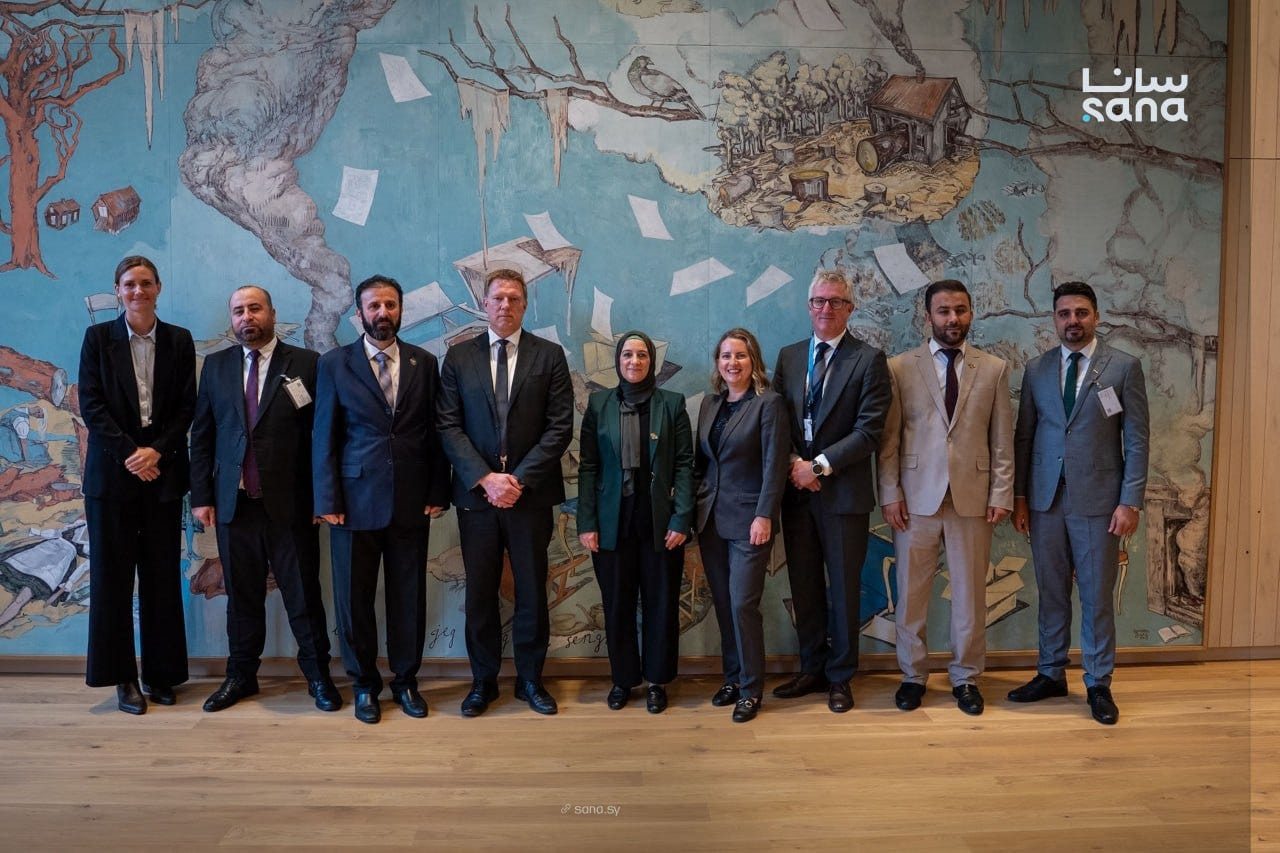
The Foreign Ministry’s Director of Expatriate and Refugee Affairs, Nahla Othman, visited the Norwegian Ministry of Justice and Public Security on October 3, meeting with Minister of State Joachim Orrin and Director General Fredrik Winstad to discuss bilateral relations and issues relating to migration, return, and cooperation in legal and procedural matters.
October 4:
Foreign Ministry Director of International Organizations Saad Baroud hosted a meeting with UNDOF commander Major General Anita Sharma on October 4 to discuss ongoing coordination over developments in southwest Syria amid continued Israeli military actions. The meeting was also attended by the MOD’s Director of the Department of International Cooperation, Colonel Ahmed Issa.
Governor of Deir ez Zour hosted a visit by Minister of Public Works and Housing, Mustafa Abdulrazzaq and UAE businessman Mohammed al-Abbar on October 4 to discuss potential investment opportunities in the region.
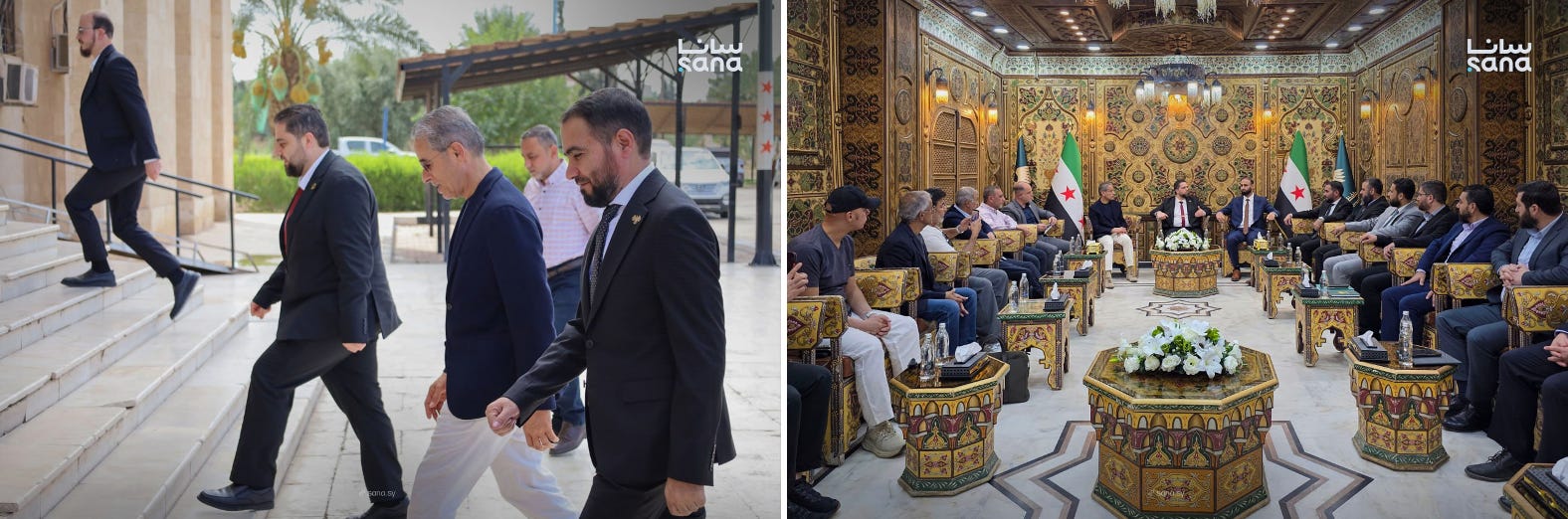
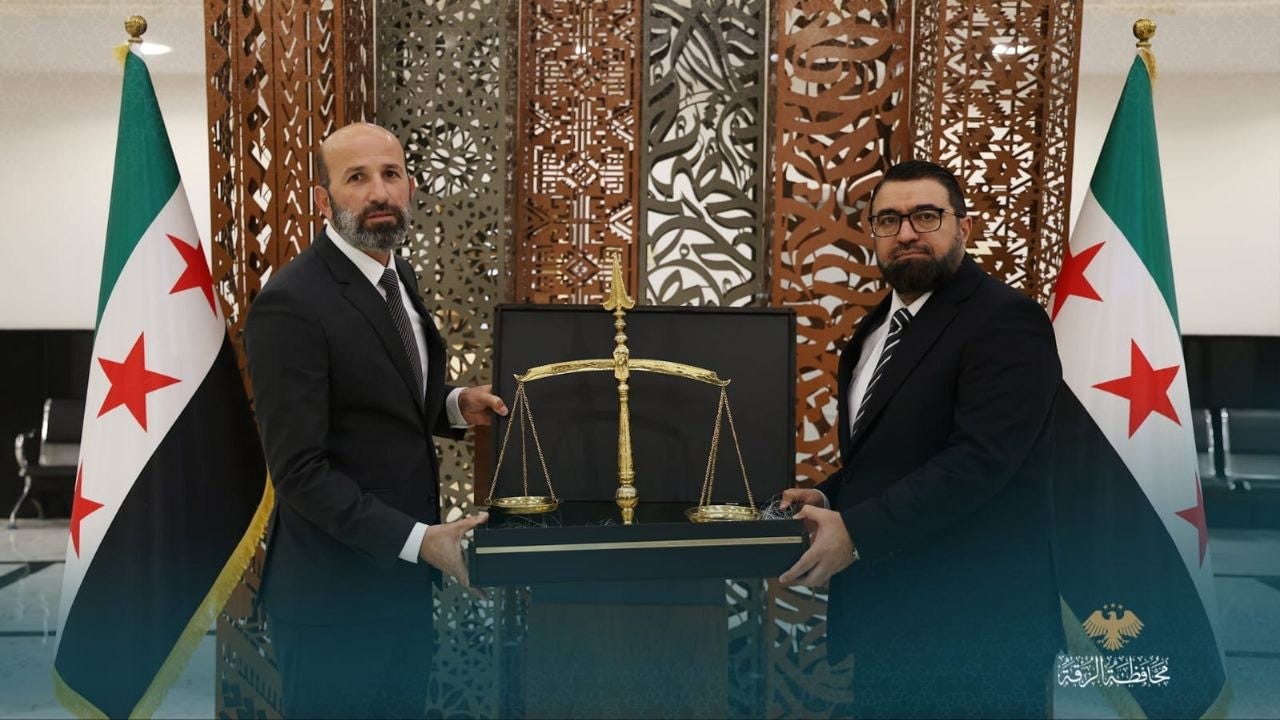
Governor of Raqqa Abdulrahman Salama hosted a visit by Minister of Justice Mazhar al-Ways on October 4 during which they discussed the need to further develop the judicial sector in Raqqa.
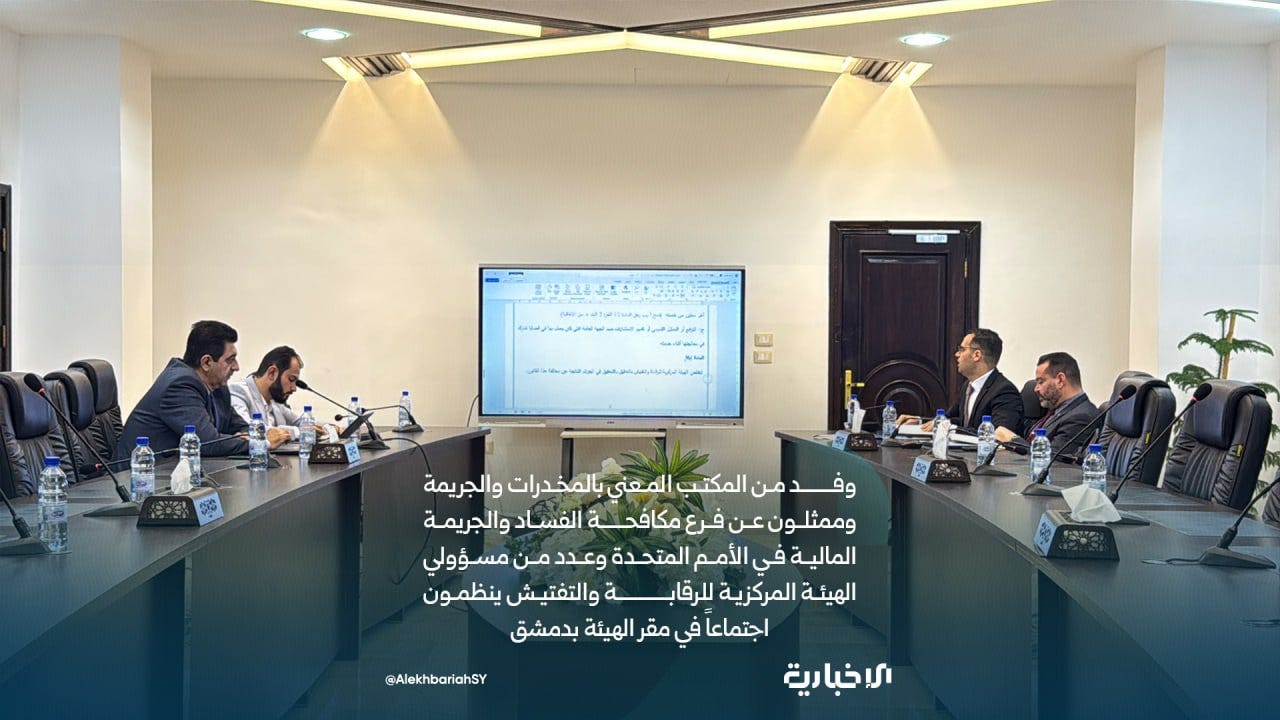
The Authority for Supervision and Inspection hosted a meeting with a delegation from the UN Office on Drugs and Crime on October 4 to discuss cooperation in improving oversight capabilities and development national legal frameworks for combating corruption and financial crimes.
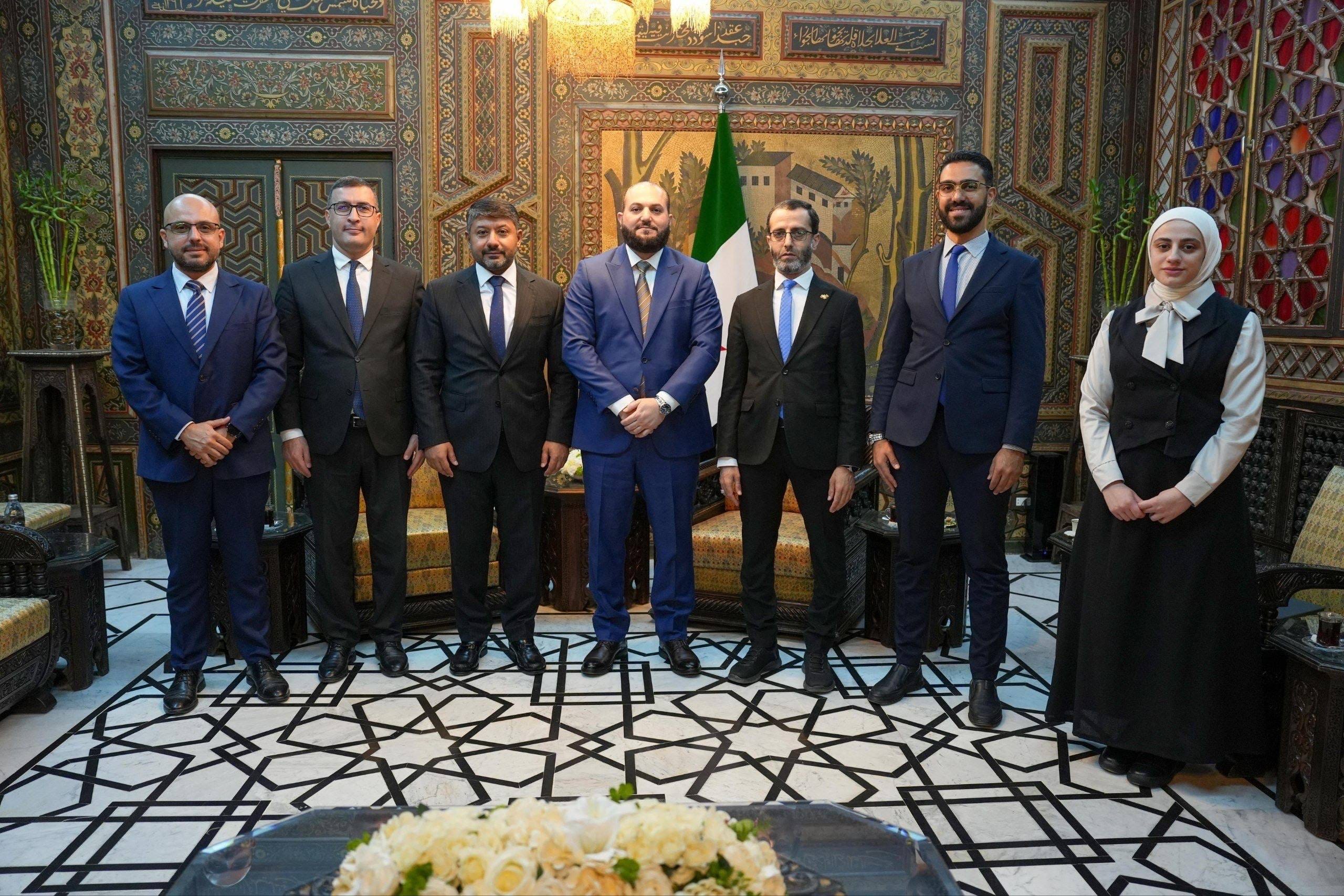
Governor of Damascus Maher Marwan hosted a meeting with Azerbaijan’s Ambassador to Syria, Alnur Shah Husynov, on October 4 to discuss proposed cooperation between Damascus and Baku.
October 5:
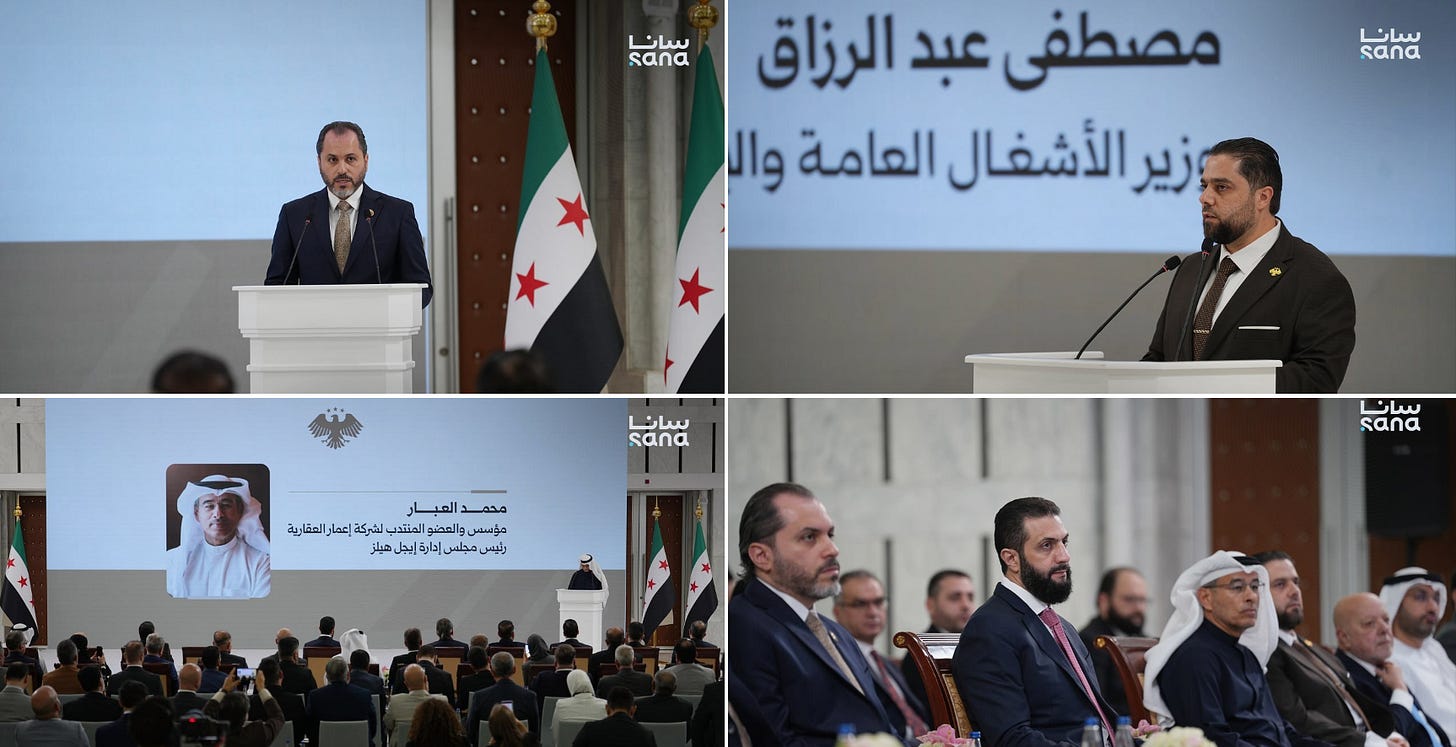
President Ahmed al-Sharaa presided over a ceremony in Damascus for the signing of a framework agreement with UAE-based Mohammed al-Abbar’s Eagles Hills construction company to begin work towards implementing the Damascus Hills, Tadamun Towers projects in Damascus and the Eco Life project in Latakia.
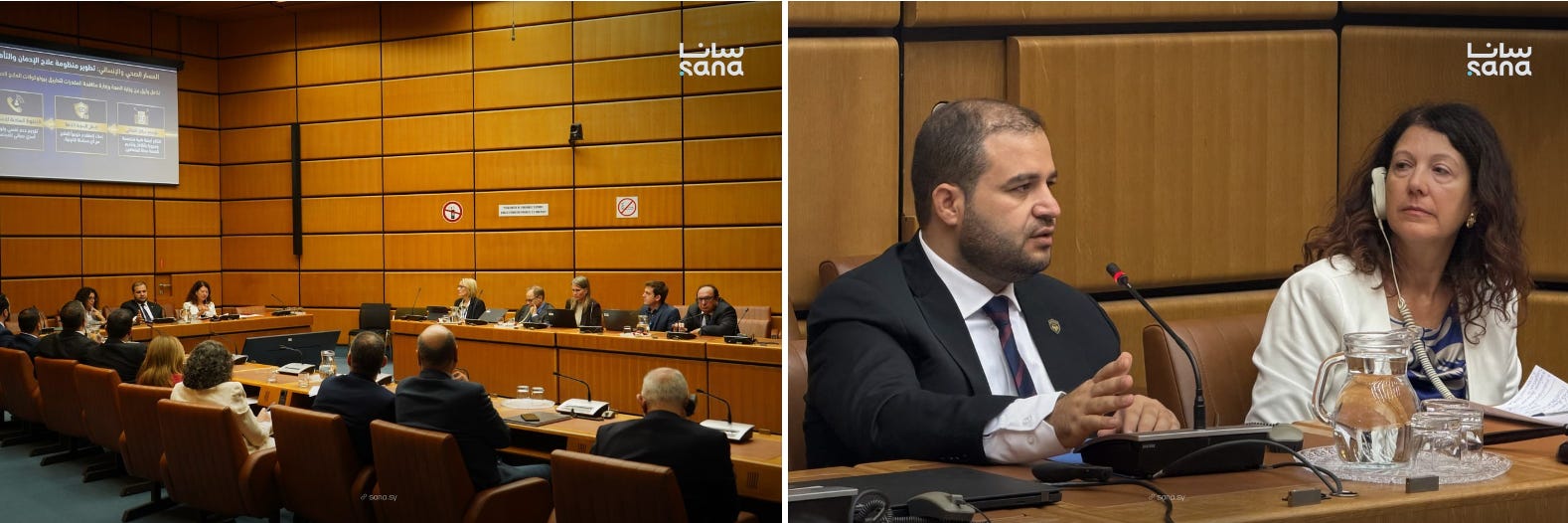
An MOI delegation led by Director of Counternarcotics, Brigadier General Khaled Eid, traveled to Vienna, Austria and participated in meetings with officials at the UN.
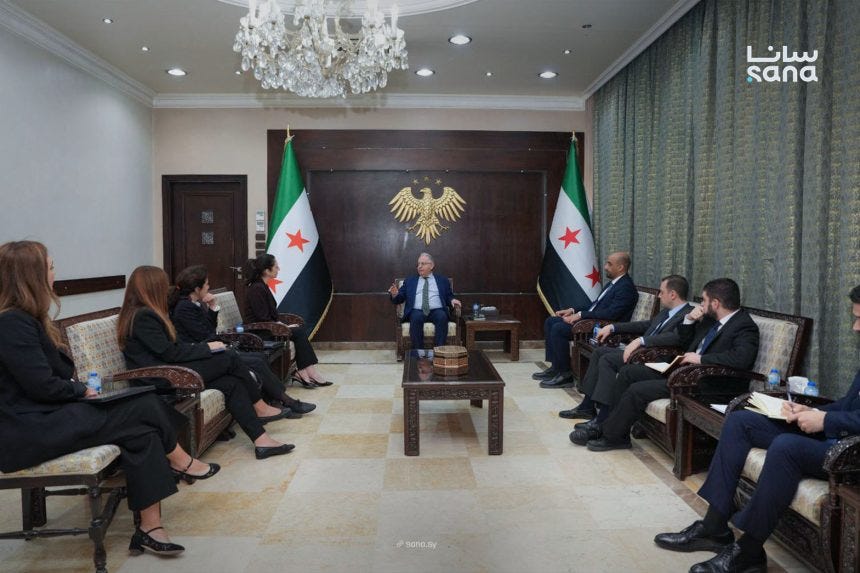
Finance Minister Mohammed Barnieh hosted a meeting with a delegation from the World Bank’s Multilateral Investment Guarantee Agency (MIGA) on October 5, during which they discussed ways for Syria’s financial sector to provide structural guarantees to investors and risks.
Minister of Telecommunications and Information Technology Abdulsalam Haykal met with Parliament Speaker Abdulhamid al-Awak on October 5 to discuss legislative priorities to support the telecommunications and technology sectors.
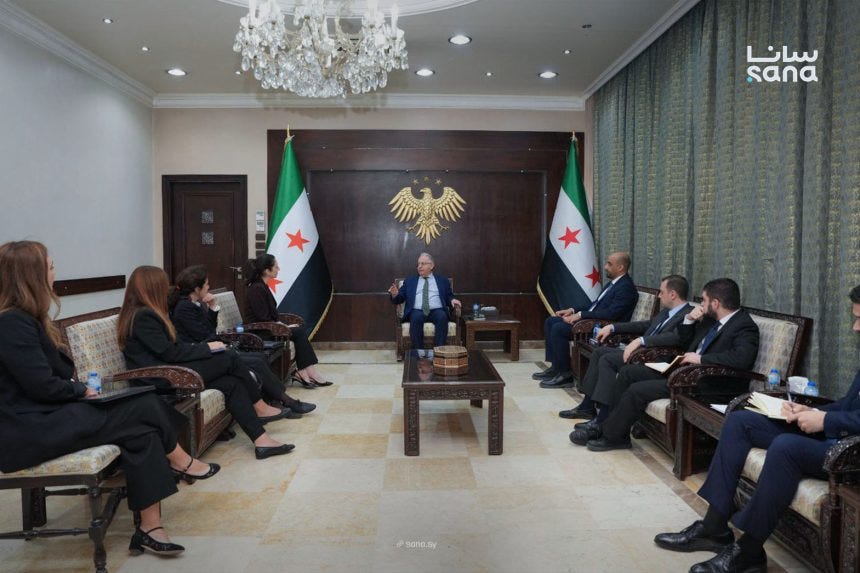
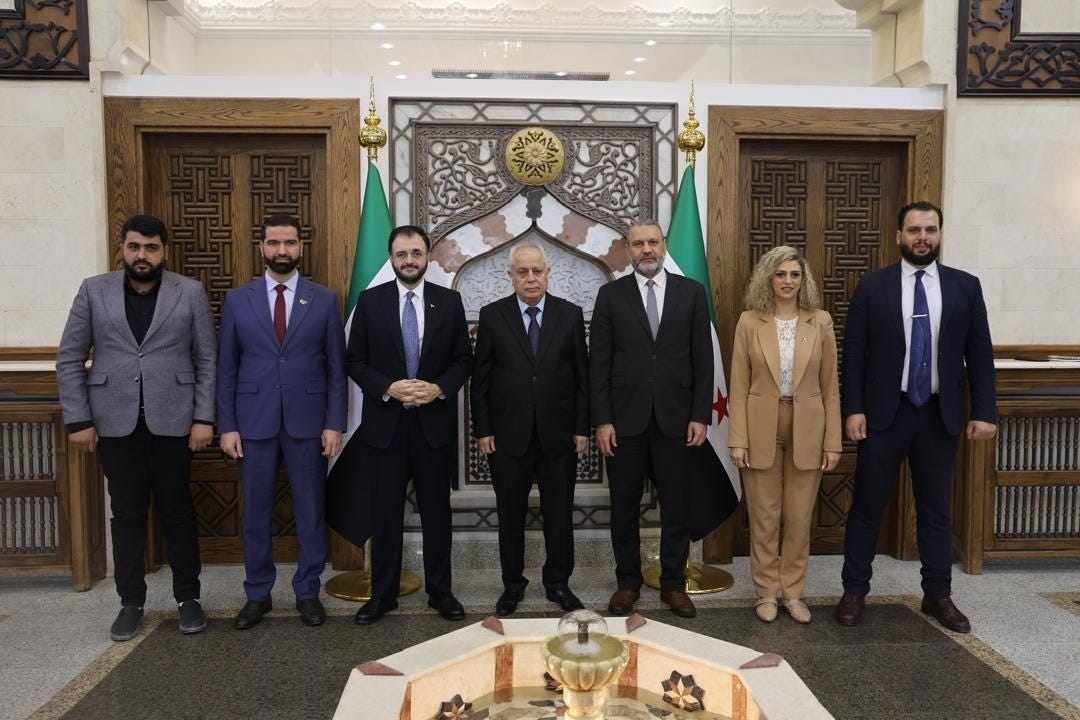
The Chairman of Syria’s Investment Authority, Ahmed Rawad Ramadan, hosted a meeting with the UNDP Country Representative Melanie Hauenstein on October 5 to discuss prospects for cooperation in “supporting development and sustainable projects, preserving existing Syrian industries, promoting their continuity, and protecting the communities associated with them.”
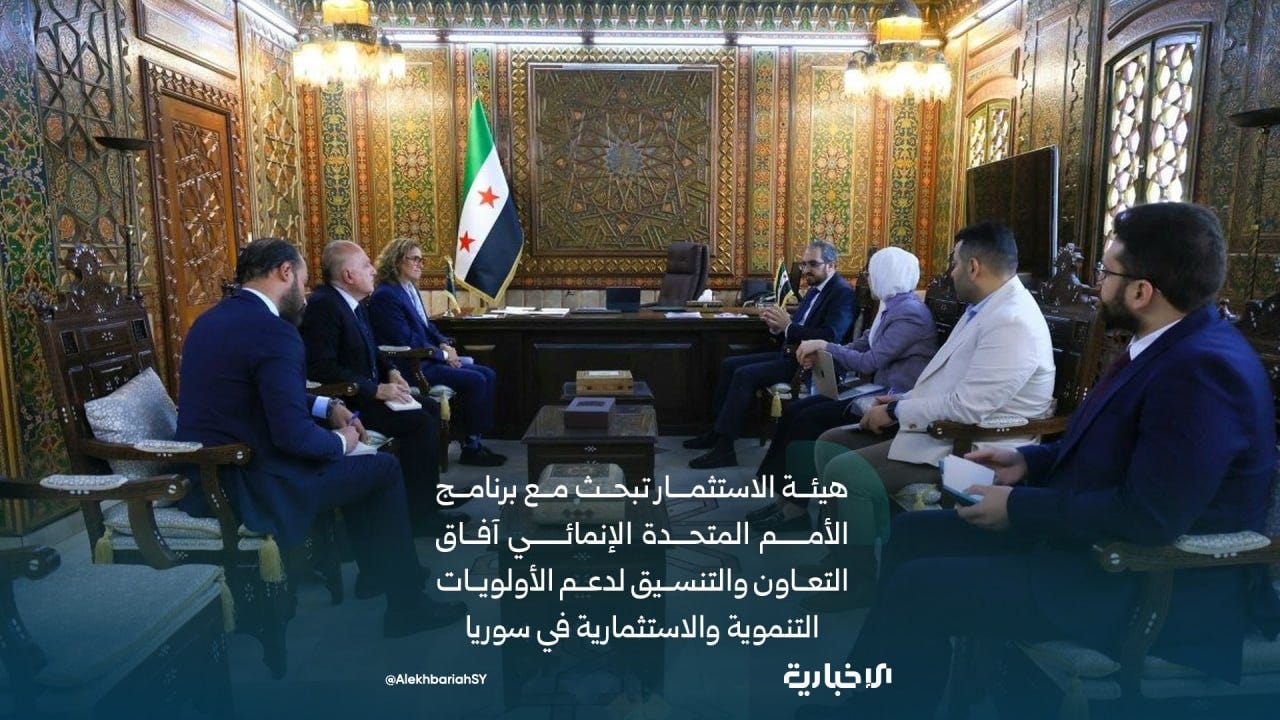
The Foreign Ministry’s Director of Arab Affairs, Mohammed Taha al-Ahmed, hosted a meeting with Egyptian Charge d’Affaires Mohammed El Feki on October 5.
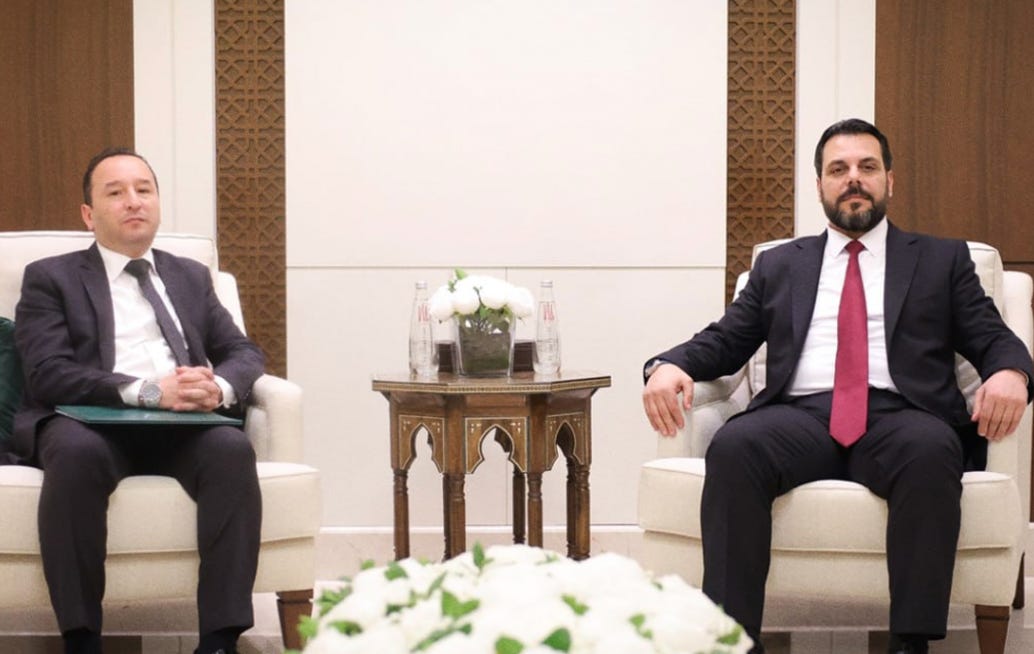
The Foreign Ministry’s Director of Protocol Affairs, Mohammed Abdulsalam, hosted a meeting with Hungary’s Charge d’Affairs Soós István Gyula on October 5.
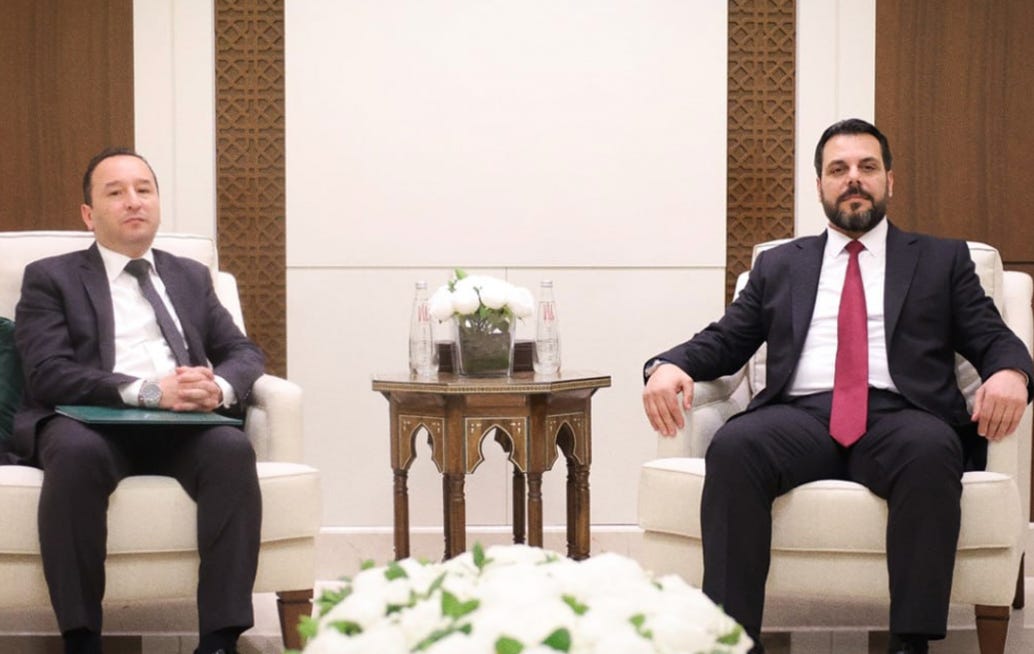
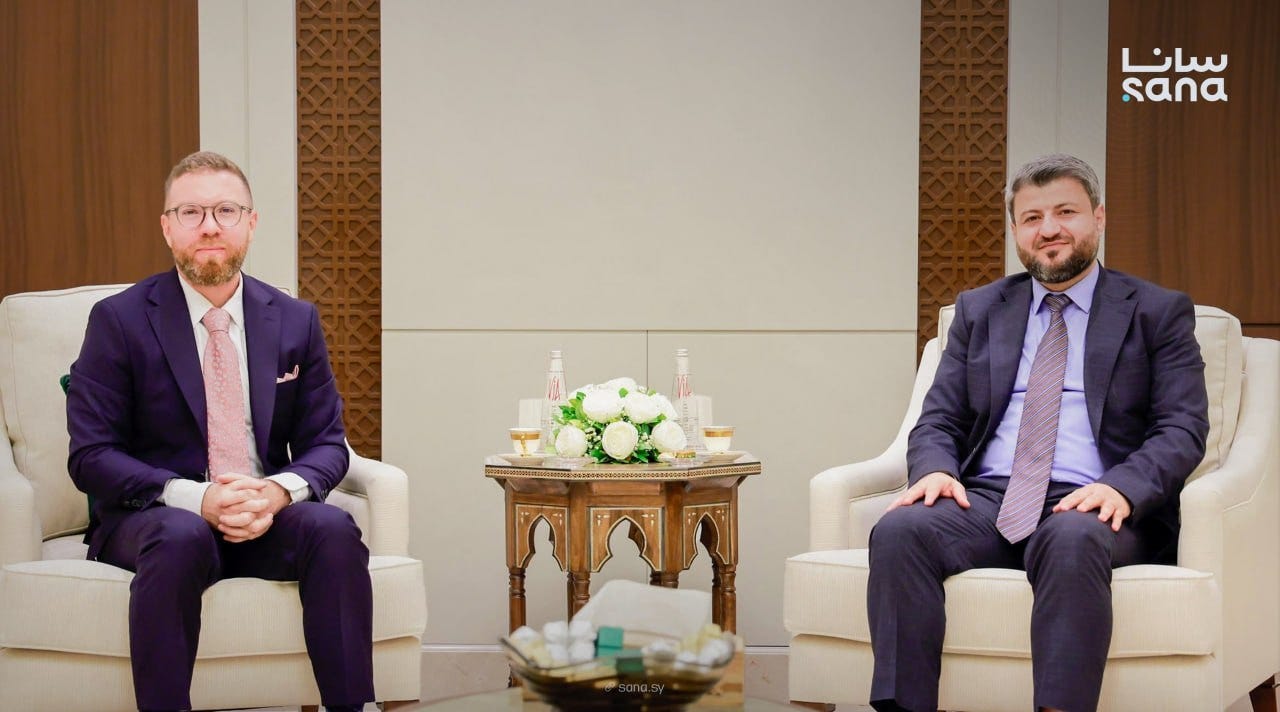
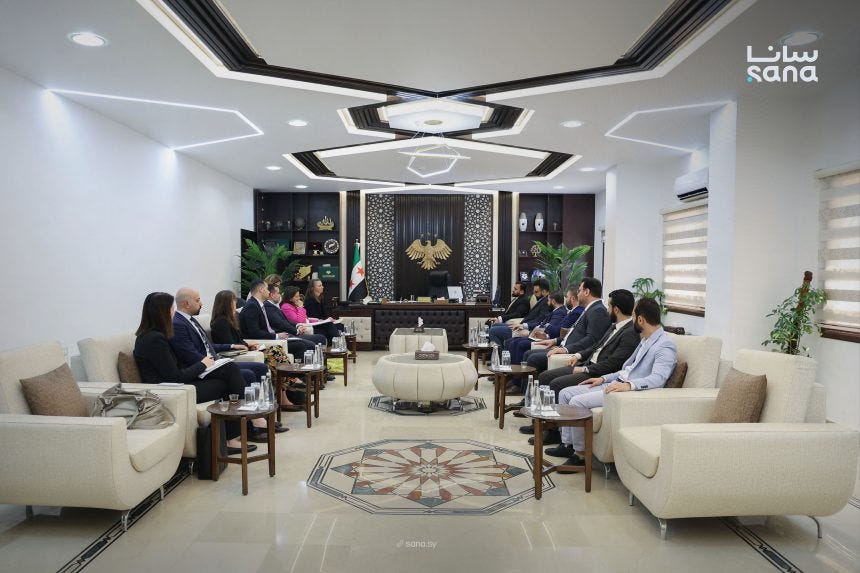
The Director of the Central Authority for Supervision and Inspection, Amer al-Ali, hosted a meeting with Germany’s Deputy Head of Mission, Anna Stejka, on October 5 to discuss proposals for cooperation in “combating corruption and transnational financial crimes, asset recovery, promoting integrity and transparency, and developing relevant legal and institutional frameworks.”
Appointments:
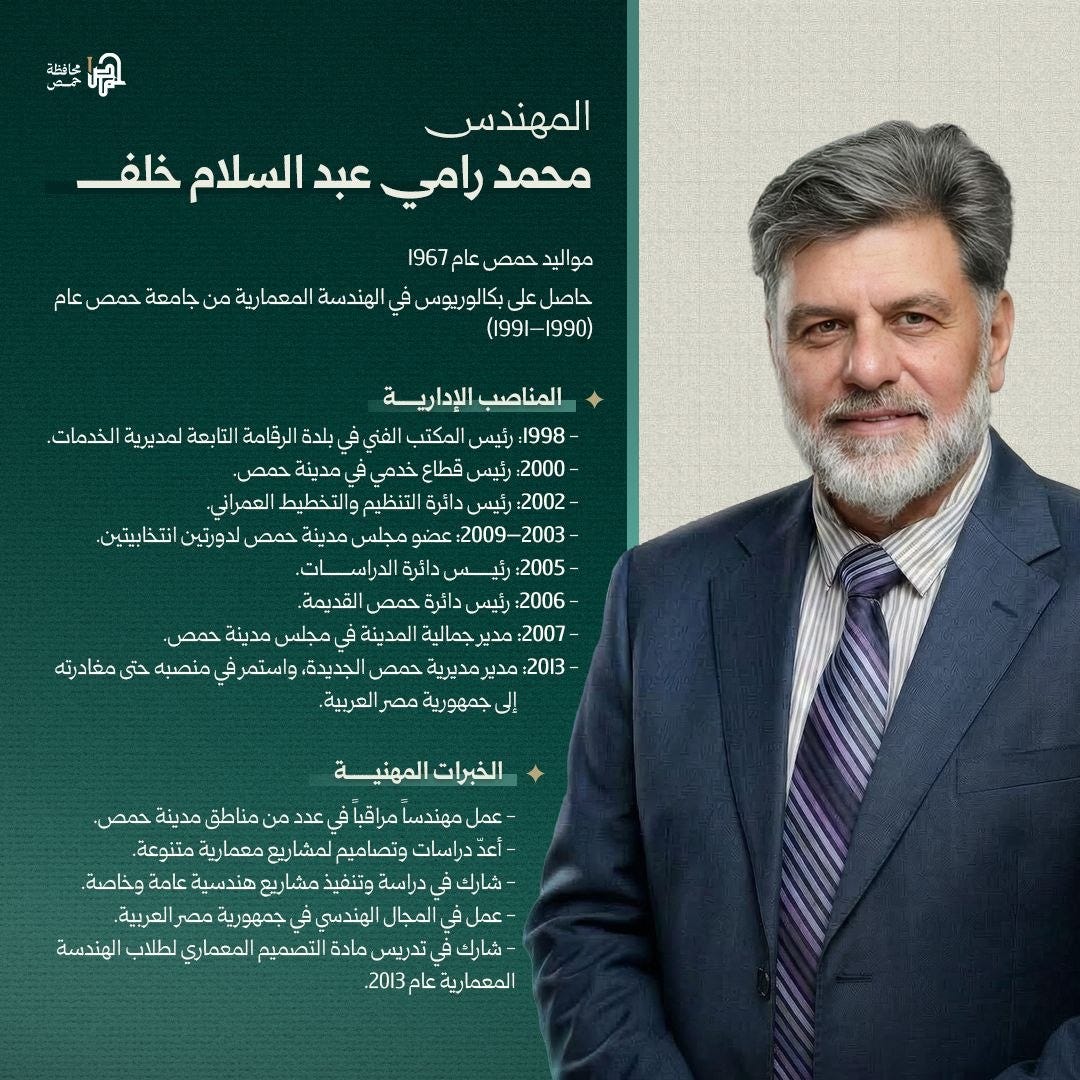
Rami Khalaf was appointed as Chairman of the Homs City Council on September 30. He replaced Bashar al-Sbai, who has moved to the General Secretariat of the Presidency.
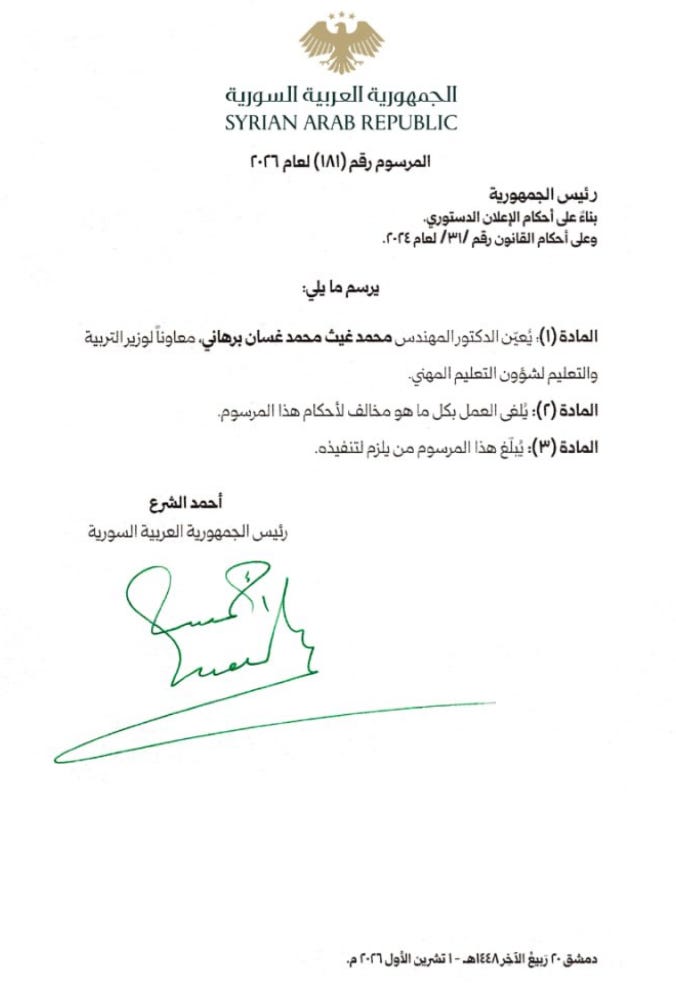
President Ahmed al-Sharaa issued a decree on October 4 appointing Mohammed Ghaith Barhani as the new Assistant Minister of Education for Vocational Affairs.
Political Developments:
Economic Developments:
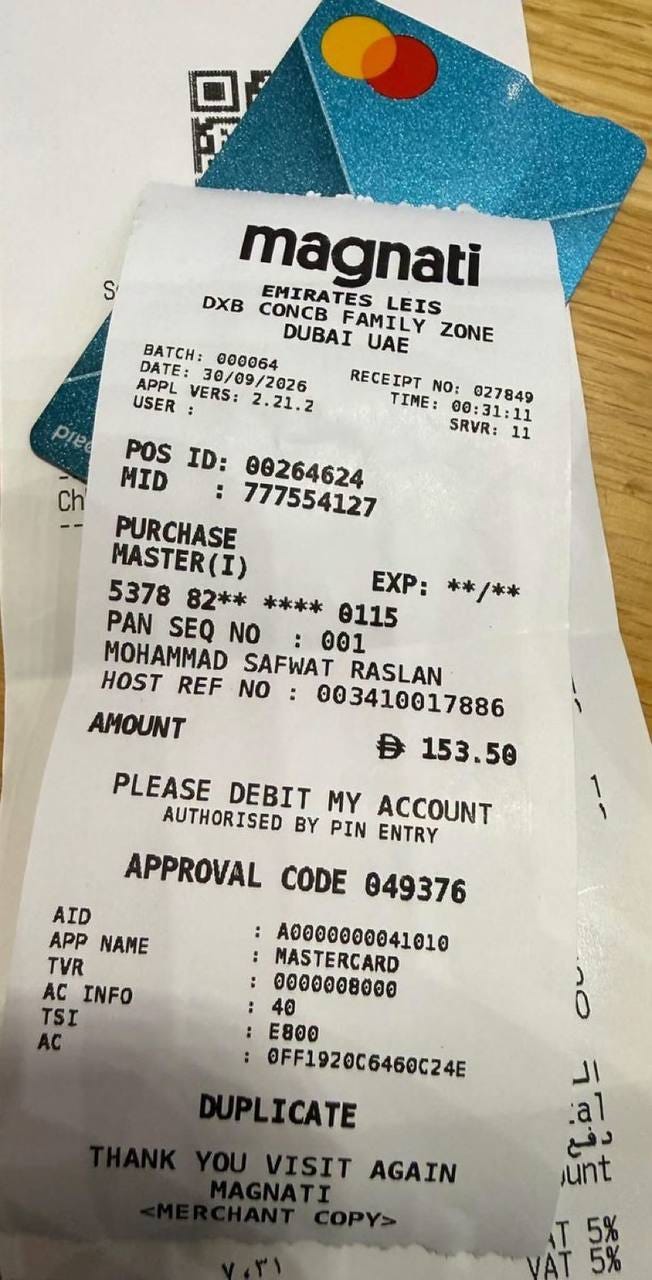
Central Bank Governor Safwat Raslan announced on September 29 that the first electronic transaction made by a Syrian bank card (Mastercard) had been completed in Dubai International Airport. “This may seem like a routine payment to many, but for Syrians, it means a lot: a Syrian card that works globally,” he added.
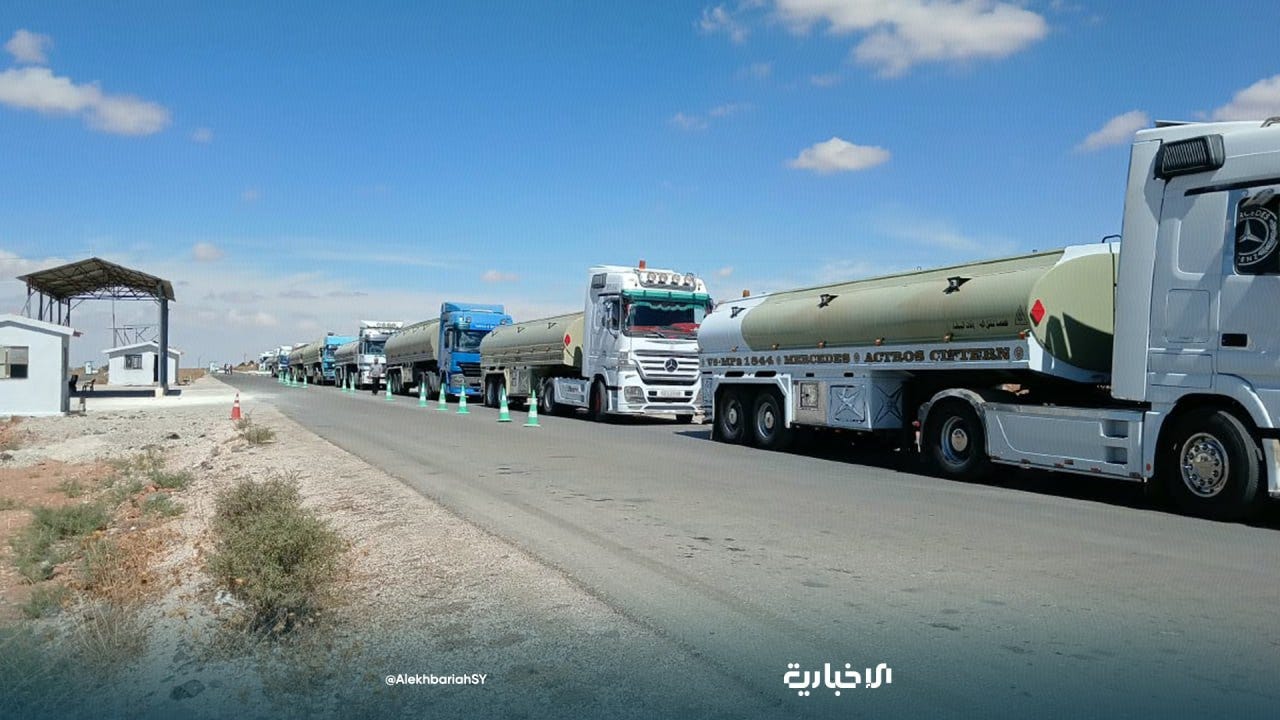
A convoy of 22 tankers carrying gasoline and diesel entered Suwayda on October 2 as part of an initiative coordinated by Governor Mustafa Bakkour to secure quantities of fuel, ensure their continued supply, and to prevent distributors inside the governorate from manipulating supply and/or prices.
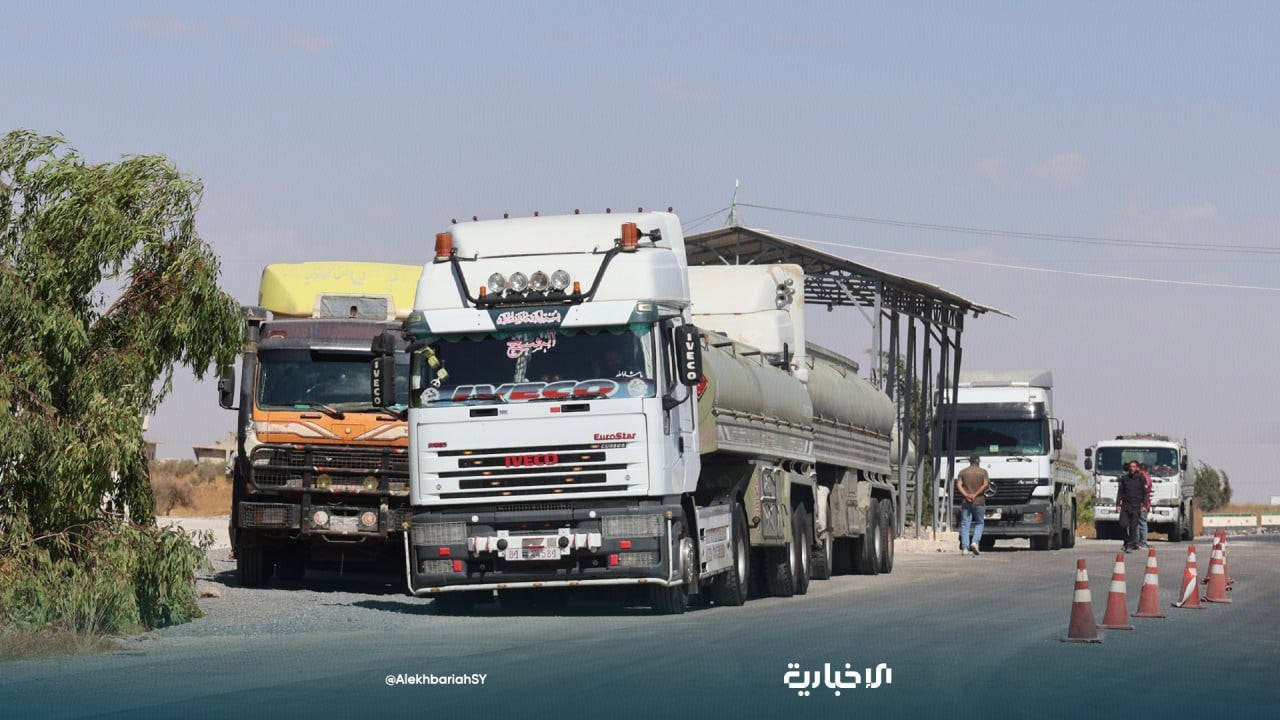
A convoy of 11 tankers carrying gasoline and diesel entered Suwayda on October 4 as part of an initiative coordinated by Governor Mustafa Bakkour.
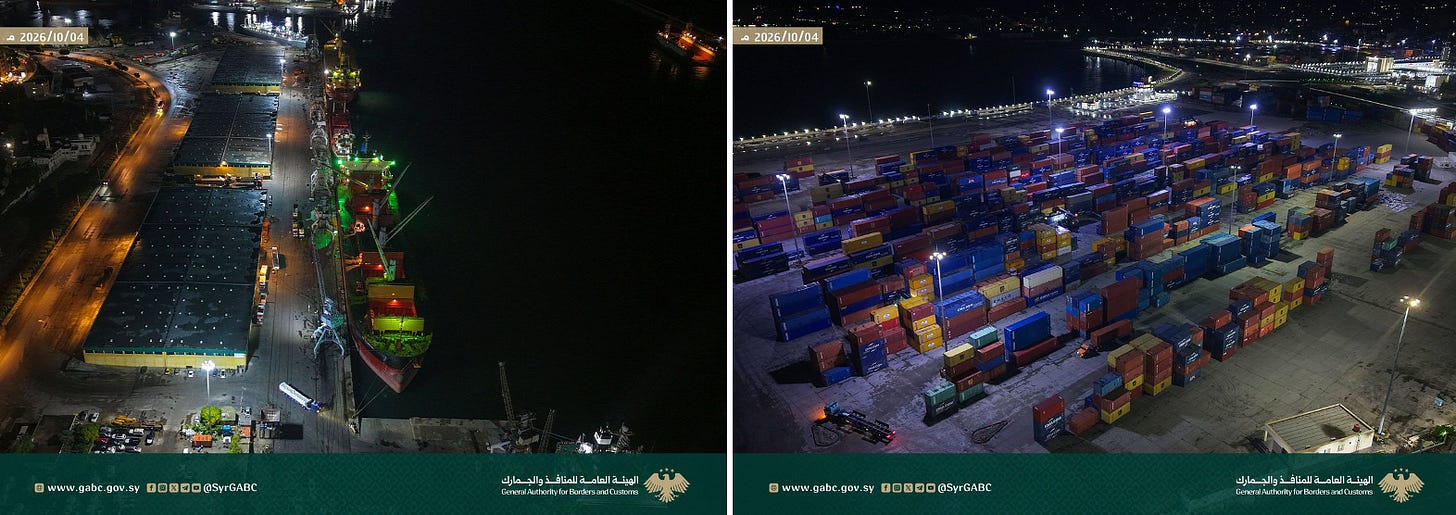
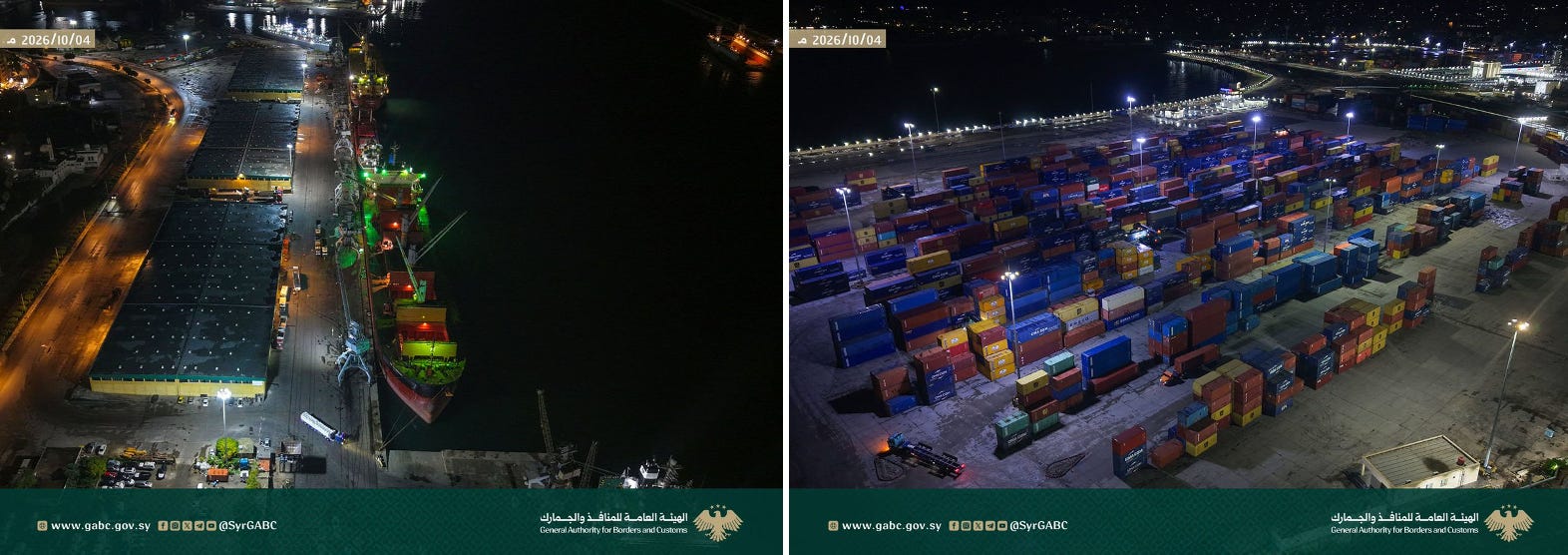
The General Authority for Border Crossings and Customs confirmed on October 4 that the Port of Latakia had processed over 3.7 million tons of general cargo and containerized goods from the start of January 2026 through the end of September 2026 — on a total of 532 ships (250 general cargo ships; 247 container ships; 22 ships arriving for repairs, and 13 passenger ships).
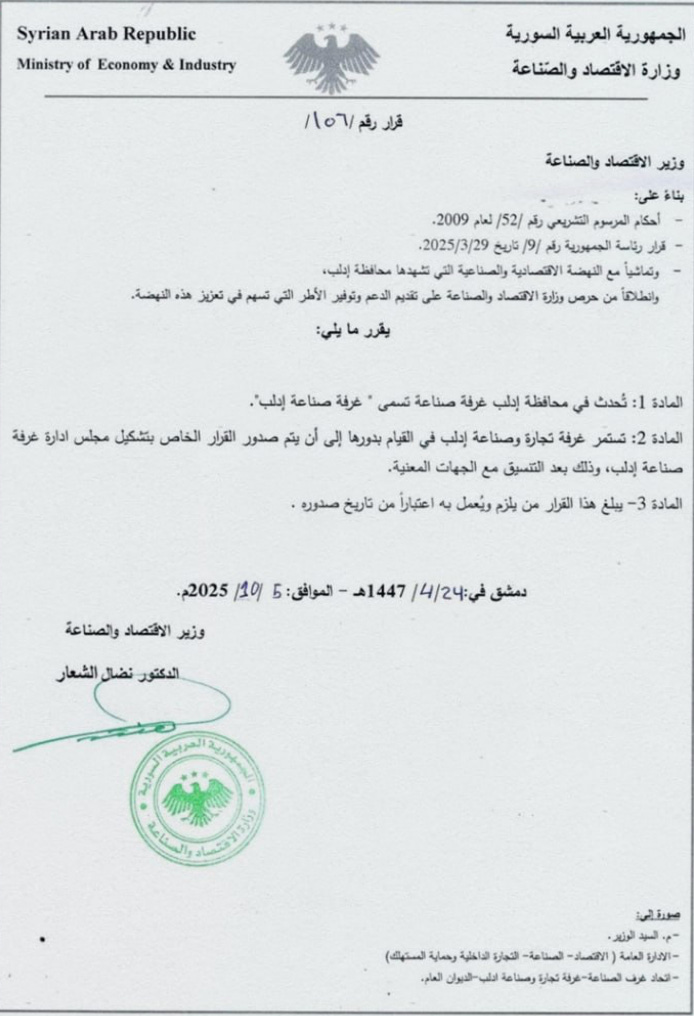
Minister of Economy and Industry Nidal al-Shaar issued a decree on October 5 establishing a chamber of industry in Idlib to assist in the region’s industrial growth.
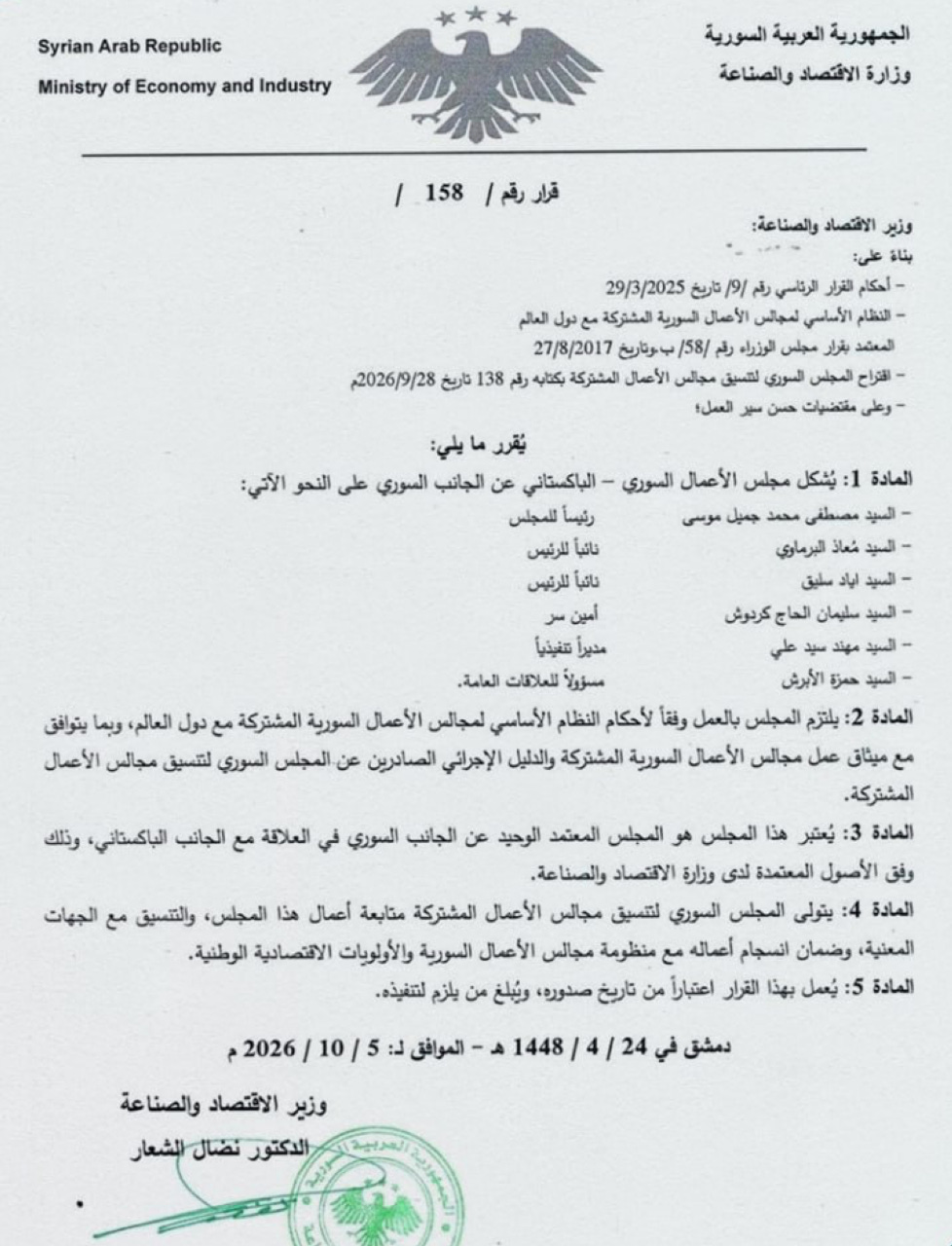
Minister of Economy and Industry Nidal al-Shaar issued a decree on October 5 establishing the Syrian-Pakistani Business Council.
Infrastructure Developments:
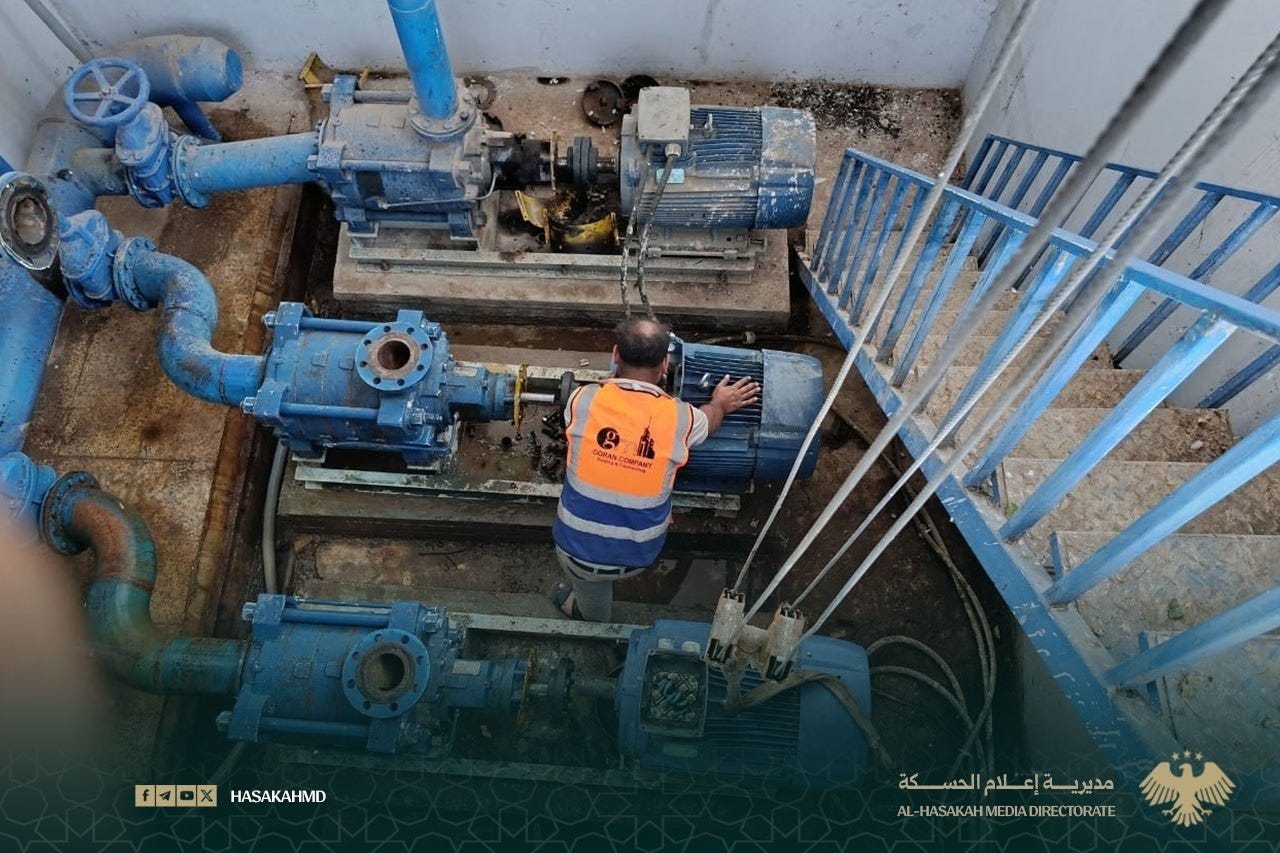
Local engineers completed rehabilitation work on two water pumps at the Tel Adan station in Hasakeh on September 29, restoring full capacity supplies to the surrounding area. The work was undertaken with the support of SARC and ICRC.
The Syrian Petroleum Company (SPC) announced on September 29 that the second phase of the Arab Gas Pipeline project had begun, with a 186km length 36-inch-diameter pipeline to be reconstructed and repaired. Completing this section will finish the project, reinstalling a 566km-long pipeline stretching from Turkey to Jordan through Syria.
The Chairman of Syria’s General Authority of Civil Aviation and Air Transport, Omar al-Hosari, announced on September 29 that new requests for access to Syrian airspace had recently been received from several Asian countries, in parallel to increasing airspace use by airlines from the Gulf and Middle East.
An explosion struck within the Tishreen Power Station’s Pressure Reducing Station (PRS) facility late on September 30, damaging both gas pipelines feeding the station. The fire was put out within two hours, but the incident forced the shut down of the Deir Ali, al-Nassariyah and Tishreen stations and enforced significant electricity rationing in the surrounding region.
The Syrian Electricity Company announced on October 1 that the al-Nassariyah and Deir Ali power plants had resumed full service, but that the Tishreen plant remained out of service due to damage.
On October 1, Governor of Quneitra Ghassan al-Sayyed Ahmed announced the launch of the “Our Golan Deserves It” campaign — an initiative to support rehabilitation work in roadways, sanitation, public lighting, and other core services throughout the governorate.
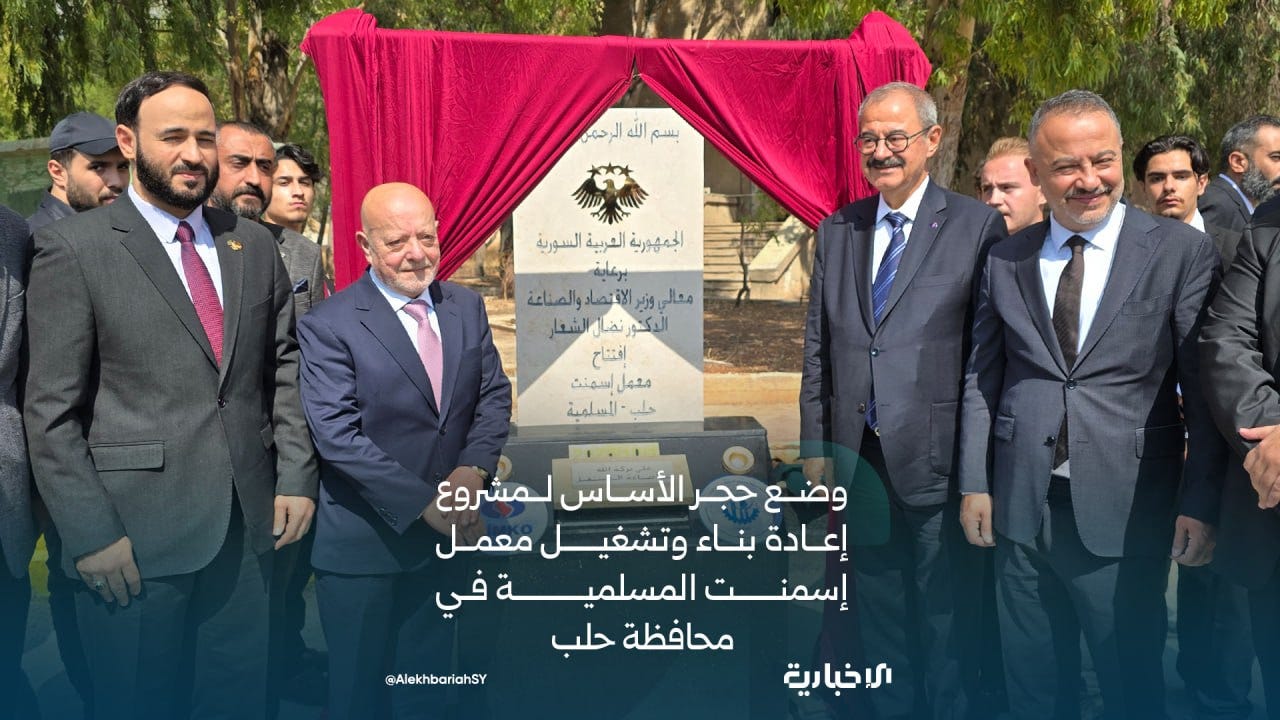
Minister of Economy and Industry Nidal al-Shaar presided over a ceremony in which the foundation stone for the new Al-Musallamiya Cement Plant in Aleppo was laid alongside Governor Azzam al-Gharib. The project is funded by a Turkish company, “Timco.”
In subsequent comments, General Manager of the Cement and Building Materials Company, Mahmoud Fadila, confirmed that the first phase of work will be rubble removal and that within 3 years of that being cleared, the plant will be fully operational, with a production capacity of 2 million tons per year.
Governor of Deir ez Zour Ziyad al-Ayyash confirmed on October 1 that the reconstruction of the al-Mayadin Bridge had begun, supported by Syria’s Construction and Engineering Company in partnership with the Turkish Roads Construction Company.
The Director General of Syrian Post, Imad Eddin Hamad announced on October 1 that Syria’s postal services and connectivity worldwide had fully resumed via the Universal Postal Union (UPU) network.
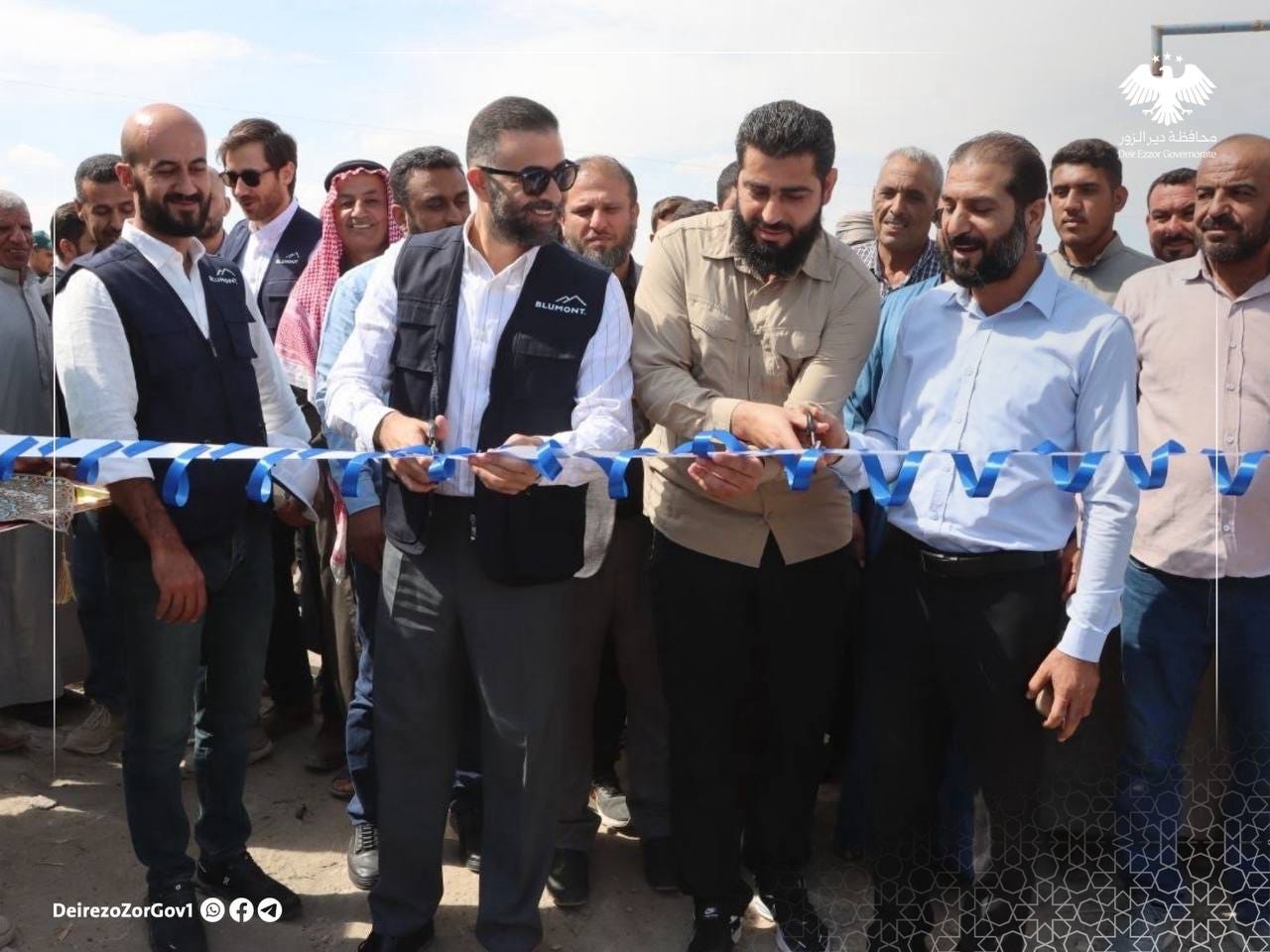
Local authorities inaugurated two water pumping stations in the Safira area of Deir ez Zour on October 1, following extensive rehabilitation work supported by the U.S. NGO Blumont.
The Syrian Petroleum Company (SPC) announced on October 2 that the Jibs has pipeline in Deir ez Zour had been reactivated following repairs to a section that was subjected to sabotage in the Shoula area several days earlier.
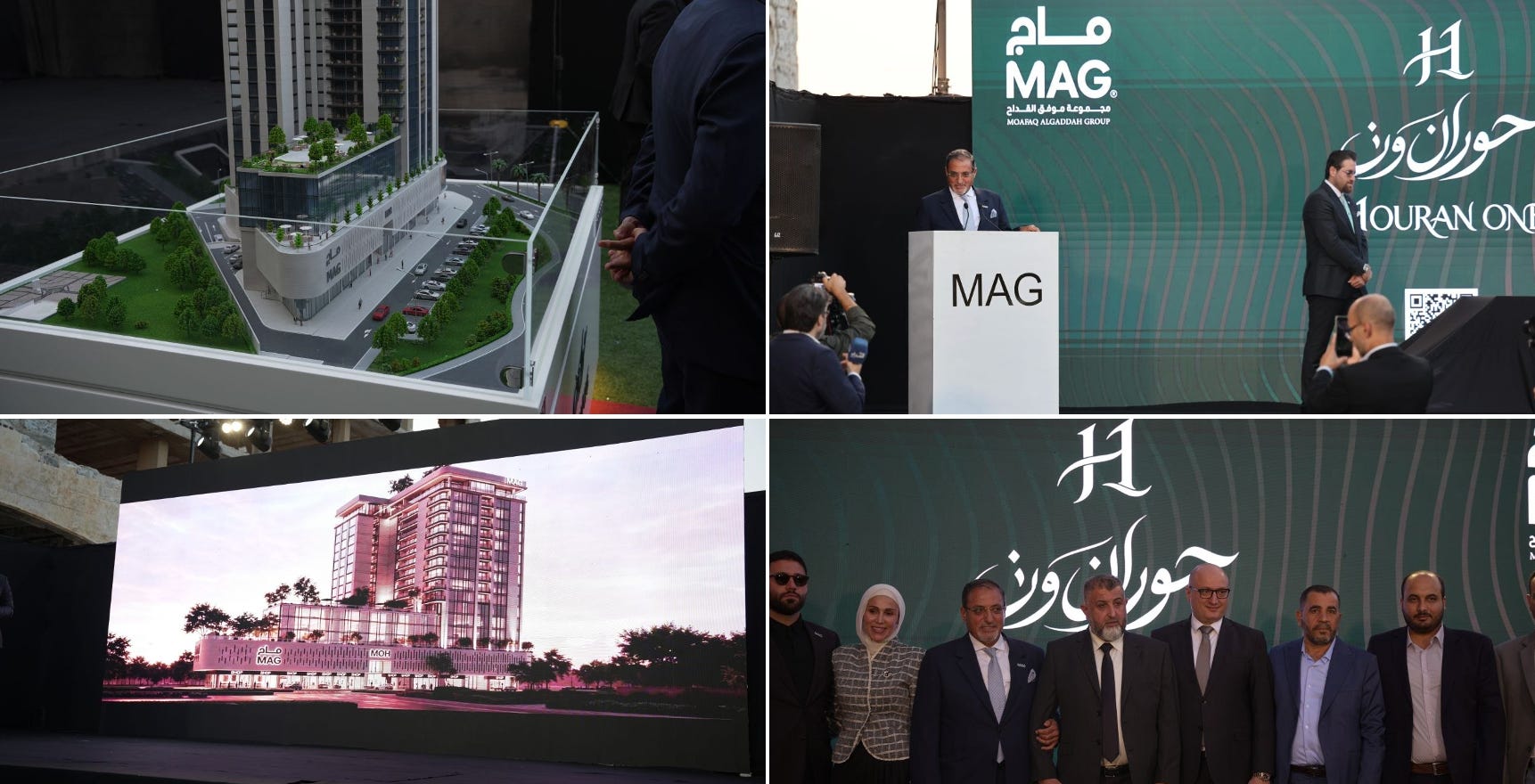
Daraa Governorate announced on October 3 the launch of the “Houran One” project on October 3, which will see the construction of an 18-storey apartment building, along with a commercial shopping mall in Daraa city. The project will be funded and undertaken by MAG Global, owned by Muwaffaq Qaddah.
Local authorities in Aleppo inaugurated the newly established Civil Affairs Department in Jinderes on October 4.
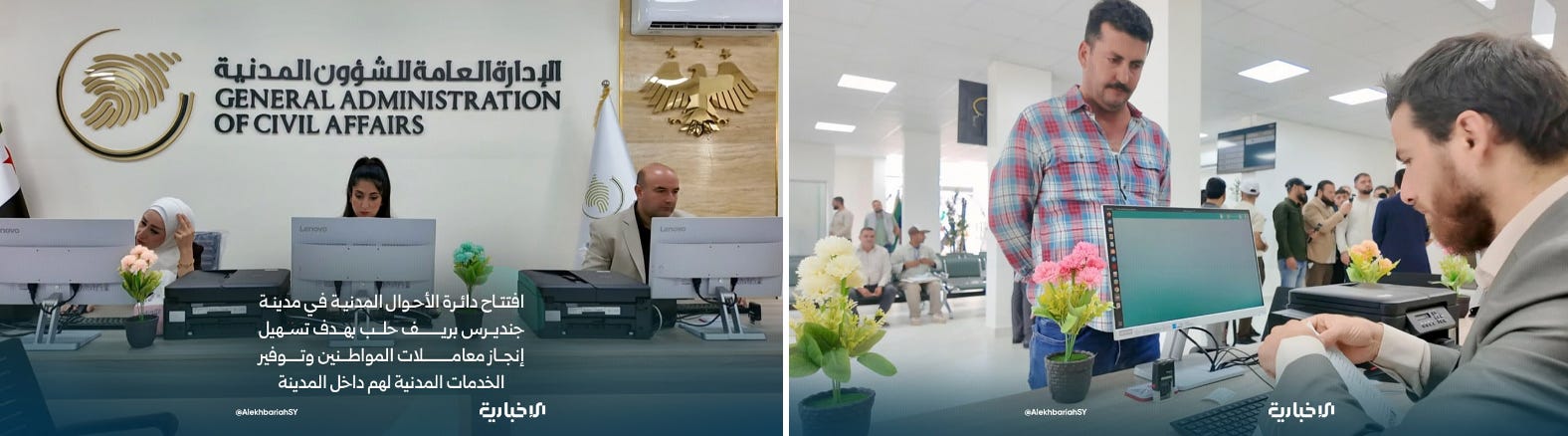
Deputy Governor of Aleppo Ali Hanoura inaugurated the new immigration and passport facility in Manbij, Aleppo on October 4.
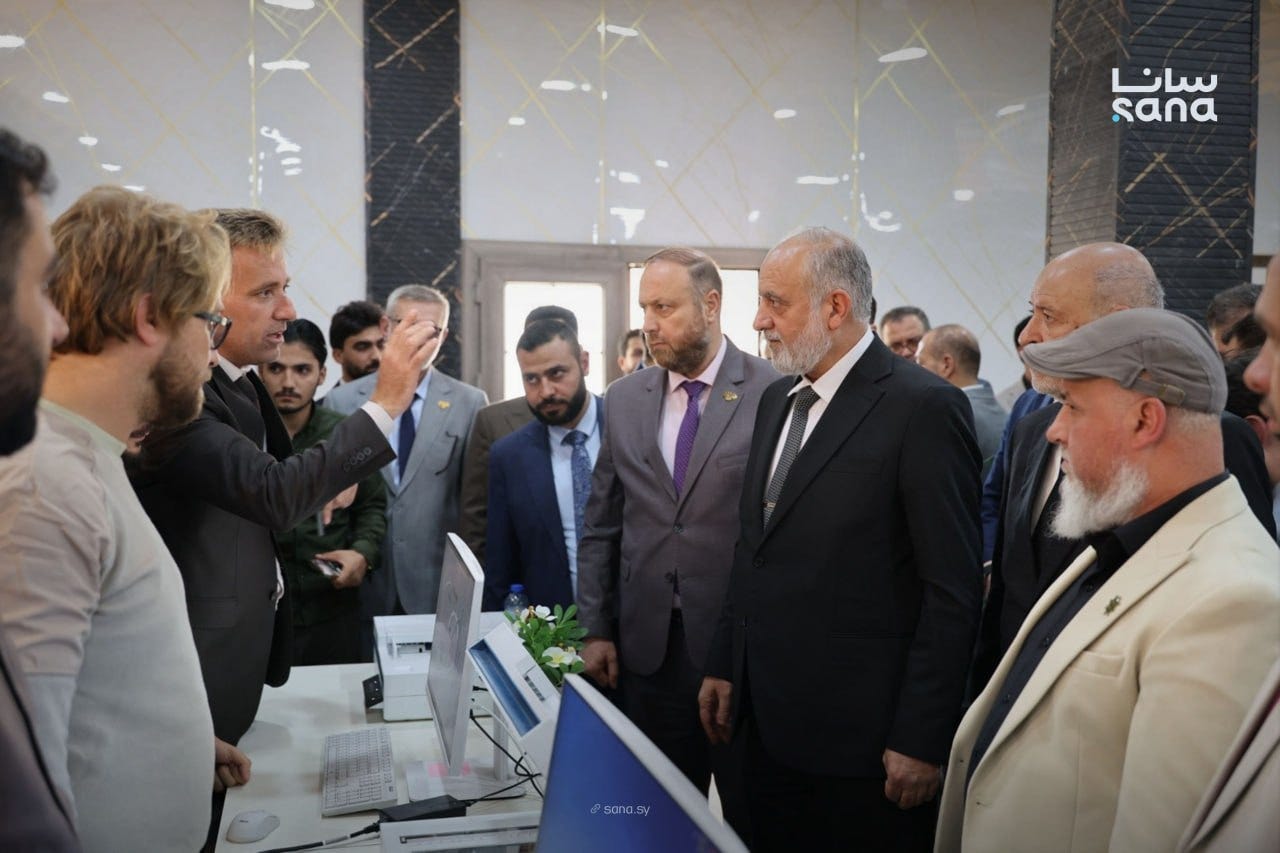
The General Authority of Civil Aviation confirmed on October 4 that more than 229,000 passengers had passed through Damascus International Airport in September 2026, on more than 2,000 flights operated by 17 airlines.
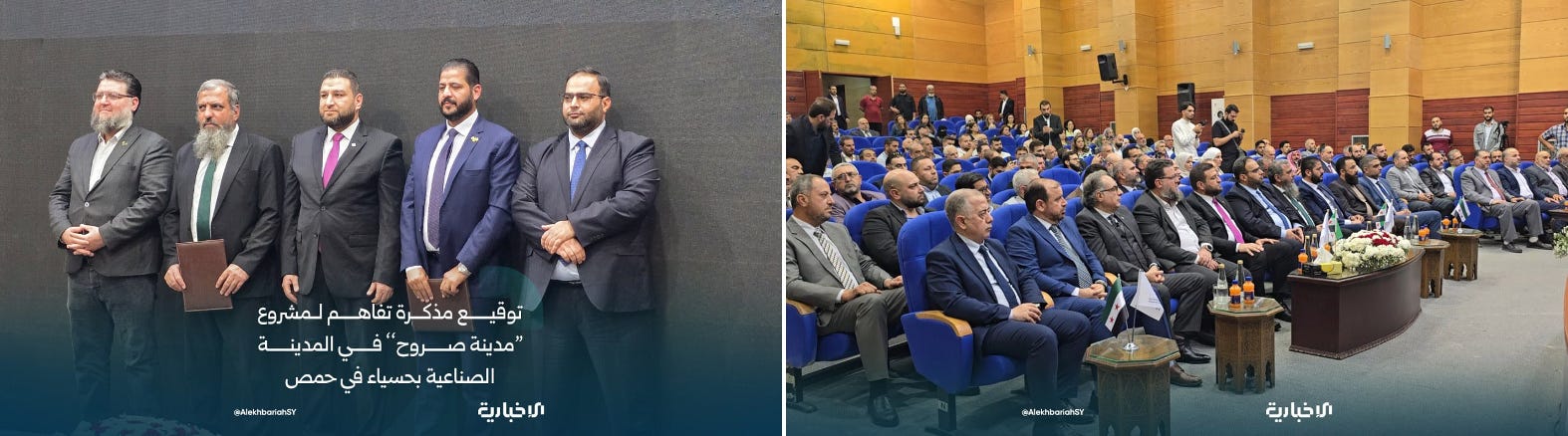
Homs Governor Murhaf al-Naasan presided over the signing of a memorandum of understanding between the Hassiya Industrial City’s administration, Homs Governorate and the Zahiya Al-Mabani company on October 5 to begin plans for implementing two projects — the development and equipping of industrial infrastructure over an area of one million square meters; and the preparation of a master plan for the construction of a fully serviced residential district over an area of 500,000 square meters, with a capacity to accommodate up to 22,000 people.
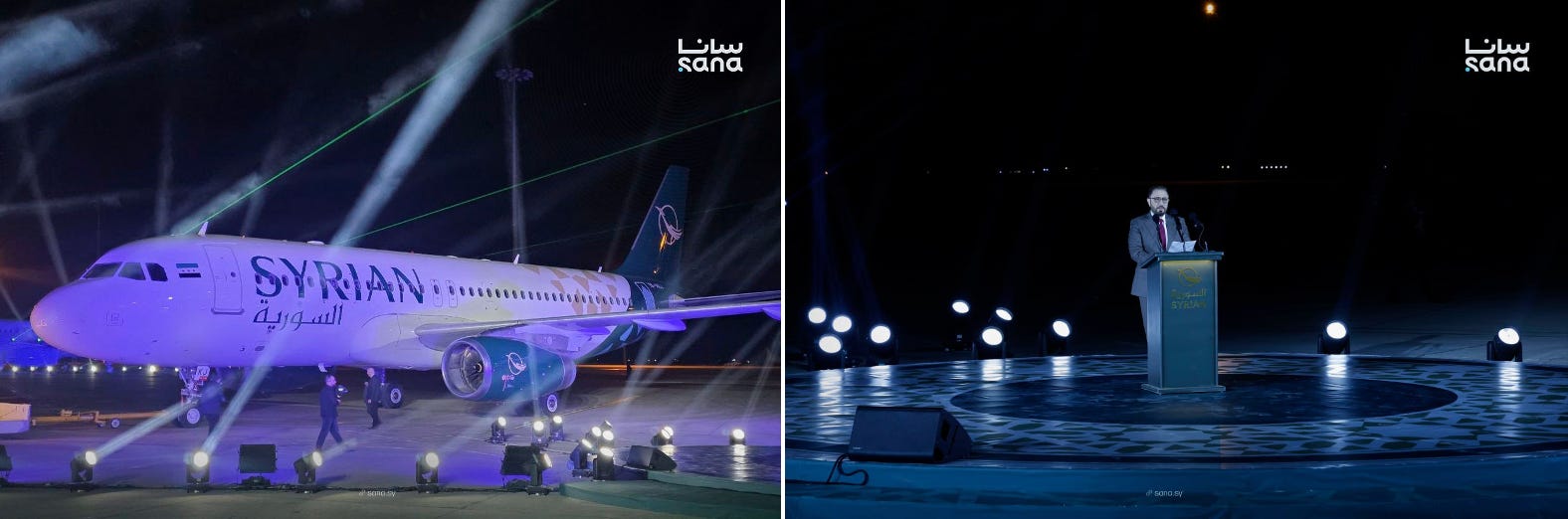
Syrian Airlines and the Chairman of the General Authority for Civil Aviation, Omar al-Hosari, revealed the newly rebranded livery for Syrian Airlines at a ceremony at Damascus International Airport late on October 6.
Education Developments:
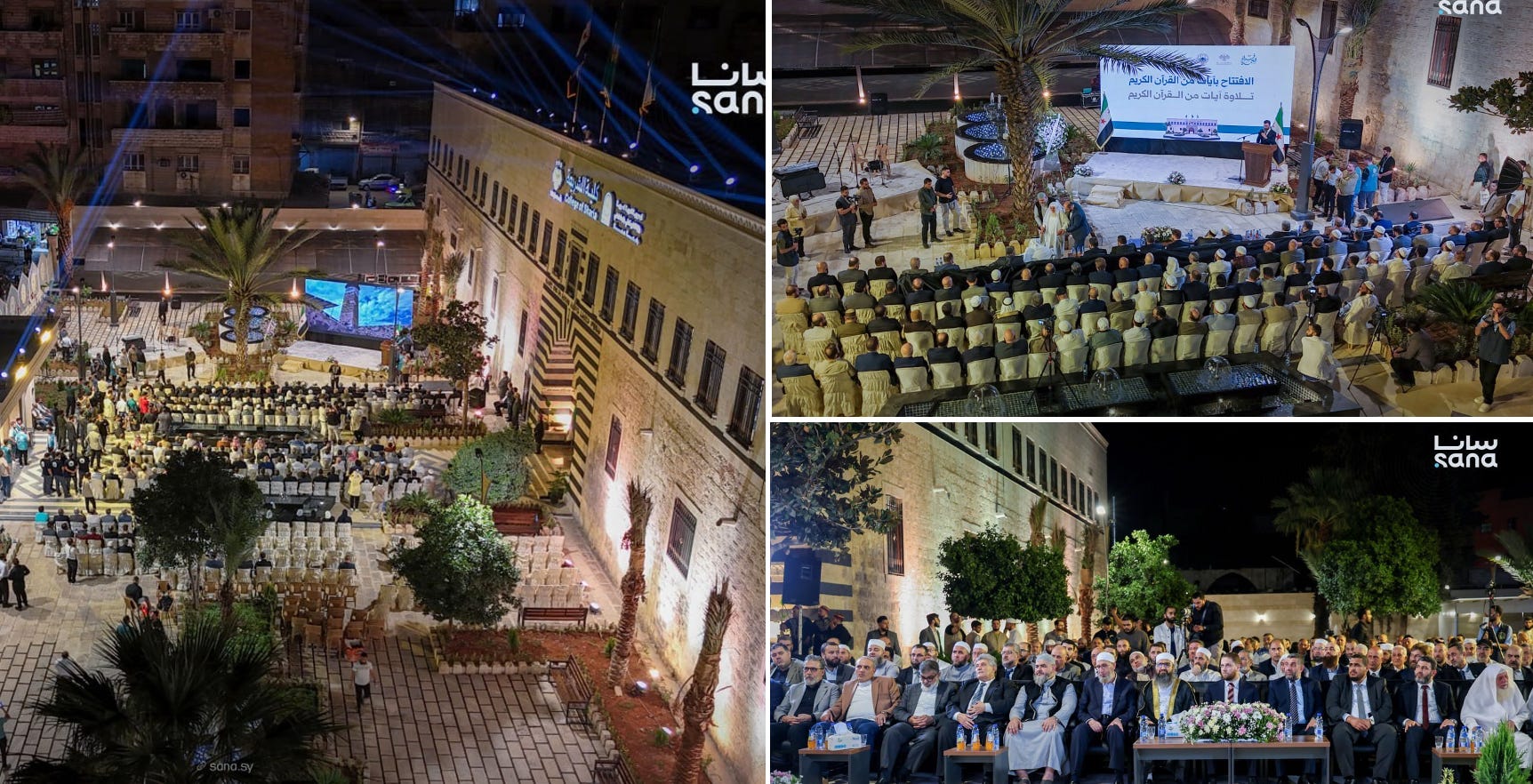
Governor of Hama Abdulrahman al-Sahyan led a ceremony inaugurating the new Faculty of Islamic Law at Hama University in Hama city on October 4.
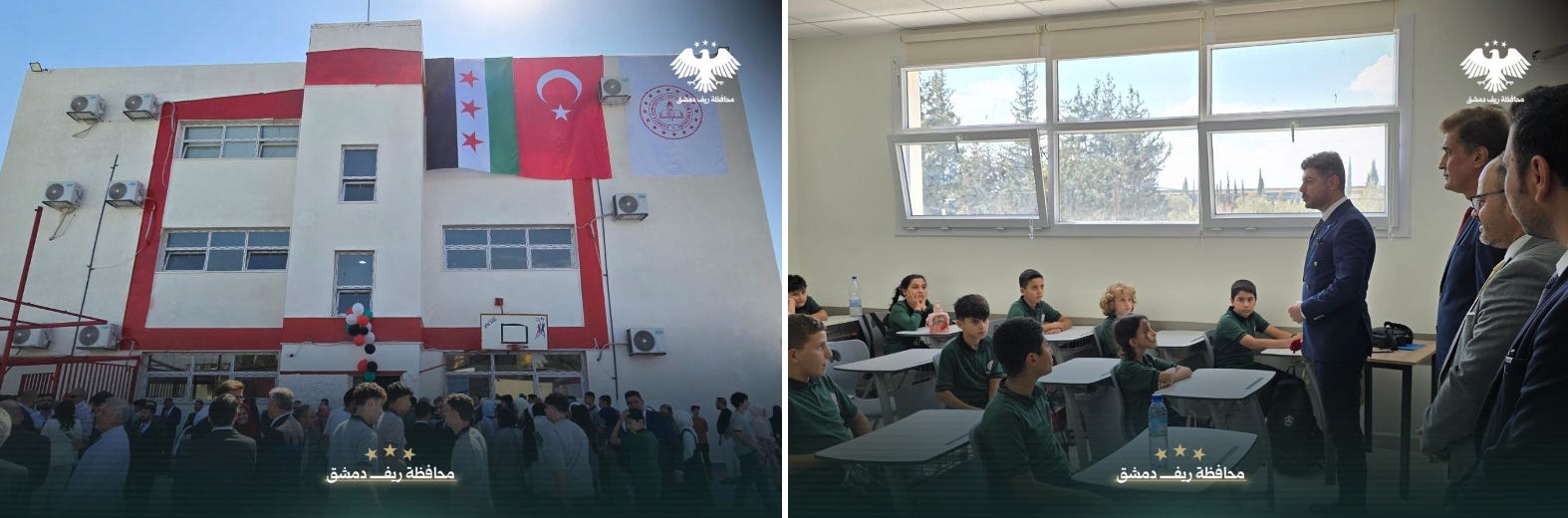
Local officials inaugurated the Turkish-funded “Damascus International School” in Jdeidat Artouz, Damascus on October 4 — with a capacity for approximately 1,000 students.
Health Developments:
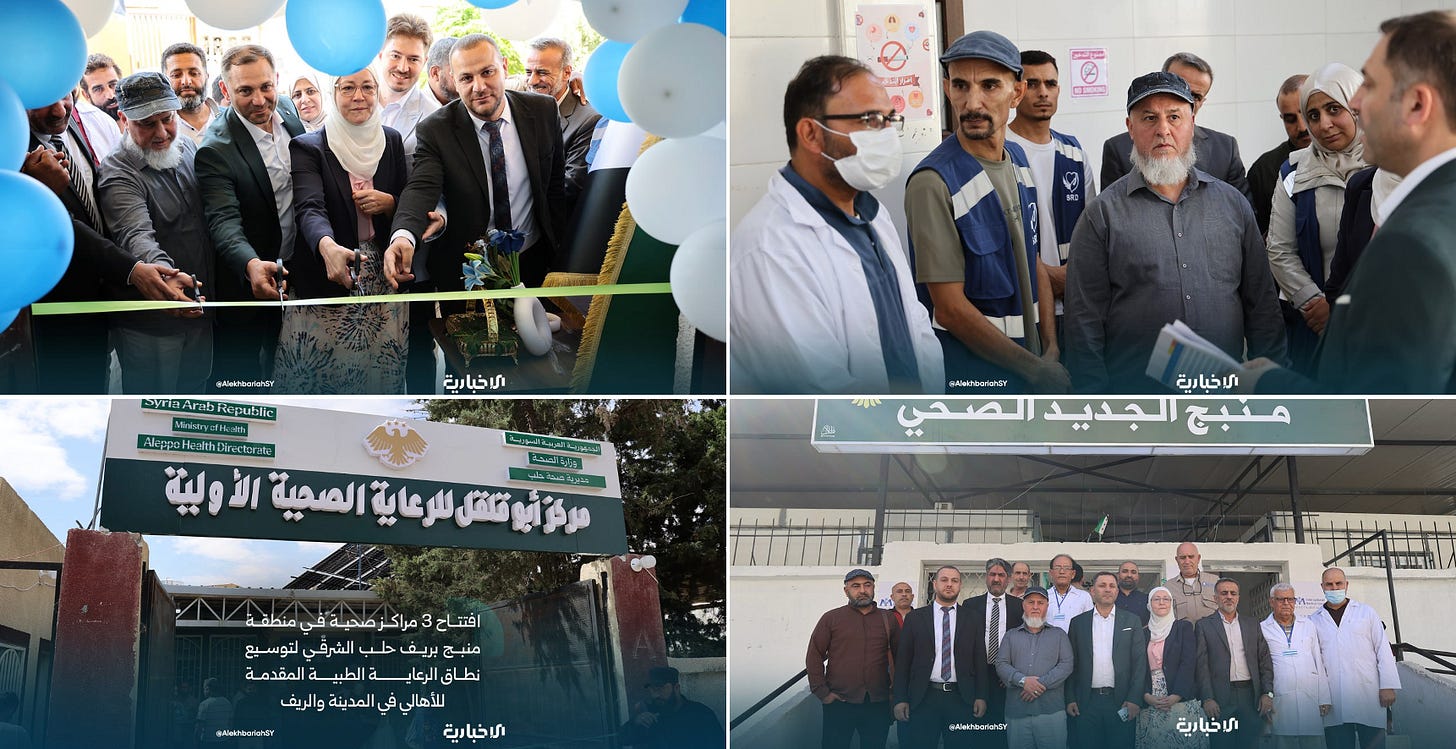
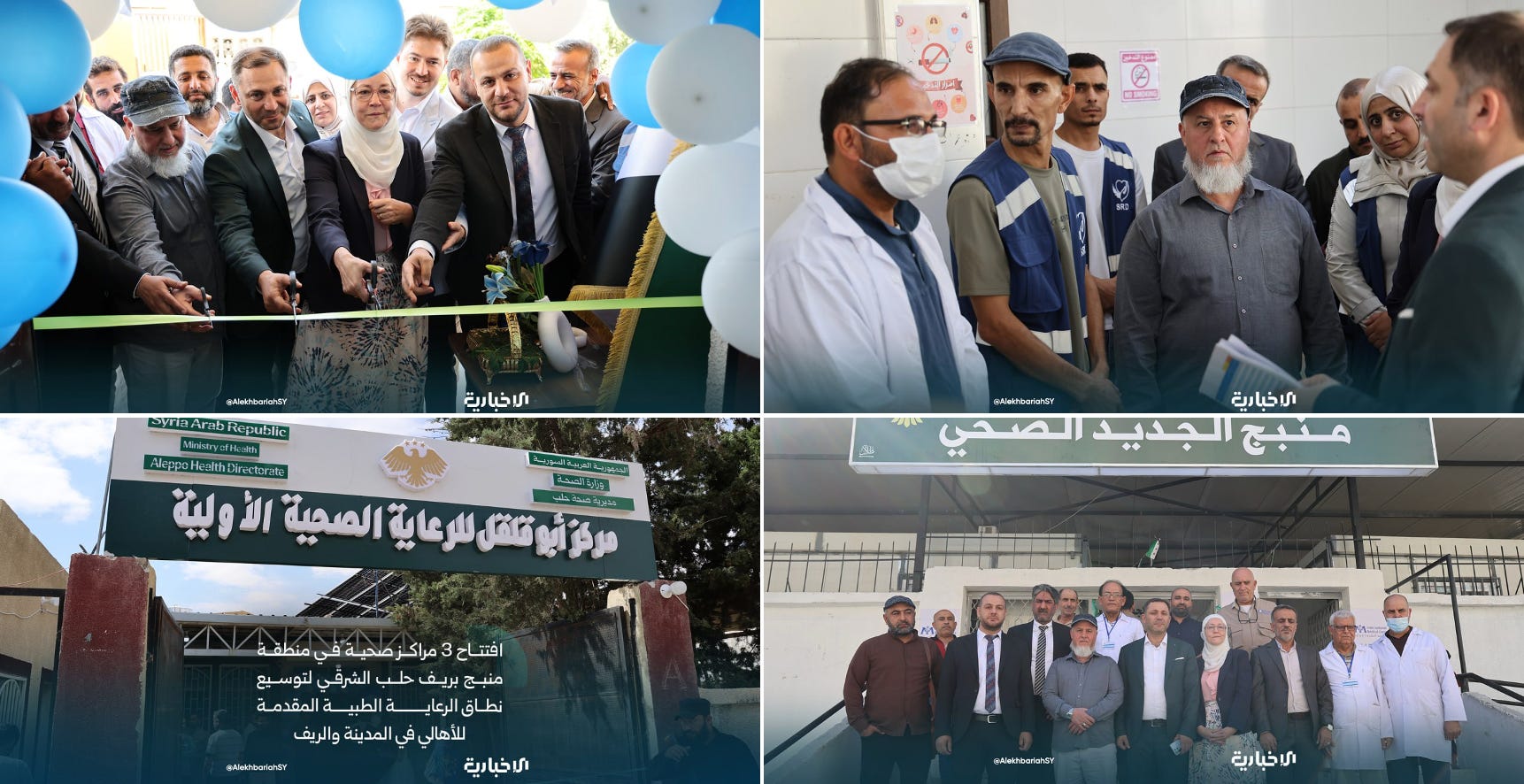
Local officials inaugurated 3 newly established medical clinics in the Manbij district on September 29 — the Manbij Health Center, the Furat Primary Health Care Center, and the Abu Qalqal Primary Health Care Center.
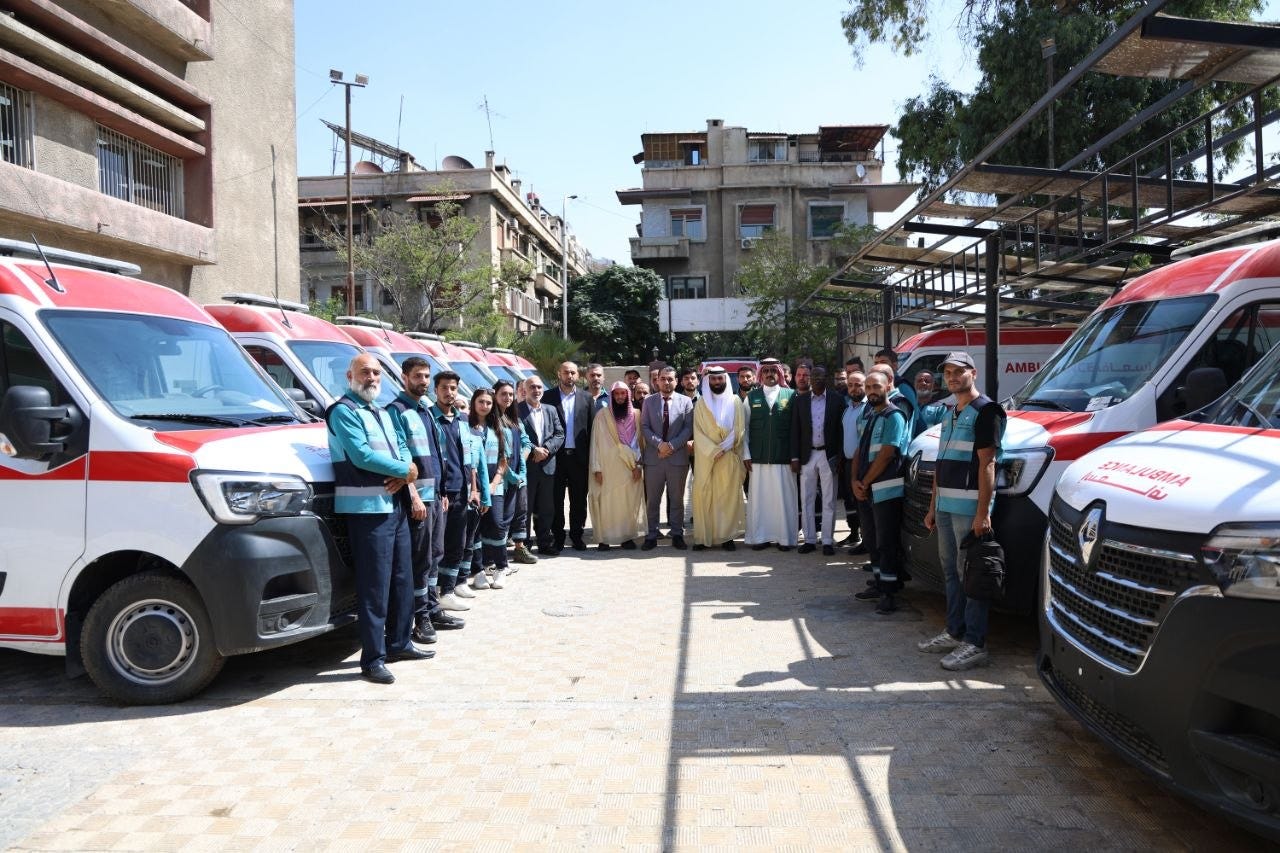
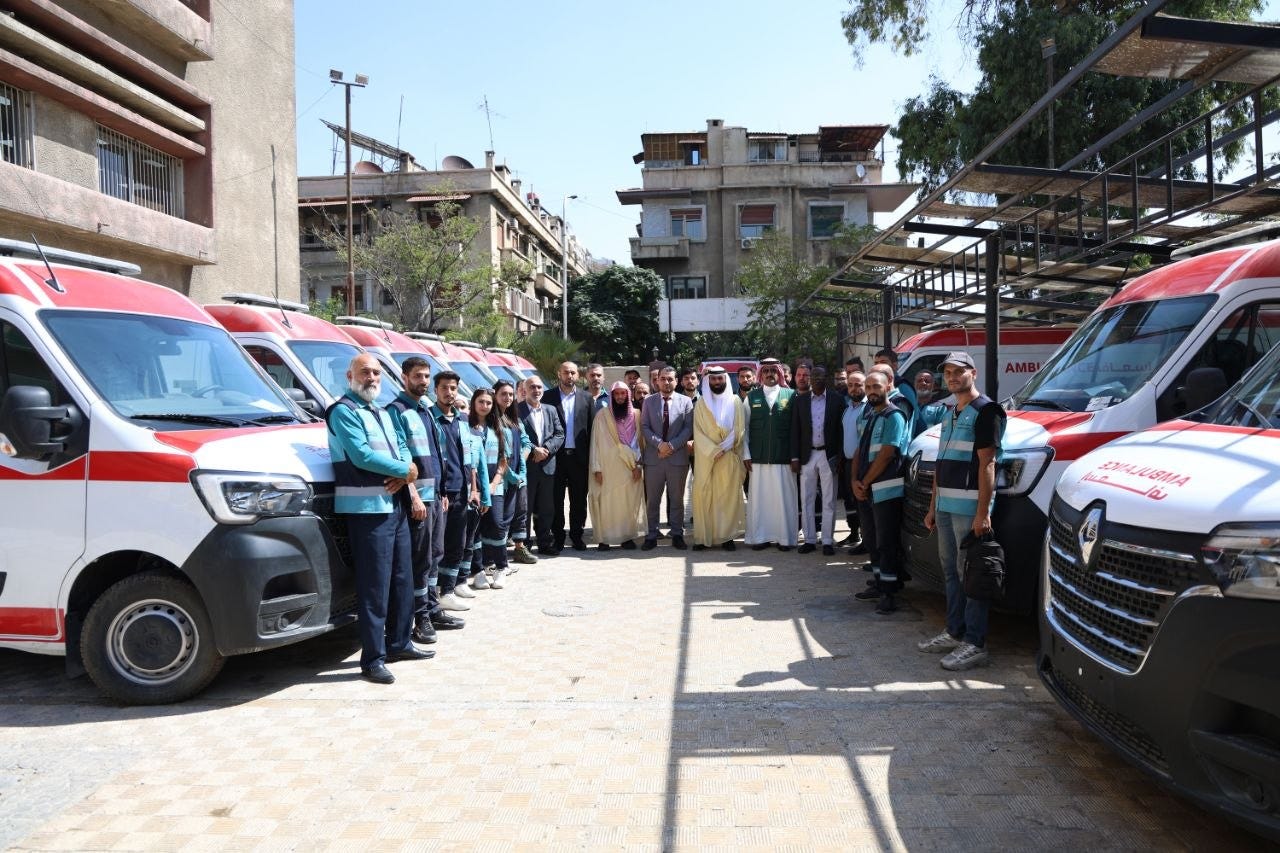
The Ministry of Health took delivery of 10 modern ambulances donated by the Saudi King Salman Center for Relief and Humanitarian Aid on September 30.
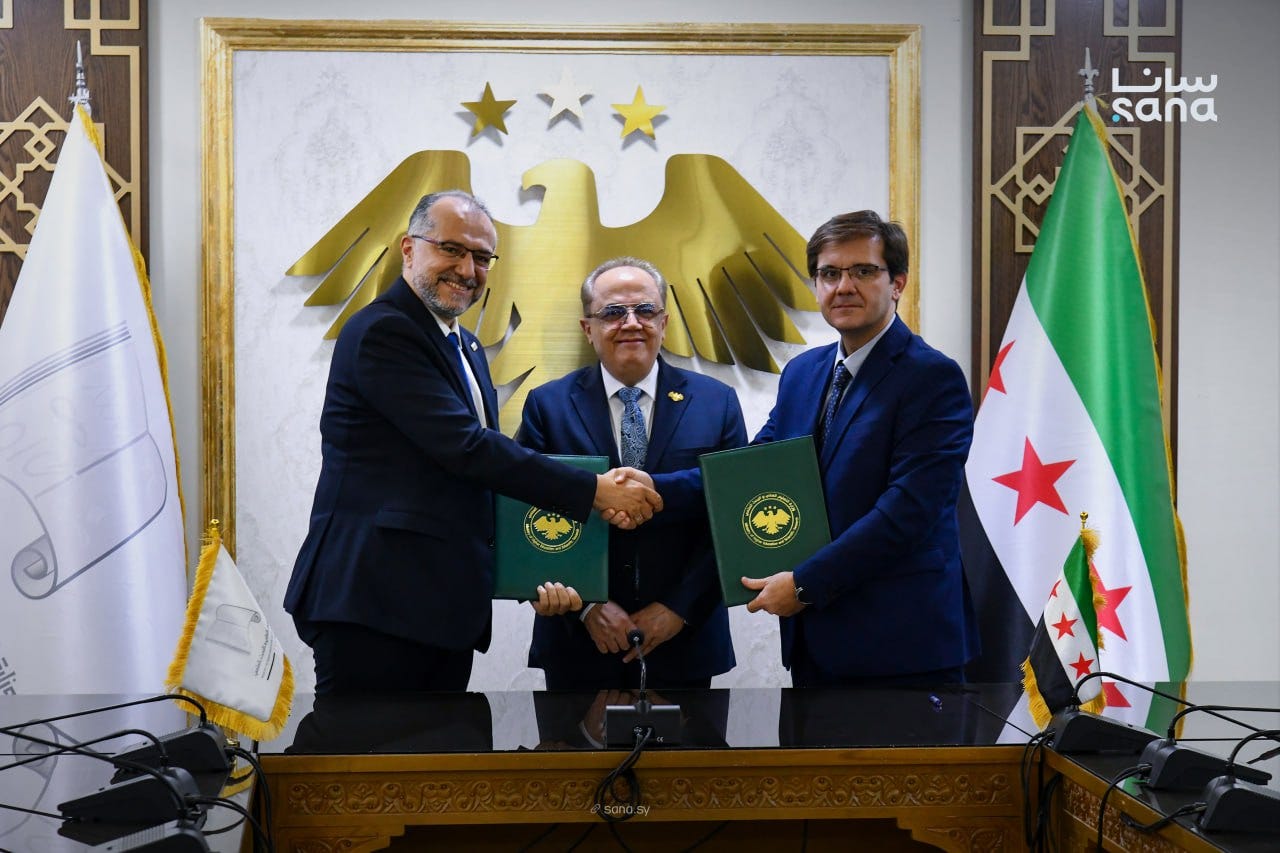
Minister of Higher Education Marwan al-Halabi presided over the signing of a strategic agreement between his ministry and the Syrian-American Medical Society (SAMS) on September 30 — to promote medical research and clinical training programs.
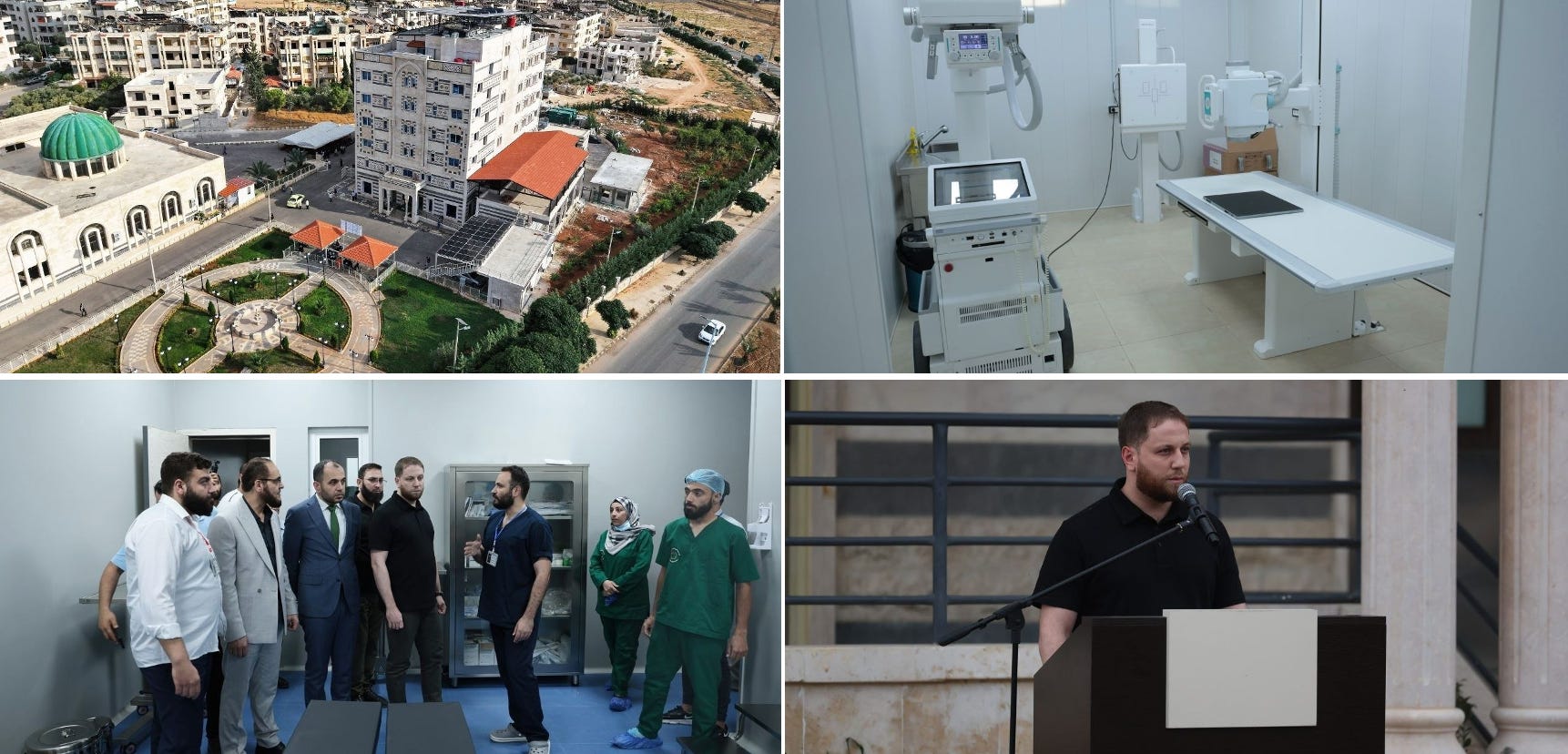
Governor of Hama Abdulrahman al-Aama inaugurated the Muhammad Ali Al-Shawaf Charitable Hospital in Hama city on October 1.
Security Developments:
Minister of Interior Anas Khattab confirmed on September 29 that a contract had been signed with an external company to begin producing Syrian national ID cards for distribution in early-2027.
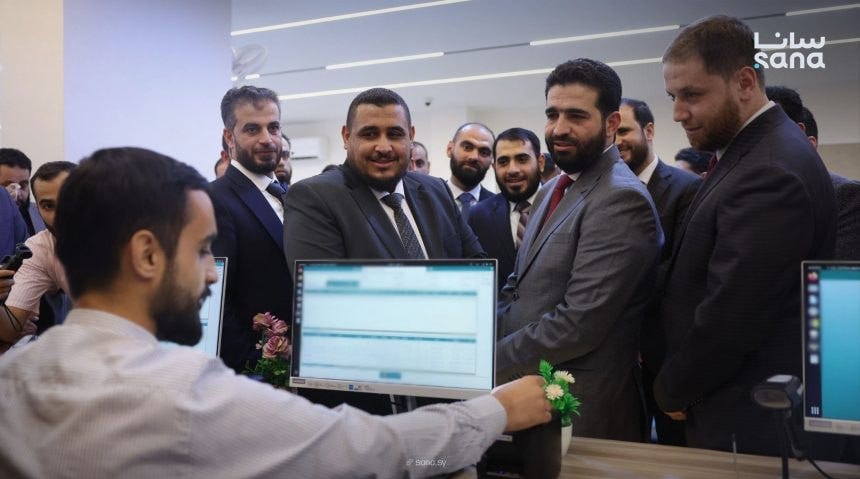
Interior Minister Anas Khattab and Governor of Homs Murhaf al-Naasan inaugurated the newly rehabilitated Criminal Investigation Branch in Homs on September 30.
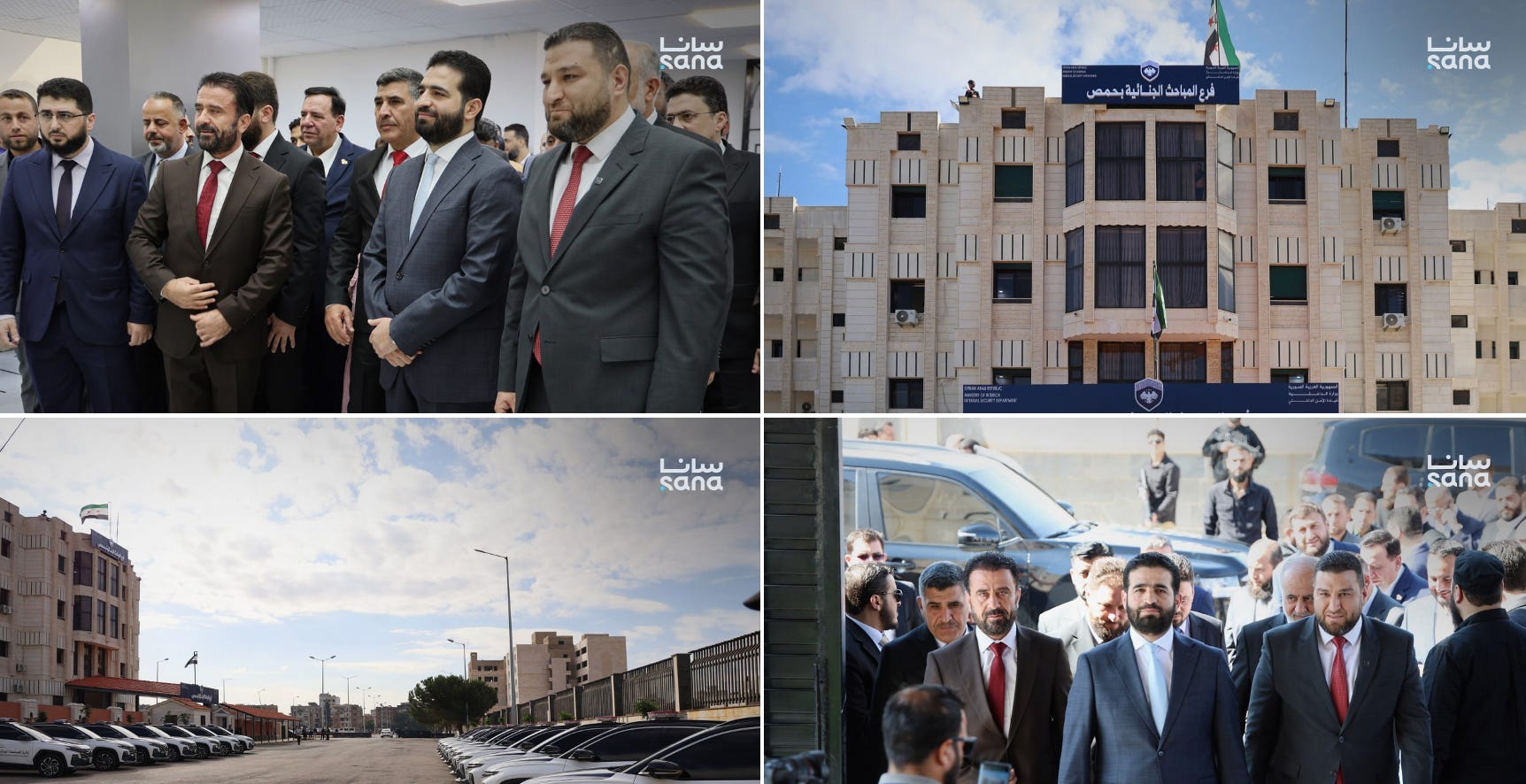
Interior Minister Anas Khattab inaugurated the newly rehabilitated MOI Qualification and Training Department in Damascus on October 4 alongside the MOI’s Director of Qualification and Training, Hussein Salman.
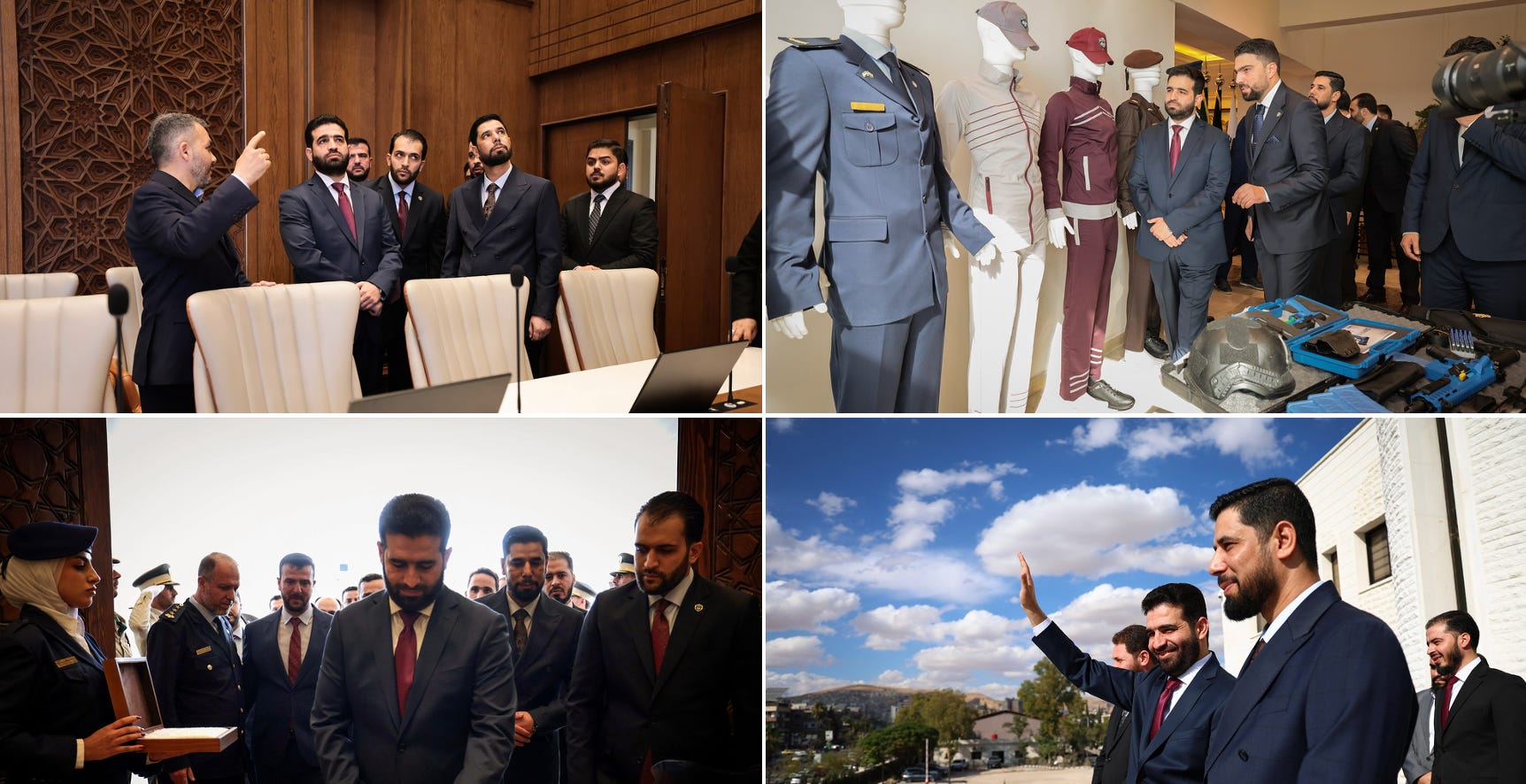
Later that day, Interior Minister Khattab also inaugurated the newly established Syrian University for Security Sciences in Damascus, alongside the university’s first president, Abdulrazzaq al-Hussein.
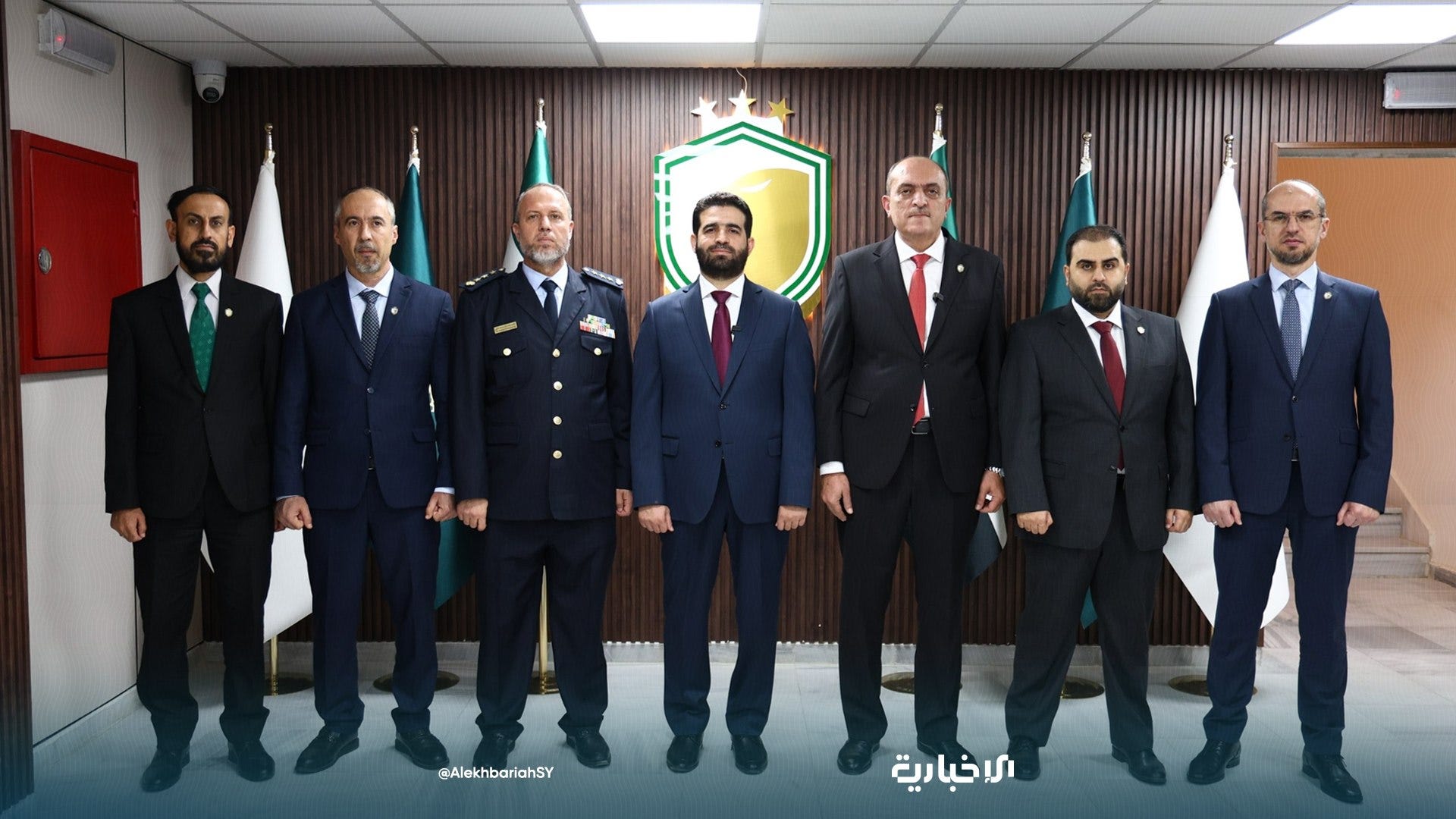
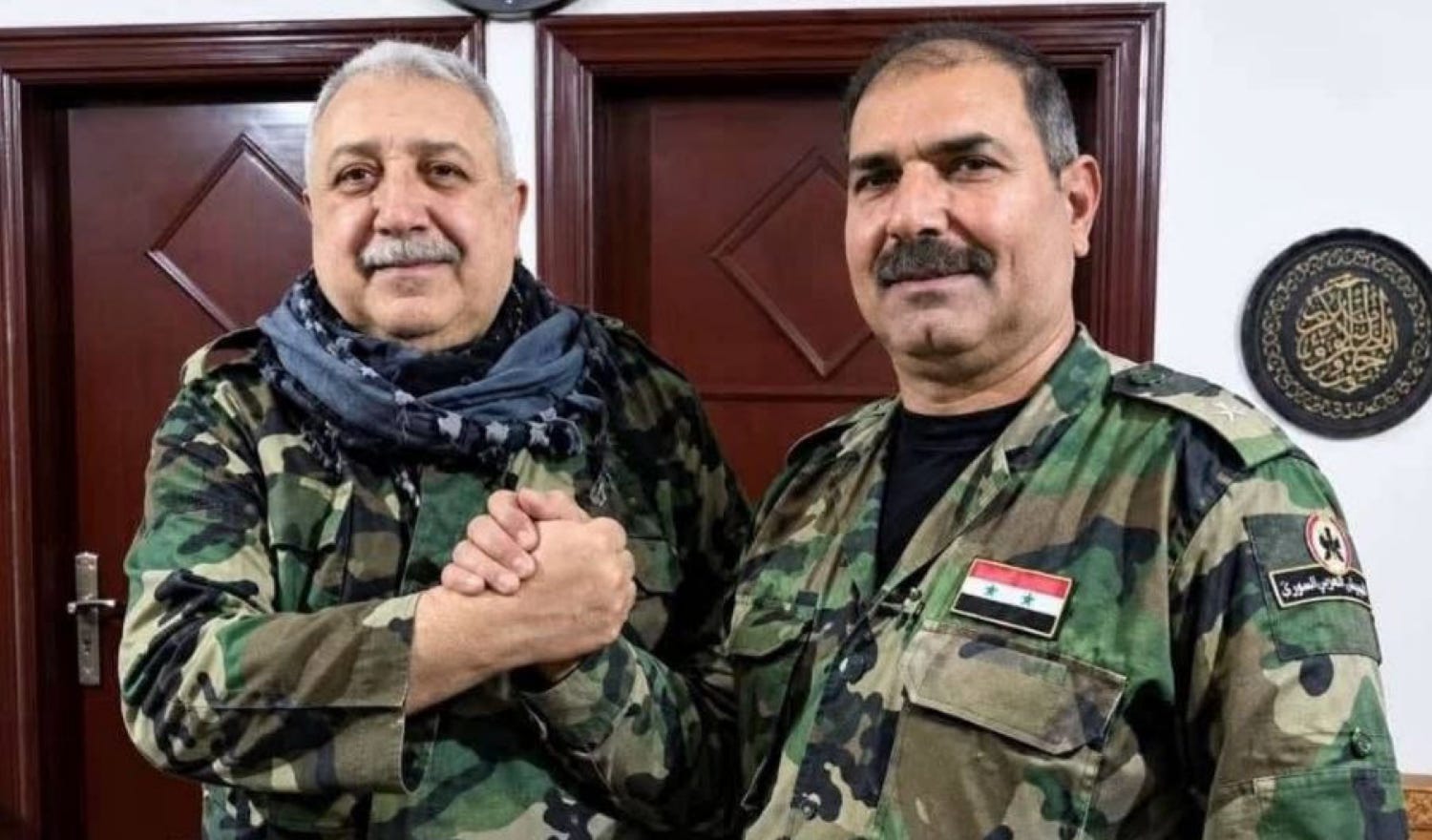
The MOI announced on October 4 the arrest of former deputy to the leader of the notorious pro-Assad militia “Syrian Resistance” Ali Kayyali (L), identified as Jamal Tarabulsi (R).
Humanitarian Developments:
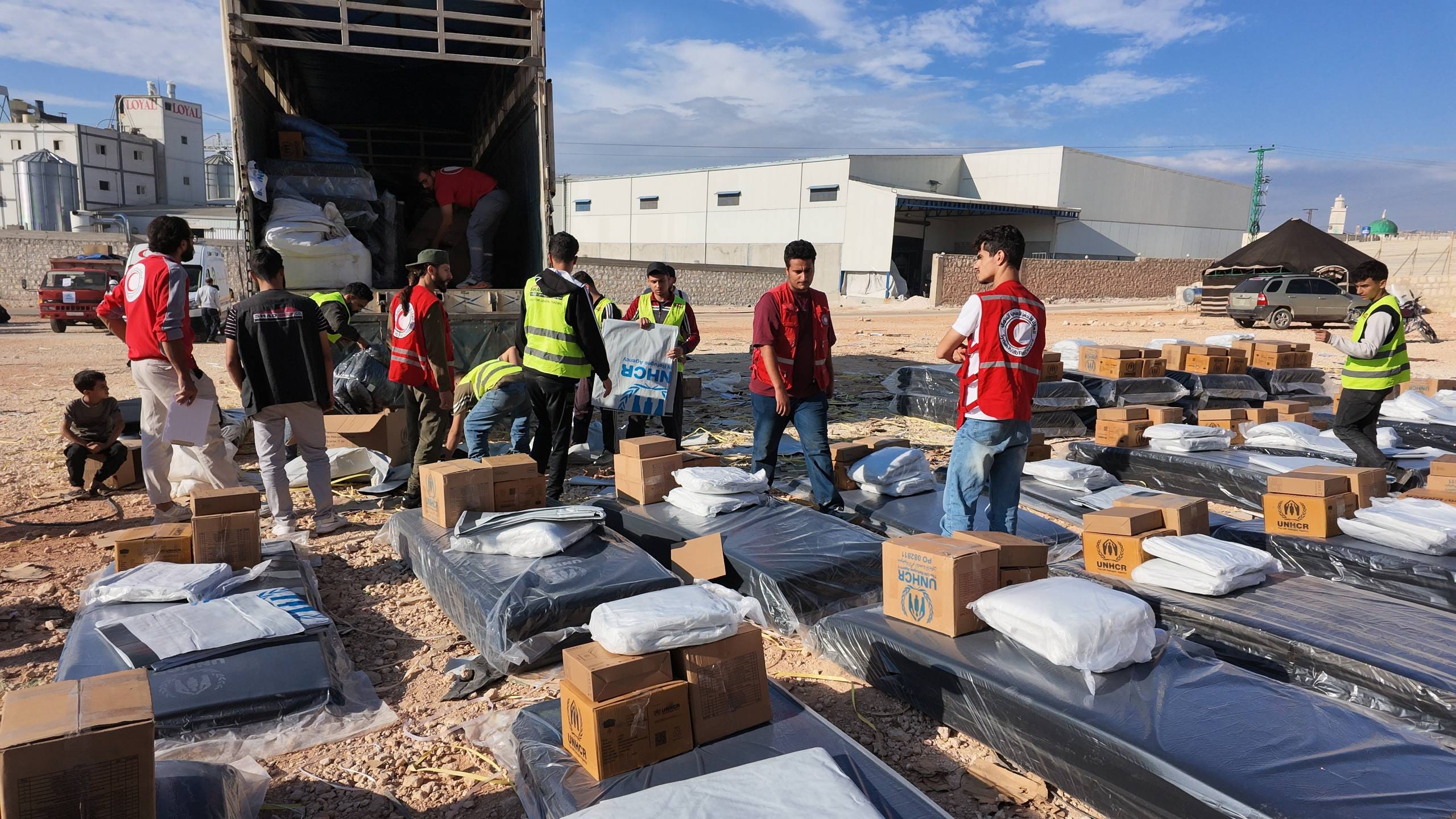
A convoy of 29 displaced families departed IDP camps in northern Aleppo on September 30 en route to their areas of origin in Rif Dimashq, Idlib, southern Aleppo and Damascus.
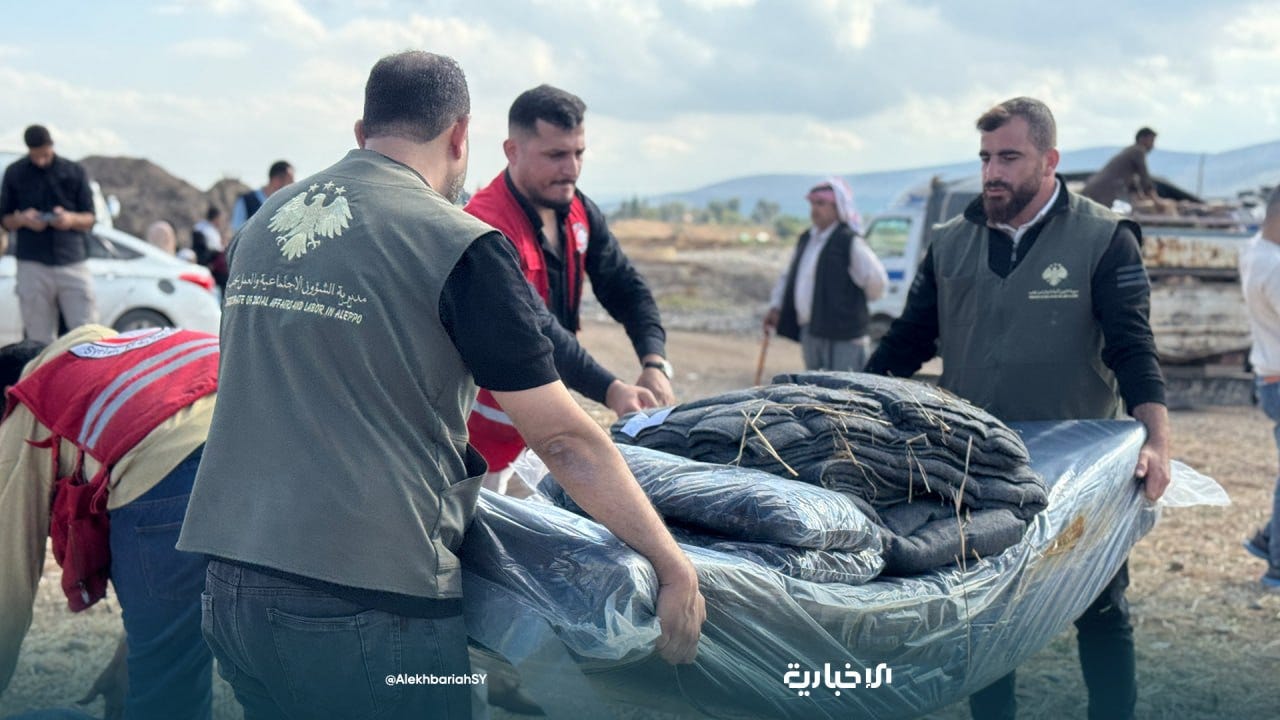
A convoy of 43 displaced families departed IDP camps in northern Aleppo on October 1 en route to their areas of origin in Idlib, Hama, Daraa, Rif Dimashq, Deir ez Zour and Raqqa governorates.
A convoy of 212 displaced families departed IDP camps in northern Idlib on October 1 en route to their areas of origin in Hasakeh, Raqqa, Homs, Hama and Aleppo.
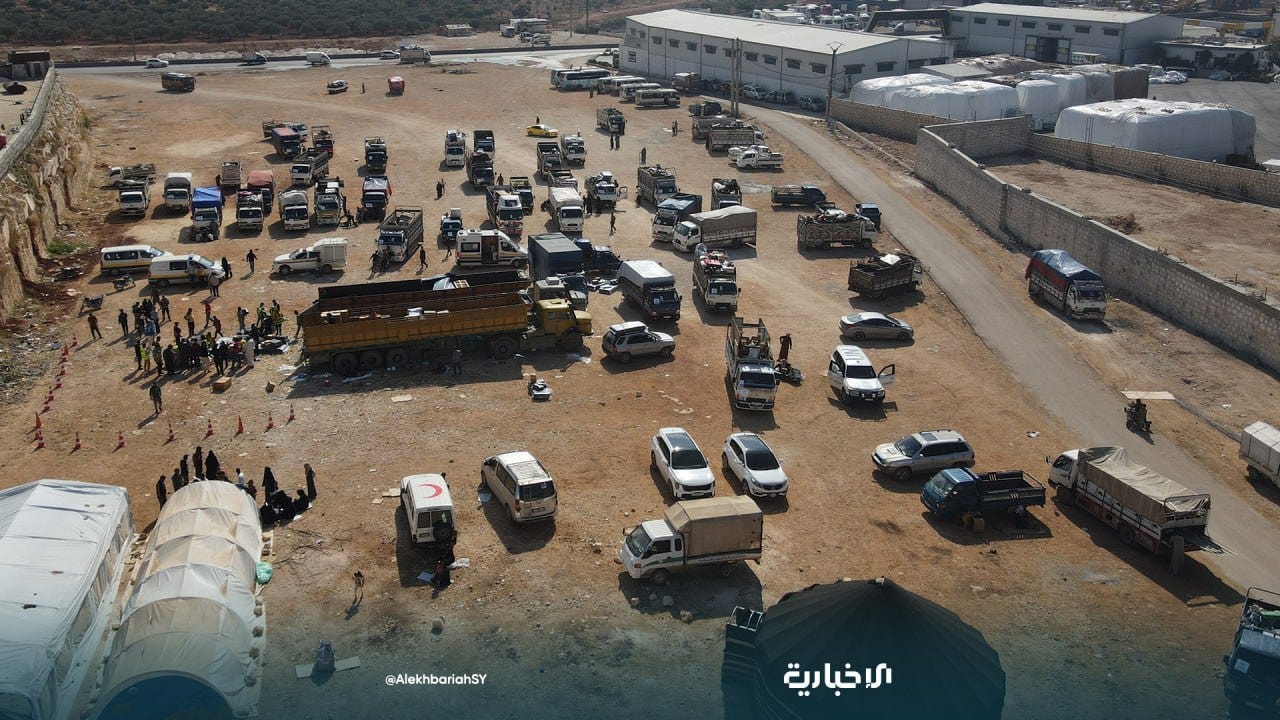
A convoy of 263 displaced families departed IDP camps in northern Idlib on October 4 en route to their areas of origin in Idlib, Hama, Homs, Aleppo, and Latakia.
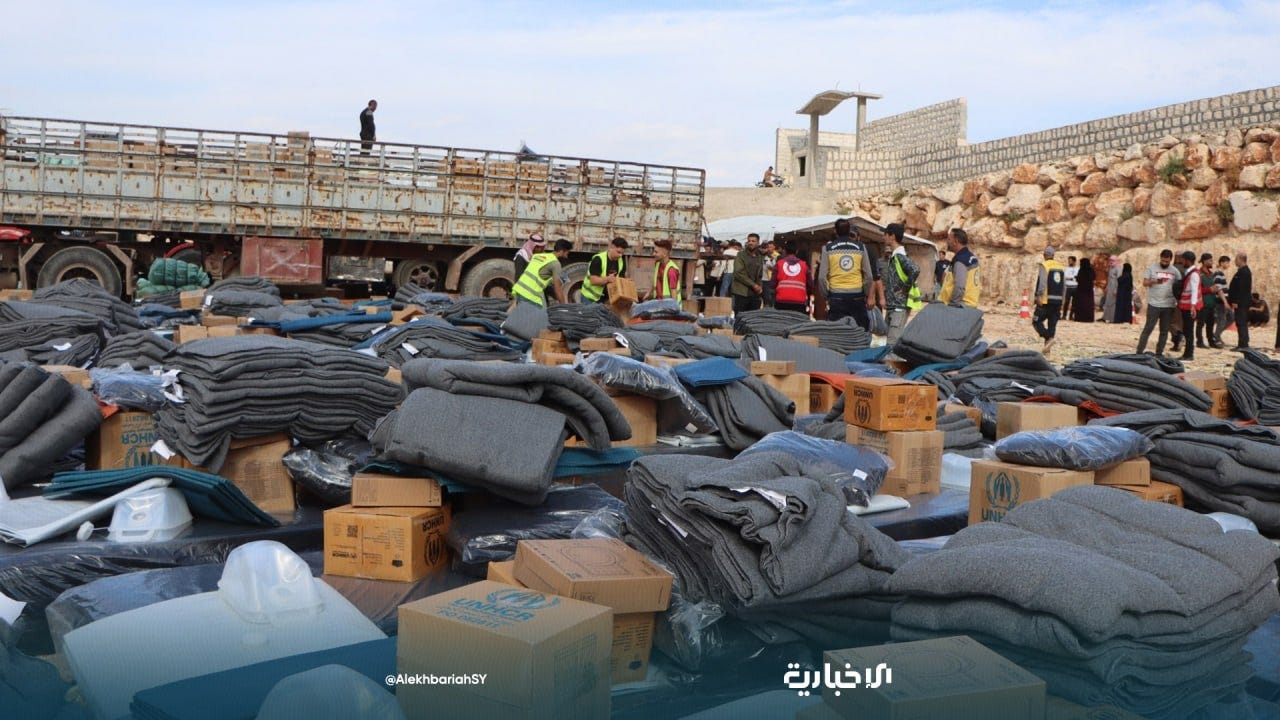
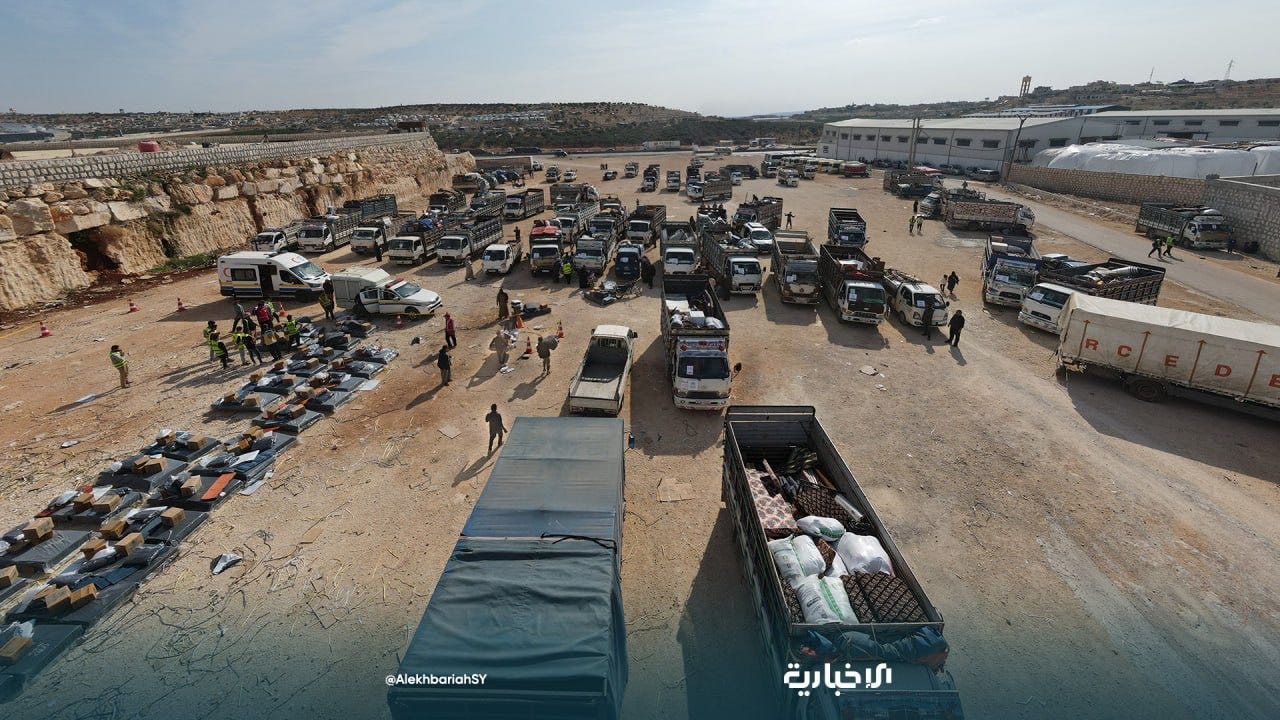
A convoy of more than 515 displaced families departed IDP camps to return to their areas of origin in Ras al-Ayn on October 5 — within the context of the ongoing integration process.
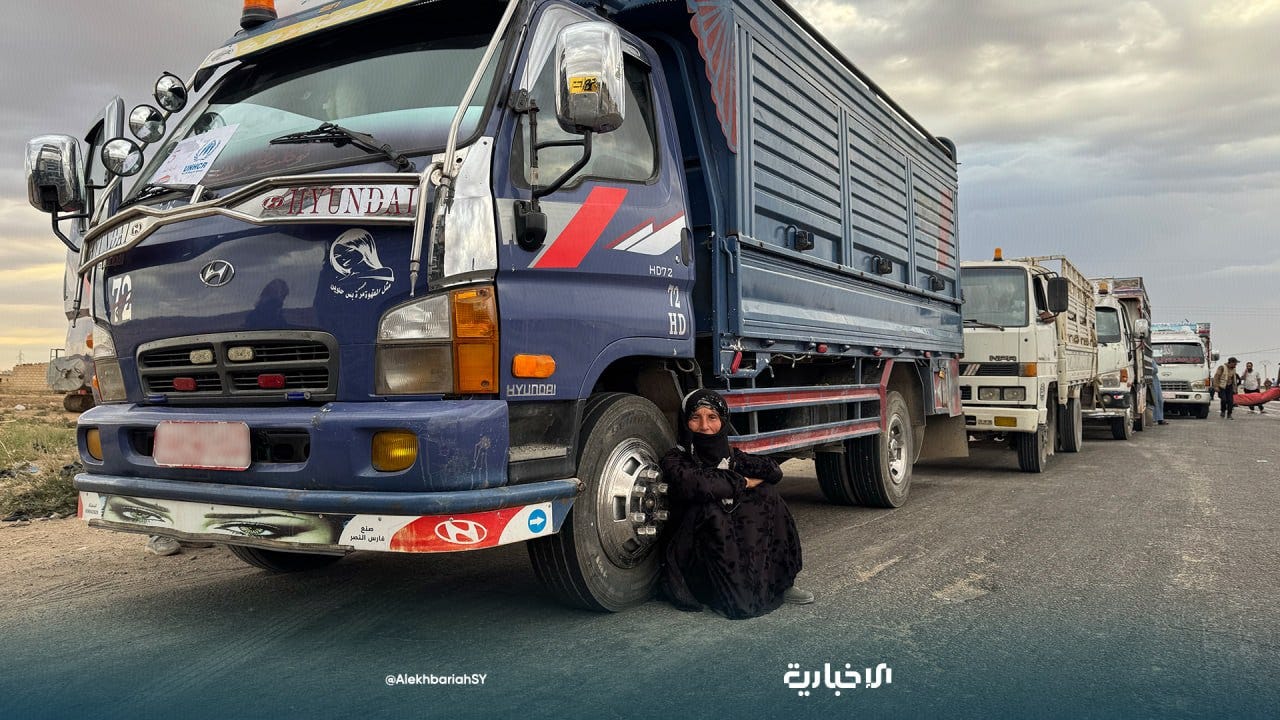
A convoy of 201 displaced families departed IDP camps in northern Idlib on October 5 en route to their areas of origin elsewhere in the country.
Justice Developments:
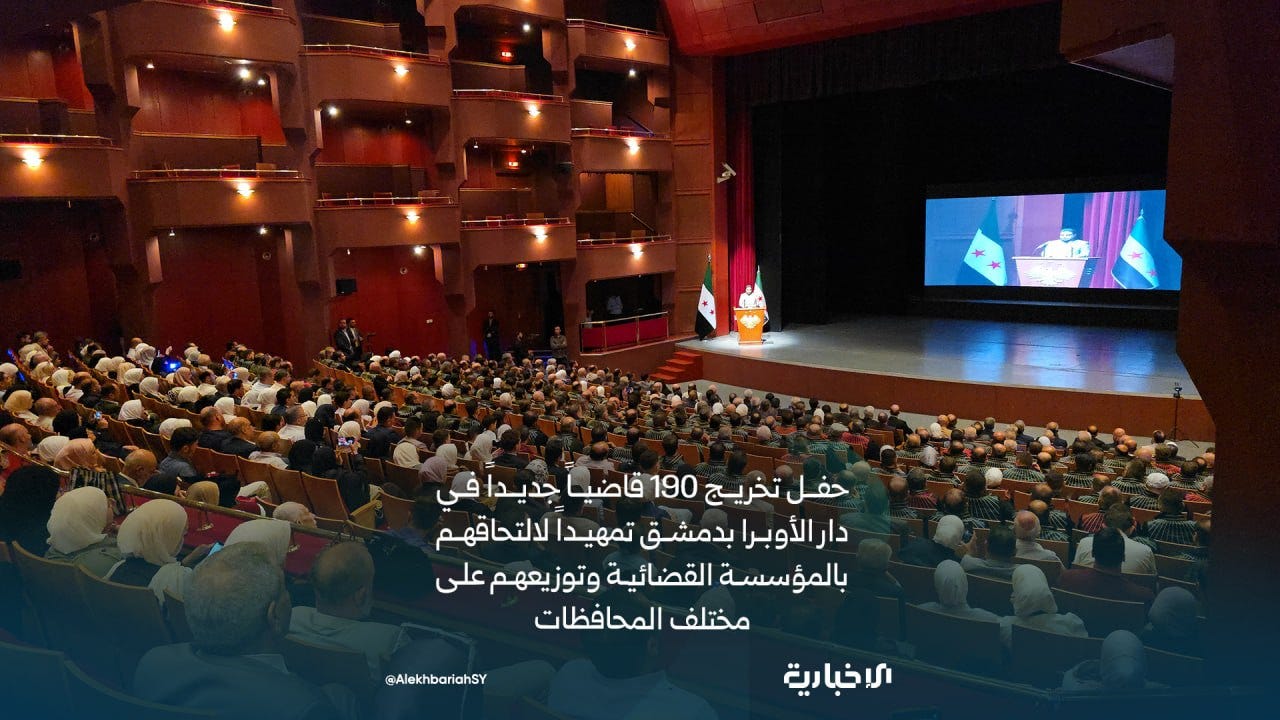
The Justice Ministry hosted a graduation ceremony for 190 newly qualified judges on October 1, attended by Justice Minister Mazhar al-Ways and Speaker of Parliament Abdulhamid al-Awak.
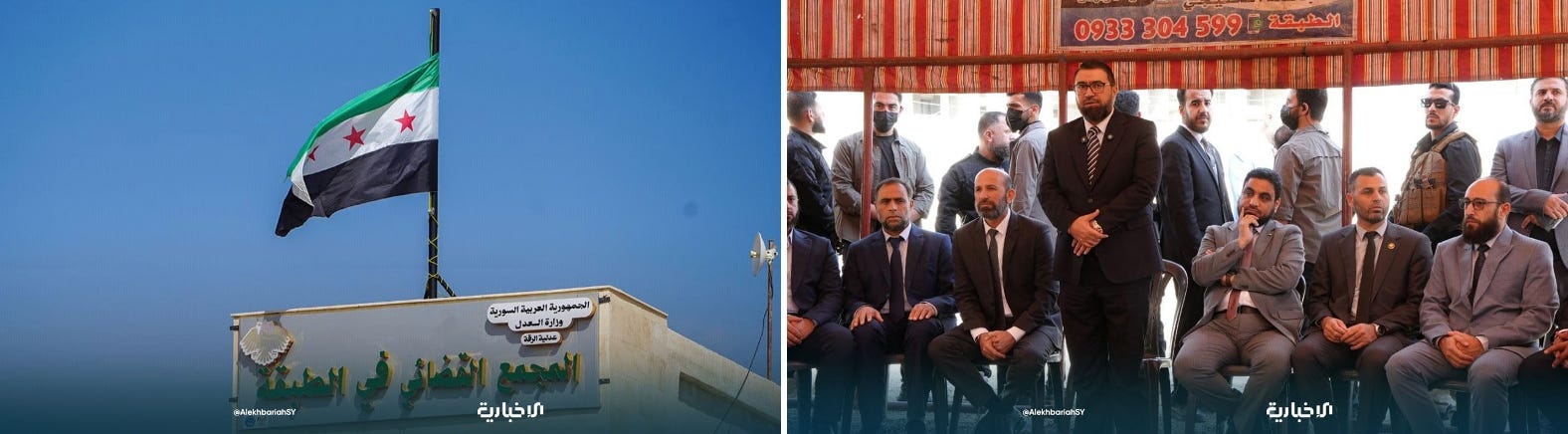
Justice Minister Mazhar al-Ways and Governor of Raqqa Abdulrahman Salama inaugurated the newly established judicial complex in Tabqa on October 4.
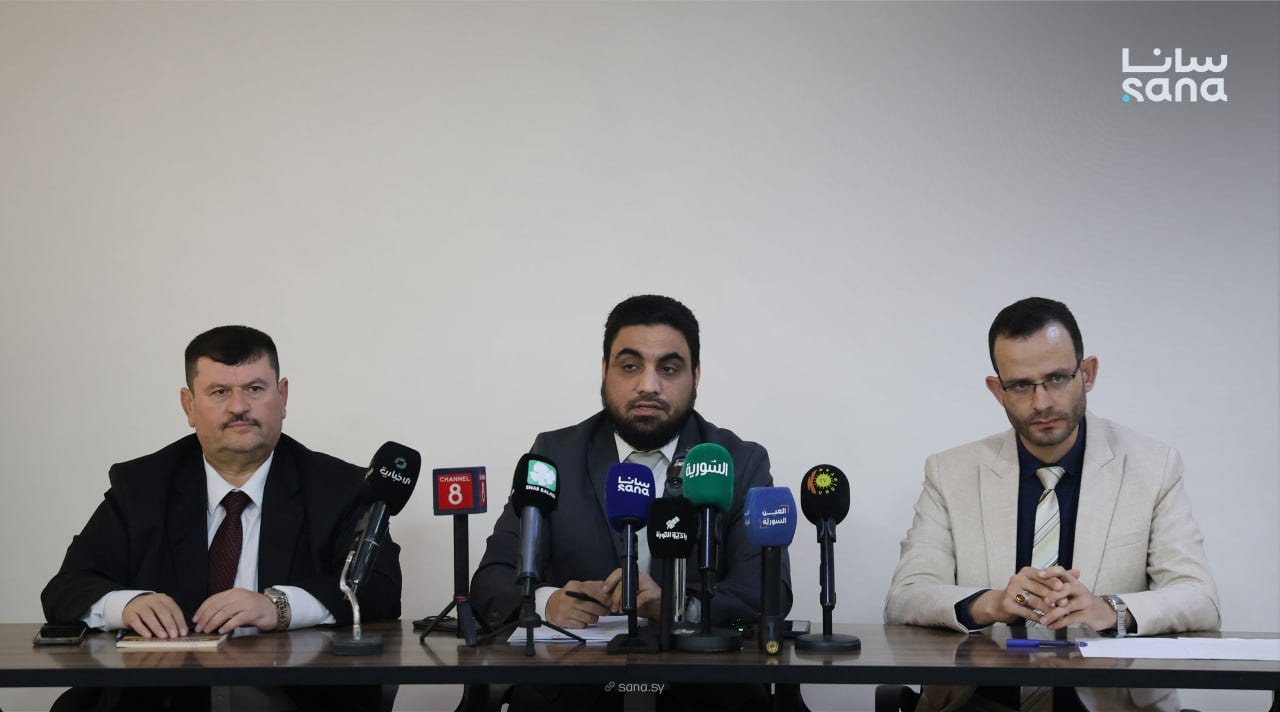
Transport Minister Yaroub Badr publicly confirmed on October 4 that 95% of the new traffic law was now complete and final preparations were underway before submitting it to parliament for approval. “The new traffic law regulates a wide range of areas, starting from the classification of vehicles into categories and their registration procedures, through the qualification of drivers via driving schools supervised by the Ministry of Transportation, to the technical inspection of vehicles, the organization of roads and their characteristics, and the speed limits imposed on them,” he said. Drivers in Syria will be required to possess specific drivers licenses for specific vehicles, as well as additional qualifications for activities such as “transportation of school students, the operation of passenger buses between governorates, the transportation of hazardous materials, fuel tanks, petroleum products, and flammable or explosive materials.”
The Dean of the Higher Institute of Justice, Ibrahim al-Hassoun, Dean of Damascus University’s Faculty of Law, Yasser al-Hawish, and Head of the Department of Islamic Law and Jurisprudence, Abdulrahman al-Saadi announced on October 5 the launch of the “Future Judges” initiative, which “aims to identify and attract promising legal talents early on, and to support outstanding students in law, Sharia, and legal faculties.”
International Developments:
The U.S. government was confirmed on October 1 to have removed Syria from its list of countries denied weapons export requests under the International Traffic in Arms Regulations (ITAR) — thereby opening Syria’s access to the U.S.-based weapons industry.
Iraqi media reported on October 3 that approximately 140 Syrian nationals who were previously among several thousand transferred from SDF custody in northeast Syria to Iraq in January 2026 had been repatriated to Syria via the al-Tanf crossing. They are the first batch of returnees from a group of 457 who were found innocent of any ISIS-linked crimes.
Syria’s Permanent Representative to the Organization for the Prohibition of Chemical Weapons (OPCW), Mohammed Katoub, announced on October 5 that Syria was now a member of the International Partnership for Accountability for the Chemical Weapons Convention (PICIAC).
CONFLICT & SECURITY:
Israel:
Israeli military forces launched a ground incursion into the village of al-Rufayd in southern Quneitra on September 29.
One local man was detained by Israeli military forces during an incursion into the village of al-Hurriya in Quneitra on September 29.
Israeli military forces launched a ground incursion into the Wadi al-Raqad area near Jamla in Daraa’s Yarmouk Basin on September 30.
Israeli military forces fired at least 3 artillery shells into farmlands near the al-Mantara Dam in central Quneitra late on September 30.
Israeli military forces also fired at least 2 artillery shells towards the village of al-Samdaniya al-Sharqiya in Quneitra on September 30.
Israeli military forces launched a ground incursion into the village of Jubata al-Khashab in Quneitra on October 1.
That day, another incursion was launched into an area located between the villages of Jamla and Abidin in Daraa’s Yarmouk Basin.
That night, one local man was detained in an Israeli ground incursion into the village of al-Hamadiya in northern Quneitra.
Israeli military forces soured at least 2 artillery shells towards the outskirts of the al-Mansoura Dam in central Quneitra on October 1.
Two local men were detained by Israeli military forces during a ground incursion into the village of Maariya in Daraa’s Yarmouk Basin in the early hours of October 2.
Israeli military forces fired at least 4 artillery shells towards the village of Abidin in Daraa’s Yarmouk Basin on October 3.
One local man was detained by Israeli military forces during an incursion into the village of al-Hamadiya in northern Quneitra on October 3.
Israeli military forces launched several ground incursions in southwest Syria on October 4 — one into the village of Sayda al-Hanout in southern Quneitra; one into an area outside the village of Kudna in southern Quneitra; and one towards the village of Kafr Kouneh in Quneitra.
Israeli military forces launched a ground incursion into an area on the outskirts of al-Isha in Quneitra on October 4.
Later that day, another incursion was launched towards the village of Umm al-Azam in central Quneitra.
That night, another incursion was launched into the village of al-Isbah, where several homes were raided and flares were launched into the sky, some of which triggered a wildfire.
One Syrian man, identified as Mohammed al-Dabbour, was shot dead by Israeli military forces after purportedly approaching an Israeli military position near the village of Hader in northern Quneitra on October 5.
Later that day, two more Syrian men were fired upon by Israeli military forces while riding a motorbike in Quneitra — both were captured, with one wounded.
Israeli military forces launched a ground incursion towards the village of Beit Jinn in Rif Dimashq early on October 5, where they entered a former Assad regime military post and detonated its infrastructure.
Later that morning, Israeli forces opened fire towards several parked vehicles in farmlands outside Beit Jinn, causing damage.
That day, another incursion was launched into an area near the village of Sayda al-Golan in Quneitra.
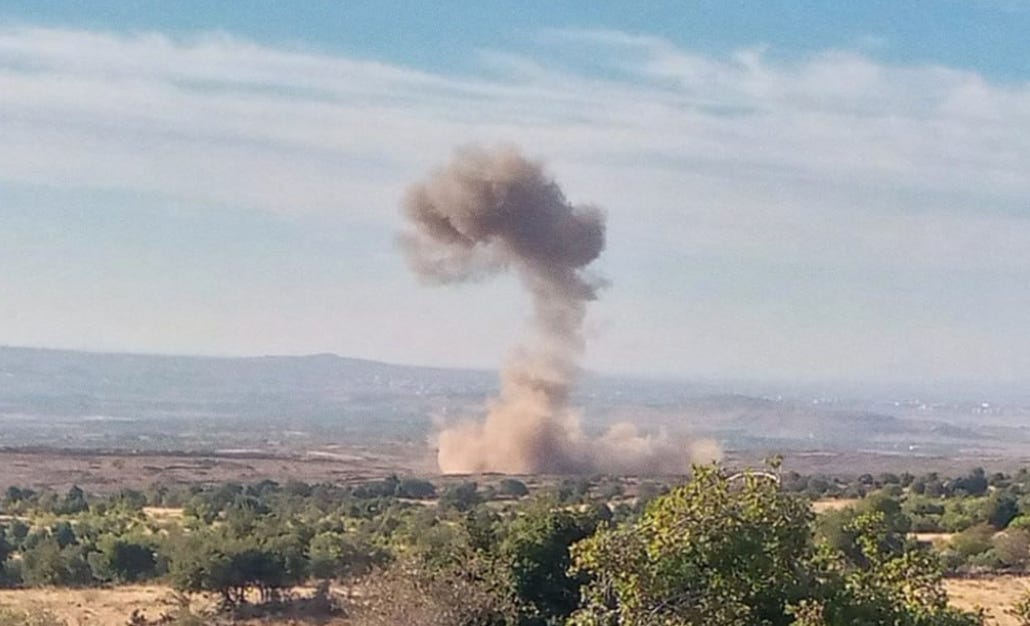
Israeli military forces fired at least 2 artillery shells into farmlands between the villages of Briqa and Kudna in southern Quneitra on October 5.
Israeli military forces launched a ground incursion into the village of Sayda al-Golan in southern Quneitra early on October 6.
Later that morning, another incursion was launched into the Tel al-Durayat area of southern Quneitra.
ISIS:
A local MOD officer identified as Anwar al-Jundi was shot and injured in a targeted attack by suspected ISIS-linked militants in al-Sanamayn late on September 30.
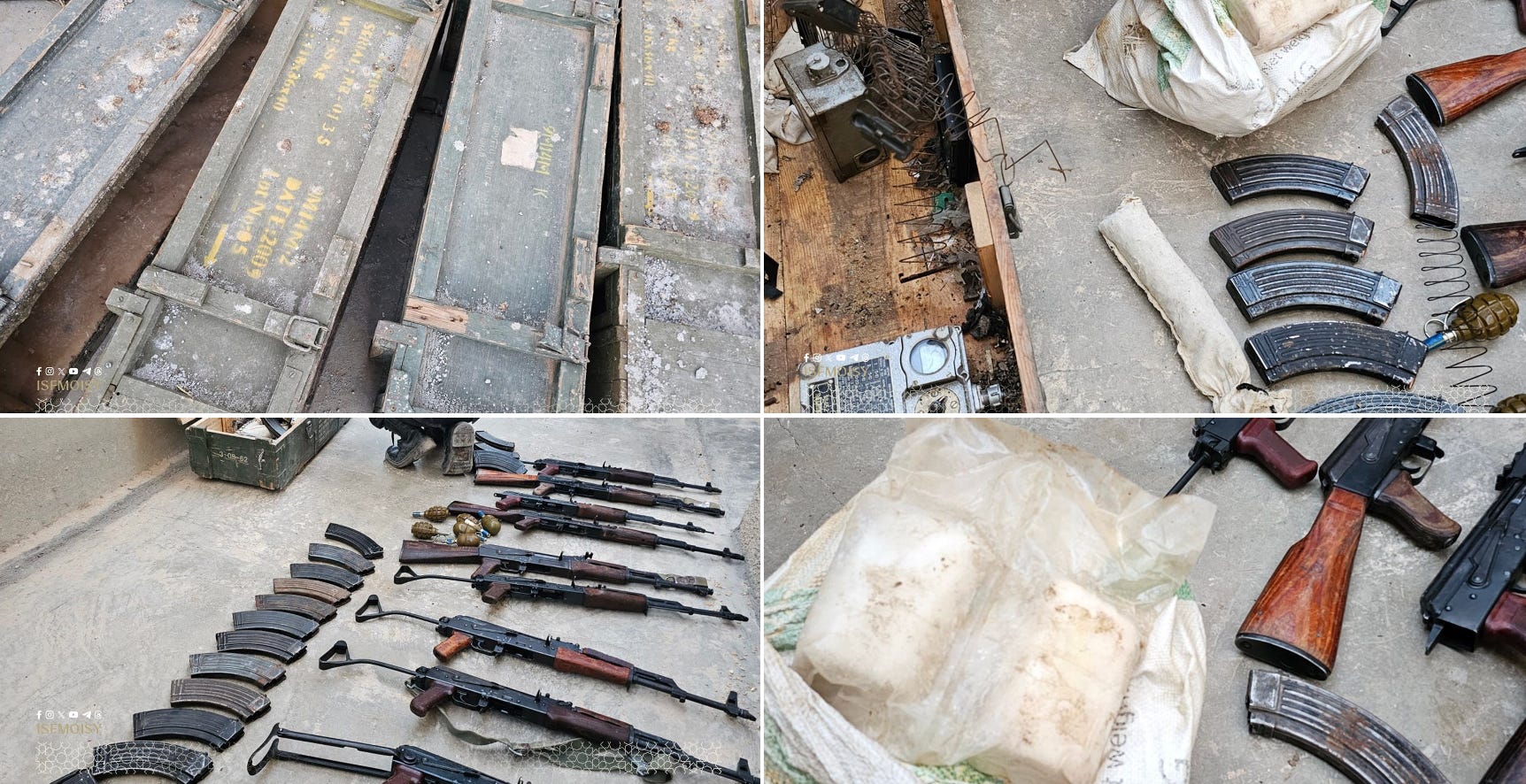
MOI Internal Security forces seized an ISIS-linked weapons cache previously belonging to Mohsen al-Hmeid in al-Sanamayn, Daraa on October 5. The cache included rifles, ammunition and explosives.
Idlib:
Aleppo:
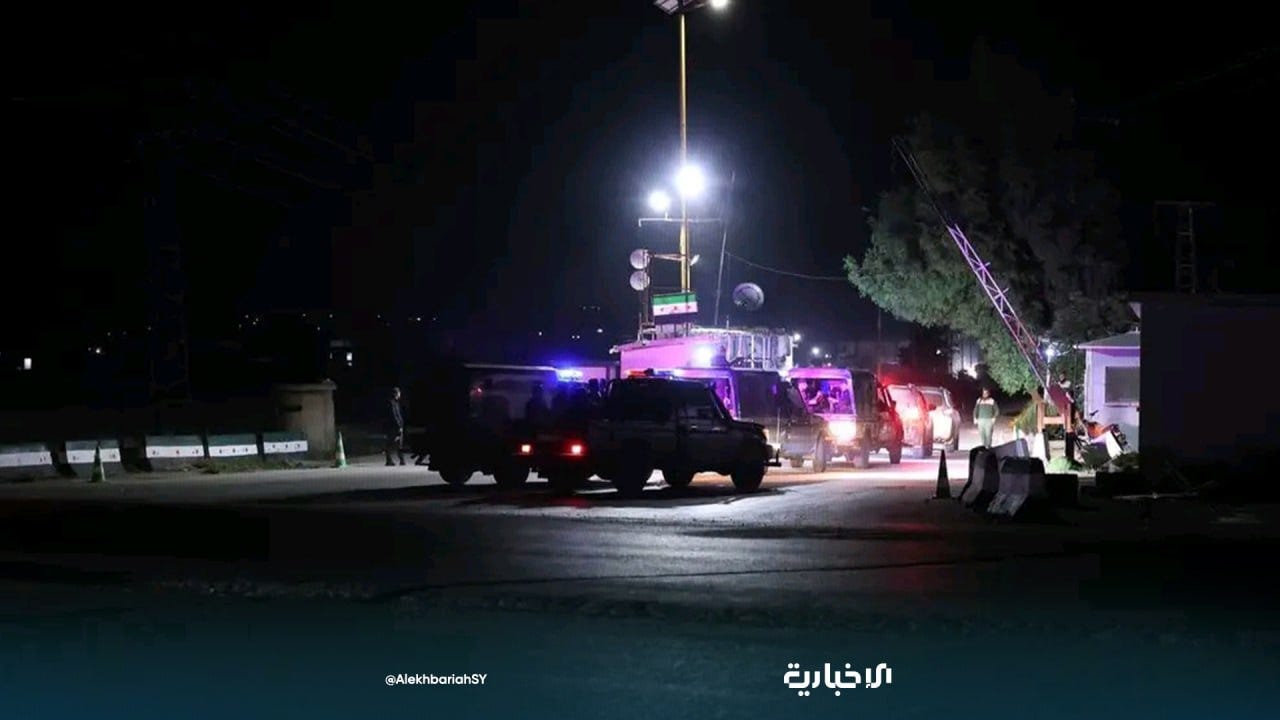
A girl was kidnapped by unidentified gunmen in the town of Qabtan al-Jabal late on October 5, prompting the deployment of MOI Internal Security to the area. Several suspects were detained, including in the nearby villages of Nubl and Zahra.
Latakia:
Tartus:
A brief clash erupted between rival gunmen in Tartus city late on September 29, during which one grenade was thrown. No casualties were caused.
A former Assad regime officer was detained by MOI personnel in a targeted raid in Tartus on October 1.
Two organized crime operatives were shot dead in a targeted attack by unidentified gunmen in eastern rural Tartus on October 4.
A small IED detonated targeting a passing traffic security vehicle on the al-Qadmus road in rural Tartus early on October 5. It caused no casualties.ntw
Hama:
One child was injured after triggering an unexploded landmine in the village of al-Hamamiyat in northern rural Hama on October 2.
MOI Internal Security personnel deployed to the town of Suqaylabiya late on October 3 to put down an unarmed clash between locals and residents from neighboring Qalaat al-Mudiq. No casualties were confirmed.
Homs:
MOD forces from the Badiya force seized two arms caches concealed underground in a valley in the Jabal al-Amour region on September 30.
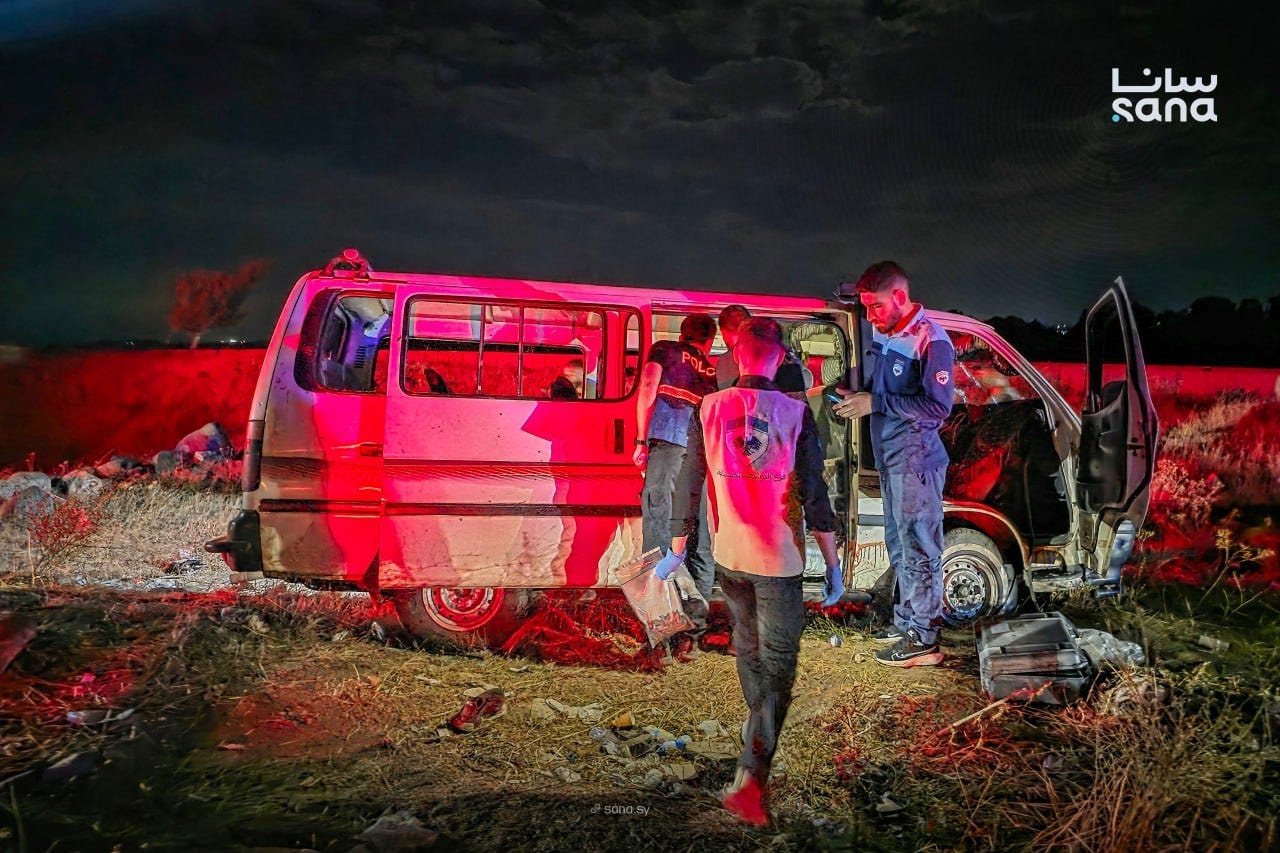
Seven Alawite engineers were killed and several more were injured when unidentified gunmen opened fire on their passenger bus as it drove across the Masyaf Bridge near al-Houla late on September 30. The bus was headed to the Alawite village of Fahel, whose wartime pro-Assad militias were accused of the 2012 Houla massacre.
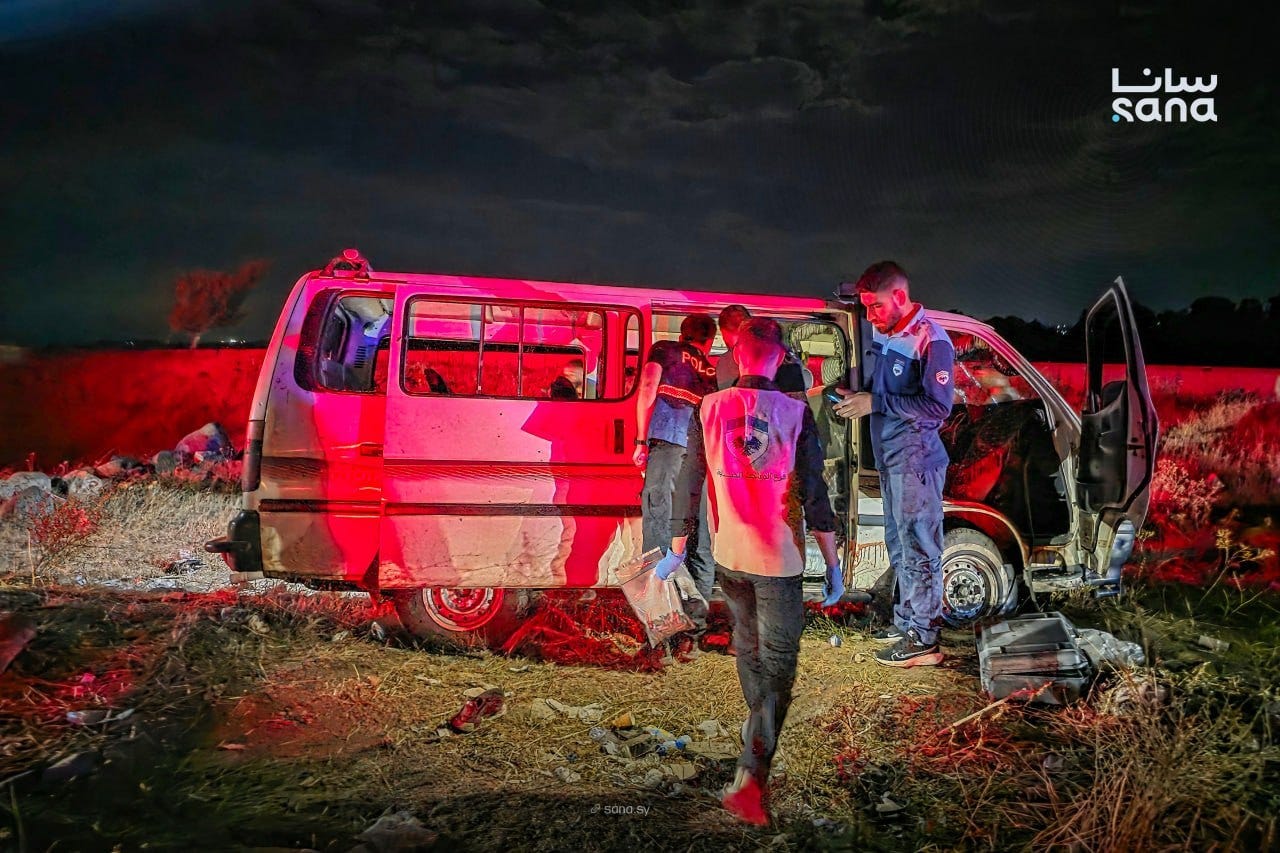
Two people were killed after triggering an unexploded landmine outside the T4 Airbase in rural Homs on September 30.
Raqqa:
One child was injured after triggering an unexploded landmine near Tel Abyad on October 2.
Hasakeh:
Deir ez Zour:
Two people were injured when a small IED attached to their vehicle detonated in the al-Buhamayd area early on October 1.
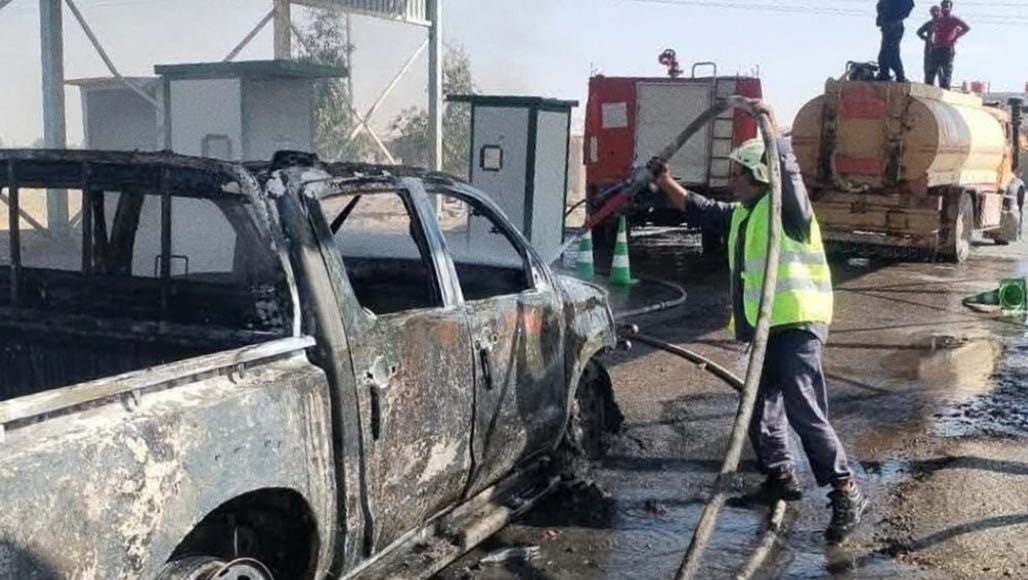
One MOD engineer was injured when an unexploded landmine he was attempting to make safe unexpectedly detonated in the al-Husseiniya area of western rural Deir ez Zour on October 2.
One civilian was killed in crossfire during clashes between rival families in the village of Mozan near al-Bukamal on October 5.
Rif Dimashq:
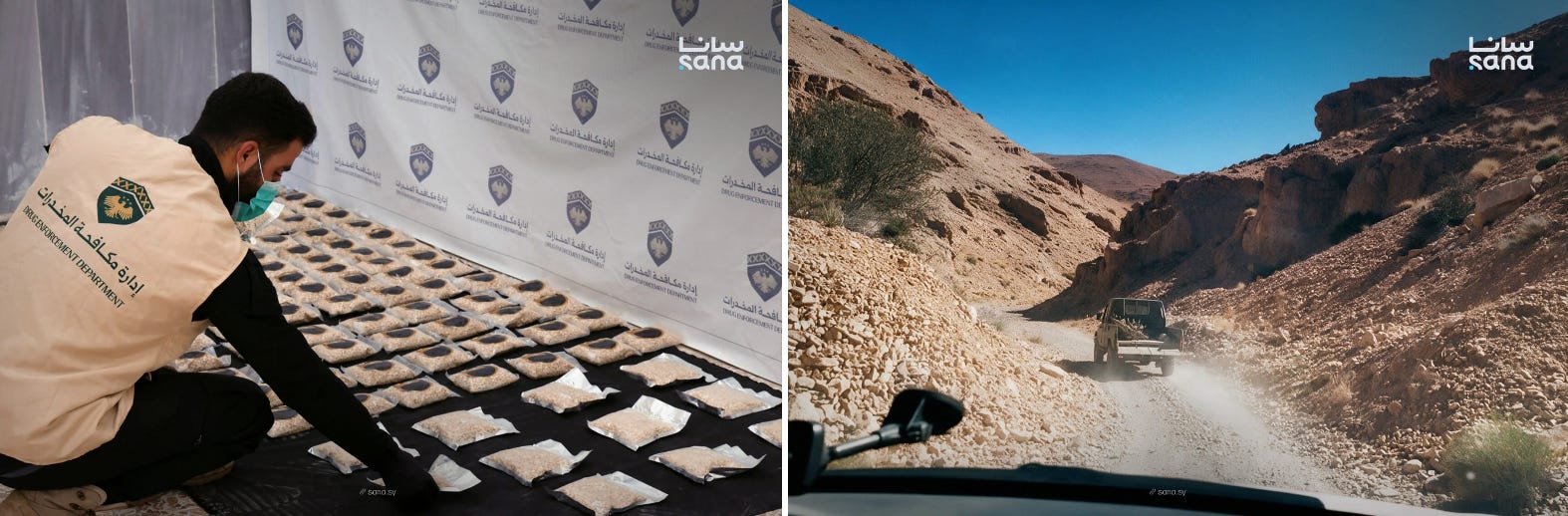
A shipment of 225,000 captagon pills was seized shortly after crossing the border from Lebanon in rural Rif Dimashq on September 30. Two traffickers were detained.
One gunman suspected of involvement in the killing of an MOI Internal Security officer was detained in a targeted MOI raid in al-Dumayr on October 1.
Three MOD soldiers were killed when they triggered an unexploded landmine during demining duties in the village of Abada on October 1.
Four people were killed and several others were injured when gunmen from a rival family opened fire on their vehicle in the Ras al-Mara area in the Qalamoun late on October 2.
Damascus:
Daraa:
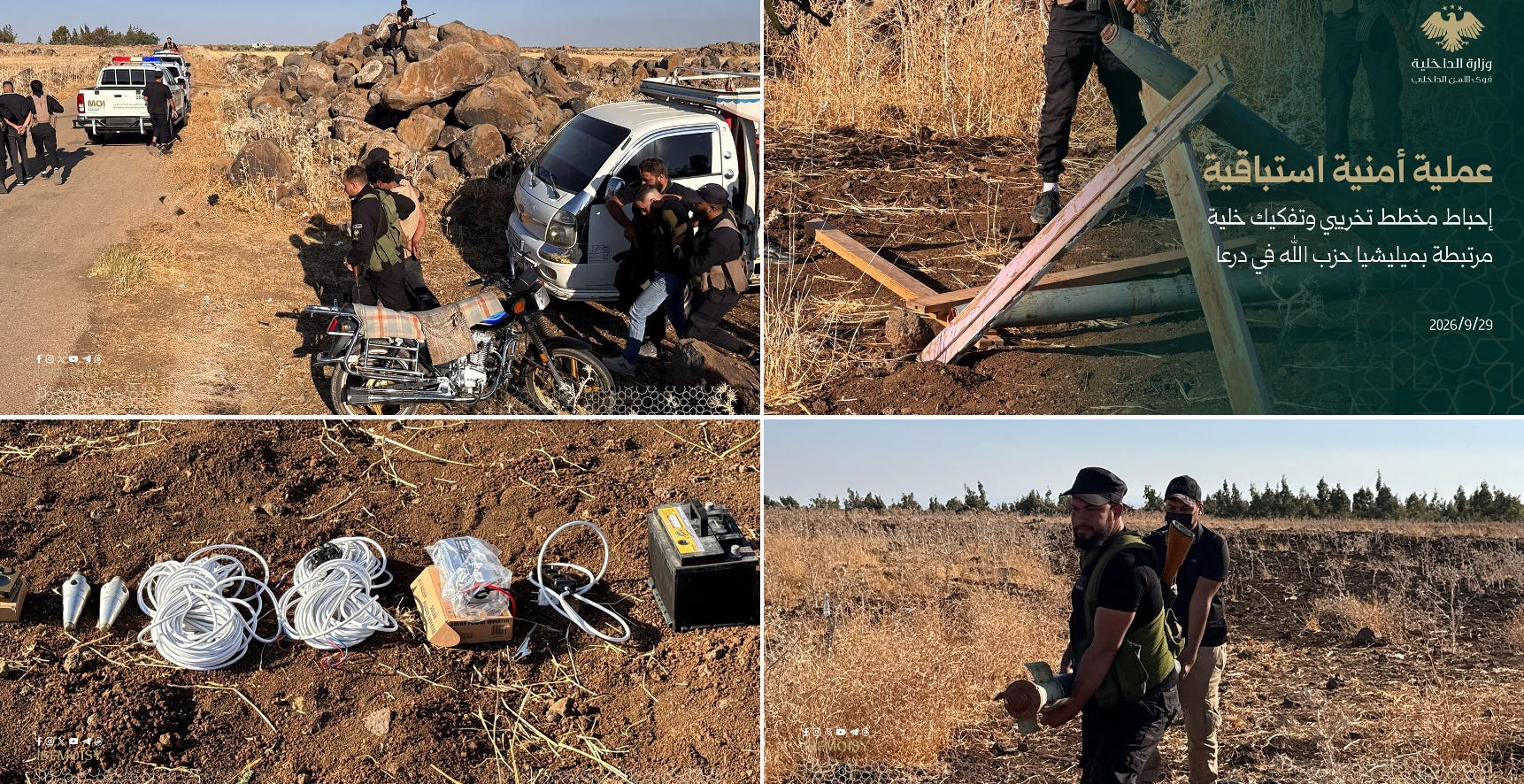
A 3-man Hezbollah cell was captured in an intelligence-led operation conducted by the MOI and General Intelligence Directorate in the Yarmouk Basin on September 29. The cell had been preparing to launch several rockets towards Israel.
One woman was killed and several other civilians were injured in crossfire during clashes between rival families in the village of Beit Arah in western rural Daraa on September 30.
One man was injured after triggering an unexploded landmine on the road linking the villages of Zamarin and Samlin in northern rural Daraa on October 3.
Unidentified gunmen opened fire towards an MOI Internal Security patrol in Tafas late on October 6, but it caused no casualties.
Suwayda:
Several bus passengers were assaulted by Druze National Guard militiamen when their bus was stopped at the al-Anqoud Roundabout in Suwayda city on September 29. Following the incident, National Guard reinforcements were deployed to the surrounding area, in response to concerns that retributive attacks could result.
One Druze National Guard militia commander, identified as Majid al-Halabi, was killed after he and his men opened fire with heavy machine guns towards the government-held village of Mazraa in western rural Suwayda on October 2, triggering clashes with MOI Internal Security forces stationed nearby.
Jordanian armed forces intercepted four men attempting to illegally infiltrate Jordan from Suwayda’s southern desert late on October 3.
One combatant was killed during a brief clash between rival families in the al-Asfar area of eastern rural Suwayda on October 4 that was triggered by a land dispute.
Druze National Guard militiamen and MOI Internal Security personnel engaged in clashes along the al-Mazraa-Ara frontline on October 5. No casualties were confirmed.